Проверил: преподаватель
Барышникова Юлия Викторовна
- Главная
- Разное
- Образование
- Спорт
- Естествознание
- Природоведение
- Религиоведение
- Французский язык
- Черчение
- Английский язык
- Астрономия
- Алгебра
- Биология
- География
- Геометрия
- Детские презентации
- Информатика
- История
- Литература
- Математика
- Музыка
- МХК
- Немецкий язык
- ОБЖ
- Обществознание
- Окружающий мир
- Педагогика
- Русский язык
- Технология
- Физика
- Философия
- Химия
- Шаблоны, фоны, картинки для презентаций
- Экология
- Экономика
Презентация, доклад по математике на тему Тригонометрия вокруг нас
Содержание
- 1. Презентация по математике на тему Тригонометрия вокруг нас
- 2. Some facts about robin hood
- 3. In popular culture Robin
- 4. According to the
- 5. The surviving medieval court
- 6. The first clear reference
- 7. According to the
- 8. Nottingham castle At first,
- 9. In the legends
- 10. The archers’ сompetitions, which
- 11. the Sherwood Forest The place
- 12. Robin Hood, as
- 13. Thank you for your attention!
- 14. Some QuestionsWhat was the name of Robin
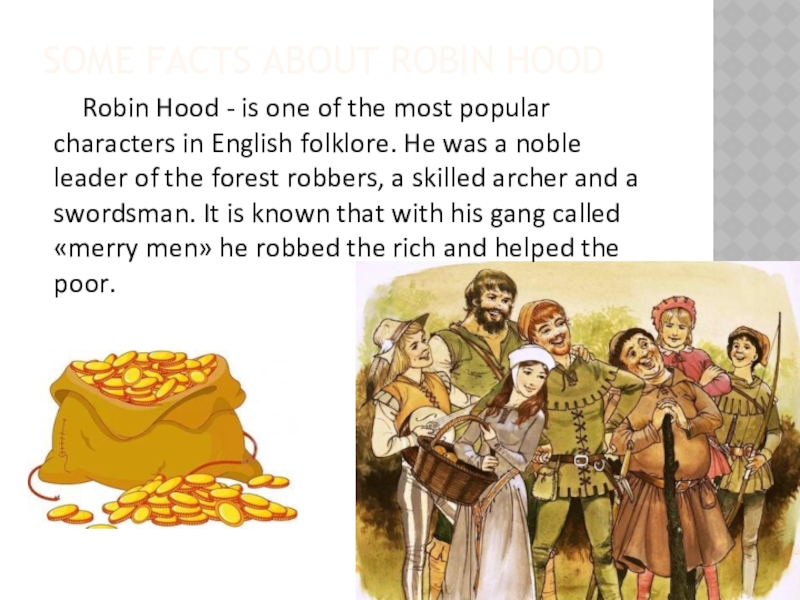
Some facts about robin hood Robin Hood - is one of the most popular characters in English folklore. He was a noble leader of the forest robbers, a skilled archer and a swordsman. It
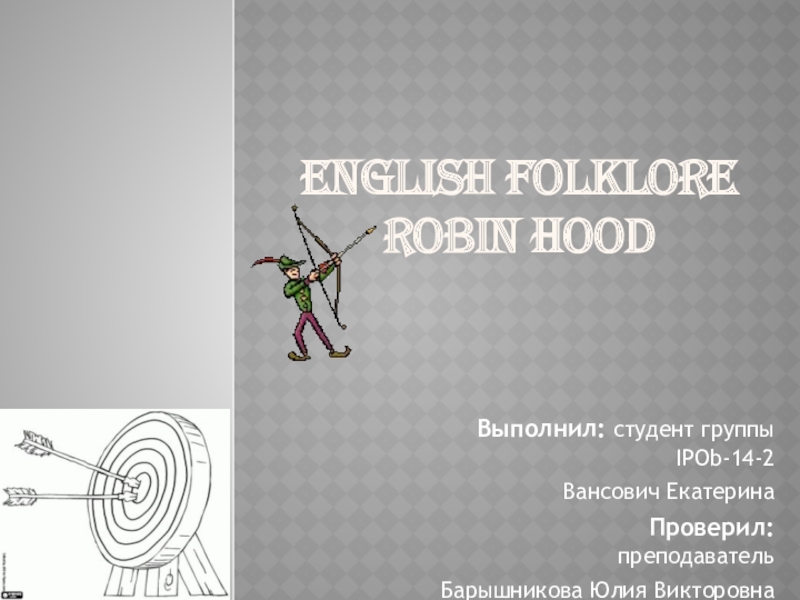
Слайд 2Some facts about robin hood
Robin Hood -
is one of the most popular characters in English folklore. He was a noble leader of the forest robbers, a skilled archer and a swordsman. It is known that with his gang called «merry men» he robbed the rich and helped the poor.
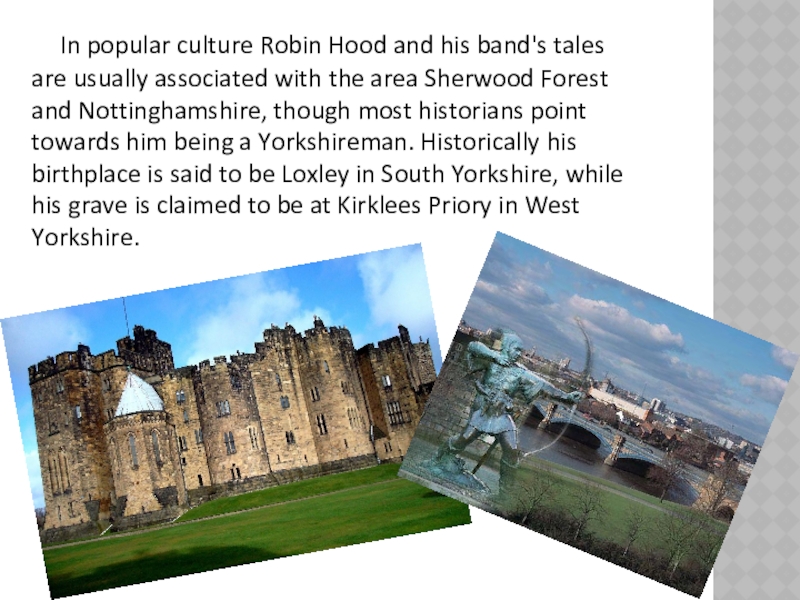
Слайд 3 In popular culture Robin Hood and his band's
tales are usually associated with the area Sherwood Forest and Nottinghamshire, though most historians point towards him being a Yorkshireman. Historically his birthplace is said to be Loxley in South Yorkshire, while his grave is claimed to be at Kirklees Priory in West Yorkshire.
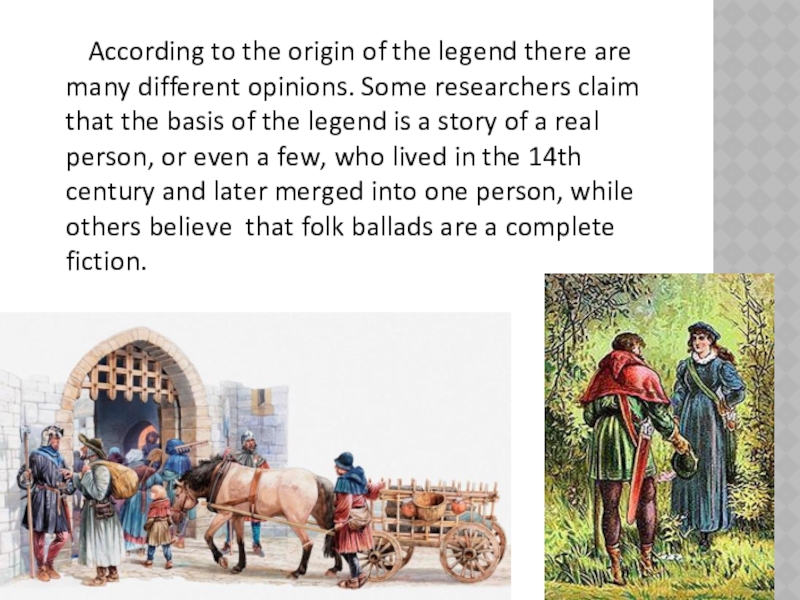
Слайд 4 According to the origin of the legend
there are many different opinions. Some researchers claim that the basis of the legend is a story of a real person, or even a few, who lived in the 14th century and later merged into one person, while others believe that folk ballads are a complete fiction.
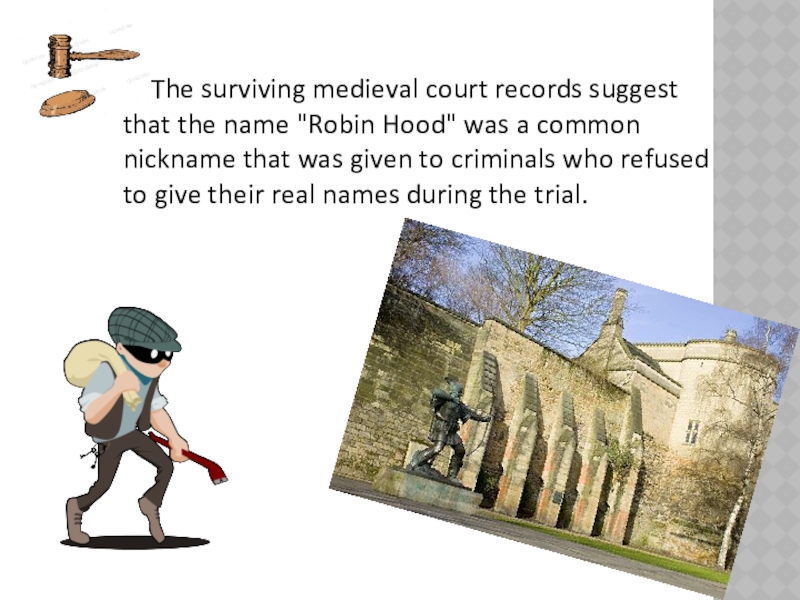
Слайд 5 The surviving medieval court records suggest that the
name "Robin Hood" was a common nickname that was given to criminals who refused to give their real names during the trial.
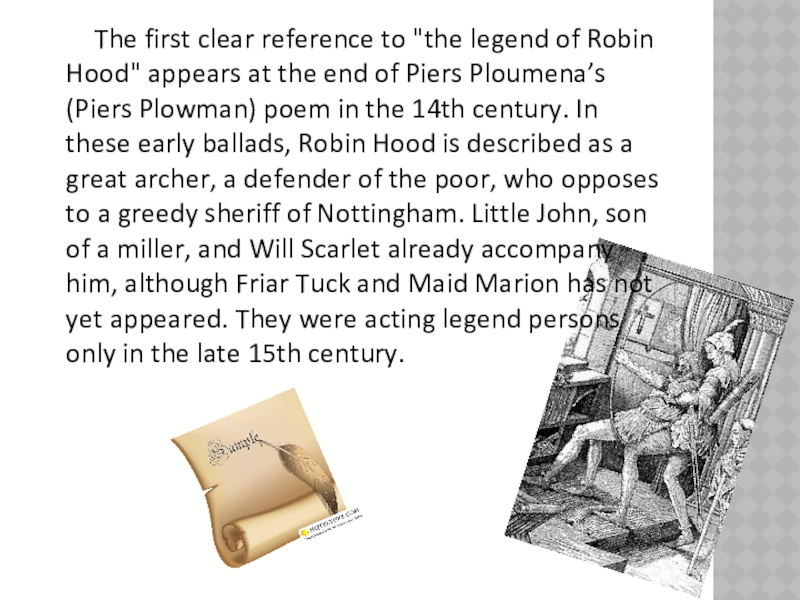
Слайд 6 The first clear reference to "the legend of
Robin Hood" appears at the end of Piers Ploumena’s (Piers Plowman) poem in the 14th century. In these early ballads, Robin Hood is described as a great archer, a defender of the poor, who opposes to a greedy sheriff of Nottingham. Little John, son of a miller, and Will Scarlet already accompany him, although Friar Tuck and Maid Marion has not yet appeared. They were acting legend persons only in the late 15th century.
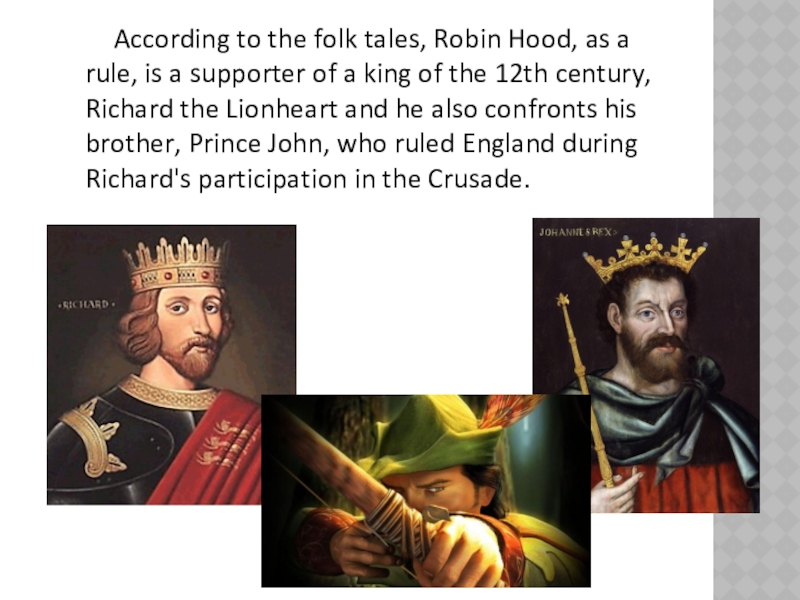
Слайд 7 According to the folk tales, Robin Hood,
as a rule, is a supporter of a king of the 12th century, Richard the Lionheart and he also confronts his brother, Prince John, who ruled England during Richard's participation in the Crusade.
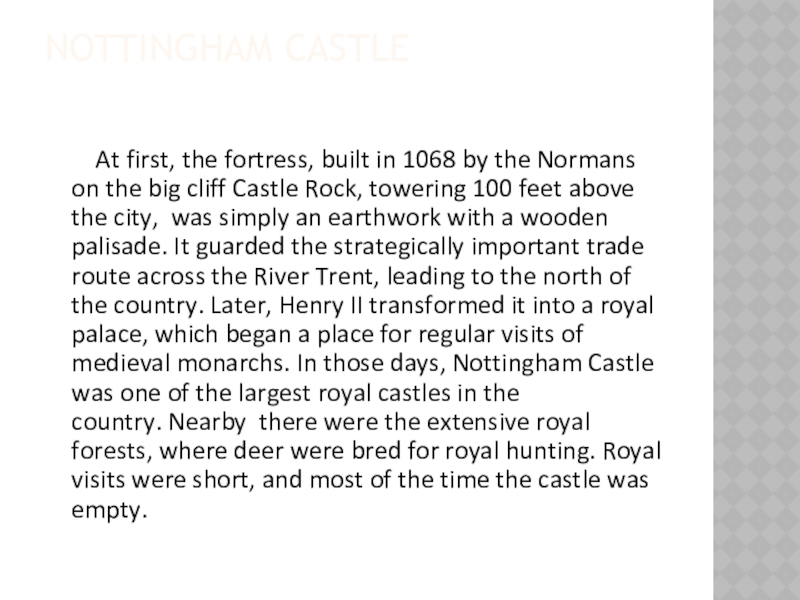
Слайд 8Nottingham castle
At first, the fortress, built in 1068
by the Normans on the big cliff Castle Rock, towering 100 feet above the city, was simply an earthwork with a wooden palisade. It guarded the strategically important trade route across the River Trent, leading to the north of the country. Later, Henry II transformed it into a royal palace, which began a place for regular visits of medieval monarchs. In those days, Nottingham Castle was one of the largest royal castles in the country. Nearby there were the extensive royal forests, where deer were bred for royal hunting. Royal visits were short, and most of the time the castle was empty.
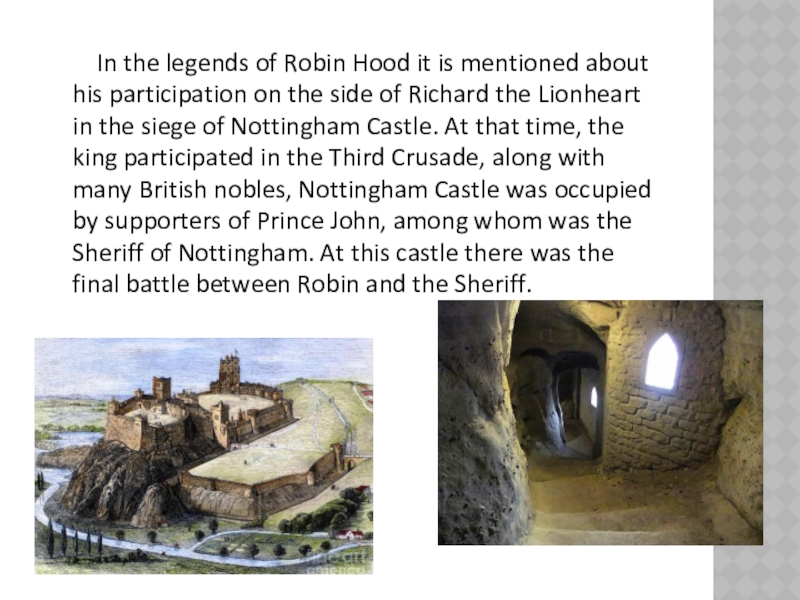
Слайд 9 In the legends of Robin Hood it
is mentioned about his participation on the side of Richard the Lionheart in the siege of Nottingham Castle. At that time, the king participated in the Third Crusade, along with many British nobles, Nottingham Castle was occupied by supporters of Prince John, among whom was the Sheriff of Nottingham. At this castle there was the final battle between Robin and the Sheriff.
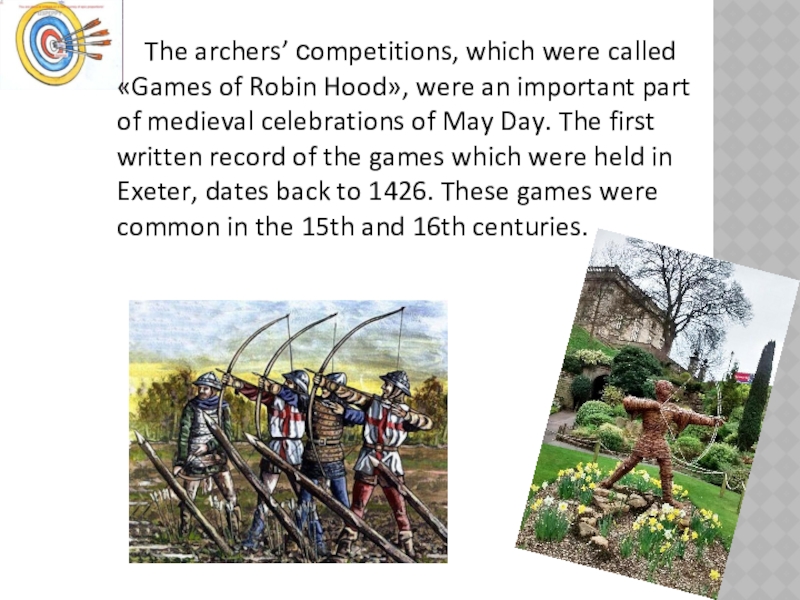
Слайд 10 The archers’ сompetitions, which were called «Games of
Robin Hood», were an important part of medieval celebrations of May Day. The first written record of the games which were held in Exeter, dates back to 1426. These games were common in the 15th and 16th centuries.
Слайд 11the Sherwood Forest
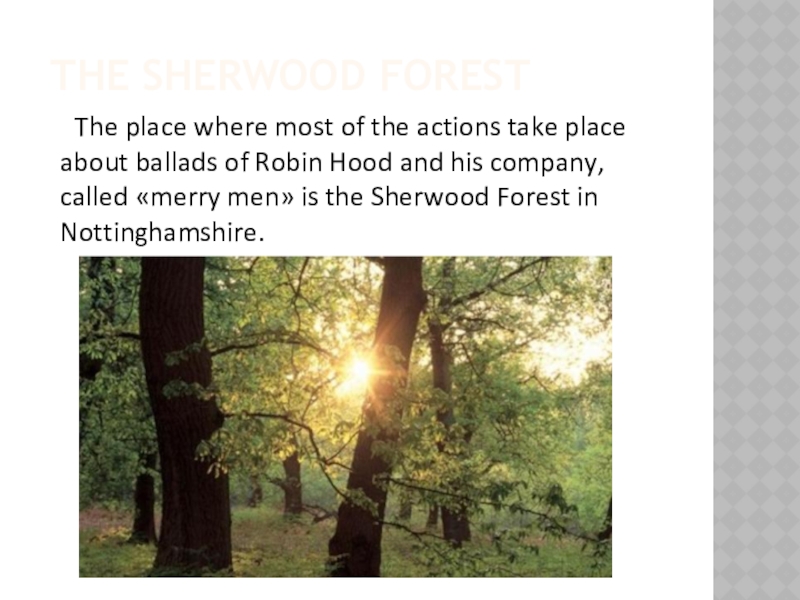
The place where most of the
actions take place about ballads of Robin Hood and his company, called «merry men» is the Sherwood Forest in Nottinghamshire.
Слайд 12 Robin Hood, as mentioned in the legend,
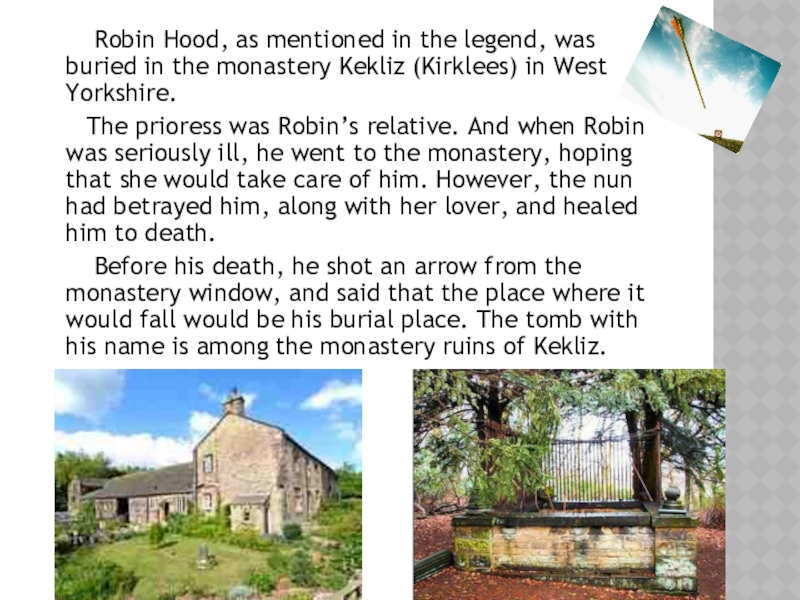
was buried in the monastery Kekliz (Kirklees) in West Yorkshire.
The prioress was Robin’s relative. And when Robin was seriously ill, he went to the monastery, hoping that she would take care of him. However, the nun had betrayed him, along with her lover, and healed him to death.
Before his death, he shot an arrow from the monastery window, and said that the place where it would fall would be his burial place. The tomb with his name is among the monastery ruins of Kekliz.
The prioress was Robin’s relative. And when Robin was seriously ill, he went to the monastery, hoping that she would take care of him. However, the nun had betrayed him, along with her lover, and healed him to death.
Before his death, he shot an arrow from the monastery window, and said that the place where it would fall would be his burial place. The tomb with his name is among the monastery ruins of Kekliz.

Слайд 14Some Questions
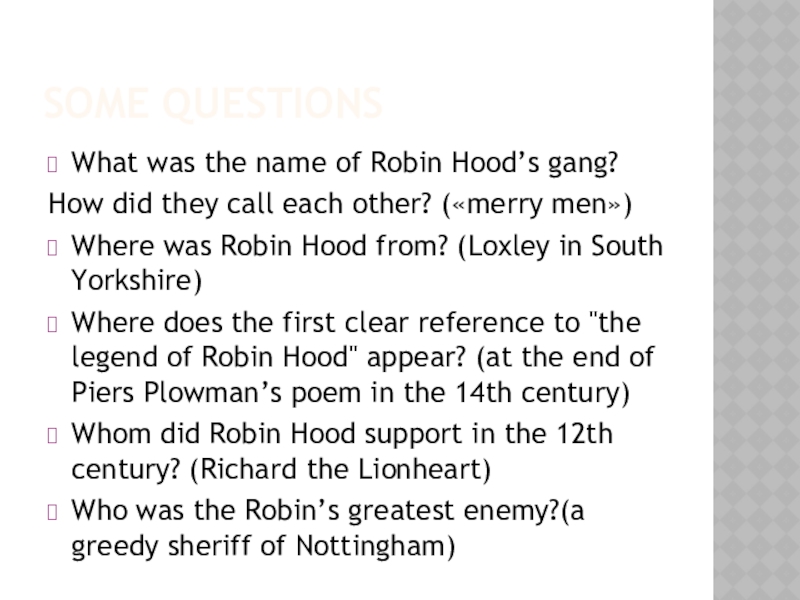
What was the name of Robin Hood’s gang?
How did they
call each other? («merry men»)
Where was Robin Hood from? (Loxley in South Yorkshire)
Where does the first clear reference to "the legend of Robin Hood" appear? (at the end of Piers Plowman’s poem in the 14th century)
Whom did Robin Hood support in the 12th century? (Richard the Lionheart)
Who was the Robin’s greatest enemy?(a greedy sheriff of Nottingham)
Where was Robin Hood from? (Loxley in South Yorkshire)
Where does the first clear reference to "the legend of Robin Hood" appear? (at the end of Piers Plowman’s poem in the 14th century)
Whom did Robin Hood support in the 12th century? (Richard the Lionheart)
Who was the Robin’s greatest enemy?(a greedy sheriff of Nottingham)