- Главная
- Разное
- Образование
- Спорт
- Естествознание
- Природоведение
- Религиоведение
- Французский язык
- Черчение
- Английский язык
- Астрономия
- Алгебра
- Биология
- География
- Геометрия
- Детские презентации
- Информатика
- История
- Литература
- Математика
- Музыка
- МХК
- Немецкий язык
- ОБЖ
- Обществознание
- Окружающий мир
- Педагогика
- Русский язык
- Технология
- Физика
- Философия
- Химия
- Шаблоны, фоны, картинки для презентаций
- Экология
- Экономика
Презентация, доклад Работа терапевтического отделения
Содержание
- 1. Презентация Работа терапевтического отделения
- 2. The purpose of the therapeutic department and
- 3. Device and equipment the therapeutic departmentУстройство и
- 4. The device of the chambers in the
- 5. Internal regulations therapeutic departmentВнутренний распорядок терапевтического отделения:7.00
- 6. The procedure of examination and treatment patients
- 7. 8. Больные получают комплексное обследование и лечение
- 8. Individual mode of patient Индивидуальный режим больному
- 9. Постельный режим - больному запрещено вставать
- 10. Полупостельный режим - больному запрещено выходить из
- 11. Палатный режим - больному разрешаются передвижение по
- 12. Общий («свободный») режим - больному разрешено ходить
- 13. Sanitary and epidemiological regime of the therapeutic
- 14. Nosocomial infectionВнутрибольничная (нозокомиальная (греч. nosokomeion – больница),
- 15. Thank you for your attention

Слайд 2The purpose of the therapeutic department and its medical composition
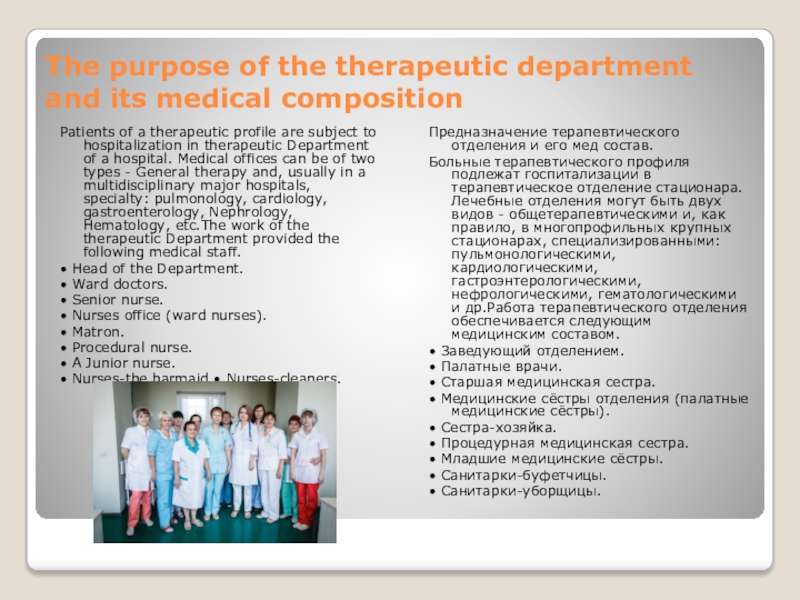
Patients of
• Head of the Department.
• Ward doctors.
• Senior nurse.
• Nurses office (ward nurses).
• Matron.
• Procedural nurse.
• A Junior nurse.
• Nurses-the barmaid.• Nurses-cleaners.
Предназначение терапевтического отделения и его мед состав.
Больные терапевтического профиля подлежат госпитализации в терапевтическое отделение стационара. Лечебные отделения могут быть двух видов - общетерапевтическими и, как правило, в многопрофильных крупных стационарах, специализированными: пульмонологическими, кардиологическими, гастроэнтерологическими, нефрологическими, гематологическими и др.Работа терапевтического отделения обеспечивается следующим медицинским составом.
• Заведующий отделением.
• Палатные врачи.
• Старшая медицинская сестра.
• Медицинские сёстры отделения (палатные медицинские сёстры).
• Сестра-хозяйка.
• Процедурная медицинская сестра.
• Младшие медицинские сёстры.
• Санитарки-буфетчицы.
• Санитарки-уборщицы.
Слайд 3Device and equipment the therapeutic department
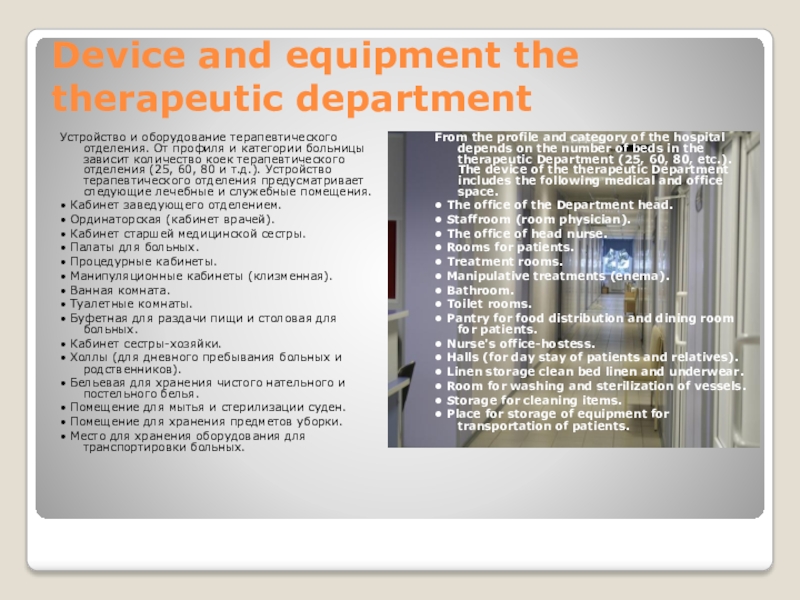
Устройство и оборудование терапевтического отделения. От
• Кабинет заведующего отделением.
• Ординаторская (кабинет врачей).
• Кабинет старшей медицинской сестры.
• Палаты для больных.
• Процедурные кабинеты.
• Манипуляционные кабинеты (клизменная).
• Ванная комната.
• Туалетные комнаты.
• Буфетная для раздачи пищи и столовая для больных.
• Кабинет сестры-хозяйки.
• Холлы (для дневного пребывания больных и родственников).
• Бельевая для хранения чистого нательного и постельного белья.
• Помещение для мытья и стерилизации суден.
• Помещение для хранения предметов уборки.
• Место для хранения оборудования для транспортировки больных.
From the profile and category of the hospital depends on the number of beds in the therapeutic Department (25, 60, 80, etc.). The device of the therapeutic Department includes the following medical and office space.
• The office of the Department head.
• Staffroom (room physician).
• The office of head nurse.
• Rooms for patients.
• Treatment rooms.
• Manipulative treatments (enema).
• Bathroom.
• Toilet rooms.
• Pantry for food distribution and dining room for patients.
• Nurse's office-hostess.
• Halls (for day stay of patients and relatives).
• Linen storage clean bed linen and underwear.
• Room for washing and sterilization of vessels.
• Storage for cleaning items.
• Place for storage of equipment for transportation of patients.
Слайд 4The device of the chambers in the therapeutic department
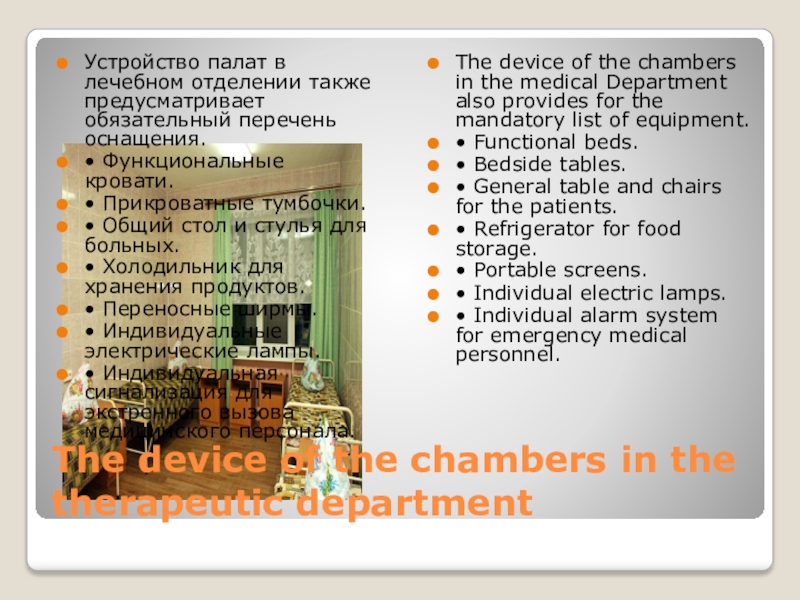
Устройство палат в
• Функциональные кровати.
• Прикроватные тумбочки.
• Общий стол и стулья для больных.
• Холодильник для хранения продуктов.
• Переносные ширмы.
• Индивидуальные электрические лампы.
• Индивидуальная сигнализация для экстренного вызова медицинского персонала.
The device of the chambers in the medical Department also provides for the mandatory list of equipment.
• Functional beds.
• Bedside tables.
• General table and chairs for the patients.
• Refrigerator for food storage.
• Portable screens.
• Individual electric lamps.
• Individual alarm system for emergency medical personnel.
Слайд 5Internal regulations therapeutic department
Внутренний распорядок терапевтического отделения:
7.00 Подъём
7.00-7.30 Измерение температуры
7.30-8.00 Утренний туалет
8.00-8.30 Раздача лекарств
8.30-9.30 Завтрак
9.30-12.00 Врачебный обход
12.00-14.00 Выполнение врачебных назначений
14.00-14.30 Обед
14.30-16.30 «Тихий час»
16.30-17.00 Измерение температуры тела
17.00-17.30 Послеобеденный чай
17.30-19.00 Посещение родственниками
19.00-19.30 Раздача лекарств
19.30-20.00 Ужин
20.00-21.30 Свободное время
21.30-22.00 Вечерний туалет
22.00-7.00 Сон
7.00 The rise
7.00-7.30
The measurement of body temperature
7.30-8.00 Morning toilet
8.00-8.30 Distribution of drugs
8.30-9.30 Breakfast
9.30-12.00 Medical bypass
12.00-14.00 The implementation of prescribing
14.00-14.30 Lunch
14.30-16.30 "Quiet time«
16.30-17.00 The measurement of body temperature
17.00-17.30 Afternoon tea
17.30-19.00 Visiting relatives
19.00-19.30 Distribution of drugs
19.30-20.00 Dinner
20.00-21.30 Free time
21.30-22.00 Evening toilet
22.00-7.00 Sleep
Слайд 6The procedure of examination and treatment patients in the day hospital
ПОРЯДОК ПРОВЕДЕНИЯ ОБСЛЕДОВАНИЯ И ЛЕЧЕНИЯ БОЛЬНЫХ В ДНЕВНОМ СТАЦИОНАРЕ
1. Режим работы отделения дневного стационара 9.00.-12.00. кроме субботы и воскресенья в 1 смену..
2. Дневной стационар имеет правила внутреннего распорядка больных, утвержденных главным врачом.
3. В дневном стационаре разрешается пользоваться личными одеждой, обувью, постельными принадлежностями.
4. Питание больных в дневном стационаре не производится.
5. Врач-терапевт дневного стационара проводит ежедневный осмотр больных, контролирует и корректирует планы их обследования и лечения..
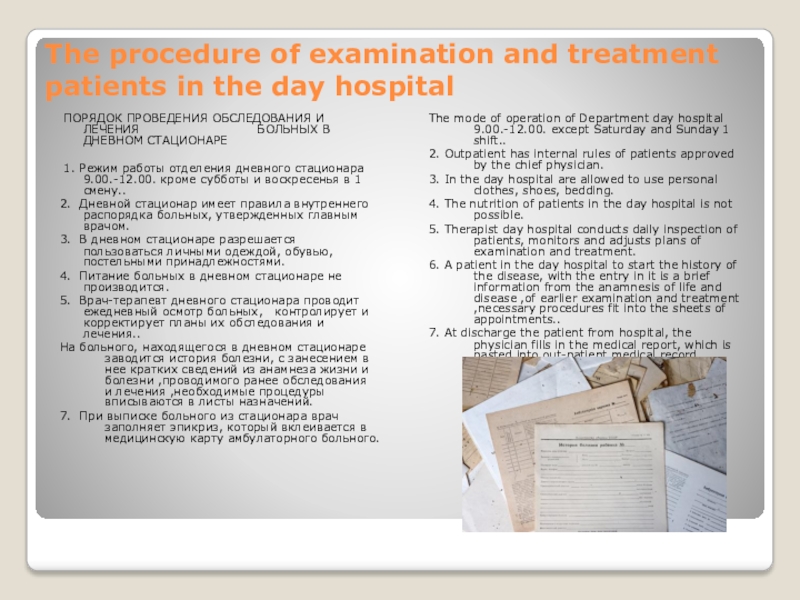
На больного, находящегося в дневном стационаре заводится история болезни, с занесением в нее кратких сведений из анамнеза жизни и болезни ,проводимого ранее обследования и лечения ,необходимые процедуры вписываются в листы назначений.
7. При выписке больного из стационара врач заполняет эпикриз, который вклеивается в медицинскую карту амбулаторного больного.
The mode of operation of Department day hospital 9.00.-12.00. except Saturday and Sunday 1 shift..
2. Outpatient has internal rules of patients approved by the chief physician.
3. In the day hospital are allowed to use personal clothes, shoes, bedding.
4. The nutrition of patients in the day hospital is not possible.
5. Therapist day hospital conducts daily inspection of patients, monitors and adjusts plans of examination and treatment.
6. A patient in the day hospital to start the history of the disease, with the entry in it is a brief information from the anamnesis of life and disease ,of earlier examination and treatment ,necessary procedures fit into the sheets of appointments..
7. At discharge the patient from hospital, the physician fills in the medical report, which is pasted into out-patient medical record.
Слайд 78. Больные получают комплексное обследование и лечение по индивидуально составленным дифференцированным
9. В целях обеспечения больных комплексным восстановительным лечением используются все необходимые подразделения РБ.
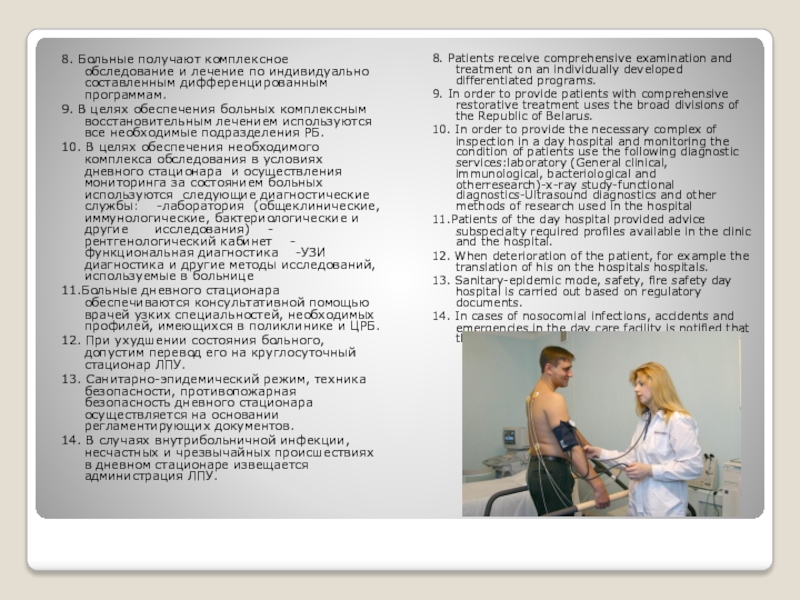
10. В целях обеспечения необходимого комплекса обследования в условиях дневного стационара и осуществления мониторинга за состоянием больных используются следующие диагностические службы: -лаборатория (общеклинические, иммунологические, бактериологические и другие исследования) -рентгенологический кабинет -функциональная диагностика -УЗИ диагностика и другие методы исследований, используемые в больнице
11.Больные дневного стационара обеспечиваются консультативной помощью врачей узких специальностей, необходимых профилей, имеющихся в поликлинике и ЦРБ.
12. При ухудшении состояния больного, допустим перевод его на круглосуточный стационар ЛПУ.
13. Санитарно-эпидемический режим, техника безопасности, противопожарная безопасность дневного стационара осуществляется на основании регламентирующих документов.
14. В случаях внутрибольничной инфекции, несчастных и чрезвычайных происшествиях в дневном стационаре извещается администрация ЛПУ.
8. Patients receive comprehensive examination and treatment on an individually developed differentiated programs.
9. In order to provide patients with comprehensive restorative treatment uses the broad divisions of the Republic of Belarus.
10. In order to provide the necessary complex of inspection in a day hospital and monitoring the condition of patients use the following diagnostic services:laboratory (General clinical, immunological, bacteriological and otherresearch)-x-ray study-functional diagnostics-Ultrasound diagnostics and other methods of research used in the hospital
11.Patients of the day hospital provided advice subspecialty required profiles available in the clinic and the hospital.
12. When deterioration of the patient, for example the translation of his on the hospitals hospitals.
13. Sanitary-epidemic mode, safety, fire safety day hospital is carried out based on regulatory documents.
14. In cases of nosocomial infections, accidents and emergencies in the day care facility is notified that the administration of hospitals.
Слайд 8Individual mode of patient
Индивидуальный режим больному назначает врач; конкретная разновидность
An individual patient by a doctor; a particular type depends on the patient's condition (severity of illness) and the nature of the disease.
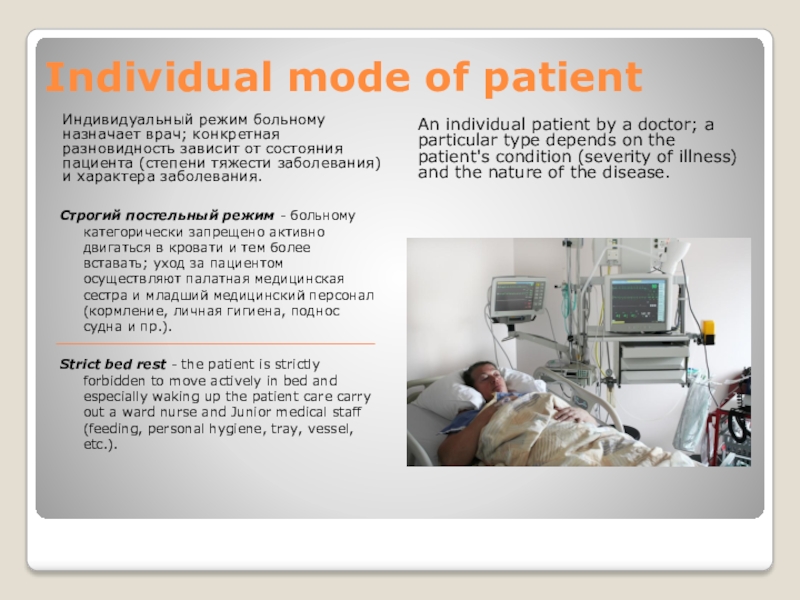
Строгий постельный режим - больному категорически запрещено активно двигаться в кровати и тем более вставать; уход за пациентом осуществляют палатная медицинская сестра и младший медицинский персонал (кормление, личная гигиена, поднос судна и пр.).
Strict bed rest - the patient is strictly forbidden to move actively in bed and especially waking up the patient care carry out a ward nurse and Junior medical staff (feeding, personal hygiene, tray, vessel, etc.).
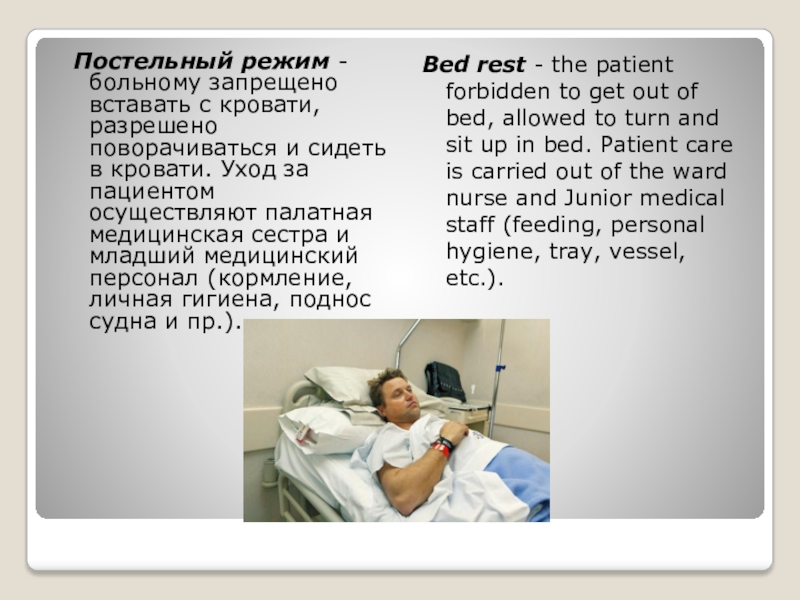
Слайд 9 Постельный режим - больному запрещено вставать с кровати, разрешено поворачиваться
Bed rest - the patient forbidden to get out of bed, allowed to turn and sit up in bed. Patient care is carried out of the ward nurse and Junior medical staff (feeding, personal hygiene, tray, vessel, etc.).
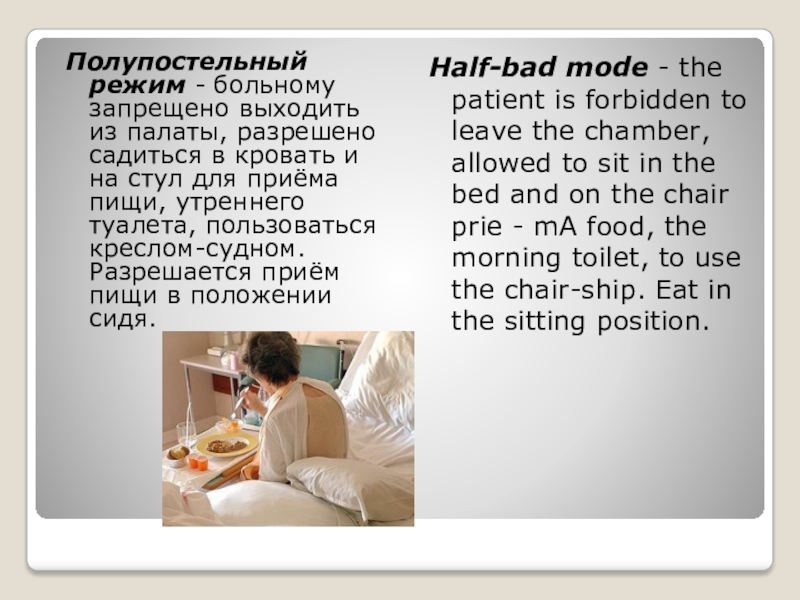
Слайд 10Полупостельный режим - больному запрещено выходить из палаты, разрешено садиться в кровать и
Half-bad mode - the patient is forbidden to leave the chamber, allowed to sit in the bed and on the chair prie - mA food, the morning toilet, to use the chair-ship. Eat in the sitting position.
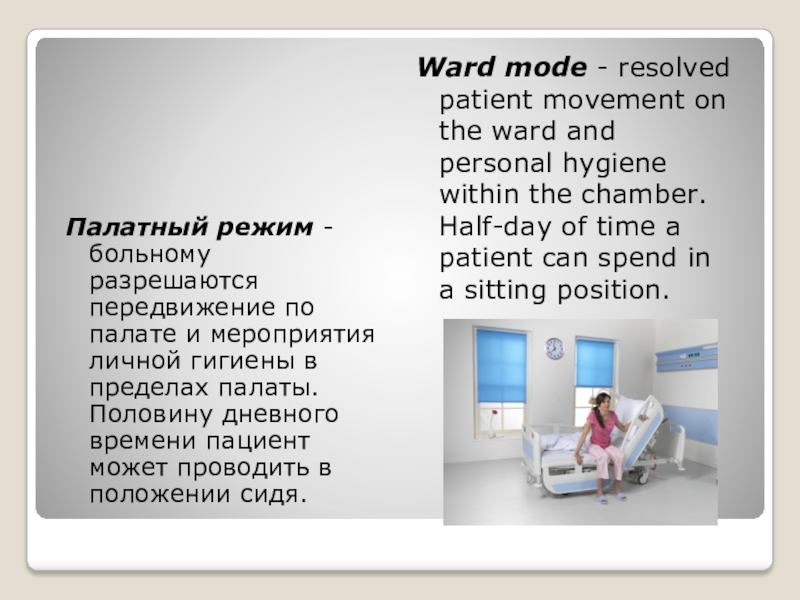
Слайд 11Палатный режим - больному разрешаются передвижение по палате и мероприятия личной
Ward mode - resolved patient movement on the ward and personal hygiene within the chamber. Half-day of time a patient can spend in a sitting position.
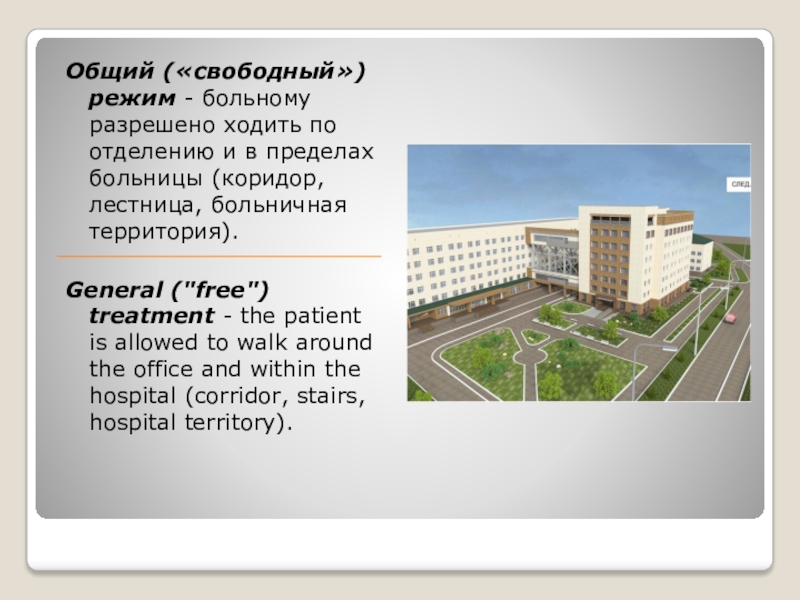
Слайд 12Общий («свободный») режим - больному разрешено ходить по отделению и в
General ("free") treatment - the patient is allowed to walk around the office and within the hospital (corridor, stairs, hospital territory).
Слайд 13Sanitary and epidemiological regime of the therapeutic department
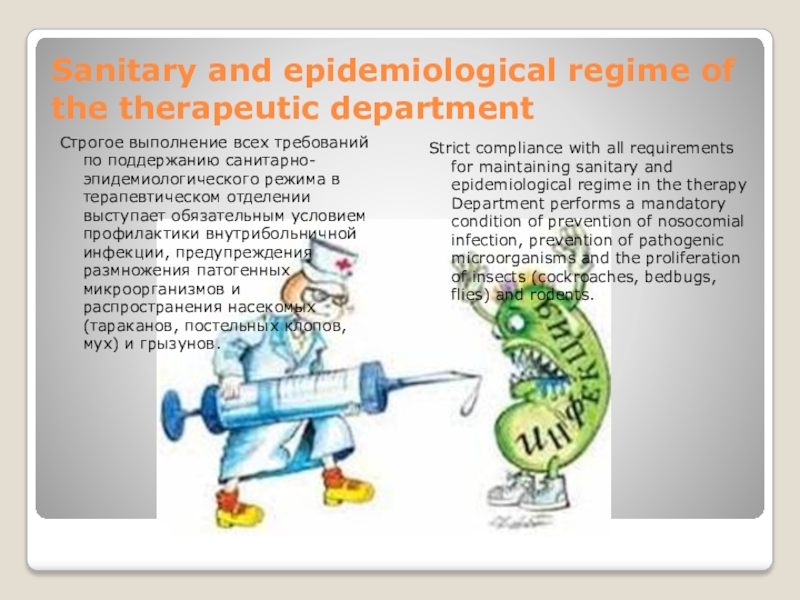
Строгое выполнение всех требований
Strict compliance with all requirements for maintaining sanitary and epidemiological regime in the therapy Department performs a mandatory condition of prevention of nosocomial infection, prevention of pathogenic microorganisms and the proliferation of insects (cockroaches, bedbugs, flies) and rodents.
Слайд 14Nosocomial infection
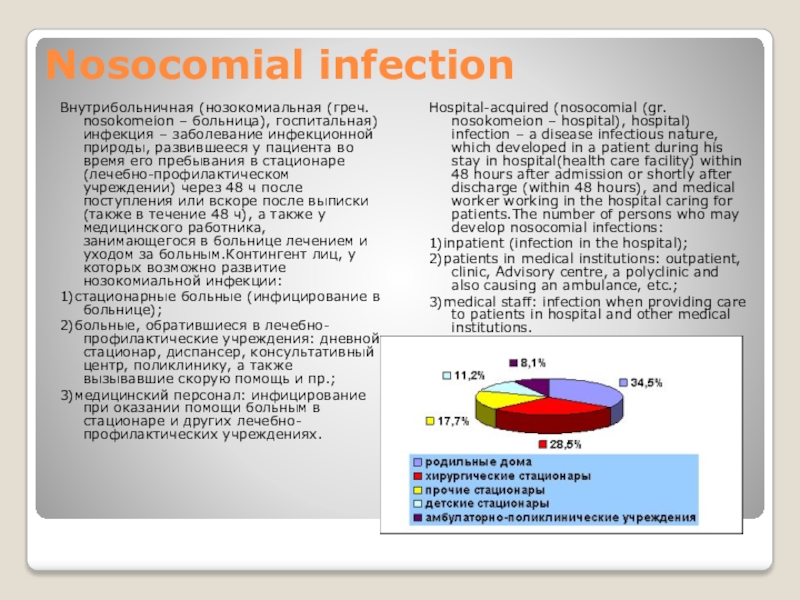
Внутрибольничная (нозокомиальная (греч. nosokomeion – больница), госпитальная) инфекция – заболевание
1)стационарные больные (инфицирование в больнице);
2)больные, обратившиеся в лечебно-профилактические учреждения: дневной стационар, диспансер, консультативный центр, поликлинику, а также вызывавшие скорую помощь и пр.;
3)медицинский персонал: инфицирование при оказании помощи больным в стационаре и других лечебно-профилактических учреждениях.
Hospital-acquired (nosocomial (gr. nosokomeion – hospital), hospital) infection – a disease infectious nature, which developed in a patient during his stay in hospital(health care facility) within 48 hours after admission or shortly after discharge (within 48 hours), and medical worker working in the hospital caring for patients.The number of persons who may develop nosocomial infections:
1)inpatient (infection in the hospital);
2)patients in medical institutions: outpatient, clinic, Advisory centre, a polyclinic and also causing an ambulance, etc.;
3)medical staff: infection when providing care to patients in hospital and other medical institutions.