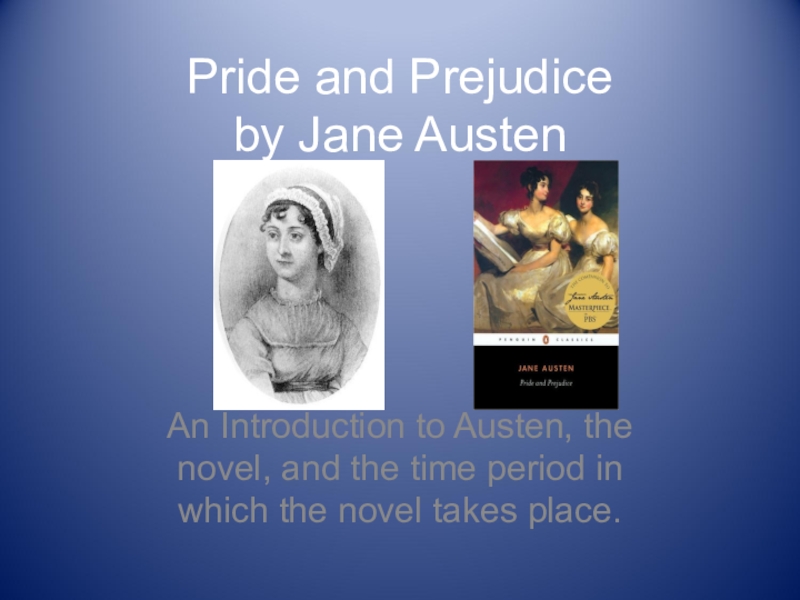
the time period in which the novel takes place.
- Главная
- Разное
- Образование
- Спорт
- Естествознание
- Природоведение
- Религиоведение
- Французский язык
- Черчение
- Английский язык
- Астрономия
- Алгебра
- Биология
- География
- Геометрия
- Детские презентации
- Информатика
- История
- Литература
- Математика
- Музыка
- МХК
- Немецкий язык
- ОБЖ
- Обществознание
- Окружающий мир
- Педагогика
- Русский язык
- Технология
- Физика
- Философия
- Химия
- Шаблоны, фоны, картинки для презентаций
- Экология
- Экономика
Презентация, доклад по литературе Англии Картины жизни людей среднего класса английского общества в произведениях Дж.Остин
Содержание
- 1. Презентация по литературе Англии Картины жизни людей среднего класса английского общества в произведениях Дж.Остин
- 2. Outline A general summary of the novel.
- 3. 1. A general summary of the novel.
- 4. “Novels of Manners” critique social customs, conventions,
- 5. The Bennet’s familyElizabeth Bennet—protagonist, the second of
- 6. Characters: Bennet FriendsCharlotte Lucas—Elizabeth’s best friendSir William
- 7. Characters: Bingley Family & FriendsMr. Charles Bingley—unmarried,
- 8. Plot OverviewThe news that a wealthy young
- 9. 2. The main social concepts of the
- 10. 2. ClassLower class?Life for the middle and
- 11. 3. EducationNo organized education; local charity or
- 12. Women’s EducationAs for domestic training,a relatively large
- 13. 4. Gender DifferencesMen had greater power and
- 14. Gender Differences: Menman’s primary role is to
- 15. Gender Differences: WomenDuring this time period, it
- 16. 3. Characters and their analysis1. Elizabeth Bennet.
- 17. pp. 114-1172. Fitzwilliam Darcy. 3. Jane Bennet4.
- 18. 4. The main themes and the role
- 19. 2. REPUTATIONPride and Prejudice depicts a society in
- 20. 3. CLASSThe theme of class is related
- 21. MOTIFS IN THE NOVELMotifs are recurring structures,
- 22. JOURNEYS Nearly every scene in Pride and Prejudice takes
- 23. Symbols Symbols are objects, characters, figures, and
- 24. Satire Jane Austen uses different literary devices
- 25. Examples of Satire A quote from Mr.
- 26. Elizabeth remarks sarcastically about Jane’s sickness:“If Jane should
- 27. Home Assignment Make a short report on:“How
Outline A general summary of the novel. Main heroes.The main social concepts of the novelCharacters and their analysisThe main themes and the role of sarcasm in the novel.
Слайд 2Outline
A general summary of the novel. Main heroes.
The main social
concepts of the novel
Characters and their analysis
The main themes and the role of sarcasm in the novel.
Characters and their analysis
The main themes and the role of sarcasm in the novel.
Слайд 31. A general summary of the novel.
History: originally titled First
Impressions (1796-1797)
Rejected by publishers
In 1809, Austen began revisions
Pride and Prejudice published in January 1813
Genre: Comedy of manners (not a tragic ending)
Setting: During Napoleonic Wars (1797-1815) in Longbourn, in rural England
Netherfield Park, Bingley’s residence
Pemberly House, Darcy’s Estate
The Derbyshire countryside
Rosings, the home of Lady Catherine
Themes: Love, Reputation, Class
Rejected by publishers
In 1809, Austen began revisions
Pride and Prejudice published in January 1813
Genre: Comedy of manners (not a tragic ending)
Setting: During Napoleonic Wars (1797-1815) in Longbourn, in rural England
Netherfield Park, Bingley’s residence
Pemberly House, Darcy’s Estate
The Derbyshire countryside
Rosings, the home of Lady Catherine
Themes: Love, Reputation, Class
Слайд 4
“Novels of Manners” critique social customs, conventions, and behaviors of a
particular social class at a specific time and place.
Includes satirical wit (especially in the realities of love and marriage)
Satirizes snobs and the poor breeding of the lower social classes.
Often critical of the assumptions and prejudices of upper-class England.
Realistic about the lack of social mobility and the awareness of class.
Advancement for men: military, church, or law
Advancement for women: successful marriage
Includes satirical wit (especially in the realities of love and marriage)
Satirizes snobs and the poor breeding of the lower social classes.
Often critical of the assumptions and prejudices of upper-class England.
Realistic about the lack of social mobility and the awareness of class.
Advancement for men: military, church, or law
Advancement for women: successful marriage
Слайд 5The Bennet’s family
Elizabeth Bennet—protagonist, the second of five daughters; pragmatic and
independent; her father’s favorite
Miss Jane Bennet—Elizabeth’s older sister; wants to see the best in everyone;
Mary Bennett—the plain, bookish middle sister
Miss Catherine (Kitty) Bennett—easily led and shallow fourth daughter
Lydia Bennet—the youngest sister, flirty and undisciplined
Mr. Bennet—their father, cynical and permissive
Mrs. Bennet—their mother, whose main goal is to find husbands for her daughters
Miss Jane Bennet—Elizabeth’s older sister; wants to see the best in everyone;
Mary Bennett—the plain, bookish middle sister
Miss Catherine (Kitty) Bennett—easily led and shallow fourth daughter
Lydia Bennet—the youngest sister, flirty and undisciplined
Mr. Bennet—their father, cynical and permissive
Mrs. Bennet—their mother, whose main goal is to find husbands for her daughters
Слайд 6Characters: Bennet Friends
Charlotte Lucas—Elizabeth’s best friend
Sir William and Mrs. Lucas—The Bennets’
neighbors
Mr. Collins—the Bennet girls’ overbearing cousin, a priggish clergyman who stands to inherit Longbourn, the Bennets’ entailed estate
The Gardiners—Mrs. Bennet’s brother and sister-in-law who live in London
George Wickham—an attractive militia officer stationed near the Bennets
Mr. Collins—the Bennet girls’ overbearing cousin, a priggish clergyman who stands to inherit Longbourn, the Bennets’ entailed estate
The Gardiners—Mrs. Bennet’s brother and sister-in-law who live in London
George Wickham—an attractive militia officer stationed near the Bennets
Слайд 7Characters: Bingley Family & Friends
Mr. Charles Bingley—unmarried, wealthy young man who
has leased nearby Netherfield
Miss Caroline Bingley—Mr. Bingley’s sister
Mrs. Hurst—Bingley’s married sister
Mr. Hurst—Bingley’s brother-in-law
Mr. Fitzwilliam Darcy—Bingley’s prideful, wealthy friend
Miss Darcy—Darcy’s sister
Col. Fitzwilliam—a relation of Darcy whose status as second son leaves him with little wealth
Lady Catherine de Bourgh—a condescending wealthy snob; patron of Collins; aunt of Darcy
Miss Caroline Bingley—Mr. Bingley’s sister
Mrs. Hurst—Bingley’s married sister
Mr. Hurst—Bingley’s brother-in-law
Mr. Fitzwilliam Darcy—Bingley’s prideful, wealthy friend
Miss Darcy—Darcy’s sister
Col. Fitzwilliam—a relation of Darcy whose status as second son leaves him with little wealth
Lady Catherine de Bourgh—a condescending wealthy snob; patron of Collins; aunt of Darcy
Слайд 8Plot Overview
The news that a wealthy young gentleman named Charles Bingley
has rented the manor of Netherfield Park causes a great stir in the nearby village of Longbourn, especially in the Bennet household. The Bennets have five unmarried daughters—from oldest to youngest, Jane, ElizabethThe news that a wealthy young gentleman named Charles Bingley has rented the manor of Netherfield Park causes a great stir in the nearby village of Longbourn, especially in the Bennet household. The Bennets have five unmarried daughters—from oldest to youngest, Jane, Elizabeth, Mary, Kitty, and Lydia—and Mrs. Bennet is desperate to see them all married.
After Mr. Bennet pays a social visit to Mr. Bingley, the Bennets attend a ball at which Mr. Bingley is present. He is taken with Jane and spends much of the evening dancing with her. His close friend, Mr. Darcy, is less pleased with the evening and haughtily refuses to dance with Elizabeth, which makes everyone view him as arrogant and obnoxious.
Слайд 92. The main social concepts of the novel: reputation
Reputation is everything,
especially to women.
Elizabeth walks to Bingley’s
Mrs. Bennett’s ridiculous behavior
Lydia’s relationship with Wickham
Darcy’s intervention…
Elizabeth walks to Bingley’s
Mrs. Bennett’s ridiculous behavior
Lydia’s relationship with Wickham
Darcy’s intervention…
Слайд 102. Class
Lower class?
Life for the middle and upper class was strictly
regulated
Bennett’s associated with Bingley’s
Mr. Collins actions around Lady Catherine
Darcy and Elizabeth/ Jane and Bingley marriages
Can love and happiness overcome class?
Bennett’s associated with Bingley’s
Mr. Collins actions around Lady Catherine
Darcy and Elizabeth/ Jane and Bingley marriages
Can love and happiness overcome class?
Слайд 113. Education
No organized education; local charity or church-run schools were popular.
“Genteel”
social levels, like those in Pride and Prejudice, did not attend these schools.
They would be taught by parents, a tutor, or be sent away to live with a tutor when young.
Some grammar schools existed but were only for males.
They would be taught by parents, a tutor, or be sent away to live with a tutor when young.
Some grammar schools existed but were only for males.
Слайд 12Women’s Education
As for domestic training,a relatively large amount of girls' and
women's time was spent on sewing or needlework
For women of the "genteel" classes the goal of non-domestic education was thus often the acquisition of "accomplishments", such as the ability to draw, sing, play music, or speak modern languages (generally French and Italian).
Generally just done to attract men.
For women of the "genteel" classes the goal of non-domestic education was thus often the acquisition of "accomplishments", such as the ability to draw, sing, play music, or speak modern languages (generally French and Italian).
Generally just done to attract men.
Слайд 134. Gender Differences
Men had greater power and contribution to society as
a whole
Women were viewed more as reserved, gossipy, and highly held by reputation.
Women were expected appear and behave with a certain manner, and easily became a social outcast if any societal deviance was displayed
Women were viewed more as reserved, gossipy, and highly held by reputation.
Women were expected appear and behave with a certain manner, and easily became a social outcast if any societal deviance was displayed
Слайд 14Gender Differences: Men
man’s primary role is to be the provider:
work,
propose an engagement for a wife,
earn the family’s only income,
make final decisions,
physically and fiscally support and protect the family, and
provide a home, food, and clothing.
Слайд 15Gender Differences: Women
During this time period, it was unacceptable for women,
or a woman, to travel alone.
Women were to:
tend to the children,
cook the meals,
do the shopping and sewing, and
uphold the daily routines for the family, primarily tending to the husband’s needs.
Women were to:
tend to the children,
cook the meals,
do the shopping and sewing, and
uphold the daily routines for the family, primarily tending to the husband’s needs.
Слайд 163. Characters and their analysis
1. Elizabeth Bennet. “Lizzy has something more
of quickness than her sisters”(intelligence and wit)
“she had a lively, playful disposition, which delighted in anything ridiculous”
“there was a mixture of sweetness and archness in her manner which made it difficult for her to affront anybody”
“she had a lively, playful disposition, which delighted in anything ridiculous”
“there was a mixture of sweetness and archness in her manner which made it difficult for her to affront anybody”
Слайд 17pp. 114-117
2. Fitzwilliam Darcy.
3. Jane Bennet
4. Charles Bingley
5. Mr. Bennet
6. Mrs Bennet
7. Mr Collins
8. Charlotte Lucas
Слайд 184. The main themes and the role of sarcasm in the
novel.
Themes are the fundamental and often universal ideas explored in a literary work.
1. LOVE
Pride and Prejudice contains one of the most cherished love stories in English literature: the courtship between Darcy and Elizabeth.
Слайд 19
2. REPUTATION
Pride and Prejudice depicts a society in which a woman’s reputation
is of the utmost importance. A woman is expected to behave in certain ways.
This theme appears in the novel, when Elizabeth walks to Netherfield and arrives with muddy skirts, to the shock of the reputation-conscious Miss Bingley and her friends. At other points, the ill-mannered, ridiculous behavior of Mrs. Bennet gives her a bad reputation with the more refined (and snobbish) Darcy and Bingley.
This theme appears in the novel, when Elizabeth walks to Netherfield and arrives with muddy skirts, to the shock of the reputation-conscious Miss Bingley and her friends. At other points, the ill-mannered, ridiculous behavior of Mrs. Bennet gives her a bad reputation with the more refined (and snobbish) Darcy and Bingley.
Слайд 20
3. CLASS
The theme of class is related to reputation, in that
both reflect the strictly regimented nature of life for the middle and upper classes in Regency England.
-While the Bennets, who are middle class, may socialize with the upper-class Bingleys and Darcys, they are clearly their social inferiors and are treated as such. Austen satirizes this kind of class-consciousness, particularly in the character of Mr. Collins.
-Austen shows the power of love and happiness to overcome class boundaries and prejudices, thereby implying that such prejudices are hollow, unfeeling, and unproductive.
-While the Bennets, who are middle class, may socialize with the upper-class Bingleys and Darcys, they are clearly their social inferiors and are treated as such. Austen satirizes this kind of class-consciousness, particularly in the character of Mr. Collins.
-Austen shows the power of love and happiness to overcome class boundaries and prejudices, thereby implying that such prejudices are hollow, unfeeling, and unproductive.
Слайд 21MOTIFS IN THE NOVEL
Motifs are recurring structures, contrasts, and literary devices
that can help to develop and inform the text’s major themes.
COURTSHIP
In a sense, Pride and Prejudice is the story of two courtships—those between Darcy and Elizabeth and between Bingley and Jane.
Marriage is the ultimate goal, courtship constitutes the real working-out of love. Courtship becomes a sort of forge of a person’s personality
COURTSHIP
In a sense, Pride and Prejudice is the story of two courtships—those between Darcy and Elizabeth and between Bingley and Jane.
Marriage is the ultimate goal, courtship constitutes the real working-out of love. Courtship becomes a sort of forge of a person’s personality
Слайд 22JOURNEYS
Nearly every scene in Pride and Prejudice takes place indoors, and the action
centers around the Bennet home in the small village of Longbourn. Nevertheless, journeys—even short ones—function repeatedly as catalysts for change in the novel. Elizabeth’s first journey, by which she intends simply to visit Charlotte and Mr. Collins, brings her into contact with Mr. Darcy, and leads to his first proposal. Her second journey takes her to Derby and Pemberley, where she fans the growing flame of her affection for Darcy.
Слайд 23Symbols
Symbols are objects, characters, figures, and colors used to represent abstract
ideas or concepts.
PEMBERLEY
Pride and Prejudice is remarkably free of explicit symbolism, which perhaps has something to do with the novel’s reliance on dialogue over description. Nevertheless, Pemberley, Darcy’s estate, sits at the center of the novel, literally and figuratively, as a geographic symbol of the man who owns it.
PEMBERLEY
Pride and Prejudice is remarkably free of explicit symbolism, which perhaps has something to do with the novel’s reliance on dialogue over description. Nevertheless, Pemberley, Darcy’s estate, sits at the center of the novel, literally and figuratively, as a geographic symbol of the man who owns it.
Слайд 24Satire
Jane Austen uses different literary devices throughout Pride and Prejudice
and most of them are used to create humour and various other elements that enrich the story. Satire is used in Pride and Prejudice to make fun of human vices or weaknesses.
SATIRE can be described as “a literary composition, in verse or prose, in which human folly and vice is held up to scorn, derision, or ridicule”
Or
“the use of irony, sarcasm, ridicule, or the like, in exposing, denouncing, or deriding vice, folly etc.”
SATIRE can be described as “a literary composition, in verse or prose, in which human folly and vice is held up to scorn, derision, or ridicule”
Or
“the use of irony, sarcasm, ridicule, or the like, in exposing, denouncing, or deriding vice, folly etc.”
Слайд 25Examples of Satire
A quote from Mr. Collins is:
"The death of
your daughter would have been a blessing in comparison of this."
In this quote, Austen uses satire through Mr. Collins simply by showing how much he is a people pleaser. Austen shows that Mr. Collins would rather deal with death, or would prefer death, than to make a ripple, or to ruffle the feathers of society and propriety in that day and age.
In this quote, Austen uses satire through Mr. Collins simply by showing how much he is a people pleaser. Austen shows that Mr. Collins would rather deal with death, or would prefer death, than to make a ripple, or to ruffle the feathers of society and propriety in that day and age.
Слайд 26
Elizabeth remarks sarcastically about Jane’s sickness:
“If Jane should die; it would be
comfort to know that it was all in pursuit of Mr. Bingley”
This shows that Mrs Bеnnet is such a foolish and greedy woman that for her the first priority is that Jane’s marriage to Mr. Bingley and she even does not care if she lost her daughter in this scenario and the following lines are a proof of her greedy nature and is also a good example of satirizing.
This shows that Mrs Bеnnet is such a foolish and greedy woman that for her the first priority is that Jane’s marriage to Mr. Bingley and she even does not care if she lost her daughter in this scenario and the following lines are a proof of her greedy nature and is also a good example of satirizing.
Слайд 27Home Assignment
Make a short report on:
“How does Jane Austen use
wit and irony in Pride and Prejudice?”