Урок английского языка
9 класс
Учитель Джураев К.М.
- Главная
- Разное
- Образование
- Спорт
- Естествознание
- Природоведение
- Религиоведение
- Французский язык
- Черчение
- Английский язык
- Астрономия
- Алгебра
- Биология
- География
- Геометрия
- Детские презентации
- Информатика
- История
- Литература
- Математика
- Музыка
- МХК
- Немецкий язык
- ОБЖ
- Обществознание
- Окружающий мир
- Педагогика
- Русский язык
- Технология
- Физика
- Философия
- Химия
- Шаблоны, фоны, картинки для презентаций
- Экология
- Экономика
Презентация, доклад по английскому языку для учащихся 9 классов на тему Планета Земля без войн. Толерантность или конформизм
Содержание
- 1. Презентация по английскому языку для учащихся 9 классов на тему Планета Земля без войн. Толерантность или конформизм
- 2. Слайд 2
- 3. II. Фонетическая зарядкаto respect to be unhappyto build
- 4. III. Речевая разминка1. Everyone should have the
- 5. IV. Развитие навыков аудированияto speak freelyto get
- 6. V. Развитие навыков чтения In 1948,
- 7. V. Развитие навыков чтения In 1948,
- 8. V. Развитие навыков чтения In 1948,
- 9. V. Развитие навыков чтения In 1948,
- 10. V. Развитие навыков чтения In 1948,
- 11. Слайд 11
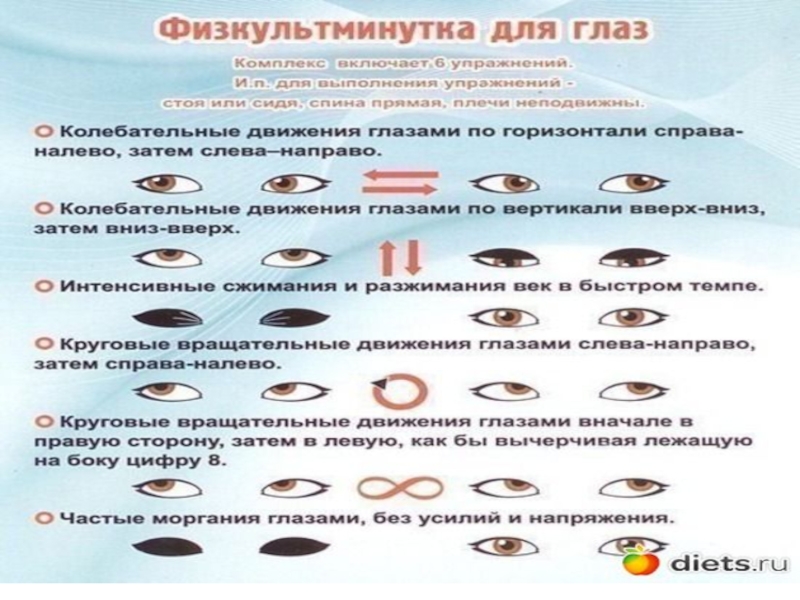
- 12. VI. Физкультминутка.
- 13. Слайд 13
- 14. VII. Развитие навыков диалогической речи.Work in pairs.
- 15. Example: "I want to know what
- 16. Example: "I want to know what
- 17. VIII. Развитие навыков монологической речи. Read through
- 18. Prepare a short description about
- 19. IX. Подведение итогов урокаI see, you are
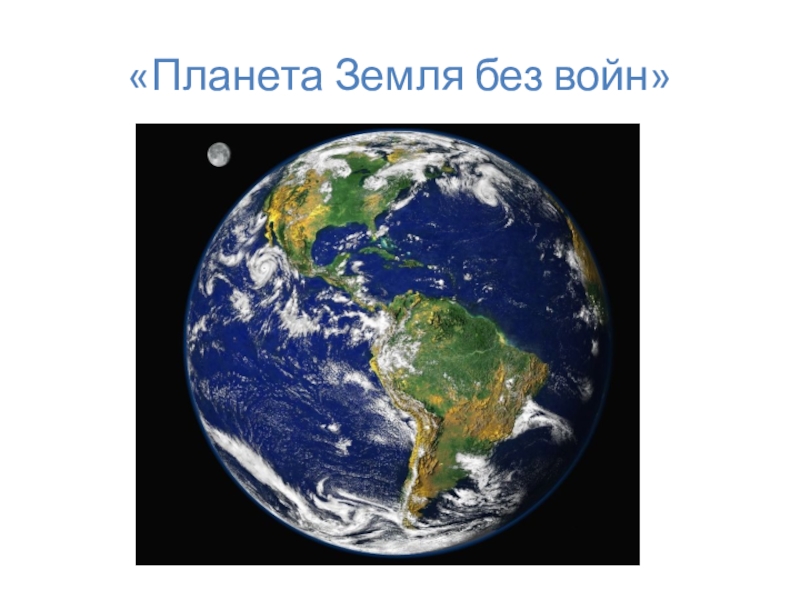
- 20. «Планета Земля без войн»
- 21. Спасибо за внимание!
- 22. Источники:УМК «Английский язык с удовольствием» / Учебник
II. Фонетическая зарядкаto respect to be unhappyto build libertyto declare to createto let happen to allowto sufferto forbidto discriminate to be tolerantto disagree to announceto support to helpto prohibit crueltyfreedom strangerforeigner to have different valuesviolence to
Слайд 1 «Планета Земля без войн. Толерантность или конформизм» «Be Tolerant and You Will
Prevent Wars»
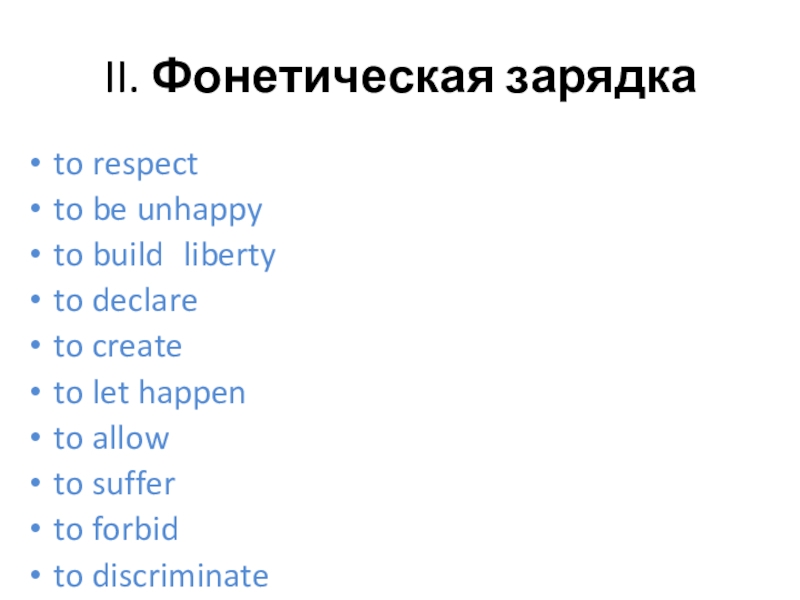
Слайд 3II. Фонетическая зарядка
to respect
to be unhappy
to build liberty
to declare
to create
to
let happen
to allow
to suffer
to forbid
to discriminate
to be tolerant
to disagree
to announce
to support
to help
to prohibit
cruelty
freedom
stranger
foreigner
to have different values
violence
to bully
to allow
to suffer
to forbid
to discriminate
to be tolerant
to disagree
to announce
to support
to help
to prohibit
cruelty
freedom
stranger
foreigner
to have different values
violence
to bully
Слайд 4III. Речевая разминка
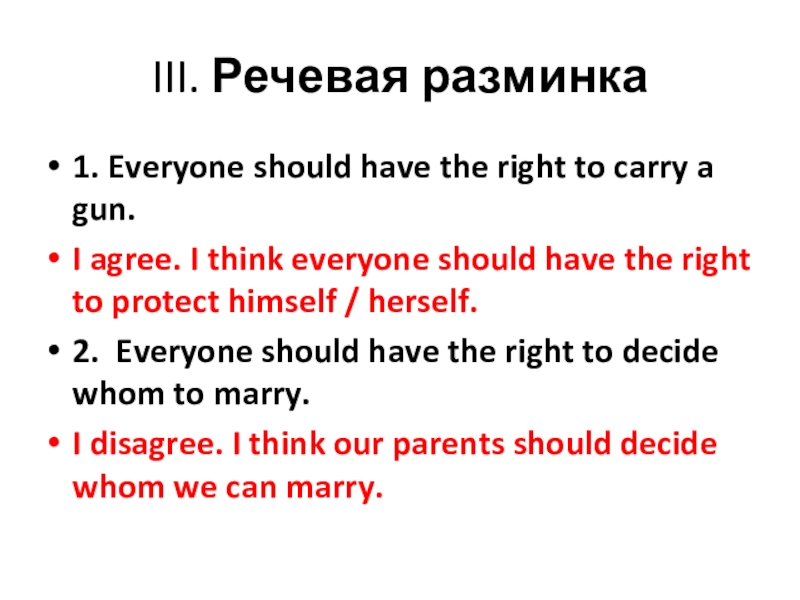
1. Everyone should have the right to carry a
gun.
I agree. I think everyone should have the right to protect himself / herself.
2. Everyone should have the right to decide whom to marry.
I disagree. I think our parents should decide whom we can marry.
I agree. I think everyone should have the right to protect himself / herself.
2. Everyone should have the right to decide whom to marry.
I disagree. I think our parents should decide whom we can marry.
Слайд 5IV. Развитие навыков аудирования
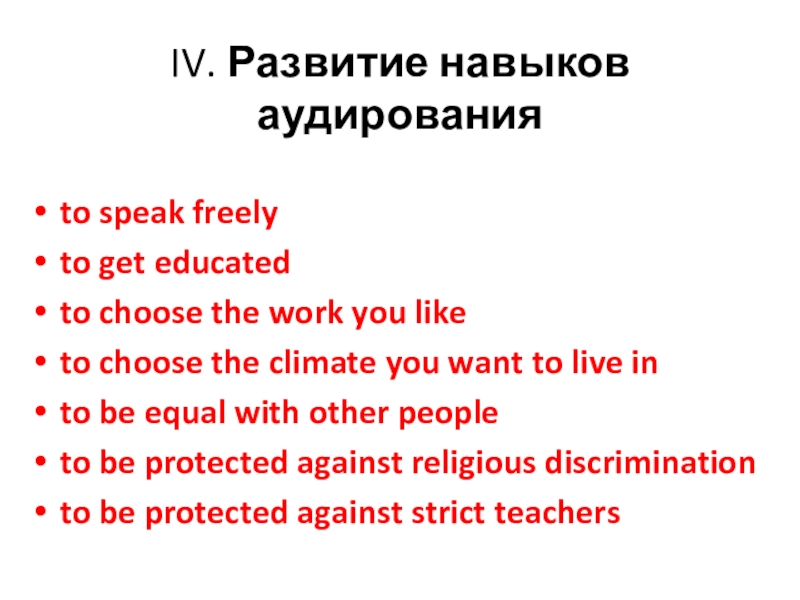
to speak freely
to get educated
to choose the work
you like
to choose the climate you want to live in
to be equal with other people
to be protected against religious discrimination
to be protected against strict teachers
to choose the climate you want to live in
to be equal with other people
to be protected against religious discrimination
to be protected against strict teachers
Слайд 6
V. Развитие навыков чтения
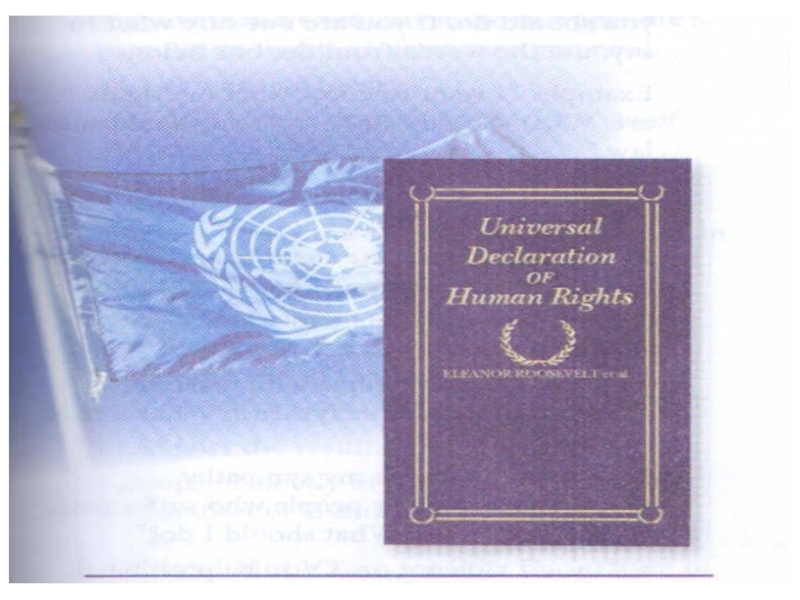
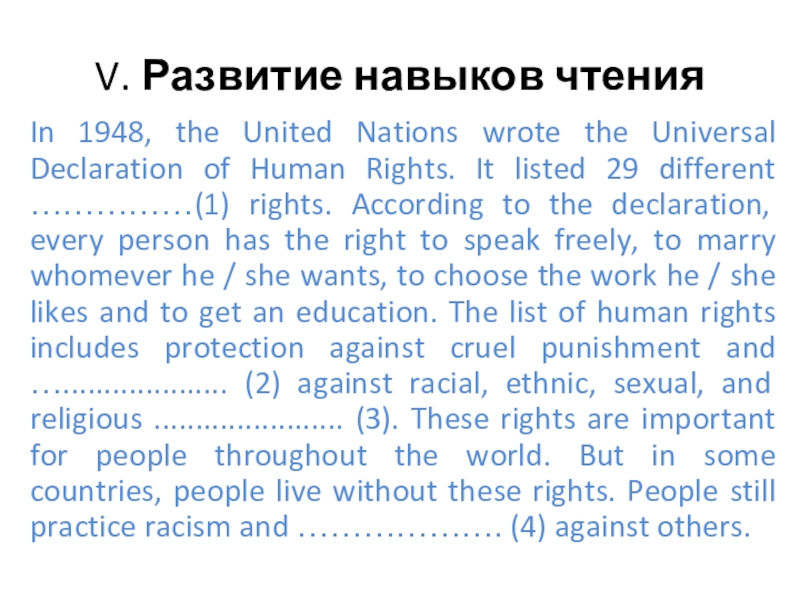
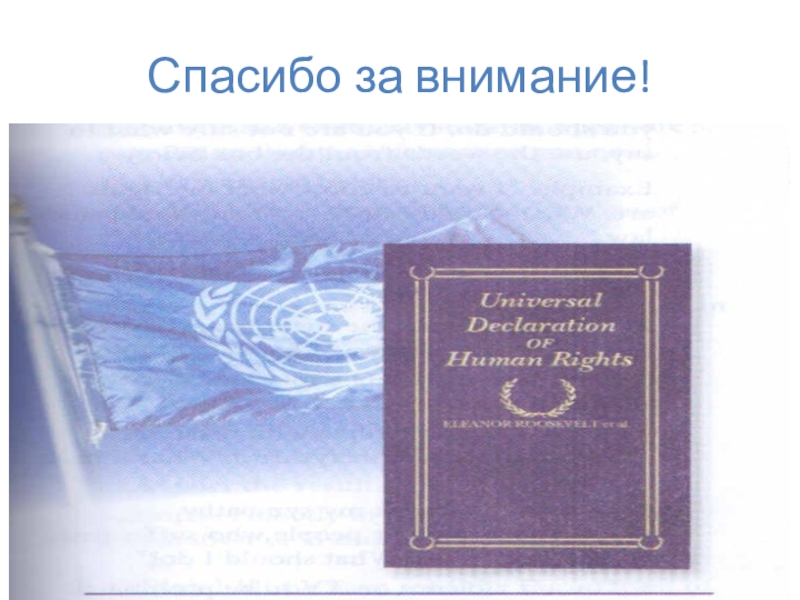
In 1948, the United Nations wrote the Universal
Declaration of Human Rights. It listed 29 different ……………(1) rights. According to the declaration, every person has the right to speak freely, to marry whomever he / she wants, to choose the work he / she likes and to get an education. The list of human rights includes protection against cruel punishment and ….................... (2) against racial, ethnic, sexual, and religious ....................... (3). These rights are important for people throughout the world. But in some countries, people live without these rights. People still practice racism and ………………. (4) against others.
Слайд 7
V. Развитие навыков чтения
In 1948, the United Nations wrote the Universal
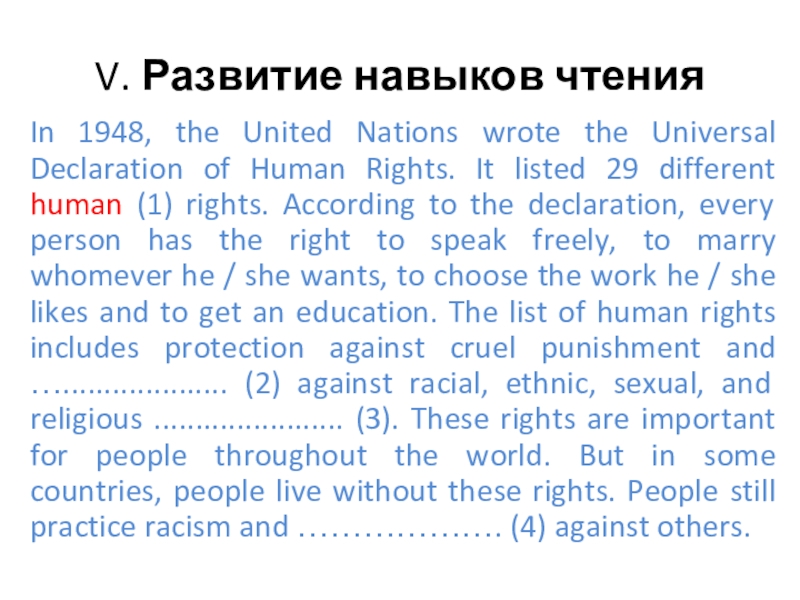
Declaration of Human Rights. It listed 29 different human (1) rights. According to the declaration, every person has the right to speak freely, to marry whomever he / she wants, to choose the work he / she likes and to get an education. The list of human rights includes protection against cruel punishment and ….................... (2) against racial, ethnic, sexual, and religious ....................... (3). These rights are important for people throughout the world. But in some countries, people live without these rights. People still practice racism and ………………. (4) against others.
Слайд 8
V. Развитие навыков чтения
In 1948, the United Nations wrote the Universal
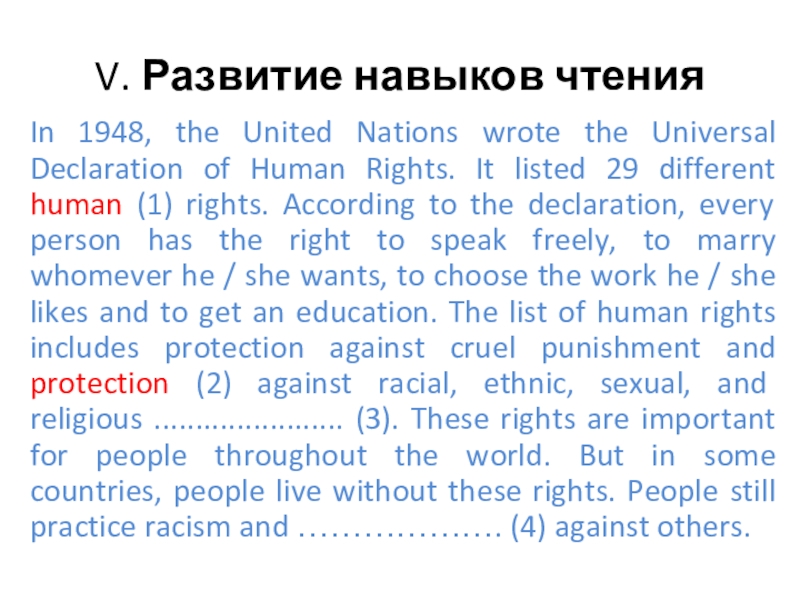
Declaration of Human Rights. It listed 29 different human (1) rights. According to the declaration, every person has the right to speak freely, to marry whomever he / she wants, to choose the work he / she likes and to get an education. The list of human rights includes protection against cruel punishment and protection (2) against racial, ethnic, sexual, and religious ....................... (3). These rights are important for people throughout the world. But in some countries, people live without these rights. People still practice racism and ………………. (4) against others.
Слайд 9
V. Развитие навыков чтения
In 1948, the United Nations wrote the Universal
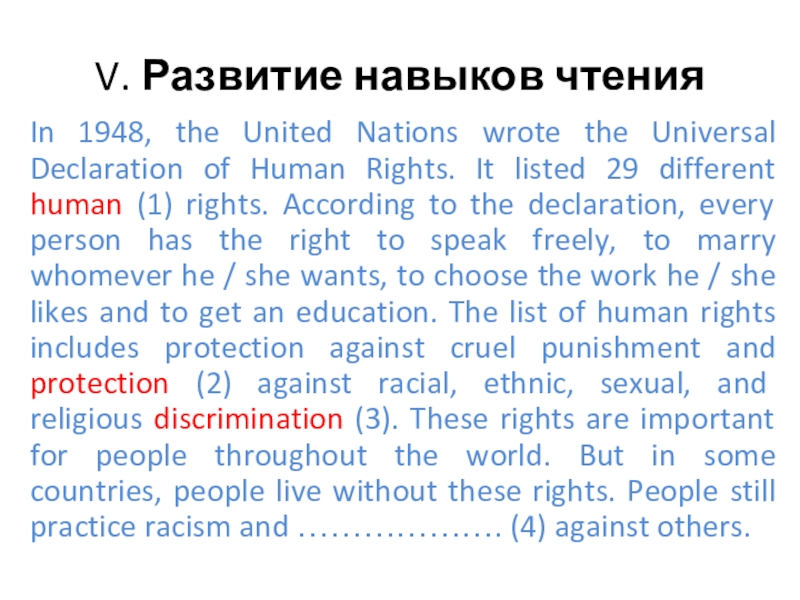
Declaration of Human Rights. It listed 29 different human (1) rights. According to the declaration, every person has the right to speak freely, to marry whomever he / she wants, to choose the work he / she likes and to get an education. The list of human rights includes protection against cruel punishment and protection (2) against racial, ethnic, sexual, and religious discrimination (3). These rights are important for people throughout the world. But in some countries, people live without these rights. People still practice racism and ………………. (4) against others.
Слайд 10
V. Развитие навыков чтения
In 1948, the United Nations wrote the Universal
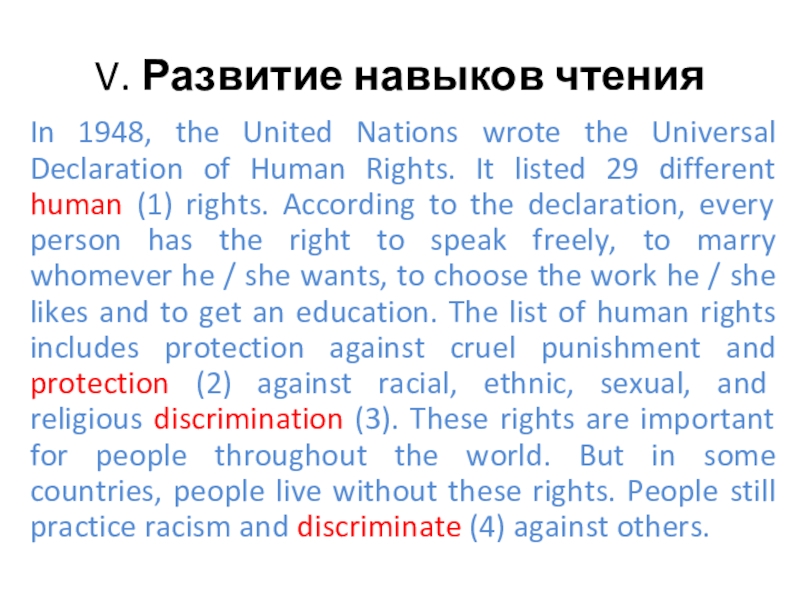
Declaration of Human Rights. It listed 29 different human (1) rights. According to the declaration, every person has the right to speak freely, to marry whomever he / she wants, to choose the work he / she likes and to get an education. The list of human rights includes protection against cruel punishment and protection (2) against racial, ethnic, sexual, and religious discrimination (3). These rights are important for people throughout the world. But in some countries, people live without these rights. People still practice racism and discriminate (4) against others.
Слайд 14VII. Развитие навыков диалогической речи.
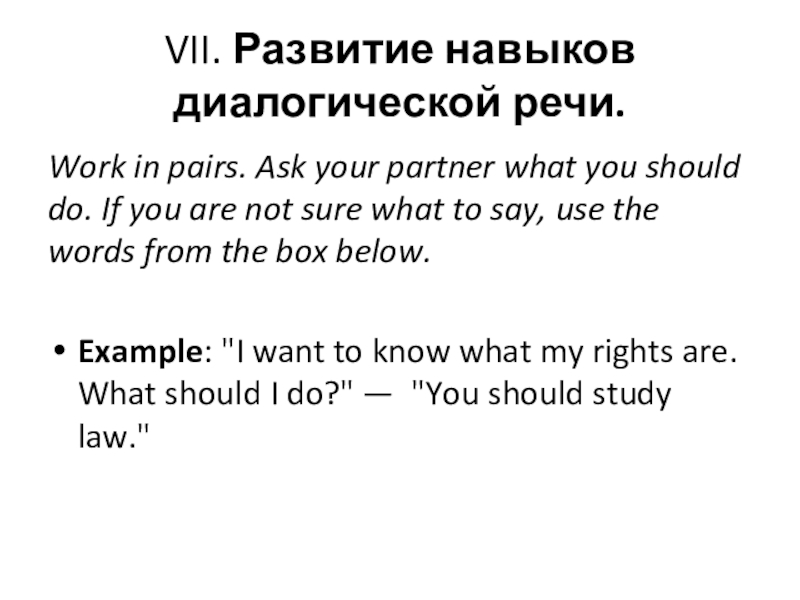
Work in pairs. Ask your partner what
you should do. If you are not sure what to say, use the words from the box below.
Example: "I want to know what my rights are. What should I do?" — "You should study law."
Example: "I want to know what my rights are. What should I do?" — "You should study law."
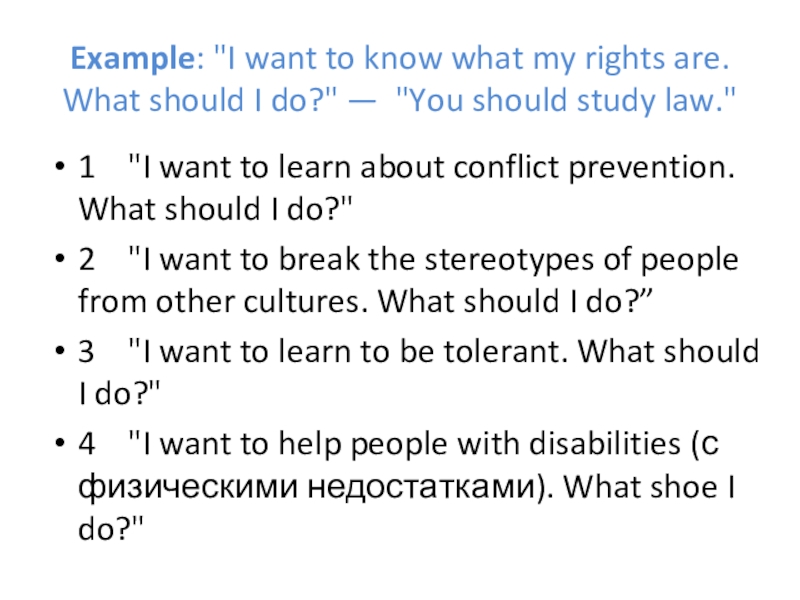
Слайд 15 Example: "I want to know what my rights are. What should
I do?" — "You should study law."
1 "I want to learn about conflict prevention. What should I do?"
2 "I want to break the stereotypes of people from other cultures. What should I do?”
3 "I want to learn to be tolerant. What should I do?"
4 "I want to help people with disabilities (с физическими недостатками). What shoe I do?"
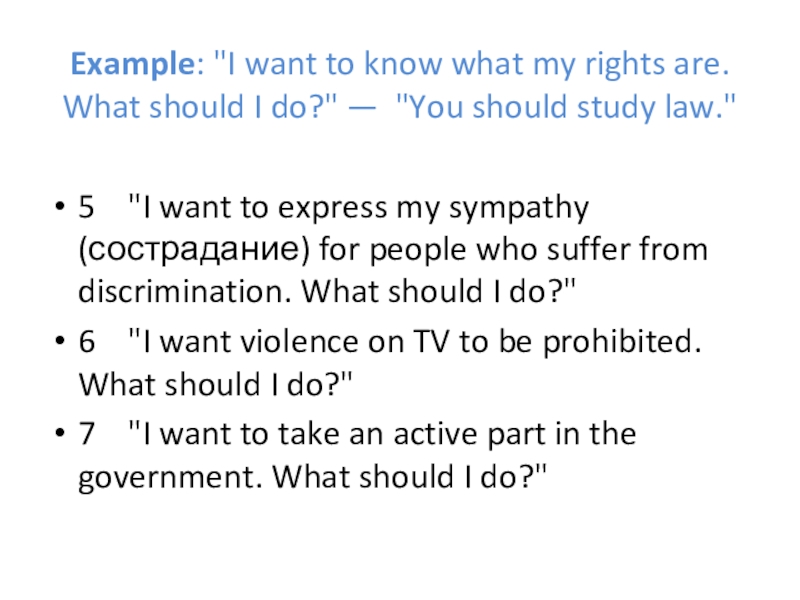
Слайд 16 Example: "I want to know what my rights are. What should
I do?" — "You should study law."
5 "I want to express my sympathy (сострадание) for people who suffer from discrimination. What should I do?"
6 "I want violence on TV to be prohibited. What should I do?"
7 "I want to take an active part in the government. What should I do?"
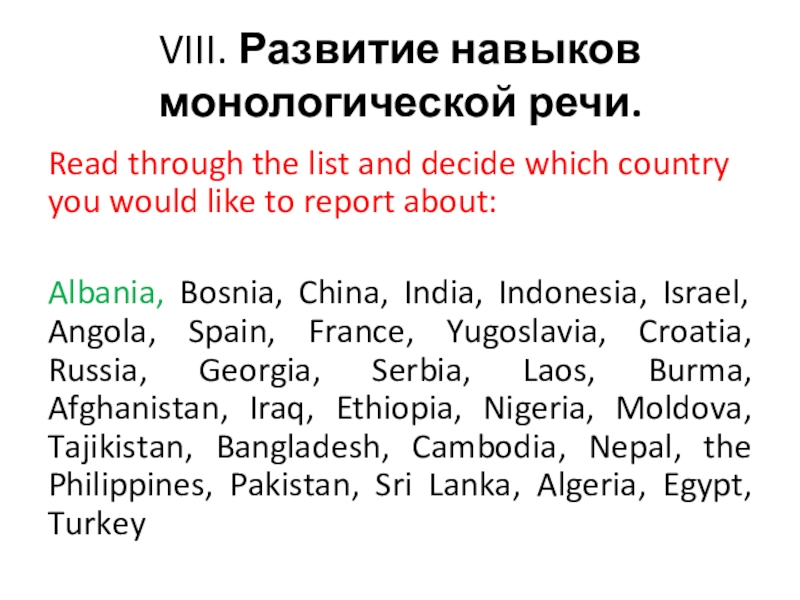
Слайд 17VIII. Развитие навыков монологической речи.
Read through the list and decide
which country you would like to report about:
Albania, Bosnia, China, India, Indonesia, Israel, Angola, Spain, France, Yugoslavia, Croatia, Russia, Georgia, Serbia, Laos, Burma, Afghanistan, Iraq, Ethiopia, Nigeria, Moldova, Tajikistan, Bangladesh, Cambodia, Nepal, the Philippines, Pakistan, Sri Lanka, Algeria, Egypt, Turkey
Albania, Bosnia, China, India, Indonesia, Israel, Angola, Spain, France, Yugoslavia, Croatia, Russia, Georgia, Serbia, Laos, Burma, Afghanistan, Iraq, Ethiopia, Nigeria, Moldova, Tajikistan, Bangladesh, Cambodia, Nepal, the Philippines, Pakistan, Sri Lanka, Algeria, Egypt, Turkey
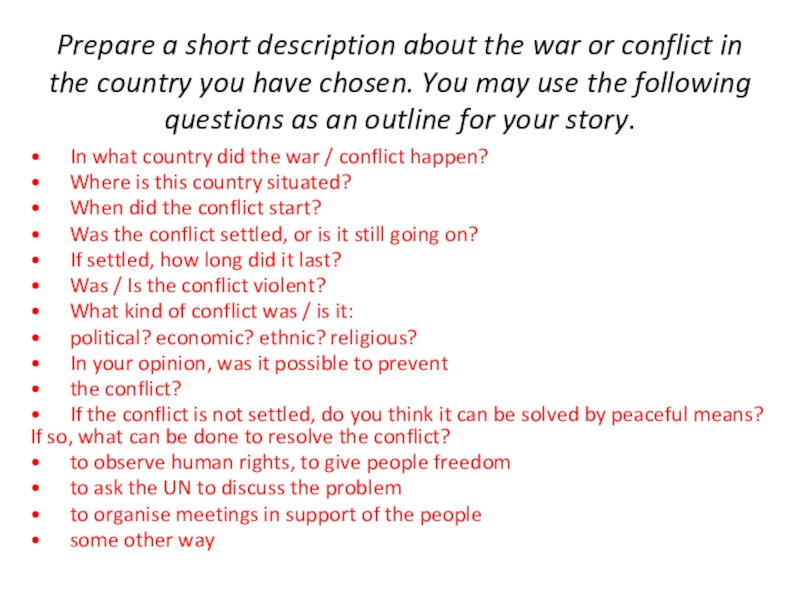
Слайд 18 Prepare a short description about the war or conflict in the
country you have chosen. You may use the following questions as an outline for your story.
• In what country did the war / conflict happen?
• Where is this country situated?
• When did the conflict start?
• Was the conflict settled, or is it still going on?
• If settled, how long did it last?
• Was / Is the conflict violent?
• What kind of conflict was / is it:
• political? economic? ethnic? religious?
• In your opinion, was it possible to prevent
• the conflict?
• If the conflict is not settled, do you think it can be solved by peaceful means? If so, what can be done to resolve the conflict?
• to observe human rights, to give people freedom
• to ask the UN to discuss the problem
• to organise meetings in support of the people
• some other way
Слайд 19IX. Подведение итогов урока
I see, you are well prepared today.
It
was a real pleasure to listen to your answers.
Thank you for your work.
The lesson is over. Good-bye.
Домашнее задание: упр. 10, стр. 46 в рабочей тетради.
Thank you for your work.
The lesson is over. Good-bye.
Домашнее задание: упр. 10, стр. 46 в рабочей тетради.
Слайд 22Источники:
УМК «Английский язык с удовольствием» / Учебник «Enjoy English» для 9
класса. М.З. Биболетова, Е.Е. Бабушис, Н.Д. Снежко. (Обнинск: Титул, 2014 г.).
Рабочая тетрадь к учебнику «Английский язык с удовольствием» / «Enjoy English» для 9 класса;
http://lifeglobe.net/media/entry/0/1-899.jpg
https://yandex.ru/images
Рабочая тетрадь к учебнику «Английский язык с удовольствием» / «Enjoy English» для 9 класса;
http://lifeglobe.net/media/entry/0/1-899.jpg
https://yandex.ru/images