- Главная
- Разное
- Образование
- Спорт
- Естествознание
- Природоведение
- Религиоведение
- Французский язык
- Черчение
- Английский язык
- Астрономия
- Алгебра
- Биология
- География
- Геометрия
- Детские презентации
- Информатика
- История
- Литература
- Математика
- Музыка
- МХК
- Немецкий язык
- ОБЖ
- Обществознание
- Окружающий мир
- Педагогика
- Русский язык
- Технология
- Физика
- Философия
- Химия
- Шаблоны, фоны, картинки для презентаций
- Экология
- Экономика
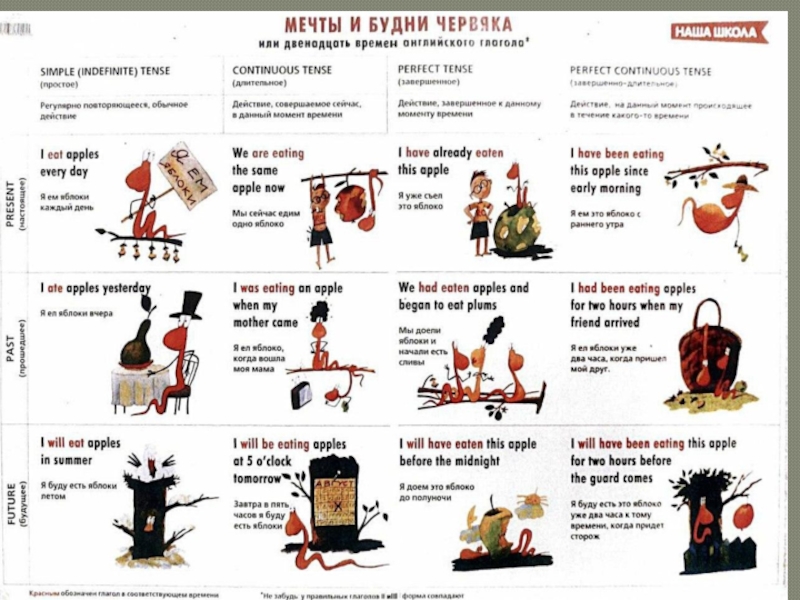
Презентация, доклад к уроку обзор времен грамматика Spotlight 8
Содержание
- 1. Презентация к уроку обзор времен грамматика Spotlight 8
- 2. Слайд 2
- 3. Present Simple & Present ContPr.S речь идет
- 4. Stative VerbsГлаголы чувственного восприятия (look, appear, hear,
- 5. Слайд 5
- 6. Pr. Perfect vs Past SimplePast S. :Действие
- 7. Expressing future actionsbe going to:Планы на будущее
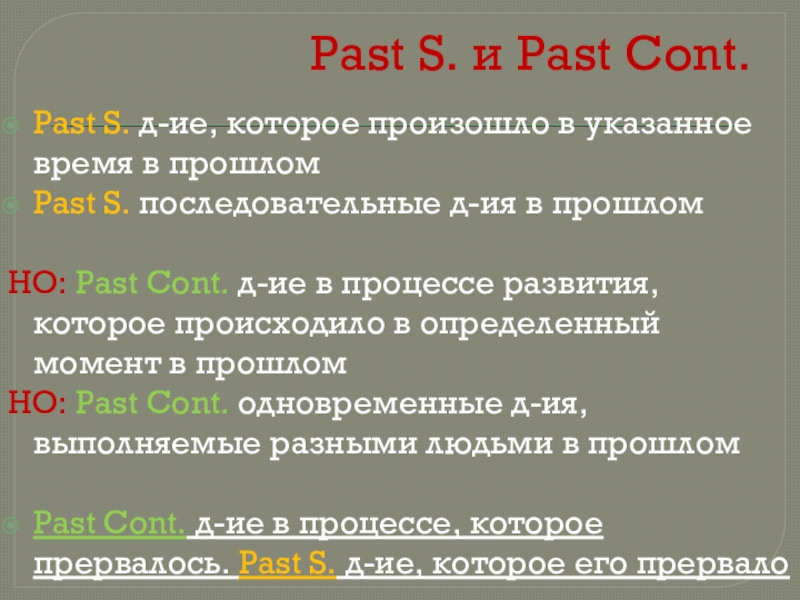
- 8. Past S. и Past Cont.Past S. д-ие,
- 9. Слайд 9
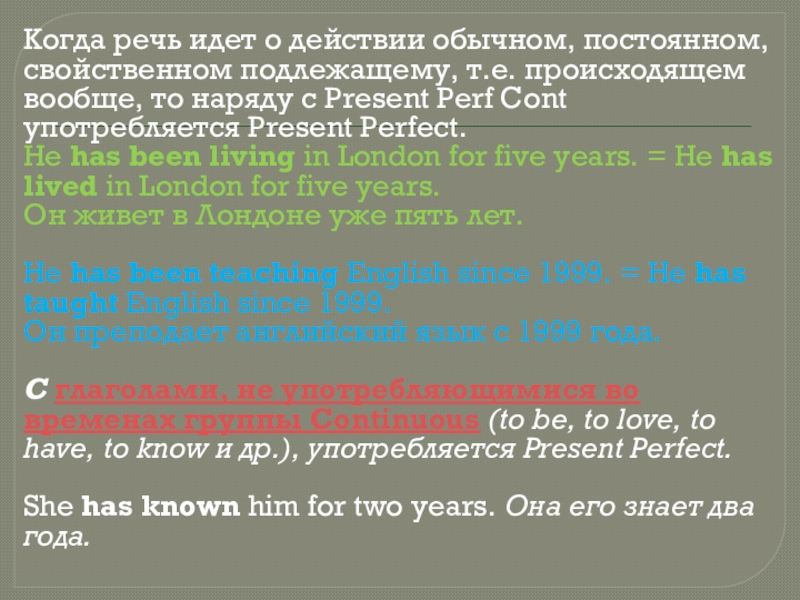
- 10. Когда речь идет о действии обычном, постоянном,
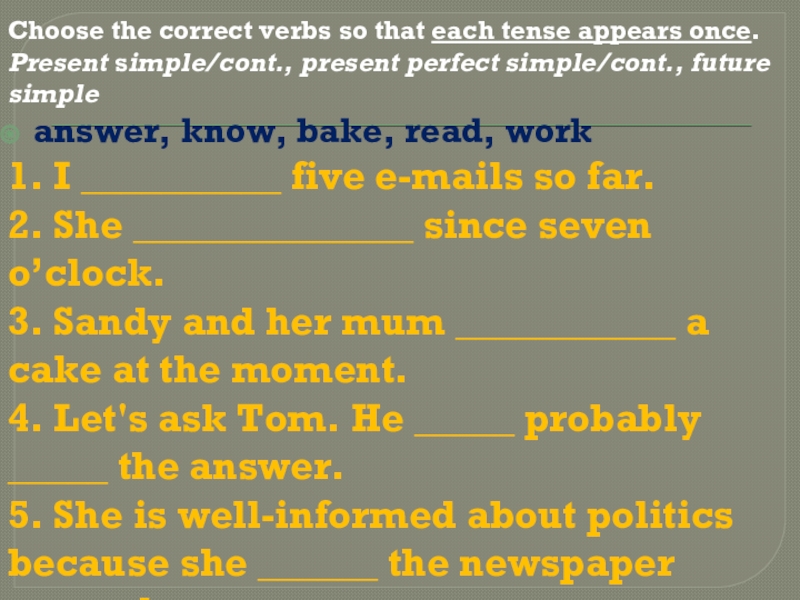
- 11. Choose the correct verbs so that each tense
- 12. Complete the sentences for situations in the
- 13. Complete the sentences for situations in the
- 14. Make the past simple or past continuous1)
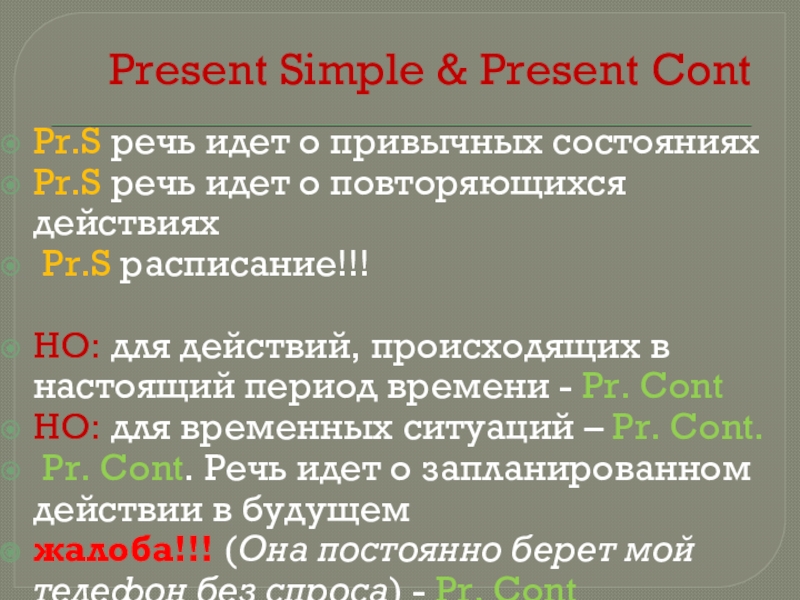
Present Simple & Present ContPr.S речь идет о привычных состоянияхPr.S речь идет о повторяющихся действиях Pr.S расписание!!!НО: для действий, происходящих в настоящий период времени - Pr. ContНО: для временных ситуаций – Pr. Cont. Pr. Cont. Речь
Слайд 3Present Simple & Present Cont
Pr.S речь идет о привычных состояниях
Pr.S речь
идет о повторяющихся действиях
Pr.S расписание!!!
НО: для действий, происходящих в настоящий период времени - Pr. Cont
НО: для временных ситуаций – Pr. Cont.
Pr. Cont. Речь идет о запланированном действии в будущем
жалоба!!! (Она постоянно берет мой телефон без спроса) - Pr. Cont
Pr.S расписание!!!
НО: для действий, происходящих в настоящий период времени - Pr. Cont
НО: для временных ситуаций – Pr. Cont.
Pr. Cont. Речь идет о запланированном действии в будущем
жалоба!!! (Она постоянно берет мой телефон без спроса) - Pr. Cont
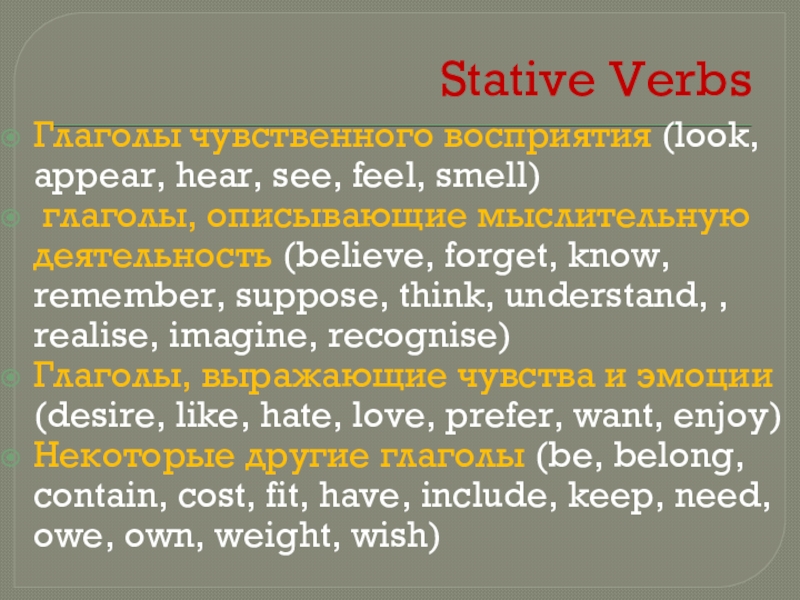
Слайд 4Stative Verbs
Глаголы чувственного восприятия (look, appear, hear, see, feel, smell)
глаголы,
описывающие мыслительную деятельность (believe, forget, know, remember, suppose, think, understand, , realise, imagine, recognise)
Глаголы, выражающие чувства и эмоции (desire, like, hate, love, prefer, want, enjoy)
Некоторые другие глаголы (be, belong, contain, cost, fit, have, include, keep, need, owe, own, weight, wish)
Глаголы, выражающие чувства и эмоции (desire, like, hate, love, prefer, want, enjoy)
Некоторые другие глаголы (be, belong, contain, cost, fit, have, include, keep, need, owe, own, weight, wish)
Слайд 6Pr. Perfect vs Past Simple
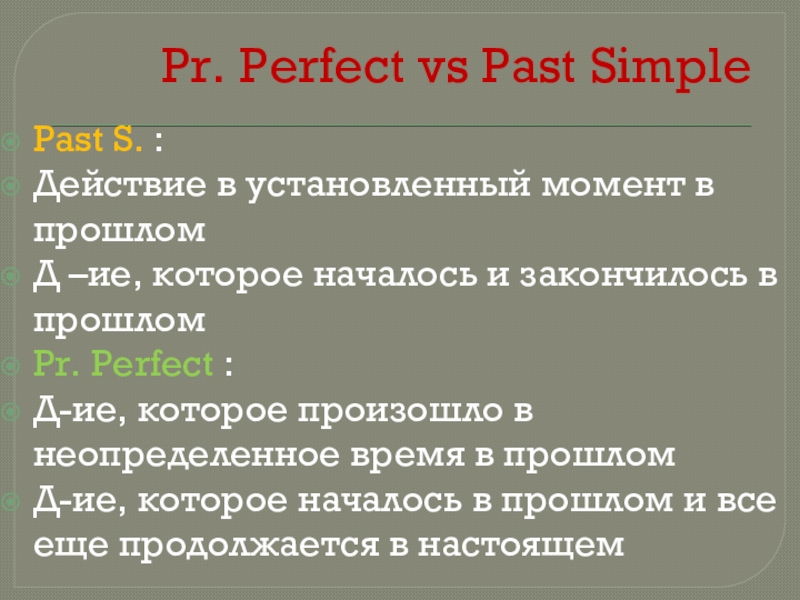
Past S. :
Действие в установленный момент в
прошлом
Д –ие, которое началось и закончилось в прошлом
Pr. Perfect :
Д-ие, которое произошло в неопределенное время в прошлом
Д-ие, которое началось в прошлом и все еще продолжается в настоящем
Д –ие, которое началось и закончилось в прошлом
Pr. Perfect :
Д-ие, которое произошло в неопределенное время в прошлом
Д-ие, которое началось в прошлом и все еще продолжается в настоящем
Слайд 7Expressing future actions
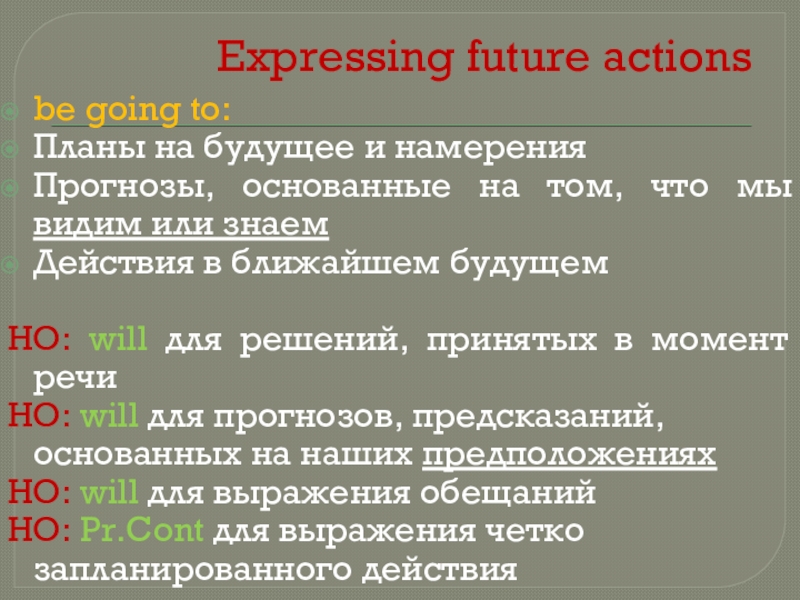
be going to:
Планы на будущее и намерения
Прогнозы, основанные
на том, что мы видим или знаем
Действия в ближайшем будущем
НО: will для решений, принятых в момент речи
НО: will для прогнозов, предсказаний, основанных на наших предположениях
НО: will для выражения обещаний
НО: Pr.Cont для выражения четко запланированного действия
Действия в ближайшем будущем
НО: will для решений, принятых в момент речи
НО: will для прогнозов, предсказаний, основанных на наших предположениях
НО: will для выражения обещаний
НО: Pr.Cont для выражения четко запланированного действия
Слайд 8Past S. и Past Cont.
Past S. д-ие, которое произошло в указанное
время в прошлом
Past S. последовательные д-ия в прошлом
НО: Past Cont. д-ие в процессе развития, которое происходило в определенный момент в прошлом
НО: Past Cont. одновременные д-ия, выполняемые разными людьми в прошлом
Past Cont. д-ие в процессе, которое прервалось. Past S. д-ие, которое его прервало
Past S. последовательные д-ия в прошлом
НО: Past Cont. д-ие в процессе развития, которое происходило в определенный момент в прошлом
НО: Past Cont. одновременные д-ия, выполняемые разными людьми в прошлом
Past Cont. д-ие в процессе, которое прервалось. Past S. д-ие, которое его прервало
Слайд 10Когда речь идет о действии обычном, постоянном, свойственном подлежащему, т.е. происходящем
вообще, то наряду с Present Perf Cont употребляется Present Perfect.
He has been living in London for five years. = He has lived in London for five years.
Он живет в Лондоне уже пять лет.
He has been teaching English since 1999. = He has taught English since 1999.
Он преподает английский язык с 1999 года.
С глаголами, не употребляющимися во временах группы Continuous (to be, to love, to have, to know и др.), употребляется Present Perfect.
She has known him for two years. Она его знает два года.
Слайд 11Choose the correct verbs so that each tense appears once. Present simple/cont., present perfect
simple/cont., future simple
answer, know, bake, read, work
1. I __________ five e-mails so far.
2. She ______________ since seven o’clock.
3. Sandy and her mum ___________ a cake at the moment.
4. Let's ask Tom. He _____ probably _____ the answer.
5. She is well-informed about politics because she ______ the newspaper every day.
answer, know, bake, read, work
1. I __________ five e-mails so far.
2. She ______________ since seven o’clock.
3. Sandy and her mum ___________ a cake at the moment.
4. Let's ask Tom. He _____ probably _____ the answer.
5. She is well-informed about politics because she ______ the newspaper every day.
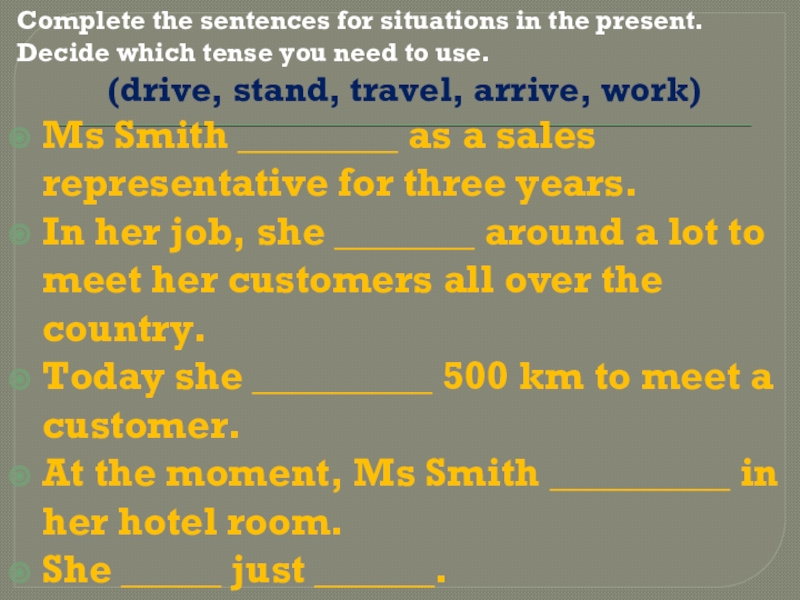
Слайд 12Complete the sentences for situations in the present. Decide which tense
you need to use.
(drive, stand, travel, arrive, work)
Ms Smith ________ as a sales representative for three years.
In her job, she _______ around a lot to meet her customers all over the country.
Today she _________ 500 km to meet a customer.
At the moment, Ms Smith _________ in her hotel room.
She _____ just ______.
(drive, stand, travel, arrive, work)
Ms Smith ________ as a sales representative for three years.
In her job, she _______ around a lot to meet her customers all over the country.
Today she _________ 500 km to meet a customer.
At the moment, Ms Smith _________ in her hotel room.
She _____ just ______.
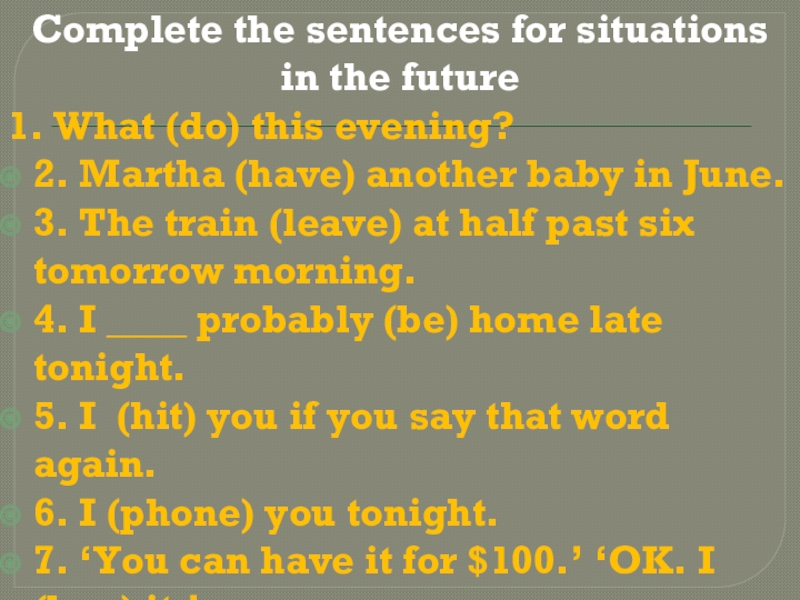
Слайд 13Complete the sentences for situations in the future
1. What (do) this evening?
2. Martha (have) another
baby in June.
3. The train (leave) at half past six tomorrow morning.
4. I ____ probably (be) home late tonight.
5. I (hit) you if you say that word again.
6. I (phone) you tonight.
7. ‘You can have it for $100.’ ‘OK. I (buy) it.’
3. The train (leave) at half past six tomorrow morning.
4. I ____ probably (be) home late tonight.
5. I (hit) you if you say that word again.
6. I (phone) you tonight.
7. ‘You can have it for $100.’ ‘OK. I (buy) it.’
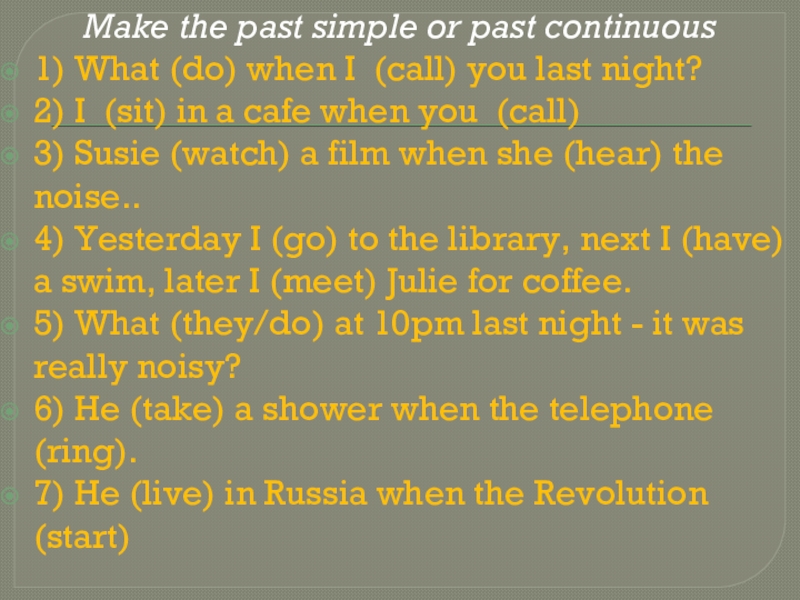
Слайд 14Make the past simple or past continuous
1) What (do) when I
(call) you last night?
2) I (sit) in a cafe when you (call)
3) Susie (watch) a film when she (hear) the noise..
4) Yesterday I (go) to the library, next I (have) a swim, later I (meet) Julie for coffee.
5) What (they/do) at 10pm last night - it was really noisy?
6) He (take) a shower when the telephone (ring).
7) He (live) in Russia when the Revolution (start)
2) I (sit) in a cafe when you (call)
3) Susie (watch) a film when she (hear) the noise..
4) Yesterday I (go) to the library, next I (have) a swim, later I (meet) Julie for coffee.
5) What (they/do) at 10pm last night - it was really noisy?
6) He (take) a shower when the telephone (ring).
7) He (live) in Russia when the Revolution (start)