- Главная
- Разное
- Образование
- Спорт
- Естествознание
- Природоведение
- Религиоведение
- Французский язык
- Черчение
- Английский язык
- Астрономия
- Алгебра
- Биология
- География
- Геометрия
- Детские презентации
- Информатика
- История
- Литература
- Математика
- Музыка
- МХК
- Немецкий язык
- ОБЖ
- Обществознание
- Окружающий мир
- Педагогика
- Русский язык
- Технология
- Физика
- Философия
- Химия
- Шаблоны, фоны, картинки для презентаций
- Экология
- Экономика
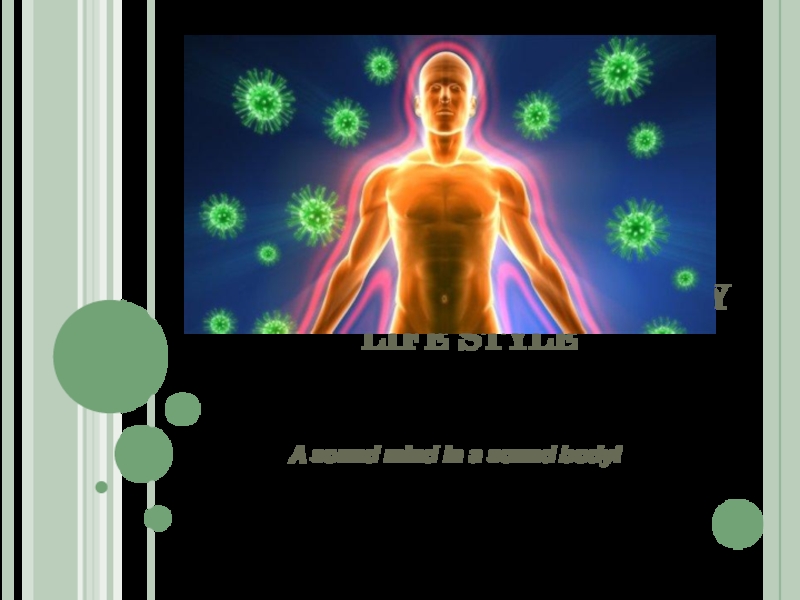
Презентация, доклад к УМК Здоровый образ жизни
Содержание
- 1. Презентация к УМК Здоровый образ жизни
- 2. What Is the Immune System and What Does It Do
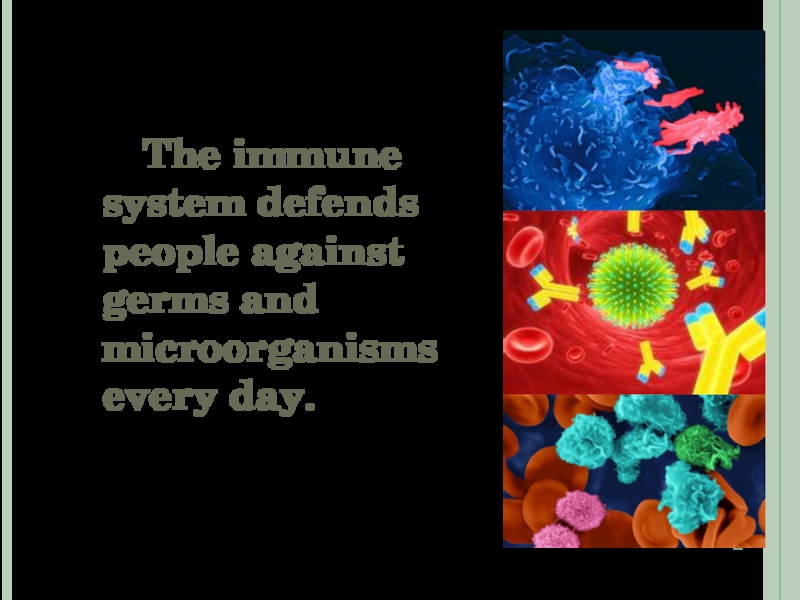
- 3. The immune system defends people against germs and microorganisms every day.
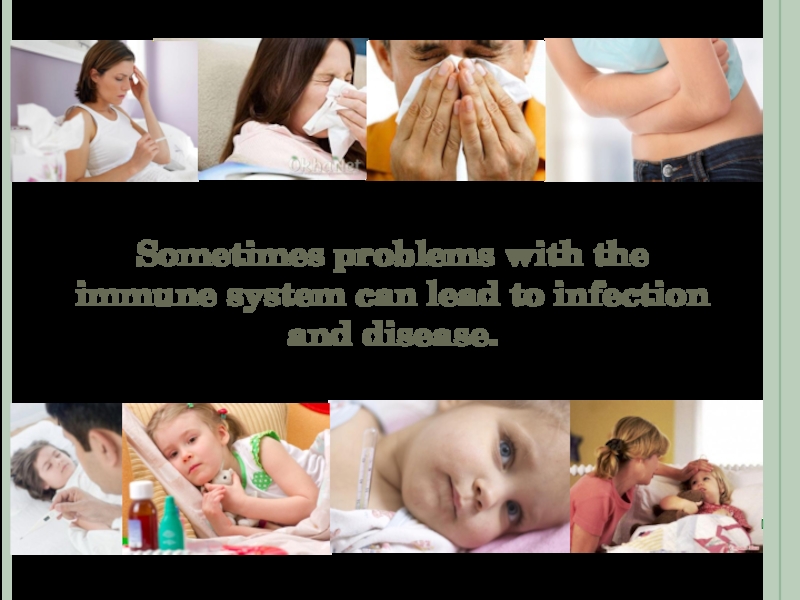
- 4. Sometimes problems with the immune system can lead to infection and disease.
- 5. About CellsThere are two basic types of
- 6. Leukocytes are produced or stored in many
- 7. All of these specialized cells and parts
- 8. Innate ImmunityEveryone is born with innate immunity,
- 9. Innate immunity also includes the external barriers
- 10. Adaptive ImmunityWe also have a second kind
- 11. Passive ImmunityPassive immunity is "borrowed" from another
- 12. Everyone's immune system is different. Some people
- 13. Things That Can Go Wrong With the
- 14. And if you're lucky enough to be
- 15. Cheers!
What Is the Immune System and What Does It Do
Слайд 5About Cells
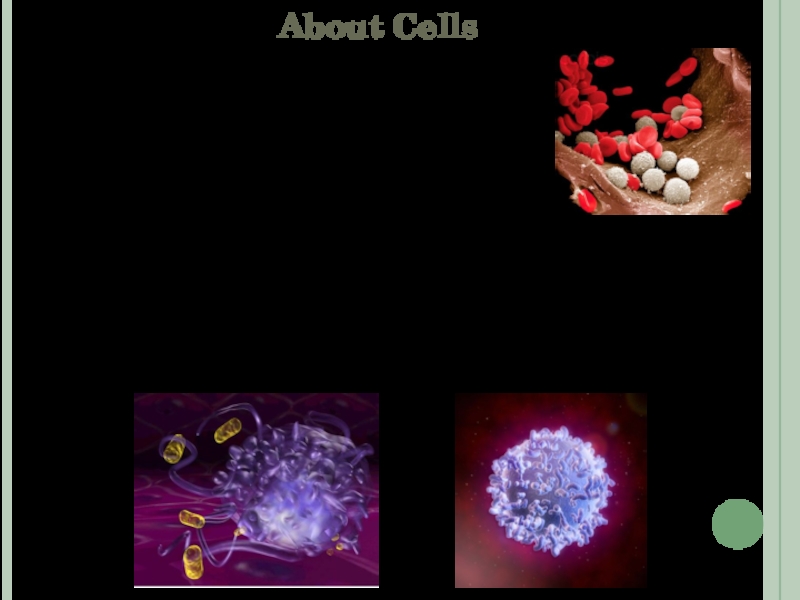
There are two basic types of leukocytes:
•the phagocytes are cells
that chew up invading organisms;
•the lymphocytes are cells that allow the body to remember and recognize previous invaders and help the body destroy them.
Слайд 6 Leukocytes are produced or stored in many locations in the body,
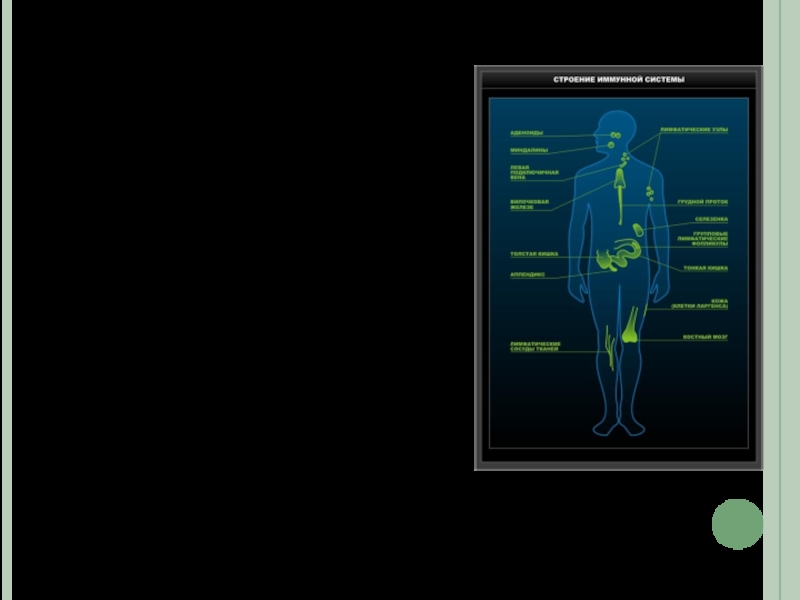
including the thymus, spleen, and bone marrow. For this reason, they are called the lymphoid organs. There are also groups of lymphoid tissue in the body, primarily in the form of lymph nodes, that house the leukocytes.
The leukocytes circulate through the body between the organs and nodes by means of the lymphatic vessels. Leukocytes can also circulate through the blood vessels. In this way, the immune system works in a coordinated manner to monitor the body for germs or substances that might cause problems.
The leukocytes circulate through the body between the organs and nodes by means of the lymphatic vessels. Leukocytes can also circulate through the blood vessels. In this way, the immune system works in a coordinated manner to monitor the body for germs or substances that might cause problems.
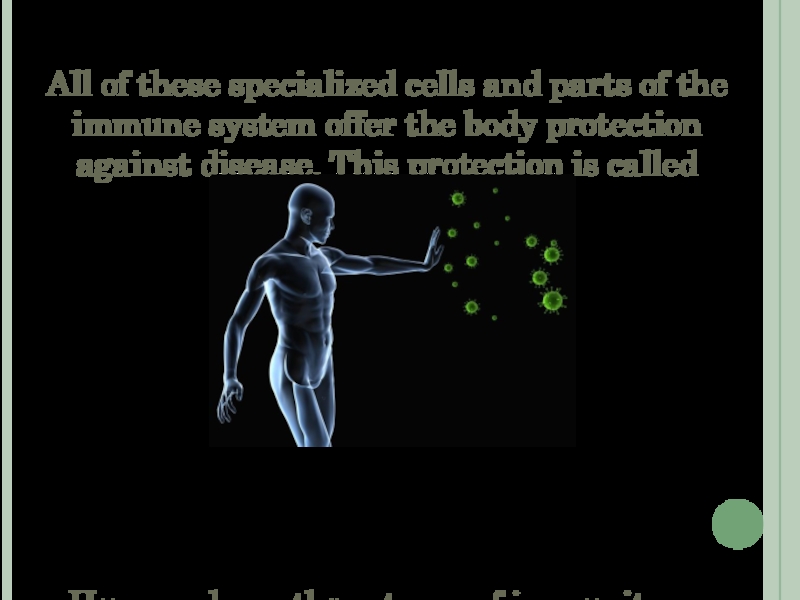
Слайд 7All of these specialized cells and parts of the immune system
offer the body protection against disease. This protection is called immunity.
Humans have three types of immunity — innate, adaptive, and passive.
Слайд 8Innate Immunity
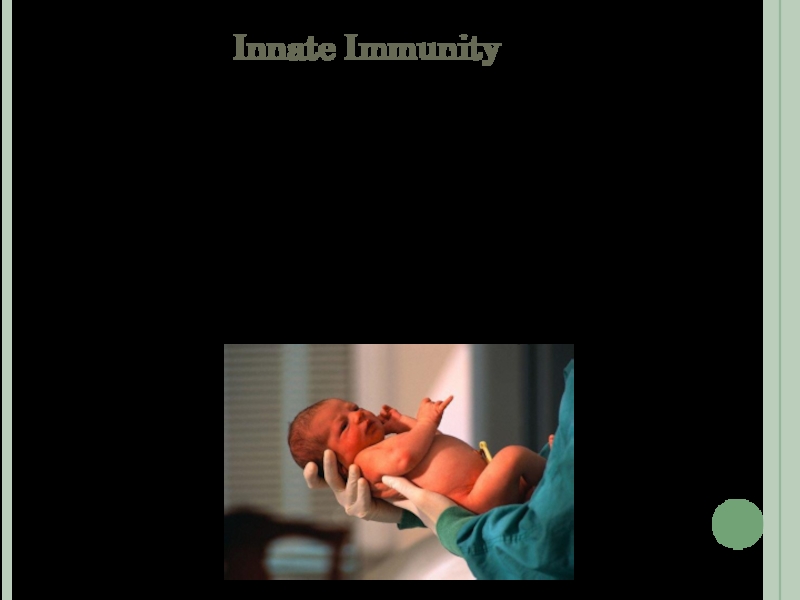
Everyone is born with innate immunity, a type of general
protection that humans have. Many of the germs that affect other species don't harm us. For example, the viruses that cause leukemia in cats or distemper in dogs don't affect humans. Innate immunity works both ways because some viruses that make humans ill — such as the virus that causes HIV/AIDS — don't make cats or dogs sick either.
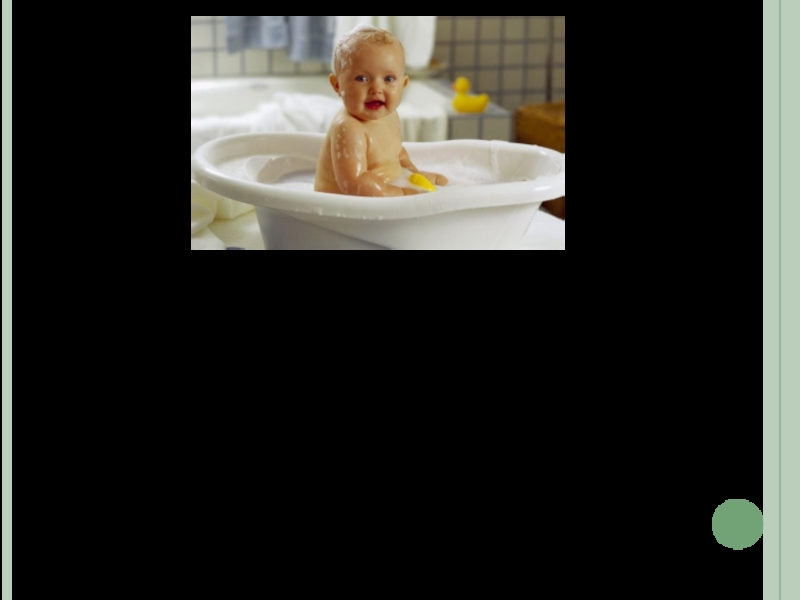
Слайд 9Innate immunity also includes the external barriers of the body, like
the skin and mucous membranes (like those that line the nose, throat, and gastrointestinal tract), which are our first line of defense in preventing diseases from entering the body. If this outer defensive wall is broken (like if you get a cut), the skin attempts to heal the break quickly and special immune cells on the skin attack invading germs.
Слайд 10Adaptive Immunity
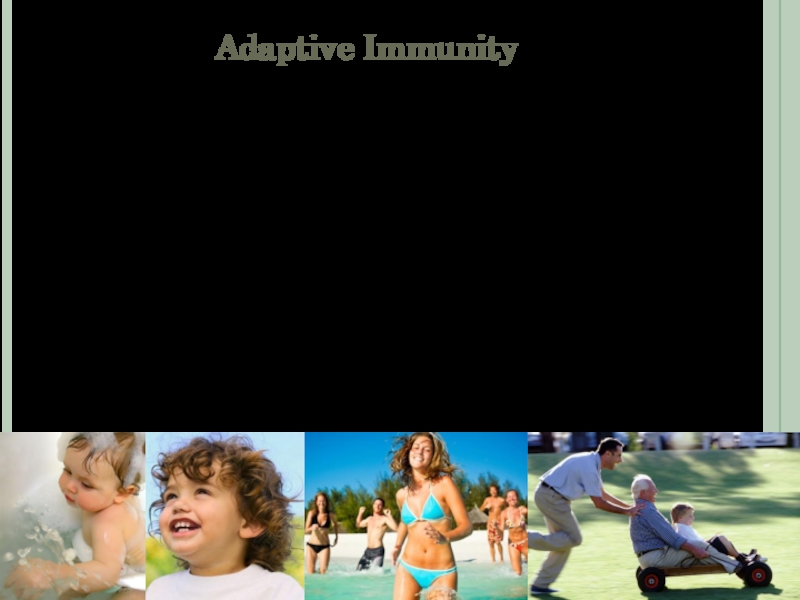
We also have a second kind of protection called adaptive
(or active) immunity. This type of immunity develops throughout our lives. Adaptive immunity involves the lymphocytes and develops as children and adults are exposed to diseases or immunized against diseases through vaccination.
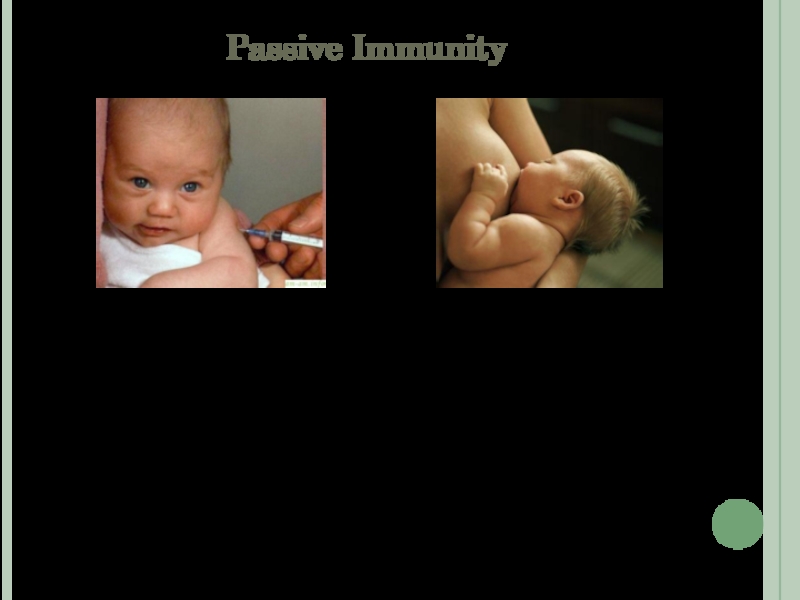
Слайд 11Passive Immunity
Passive immunity is "borrowed" from another source and it lasts
for a short time. For example, antibodies in a mother's breast milk provide an infant with temporary immunity to diseases that the mother has been exposed to. This can help protect the infant against infection during the early years of childhood.
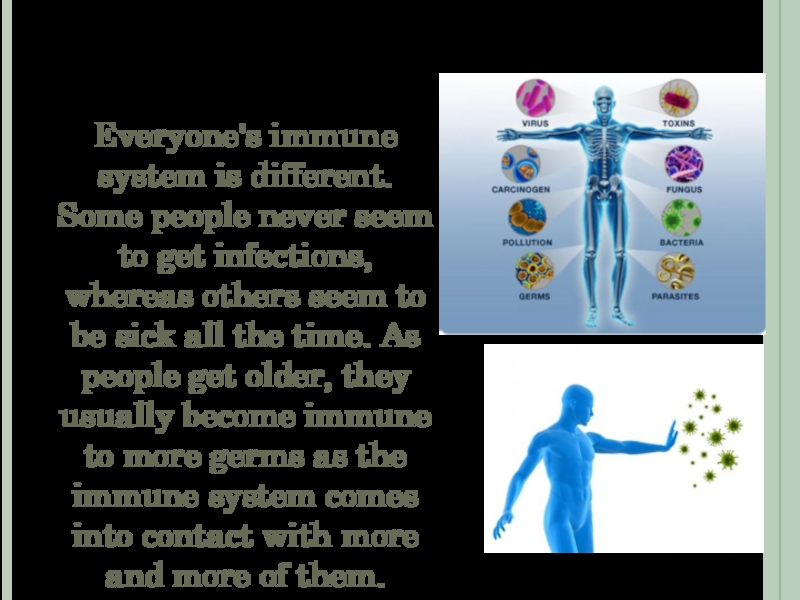
Слайд 12Everyone's immune system is different. Some people never seem to get
infections, whereas others seem to be sick all the time. As people get older, they usually become immune to more germs as the immune system comes into contact with more and more of them.
Слайд 13Things That Can Go Wrong With the Immune System
Disorders of the
immune system can be broken down into four main categories:
immunodeficiency disorders (primary or acquired);
autoimmune disorders (in which the body's own immune system attacks its own tissue as foreign matter);
allergic disorders (in which the immune system overreacts in response to an antigen);
cancer of the immune system.
immunodeficiency disorders (primary or acquired);
autoimmune disorders (in which the body's own immune system attacks its own tissue as foreign matter);
allergic disorders (in which the immune system overreacts in response to an antigen);
cancer of the immune system.
Слайд 14And if you're lucky enough to be healthy, you can help
your immune system keep you that way by washing your hands often to avoid infection, eating right, getting plenty of exercise, and getting regular medical checkups.