- Главная
- Разное
- Образование
- Спорт
- Естествознание
- Природоведение
- Религиоведение
- Французский язык
- Черчение
- Английский язык
- Астрономия
- Алгебра
- Биология
- География
- Геометрия
- Детские презентации
- Информатика
- История
- Литература
- Математика
- Музыка
- МХК
- Немецкий язык
- ОБЖ
- Обществознание
- Окружающий мир
- Педагогика
- Русский язык
- Технология
- Физика
- Философия
- Химия
- Шаблоны, фоны, картинки для презентаций
- Экология
- Экономика
Презентация, доклад BRITISH LITERATURE FOR CHILDREN: HISTORY
Содержание
- 1. Презентация BRITISH LITERATURE FOR CHILDREN: HISTORY
- 2. Children's literature is literature written specially for
- 3. Prose and poetry for children is part
- 4. children accepted as beings with their particular
- 5. WHY DO CHILDREN NEED LITERATURE for CHILDREN?
- 6. WHAT CAN IT GIVE TO THEM?
- 7. It is a rich source for enriching
- 8. HISTORY Because of the difficulty in defining
- 9. ORAL TRADITION The field of children’s literature as
- 10. The first manuscripts appeared in the Middle
- 11. Most of books of the Middle Ages
- 12. 15th CenturyAmong non-religious books: THOMAS MALORY’S MORTE
- 13. Somewhere in the 15 -th c. there
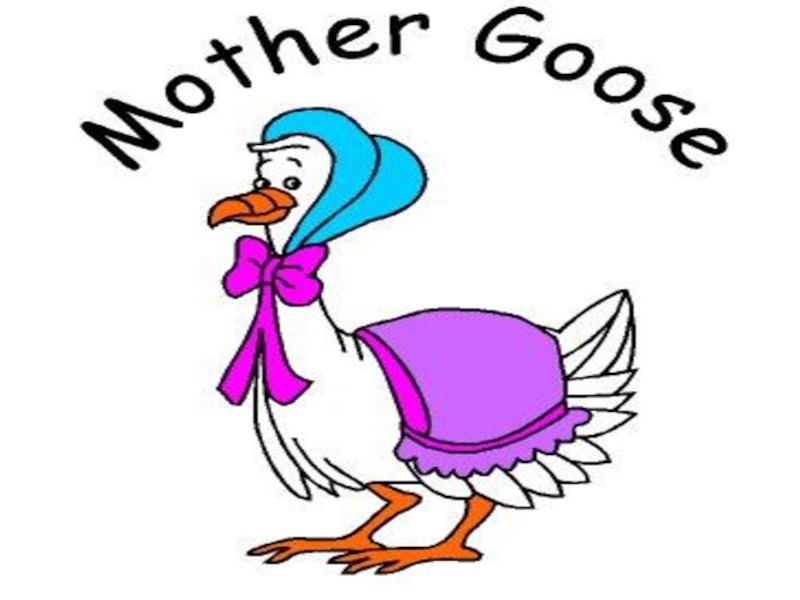
- 14. MOTHER GOOSE STORIES The older Mother Goose Stories
- 15. The nursery rhymes that now number some
- 16. Twinkle, twinkle, little star, How I wonder
- 17. Слайд 17
- 18. Elizabeth, Elspeth, Betsey, and Bess, They all
- 19. One, two, three, four, five, Once I
- 20. The M.G. verses underwent many changes during
- 21. 17th CenturyForeign literature in translation mainly by William Godwin was rather popular.
- 22. 17-18 th CenturiesWorks of moral instruction written
- 23. 17-18 th CenturiesReligious tone .Preparation for possible
- 24. 18 th centuryThe world was very much
- 25. 18 th centuryBooks for boys and girls
- 26. 18 th centuryRobinson Crusoe (1719) by Daniel
- 27. Later, children's literature ebecame less didactic. A
- 28. 18-19 th centuriesThe Carol Island by Michael
- 29. 19 th century But that was boy’s literature
- 30. 18th CenturyEnglish Children’s Verse
- 31. 18th CenturyIn 1744, John NewberyIn 1744, John
- 32. 18th CenturyPrevious to Newbery, literature for children
- 33. 19 th CenturyThe Romantic wave that swept
- 34. 18th CenturyBy the publication of William BlakeBy
- 35. 19 th CenturyA revival of interest in
- 36. British writer who continued the creative fairy-tale
- 37. The supreme combination of fantasy and humour,
- 38. According to some theories, the popularity
- 39. Lewis Carroll (1832-1898)
- 40. Alice BooksThe principle of extravaganza (extravagant irregularity
- 41. Слайд 41
- 42. Попробуй пойми !!!Жанр «нонсенса». Мотив чудачества, логическое и алогичное.
- 43. 19th CenturyTwo other notable late 19th-century British
- 44. 19th Centuryas have Kipling's animal stories in
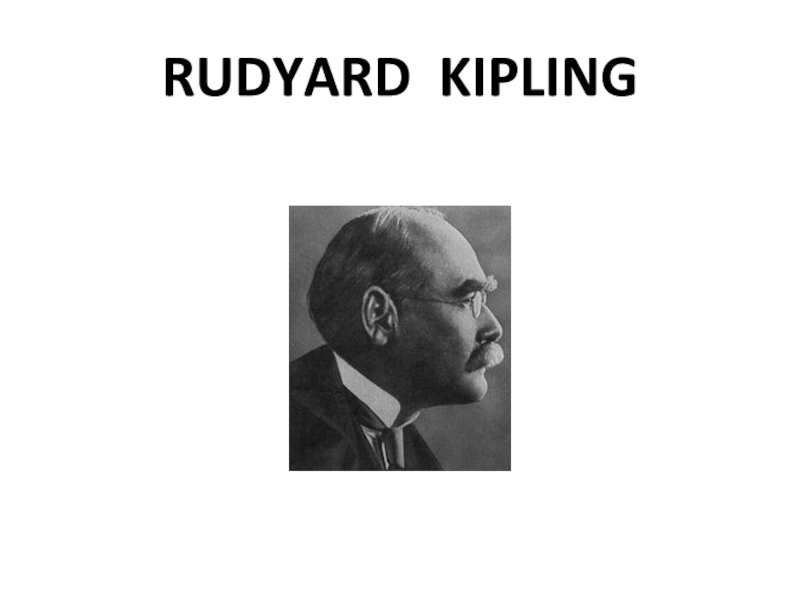
- 45. RUDYARD KIPLING
- 46. Слайд 46
- 47. The first English verse in limerick form
- 48. Hickory, dickory, dock, The mouse ran up
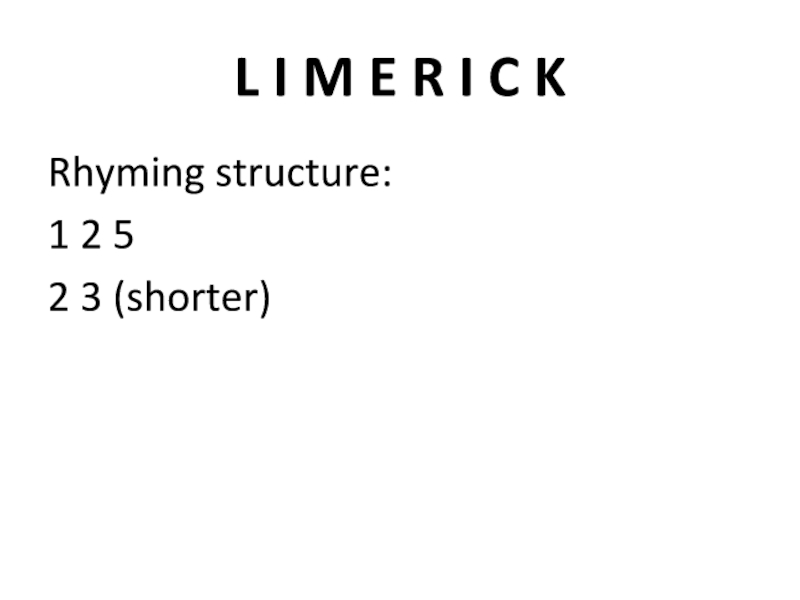
- 49. L I M E R I C K The limerick is a funny five-line rhyme.
- 50. L I M E R I C
- 51. EDWARD LEAR (1812-1888) He was the
- 52. Слайд 52
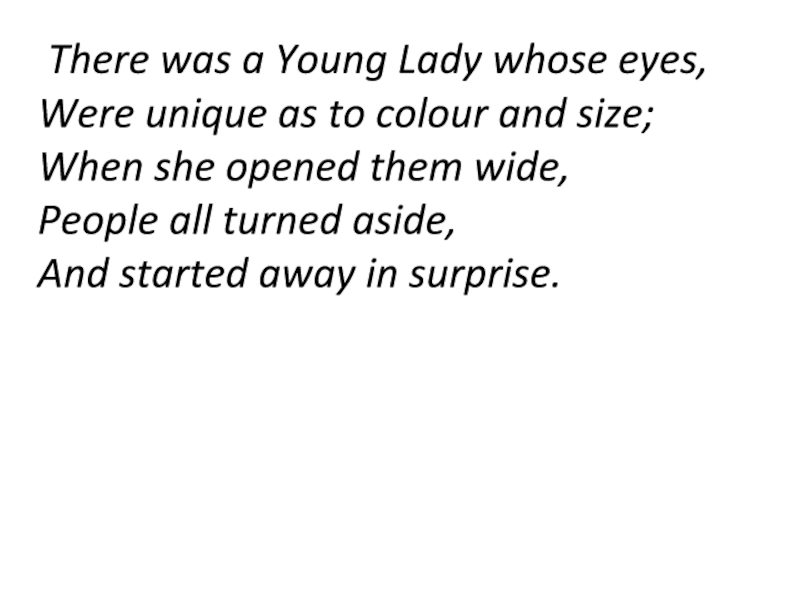
- 53. There was a Young Lady whose eyes,
- 54. Define its rhyming structure
- 55. L I M E R I C KRhyming structure:1 2 52 3 (shorter)
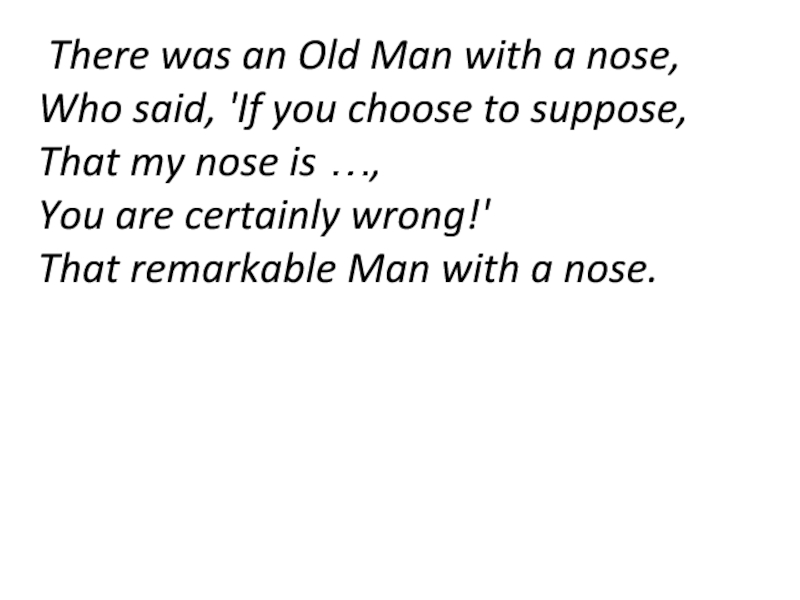
- 56. There was an Old Man with a
- 57. ` There was an Old Man with a
- 58. 20 th Century
- 59. A. A. Milne
- 60. A BritishA British authorA British author, best
- 61. Слайд 61
- 62. 20th CenturyFantasy continued to be a major
- 63. 20th CenturyAnother fantasy that has become a
- 64. The Wind in the Willows is a
- 65. Joanne Rowling is probably the best-known children's
- 66. WHAT COMPRISES CHILDREN’S LITERATURE?
- 67. GENRESPicture BooksFairy Tales (fantasy)Realistic FictionHistorical FictionPoetryBooks of Enquiry
- 68. Historical FictionIt is based on fact, but
- 69. Picture Book Illustration is essential. They keep
- 70. FantasyChildren have long been fascinated by the
- 71. FantasyToys and other objects that have human
- 72. Realistic FictionDifferent topics are reflected. It deals
- 73. Historical FictionIt reflects life as it was
- 74. PoetryIt is designed to delight.Rhythm, Rhyme, and
- 75. The End
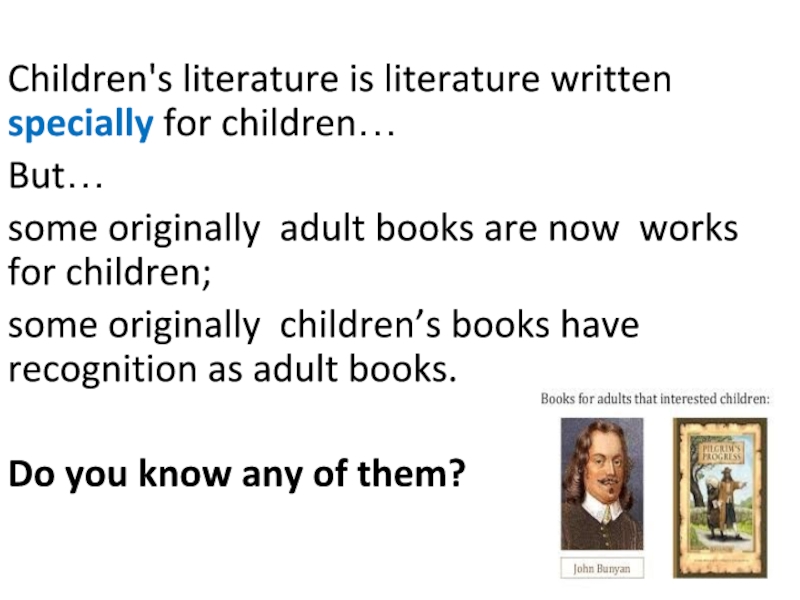
Children's literature is literature written specially for children…But…some originally adult books are now works for children; some originally children’s books have recognition as adult books. Do you know any of them?
Слайд 2
Children's literature is literature written specially for children…
But…
some originally adult books
are now works for children;
some originally children’s books have recognition as adult books.
Do you know any of them?
some originally children’s books have recognition as adult books.
Do you know any of them?
Слайд 3 Prose and poetry for children is part of literature just as
children part of humanity.
But before there could be books for children, there had to be …?
But before there could be books for children, there had to be …?
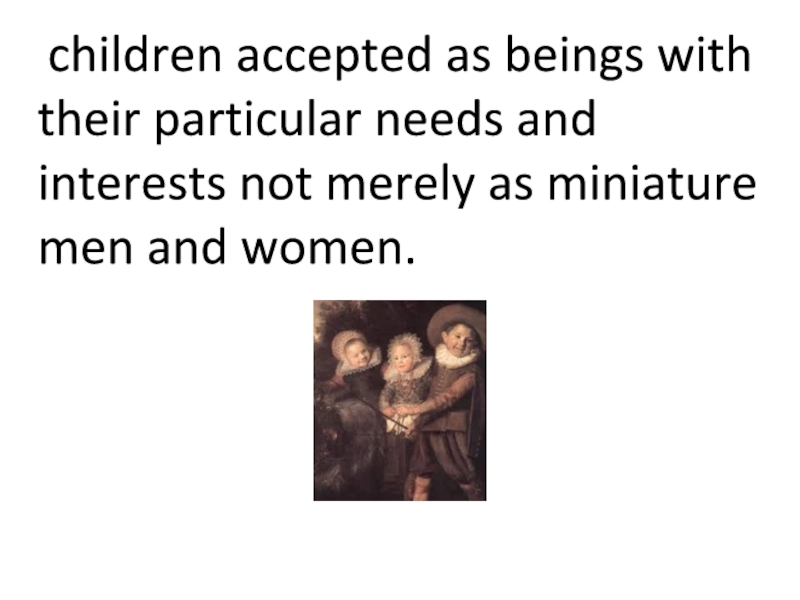
Слайд 4 children accepted as beings with their particular needs and interests not
merely as miniature men and women.
Слайд 7It is a rich source for enriching children’s language.
It stimulates their
emotional and intellectual lives.
It has a power to educate children's hearts as well as their heads.
It offers “The Journey to Joy”.
It has a power to educate children's hearts as well as their heads.
It offers “The Journey to Joy”.
Слайд 8HISTORY
Because of the difficulty in defining children's literature, it is also
difficult to trace the history of children's literature to a precise starting point.
Слайд 9ORAL TRADITION
The field of children’s literature as all literature grows out
of the oral tradition. People gathered around the fire to hear storytellers.
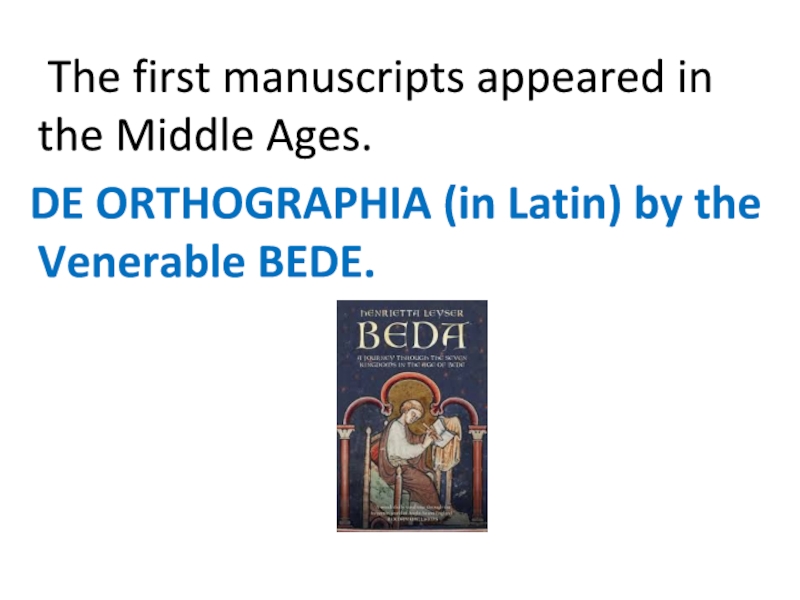
Слайд 10 The first manuscripts appeared in the Middle Ages.
DE ORTHOGRAPHIA
(in Latin) by the Venerable BEDE.
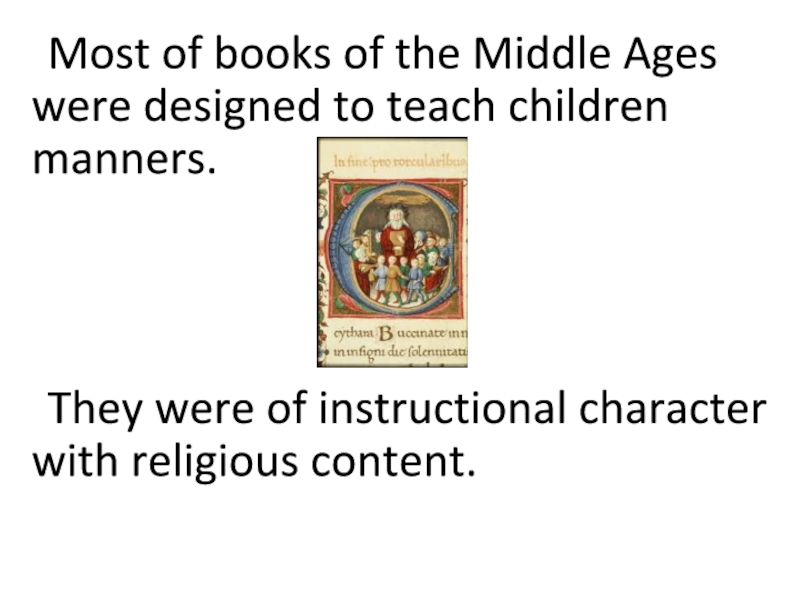
Слайд 11 Most of books of the Middle Ages were designed to teach
children manners.
They were of instructional character with religious content.
They were of instructional character with religious content.
Слайд 1215th Century
Among non-religious books: THOMAS MALORY’S
MORTE D”ARTHUR (1486) and the
tales of Robin Hood (c. 1450) were not written with children in mind, but children have been fascinated by these stories for centuries.
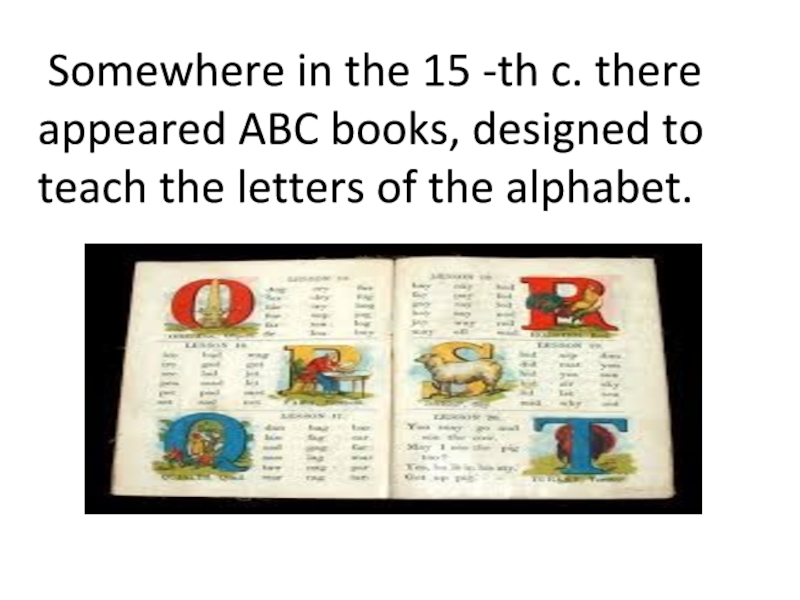
Слайд 13 Somewhere in the 15 -th c. there appeared ABC books, designed
to teach the letters of the alphabet.
Слайд 14MOTHER GOOSE STORIES
The older Mother Goose Stories (children’s folklore) date back
to 15-16th centuries.
In 1760-s the first collection of 52 songs of English children’s folklore was published under the title of “Mother Goose Stories”
In 1760-s the first collection of 52 songs of English children’s folklore was published under the title of “Mother Goose Stories”
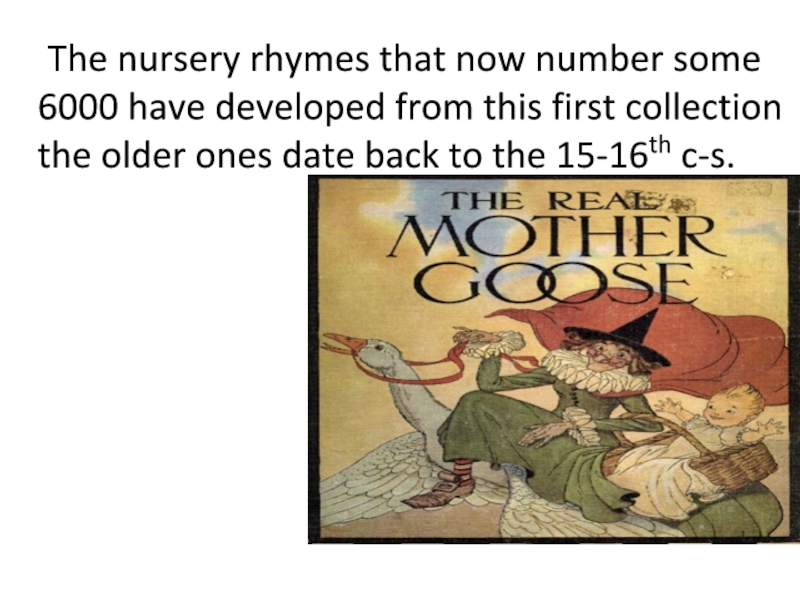
Слайд 15 The nursery rhymes that now number some 6000 have developed from
this first collection the older ones date back to the 15-16th c-s.
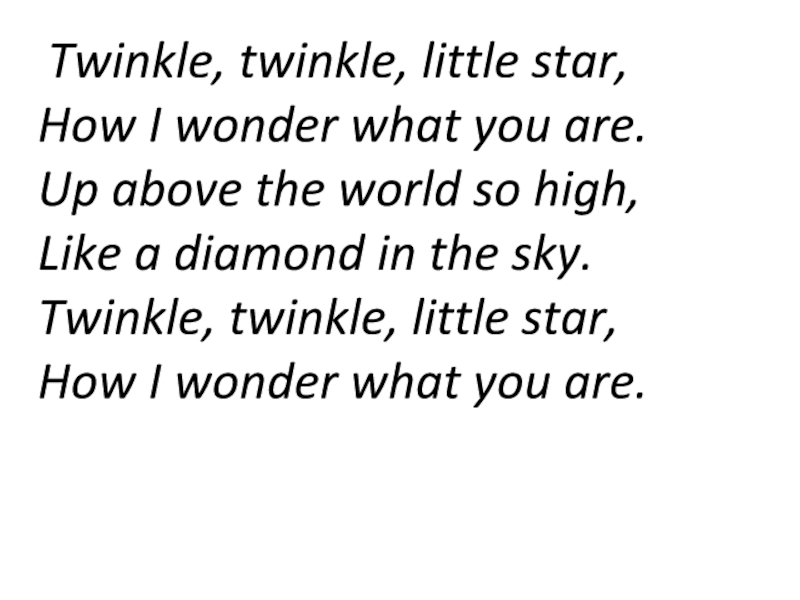
Слайд 16 Twinkle, twinkle, little star, How I wonder what you are. Up above the
world so high,
Like a diamond in the sky.
Twinkle, twinkle, little star,
How I wonder what you are.
Слайд 18 Elizabeth, Elspeth, Betsey, and Bess, They all went together to seek a
bird's nest;
They found a bird's nest with five eggs in,
They all took one, and left four in.
Слайд 19
One, two, three, four, five,
Once I caught a fish alive.
Six, seven,
eight, nine, ten,
Then I let it go again.
Слайд 20
The M.G. verses underwent many changes during the years when they
were passed by word of mouth.
Generations of children enjoy the variety of subject matter and mood that surprises them in M.G.
Generations of children enjoy the variety of subject matter and mood that surprises them in M.G.
Слайд 2217-18 th Centuries
Works of moral instruction written for children had long
been more important than any other type of writing for the young in the 17th and 18th centuries.
Слайд 2317-18 th Centuries
Religious tone .
Preparation for possible sudden death and departure
to the next world was a feature of the rhymes and novels for children (!).
Слайд 2418 th century
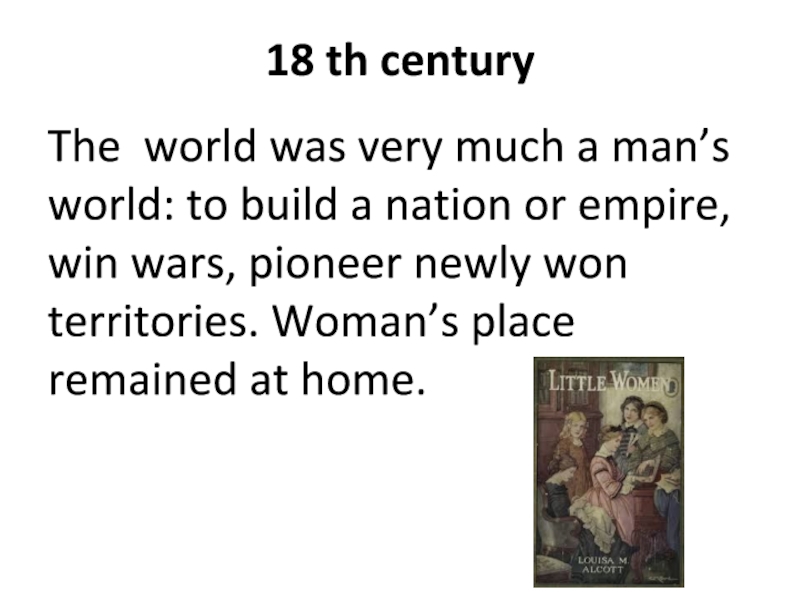
The world was very much a man’s world: to
build a nation or empire, win wars, pioneer newly won territories. Woman’s place remained at home.
Слайд 2518 th century
Books for boys and girls reflected its division. For
boys there was the life of action on land or at sea: the world of the boy’s adventure story.
Robinsonade…
Robinsonade…
Слайд 2618 th century
Robinson Crusoe (1719) by Daniel Defoe.
The first two
Voyages of Jonathan Swift's Gulliver's Travels (1726), which fascinates adults as a satire, is enjoyed by children for its fantasy .
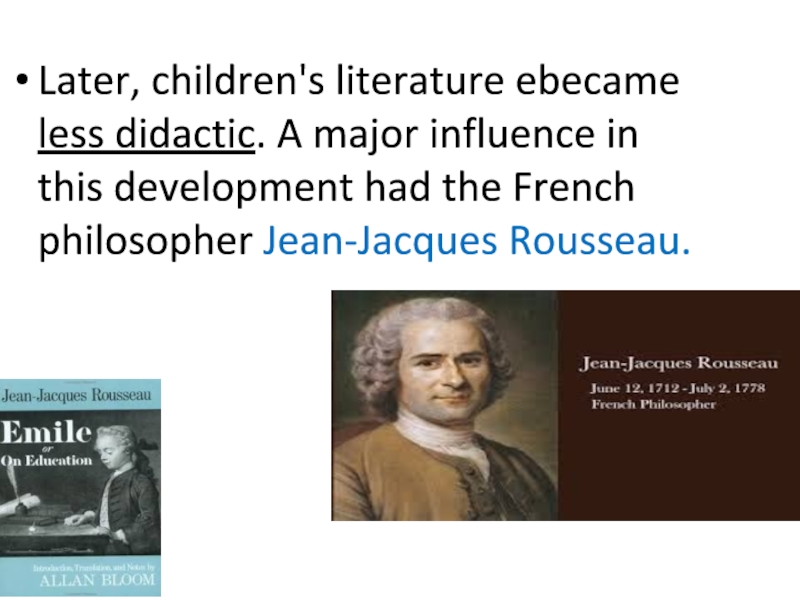
Слайд 27Later, children's literature ebecame less didactic. A major influence in this
development had the French philosopher Jean-Jacques Rousseau.
Слайд 2818-19 th centuries
The Carol Island by Michael Ballantyne, Treasure Island by
R.L. Stevenson.
The first historical adventure story to be written speccialy for children were those of Captain Marryat (1792-1848)
The first historical adventure story to be written speccialy for children were those of Captain Marryat (1792-1848)
Слайд 2919 th century
But that was boy’s literature as boys were expected
to develop in a manly way, girls in a womanly. Eg. of a domestic story for girls: Louisa Alcott’s (1832-88) Little Women
Слайд 3118th Century
In 1744, John NewberyIn 1744, John Newbery published A Little
Pretty Pocket-Book in England. He sold it with a ball for boys or a pincushion for girls. It is considered a landmark for the beginning of pleasure reading marketed specifically to children.
Слайд 3218th Century
Previous to Newbery, literature for children was intended to instruct
the young, though there was a rich oral traditionPrevious to Newbery, literature for children was intended to instruct the young, though there was a rich oral tradition of storytelling for children and adults.
Слайд 3319 th Century
The Romantic wave that swept Europe early in the
19th century also affected children's literature. In Great Britain the writings of the novelist Sir Walter Scott, noted for his tales of chivalry, were read with delight by older children.
Слайд 3418th Century
By the publication of William BlakeBy the publication of William
Blake's Songs of Innocence in 1789, books written specifically for the use of children outside of school had become "a clear but subordinate branch of English literature."
Слайд 3519 th Century
A revival of interest in Shakespeare resulted in one
of the most popular children's books, Tales from Shakespeare (1807), a re-telling of the plays of Shakespeare for children by the essayist Charles Lamb and his sister Mary Ann Lamb.
Слайд 36British writer who continued the creative fairy-tale tradition was Oscar Wilde
in The Happy Prince and Other Tales (1888).
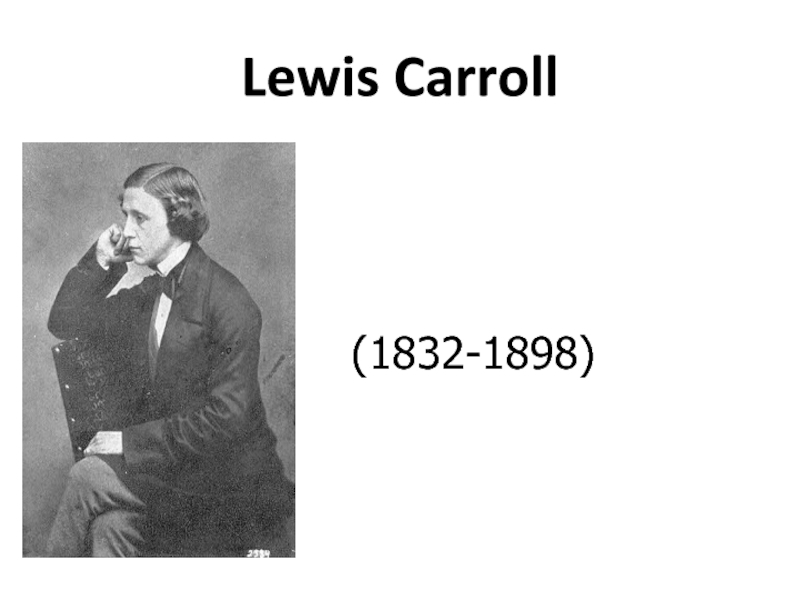
Слайд 37The supreme combination of fantasy and humour, however, was achieved by
the English author and mathematician Lewis Carroll, pen name of Charles Ludwig Dodgson, in Alice's Adventures in Wonderland (1865) and Through the Looking Glass (1872).
Слайд 38 According to some theories, the popularity of these works is
to be accounted for by the mathematical logic underlying their fantasy; according to others, by the profound psychological perceptions in the fantasy. It is generally agreed that the two books constitute a masterpiece of children's literature.
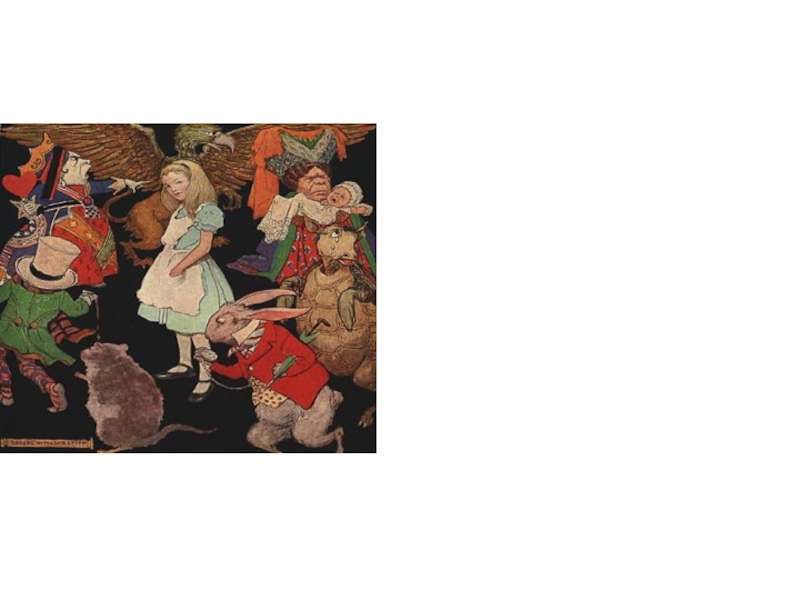
Слайд 40Alice Books
The principle of extravaganza (extravagant irregularity of words and fantastic
elements) is applied in his “Alice” books, nonsense stories most difficult to understand in a foreign language.
Слайд 4319th Century
Two other notable late 19th-century British writers for children were
Robert Louis Stevenson and Rudyard Kipling. Stevenson's Treasure Island (1883), A Child's Garden of Verses (1885) have become classics,
Слайд 4419th Century
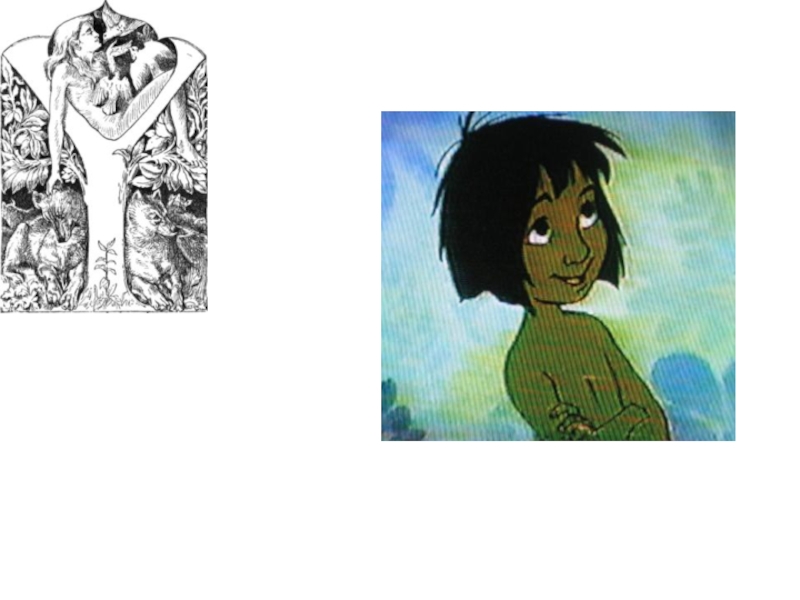
as have Kipling's animal stories in The Jungle Book and
The Second Jungle Book (1894-1895) and Just So Stories for Little Children (1902), based on the folk traditions of India.
Слайд 47
The first English verse in limerick form is "Hickory, Dickory, Dock,"
of which the earliest printed version dates from 1744.
Слайд 48 Hickory, dickory, dock, The mouse ran up the clock. The clock struck one, The
mouse ran down!
Hickory, dickory, dock.
Слайд 50L I M E R I C K
It is a form
of light verse that was popularized by Edward Lear with the publication of his Book of Nonsense in 1846.
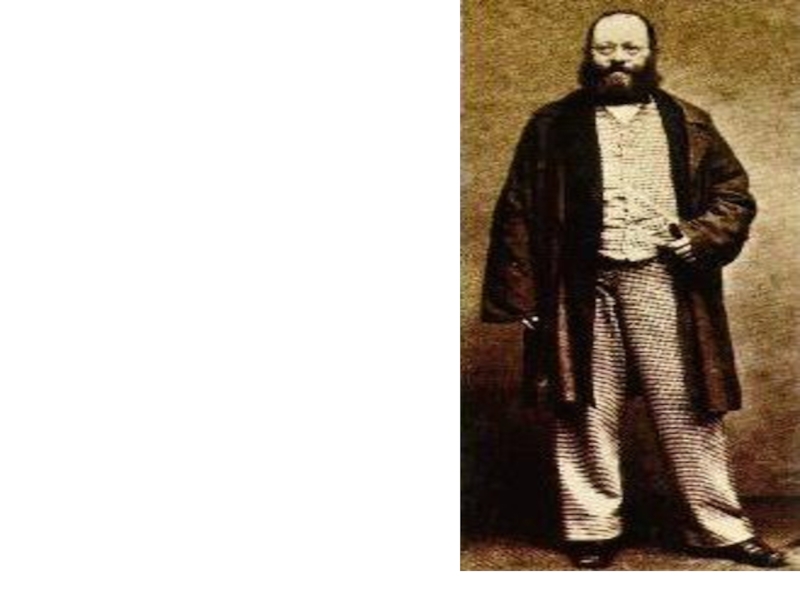
Слайд 51EDWARD LEAR
(1812-1888)
He was the youngest of 21 children !
At
the age of 19, he was employed by the London Zoo and published the first book of coloured drawings of parrots. Later, he also painted very beautiful landscapes.
Слайд 53 There was a Young Lady whose eyes, Were unique as to colour
and size;
When she opened them wide,
People all turned aside,
And started away in surprise.
Слайд 56 There was an Old Man with a nose, Who said, 'If you
choose to suppose,
That my nose is …,
You are certainly wrong!'
That remarkable Man with a nose.
Слайд 57` There was an Old Man with a nose, Who said, 'If you
choose to suppose,
That my nose is too long,
You are certainly wrong!'
That remarkable Man with a nose.

Слайд 60 A BritishA British authorA British author, best known for his booksA
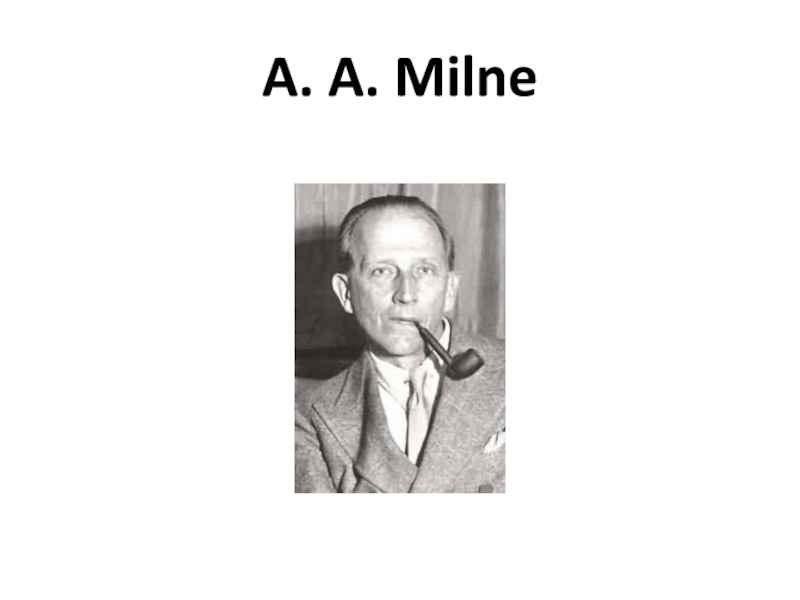
British author, best known for his books about the teddy bearA British author, best known for his books about the teddy bear Winnie-the-Pooh and for various children's poems. Milne was a noted writer, before the huge success of Pooh overshadowed all his previous work.
Слайд 6220th Century
Fantasy continued to be a major mode of literature for
children in the early 20th century. the British novelist and dramatist Sir James Matthew Barrie adapted Peter Pan in Kensington Gardens (1906) and Peter and Wendy (1911).
Слайд 6320th Century
Another fantasy that has become a classic is The Wind
in the Willows (1908), by Kenneth Grahame.
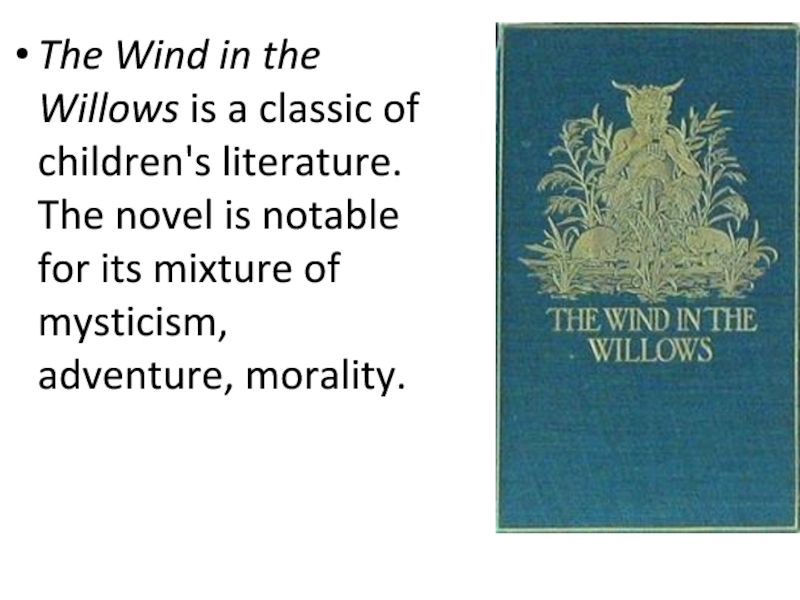
Слайд 64The Wind in the Willows is a classic of children's literature.
The novel is notable for its mixture of mysticism, adventure, morality.
Слайд 65Joanne Rowling is probably the best-known children's author today and also
the most successful. Being the author of the extremely successful, Harry Potter series, her books have been sold in more than 300 million copies worldwide and are translated into more than 63 languages. She is also the first billionaire-author.
Слайд 67GENRES
Picture Books
Fairy Tales (fantasy)
Realistic Fiction
Historical Fiction
Poetry
Books of Enquiry
Слайд 68Historical Fiction
It is based on fact, but an author’s imagination brings
these facts alive.
Both fact and imagination allow children to learn about, and to enjoy, what life was like long ago.
Both fact and imagination allow children to learn about, and to enjoy, what life was like long ago.
Слайд 69Picture Book
Illustration is essential. They keep the story moving, excite child’s
imagination. In some picture books, the pictures themselves carry the entire meaning (wordless books oe textless books)
Слайд 70Fantasy
Children have long been fascinated by
the world of kings and
queens (O. Wilde’s The Happy Prince)
Animal characters that are brought to life by making them act, feel, talk, and think like humans (B. Porter’s Peter Rabbit)
Animal characters that are brought to life by making them act, feel, talk, and think like humans (B. Porter’s Peter Rabbit)
Слайд 71Fantasy
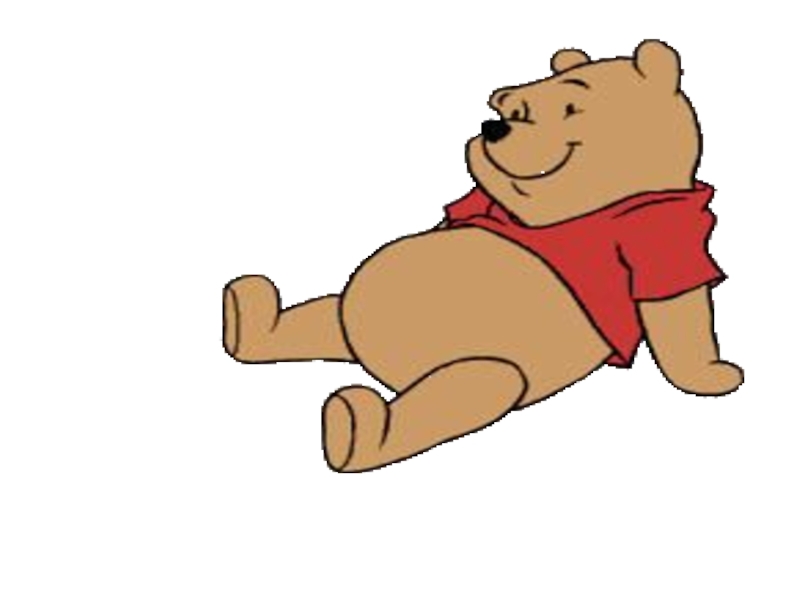
Toys and other objects that have human qualities ( A.A. Milne’s
Winnie-the –Pooh)
High fantasy: complex tales in which there is a battle between good and evil (J. Tolkien’s The Hobbit).
High fantasy: complex tales in which there is a battle between good and evil (J. Tolkien’s The Hobbit).
Слайд 72Realistic Fiction
Different topics are reflected. It deals with the problems and
conflicts that children face in growing up: life-death, divorce, physical disabilities, family, school-related topics. R.F. gives children insights in dealing with similar issues and concerns.
Слайд 73Historical Fiction
It reflects life as it was (or may have been
in the past.)
What is the difference between historical fiction and historical texts?
What is the difference between historical fiction and historical texts?
Слайд 74Poetry
It is designed to delight.
Rhythm, Rhyme, and Language delight the ear.
It
reaches into both the hearts and the heads of children, appealing to both their emotions and their thoughts.