- Главная
- Разное
- Образование
- Спорт
- Естествознание
- Природоведение
- Религиоведение
- Французский язык
- Черчение
- Английский язык
- Астрономия
- Алгебра
- Биология
- География
- Геометрия
- Детские презентации
- Информатика
- История
- Литература
- Математика
- Музыка
- МХК
- Немецкий язык
- ОБЖ
- Обществознание
- Окружающий мир
- Педагогика
- Русский язык
- Технология
- Физика
- Философия
- Химия
- Шаблоны, фоны, картинки для презентаций
- Экология
- Экономика
Презентация, доклад на тему Presentation for high school students
Содержание
- 1. Presentation for high school students
- 2. Слайд 2
- 3. Слайд 3
- 4. When he was 10, his family moved
- 5. Then he went to school
- 6. Over his career he wrote
- 7. Dinkens’ after merits include compaigns
- 8. He used to be a young ad
- 9. Dinkens published many
- 10. His books are rather interesting to read
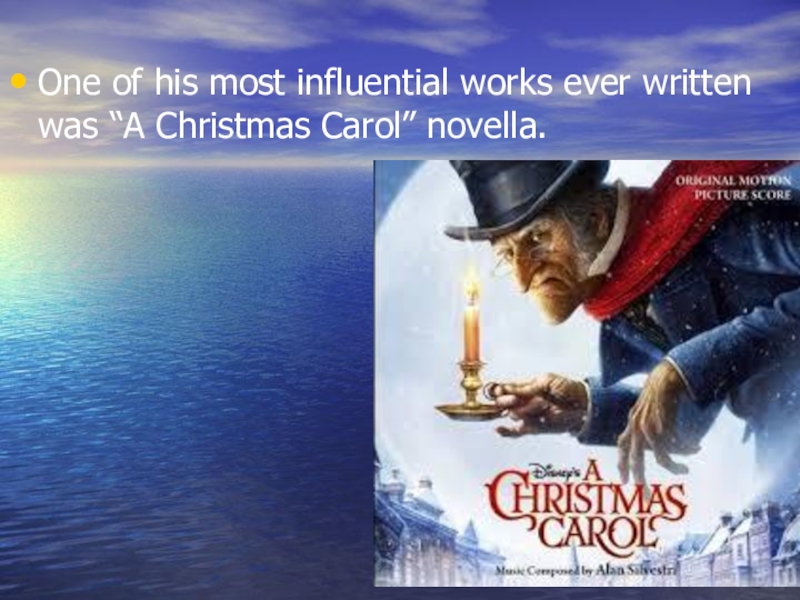
- 11. One of his most influential works ever written was “A Christmas Carol” novella.
- 12. His fellow writers of
- 13. Слайд 13
- 14. One of the worse consequences of poverty
- 15. On the positive side, Dinkens places heavy
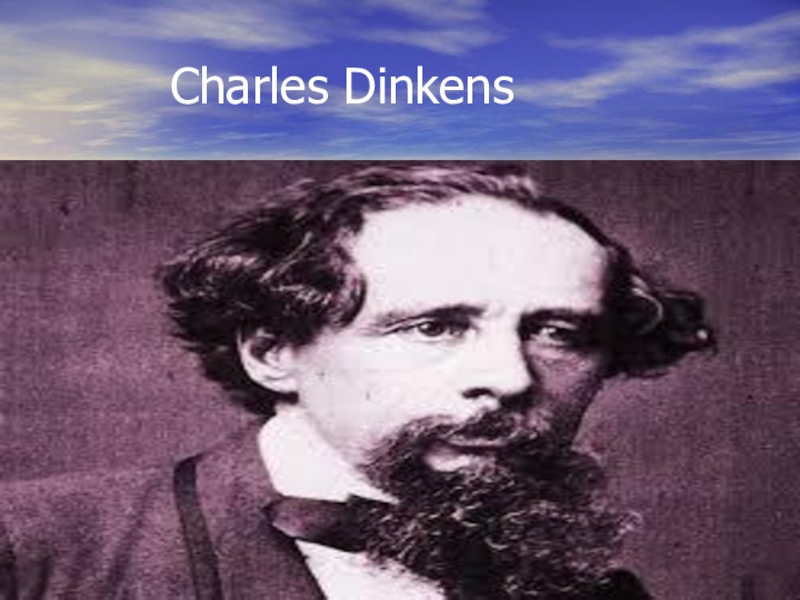
Charles Dinkens was an
Слайд 2
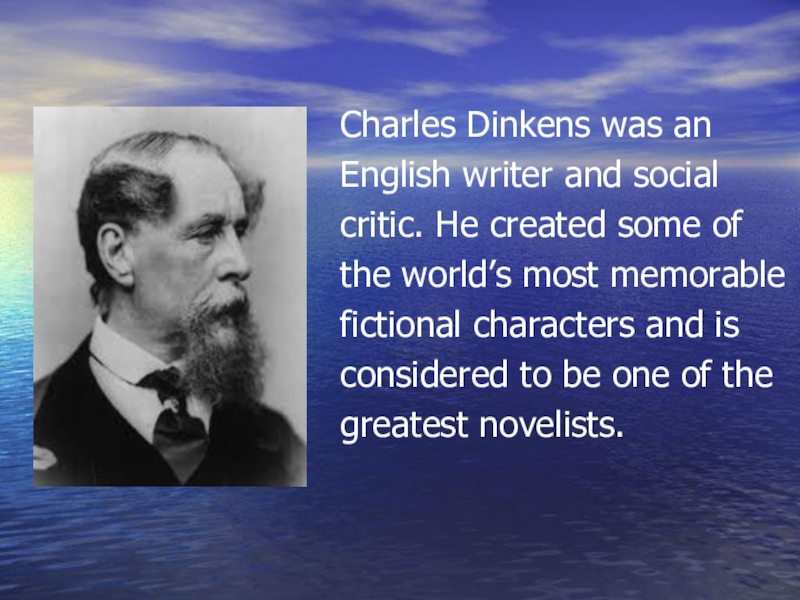
Charles Dinkens was an
English writer and social
critic. He created some of
the world’s most memorable
fictional characters and is
considered to be one of the
greatest novelists.
Слайд 3
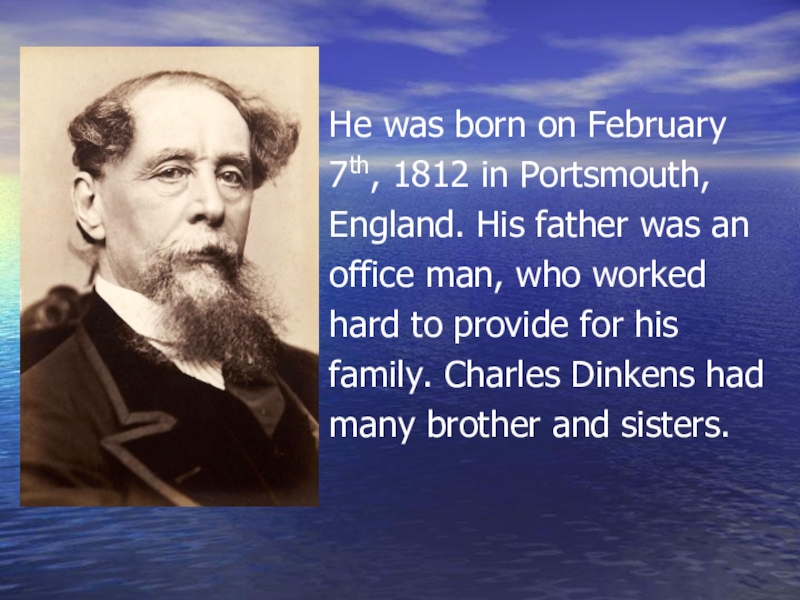
He was born on February
7th, 1812 in Portsmouth,
England. His father was an
office man, who worked
hard to provide for his
family. Charles Dinkens had
many brother and sisters.
Слайд 4
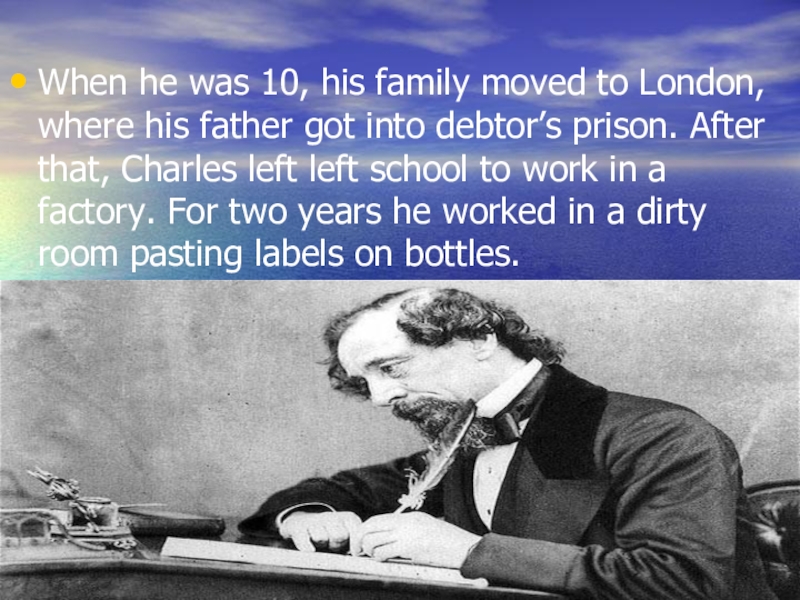
When he was 10, his family moved to London, where his
father got into debtor’s prison. After that, Charles left left school to work in a factory. For two years he worked in a dirty room pasting labels on bottles.
Слайд 5
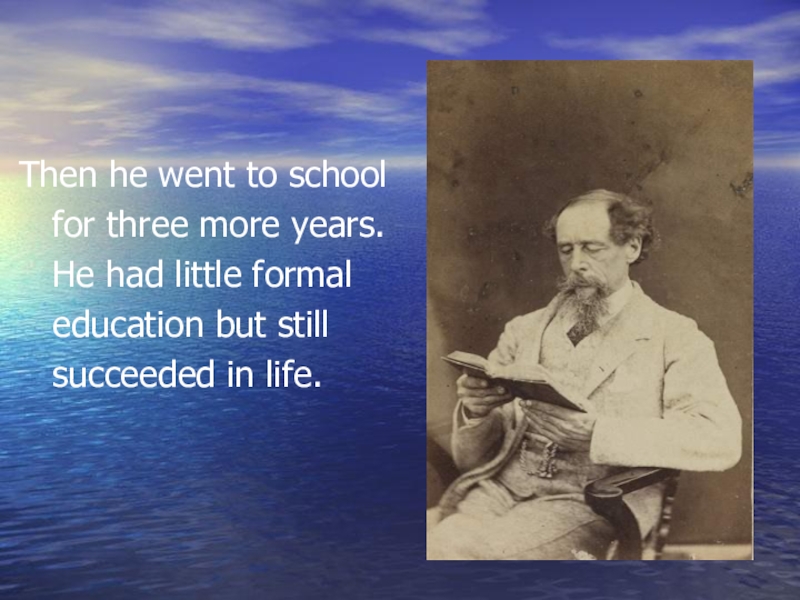
Then he went to school
for three more
years.
He had little formal
education but still
succeeded in life.
He had little formal
education but still
succeeded in life.
Слайд 6
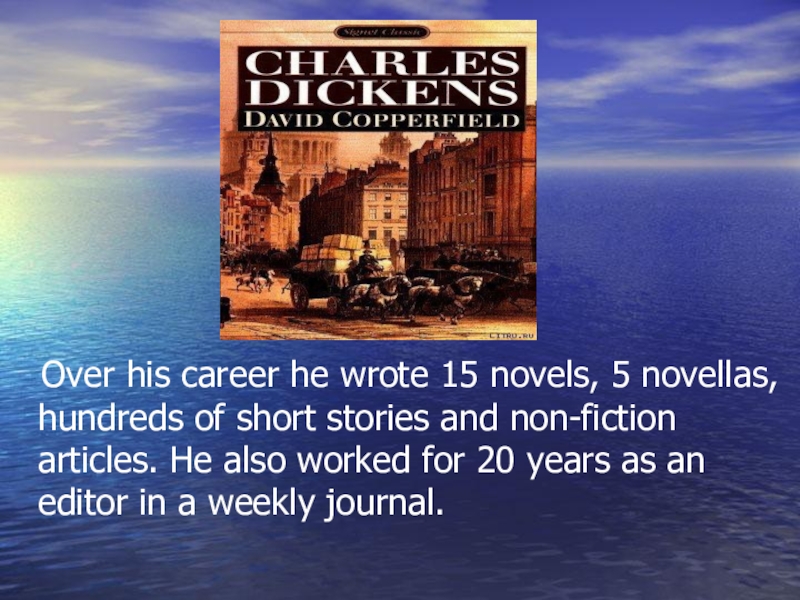
Over his career he wrote 15 novels, 5 novellas,
hundreds of short stories and non-fiction articles. He also worked for 20 years as an editor in a weekly journal.
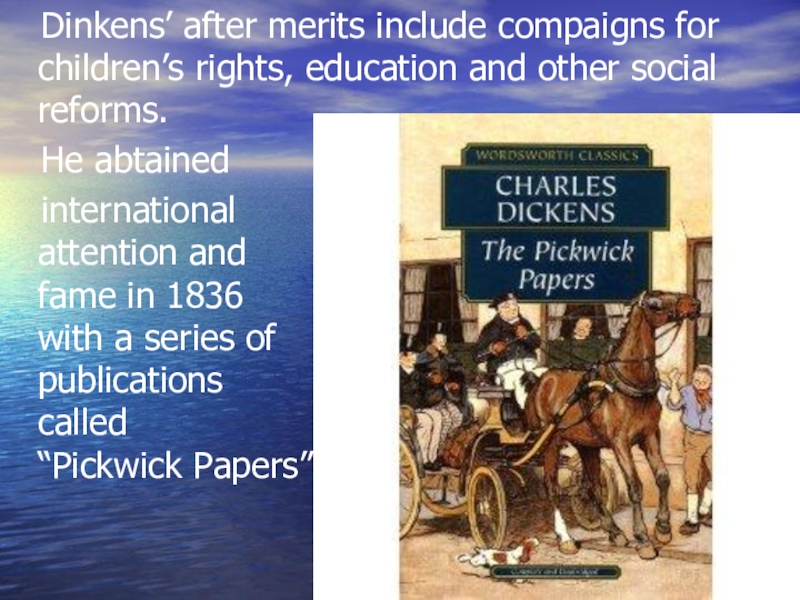
Слайд 7 Dinkens’ after merits include compaigns for children’s rights, education
and other social reforms.
He abtained
international attention and fame in 1836 with a series of publications called “Pickwick Papers”
He abtained
international attention and fame in 1836 with a series of publications called “Pickwick Papers”
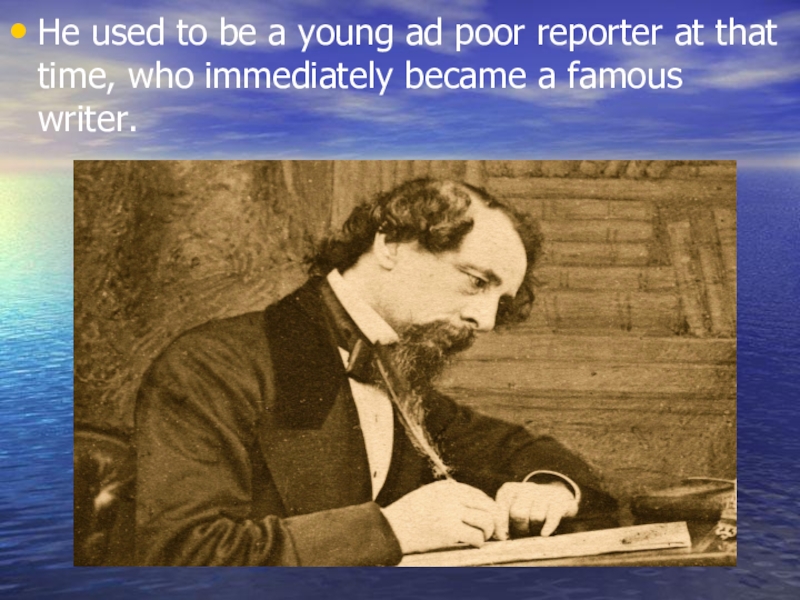
Слайд 9
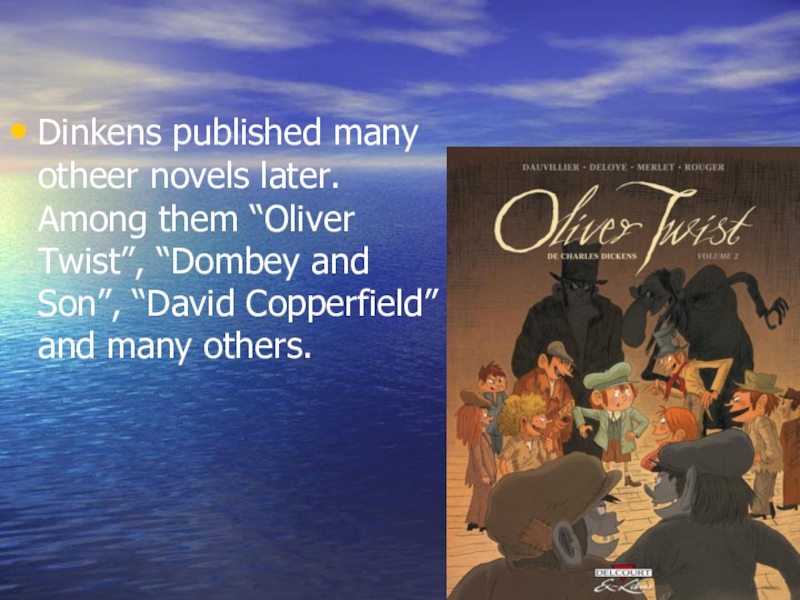
Dinkens published many
otheer novels later. Among them “Oliver Twist”, “Dombey and Son”, “David Copperfield” and many others.
Слайд 10
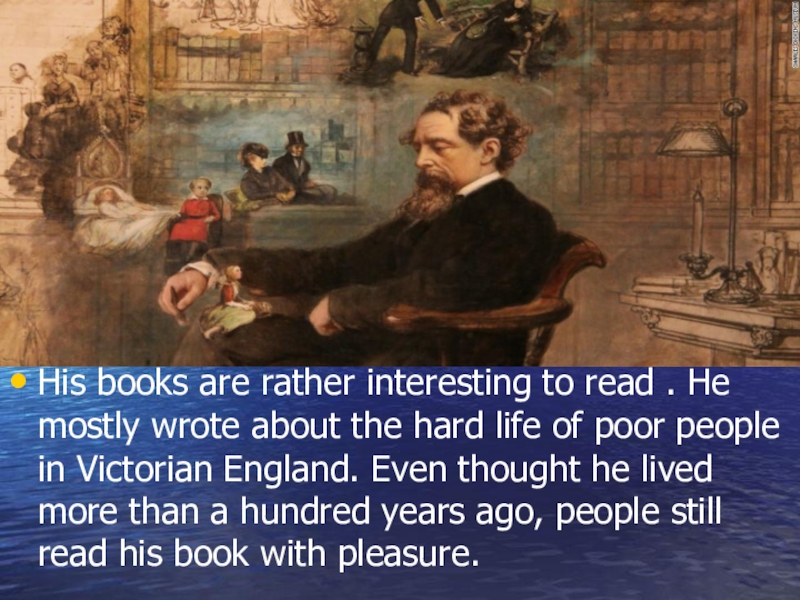
His books are rather interesting to read . He mostly wrote
about the hard life of poor people in Victorian England. Even thought he lived more than a hundred years ago, people still read his book with pleasure.
Слайд 12
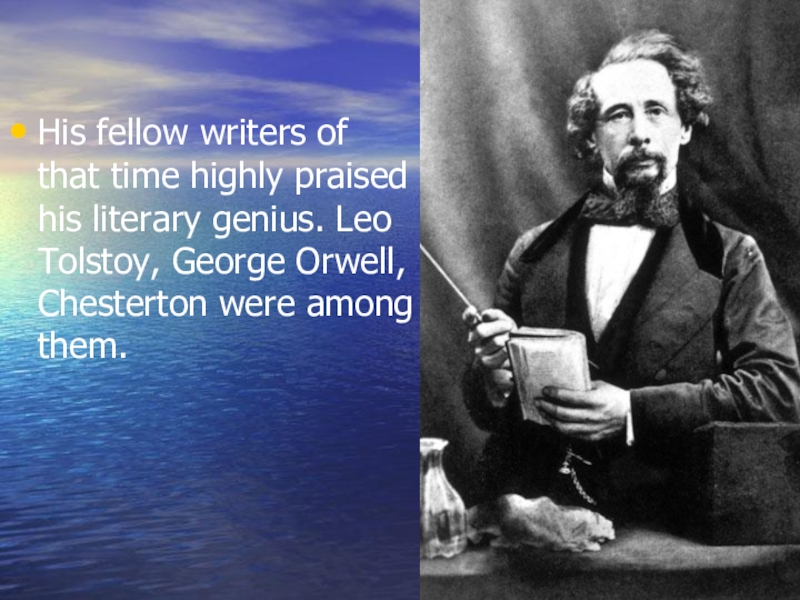
His fellow writers of
that time highly praised his literary genius. Leo Tolstoy, George Orwell, Chesterton were among them.
Слайд 13
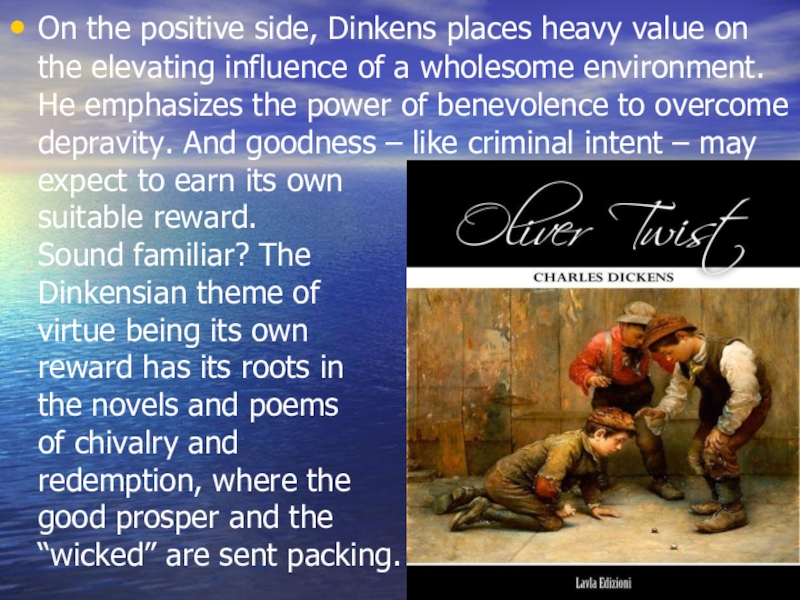
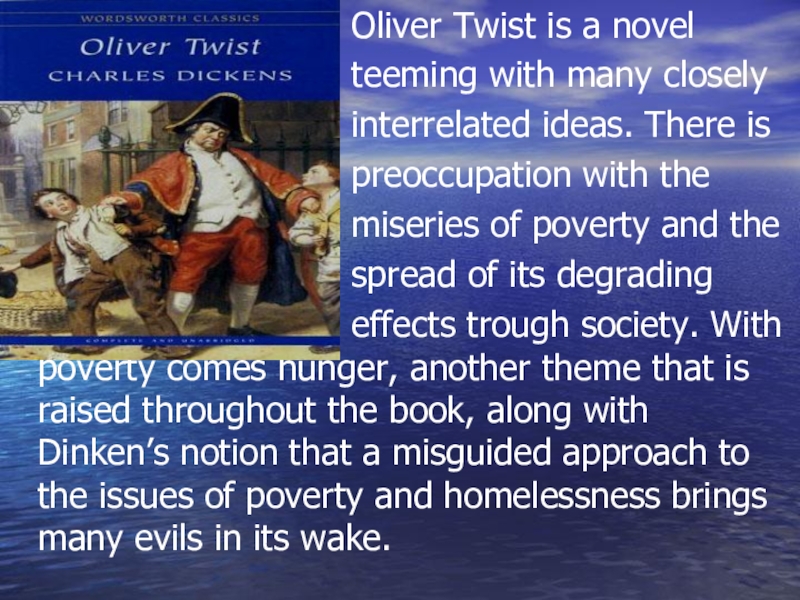
Oliver Twist is a novel
teeming with many closely
interrelated ideas. There is
preoccupation with the
miseries of poverty and the
spread of its degrading
effects trough society. With poverty comes hunger, another theme that is raised throughout the book, along with Dinken’s notion that a misguided approach to the issues of poverty and homelessness brings many evils in its wake.
teeming with many closely
interrelated ideas. There is
preoccupation with the
miseries of poverty and the
spread of its degrading
effects trough society. With poverty comes hunger, another theme that is raised throughout the book, along with Dinken’s notion that a misguided approach to the issues of poverty and homelessness brings many evils in its wake.
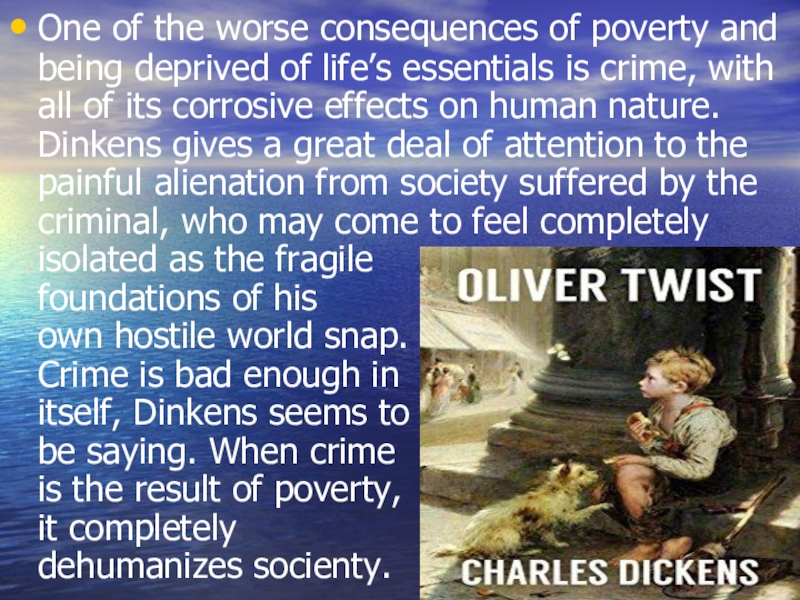
Слайд 14One of the worse consequences of poverty and being deprived of
life’s essentials is crime, with all of its corrosive effects on human nature. Dinkens gives a great deal of attention to the painful alienation from society suffered by the criminal, who may come to feel completely isolated as the fragile foundations of his own hostile world snap. Crime is bad enough in itself, Dinkens seems to be saying. When crime is the result of poverty, it completely dehumanizes socienty.
Слайд 15On the positive side, Dinkens places heavy value on the elevating
influence of a wholesome environment. He emphasizes the power of benevolence to overcome depravity. And goodness – like criminal intent – may expect to earn its own suitable reward. Sound familiar? The Dinkensian theme of virtue being its own reward has its roots in the novels and poems of chivalry and redemption, where the good prosper and the “wicked” are sent packing.