- Главная
- Разное
- Образование
- Спорт
- Естествознание
- Природоведение
- Религиоведение
- Французский язык
- Черчение
- Английский язык
- Астрономия
- Алгебра
- Биология
- География
- Геометрия
- Детские презентации
- Информатика
- История
- Литература
- Математика
- Музыка
- МХК
- Немецкий язык
- ОБЖ
- Обществознание
- Окружающий мир
- Педагогика
- Русский язык
- Технология
- Физика
- Философия
- Химия
- Шаблоны, фоны, картинки для презентаций
- Экология
- Экономика
Презентация, доклад на тему Обучение диалогической речи на уроках иностранного языка (из опыта работы)
Содержание
- 1. Обучение диалогической речи на уроках иностранного языка (из опыта работы)
- 2. Проблемы диалогической речи
- 3. Проблемы диалогической речиотсутствие каких-либо зрительных опор в процессе естественного говорения;зависимость от:партнёра в процессе диалога;темпа;особенностей артикуляции;богатства вокабуляра.
- 4. Два вида речевых ситуаций
- 5. Учебные речевые ситуацииУРС ставят студента в условия,
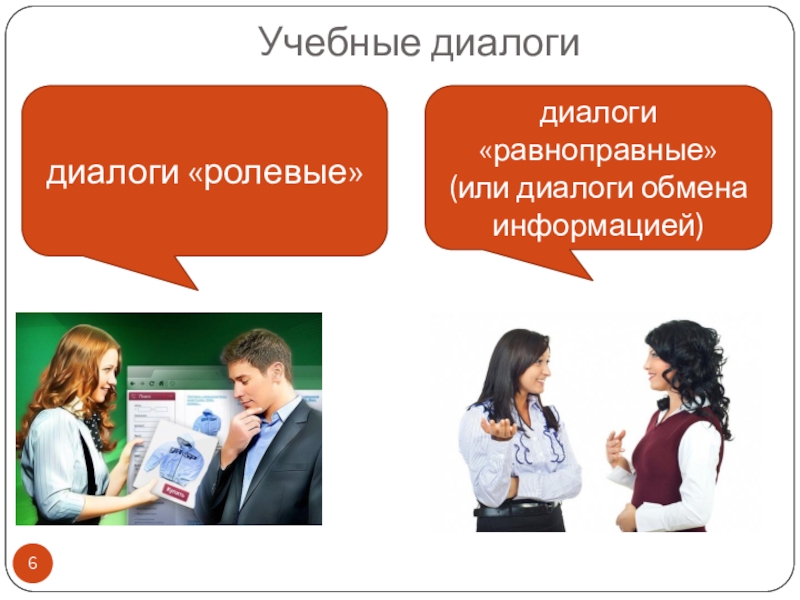
- 6. Учебные диалогидиалоги «ролевые»диалоги «равноправные» (или диалоги обмена информацией)
- 7. - Sasha, is your flat large or
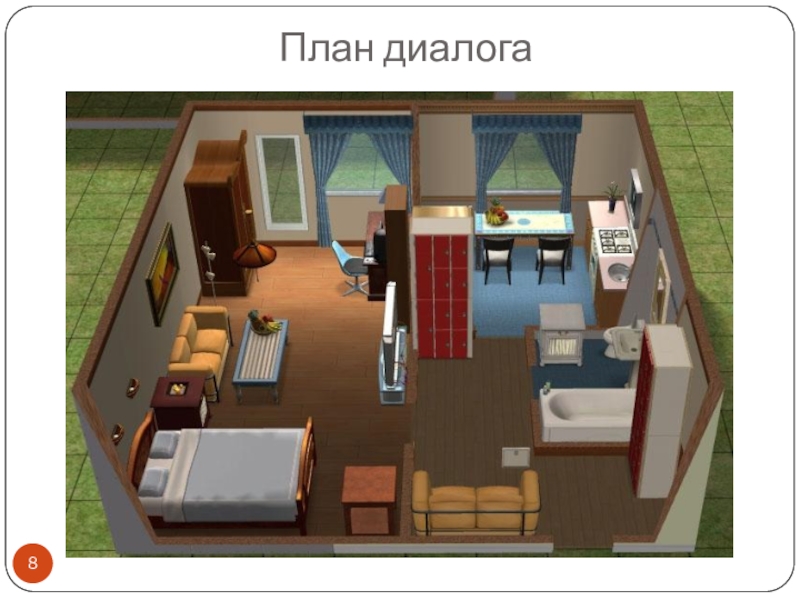
- 8. План диалога
- 9. - Sasha, is your flat large or
- 10. Преимущества равноправного диалогаон ориентирован на личный жизненный
- 11. Равноправные диалоги
- 12. Формально равноправные диалоги
- 13. Диалог образецRevise/Say and learn – other words
- 14. Диалог образецExercise 1 A: Where’s the bank?B:
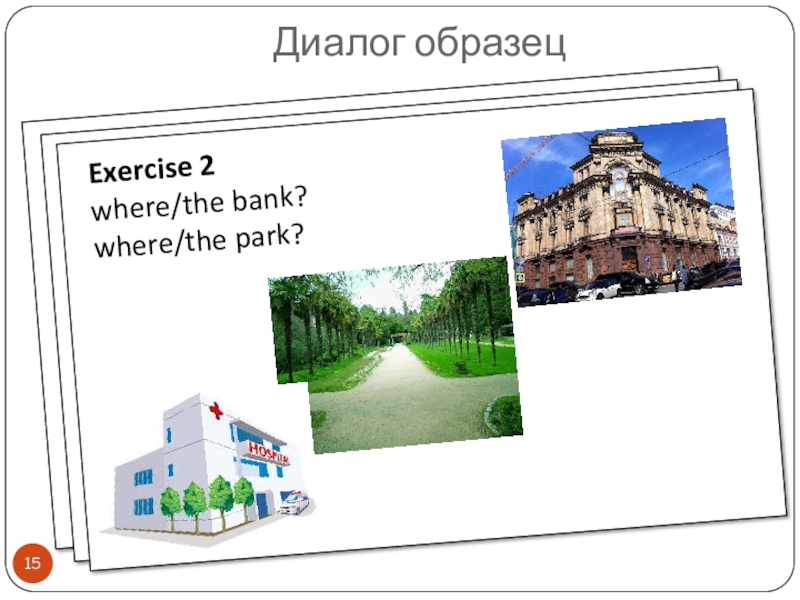
- 15. Диалог образецExercise 2 where/the bank?where/the park?
- 16. Диалог образецExercise 3 Complete and practiseA: Where’s
- 17. Диалог образецSay and learn - Presents SimplePresent
- 18. Диалог образецB: Yes , I do A:
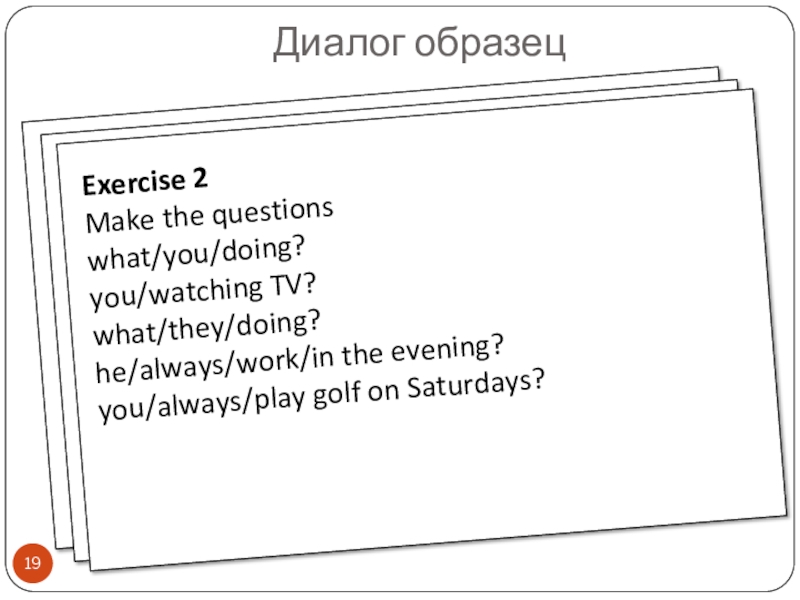
- 19. Диалог образецExercise 2 Make the questions what/you/doing?you/watching TV?what/they/doing?he/always/work/in the evening?you/always/play golf on Saturdays?
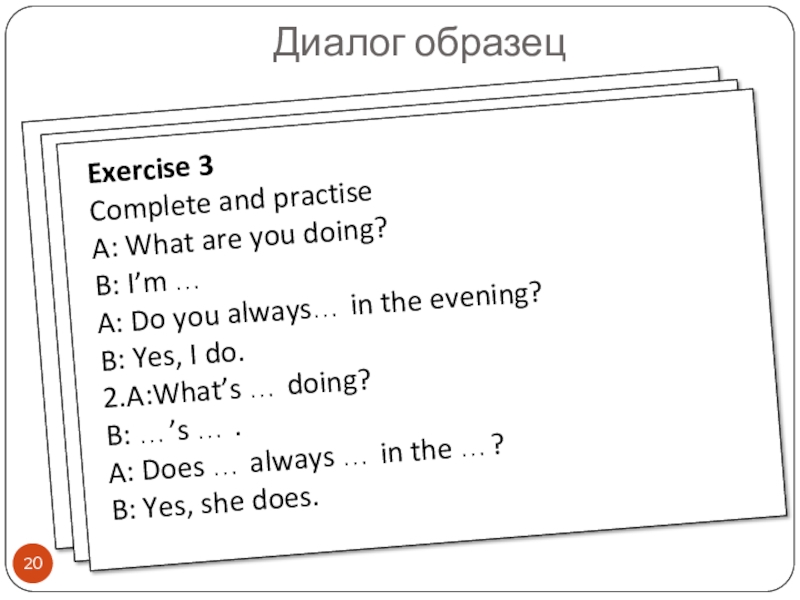
- 20. Диалог образецExercise 3 Complete and practise A:
- 21. Диалогическая речь со студентами технических специальностей
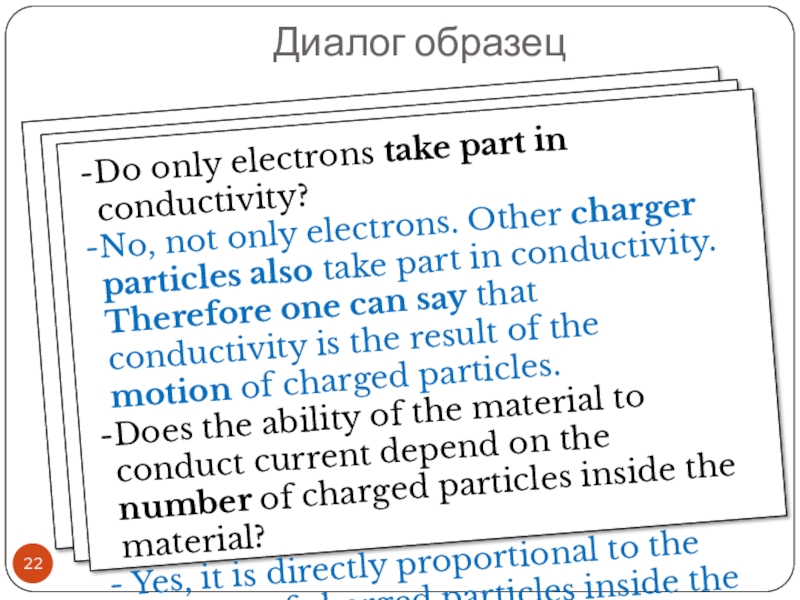
- 22. Диалог образецDo only electrons take part in
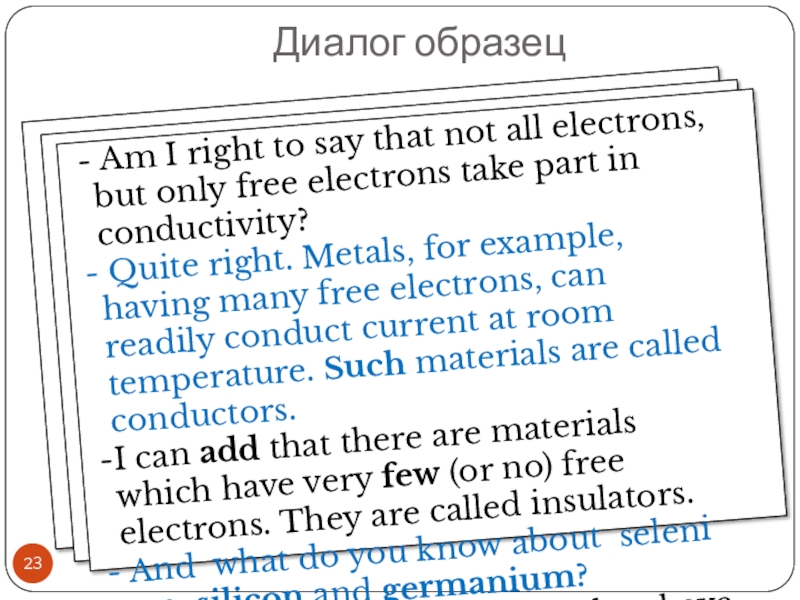
- 23. Диалог образец Am I right to say
- 24. Слайд 24
- 25. Bubba’s FoodSara Smith, who lives in San
- 26. Sarah Smith, who lives in San Francisco,
- 27. Спасибо за внимание
Проблемы диалогической речи
Слайд 1Петровская Анна Владимировна
Обучение диалогической речи на уроках иностранного языка
преподаватель английского языка

Слайд 3Проблемы диалогической речи
отсутствие каких-либо зрительных опор в процессе естественного говорения;
зависимость от:
партнёра
в процессе диалога;
темпа;
особенностей артикуляции;
богатства вокабуляра.
темпа;
особенностей артикуляции;
богатства вокабуляра.

Слайд 5Учебные речевые ситуации
УРС ставят студента в условия, однотипные с естественными.
УРС позволяют
активизировать разговорные формулы, определенную лексику, грамматические структуры, не фиксируя внимания на них.
УРС будят воображение студентов, заставляя их оформлять свою мысль на иностранном языке.
УРС будят воображение студентов, заставляя их оформлять свою мысль на иностранном языке.
Слайд 7- Sasha, is your flat large or small?
- I think, our
flat is neither too large nor too small. And what about your flat, Vera? Is your flat large or small?
- I’d say, our flat is rather small. How many rooms are there in your flat? (How many rooms do you have in your flat?)
- There are three rooms and a kitchen. (We have three rooms) And what about your flat, Vera? How many rooms are there in your flat? (How many rooms do you have in your flat?)
- There are only two rooms in our flat. (We have only two rooms.) What floor is your flat on?
- Our flat is on the ground floor. And what about your flat? What floor is your flat on?
- Our flat is on the third floor. Is there a telephone in your flat? (Are you on the phone?)
- No, unfortunately, there is no telephone in our flat (… we aren’t on the phone) And what about your flat? Is there a telephone in yours? (Are you on the phone?)
- Fortunately, there is a telephone in our flat (… we are on the phone.)
- I’d say, our flat is rather small. How many rooms are there in your flat? (How many rooms do you have in your flat?)
- There are three rooms and a kitchen. (We have three rooms) And what about your flat, Vera? How many rooms are there in your flat? (How many rooms do you have in your flat?)
- There are only two rooms in our flat. (We have only two rooms.) What floor is your flat on?
- Our flat is on the ground floor. And what about your flat? What floor is your flat on?
- Our flat is on the third floor. Is there a telephone in your flat? (Are you on the phone?)
- No, unfortunately, there is no telephone in our flat (… we aren’t on the phone) And what about your flat? Is there a telephone in yours? (Are you on the phone?)
- Fortunately, there is a telephone in our flat (… we are on the phone.)
Слайд 9- Sasha, is your flat large or small?
- I think, our
flat is neither too large nor too small. And what about your flat, Vera? Is your flat large or small?
- I’d say, our flat is rather small. How many rooms are there in your flat? (How many rooms do you have in your flat?)
- There are three rooms and a kitchen. (We have three rooms) And what about your flat, Vera? How many rooms are there in your flat? (How many rooms do you have in your flat?)
- There are only two rooms in our flat. (We have only two rooms.) What floor is your flat on?
- Our flat is on the ground floor. And what about your flat? What floor is your flat on?
- Our flat is on the third floor. Is there a telephone in your flat? (Are you on the phone?)
- No, unfortunately, there is no telephone in our flat (… we aren’t on the phone) And what about your flat? Is there a telephone in yours? (Are you on the phone?)
- Fortunately, there is a telephone in our flat (… we are on the phone.)
- I’d say, our flat is rather small. How many rooms are there in your flat? (How many rooms do you have in your flat?)
- There are three rooms and a kitchen. (We have three rooms) And what about your flat, Vera? How many rooms are there in your flat? (How many rooms do you have in your flat?)
- There are only two rooms in our flat. (We have only two rooms.) What floor is your flat on?
- Our flat is on the ground floor. And what about your flat? What floor is your flat on?
- Our flat is on the third floor. Is there a telephone in your flat? (Are you on the phone?)
- No, unfortunately, there is no telephone in our flat (… we aren’t on the phone) And what about your flat? Is there a telephone in yours? (Are you on the phone?)
- Fortunately, there is a telephone in our flat (… we are on the phone.)
Слайд 10Преимущества равноправного диалога
он ориентирован на личный жизненный опыт учащегося;
содержание диалога
легко поддаётся планированию;
диалог обеспечивает оптимальное сочетание структурной повторяемости реплик с их интонационной и лексической вариативностью, обеспечивая тем самым как прочность, так и осмысленность усвоения.
диалог обеспечивает оптимальное сочетание структурной повторяемости реплик с их интонационной и лексической вариативностью, обеспечивая тем самым как прочность, так и осмысленность усвоения.

Слайд 13Диалог образец
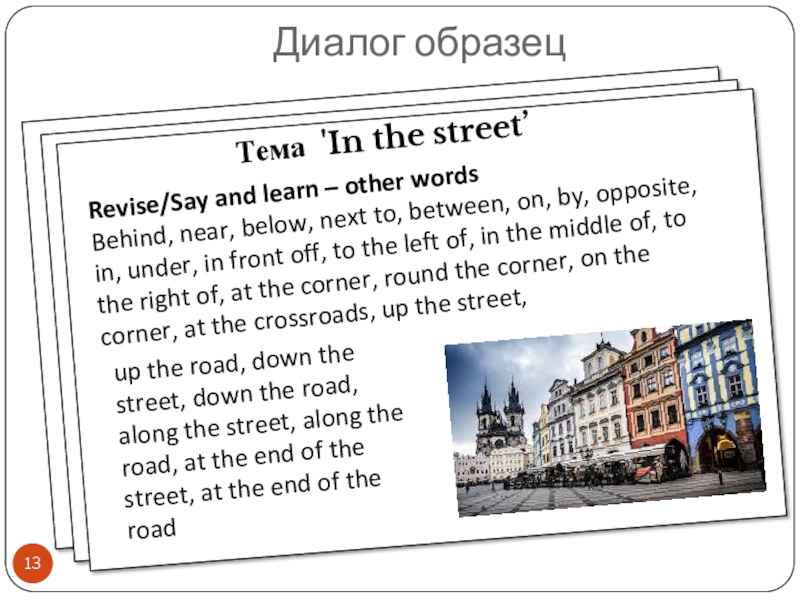
Revise/Say and learn – other words
Behind, near, below, next
to, between, on, by, opposite, in, under, in front off, to the left of, in the middle of, to the right of, at the corner, round the corner, on the corner, at the crossroads, up the street,
Тема 'In the street’
up the road, down the street, down the road, along the street, along the road, at the end of the street, at the end of the road
Слайд 14Диалог образец
Exercise 1
A: Where’s the bank?
B: It’s next to the
bookstore.
A: Where’s the café?
B: It’s between the dry cleaner’s and the video store
A: Where’s the supermarket
B: It’s round the corner opposite the railway station
A: Is the park on this street?
B: Yes, it is. It’s down the street by the church.
A: Where’s the café?
B: It’s between the dry cleaner’s and the video store
A: Where’s the supermarket
B: It’s round the corner opposite the railway station
A: Is the park on this street?
B: Yes, it is. It’s down the street by the church.
Слайд 16Диалог образец
Exercise 3
Complete and practise
A: Where’s the … ?
B: It’s
… .
A: Where’s the …?
B: It’s between the … and the … .
A: Where’s the … ?
B: It’s down the street next to the … .
A: Is the … on this street?
B: Yes, it is. It’s … the street near the … .
A: Where’s the …?
B: It’s between the … and the … .
A: Where’s the … ?
B: It’s down the street next to the … .
A: Is the … on this street?
B: Yes, it is. It’s … the street near the … .
Слайд 17Диалог образец
Say and learn - Presents Simple
Present Progressive
A: What are you
doing ?
B: I’m watching TV.
A: Do you always watch TV in the evening?
B: Yes, I do.
A: What’s John doing?
B: He’s studying.
A: Does he always study in the evening?
B: Yes, he does.
B: I’m watching TV.
A: Do you always watch TV in the evening?
B: Yes, I do.
A: What’s John doing?
B: He’s studying.
A: Does he always study in the evening?
B: Yes, he does.
Слайд 18Диалог образец
B: Yes , I do
A: Is Jane swimming?
B: Yes,
she is.
A: Does she always swim on Saturdays?
B: Yes, she does
A: What are Tom and Mark doing?
B: They’re playing football.
A: Do they always play football on Sundays?
B: Yes, they do
A: Does she always swim on Saturdays?
B: Yes, she does
A: What are Tom and Mark doing?
B: They’re playing football.
A: Do they always play football on Sundays?
B: Yes, they do
Слайд 19Диалог образец
Exercise 2
Make the questions
what/you/doing?
you/watching TV?
what/they/doing?
he/always/work/in the evening?
you/always/play golf
on Saturdays?
Слайд 20Диалог образец
Exercise 3
Complete and practise
A: What are you doing?
B:
I’m …
A: Do you always… in the evening?
B: Yes, I do.
2.A:What’s … doing?
B: …’s … .
A: Does … always … in the …?
B: Yes, she does.
A: Do you always… in the evening?
B: Yes, I do.
2.A:What’s … doing?
B: …’s … .
A: Does … always … in the …?
B: Yes, she does.

Слайд 22Диалог образец
Do only electrons take part in conductivity?
No, not only electrons.
Other charger particles also take part in conductivity. Therefore one can say that conductivity is the result of the motion of charged particles.
Does the ability of the material to conduct current depend on the number of charged particles inside the material?
Yes, it is directly proportional to the number of charged particles inside the material that can be set in motion.
Does the ability of the material to conduct current depend on the number of charged particles inside the material?
Yes, it is directly proportional to the number of charged particles inside the material that can be set in motion.
Слайд 23Диалог образец
Am I right to say that not all electrons,
but only free electrons take part in conductivity?
Quite right. Metals, for example, having many free electrons, can readily conduct current at room temperature. Such materials are called conductors.
I can add that there are materials which have very few (or no) free electrons. They are called insulators.
And what do you know about selenium, silicon and germanium?
These are semiconductors. They have more free electrons than insulators, but fewer than conductors.
Quite right. Metals, for example, having many free electrons, can readily conduct current at room temperature. Such materials are called conductors.
I can add that there are materials which have very few (or no) free electrons. They are called insulators.
And what do you know about selenium, silicon and germanium?
These are semiconductors. They have more free electrons than insulators, but fewer than conductors.

Слайд 25Bubba’s Food
Sara Smith, who lives in San Francisco, went shopping for
cat food.
Sara is 30, and lives at 3037 Market St. She has lived there since 1990. Sara is married. She is married to a man named John. She has been married for 7 years.
They have two children, and one very big cat. Their son Bob is five years old and their daughter Nancy is three. Their cat, Bubba, is 2 years old. Bubba is huge. He weighs 258 pounds (117 kilos)!
At 9 am, Sara got in to her car and drove to the pet store. She bought 68 bags of cat food for $10 each plus tax. The regular price was $15, so she got a good deal. The total was $680. She paid by credit card.
On her way home, Sara stopped at a convenience store to buy milk. Bubba loves milk. The milk was $3.00 for one gallon, and Sara bought 30 gallons. She paid $100 and got $10 back in change.
Sara got home at 11 a.m. Bubba was waiting at the door. He was very hungry.
Sara is 30, and lives at 3037 Market St. She has lived there since 1990. Sara is married. She is married to a man named John. She has been married for 7 years.
They have two children, and one very big cat. Their son Bob is five years old and their daughter Nancy is three. Their cat, Bubba, is 2 years old. Bubba is huge. He weighs 258 pounds (117 kilos)!
At 9 am, Sara got in to her car and drove to the pet store. She bought 68 bags of cat food for $10 each plus tax. The regular price was $15, so she got a good deal. The total was $680. She paid by credit card.
On her way home, Sara stopped at a convenience store to buy milk. Bubba loves milk. The milk was $3.00 for one gallon, and Sara bought 30 gallons. She paid $100 and got $10 back in change.
Sara got home at 11 a.m. Bubba was waiting at the door. He was very hungry.
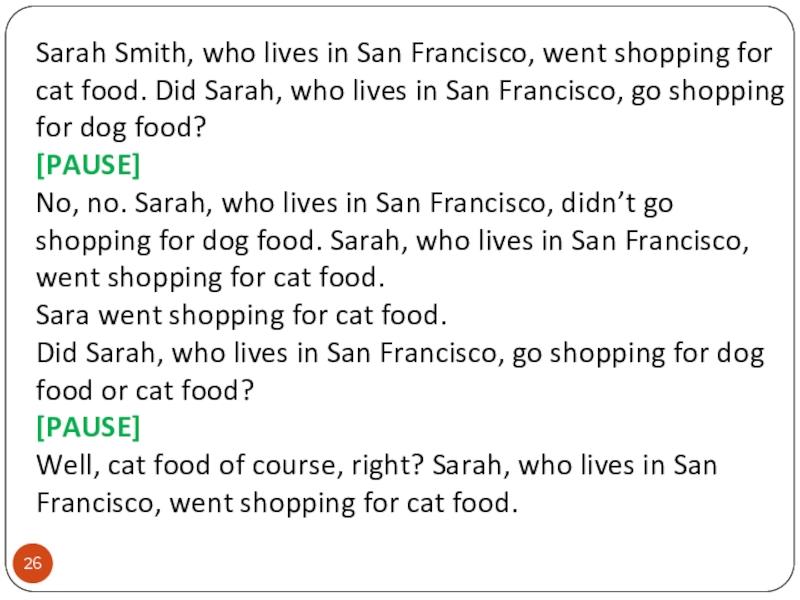
Слайд 26Sarah Smith, who lives in San Francisco, went shopping for cat
food. Did Sarah, who lives in San Francisco, go shopping for dog food?
[PAUSE]
No, no. Sarah, who lives in San Francisco, didn’t go shopping for dog food. Sarah, who lives in San Francisco, went shopping for cat food.
Sara went shopping for cat food.
Did Sarah, who lives in San Francisco, go shopping for dog food or cat food?
[PAUSE]
Well, cat food of course, right? Sarah, who lives in San Francisco, went shopping for cat food.
[PAUSE]
No, no. Sarah, who lives in San Francisco, didn’t go shopping for dog food. Sarah, who lives in San Francisco, went shopping for cat food.
Sara went shopping for cat food.
Did Sarah, who lives in San Francisco, go shopping for dog food or cat food?
[PAUSE]
Well, cat food of course, right? Sarah, who lives in San Francisco, went shopping for cat food.