- Главная
- Разное
- Образование
- Спорт
- Естествознание
- Природоведение
- Религиоведение
- Французский язык
- Черчение
- Английский язык
- Астрономия
- Алгебра
- Биология
- География
- Геометрия
- Детские презентации
- Информатика
- История
- Литература
- Математика
- Музыка
- МХК
- Немецкий язык
- ОБЖ
- Обществознание
- Окружающий мир
- Педагогика
- Русский язык
- Технология
- Физика
- Философия
- Химия
- Шаблоны, фоны, картинки для презентаций
- Экология
- Экономика
Презентация, доклад на тему История Английского языка: Development of the Gerund
Содержание
- 1. История Английского языка: Development of the Gerund
- 2. Plan:Origin of the gerundThe endings of the
- 3. Key Terms:Blending – контаминация, смешениеOverlap – наложениеDescendant – потомок
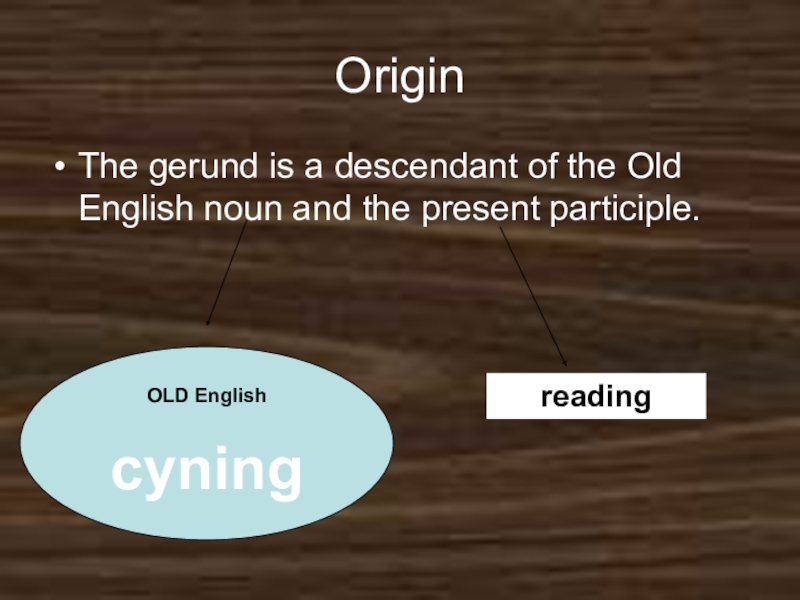
- 4. OriginThe gerund is a descendant of the Old English noun and the present participle.reading OLD Englishcyning
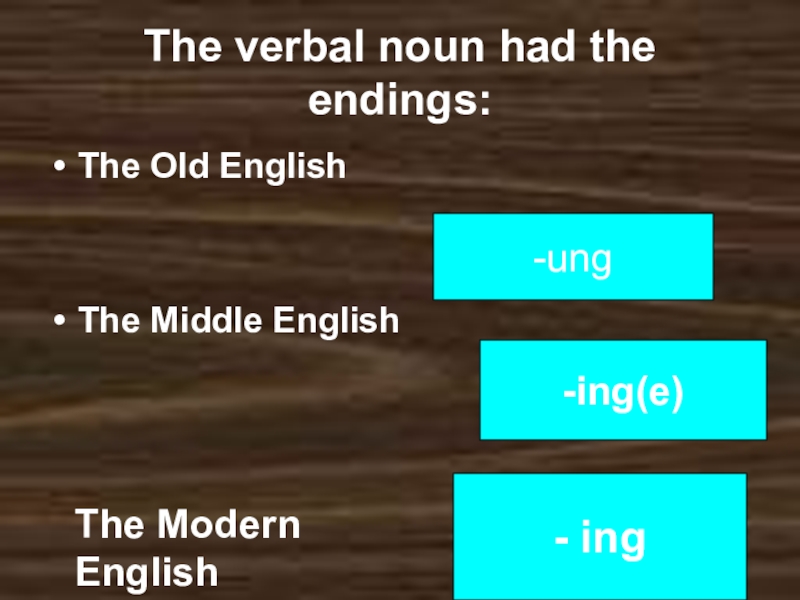
- 5. The verbal noun had the endings:
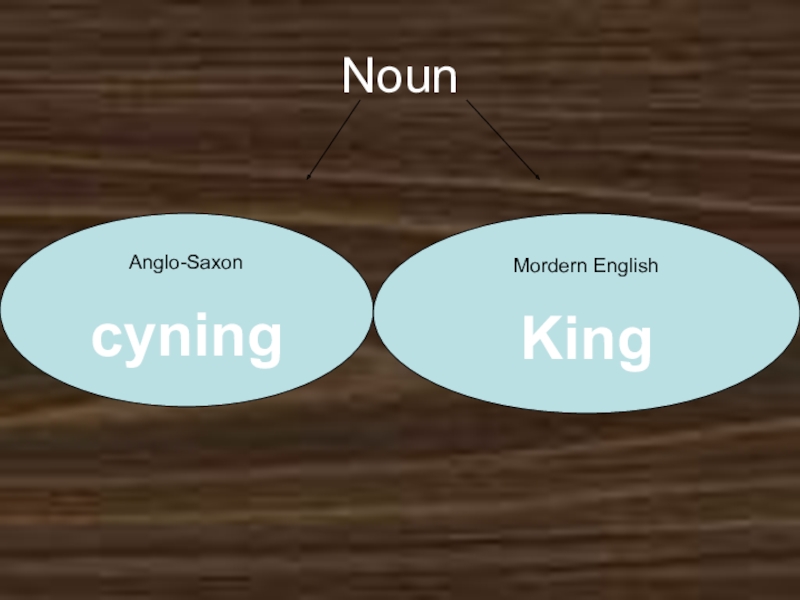
- 6. NounAnglo-Saxon cyningMordern English King
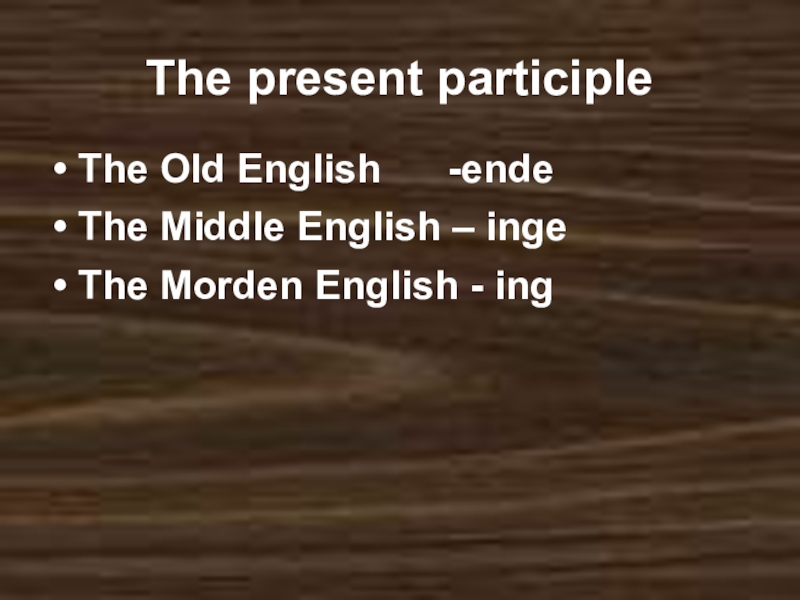
- 7. The present participleThe Old English -endeThe Middle English – ingeThe Morden English - ing
- 8. The verbal noun and the participle became merged into one form -ing
- 9. As the result of the blending of
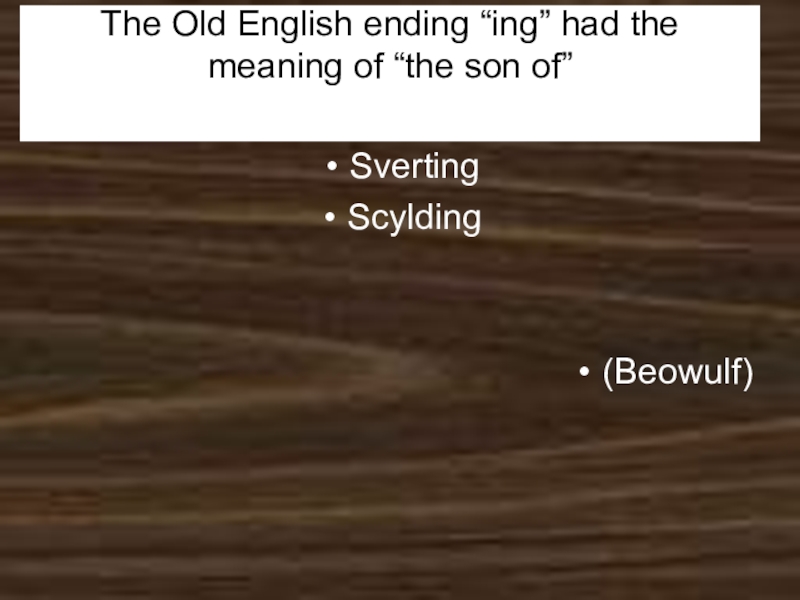
- 10. The Old English ending “ing” had the meaning of “the son of” SvertingScylding(Beowulf)
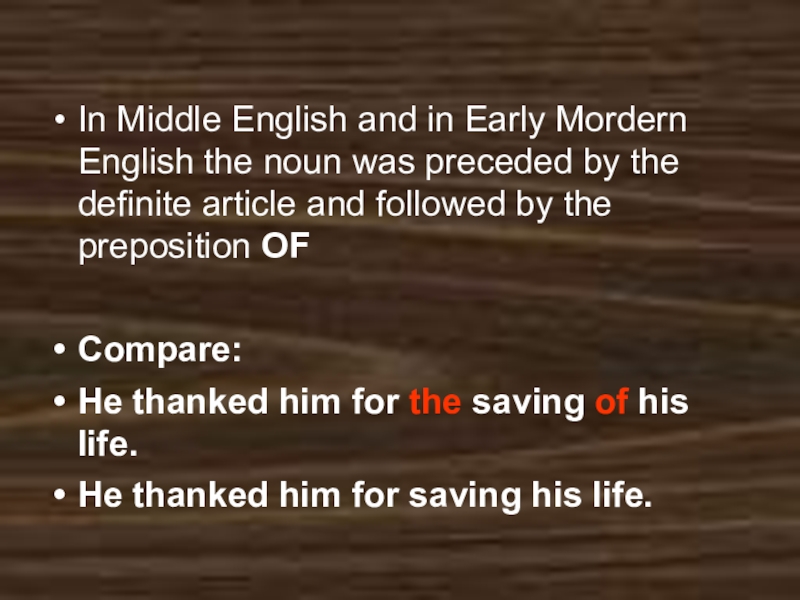
- 11. In Middle English and in Early Mordern
- 12. The sphere of the usageGerund replaced the
- 13. The advantage of the gerund was that
- 14. Modern EnglishGerund Nominal
- 15. Thank you for your attention
Plan:Origin of the gerundThe endings of the verbal nounsThe endings of the present participleThe sphere of the usageModern English
Слайд 2Plan:
Origin of the gerund
The endings of the verbal nouns
The endings of
the present participle
The sphere of the usage
Modern English
The sphere of the usage
Modern English
Слайд 4Origin
The gerund is a descendant of the Old English noun and
the present participle.
reading
OLD English
cyning
Слайд 5
The verbal noun had the endings:
The Old English
The Middle English
-ung
-ing(e)
The
Modern English
- ing
Слайд 9As the result of the blending of the two forms,
The
verbal noun in (-ing) began to develop verbal
characteristics
Under the influence of the participle
characteristics
Under the influence of the participle
Слайд 11In Middle English and in Early Mordern English the noun was
preceded by the definite article and followed by the preposition OF
Compare:
He thanked him for the saving of his life.
He thanked him for saving his life.
Compare:
He thanked him for the saving of his life.
He thanked him for saving his life.
Слайд 12The sphere of the usage
Gerund replaced the Infinitive and the Participle
in many adverbial functions.
Its advantage was that is could be used with various prepositions
Its advantage was that is could be used with various prepositions
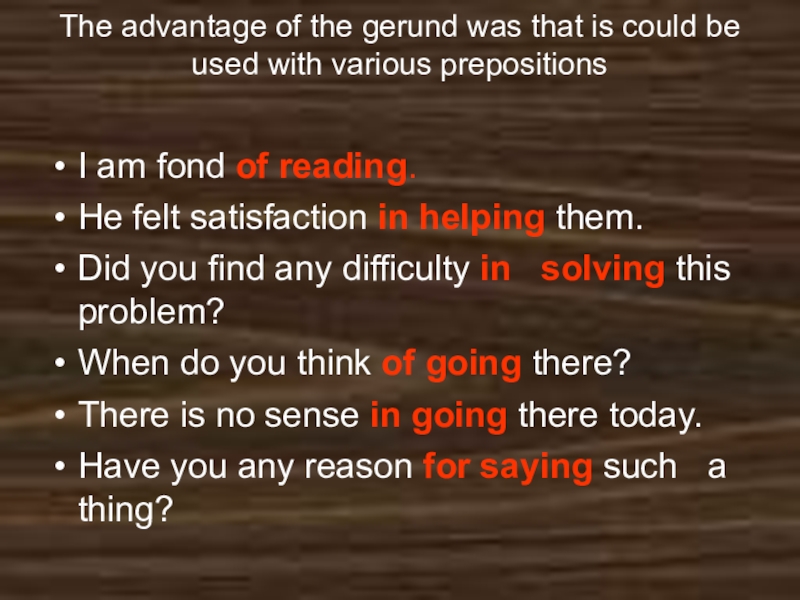
Слайд 13The advantage of the gerund was that is could be used
with various prepositions
I am fond of reading.
He felt satisfaction in helping them.
Did you find any difficulty in solving this problem?
When do you think of going there?
There is no sense in going there today.
Have you any reason for saying such a thing?
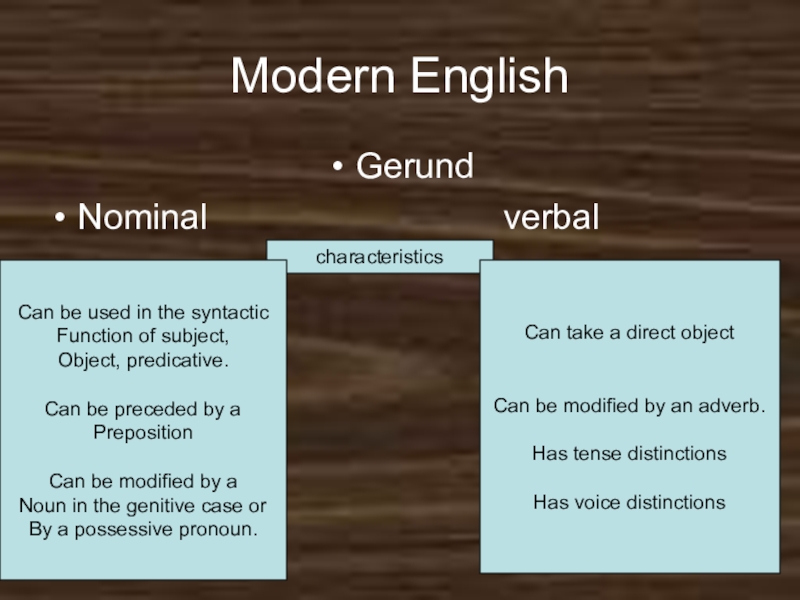
Слайд 14Modern English
Gerund
Nominal
verbal
characteristics
Can be used in the syntactic
Function of subject,
Object, predicative.
Can be preceded by a
Preposition
Can be modified by a
Noun in the genitive case or
By a possessive pronoun.
Can take a direct object
Can be modified by an adverb.
Has tense distinctions
Has voice distinctions