- Главная
- Разное
- Образование
- Спорт
- Естествознание
- Природоведение
- Религиоведение
- Французский язык
- Черчение
- Английский язык
- Астрономия
- Алгебра
- Биология
- География
- Геометрия
- Детские презентации
- Информатика
- История
- Литература
- Математика
- Музыка
- МХК
- Немецкий язык
- ОБЖ
- Обществознание
- Окружающий мир
- Педагогика
- Русский язык
- Технология
- Физика
- Философия
- Химия
- Шаблоны, фоны, картинки для презентаций
- Экология
- Экономика
Презентация, доклад по политологии на тему Международные организации
Содержание
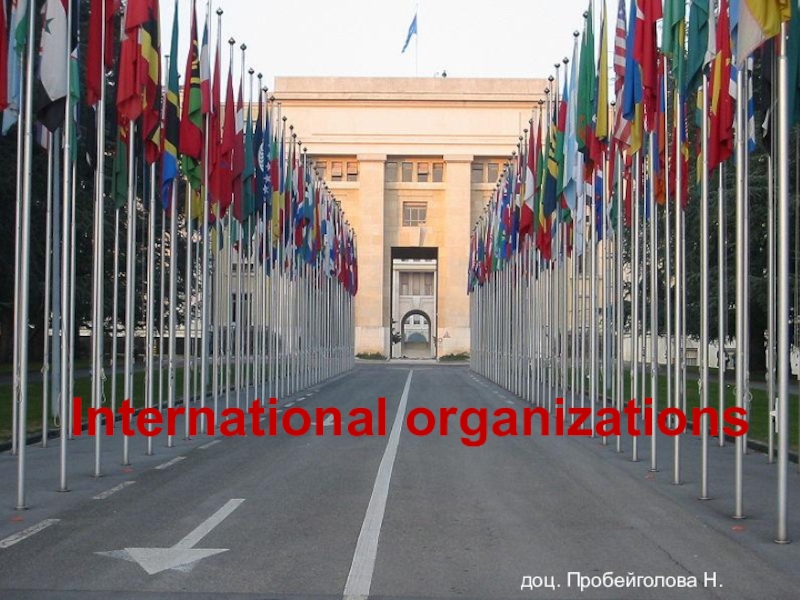
- 1. Презентация по политологии на тему Международные организации
- 2. United Nations (UN) In 2007, the
- 3. The main objectives of the UNto maintain
- 4. The Headquarters of the UN is situated
- 5. the General Assembly;the Security Council;Secretariat,;the International
- 6. the General Assembly is considering the principles
- 7. General AssemblyIt includes all members of the
- 8. Security CouncilThe Security Council is responsible for
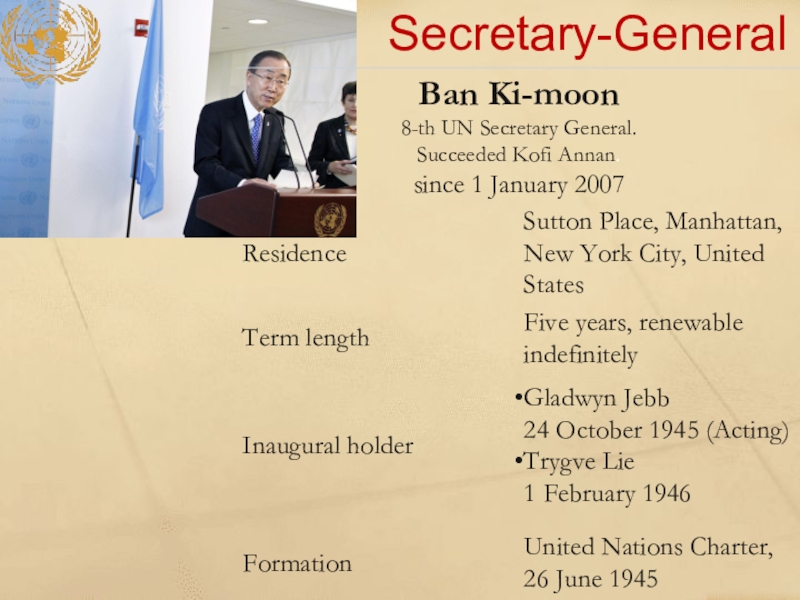
- 9. Secretary-General
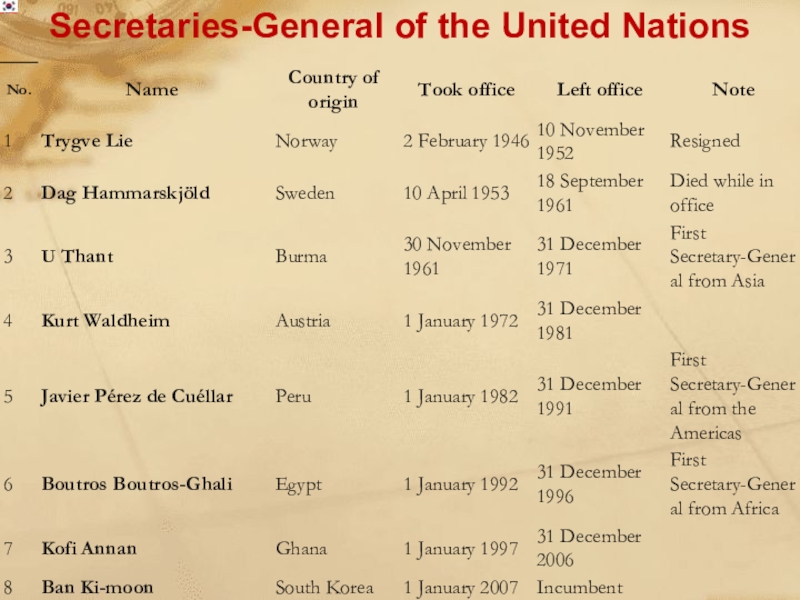
- 10. Secretaries-General of the United Nations
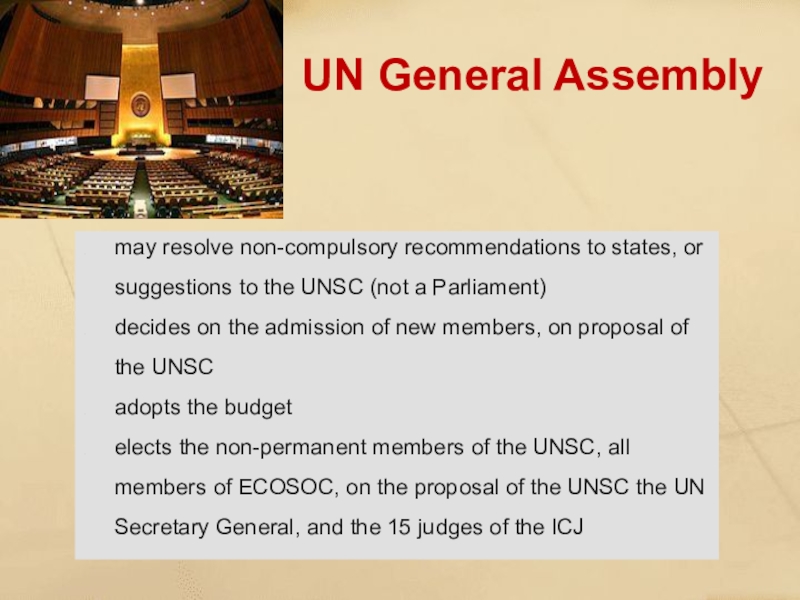
- 11. UN General Assembly
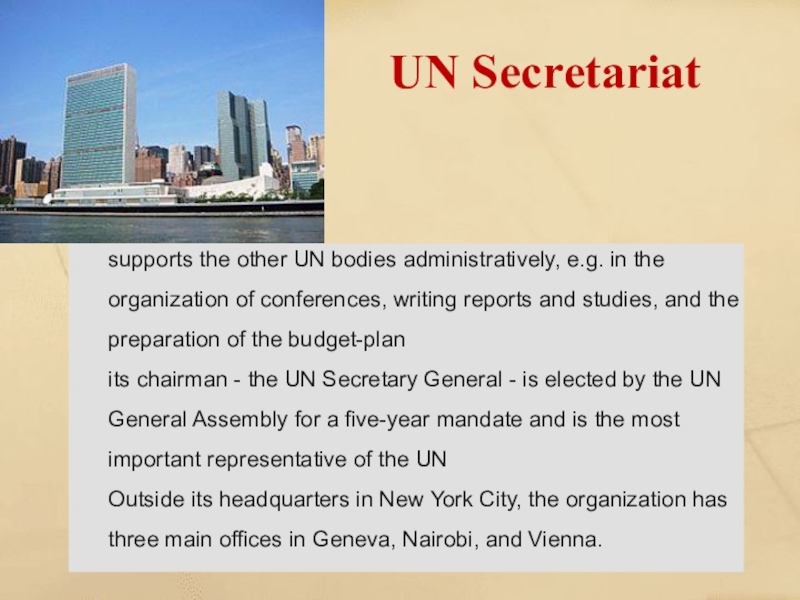
- 12. UN Secretariat
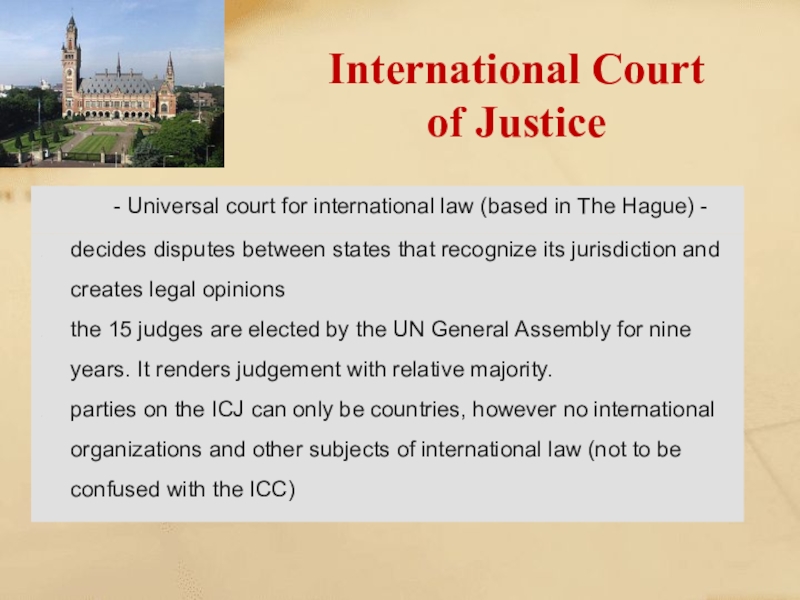
- 13. International Court of Justice
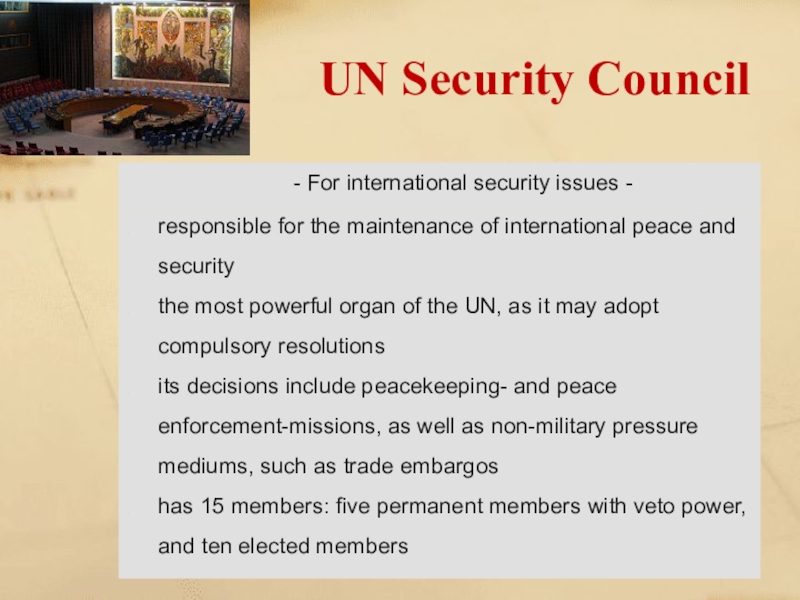
- 14. UN Security Council
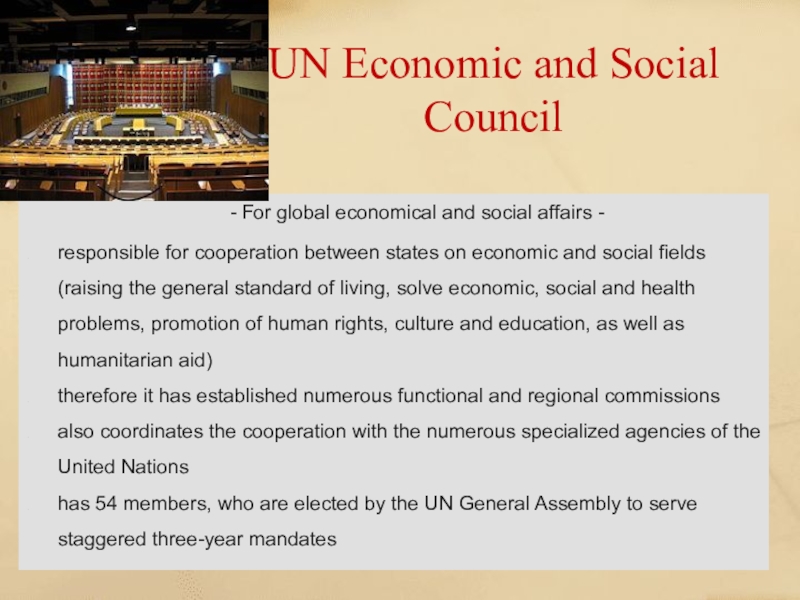
- 15. UN Economic and Social Council
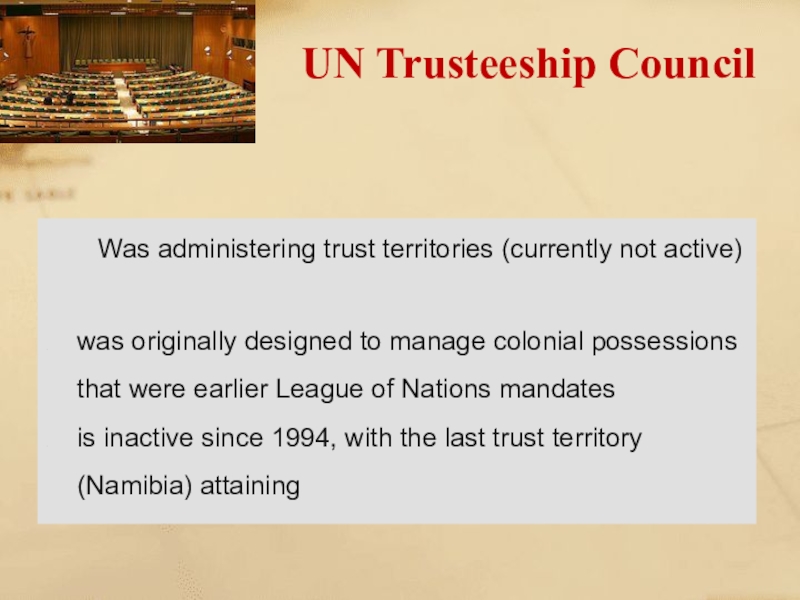
- 16. UN Trusteeship Council
- 17. The basic directions of activity of the United Nations:the health of the population;education;demographics;environment;economic development.
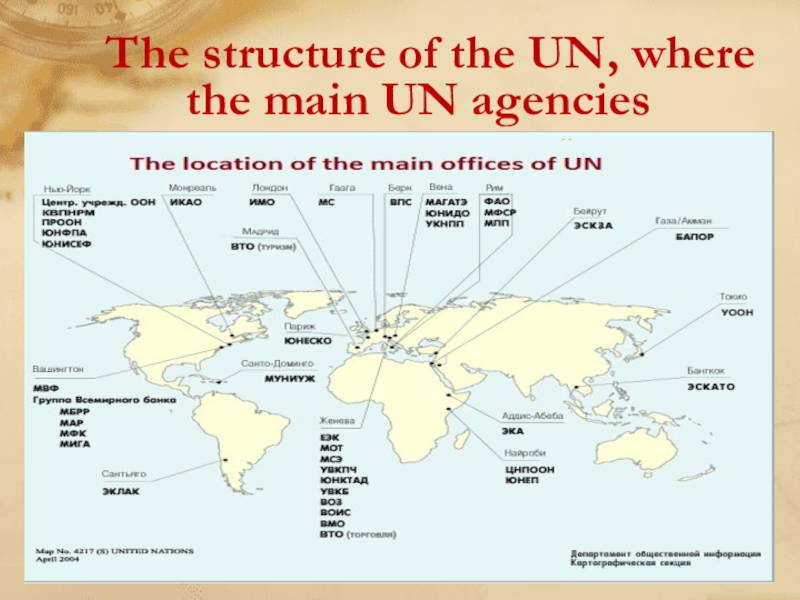
- 18. The structure of the UN, where the main UN agencies
- 19. OTHER INTERNATIONAL ORGANIZATIONS
- 20. The North Atlantic Treaty Organization-NATOWas established in
- 21. The Council for mutual economic assistance,
- 22. АНЗЮС (Australia-New Zealand-United States Security Treaty —
- 23. The Organization for security and cooperation in
- 24. Of The Islamic Conference, OICfounded in 1969,
- 25. The League Of Arab States (LAS) founded
- 26. Organization of petroleum exporting countries OPECestablished in
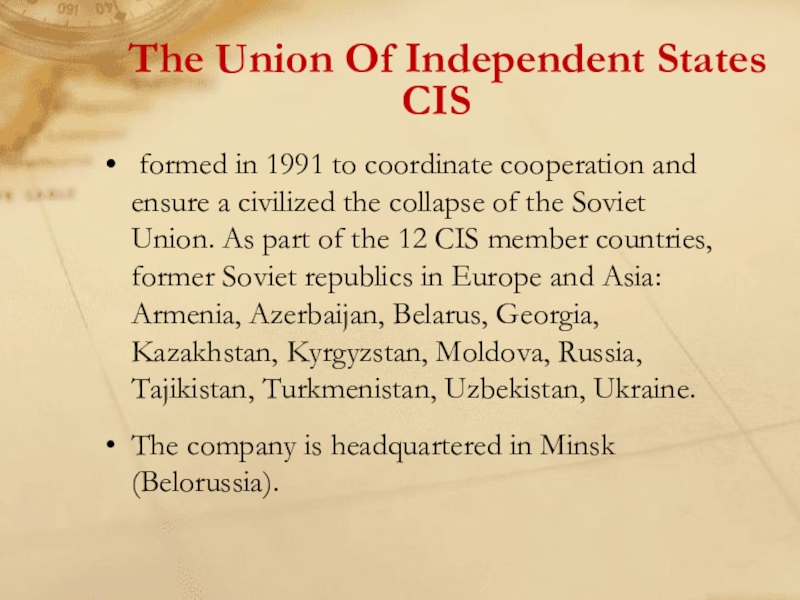
- 27. The Union Of Independent States CIS
United Nations (UN) In 2007, the UN included 192 independent StatesThe United Nations (UN) is indisputably the biggest, the most important, global and universal organization today. It was created after the Second World War, in
Слайд 2United Nations
(UN)
In 2007, the UN included 192 independent States
The
United Nations (UN) is indisputably the biggest, the most important, global and universal organization today. It was created after the Second World War, in 1945, with the aim of preventing of the next world war and local conflicts, strengthening of international safety and development of international cooperation.
Слайд 3The main objectives of the UN
to maintain international peace and security;
to
develop friendly relations among Nations;
to achieve international cooperation in solving international problems;
promote respect for human rights and to be a Centre for harmonizing the actions of Nations in the attainment of these common ends.
to achieve international cooperation in solving international problems;
promote respect for human rights and to be a Centre for harmonizing the actions of Nations in the attainment of these common ends.
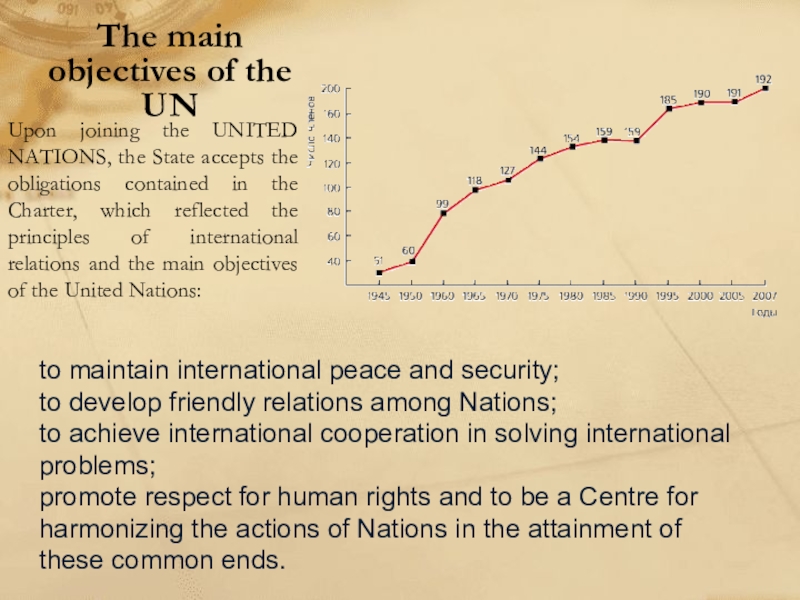
Upon joining the UNITED NATIONS, the State accepts the obligations contained in the Charter, which reflected the principles of international relations and the main objectives of the United Nations:
Слайд 4The Headquarters of the UN is situated in New York (USA).
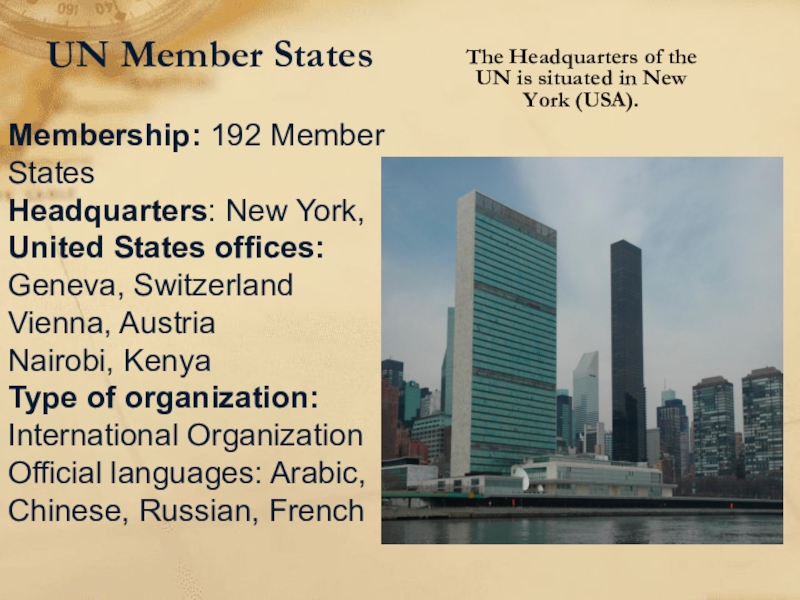
Membership:
192 Member States
Headquarters: New York, United States offices: Geneva, Switzerland Vienna, Austria
Nairobi, Kenya
Type of organization: International Organization
Official languages: Arabic, Chinese, Russian, French
Headquarters: New York, United States offices: Geneva, Switzerland Vienna, Austria
Nairobi, Kenya
Type of organization: International Organization
Official languages: Arabic, Chinese, Russian, French
Слайд 5 the General Assembly;
the Security Council;
Secretariat,;
the International Court of Justice;
the
Trusteeship Council;
the Economic Council;
Social Council.
the Economic Council;
Social Council.
The principal organs of the UN
Слайд 6the General Assembly is considering the principles of cooperation in the
field of ensuring international peace and security;
elect non-permanent members of the UN Security Council, members of the economic and Social Council;
on the recommendation of the Security Council, appoints the Secretary-General of the United Nations;
in conjunction with the Security Council elects the members of the International Court of Justice;
coordinates international cooperation in the economic, social, cultural and humanitarian spheres;
exercise other powers provided for in the Charter of the United Nations.
elect non-permanent members of the UN Security Council, members of the economic and Social Council;
on the recommendation of the Security Council, appoints the Secretary-General of the United Nations;
in conjunction with the Security Council elects the members of the International Court of Justice;
coordinates international cooperation in the economic, social, cultural and humanitarian spheres;
exercise other powers provided for in the Charter of the United Nations.
General Assembly
the chief deliberative, policymaking and representative organ
Слайд 7General Assembly
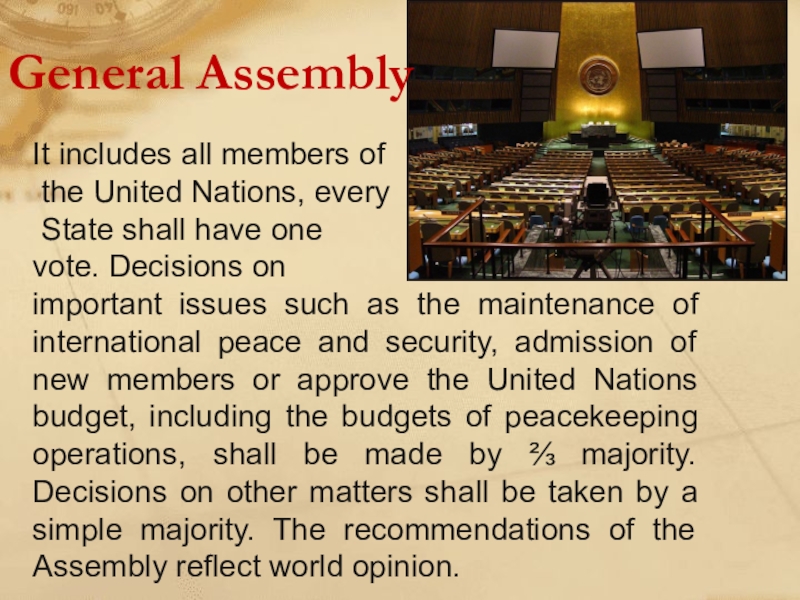
It includes all members of
the United Nations, every
State
shall have one
vote. Decisions on
important issues such as the maintenance of international peace and security, admission of new members or approve the United Nations budget, including the budgets of peacekeeping operations, shall be made by ⅔ majority. Decisions on other matters shall be taken by a simple majority. The recommendations of the Assembly reflect world opinion.
vote. Decisions on
important issues such as the maintenance of international peace and security, admission of new members or approve the United Nations budget, including the budgets of peacekeeping operations, shall be made by ⅔ majority. Decisions on other matters shall be taken by a simple majority. The recommendations of the Assembly reflect world opinion.
Слайд 8Security Council
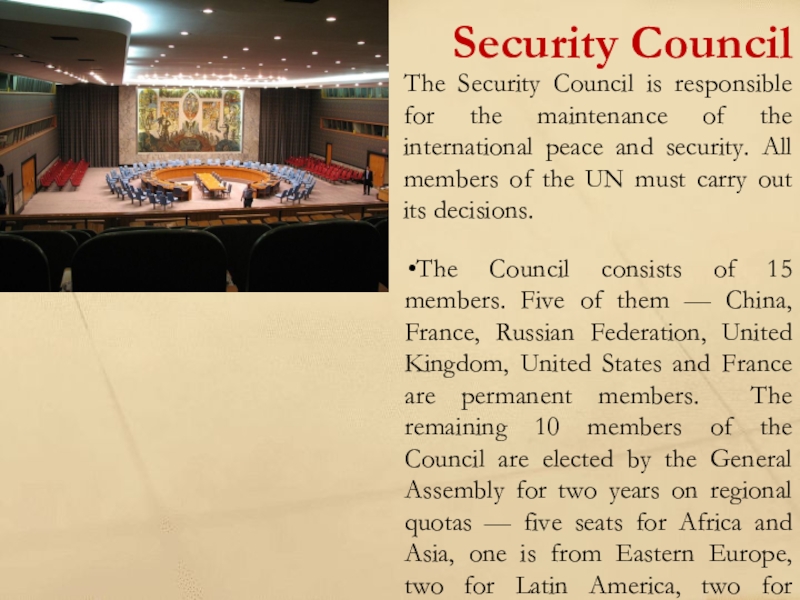
The Security Council is responsible for the maintenance of the
international peace and security. All members of the UN must carry out its decisions.
The Council consists of 15 members. Five of them — China, France, Russian Federation, United Kingdom, United States and France are permanent members. The remaining 10 members of the Council are elected by the General Assembly for two years on regional quotas — five seats for Africa and Asia, one is from Eastern Europe, two for Latin America, two for Western Europe. The decisions of the Council shall be made by an affirmative vote of nine members. However, the decision cannot be taken, even if one of the permanent members would vote against, IE uses its right of veto. The decisions of the Council are binding on all Member States
.
The Council consists of 15 members. Five of them — China, France, Russian Federation, United Kingdom, United States and France are permanent members. The remaining 10 members of the Council are elected by the General Assembly for two years on regional quotas — five seats for Africa and Asia, one is from Eastern Europe, two for Latin America, two for Western Europe. The decisions of the Council shall be made by an affirmative vote of nine members. However, the decision cannot be taken, even if one of the permanent members would vote against, IE uses its right of veto. The decisions of the Council are binding on all Member States
.
Слайд 17The basic directions of activity of the United Nations:
the health of
the population;
education;
demographics;
environment;
economic development.
education;
demographics;
environment;
economic development.

Слайд 20The North Atlantic Treaty Organization-NATO
Was established in 1949 as a standoff
threat of communism
In 2008, members of the 26 NATO States:
In 1999, the three new members joined NATO, Poland, Czech Republic and Hungary.
In 2004, the seven Eastern European countries to NATO: Slovenia, Slovakia, Romania, Bulgaria, Lithuania, Latvia, Estonia.
The headquarters of the governing bodies is located in Brussels (Belgium).
In 2008, members of the 26 NATO States:
In 1999, the three new members joined NATO, Poland, Czech Republic and Hungary.
In 2004, the seven Eastern European countries to NATO: Slovenia, Slovakia, Romania, Bulgaria, Lithuania, Latvia, Estonia.
The headquarters of the governing bodies is located in Brussels (Belgium).
Слайд 21 The Council for mutual economic assistance, CMEA
the economic cooperation organization
of socialist countries that existed in 1949-1991 Gg.
Member countries: Albania (did not participate in the work of the organization in 1961, after breaking off relations with the Soviet Union), Bulgaria, Viet Nam, Cuba, Czechoslovakia, the German Democratic Republic, Hungary, Mongolia, Poland, Romania, Soviet Union. The Socialist Federal Republic of Yugoslavia has had the status of associate member; browser status had the so-called socialist countries — Afghanistan, Angola, Ethiopia, Laos, Mozambique, Nicaragua, Yemen.
Member countries: Albania (did not participate in the work of the organization in 1961, after breaking off relations with the Soviet Union), Bulgaria, Viet Nam, Cuba, Czechoslovakia, the German Democratic Republic, Hungary, Mongolia, Poland, Romania, Soviet Union. The Socialist Federal Republic of Yugoslavia has had the status of associate member; browser status had the so-called socialist countries — Afghanistan, Angola, Ethiopia, Laos, Mozambique, Nicaragua, Yemen.
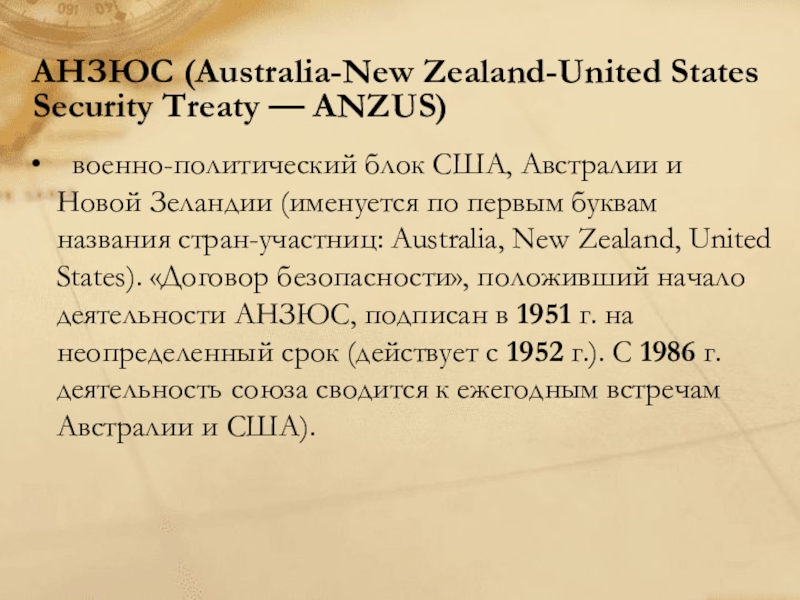
Слайд 22АНЗЮС (Australia-New Zealand-United States Security Treaty — ANZUS)
военно-политический блок США,
Австралии и Новой Зеландии (именуется по первым буквам названия стран-участниц: Australia, New Zealand, United States). «Договор безопасности», положивший начало деятельности АНЗЮС, подписан в 1951 г. на неопределенный срок (действует с 1952 г.). С 1986 г. деятельность союза сводится к ежегодным встречам Австралии и США).
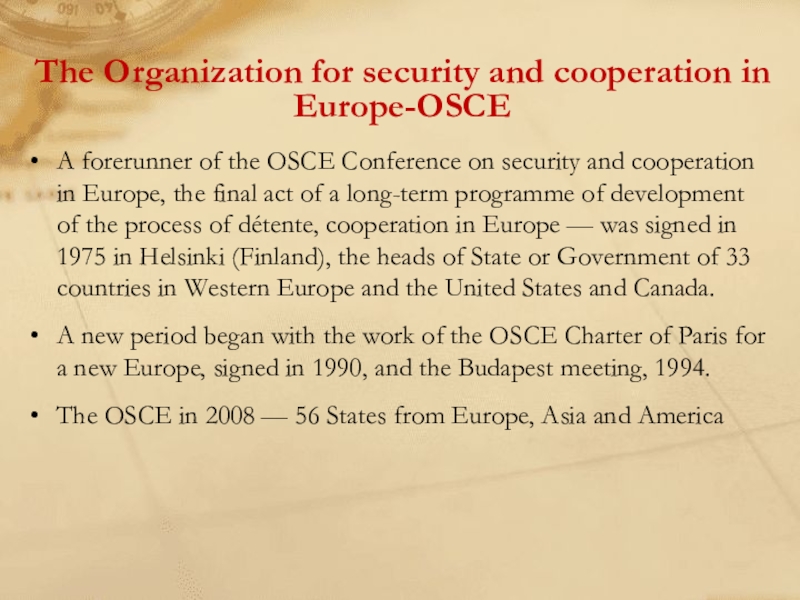
Слайд 23The Organization for security and cooperation in Europe-OSCE
A forerunner of the
OSCE Conference on security and cooperation in Europe, the final act of a long-term programme of development of the process of détente, cooperation in Europe — was signed in 1975 in Helsinki (Finland), the heads of State or Government of 33 countries in Western Europe and the United States and Canada.
A new period began with the work of the OSCE Charter of Paris for a new Europe, signed in 1990, and the Budapest meeting, 1994.
The OSCE in 2008 — 56 States from Europe, Asia and America
A new period began with the work of the OSCE Charter of Paris for a new Europe, signed in 1990, and the Budapest meeting, 1994.
The OSCE in 2008 — 56 States from Europe, Asia and America
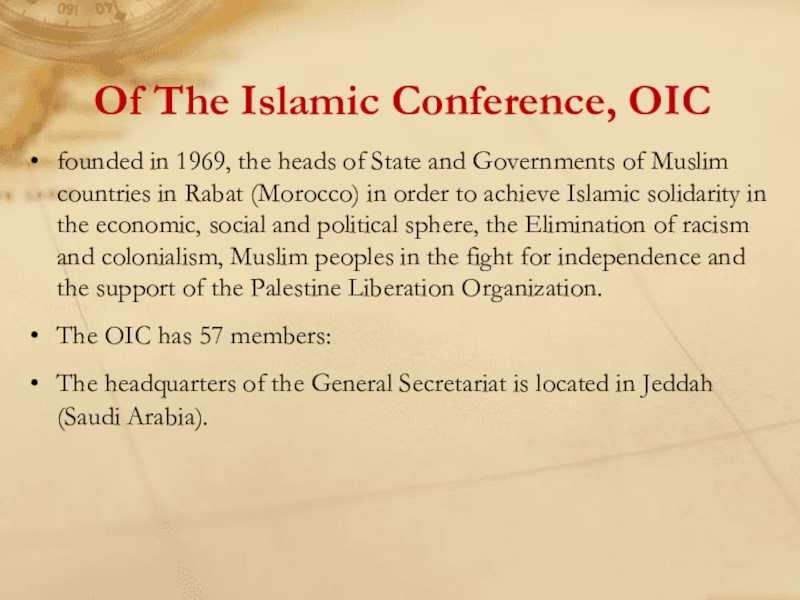
Слайд 24Of The Islamic Conference, OIC
founded in 1969, the heads of State
and Governments of Muslim countries in Rabat (Morocco) in order to achieve Islamic solidarity in the economic, social and political sphere, the Elimination of racism and colonialism, Muslim peoples in the fight for independence and the support of the Palestine Liberation Organization.
The OIC has 57 members:
The headquarters of the General Secretariat is located in Jeddah (Saudi Arabia).
The OIC has 57 members:
The headquarters of the General Secretariat is located in Jeddah (Saudi Arabia).
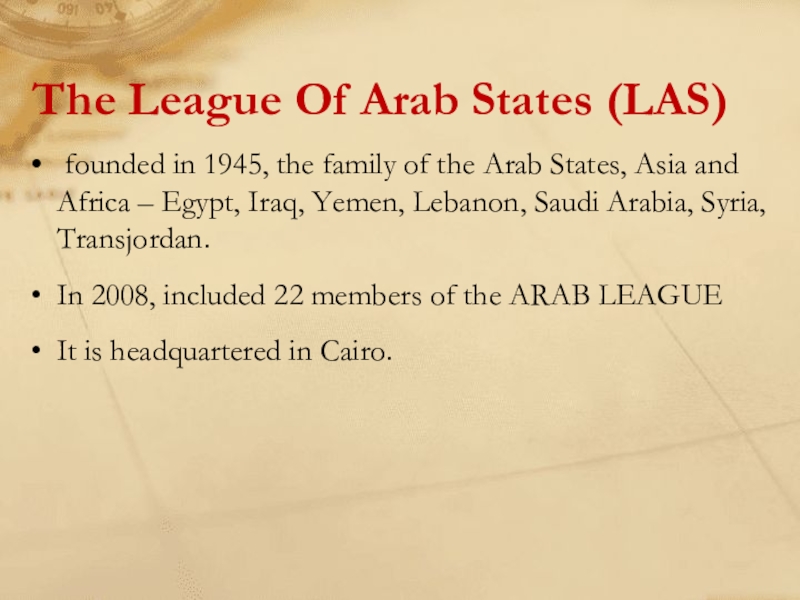
Слайд 25The League Of Arab States (LAS)
founded in 1945, the family
of the Arab States, Asia and Africa – Egypt, Iraq, Yemen, Lebanon, Saudi Arabia, Syria, Transjordan.
In 2008, included 22 members of the ARAB LEAGUE
It is headquartered in Cairo.
In 2008, included 22 members of the ARAB LEAGUE
It is headquartered in Cairo.
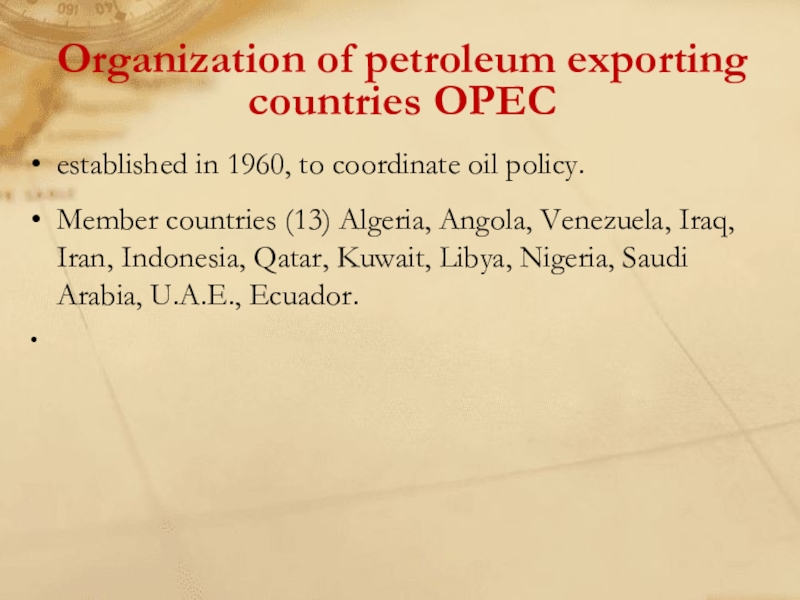
Слайд 26Organization of petroleum exporting countries OPEC
established in 1960, to coordinate oil
policy.
Member countries (13) Algeria, Angola, Venezuela, Iraq, Iran, Indonesia, Qatar, Kuwait, Libya, Nigeria, Saudi Arabia, U.A.E., Ecuador.
Member countries (13) Algeria, Angola, Venezuela, Iraq, Iran, Indonesia, Qatar, Kuwait, Libya, Nigeria, Saudi Arabia, U.A.E., Ecuador.
Слайд 27 The Union Of Independent States CIS
formed in 1991 to
coordinate cooperation and ensure a civilized the collapse of the Soviet Union. As part of the 12 CIS member countries, former Soviet republics in Europe and Asia: Armenia, Azerbaijan, Belarus, Georgia, Kazakhstan, Kyrgyzstan, Moldova, Russia, Tajikistan, Turkmenistan, Uzbekistan, Ukraine.
The company is headquartered in Minsk (Belorussia).
The company is headquartered in Minsk (Belorussia).