- Главная
- Разное
- Образование
- Спорт
- Естествознание
- Природоведение
- Религиоведение
- Французский язык
- Черчение
- Английский язык
- Астрономия
- Алгебра
- Биология
- География
- Геометрия
- Детские презентации
- Информатика
- История
- Литература
- Математика
- Музыка
- МХК
- Немецкий язык
- ОБЖ
- Обществознание
- Окружающий мир
- Педагогика
- Русский язык
- Технология
- Физика
- Философия
- Химия
- Шаблоны, фоны, картинки для презентаций
- Экология
- Экономика
Презентация, доклад -проект Arabic dance
Содержание
- 1. Презентация -проект Arabic dance
- 2. Belly dance is a name given for
- 3. 1. Belly Dancing with the VeilBelly dancing
- 4. 2. Cane Dance
- 5. 3. Egyptian Style of Oriental Dance Egyptian
- 6. 4. Turkish Style of Oriental DanceThere
- 7. 5. Lebanese Style of Oriental Dance
- 8. 6. Dance with a saberSword –
- 9. 7. Dance with wings
- 10. Why do we dance?
- 11. 1. All muscle groups workExercise encourages your
- 12. Movements of the body
- 13. Burning Calories Burning calories helps maintain
- 14. An Italian study revealed that people who
- 15. It keeps you happyElimination of depression and
- 16. My rewards
- 17. Слайд 17
Belly dance is a name given for a traditional Middle Eastern dance or Arabic dance. In Arabic dance every part of the body is involved and the most featured part of the body usually being the
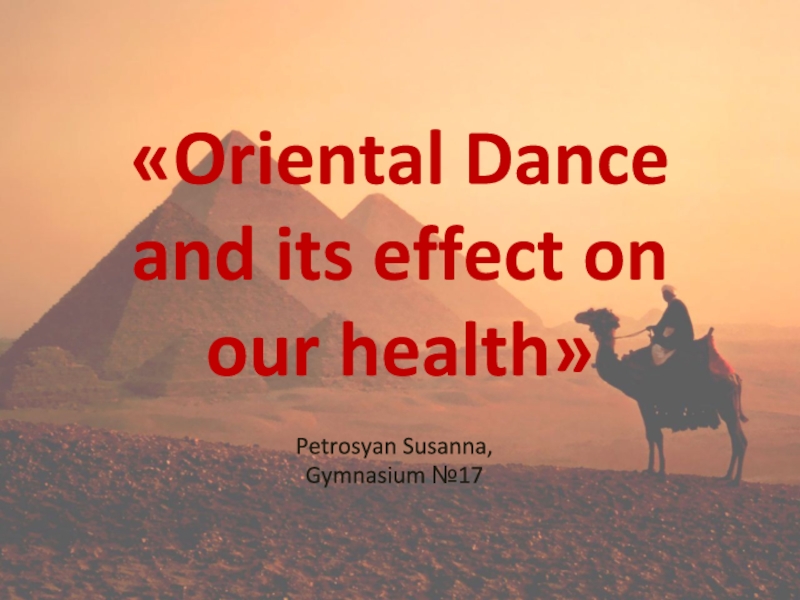
Слайд 2Belly dance is a name given for a traditional Middle Eastern
dance
or Arabic dance.
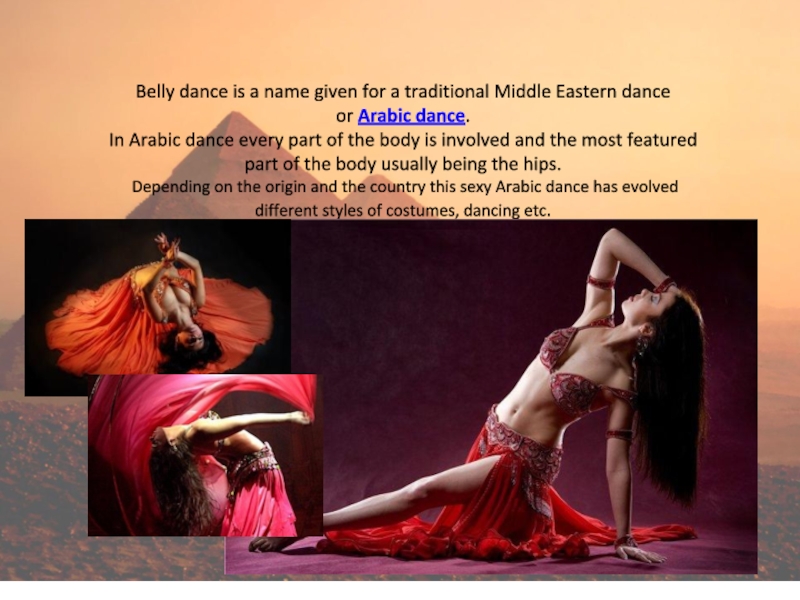
In Arabic dance every part of the body is involved and the most featured part of the body usually being the hips.
Depending on the origin and the country this sexy Arabic dance has evolved different styles of costumes, dancing etc.
or Arabic dance.
In Arabic dance every part of the body is involved and the most featured part of the body usually being the hips.
Depending on the origin and the country this sexy Arabic dance has evolved different styles of costumes, dancing etc.
Слайд 31. Belly Dancing with the Veil
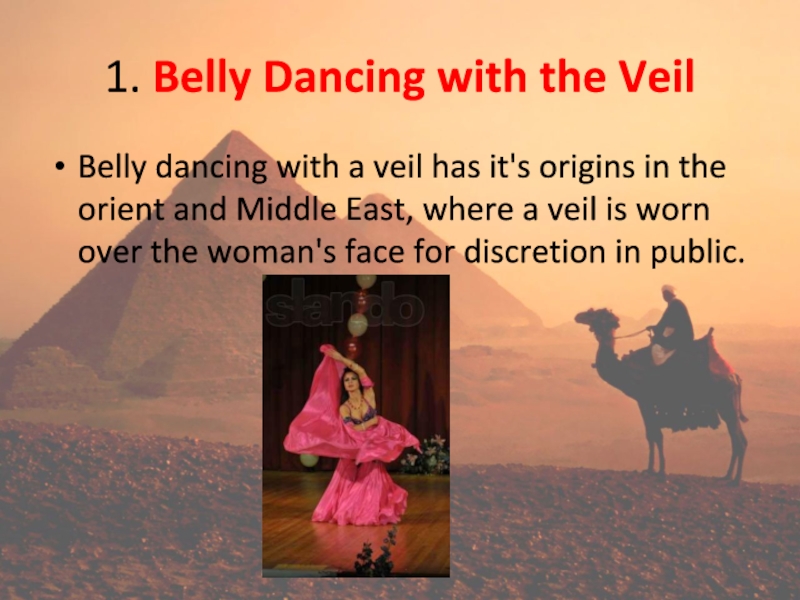
Belly dancing with a veil has
it's origins in the orient and Middle East, where a veil is worn over the woman's face for discretion in public.
Слайд 4 2. Cane Dance – Saidi, Baladi or
Lebanese
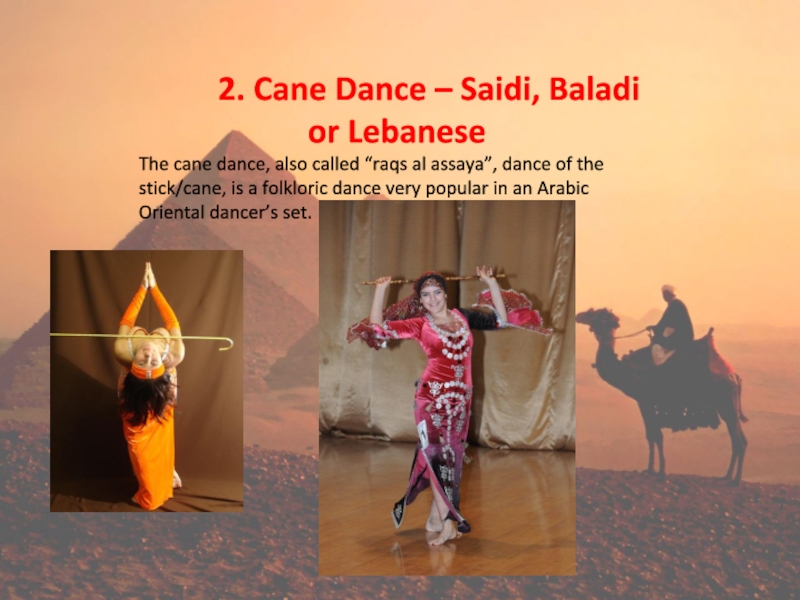
The cane dance, also called “raqs al assaya”, dance of the stick/cane, is a folkloric dance very popular in an Arabic Oriental dancer’s set.
The cane dance, also called “raqs al assaya”, dance of the stick/cane, is a folkloric dance very popular in an Arabic Oriental dancer’s set.
Слайд 53. Egyptian Style of Oriental Dance
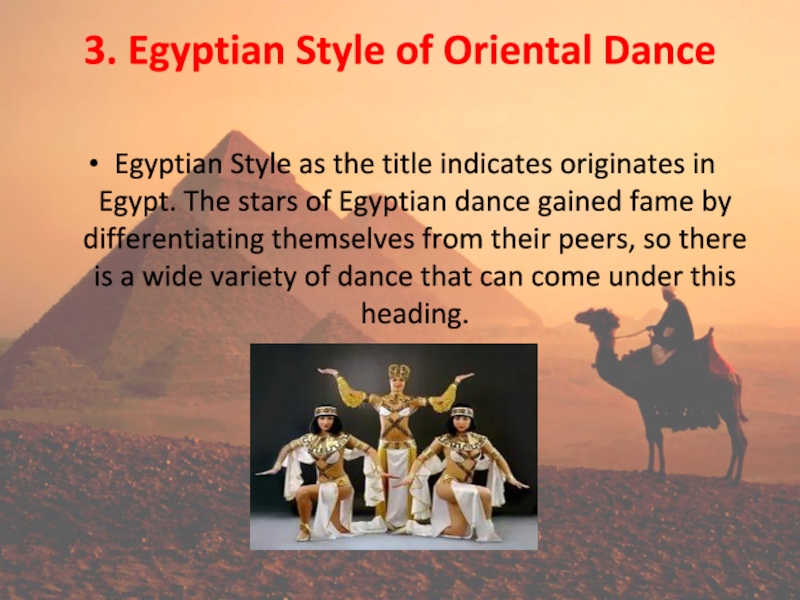
Egyptian Style as the title indicates
originates in Egypt. The stars of Egyptian dance gained fame by differentiating themselves from their peers, so there is a wide variety of dance that can come under this heading.
Слайд 6
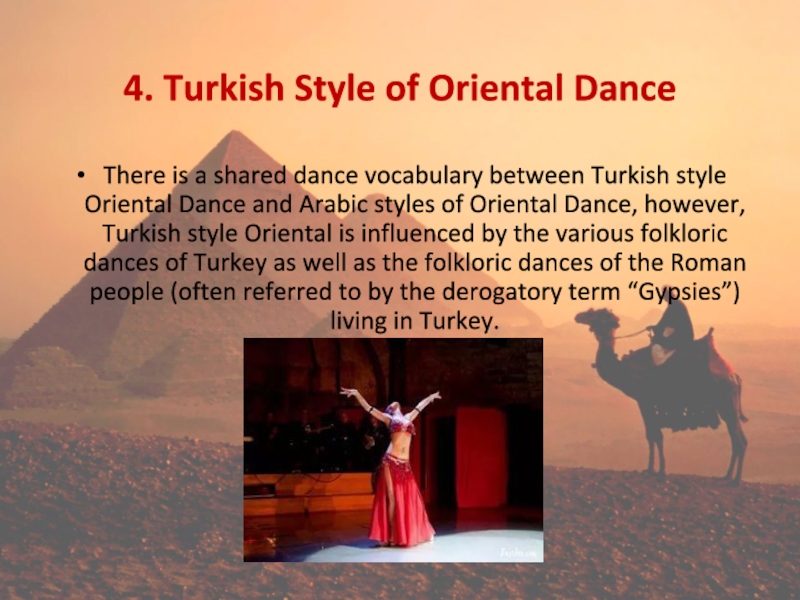
4. Turkish Style of Oriental Dance
There is a shared dance vocabulary
between Turkish style Oriental Dance and Arabic styles of Oriental Dance, however, Turkish style Oriental is influenced by the various folkloric dances of Turkey as well as the folkloric dances of the Roman people (often referred to by the derogatory term “Gypsies”) living in Turkey.
Слайд 7
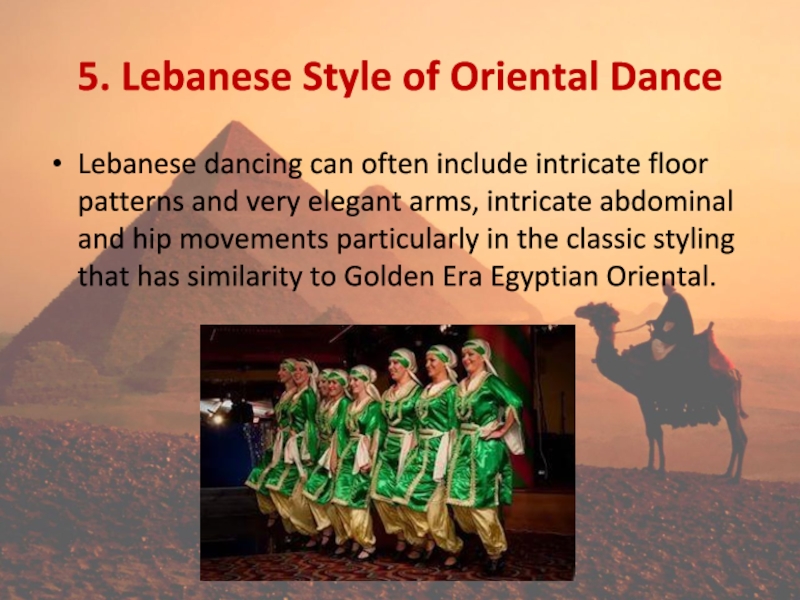
5. Lebanese Style of Oriental Dance
Lebanese dancing can often include intricate
floor patterns and very elegant arms, intricate abdominal and hip movements particularly in the classic styling that has similarity to Golden Era Egyptian Oriental.
Слайд 8
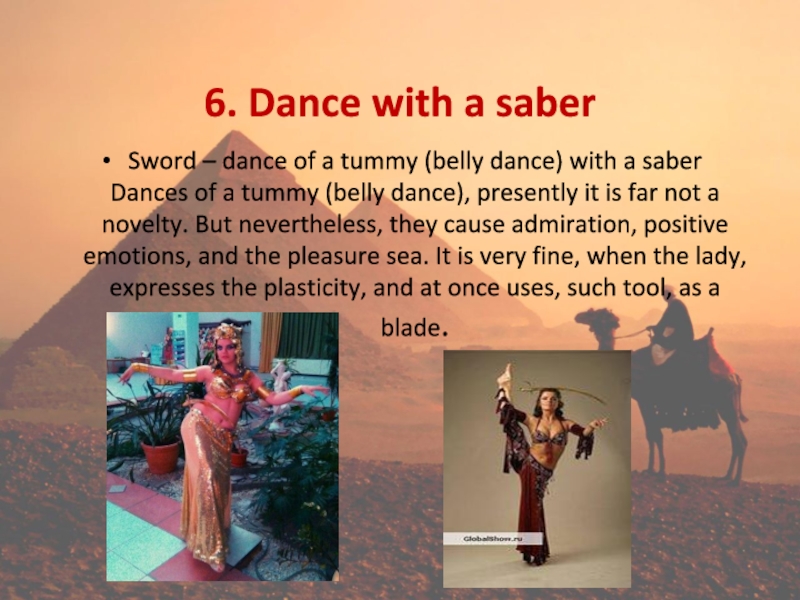
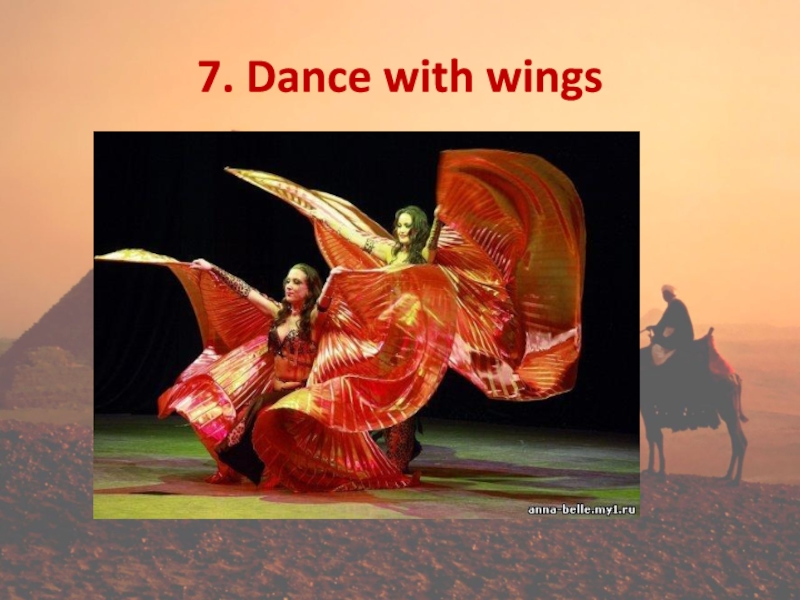
6. Dance with a saber
Sword – dance of a tummy (belly
dance) with a saber
Dances of a tummy (belly dance), presently it is far not a novelty. But nevertheless, they cause admiration, positive emotions, and the pleasure sea. It is very fine, when the lady, expresses the plasticity, and at once uses, such tool, as a blade.
Слайд 111. All muscle groups work
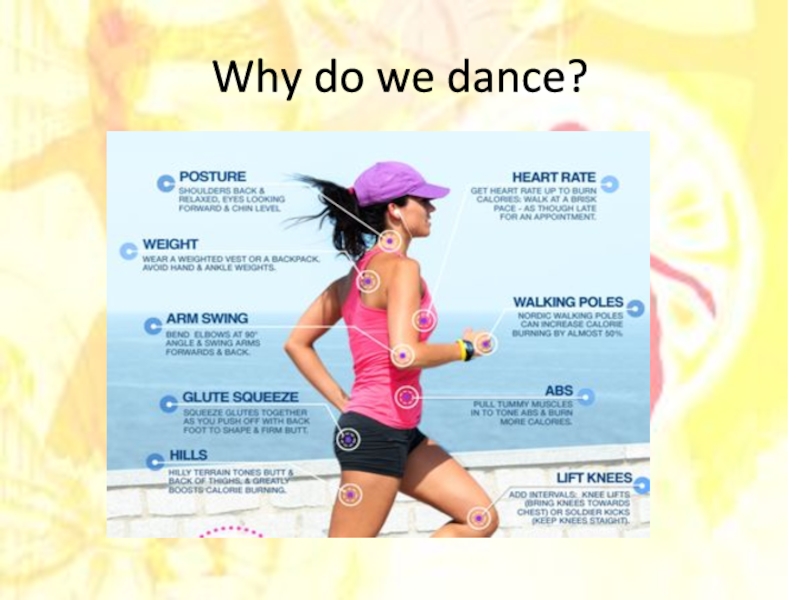
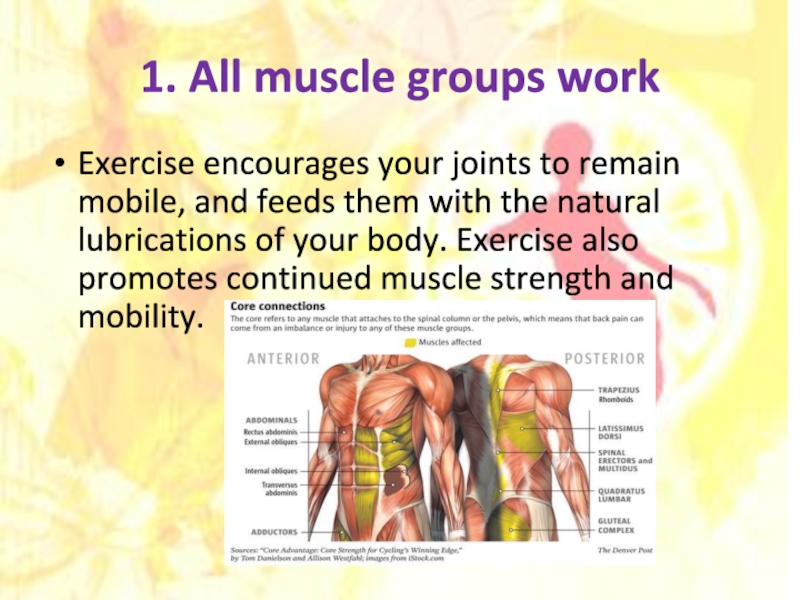
Exercise encourages your joints to remain mobile,
and feeds them with the natural lubrications of your body. Exercise also promotes continued muscle strength and mobility.
Слайд 13
Burning Calories
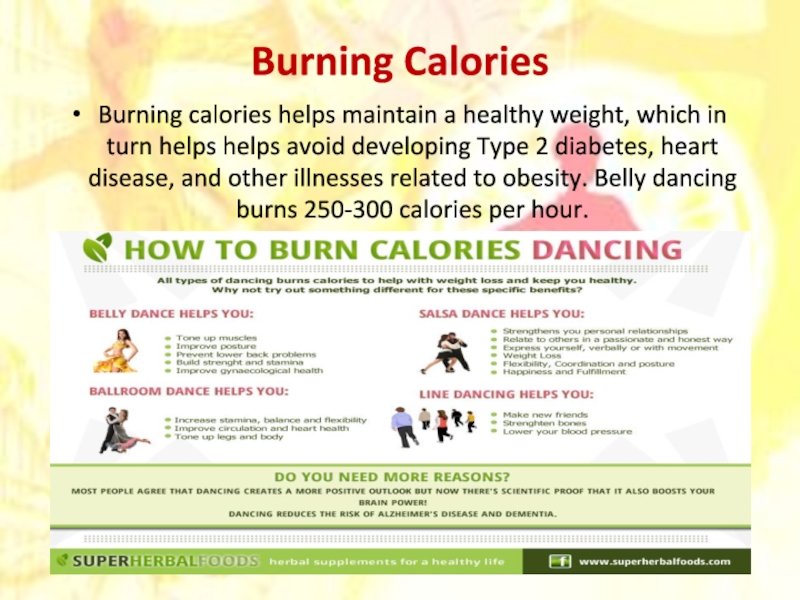
Burning calories helps maintain a healthy weight, which in turn
helps helps avoid developing Type 2 diabetes, heart disease, and other illnesses related to obesity. Belly dancing burns 250-300 calories per hour.
Слайд 14An Italian study revealed that people who had suffered cardiac failure,
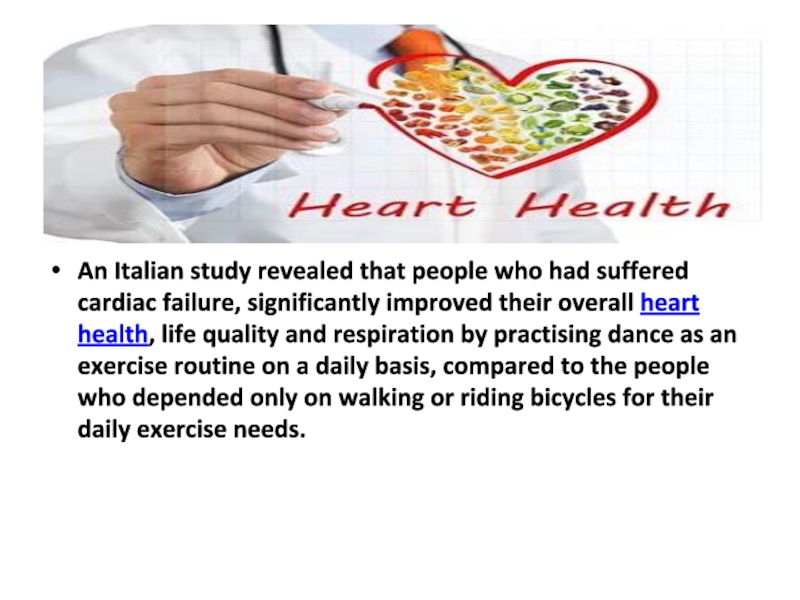
significantly improved their overall heart health, life quality and respiration by practising dance as an exercise routine on a daily basis, compared to the people who depended only on walking or riding bicycles for their daily exercise needs.
Слайд 15It keeps you happy
Elimination of depression and stress
Many studies have proven
that regular dancing can help in prevention of mild depression and improve the person’s confidence levels. Depression is becoming highly common in adolescents and adults of all age groups.
One such study got featured in the International Journal of Neuroscience. It revealed that dance therapy can not only help in overcoming depression, but also reduce the stress levels by regulating the dopamine and serotonin levels in the dancer’s body. As dancing is also a social activity, it can help people overcome feelings of loneliness (commonly seen in depression patients), especially elderly people who may be alone for much of the day.
Improves self-esteem and enhances confidence
Dancing also contributes to improvement in self-esteem and confidence levels. Whenever you learn and master a new dance step, you’ll naturally experience a spike in your confidence levels as well as your energy. Slowly, this confidence will start reflecting in other areas of your life too.
One such study got featured in the International Journal of Neuroscience. It revealed that dance therapy can not only help in overcoming depression, but also reduce the stress levels by regulating the dopamine and serotonin levels in the dancer’s body. As dancing is also a social activity, it can help people overcome feelings of loneliness (commonly seen in depression patients), especially elderly people who may be alone for much of the day.
Improves self-esteem and enhances confidence
Dancing also contributes to improvement in self-esteem and confidence levels. Whenever you learn and master a new dance step, you’ll naturally experience a spike in your confidence levels as well as your energy. Slowly, this confidence will start reflecting in other areas of your life too.