Great Britain.
- Главная
- Разное
- Образование
- Спорт
- Естествознание
- Природоведение
- Религиоведение
- Французский язык
- Черчение
- Английский язык
- Астрономия
- Алгебра
- Биология
- География
- Геометрия
- Детские презентации
- Информатика
- История
- Литература
- Математика
- Музыка
- МХК
- Немецкий язык
- ОБЖ
- Обществознание
- Окружающий мир
- Педагогика
- Русский язык
- Технология
- Физика
- Философия
- Химия
- Шаблоны, фоны, картинки для презентаций
- Экология
- Экономика
Презентация, доклад по английскому языку на тему Scotland
Содержание
- 1. Презентация по английскому языку на тему Scotland
- 2. Презентация подготовлена Свечкаревой Л. В.,
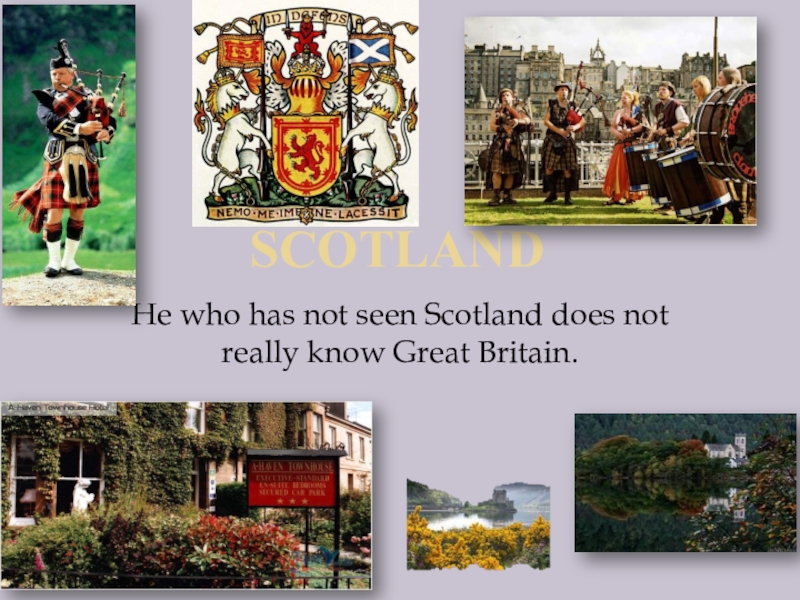
- 3. Scotland is a country in the United
- 4. Scotland’s GeographyScotland is approximately half the size
- 5. Слайд 5
- 6. The symbols of Scotland.
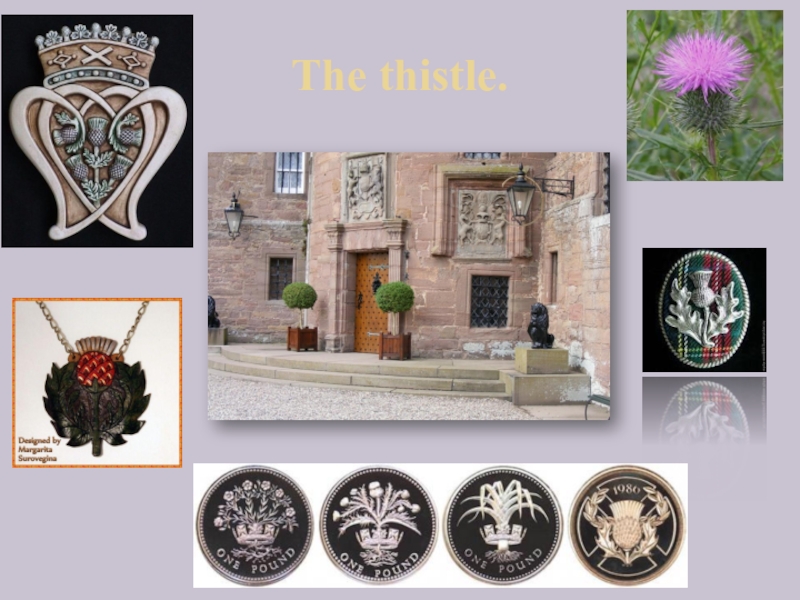
- 7. The thistle.
- 8. The Stone of Destiny.Legend says that the
- 9. The stone came home to Scotland on
- 10. The Highlands.is a populated area with mountains
- 11. Слайд 11
- 12. The border between Scotland and England.stretches for
- 13. Слайд 13
- 14. Слайд 14
- 15. Слайд 15
- 16. Слайд 16
- 17. Edinburgh is known as Athens of the
- 18. Слайд 18
- 19. Слайд 19
- 20. Слайд 20
- 21. Слайд 21
- 22. Слайд 22
- 23. The Castle. The Castle hangs over the
- 24. Royal Botanic Gardens, Edinburgh.
- 25. Слайд 25
- 26. Слайд 26
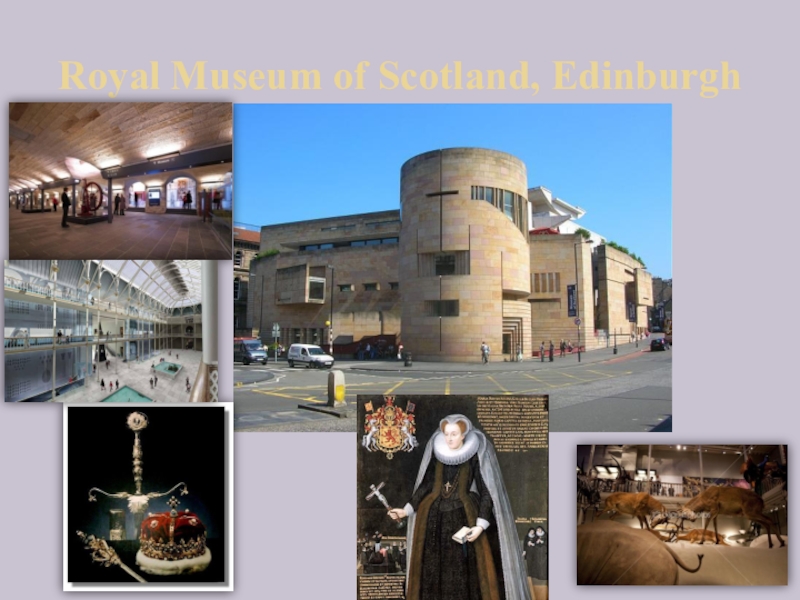
- 27. Royal Museum of Scotland, Edinburgh
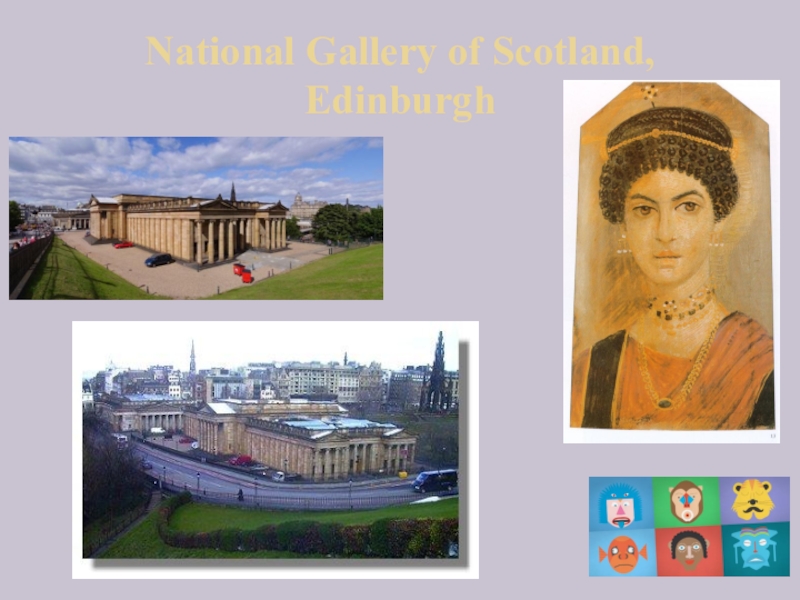
- 28. National Gallery of Scotland, Edinburgh
- 29. Слайд 29
- 30. Слайд 30
- 31. Glasgow, merchant cityis the heart of industry.It
- 32. Слайд 32
- 33. Botanical Gardens, Glasgow.
- 34. Слайд 34
- 35. Aberdeen.Is known to many as the “
- 36. Inverness. The capital and principal crossroads of
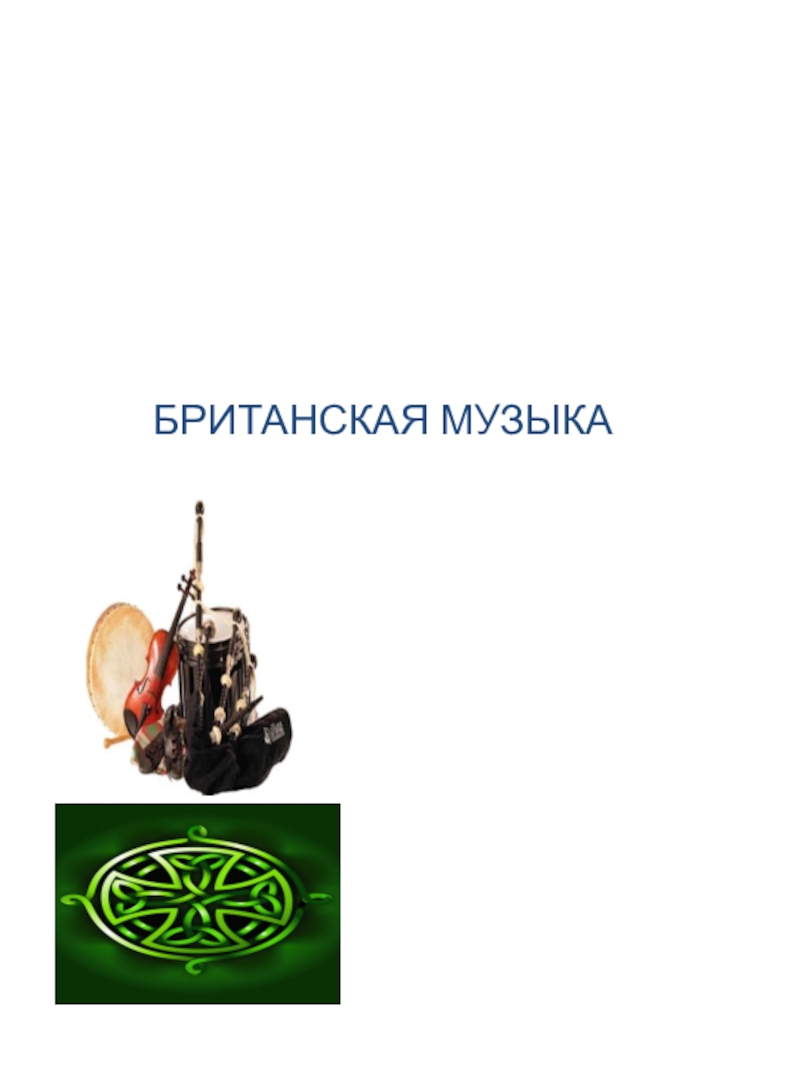
- 37. The Scottish bagpipe.
- 38. The Kilt.A traditional Scottish kilt is made
- 39. Tweed and Tartan.Tartan was worn originally in
- 40. Fortingall YewFortingall is a small village in
- 41. Слайд 41
- 42. Festivals in ScotlandEdinburgh International Festival presents a
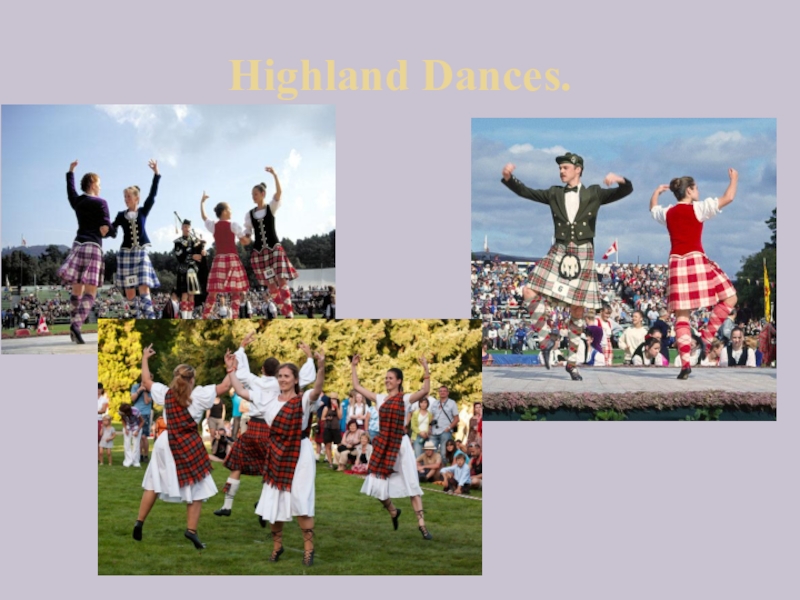
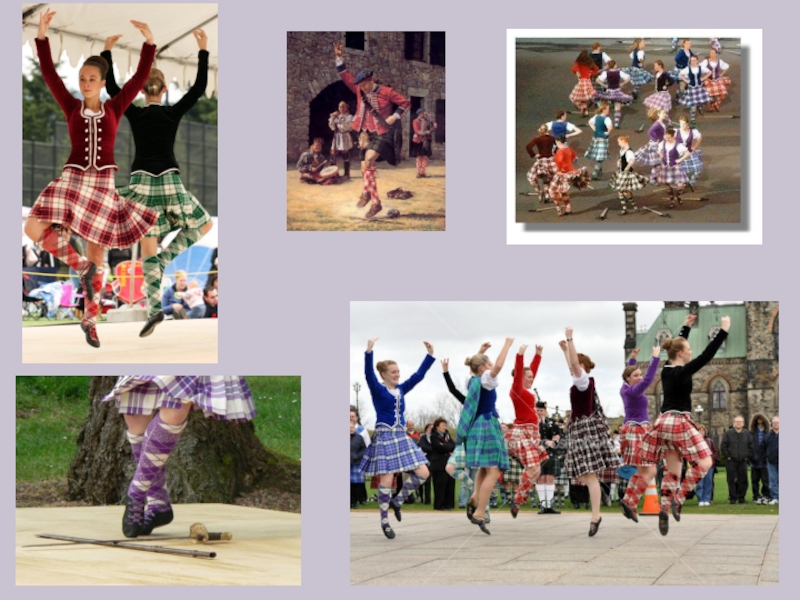
- 43. Highland Dances.
- 44. Слайд 44
- 45. A real Scottish New Year’sHogmanay is the
- 46. Слайд 46
- 47. Слайд 47
- 48. Scottish food.Traditional Scottish food consists of a
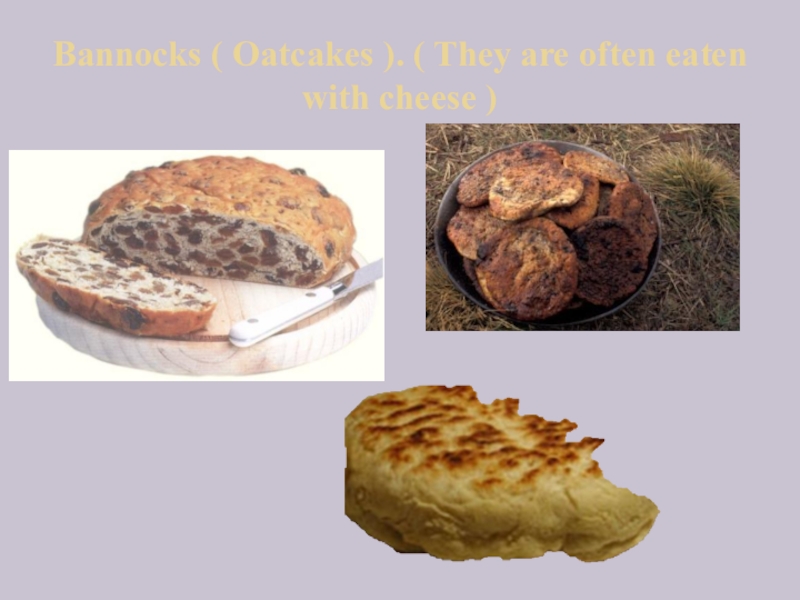
- 49. Bannocks ( Oatcakes ). ( They are often eaten with cheese )
- 50. Scotch EggsThis popular Scottish dish is served
- 51. Scotch pies. A round crusty pie, approximately
- 52. Haggis. The best known Scottish delicacy. It
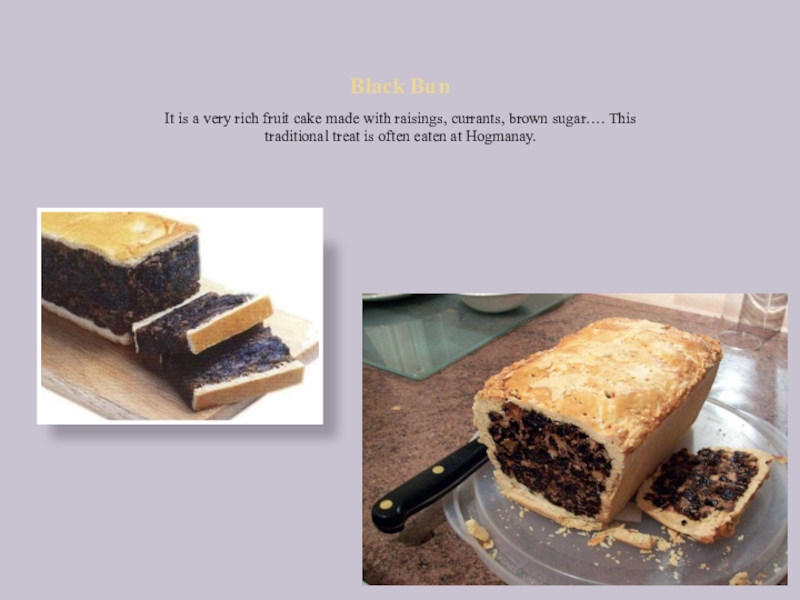
- 53. Black BunIt is a very rich fruit
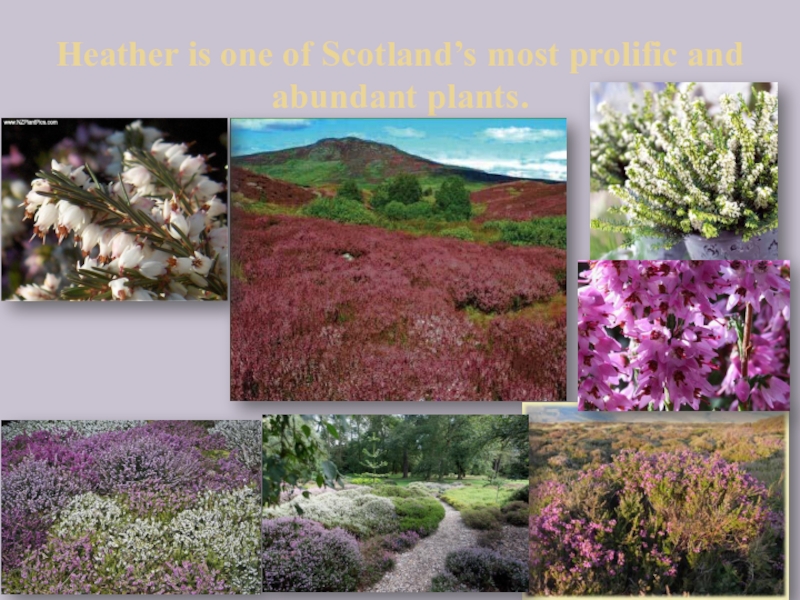
- 54. Heather is one of Scotland’s most prolific and abundant plants.
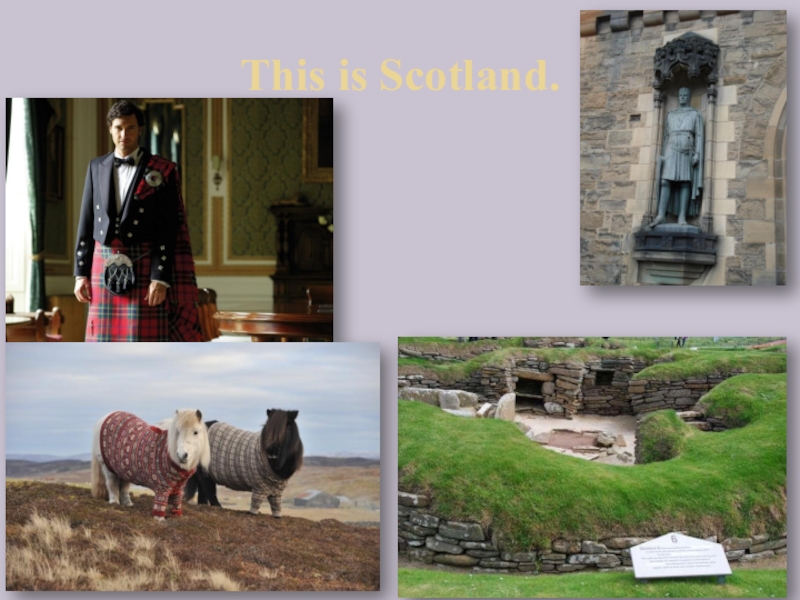
- 55. This is Scotland.
- 56. Thank you for your attention.
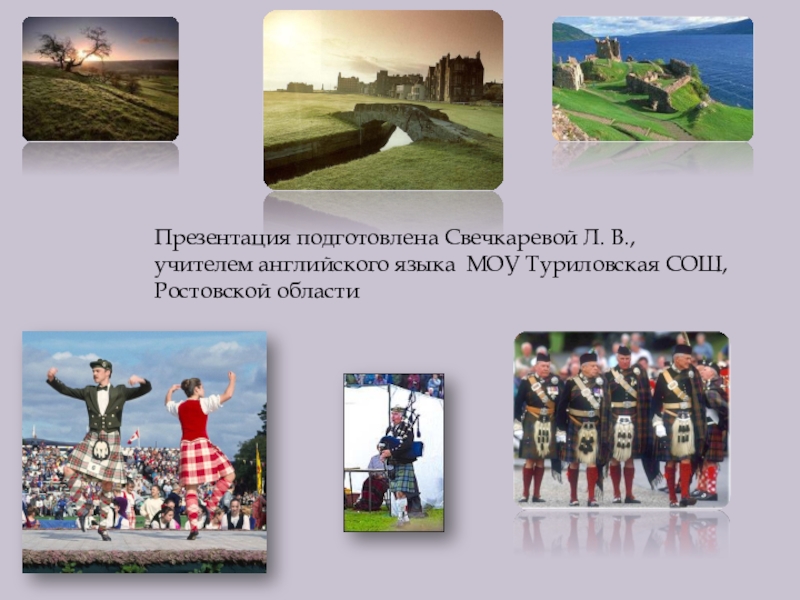
Презентация подготовлена Свечкаревой Л. В., учителем английского языка МОУ Туриловская СОШ, Ростовской области
Слайд 2Презентация подготовлена Свечкаревой Л. В.,
учителем английского языка МОУ Туриловская СОШ, Ростовской области
Слайд 3Scotland
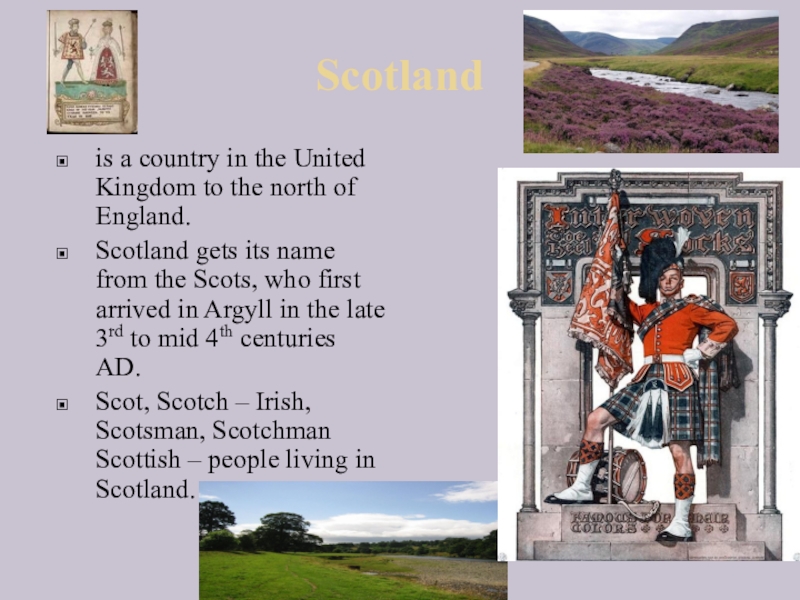
is a country in the United Kingdom to the north
of England.
Scotland gets its name from the Scots, who first arrived in Argyll in the late 3rd to mid 4th centuries AD.
Scot, Scotch – Irish, Scotsman, Scotchman Scottish – people living in Scotland.
Scotland gets its name from the Scots, who first arrived in Argyll in the late 3rd to mid 4th centuries AD.
Scot, Scotch – Irish, Scotsman, Scotchman Scottish – people living in Scotland.
Слайд 4Scotland’s Geography
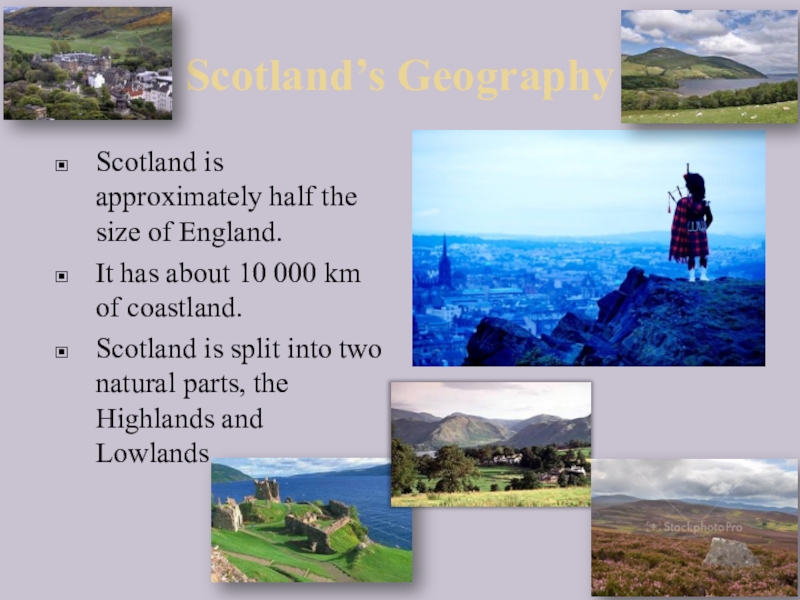
Scotland is approximately half the size of England.
It has about
10 000 km of coastland.
Scotland is split into two natural parts, the Highlands and Lowlands.
Scotland is split into two natural parts, the Highlands and Lowlands.
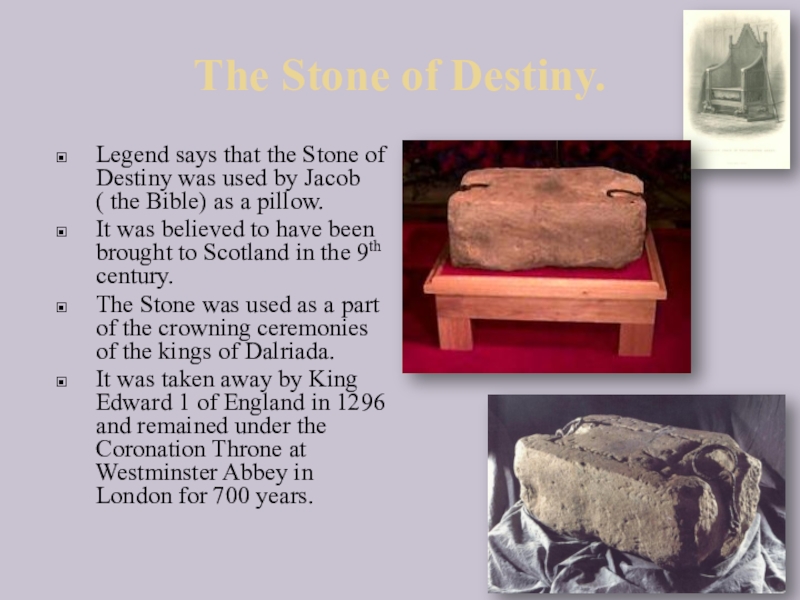
Слайд 8The Stone of Destiny.
Legend says that the Stone of Destiny was
used by Jacob ( the Bible) as a pillow.
It was believed to have been brought to Scotland in the 9th century.
The Stone was used as a part of the crowning ceremonies of the kings of Dalriada.
It was taken away by King Edward 1 of England in 1296 and remained under the Coronation Throne at Westminster Abbey in London for 700 years.
It was believed to have been brought to Scotland in the 9th century.
The Stone was used as a part of the crowning ceremonies of the kings of Dalriada.
It was taken away by King Edward 1 of England in 1296 and remained under the Coronation Throne at Westminster Abbey in London for 700 years.
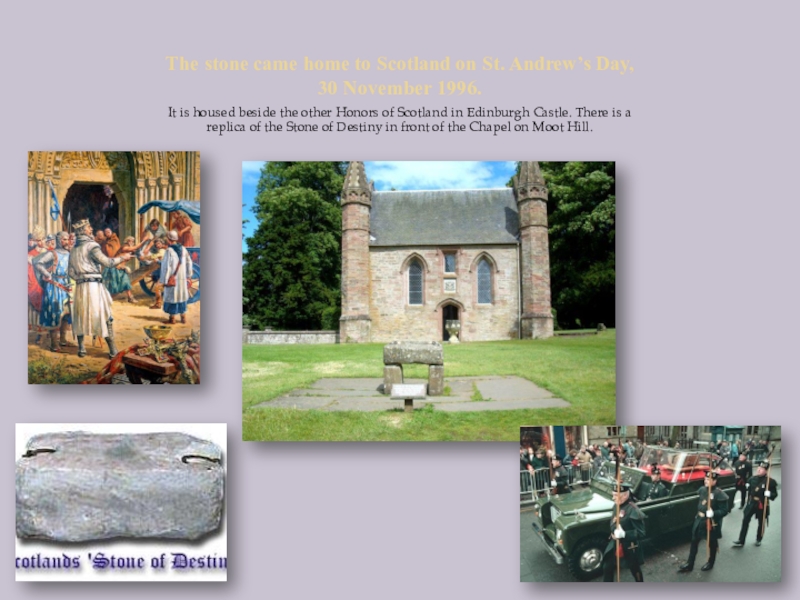
Слайд 9The stone came home to Scotland on St. Andrew’s Day, 30
November 1996.
It is housed beside the other Honors of Scotland in Edinburgh Castle. There is a replica of the Stone of Destiny in front of the Chapel on Moot Hill.
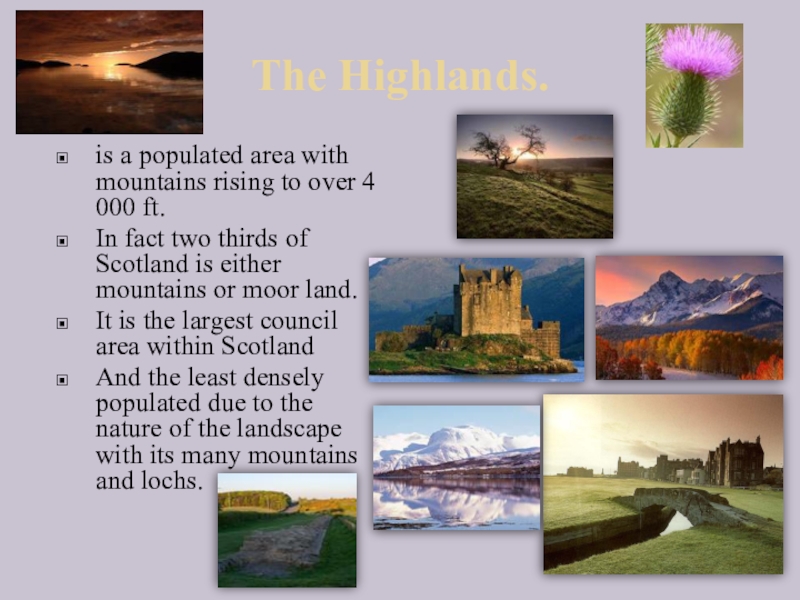
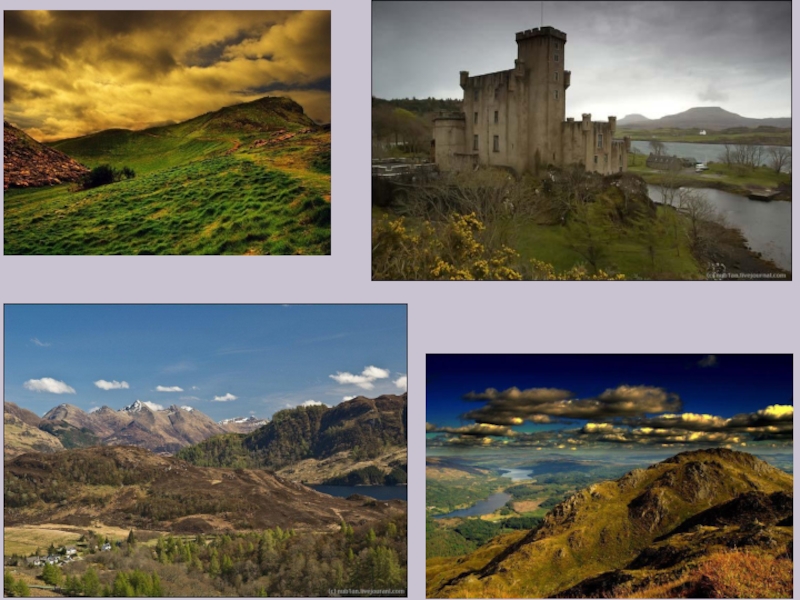
Слайд 10The Highlands.
is a populated area with mountains rising to over 4
000 ft.
In fact two thirds of Scotland is either mountains or moor land.
It is the largest council area within Scotland
And the least densely populated due to the nature of the landscape with its many mountains and lochs.
In fact two thirds of Scotland is either mountains or moor land.
It is the largest council area within Scotland
And the least densely populated due to the nature of the landscape with its many mountains and lochs.
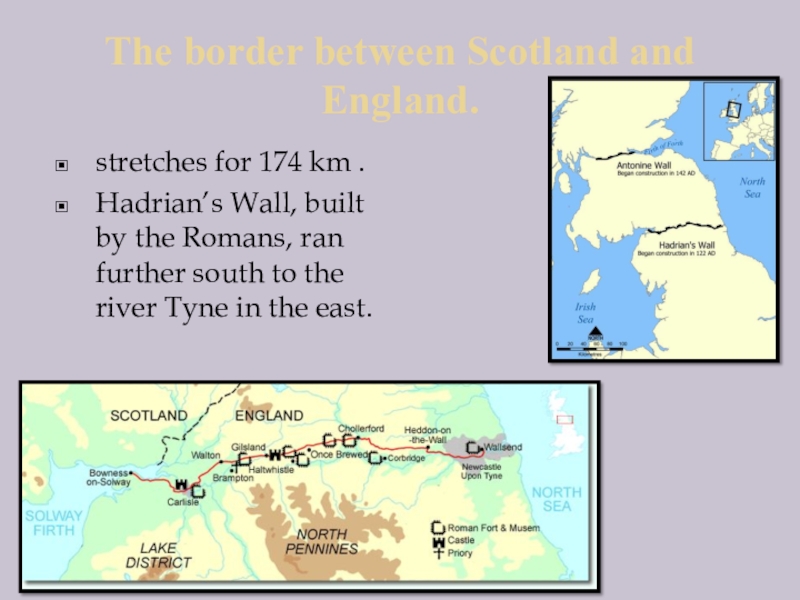
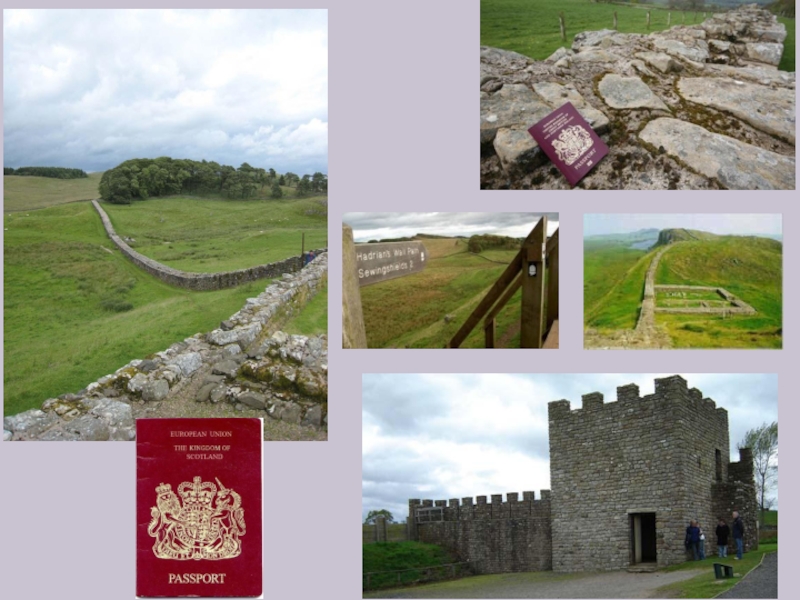
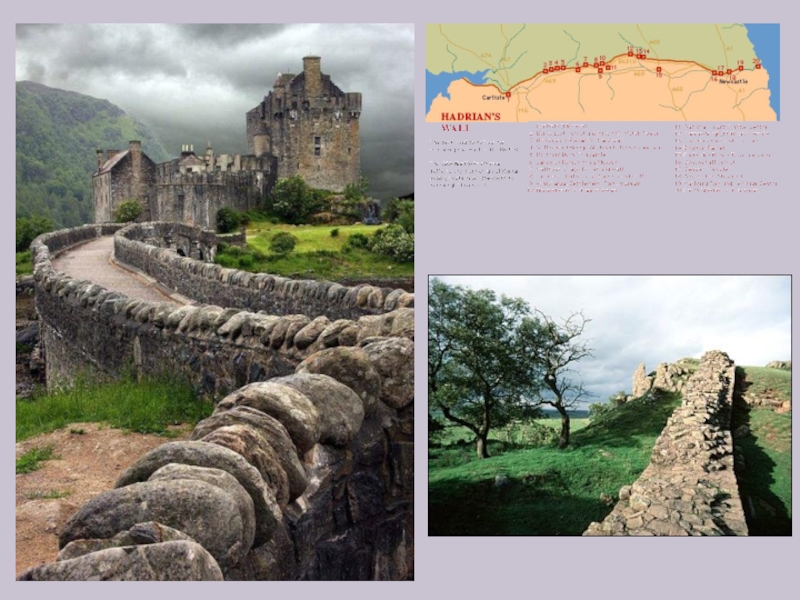
Слайд 12The border between Scotland and England.
stretches for 174 km .
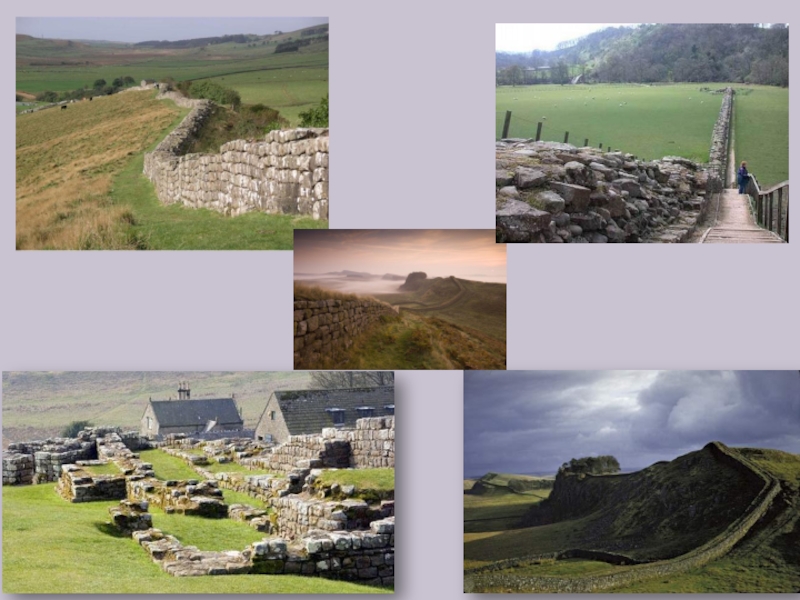
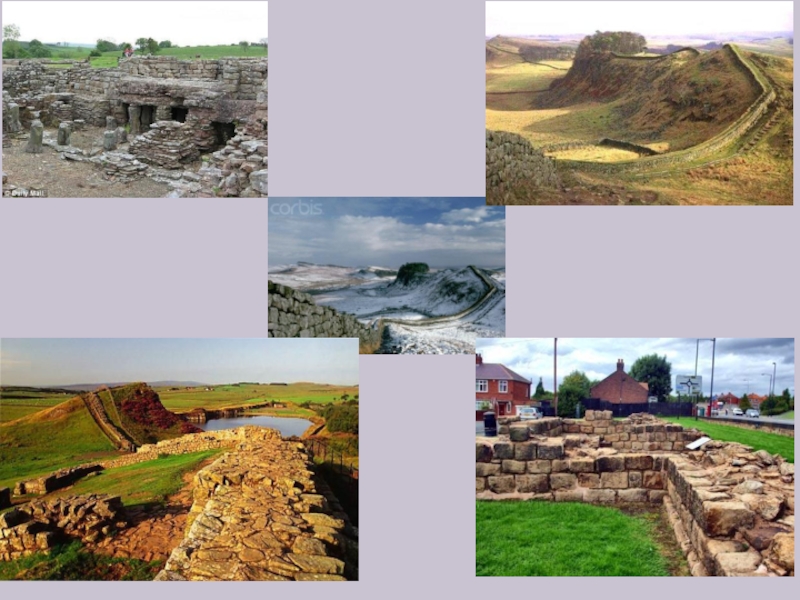
Hadrian’s Wall,
built by the Romans, ran further south to the river Tyne in the east.
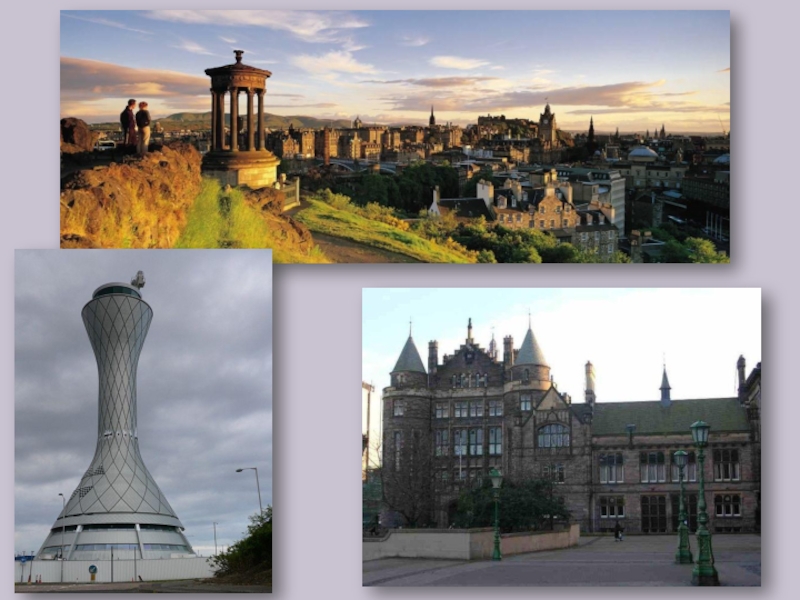
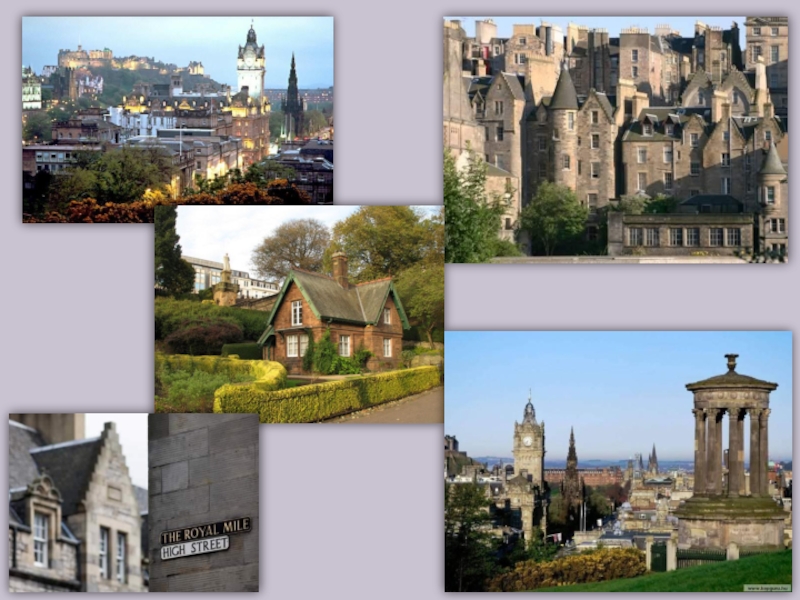
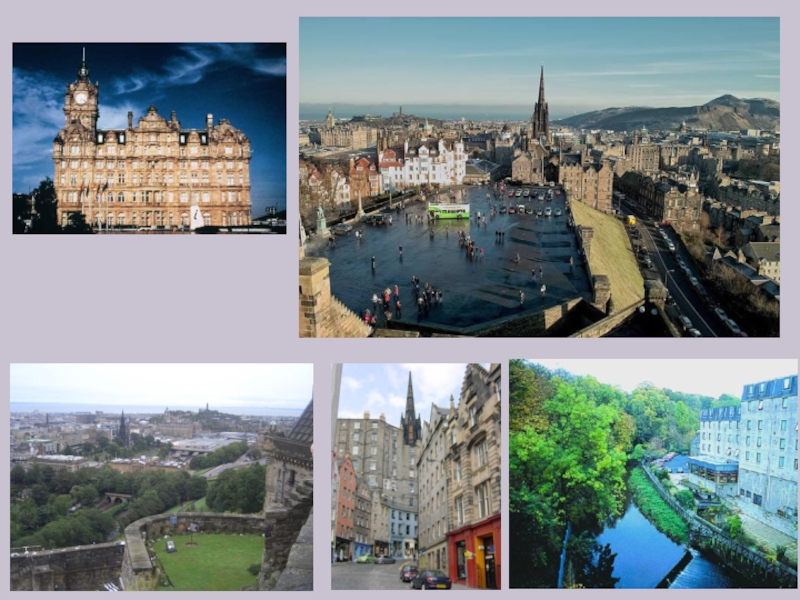
Слайд 17Edinburgh
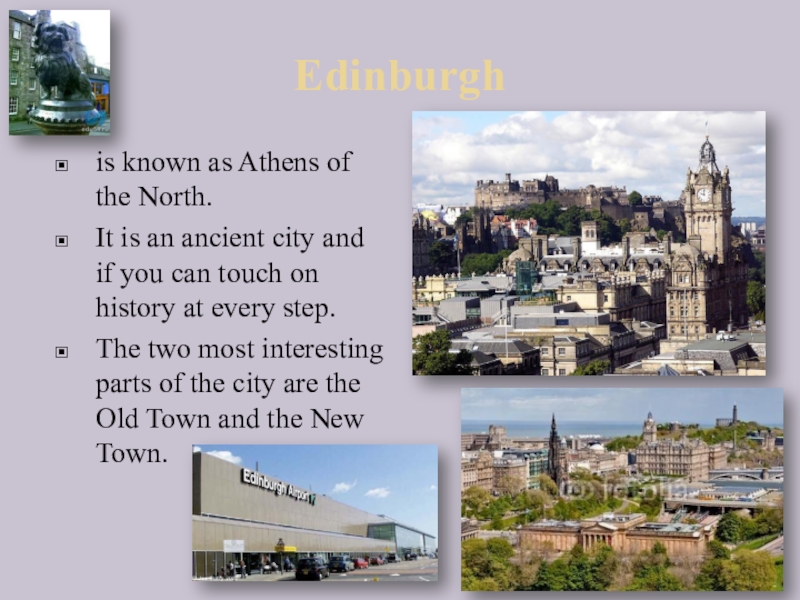
is known as Athens of the North.
It is an ancient
city and if you can touch on history at every step.
The two most interesting parts of the city are the Old Town and the New Town.
The two most interesting parts of the city are the Old Town and the New Town.
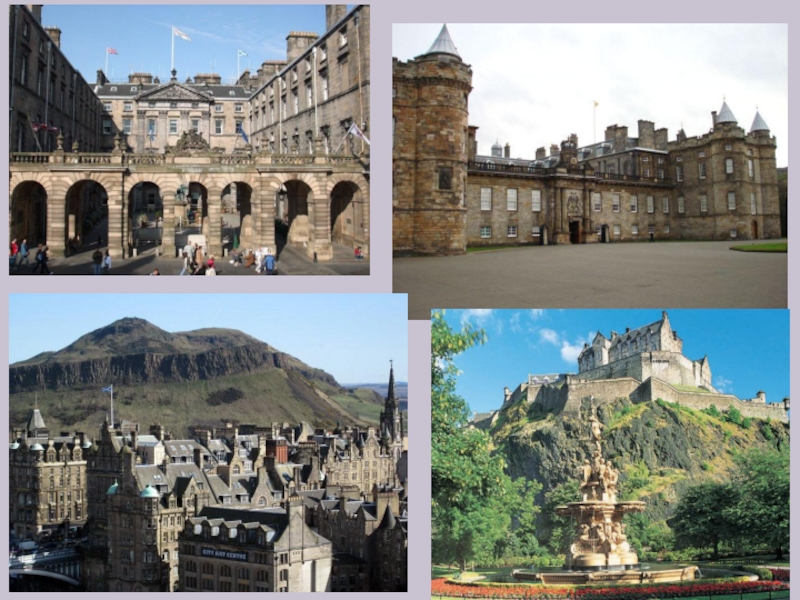
Слайд 23The Castle.
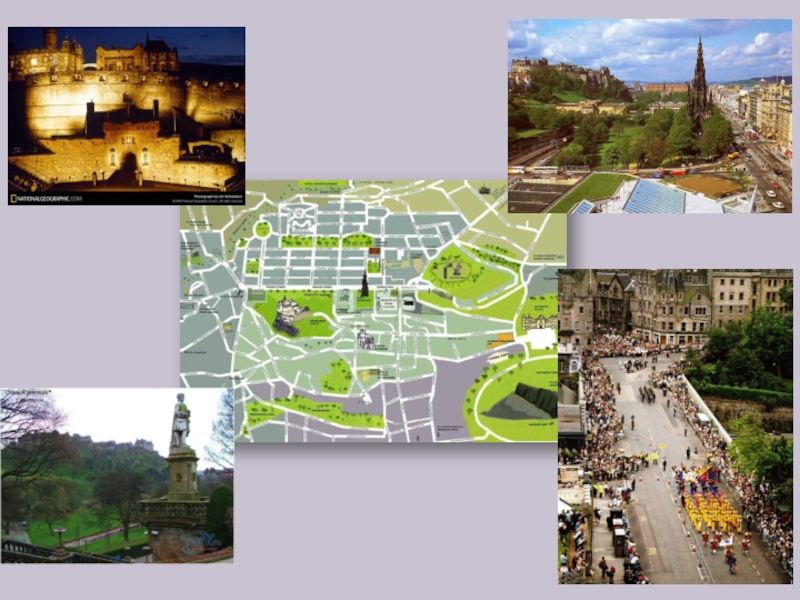
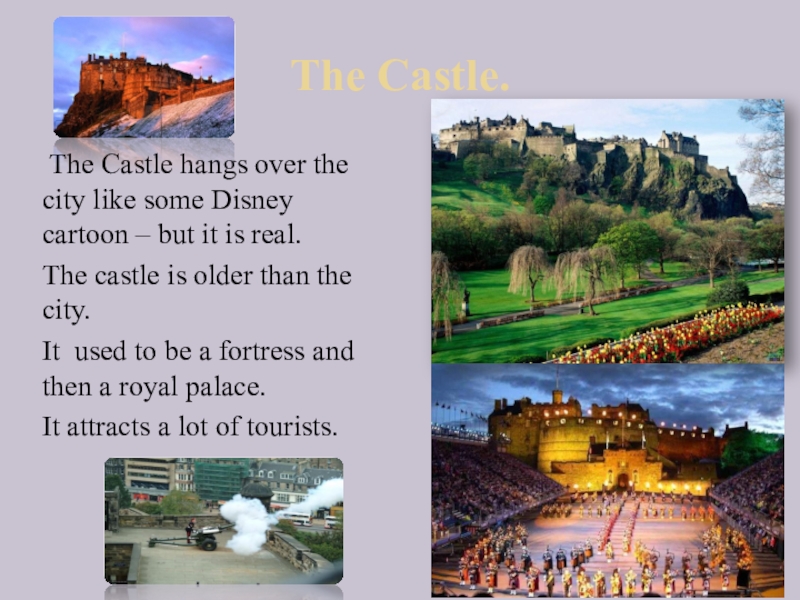
The Castle hangs over the city like some Disney
cartoon – but it is real.
The castle is older than the city.
It used to be a fortress and then a royal palace.
It attracts a lot of tourists.
The castle is older than the city.
It used to be a fortress and then a royal palace.
It attracts a lot of tourists.
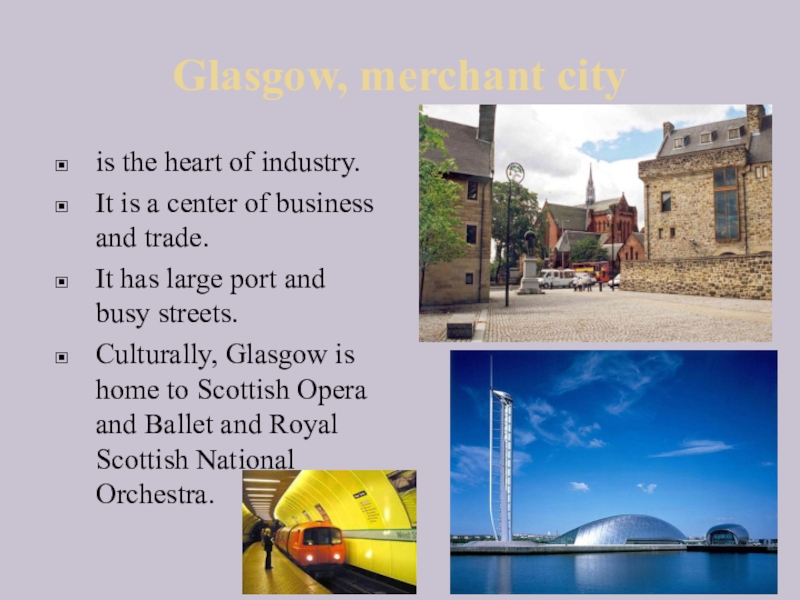
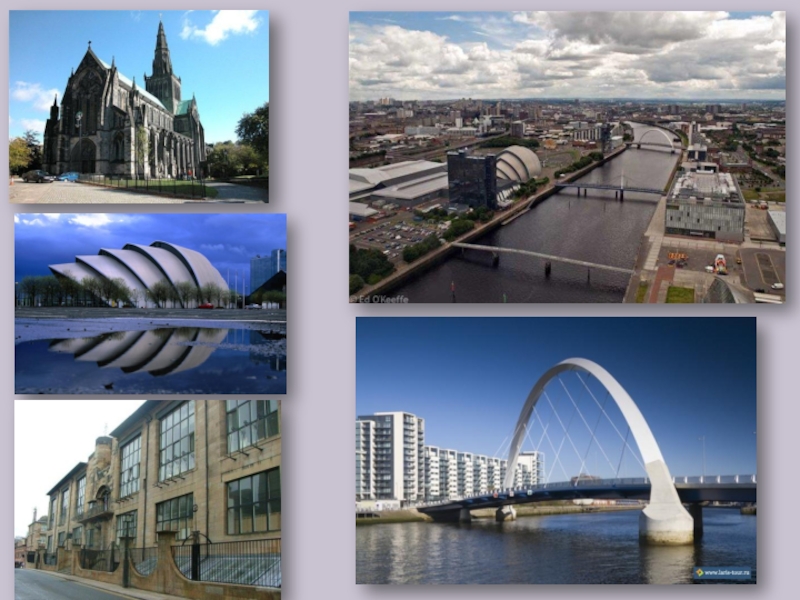
Слайд 31Glasgow, merchant city
is the heart of industry.
It is a center of
business and trade.
It has large port and busy streets.
Culturally, Glasgow is home to Scottish Opera and Ballet and Royal Scottish National Orchestra.
It has large port and busy streets.
Culturally, Glasgow is home to Scottish Opera and Ballet and Royal Scottish National Orchestra.
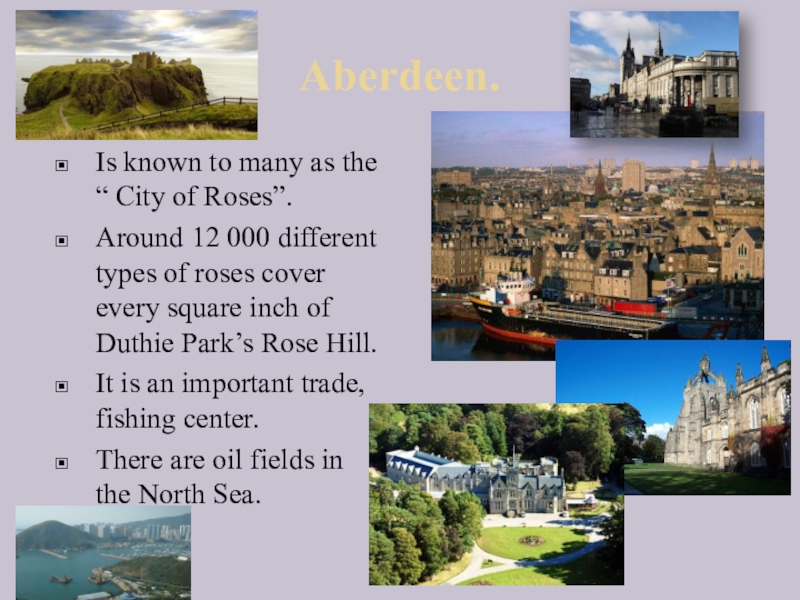
Слайд 35Aberdeen.
Is known to many as the “ City of Roses”.
Around 12
000 different types of roses cover every square inch of Duthie Park’s Rose Hill.
It is an important trade, fishing center.
There are oil fields in the North Sea.
It is an important trade, fishing center.
There are oil fields in the North Sea.
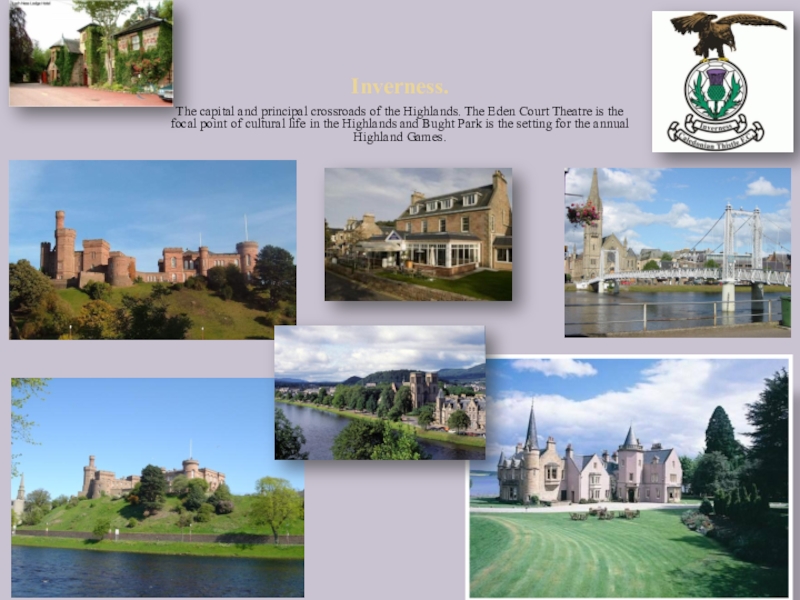
Слайд 36Inverness.
The capital and principal crossroads of the Highlands. The Eden
Court Theatre is the focal point of cultural life in the Highlands and Bught Park is the setting for the annual Highland Games.
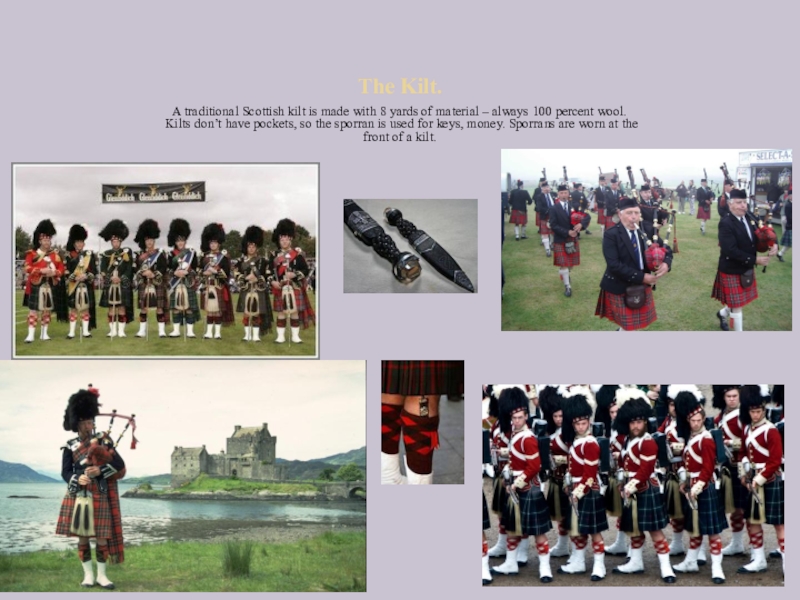
Слайд 38The Kilt.
A traditional Scottish kilt is made with 8 yards of
material – always 100 percent wool. Kilts don’t have pockets, so the sporran is used for keys, money. Sporrans are worn at the front of a kilt.
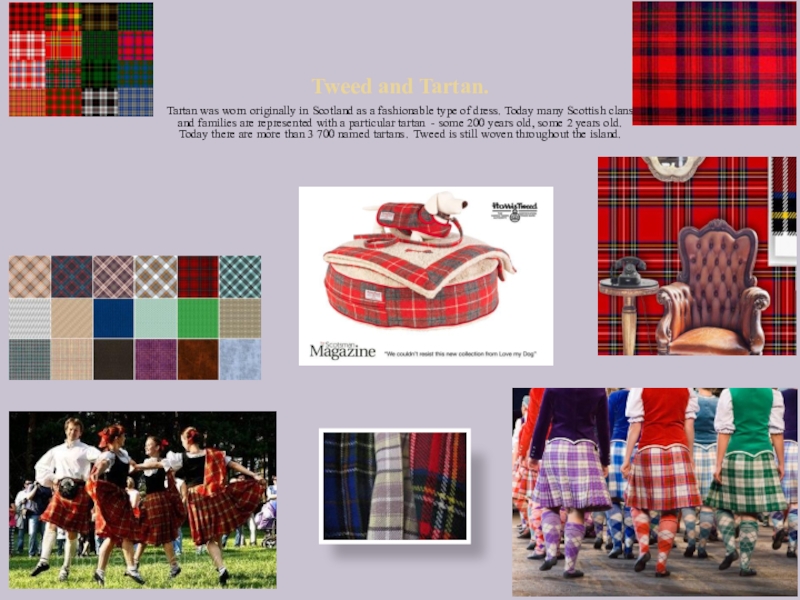
Слайд 39Tweed and Tartan.
Tartan was worn originally in Scotland as a fashionable
type of dress. Today many Scottish clans and families are represented with a particular tartan - some 200 years old, some 2 years old. Today there are more than 3 700 named tartans. Tweed is still woven throughout the island.
Слайд 40Fortingall Yew
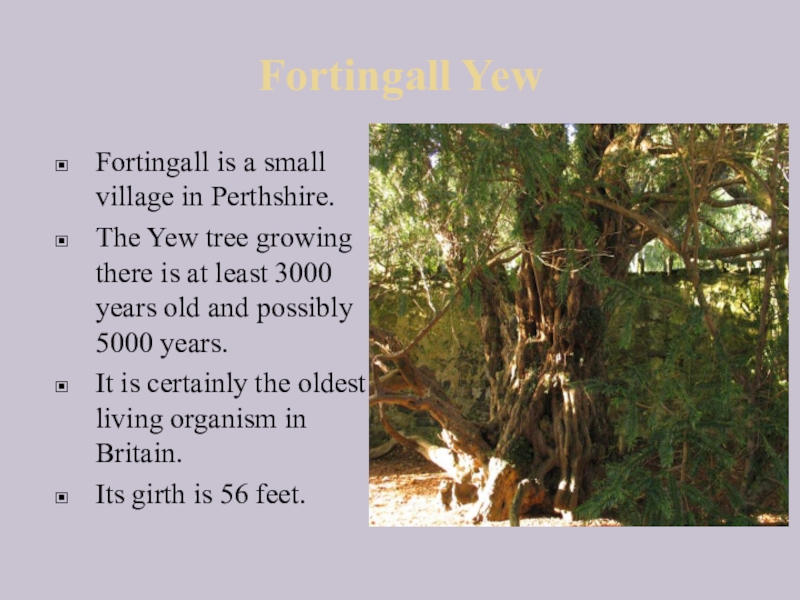
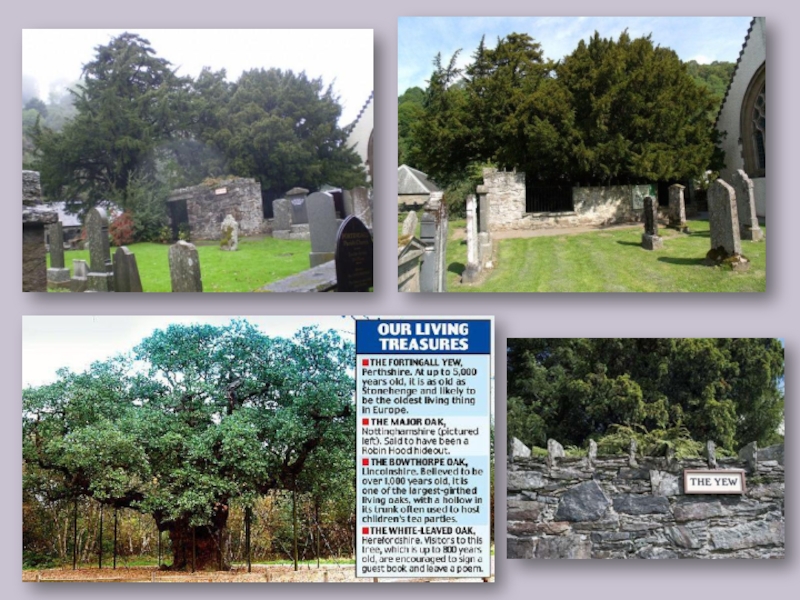
Fortingall is a small village in Perthshire.
The Yew tree growing
there is at least 3000 years old and possibly 5000 years.
It is certainly the oldest living organism in Britain.
Its girth is 56 feet.
It is certainly the oldest living organism in Britain.
Its girth is 56 feet.
Слайд 42Festivals in Scotland
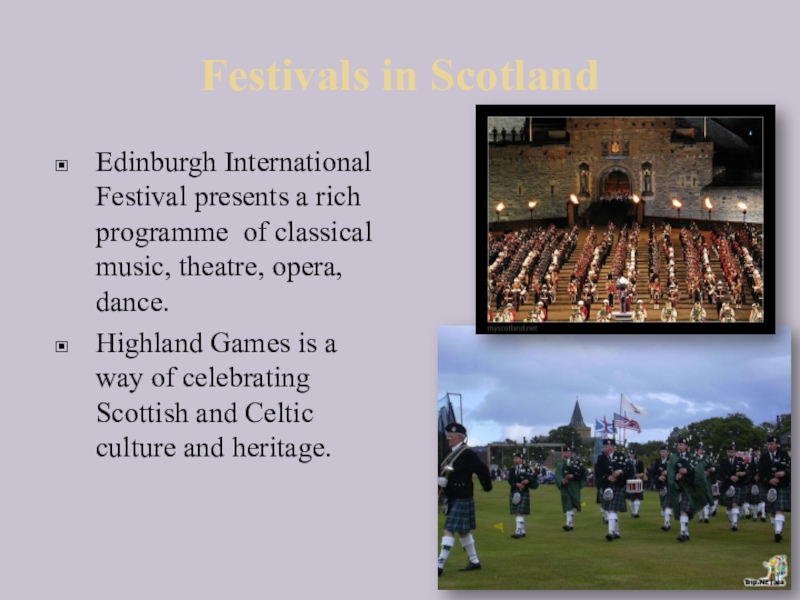
Edinburgh International Festival presents a rich programme of classical
music, theatre, opera, dance.
Highland Games is a way of celebrating Scottish and Celtic culture and heritage.
Highland Games is a way of celebrating Scottish and Celtic culture and heritage.
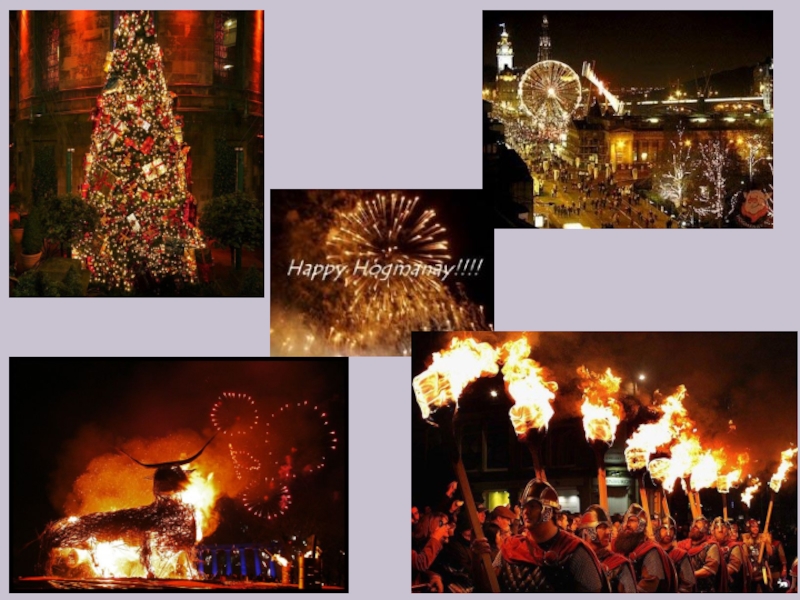
Слайд 45A real Scottish New Year’s
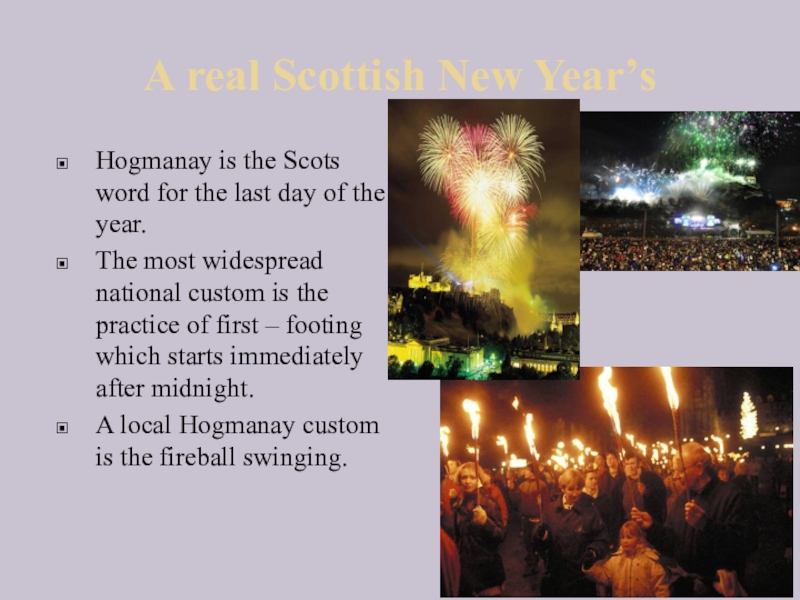
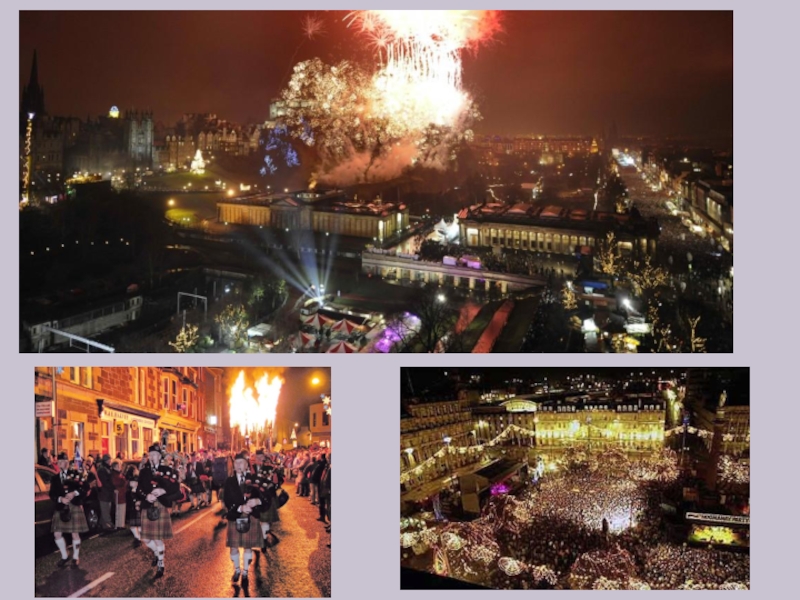
Hogmanay is the Scots word for the
last day of the year.
The most widespread national custom is the practice of first – footing which starts immediately after midnight.
A local Hogmanay custom is the fireball swinging.
The most widespread national custom is the practice of first – footing which starts immediately after midnight.
A local Hogmanay custom is the fireball swinging.
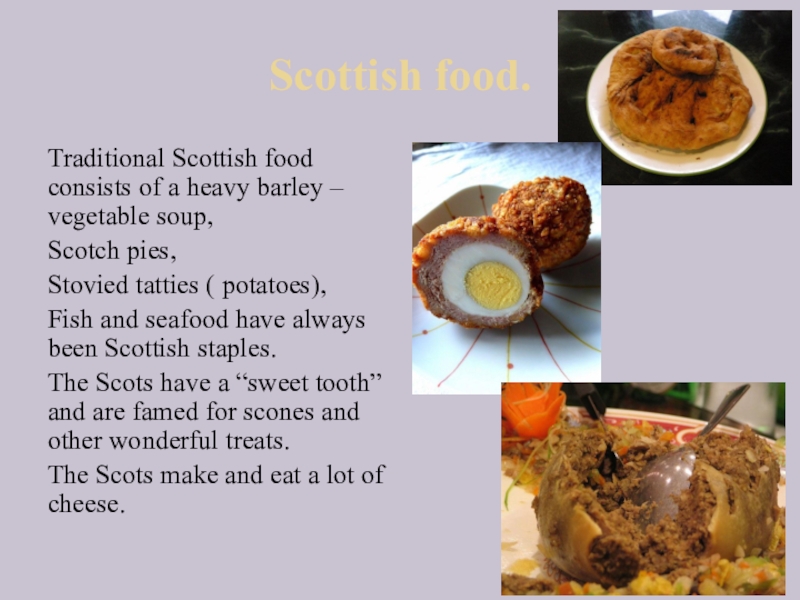
Слайд 48Scottish food.
Traditional Scottish food consists of a heavy barley – vegetable
soup,
Scotch pies,
Stovied tatties ( potatoes),
Fish and seafood have always been Scottish staples.
The Scots have a “sweet tooth” and are famed for scones and other wonderful treats.
The Scots make and eat a lot of cheese.
Scotch pies,
Stovied tatties ( potatoes),
Fish and seafood have always been Scottish staples.
The Scots have a “sweet tooth” and are famed for scones and other wonderful treats.
The Scots make and eat a lot of cheese.
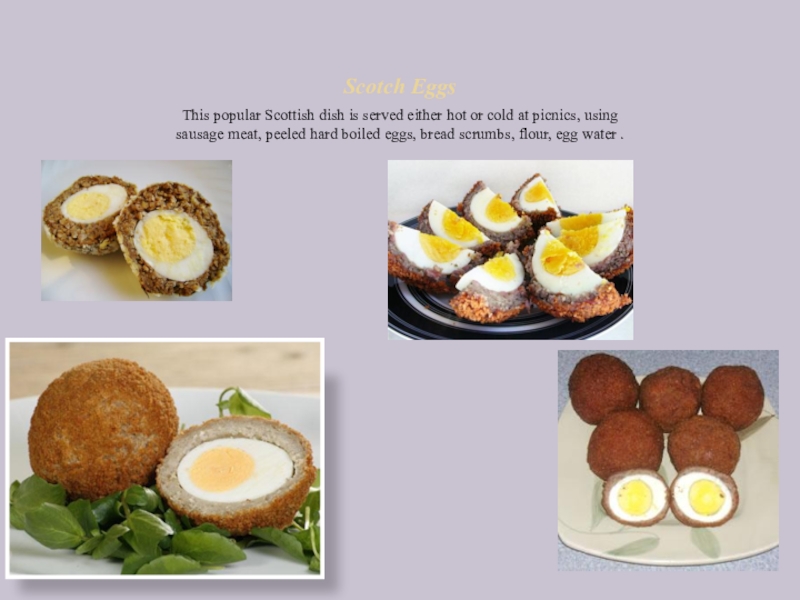
Слайд 50Scotch Eggs
This popular Scottish dish is served either hot or cold
at picnics, using sausage meat, peeled hard boiled eggs, bread scrumbs, flour, egg water .
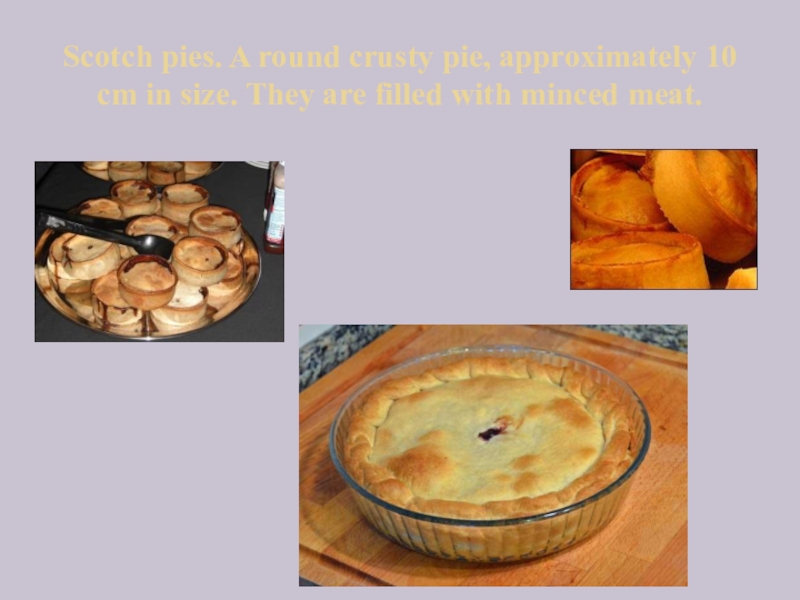
Слайд 51Scotch pies. A round crusty pie, approximately 10 cm in size.
They are filled with minced meat.
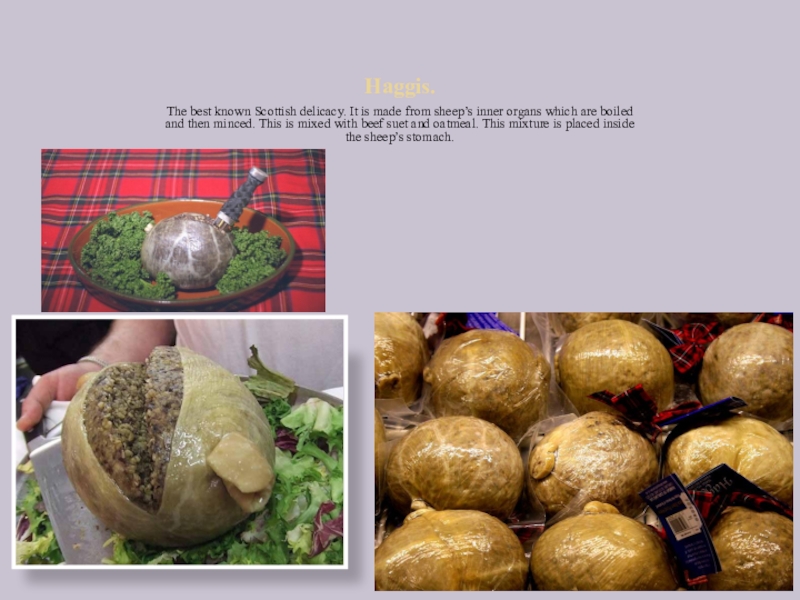
Слайд 52Haggis.
The best known Scottish delicacy. It is made from sheep’s
inner organs which are boiled and then minced. This is mixed with beef suet and oatmeal. This mixture is placed inside the sheep’s stomach.
Слайд 53Black Bun
It is a very rich fruit cake made with raisings,
currants, brown sugar…. This traditional treat is often eaten at Hogmanay.