- Главная
- Разное
- Образование
- Спорт
- Естествознание
- Природоведение
- Религиоведение
- Французский язык
- Черчение
- Английский язык
- Астрономия
- Алгебра
- Биология
- География
- Геометрия
- Детские презентации
- Информатика
- История
- Литература
- Математика
- Музыка
- МХК
- Немецкий язык
- ОБЖ
- Обществознание
- Окружающий мир
- Педагогика
- Русский язык
- Технология
- Физика
- Философия
- Химия
- Шаблоны, фоны, картинки для презентаций
- Экология
- Экономика
Презентация, доклад по английскому языку на тему Прямая и косвенная речь (8 класс)
Содержание
- 1. Презентация по английскому языку на тему Прямая и косвенная речь (8 класс)
- 2. Речь какого-нибудь лица, передаваемая буквально так, как
- 3. Прямая речь He said, “The ship will
- 4. Прямая речь He said, “The ship will
- 5. Прямая речь может представлять собой: повествовательное предложение;Вопросительное предложение;Повелительное предложение;
- 6. При обращении повествовательного предложения из прямой речи
- 7. Если в словах, вводящих прямую речь, употреблен
- 8. Если глагол в главном предложение стоит
- 9. Если глагол главного предложения находится в PAST
- 10. Указательные местоимения и наречия времени и места
- 11. Переведите в косвенную речь. Charles
- 12. Nick told us: “I saw Jimmy at
- 13. Ann said: “I can type now.” Ann
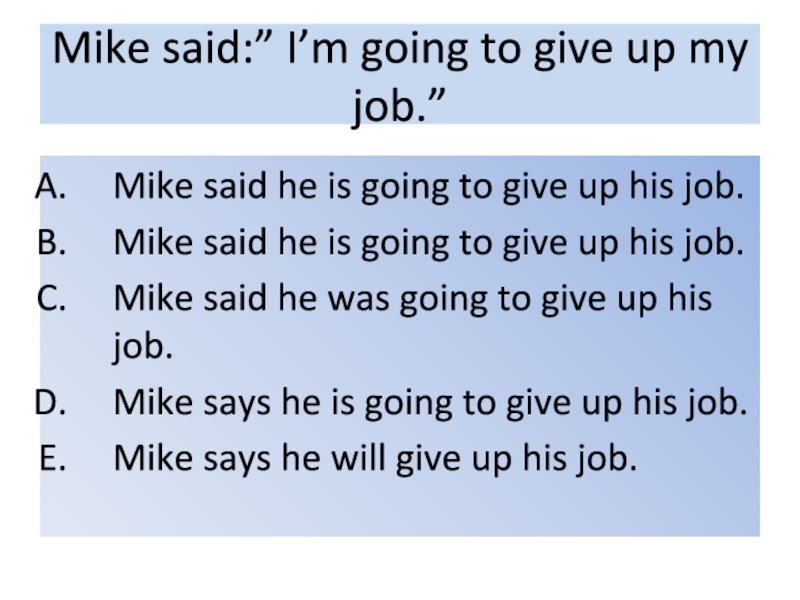
- 14. Mike said:” I’m going to give up
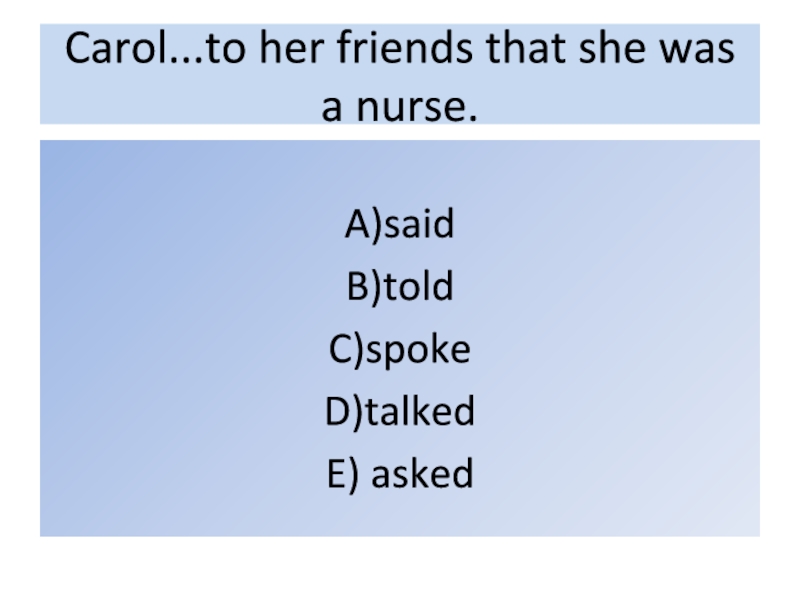
- 15. Carol...to her friends that she was a nurse.A)saidB)toldC)spokeD)talkedE) asked
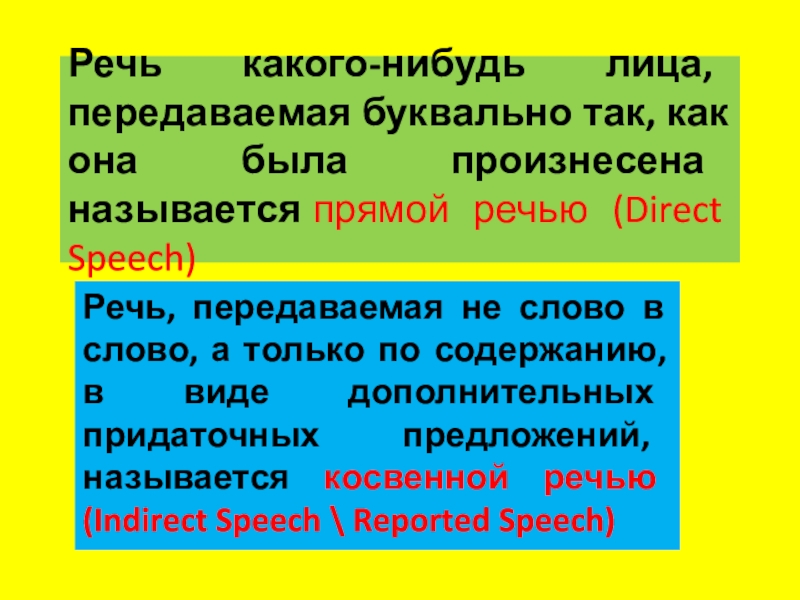
Слайд 2Речь какого-нибудь лица, передаваемая буквально так, как она была произнесена называется
Речь, передаваемая не слово в слово, а только по содержанию, в виде дополнительных придаточных предложений, называется косвенной речью (Indirect Speech \ Reported Speech)
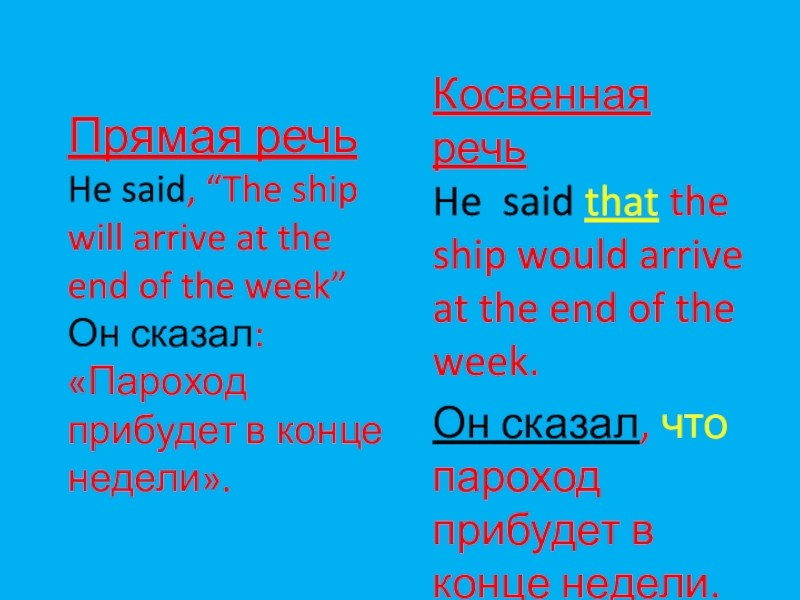
Слайд 3Прямая речь He said, “The ship will arrive at the end of
Косвенная речь
He said that the ship would arrive at the end of the week.
Он сказал, что пароход прибудет в конце недели.
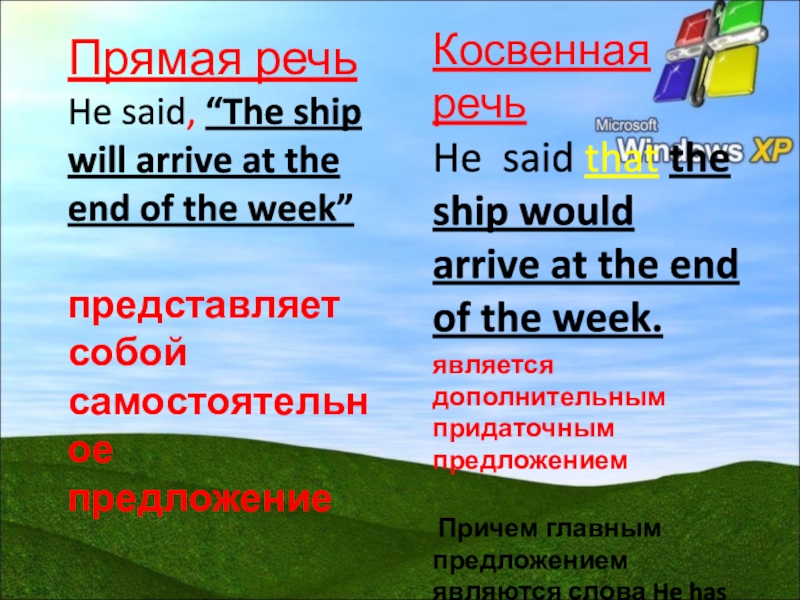
Слайд 4Прямая речь He said, “The ship will arrive at the end of
Косвенная речь
He said that the ship would arrive at the end of the week.
является дополнительным придаточным предложением
Причем главным предложением являются слова He has said , вводящие прямую речь.
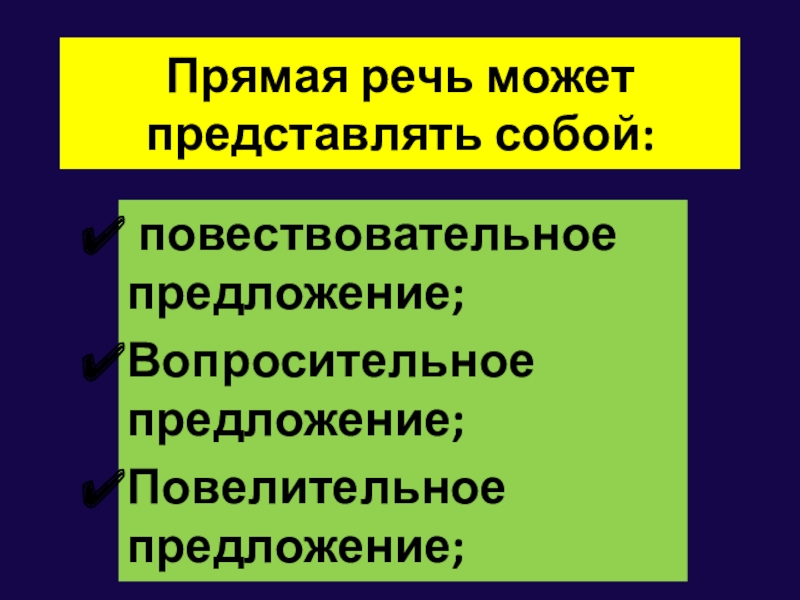
Слайд 5Прямая речь может представлять собой:
повествовательное предложение;
Вопросительное предложение;
Повелительное предложение;
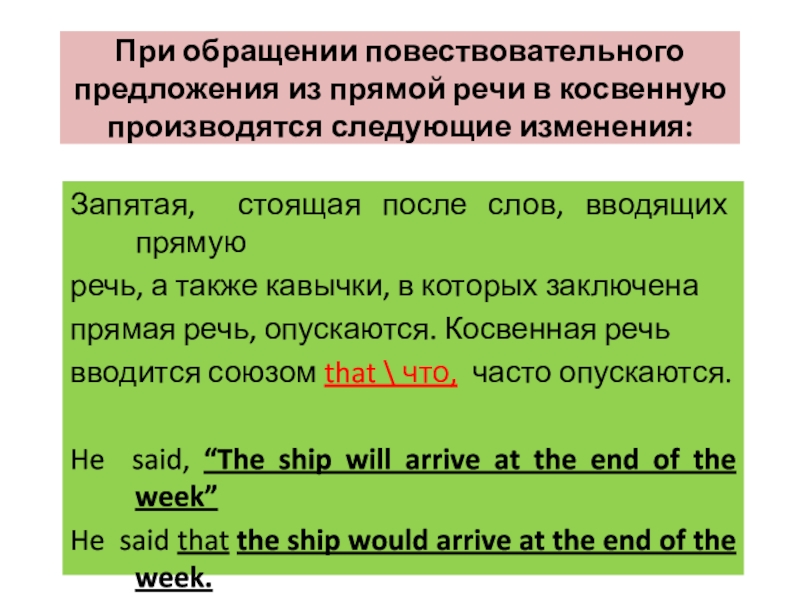
Слайд 6При обращении повествовательного предложения из прямой речи в косвенную производятся следующие
Запятая, стоящая после слов, вводящих прямую
речь, а также кавычки, в которых заключена
прямая речь, опускаются. Косвенная речь
вводится союзом that \ что, часто опускаются.
He said, “The ship will arrive at the end of the week”
He said that the ship would arrive at the end of the week.
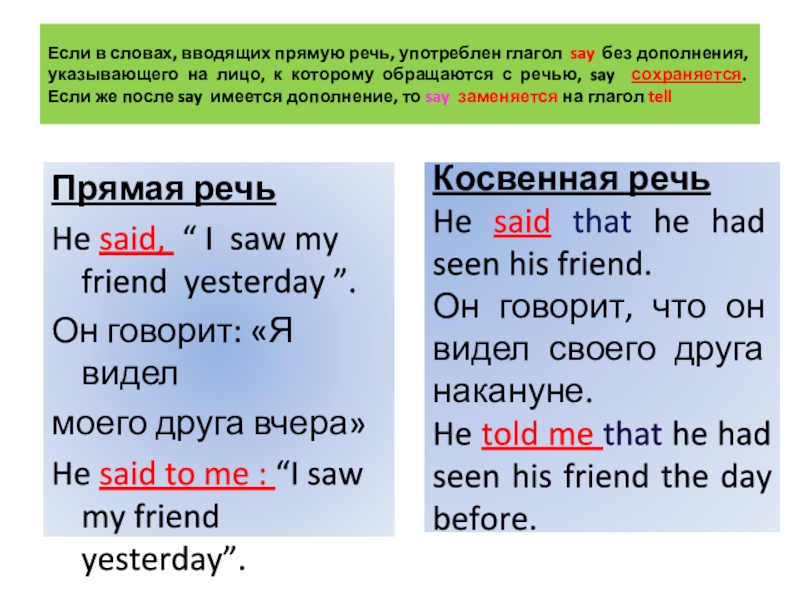
Слайд 7Если в словах, вводящих прямую речь, употреблен глагол say без дополнения,
Прямая речь
He said, “ I saw my friend yesterday ”.
Он говорит: «Я видел
моего друга вчера»
He said to me : “I saw my friend yesterday”.
Косвенная речь
He said that he had seen his friend.
Он говорит, что он видел своего друга накануне.
He told me that he had seen his friend the day before.
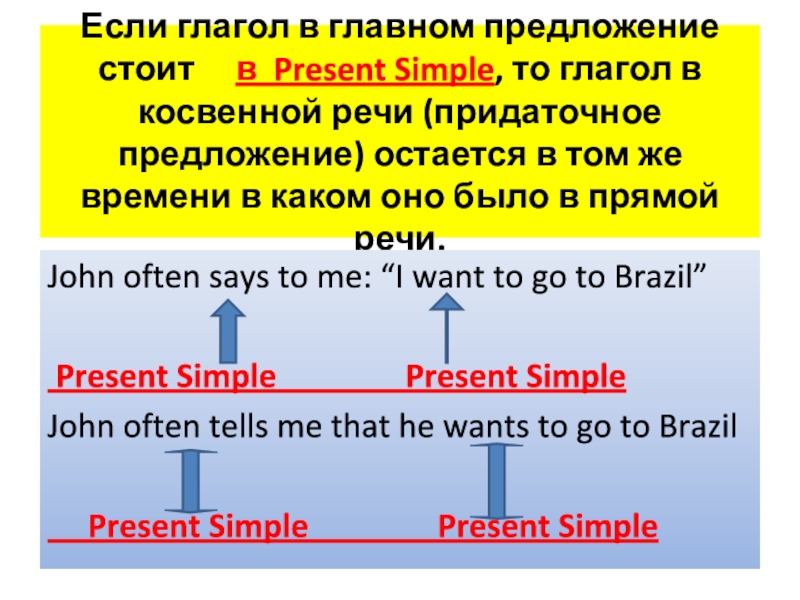
Слайд 8Если глагол в главном предложение стоит в Present Simple,
John often says to me: “I want to go to Brazil”
Present Simple Present Simple
John often tells me that he wants to go to Brazil
Present Simple Present Simple
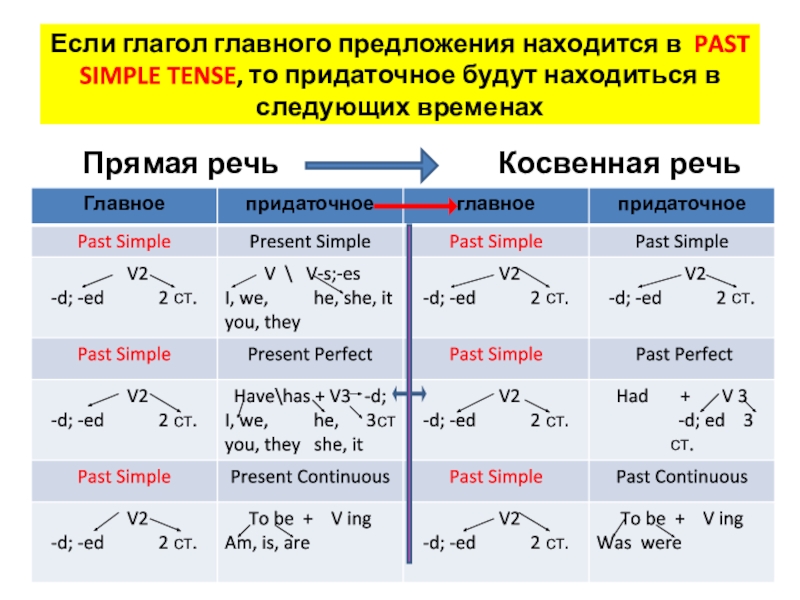
Слайд 9Если глагол главного предложения находится в PAST SIMPLE TENSE, то придаточное
Прямая речь Косвенная речь
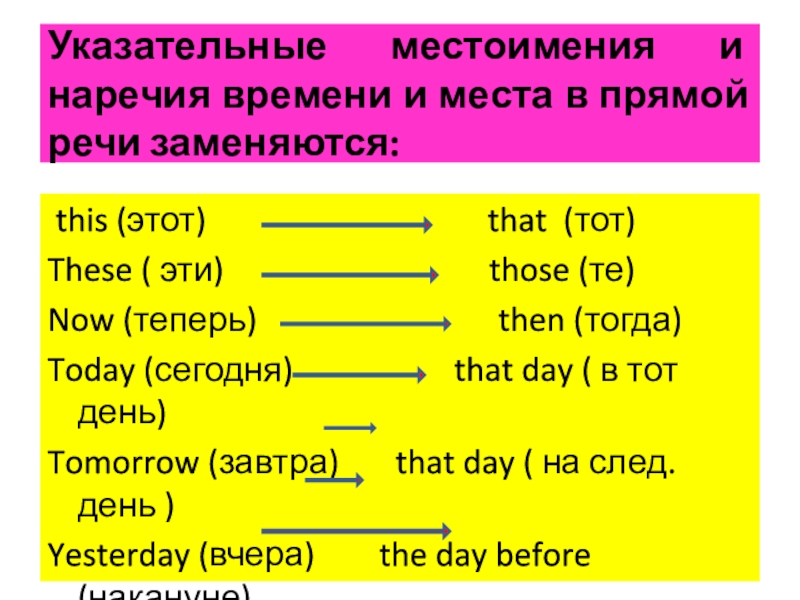
Слайд 10Указательные местоимения и наречия времени и места в прямой речи заменяются:
These ( эти) those (те)
Now (теперь) then (тогда)
Today (сегодня) that day ( в тот день)
Tomorrow (завтра) that day ( на след. день )
Yesterday (вчера) the day before (накануне)
Here (здесь) there (там)
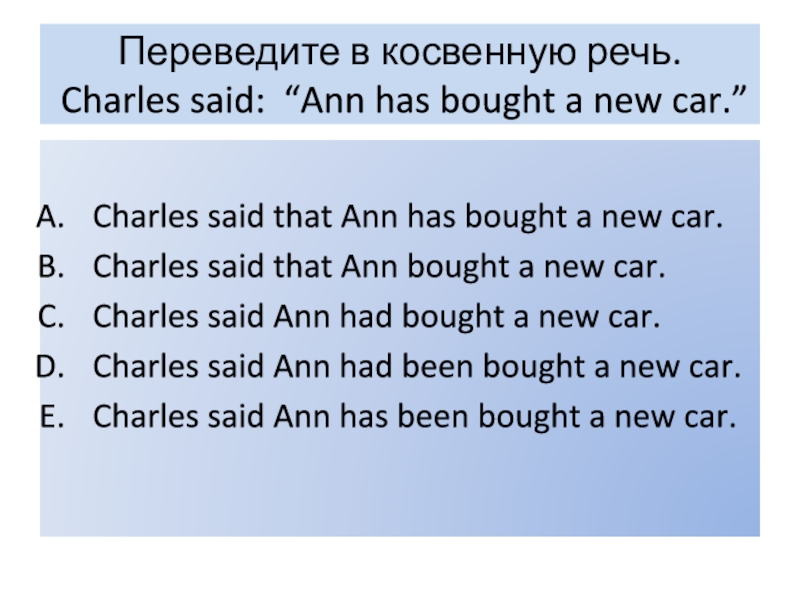
Слайд 11Переведите в косвенную речь. Charles said: “Ann has bought a
Charles said that Ann has bought a new car.
Charles said that Ann bought a new car.
Charles said Ann had bought a new car.
Charles said Ann had been bought a new car.
Charles said Ann has been bought a new car.
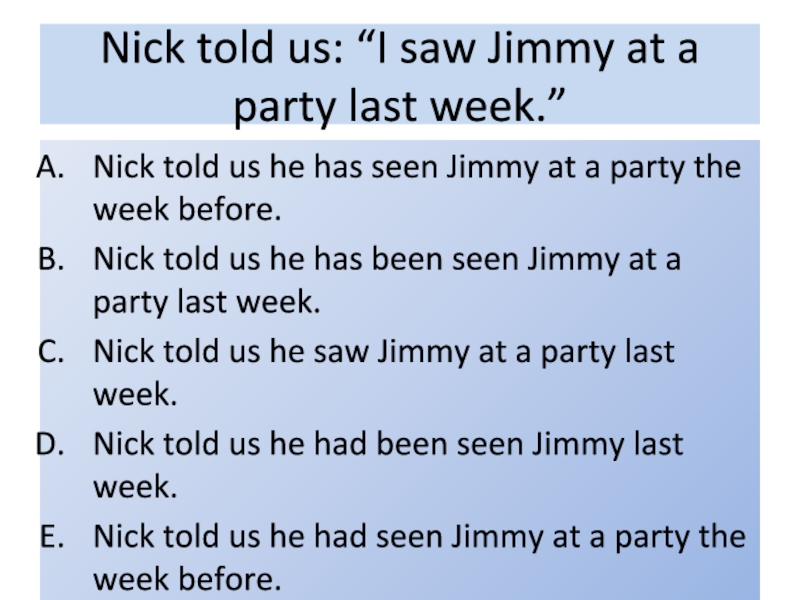
Слайд 12Nick told us: “I saw Jimmy at a party last week.”
Nick told us he has seen Jimmy at a party the week before.
Nick told us he has been seen Jimmy at a party last week.
Nick told us he saw Jimmy at a party last week.
Nick told us he had been seen Jimmy last week.
Nick told us he had seen Jimmy at a party the week before.
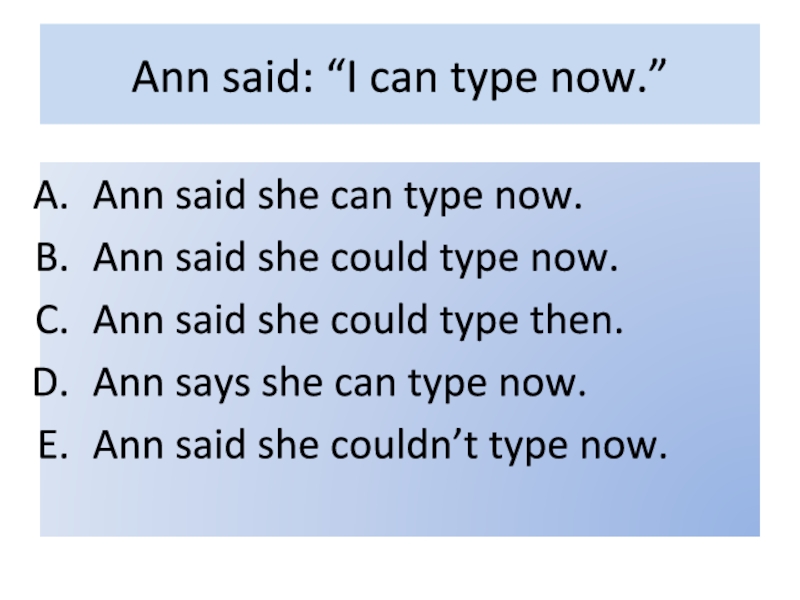
Слайд 13Ann said: “I can type now.”
Ann said she can type
Ann said she could type now.
Ann said she could type then.
Ann says she can type now.
Ann said she couldn’t type now.
Слайд 14Mike said:” I’m going to give up my job.”
Mike said
Mike said he is going to give up his job.
Mike said he was going to give up his job.
Mike says he is going to give up his job.
Mike says he will give up his job.