№12
- Главная
- Разное
- Образование
- Спорт
- Естествознание
- Природоведение
- Религиоведение
- Французский язык
- Черчение
- Английский язык
- Астрономия
- Алгебра
- Биология
- География
- Геометрия
- Детские презентации
- Информатика
- История
- Литература
- Математика
- Музыка
- МХК
- Немецкий язык
- ОБЖ
- Обществознание
- Окружающий мир
- Педагогика
- Русский язык
- Технология
- Физика
- Философия
- Химия
- Шаблоны, фоны, картинки для презентаций
- Экология
- Экономика
Презентация, доклад по английскому языку на тему Писатели и поэты
Содержание
- 1. Презентация по английскому языку на тему Писатели и поэты
- 2. Who is Charles Dickens?Charles John Huffam Dickens
- 3. BiographyCharles Dickens was born on February 7,
- 4. His father served as an official at
- 5. His older sister continued to study at
- 6. However, at the insistence of his
- 7. Literary ActivityDickens found himself primarily as a
- 8. The pickwick papers(1836-1837)A dizzying success awaited Dickens
- 9. Oliver twist(1838—1843) Two years later, Dickens spoke
- 10. Dombey and Son(1848)One of his best novels is "Dombey and Son"
- 11. David Copperfield (1849-1850) Even more weakened humor
- 12. Personal StrangenessesDickens often spontaneously fell into a
- 13. The death of writerOn June 9, 1870,
- 14. Слайд 14
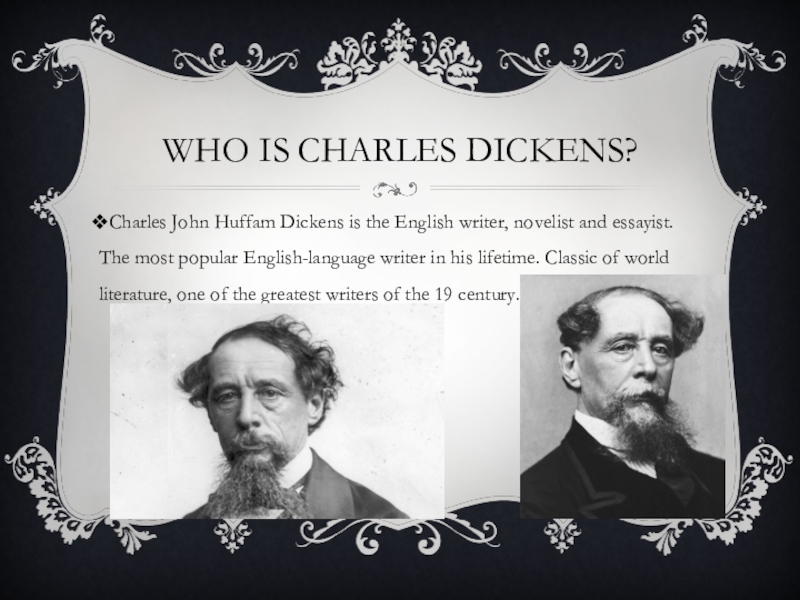
Who is Charles Dickens?Charles John Huffam Dickens is the English writer, novelist and essayist. The most popular English-language writer in his lifetime. Classic of world literature, one of the greatest writers of the 19 century.
Слайд 2Who is Charles Dickens?
Charles John Huffam Dickens is the English writer,
novelist and essayist. The most popular English-language writer in his lifetime. Classic of world literature, one of the greatest writers of the 19 century.
Слайд 3Biography
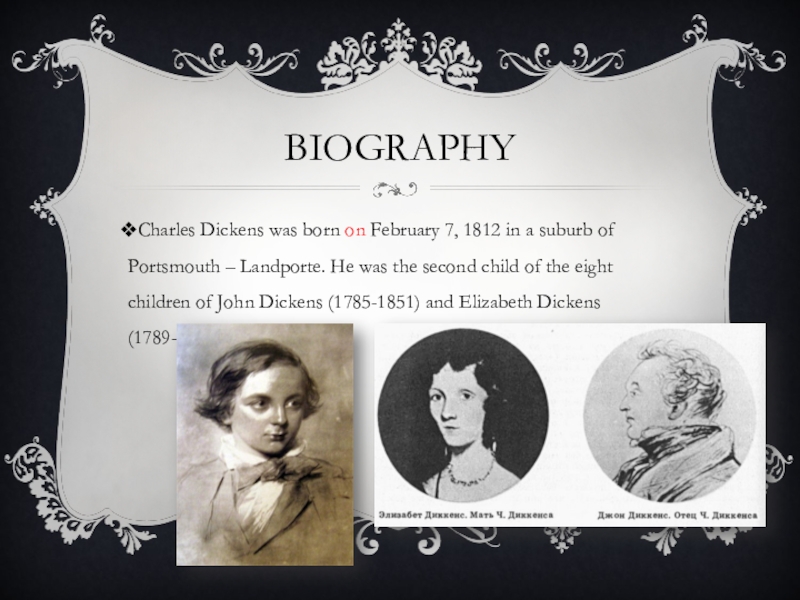
Charles Dickens was born on February 7, 1812 in a suburb
of Portsmouth – Landporte. He was the second child of the eight children of John Dickens (1785-1851) and Elizabeth Dickens (1789-1863).
Слайд 4His father served as an official at the naval base of
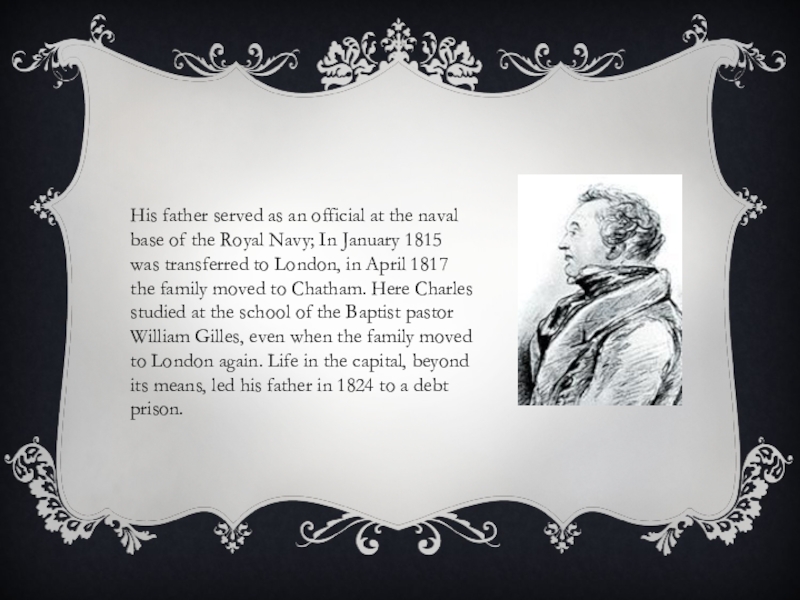
the Royal Navy; In January 1815 was transferred to London, in April 1817 the family moved to Chatham. Here Charles studied at the school of the Baptist pastor William Gilles, even when the family moved to London again. Life in the capital, beyond its means, led his father in 1824 to a debt prison.
Слайд 5His older sister continued to study at the Royal Academy of
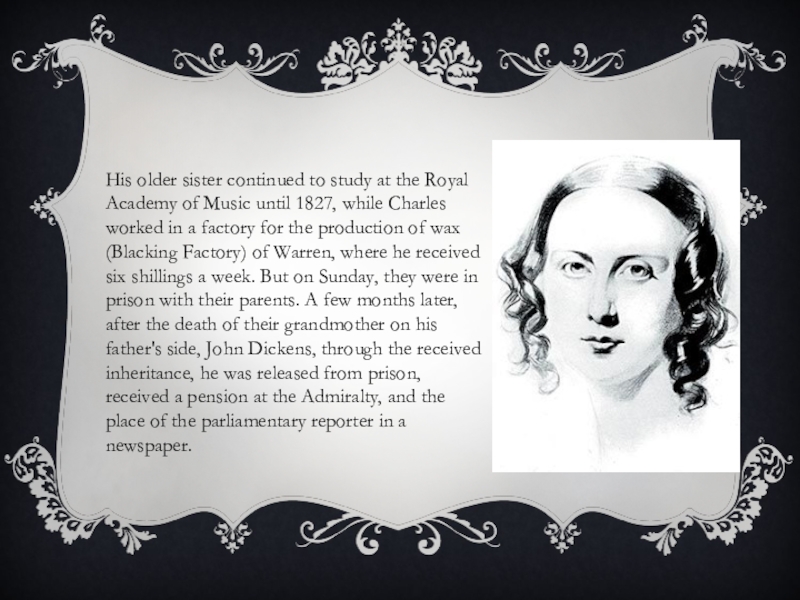
Music until 1827, while Charles worked in a factory for the production of wax (Blacking Factory) of Warren, where he received six shillings a week. But on Sunday, they were in prison with their parents. A few months later, after the death of their grandmother on his father's side, John Dickens, through the received inheritance, he was released from prison, received a pension at the Admiralty, and the place of the parliamentary reporter in a newspaper.
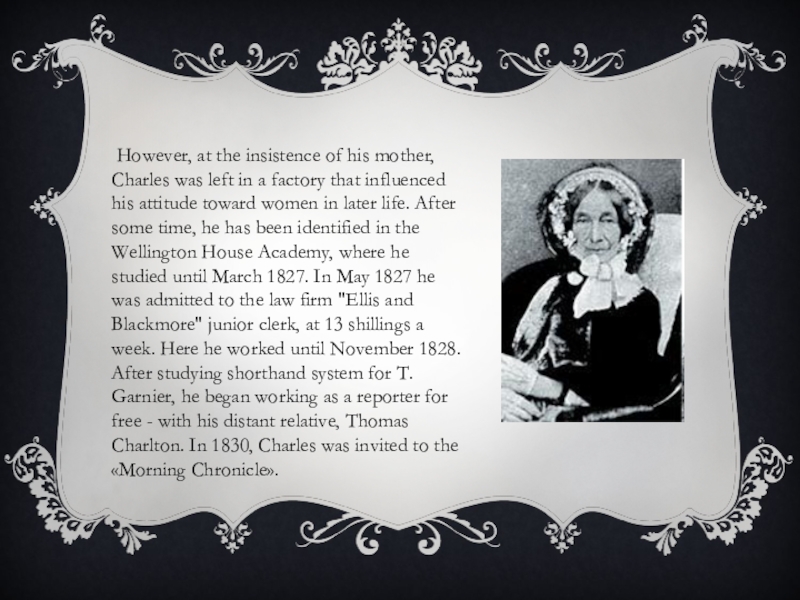
Слайд 6 However, at the insistence of his mother, Charles was left
in a factory that influenced his attitude toward women in later life. After some time, he has been identified in the Wellington House Academy, where he studied until March 1827. In May 1827 he was admitted to the law firm "Ellis and Blackmore" junior clerk, at 13 shillings a week. Here he worked until November 1828. After studying shorthand system for T. Garnier, he began working as a reporter for free - with his distant relative, Thomas Charlton. In 1830, Charles was invited to the «Morning Chronicle».
Слайд 7Literary Activity
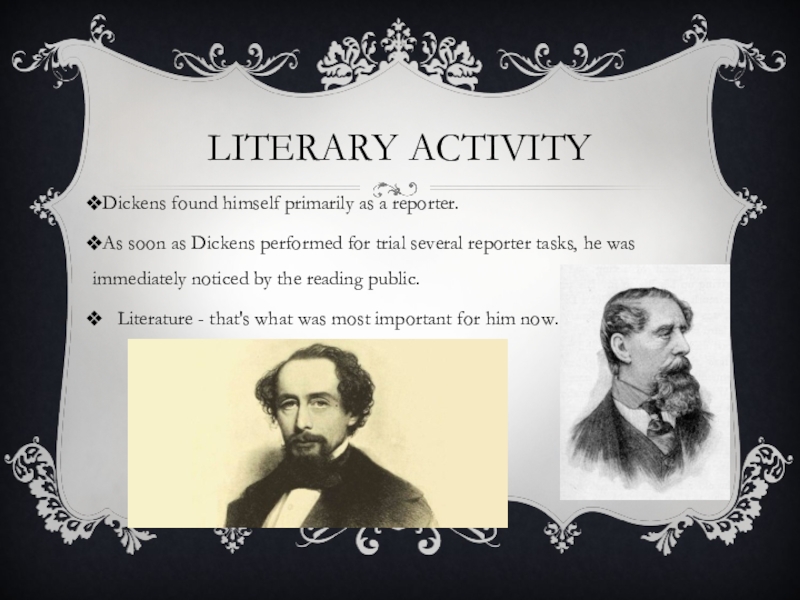
Dickens found himself primarily as a reporter.
As soon as Dickens
performed for trial several reporter tasks, he was immediately noticed by the reading public.
Literature - that's what was most important for him now.
Literature - that's what was most important for him now.
Слайд 8The pickwick papers(1836-1837)
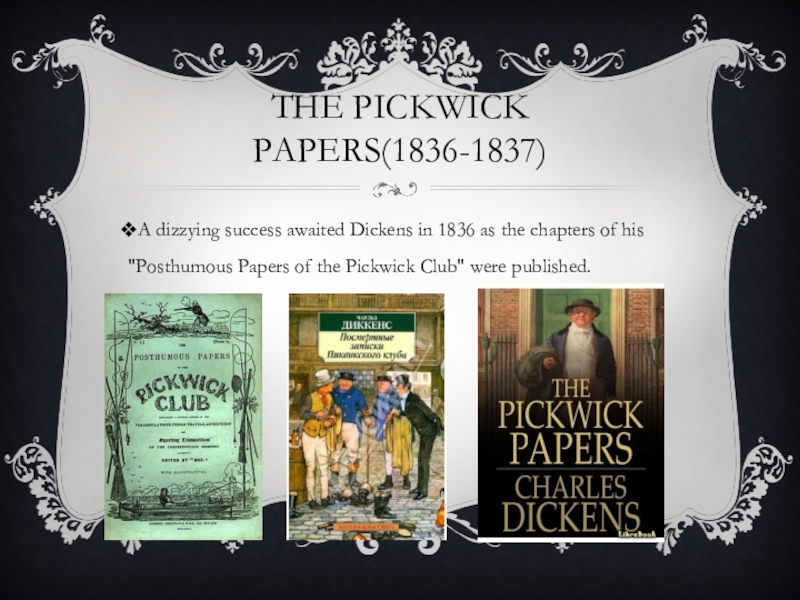
A dizzying success awaited Dickens in 1836 as the
chapters of his "Posthumous Papers of the Pickwick Club" were published.
Слайд 9Oliver twist(1838—1843)
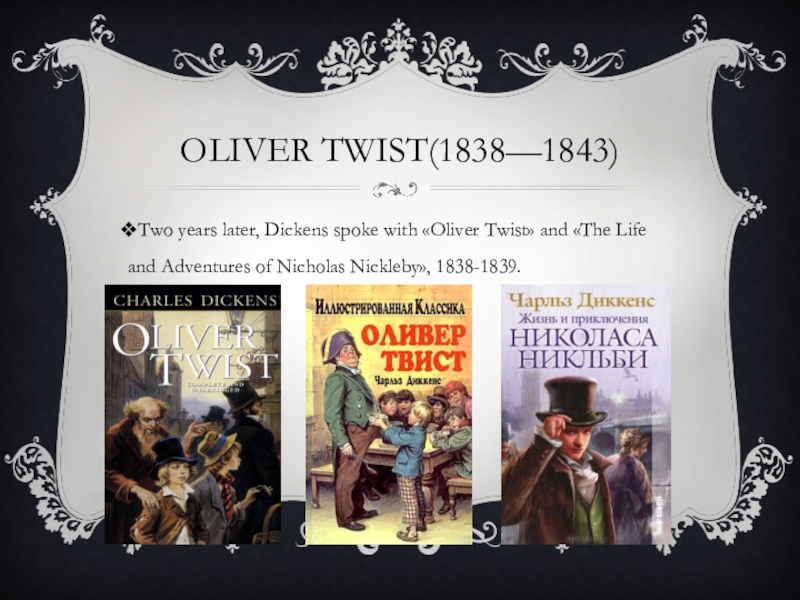
Two years later, Dickens spoke with «Oliver Twist» and
«The Life and Adventures of Nicholas Nickleby», 1838-1839.
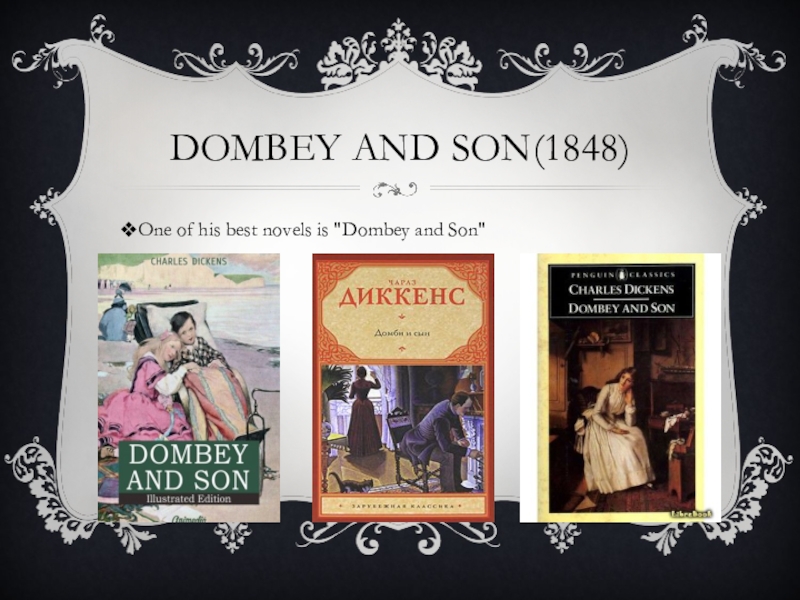
Слайд 11David Copperfield
(1849-1850)
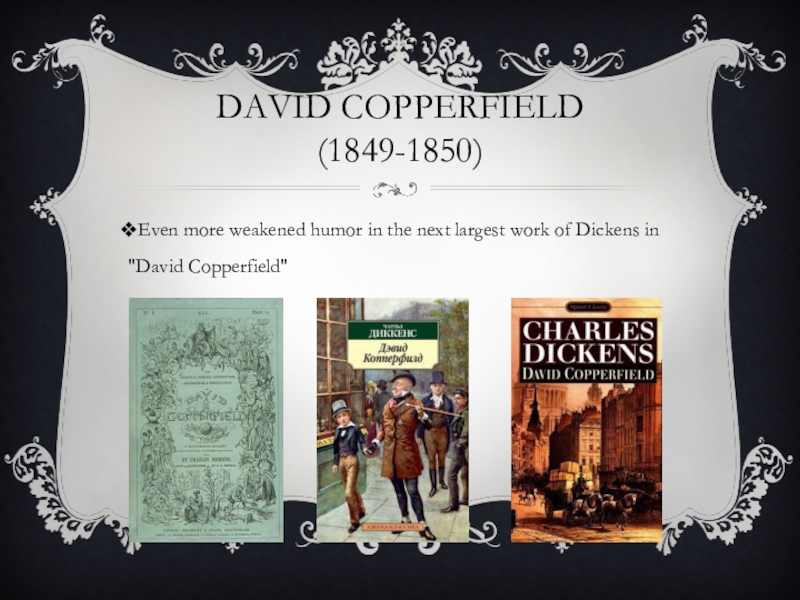
Even more weakened humor in the next largest work
of Dickens in "David Copperfield"
Слайд 12Personal Strangenesses
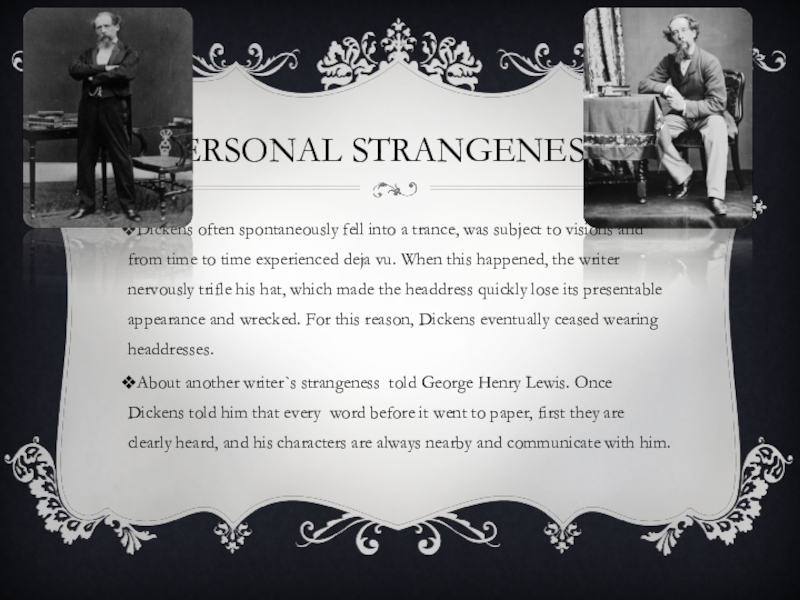
Dickens often spontaneously fell into a trance, was subject to
visions and from time to time experienced deja vu. When this happened, the writer nervously trifle his hat, which made the headdress quickly lose its presentable appearance and wrecked. For this reason, Dickens eventually ceased wearing headdresses.
About another writer`s strangeness told George Henry Lewis. Once Dickens told him that every word before it went to paper, first they are clearly heard, and his characters are always nearby and communicate with him.
About another writer`s strangeness told George Henry Lewis. Once Dickens told him that every word before it went to paper, first they are clearly heard, and his characters are always nearby and communicate with him.
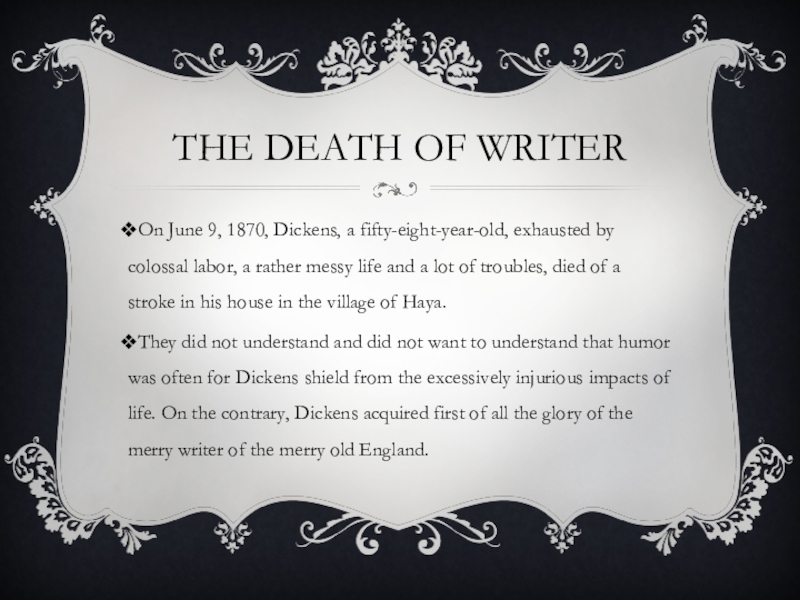
Слайд 13The death of writer
On June 9, 1870, Dickens, a fifty-eight-year-old, exhausted
by colossal labor, a rather messy life and a lot of troubles, died of a stroke in his house in the village of Haya.
They did not understand and did not want to understand that humor was often for Dickens shield from the excessively injurious impacts of life. On the contrary, Dickens acquired first of all the glory of the merry writer of the merry old England.
They did not understand and did not want to understand that humor was often for Dickens shield from the excessively injurious impacts of life. On the contrary, Dickens acquired first of all the glory of the merry writer of the merry old England.