- Главная
- Разное
- Образование
- Спорт
- Естествознание
- Природоведение
- Религиоведение
- Французский язык
- Черчение
- Английский язык
- Астрономия
- Алгебра
- Биология
- География
- Геометрия
- Детские презентации
- Информатика
- История
- Литература
- Математика
- Музыка
- МХК
- Немецкий язык
- ОБЖ
- Обществознание
- Окружающий мир
- Педагогика
- Русский язык
- Технология
- Физика
- Философия
- Химия
- Шаблоны, фоны, картинки для презентаций
- Экология
- Экономика
Презентация, доклад по английскому языку на тему Violent protests of colonists (10 класс)
Содержание
- 1. Презентация по английскому языку на тему Violent protests of colonists (10 класс)
- 2. Violent protests of colonistsColonists claimed, "No taxation
- 3. Слайд 3
- 4. The Boston MassacreThe Boston Massacre, known as
- 5. Tensions between the American colonists and the
- 6. The soldiers became enraged after one of
- 7. The first person who was hit when
- 8. Of the five civilians who died in
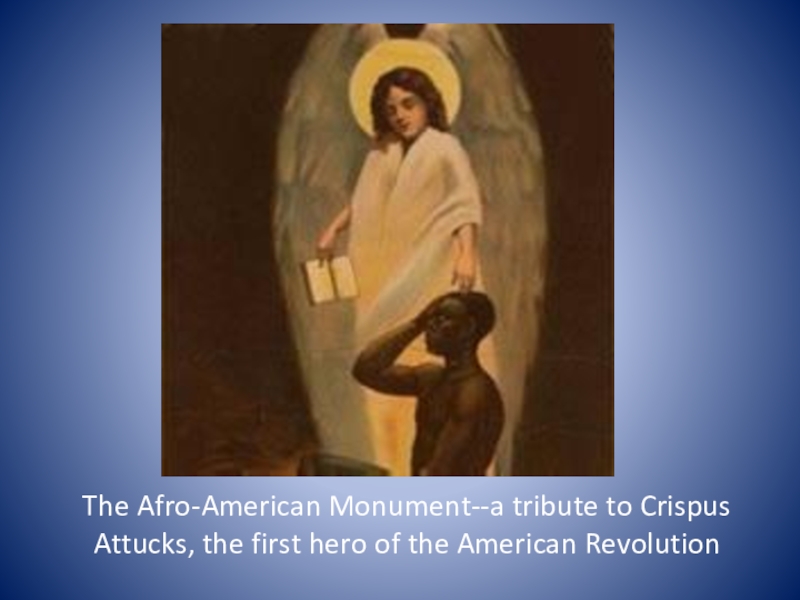
- 9. The Afro-American Monument--a tribute to Crispus Attucks, the first hero of the American Revolution
- 10. Conflicts between the British and the colonists
- 11. The Boston Massacre helped spark the colonists'
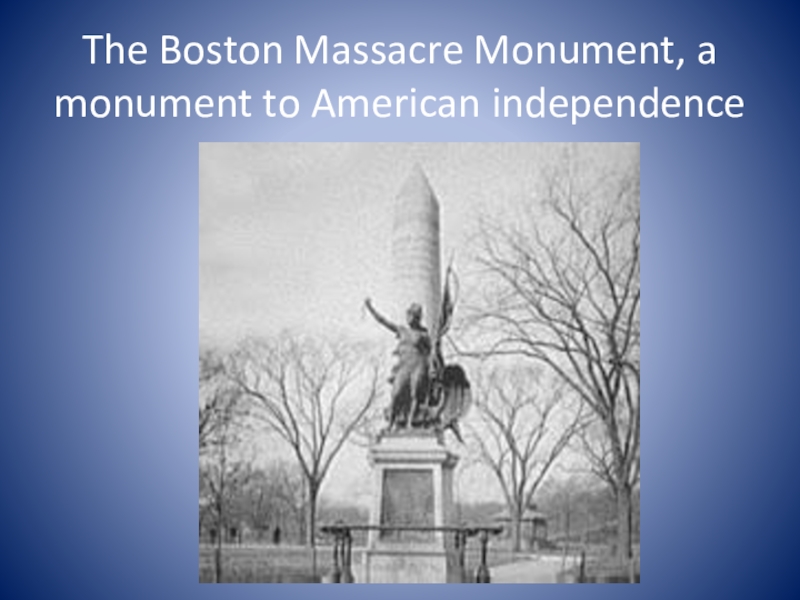
- 12. The Boston Massacre Monument, a monument to American independence
- 13. Crispus AttucksCrispus Attucks (1723—March 5, 1770) was the
- 14. Despite the lack of clarity, Attucks became
- 15. Historians disagree on whether Crispus Attucks was
- 16. According to a contemporary account in the Pennsylvania
- 17. The Boston Tea Party
- 18. Who organized the Boston Tea Party?The Boston
- 19. Слайд 19
- 20. Famous Boston Patriots who were members of
- 21. What caused the Boston Tea Party?The Boston
- 22. The Indemnity Act greatly cut down on
- 23. Tea Act of 1773 was an Act
- 24. How many people participated in the Boston
- 25. Many were from Boston or the surrounding
- 26. The participants were off all ages, but
- 27. How many ships were involved? On the
- 28. The Dartmouth arrived in Boston on November
- 29. Were the ships British?A popular misconception is
- 30. Where did the tea come from?Contrary to
- 31. In the 18th century tea trade, black
- 32. What damage did the Boston Tea Party
- 33. The damage the Sons of Liberty caused
- 34. What happened after the Tea Party?For weeks
- 35. Слайд 35
- 36. The Intolerable Acts outraged and unified the
- 37. American colonists responded with protests and coordinated
- 38. The implication and impact of the Boston
Violent protests of colonistsColonists claimed, "No taxation without representation." They refused to be taxed because they were unable to elect members of Parliament that were making these tax laws. Hence, they thought it unfair to have
Слайд 2Violent protests of colonists
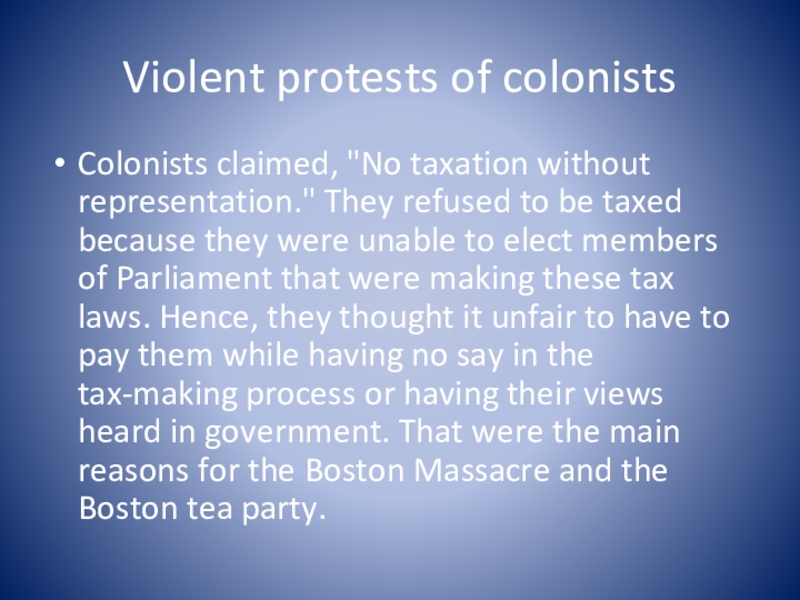
Colonists claimed, "No taxation without representation." They refused
to be taxed because they were unable to elect members of Parliament that were making these tax laws. Hence, they thought it unfair to have to pay them while having no say in the tax-making process or having their views heard in government. That were the main reasons for the Boston Massacre and the Boston tea party.
Слайд 4The Boston Massacre
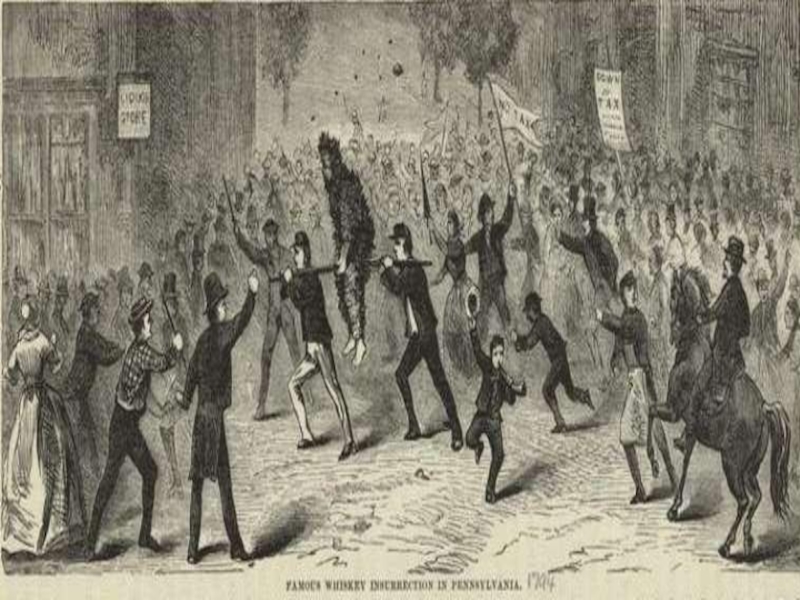
The Boston Massacre, known as the Incident on King
Street by the British, was an incident on March 5, 1770, in which British Army soldiers killed five male civilians and injured six others.
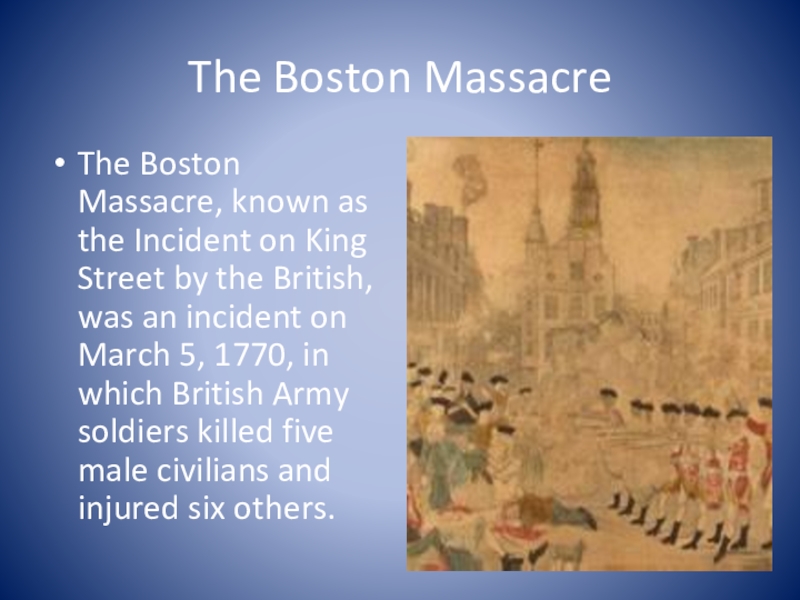
Слайд 5Tensions between the American colonists and the British were already running
high in the early spring of 1770. Late in the afternoon, on March 5, a crowd of jeering Bostonians slinging snowballs gathered around a small group of British soldiers guarding the Boston Customs House
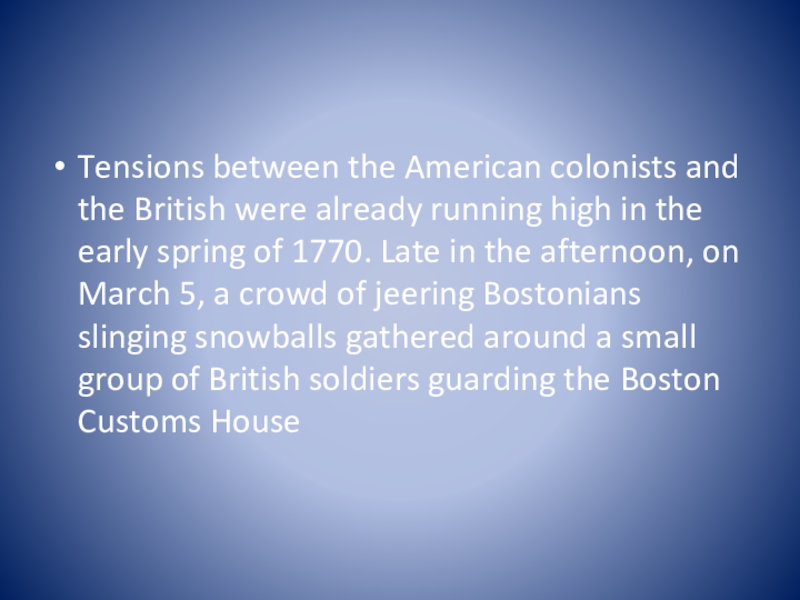
Слайд 6The soldiers became enraged after one of them had been hit.
They fired into the crowd, without orders, instantly killing three people and wounding others. Two more people died later of wounds sustained in the incident.
Слайд 7The first person who was hit when the British soldiers began
firing was an African American sailor named Crispus Attucks. Although not much is known about his past, it's likely that Attucks escaped slavery around 1750 and worked on whaling ships for the next 20 years.
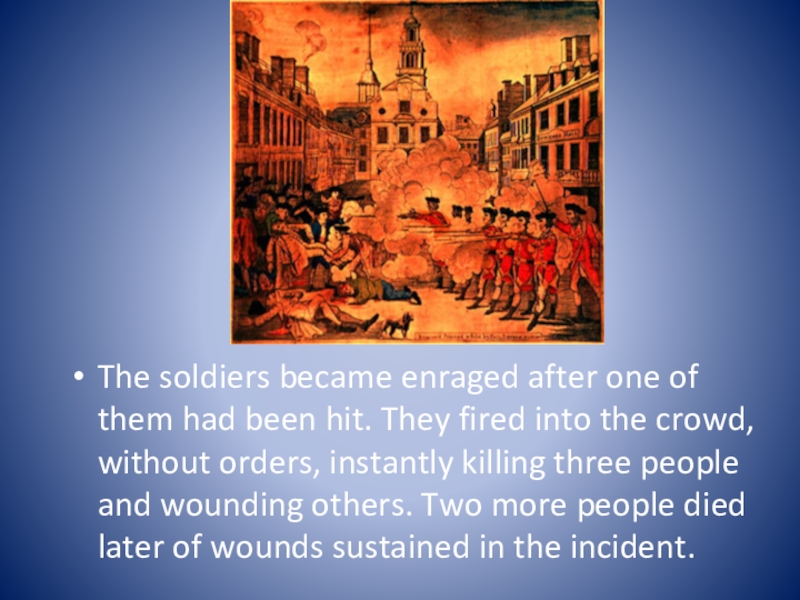
Слайд 8Of the five civilians who died in the Boston Massacre, Attucks
is the only one who became widely known, and he became the first hero of the American Revolution.
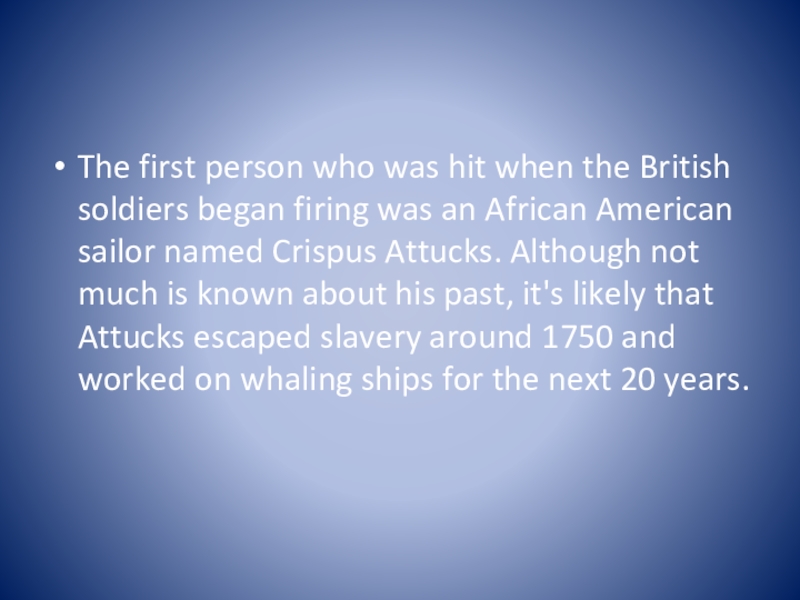
Слайд 9The Afro-American Monument--a tribute to Crispus Attucks, the first hero of
the American Revolution
Слайд 10Conflicts between the British and the colonists had been on the
rise because the British government had been trying to increase control over the colonies and raise taxes at the same time. The event in Boston helped to unite the colonies against Britain. What started as a minor fight became a turning point in the beginnings of the American Revolution.
Слайд 11The Boston Massacre helped spark the colonists' desire for American independence,
while the dead rioters became martyrs for liberty.
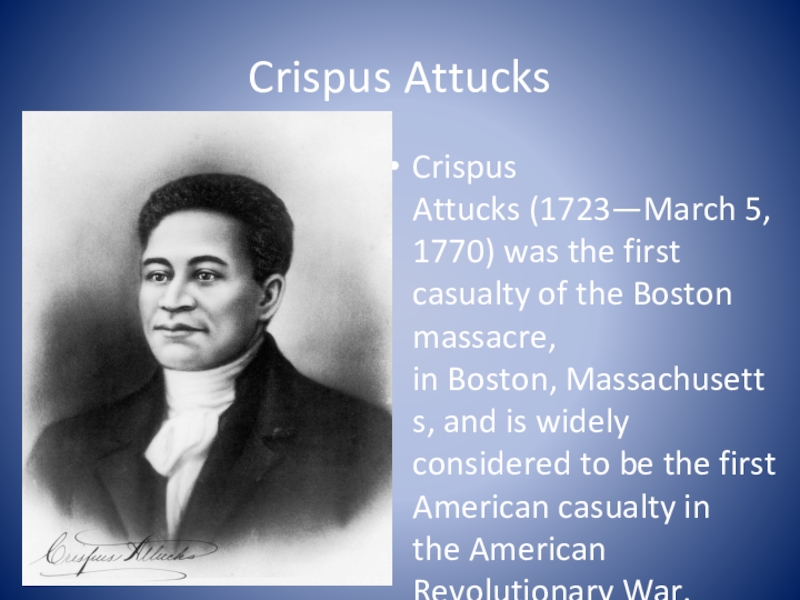
Слайд 13Crispus Attucks
Crispus Attucks (1723—March 5, 1770) was the first casualty of the Boston
massacre, in Boston, Massachusetts, and is widely considered to be the first American casualty in the American Revolutionary War.
Слайд 14Despite the lack of clarity, Attucks became an icon of the anti-slavery movement
in the 18th century. He was held up as the first martyr of the American Revolution, along with the others killed. In the early 19th century, as the abolitionist movement gained momentum in Boston, supporters lauded Attucks as an African American who played a heroic role in the history of the United States.
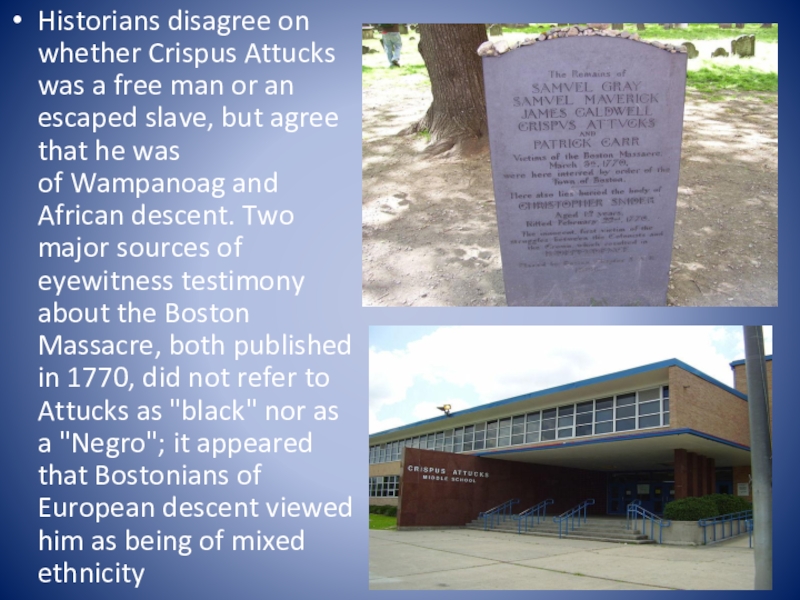
Слайд 15Historians disagree on whether Crispus Attucks was a free man or
an escaped slave, but agree that he was of Wampanoag and African descent. Two major sources of eyewitness testimony about the Boston Massacre, both published in 1770, did not refer to Attucks as "black" nor as a "Negro"; it appeared that Bostonians of European descent viewed him as being of mixed ethnicity
Слайд 16According to a contemporary account in the Pennsylvania Gazette (Philadelphia), he was a
"Mulattoe man, named Crispus Attucks, who was born in Framingham, but lately belonged to New-Providence, and was here in order to go for North Carolina . . ." Because of his mixed heritage, his story is also significant for Native Americans.
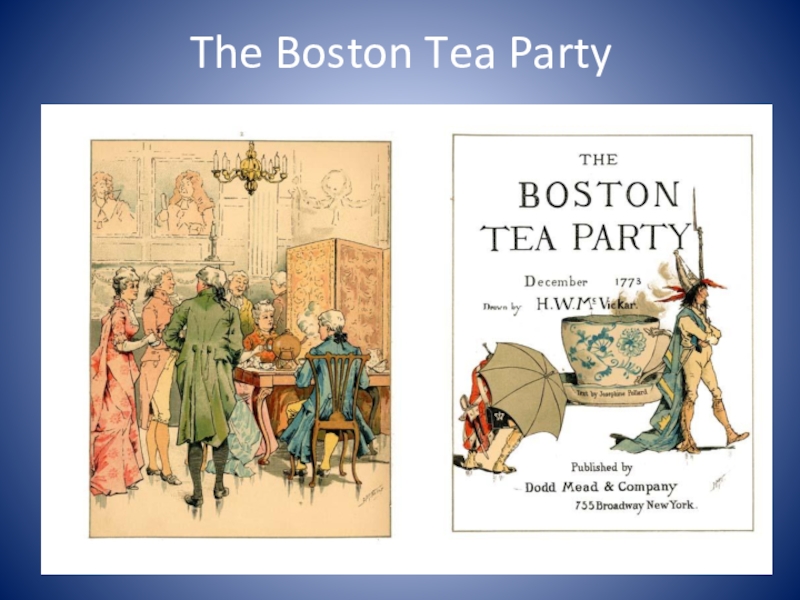
Слайд 18Who organized the Boston Tea Party?
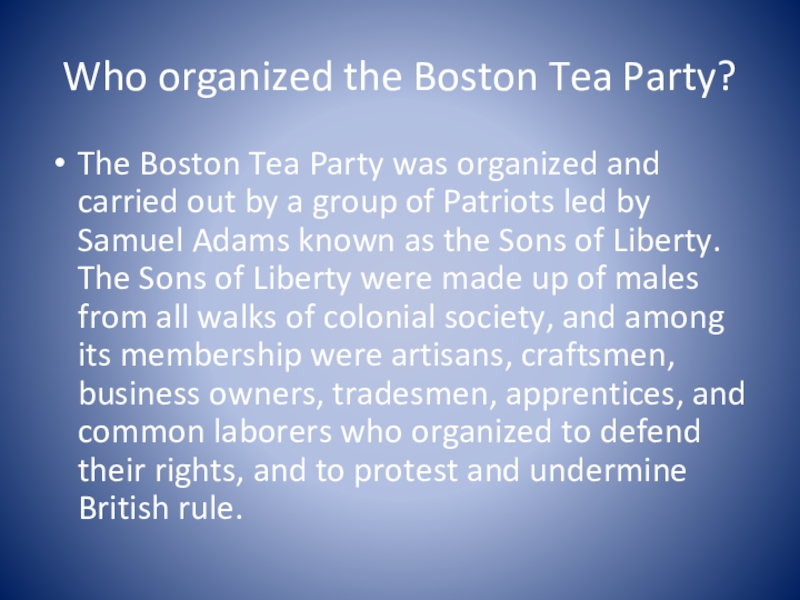
The Boston Tea Party was organized
and carried out by a group of Patriots led by Samuel Adams known as the Sons of Liberty. The Sons of Liberty were made up of males from all walks of colonial society, and among its membership were artisans, craftsmen, business owners, tradesmen, apprentices, and common laborers who organized to defend their rights, and to protest and undermine British rule.
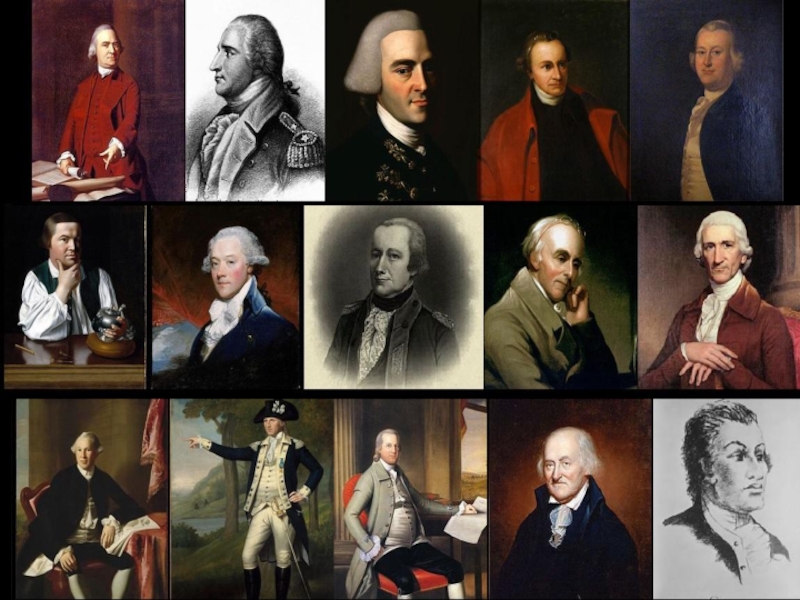
Слайд 20Famous Boston Patriots who were members of the Sons of Liberty
included John Adams, John Hancock, James Otis, Josiah Quincy, Paul Revere, and Dr. Joseph Warren. Incited by the Sons of Liberty, over 5,000 people gathered at the Old South Meeting House, the largest public building in Boston at the time, at 10:00 AM on December 16, 1773, to decide what was to be done about the tea and to plan the Boston Tea Party.
Слайд 21What caused the Boston Tea Party?
The Boston Tea Party happened as
a result of “taxation without representation”, yet the cause is more complex than that. The American colonists believed Britain was unfairly taxing them to pay for expenses incurred during the French and Indian War. Additionally, colonists believed Parliament did not have the right to tax them because the American colonies were not represented in Parliament.
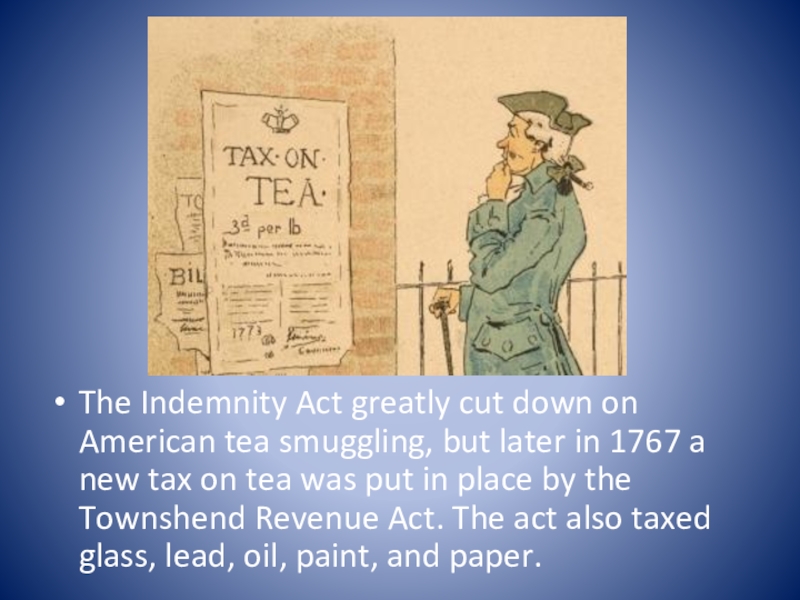
Слайд 22The Indemnity Act greatly cut down on American tea smuggling, but
later in 1767 a new tax on tea was put in place by the Townshend Revenue Act. The act also taxed glass, lead, oil, paint, and paper.
Слайд 23Tea Act of 1773 was an Act of the Parliament of
Great Britain. The principal objective was to reduce the massive surplus of tea held by the financially troubled British East India Company in its London warehouses and to help the struggling company survive. A related objective was to undercut the price of illegal tea, smuggled into Britain's North American colonies. This was supposed to convince the colonists to purchase Company tea on which the Townshend duties were paid, thus implicitly agreeing to accept Parliament's right of taxation.
Слайд 24How many people participated in the Boston Tea Party
It is estimated
that hundreds took part in the Boston Tea Party. For fear of punishment, many participants of the Boston Tea Party remained anonymous for many years after the event. To date it is known that 116 people are documented to have participated. Not all of the participants of the Boston Tea Party are known; many carried the secret of their participation to their graves. The participants were made up of males from all walks of colonial society.
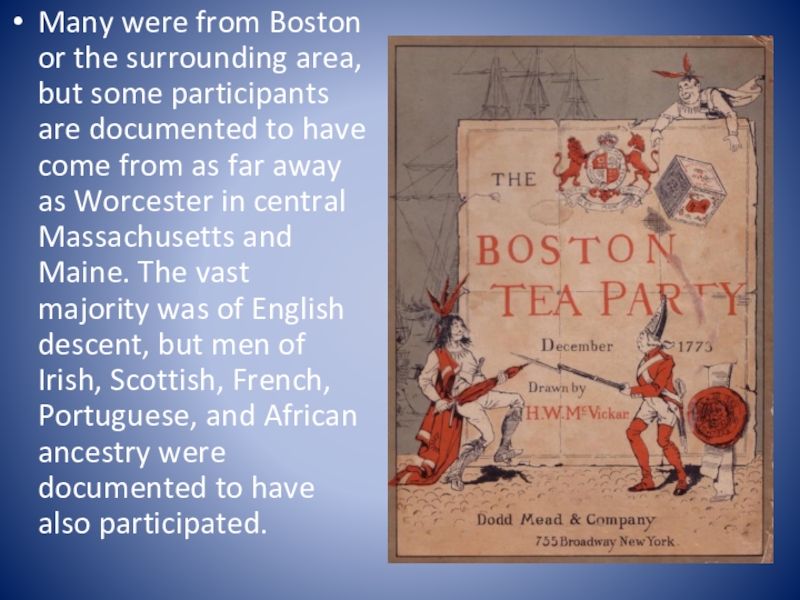
Слайд 25Many were from Boston or the surrounding area, but some participants
are documented to have come from as far away as Worcester in central Massachusetts and Maine. The vast majority was of English descent, but men of Irish, Scottish, French, Portuguese, and African ancestry were documented to have also participated.
Слайд 26The participants were off all ages, but the majority of the
documented participants was under the age of forty. Sixteen participants were teenagers, and only nine men were above the age of forty. Many of the Boston Tea Party participants fled Boston immediately after the destruction of the tea to avoid arrest. Thousands witnessed the event, and the implication and impact of this action were enormous ultimately leading to the start of the American Revolution.
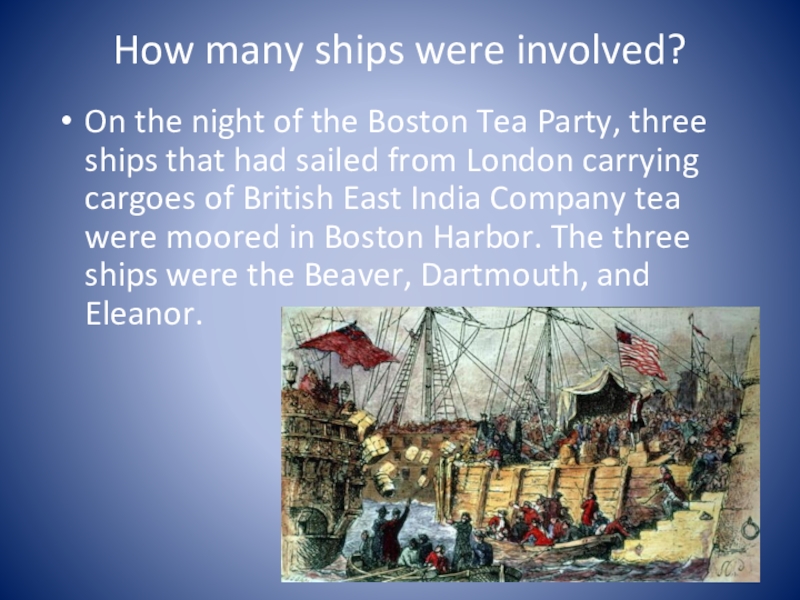
Слайд 27How many ships were involved?
On the night of the Boston Tea
Party, three ships that had sailed from London carrying cargoes of British East India Company tea were moored in Boston Harbor. The three ships were the Beaver, Dartmouth, and Eleanor.
Слайд 28The Dartmouth arrived in Boston on November 28, 1773, the Eleanor
on December 2, and the Beaver on December 15. Each of the three ships carried more than one hundred chests of British East India Company tea. The Sons of Liberty on the night of December 16, 1773, offloaded the tea cargoes of all three ships.
Слайд 29Were the ships British?
A popular misconception is the belief the Tea
Party Ships were British. In fact, the vessels were built in America and owned by Americans, but the cargo of tea they were carrying from London to Boston was owned by the British East India Company. The Beaver and Dartmouth were built and owned by the Rotch’s, an affluent Nantucket Quaker family. The Eleanor was one of several vessels owned by leading Boston merchant, John Rowe.
Слайд 30Where did the tea come from?
Contrary to popular belief, the British
East India Company tea the Beaver, Dartmouth, and Eleanor transported to Boston was not from India. The tea the Sons of Liberty dumped into Boston Harbor was in fact from China. In addition to India, the British East India Company had extensive dealings in China because of the lucrative opium trade. The tea destroyed during the Boston Tea Party was described as “Bohea” type.
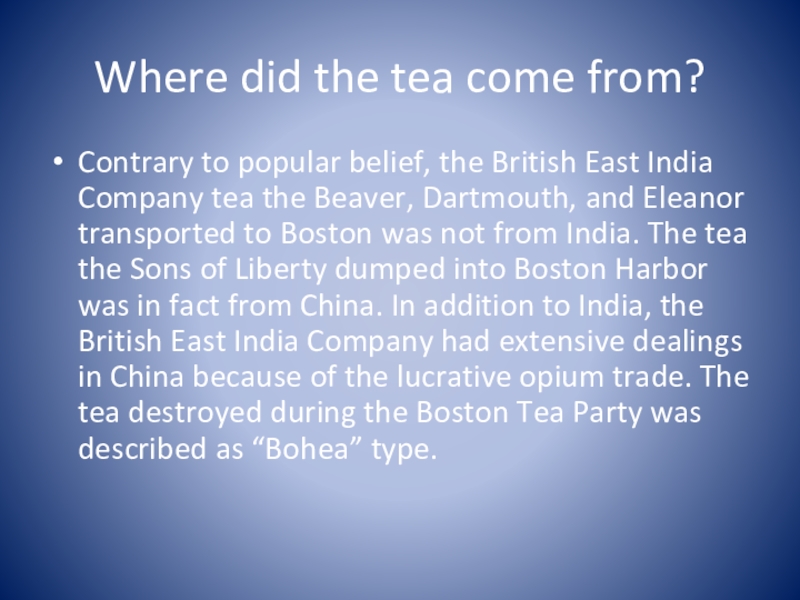
Слайд 31In the 18th century tea trade, black tea was referred to
as “Bohea.” Traditionally, the Bohea variety of black tea came from the Wuyi Mountains in the Chinese province of Fujian, but the term “Bohea” was hijacked by the tea trade to refer to all black tea varieties.
Слайд 32What damage did the Boston Tea Party cause?
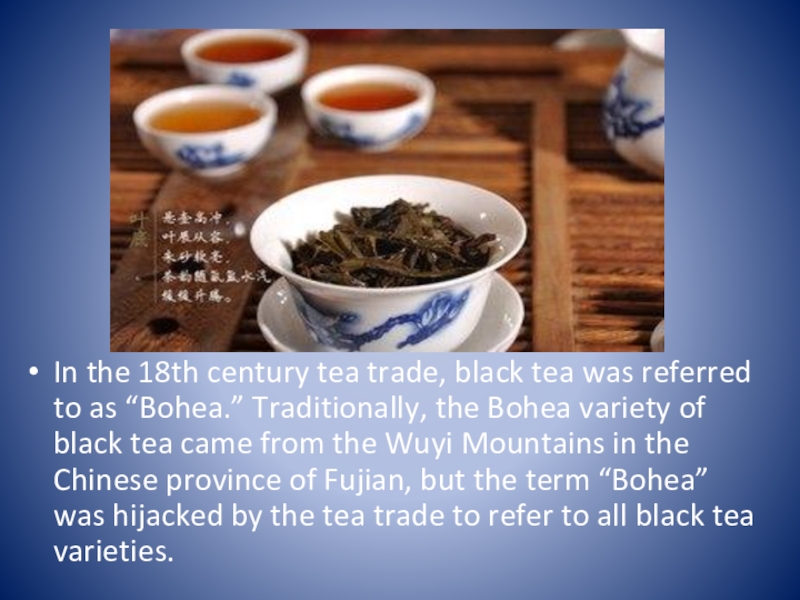
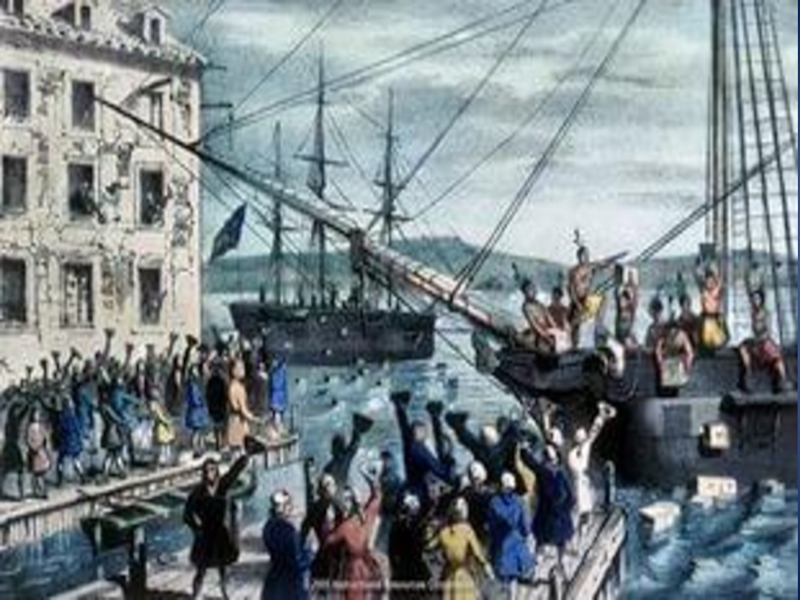
340 chests of British
East India Company tea, weighing over 92,000 pounds (roughly 46 tons), onboard the Beaver, Dartmouth, and Eleanor were smashed open with axes and dumped into Boston Harbor the night of December 16, 1773.
Слайд 33The damage the Sons of Liberty caused by destroying 340 chests
of tea, in today’s money, was worth more than $1,700,000 dollars. The British East India Company reported £9,659 worth of damage caused by the Boston Tea Party. According to some modern estimates, the destroyed tea could have brewed 18,523,000 cups of tea!
Слайд 34What happened after the Tea Party?
For weeks after the Boston Tea
Party, the 92,000 pounds of tea dumped into the harbor caused it to smell. As a result of the Boston Tea Party, the British shut down Boston Harbor until all of the 340 chests of British East India Company tea were paid for. This was implemented under the 1774 Intolerable Acts and known as the Boston Port Act.
Слайд 36The Intolerable Acts outraged and unified the American colonists even more
against British rule. In addition to the Boston Port Act, the Intolerable Acts also implemented the Massachusetts Government Act, the Administration of Justice Act, the Quartering Act, and the Quebec Act.
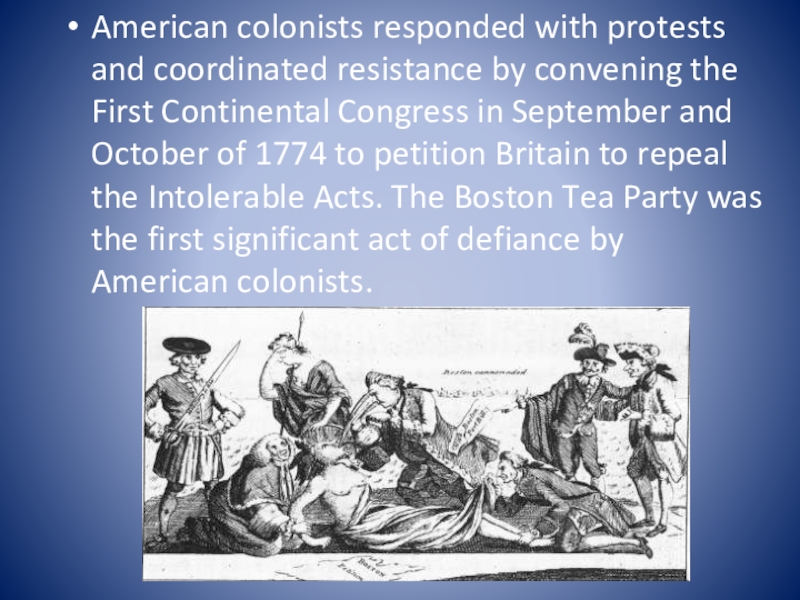
Слайд 37American colonists responded with protests and coordinated resistance by convening the
First Continental Congress in September and October of 1774 to petition Britain to repeal the Intolerable Acts. The Boston Tea Party was the first significant act of defiance by American colonists.
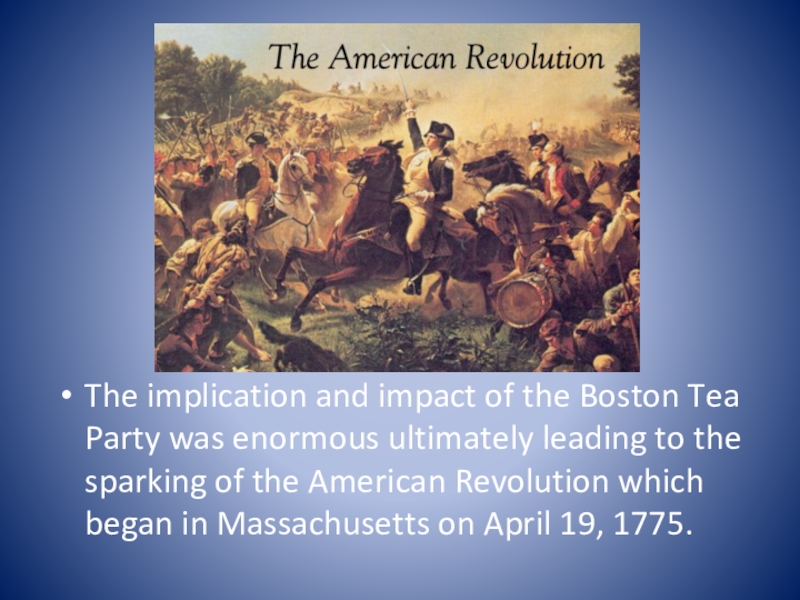
Слайд 38The implication and impact of the Boston Tea Party was enormous
ultimately leading to the sparking of the American Revolution which began in Massachusetts on April 19, 1775.