- Главная
- Разное
- Образование
- Спорт
- Естествознание
- Природоведение
- Религиоведение
- Французский язык
- Черчение
- Английский язык
- Астрономия
- Алгебра
- Биология
- География
- Геометрия
- Детские презентации
- Информатика
- История
- Литература
- Математика
- Музыка
- МХК
- Немецкий язык
- ОБЖ
- Обществознание
- Окружающий мир
- Педагогика
- Русский язык
- Технология
- Физика
- Философия
- Химия
- Шаблоны, фоны, картинки для презентаций
- Экология
- Экономика
Презентация, доклад по английскому языку на тему Vikings
Содержание
- 1. Презентация по английскому языку на тему Vikings
- 2. About the year 800, bands of fierce
- 3. The Vikings lived over one thousand years
- 4. The Viking Age in Britain
- 5. In AD 865, a 'Great Army' of
- 6. The are territories eventually settled
- 7. Most Viking men were all-round handymen,
- 8. Women baked bread. They spun and
- 9. Roving and tradingA young Viking man might
- 10. SlavesNot everyone was free to come and
- 11. The Vikings worshipped many
- 12. Viking weapons The Vikings fought using long
- 13. What the Vikings left behind? Our own
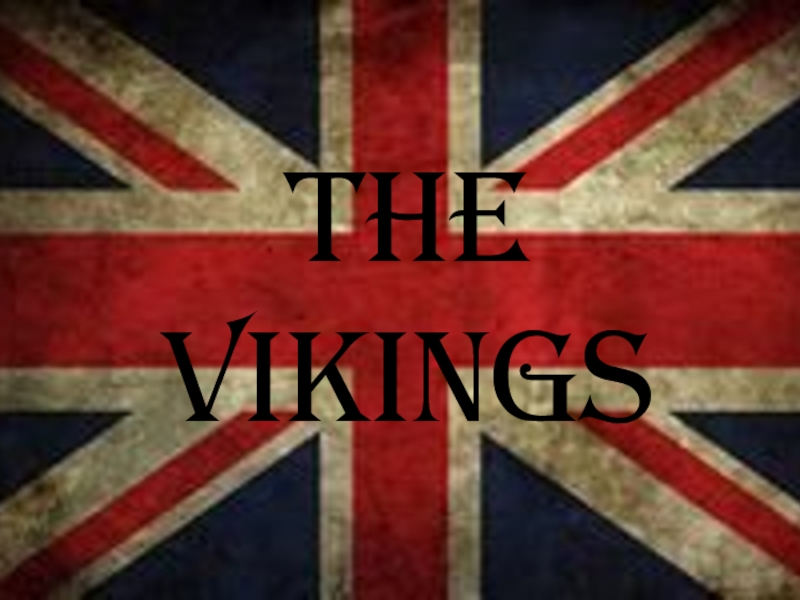
About the year 800, bands of fierce raiders began to attack the coasts. They were the Vikings. They came across the North Sea, just as the Anglo-Saxons had done 400 years earlier. In time, like the Anglo-Saxons ,
Слайд 2About the year 800, bands of fierce raiders began to attack
the coasts. They were the Vikings. They came across the North Sea, just as the Anglo-Saxons had done 400 years earlier.
In time, like the Anglo-Saxons , they made their home here. They drove the Saxons out of part of the country and took it for themselves.
King Alfred, Saxon king of Wessex, fought them in a great battle, but he could not drive them right away and had to let them have part of the country, called Danelaw.
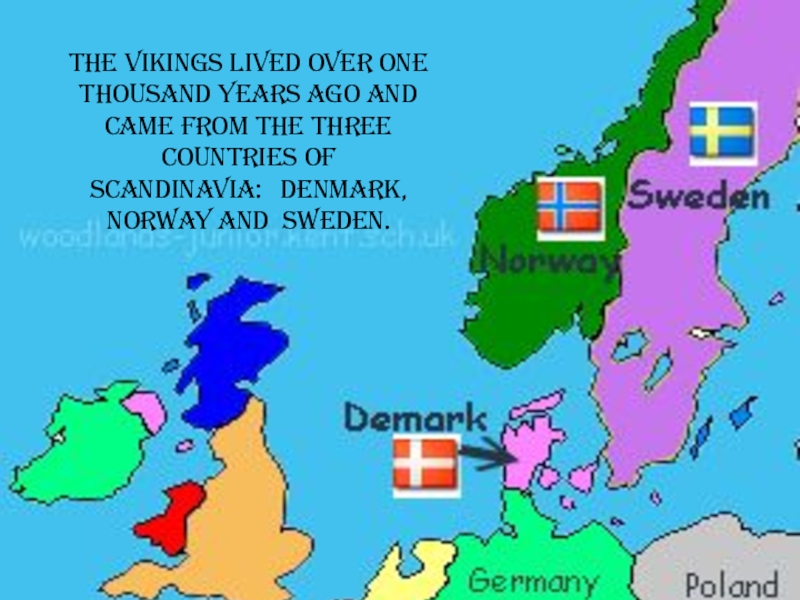
Слайд 3The Vikings lived over one thousand years ago and came from
the three countries of Scandinavia: Denmark, Norway and Sweden.
Слайд 4 The Viking Age in Britain began about 1,200 years ago in
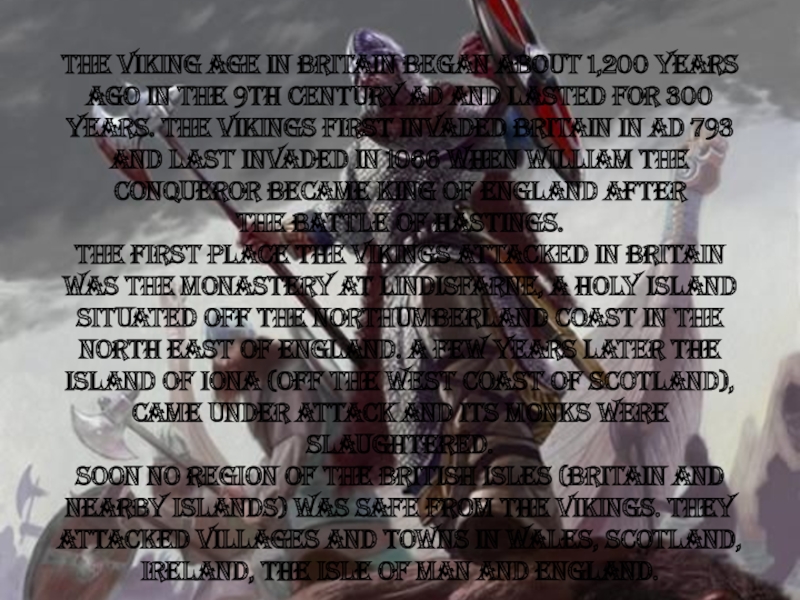
the 9th Century AD and lasted for 300 years. The Vikings first invaded Britain in AD 793 and last invaded in 1066 when William the Conqueror became King of England after the Battle of Hastings.
The first place the Vikings attacked in Britain was the monastery at Lindisfarne, a holy island situated off the Northumberland coast in the north east of England. A few years later the island of Iona (off the west coast of Scotland), came under attack and its monks were slaughtered.
Soon no region of the British Isles (Britain and nearby islands) was safe from the Vikings. They attacked villages and towns in Wales, Scotland, Ireland, the Isle of Man and England.
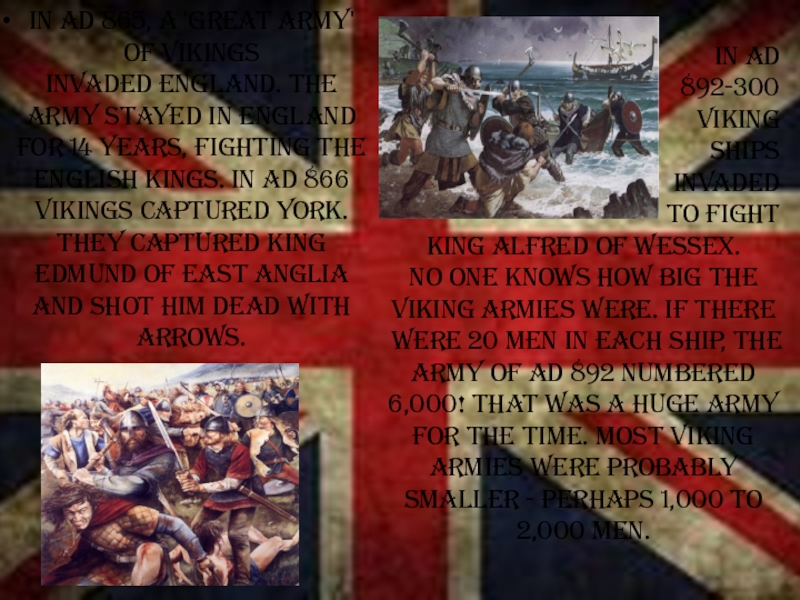
Слайд 5In AD 865, a 'Great Army' of Vikings invaded England. The army
stayed in England for 14 years, fighting the English kings. In AD 866 Vikings captured York. They captured King Edmund of East Anglia and shot him dead with arrows.
In AD 892-300
Viking
ships
Invaded
to fight
King Alfred of Wessex.
No one knows how big the Viking armies were. If there were 20 men in each ship, the army of AD 892 numbered 6,000! That was a huge army for the time. Most Viking armies were probably smaller - perhaps 1,000 to 2,000 men.
Слайд 6 The are territories eventually settled by Vikings
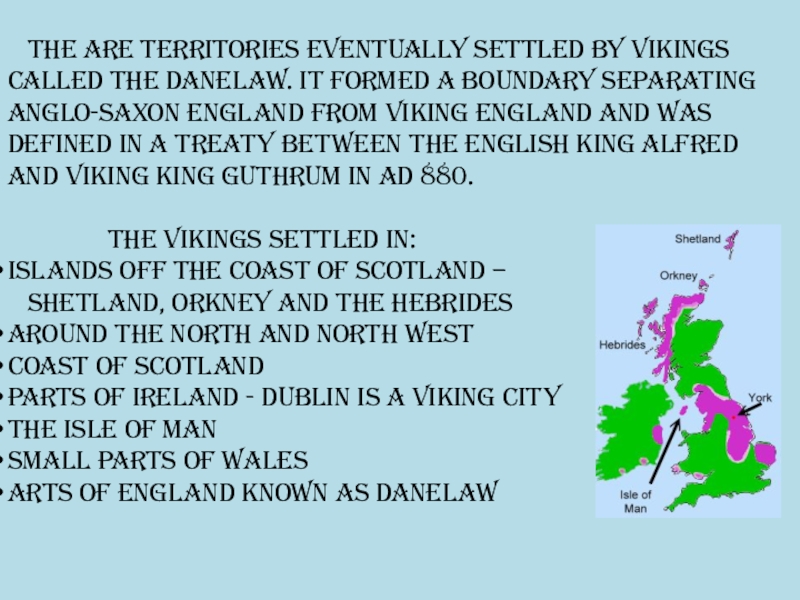
called the Danelaw. It formed a boundary separating Anglo-Saxon England from Viking England and was defined in a treaty between the English King Alfred and Viking King Guthrum in AD 880.
The Vikings settled in:
Islands off the coast of Scotland –
Shetland, Orkney and The Hebrides
Around the north and north west
coast of Scotland
Parts of Ireland - Dublin is a Viking city
The Isle of man
Small parts of wales
arts of England known as Danelaw
The Vikings settled in:
Islands off the coast of Scotland –
Shetland, Orkney and The Hebrides
Around the north and north west
coast of Scotland
Parts of Ireland - Dublin is a Viking city
The Isle of man
Small parts of wales
arts of England known as Danelaw
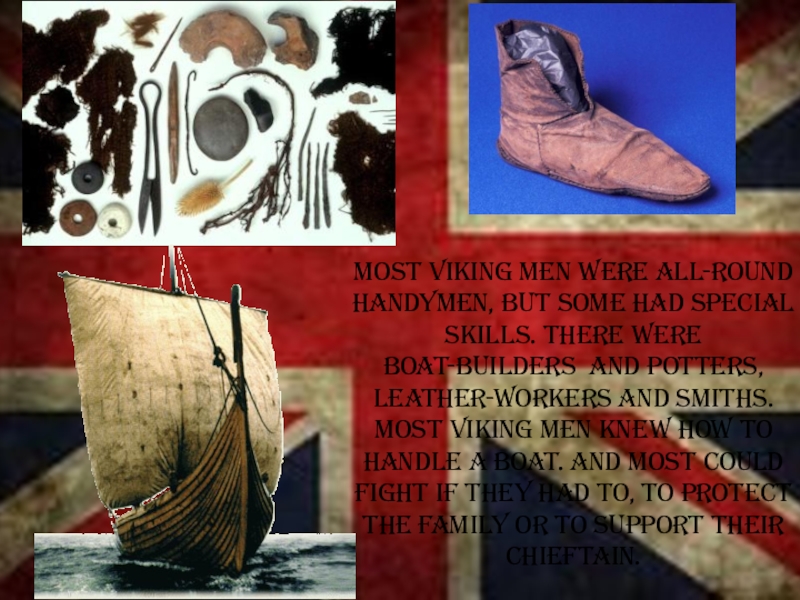
Слайд 7 Most Viking men were all-round handymen, but some had special skills.
There were boat-builders and potters, leather-workers and smiths. Most Viking men knew how to handle a boat. And most could fight if they had to, to protect the family or to support their chieftain.
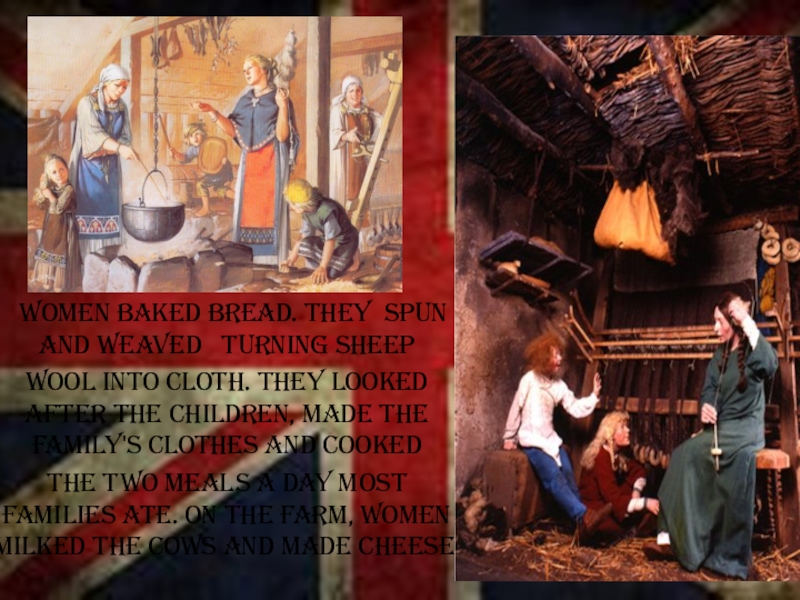
Слайд 8 Women baked bread. They spun and weaved turning sheep
wool into cloth. They looked after the children, made the family's clothes and cooked
the two meals a day most families ate. On the farm, women milked the cows and made cheese.
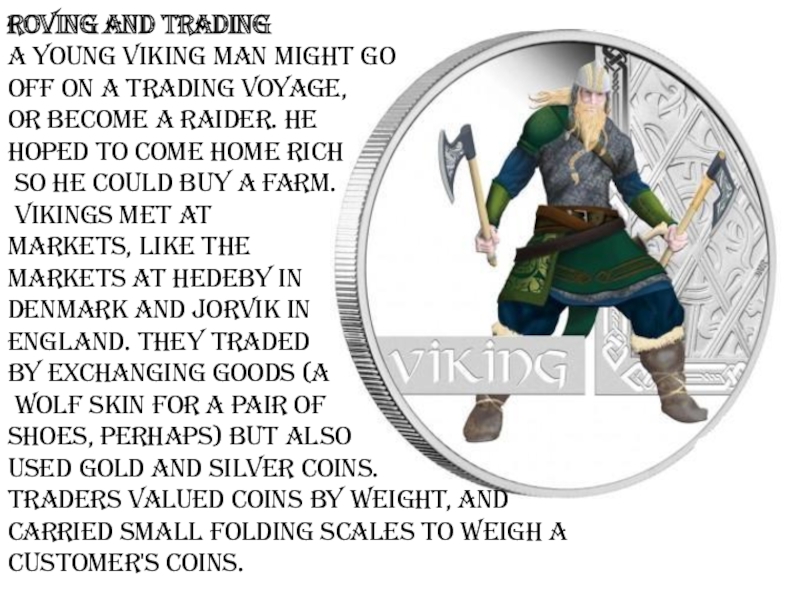
Слайд 9Roving and trading
A young Viking man might go
off on a
trading voyage,
or become a raider. He
hoped to come home rich
so he could buy a farm.
Vikings met at
markets, like the
markets at Hedeby in
Denmark and Jorvik in
England. They traded
by exchanging goods (a
wolf skin for a pair of
shoes, perhaps) but also
used gold and silver coins.
Traders valued coins by weight, and carried small folding scales to weigh a customer's coins.
or become a raider. He
hoped to come home rich
so he could buy a farm.
Vikings met at
markets, like the
markets at Hedeby in
Denmark and Jorvik in
England. They traded
by exchanging goods (a
wolf skin for a pair of
shoes, perhaps) but also
used gold and silver coins.
Traders valued coins by weight, and carried small folding scales to weigh a customer's coins.
Слайд 10
Slaves
Not everyone was free to come
and go as he or
she liked. Some people
Were slaves or 'thralls'. Slaves did
the hardest, dirtiest jobs.
People could be born slaves.
The child of a slave mother and father
was a slave too, but the child of a slave mother
and a free father was free.
Many slaves were people captured in a Viking raid. Viking traders sold slaves in markets, but slave-trading in England was stopped in 1102.
Were slaves or 'thralls'. Slaves did
the hardest, dirtiest jobs.
People could be born slaves.
The child of a slave mother and father
was a slave too, but the child of a slave mother
and a free father was free.
Many slaves were people captured in a Viking raid. Viking traders sold slaves in markets, but slave-trading in England was stopped in 1102.
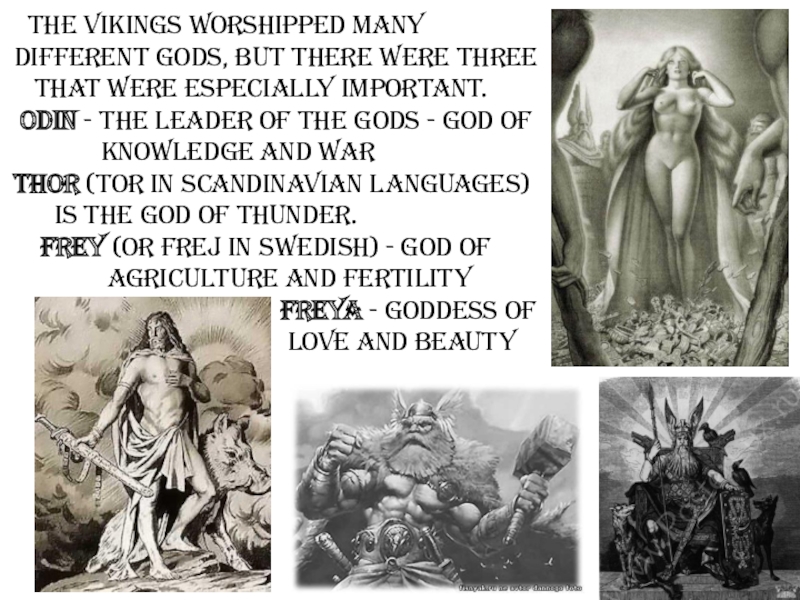
Слайд 11 The Vikings worshipped many different gods, but there
were three
that were especially important.
Odin - the leader of the gods - god of
knowledge and war
Thor (Tor in Scandinavian languages)
Is the god of thunder.
Frey (or Frej in Swedish) - god of
agriculture and fertility
Freya - goddess of
love and beauty
Слайд 12Viking weapons The Vikings fought using long swords and axes. A good
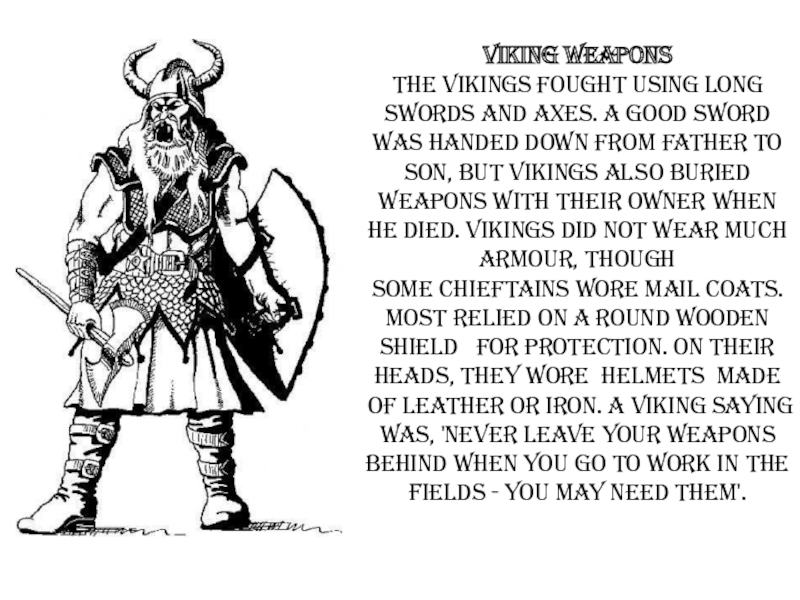
sword was handed down from father to son, but Vikings also buried weapons with their owner when he died. Vikings did not wear much armour, though some chieftains wore mail coats. Most relied on a round wooden shield for protection. On their heads, they wore helmets made of leather or iron. A Viking saying was, 'Never leave your weapons behind when you go to work in the fields - you may need them'.
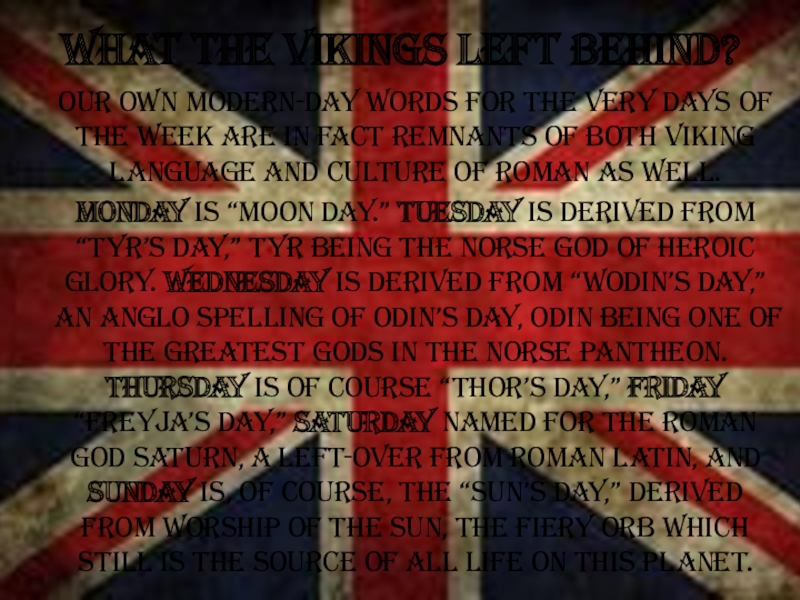
Слайд 13What the Vikings left behind?
Our own modern-day words for the very
days of the week are in fact remnants of both Viking language and culture of Roman as well.
Monday is “moon day.” Tuesday is derived from “Tyr’s day,” Tyr being the Norse god of heroic glory. Wednesday is derived from “Wodin’s Day,” an Anglo spelling of Odin’s day, Odin being one of the greatest gods in the Norse pantheon. Thursday is of course “Thor’s day,” Friday “Freyja’s day,” Saturday named for the Roman god Saturn, a left-over from Roman Latin, and Sunday is, of course, the “Sun’s day,” derived from worship of the sun, the fiery orb which still is the source of all life on this planet.
Monday is “moon day.” Tuesday is derived from “Tyr’s day,” Tyr being the Norse god of heroic glory. Wednesday is derived from “Wodin’s Day,” an Anglo spelling of Odin’s day, Odin being one of the greatest gods in the Norse pantheon. Thursday is of course “Thor’s day,” Friday “Freyja’s day,” Saturday named for the Roman god Saturn, a left-over from Roman Latin, and Sunday is, of course, the “Sun’s day,” derived from worship of the sun, the fiery orb which still is the source of all life on this planet.