- Главная
- Разное
- Образование
- Спорт
- Естествознание
- Природоведение
- Религиоведение
- Французский язык
- Черчение
- Английский язык
- Астрономия
- Алгебра
- Биология
- География
- Геометрия
- Детские презентации
- Информатика
- История
- Литература
- Математика
- Музыка
- МХК
- Немецкий язык
- ОБЖ
- Обществознание
- Окружающий мир
- Педагогика
- Русский язык
- Технология
- Физика
- Философия
- Химия
- Шаблоны, фоны, картинки для презентаций
- Экология
- Экономика
Презентация, доклад по английскому языку на тему Shakespeare's language
Содержание
- 1. Презентация по английскому языку на тему Shakespeare's language
- 2. How many words are there in the English language?
- 3. The Second Edition of the 20-volume Oxford English Dictionary contains entries for about 750,000 words.
- 4. How many words did Shakespeare use?
- 5. Shakespeare used 31,534 words in his works.
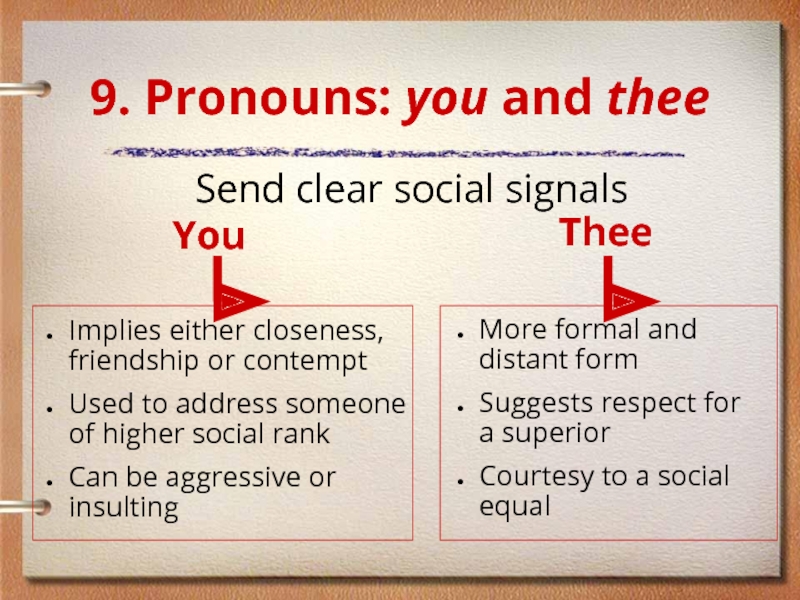
- 6. What language did Shakespeare speak?
- 7. Old EnglishFaeder ure thu eart on heofonum,
- 8. Middle EnglishOure fadir that art in heuenes,
- 9. Early Modern English (1611)Our father, which art
- 10. Modern EnglishOur Father in heaven, hallowed be
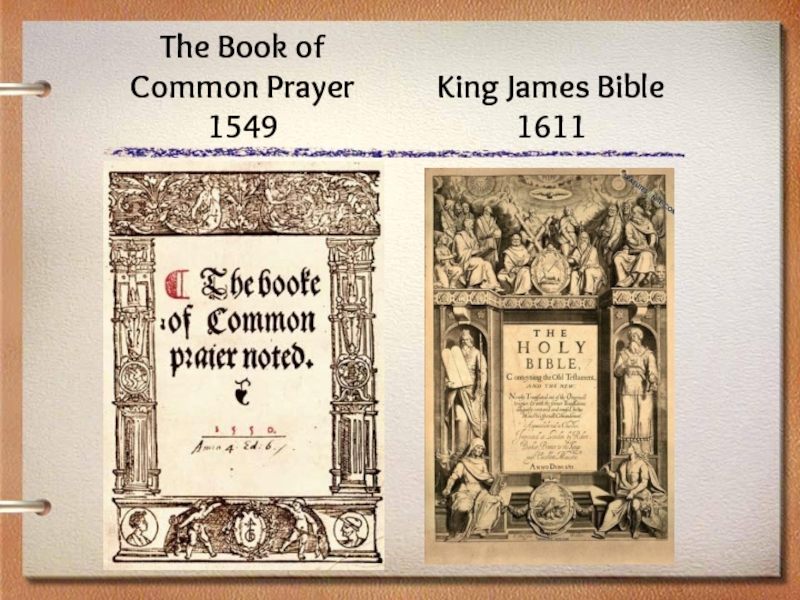
- 11. The Book of Common Prayer 1549King James Bible 1611
- 12. SpellingNo standardized spelling;Shakespeare Shake-speare
- 13. SpellingThe Elizabethan alphabet contained 24 letters, as
- 14. SpellingThe "j" was usually used as the
- 15. Spelling- Another letter which resembled a "y"
- 16. SpellingLetter “e” was often omitted and replaced
- 17. Grammar (Pronouns)
- 18. “If thou art privy to the country’s
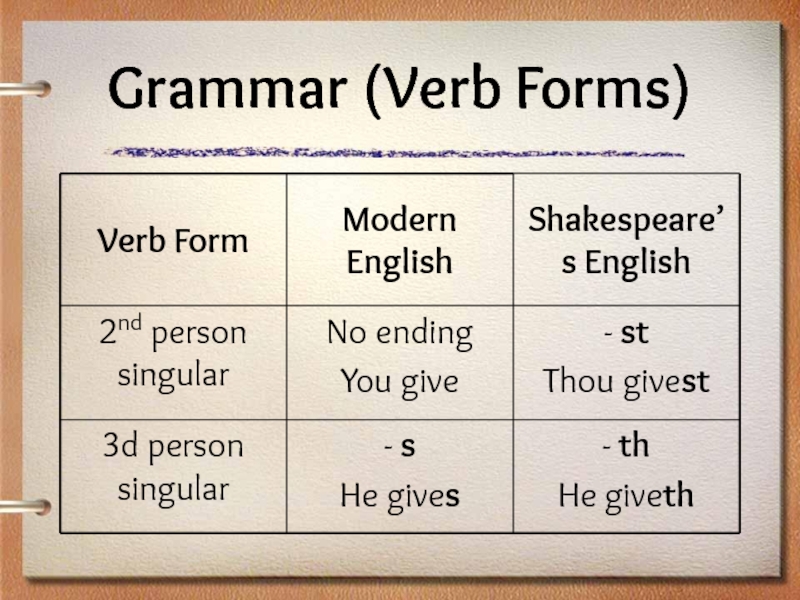
- 19. Grammar (Verb Forms)
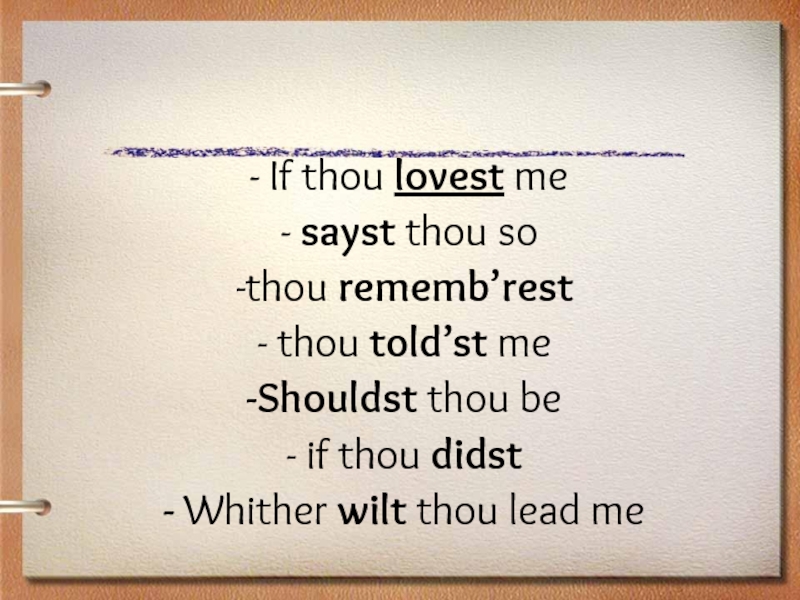
- 20. - If thou lovest me -
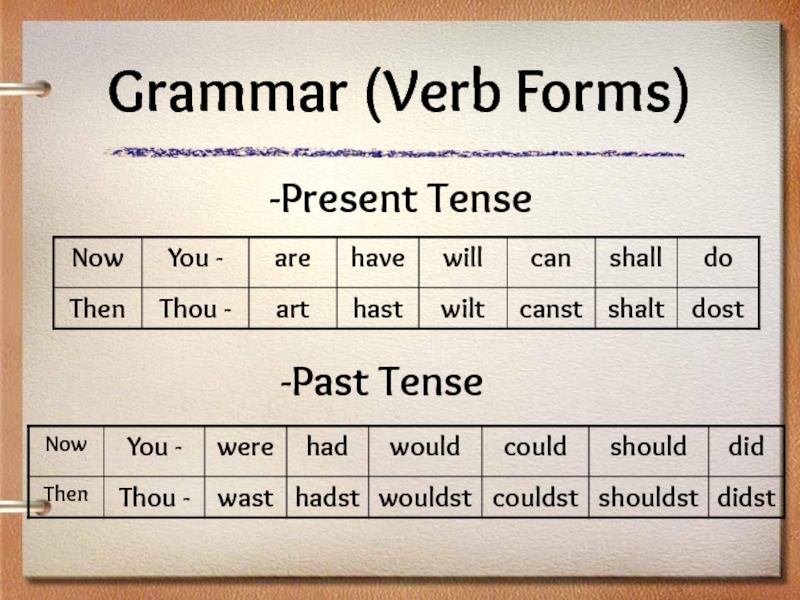
- 21. Grammar (Verb Forms)Present TensePast Tense
- 22. Grammar (Sentences)- Shakespeare often changed the word
- 23. Vocabulary- Words that no longer exist in
- 24. Vocabulary still = always, soft = slowly,
- 25. VocabularyShakespeare coined a lot of new words
- 26. VocabularyPhrases: - All that glitters is not gold
- 27. VocabularyPhrases: - For goodness' sake (Henry VIII)- Good
- 28. VocabularyPhrases: - Love is blind (Merchant of Venice)-
- 29. 1. Blank verseunrhymed lines with an arrangement
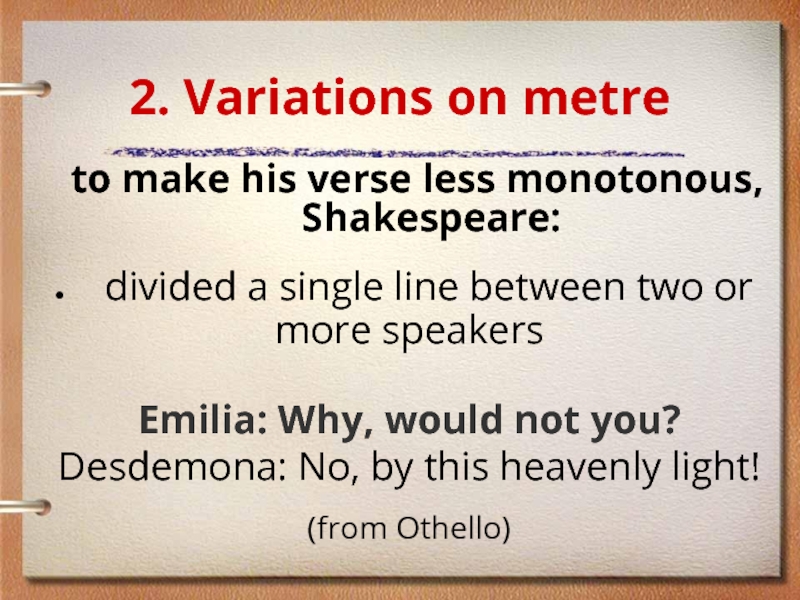
- 30. 2. Variations on metreto make his verse
- 31. 2. Variations on metreto make his verse
- 32. 2. Variations on metreto make his verse
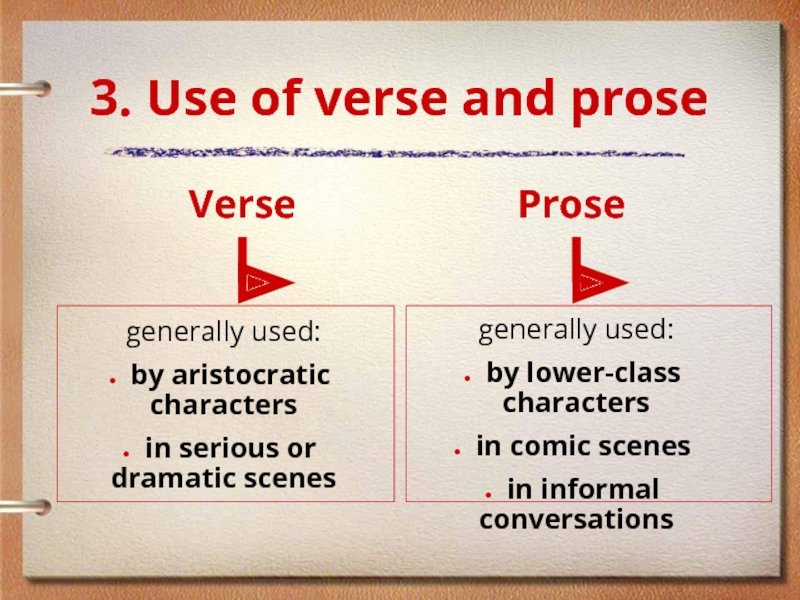
- 33. 3. Use of verse and proseVersegenerally used:
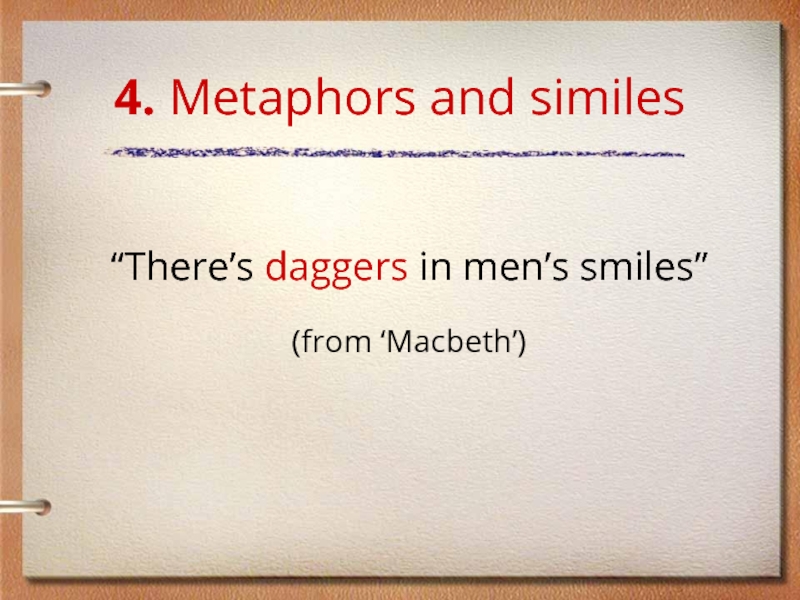
- 34. 4. Metaphors and similes“There’s daggers in men’s smiles”(from ‘Macbeth’)
- 35. 4. Metaphors and similes“The quality of mercy
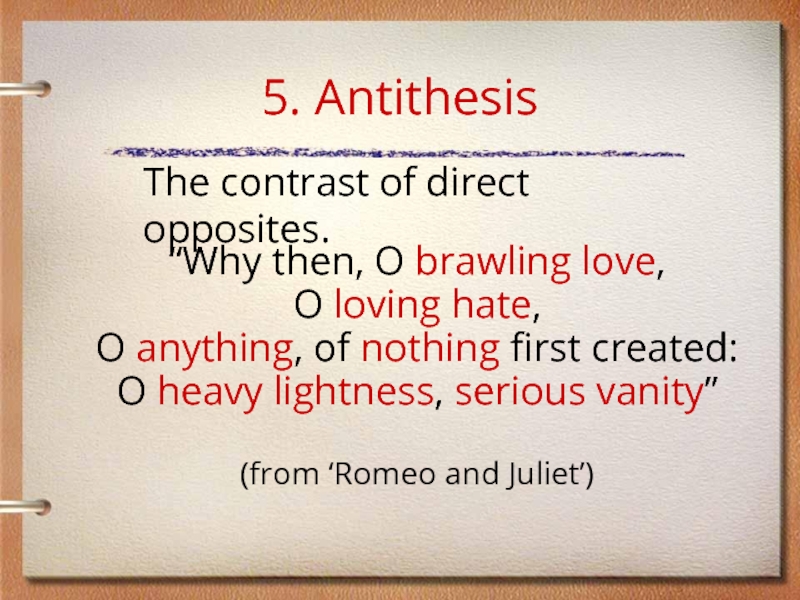
- 36. 5. Antithesis“Why then, O brawling love, O
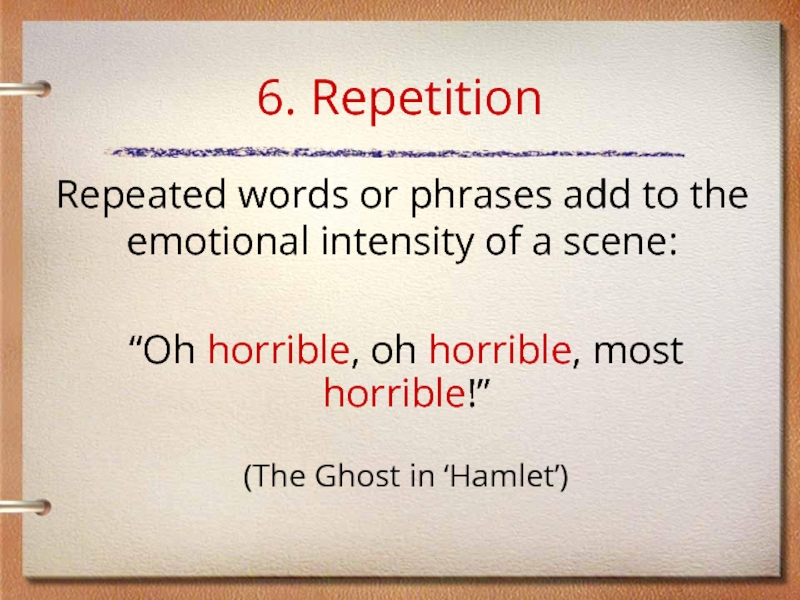
- 37. 6. Repetition“Oh horrible, oh horrible, most horrible!”
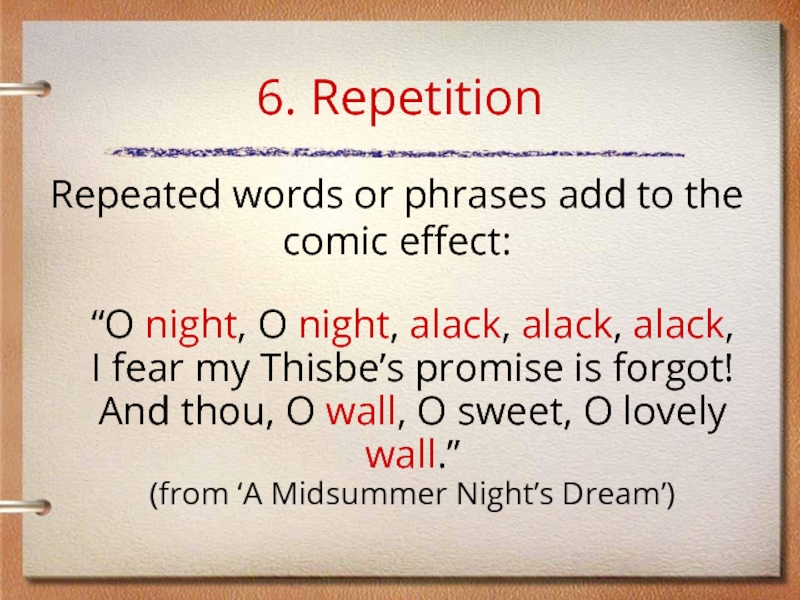
- 38. 6. Repetition“O night, O night, alack, alack,
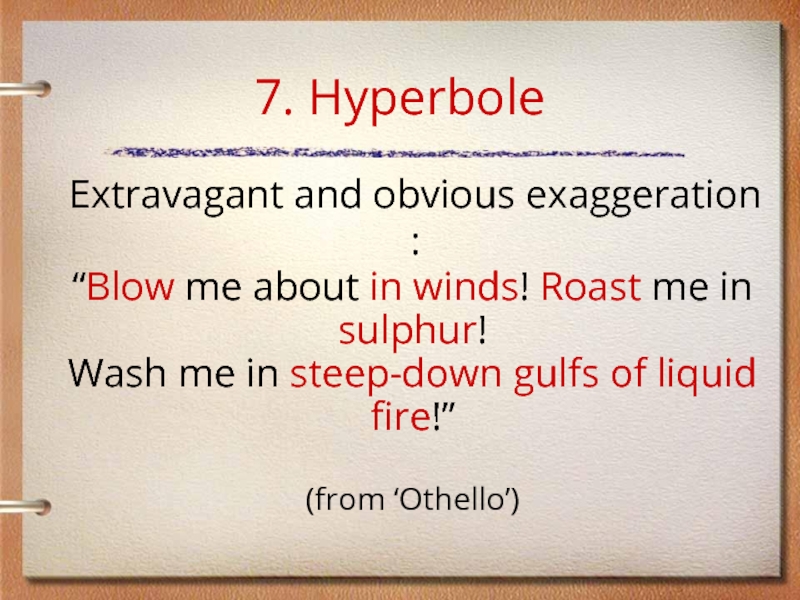
- 39. 7. Hyperbole“Blow me about in winds! Roast
- 40. 7. Personification“Come, civil Night;Thou sober-suited matron all in black.”(from ‘Romeo and Juliet’)
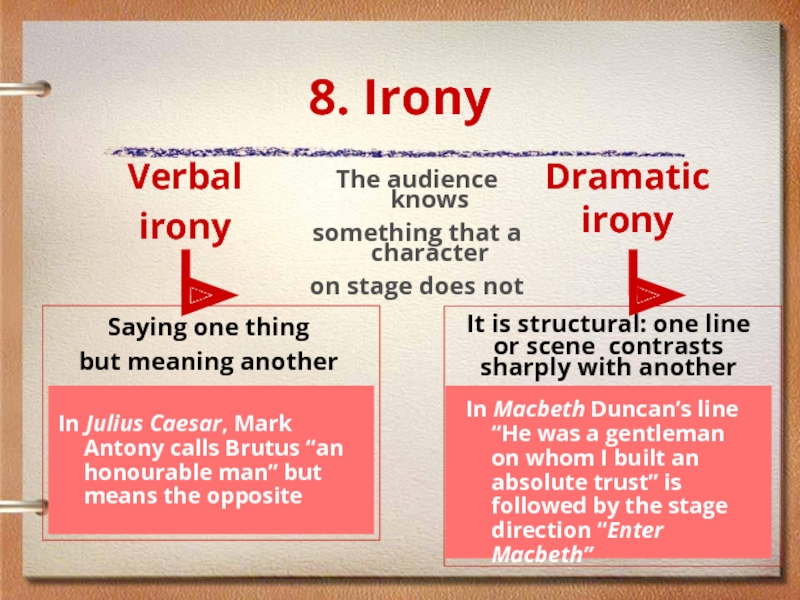
- 41. 8. IronyVerbal ironySaying one thing but meaning
- 42. 9. Pronouns: you and theeYouImplies either closeness,
- 43. Enjoy reading Shakespeare!
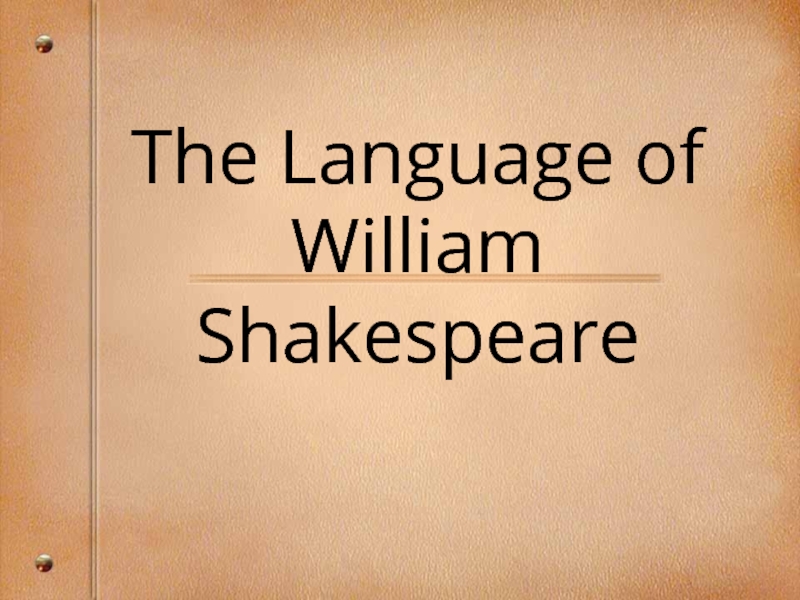

Слайд 3The Second Edition of the 20-volume Oxford English Dictionary contains entries
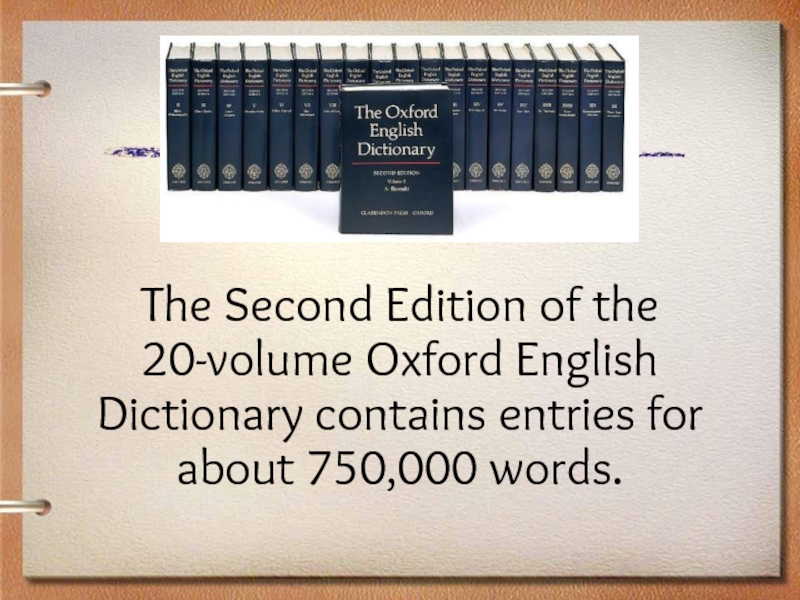

Слайд 5Shakespeare used 31,534 words in his works.
(Most adults have the

Слайд 7Old English
Faeder ure thu eart on heofonum,
si thin nama gehalgod.
Do you think you know what it means?

Слайд 8Middle English
Oure fadir that art in heuenes, halwid be thi name;
Does this one make a little more sense?

Слайд 9Early Modern English (1611)
Our father, which art in Heaven, hallowed be

Слайд 10Modern English
Our Father in heaven, hallowed be your name. Your Kingdom
your will be done, on earth as in heaven. Give us today our daily bread. Forgive us our sins, as we forgive those who sin against us. Lead us not into temptation,
but deliver us from evil. For the kingdom, the power and the glory are yours. Now and forever. Amen.

Слайд 12Spelling
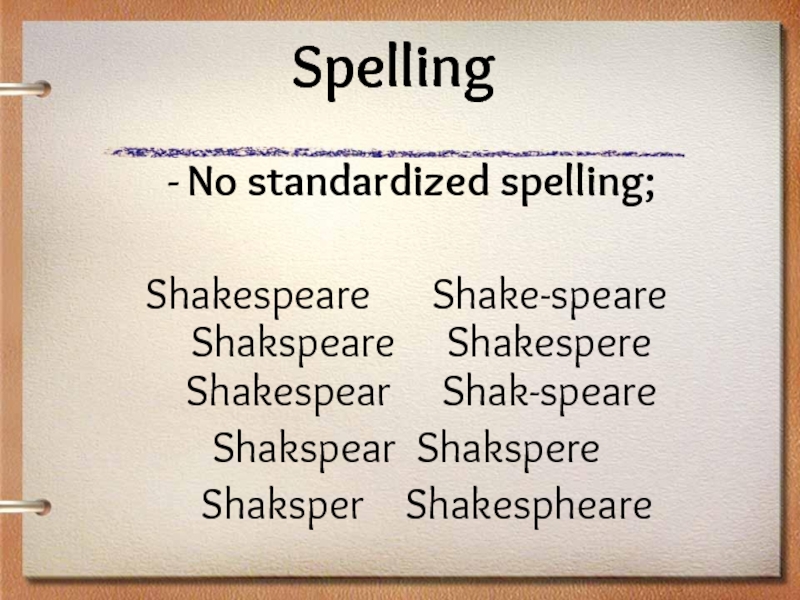
No standardized spelling;
Shakespeare Shake-speare Shakspeare
Shakspear Shakspere
Shaksper Shakespheare
Слайд 13Spelling
The Elizabethan alphabet contained 24 letters, as opposed to the present
- In the Elizabethan alphabet the letters "u" and "v" were the same letter as were "i" and "j";
Слайд 14Spelling
The "j" was usually used as the capital form of the
The letter "u" was used only in the middle of a word, and the "v" was used at the beginning.
Слайд 15Spelling
- Another letter which resembled a "y" (a thorn) was used
- Numbers were frequently written in lower case Roman numerals, with the last "i" in a number written as a "j". For example - viij March;

Слайд 16Spelling
Letter “e” was often omitted and replaced with an apostrophe (despis’d
A lot of words were contracted:
'tis ~ it is, th’ ~ the, o'er ~ over, ne'er ~ never, i' ~ in, e'er ~ ever, oft ~ often, e'en ~ even

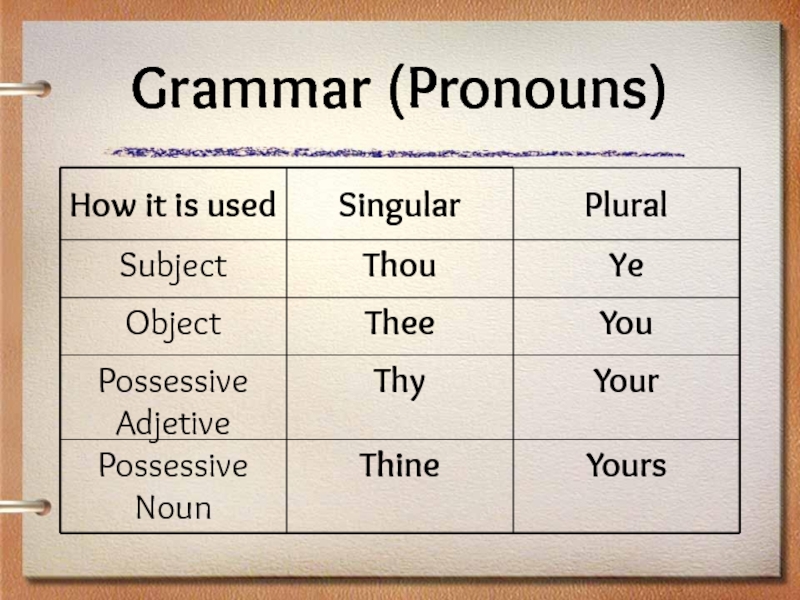
Слайд 18“If thou art privy to the country’s fate…”
“...the throne of Denmark
“By heaven I charge thee, speak”
“As thou art to thyself”

Слайд 20- If thou lovest me
- sayst thou so
thou rememb’rest
thou told’st me
Shouldst thou be
if thou didst
Whither wilt thou lead me
Слайд 22Grammar (Sentences)
- Shakespeare often changed the word order in sentences:
“These babes
“So frowned he once”
Слайд 23Vocabulary
- Words that no longer exist in the English language;
- Words
Слайд 24Vocabulary
still = always, soft = slowly,
an = if, perforce
ay = yes, fain = gladly,
anon = at once,
wherefore= why

Слайд 25Vocabulary
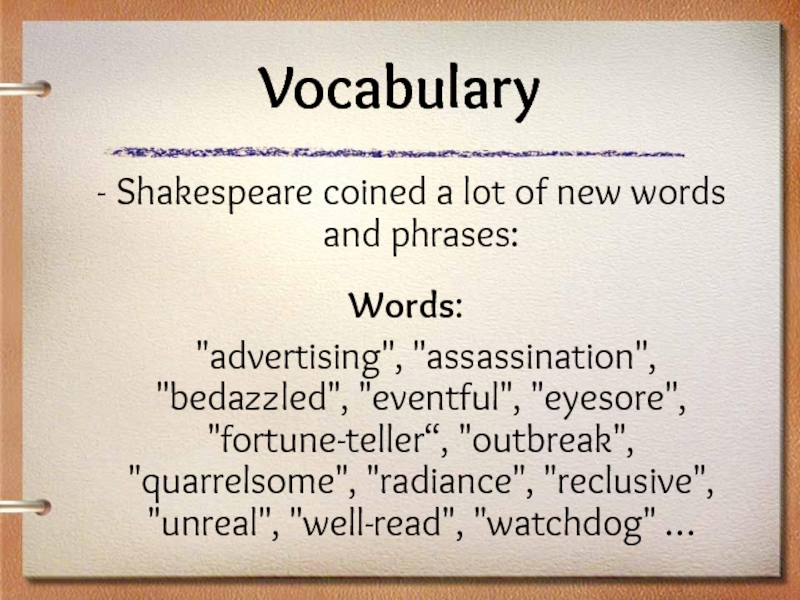
Shakespeare coined a lot of new words and phrases:
Words:
"advertising", "assassination", "bedazzled",
Слайд 26Vocabulary
Phrases:
- All that glitters is not gold (The Merchant of Venice)
-
Dead as a doornail (2Henry VI)
Too much of a good thing (As You Like It)

Слайд 27Vocabulary
Phrases:
- For goodness' sake (Henry VIII)
- Good riddance (Troilus and Cressida)
Laughing
Break the ice (The Taming Of The Shrew)

Слайд 28Vocabulary
Phrases:
- Love is blind (Merchant of Venice)
- Naked truth (Love's Labours
- Own flesh and blood (Hamlet)
Wild-goose chase (Romeo and Juliet)

Слайд 291. Blank verse
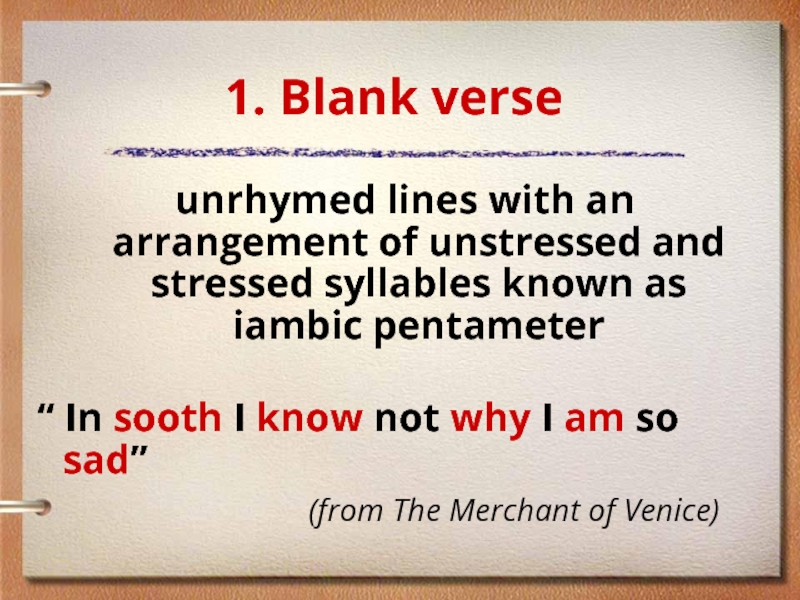
unrhymed lines with an arrangement of unstressed and stressed
“ In sooth I know not why I am so sad”
(from The Merchant of Venice)
Слайд 302. Variations on metre
to make his verse less monotonous, Shakespeare:
altered the
and stressed syllables
“that this too sullied flesh would melt”
(from ‘Hamlet’)

Слайд 312. Variations on metre
to make his verse less monotonous, Shakespeare:
altered the
“There’s nothing ill can dwell in such a temple”
(from ‘The Tempest’)

Слайд 322. Variations on metre
to make his verse less monotonous, Shakespeare:
divided a
Emilia: Why, would not you?
Desdemona: No, by this heavenly light!
(from Othello)
Слайд 333. Use of verse and prose
Verse
generally used:
by aristocratic characters
in
Prose
generally used:
by lower-class characters
in comic scenes
in informal conversations
Слайд 354. Metaphors and similes
“The quality of mercy is not strained.
It droppeth
(from ‘The Merchant of Venice’)

Слайд 365. Antithesis
“Why then, O brawling love,
O loving hate,
O anything, of
O heavy lightness, serious vanity”
(from ‘Romeo and Juliet’)
The contrast of direct opposites.
Слайд 376. Repetition
“Oh horrible, oh horrible, most horrible!”
(The Ghost in ‘Hamlet’)
Repeated words or phrases add to the emotional intensity of a scene:
Слайд 386. Repetition
“O night, O night, alack, alack, alack,
I fear my Thisbe’s
And thou, O wall, O sweet, O lovely wall.”
(from ‘A Midsummer Night’s Dream’)
Repeated words or phrases add to the comic effect:
Слайд 397. Hyperbole
“Blow me about in winds! Roast me in sulphur!
Wash me
(from ‘Othello’)
Extravagant and obvious exaggeration :
Слайд 407. Personification
“Come, civil Night;
Thou sober-suited matron all in black.”
(from ‘Romeo and

Слайд 418. Irony
Verbal
irony
Saying one thing
but meaning another
Dramatic
irony
It is structural: one
The audience knows
something that a character
on stage does not
In Julius Caesar, Mark Antony calls Brutus “an honourable man” but means the opposite
In Macbeth Duncan’s line
“He was a gentleman on whom I built an absolute trust” is followed by the stage direction “Enter Macbeth”
Слайд 429. Pronouns: you and thee
You
Implies either closeness, friendship or contempt
Used to
Can be aggressive or insulting
Thee
More formal and distant form
Suggests respect for a superior
Courtesy to a social equal
Send clear social signals