- Главная
- Разное
- Образование
- Спорт
- Естествознание
- Природоведение
- Религиоведение
- Французский язык
- Черчение
- Английский язык
- Астрономия
- Алгебра
- Биология
- География
- Геометрия
- Детские презентации
- Информатика
- История
- Литература
- Математика
- Музыка
- МХК
- Немецкий язык
- ОБЖ
- Обществознание
- Окружающий мир
- Педагогика
- Русский язык
- Технология
- Физика
- Философия
- Химия
- Шаблоны, фоны, картинки для презентаций
- Экология
- Экономика
Презентация, доклад по английскому языку Модальные глаголы Should и Ought to (10 класс)
Содержание
- 1. Презентация по английскому языку Модальные глаголы Should и Ought to (10 класс)
- 2. Should
- 3. obligationObligation (=saying what someone must do)
- 4. adviceAdvice You shouldn’t go there.
- 5. intensificationAfter impersonal expressions of surprising, annoyance, pity,
- 6. intensificationIn relative clause, if the predicate of
- 7. intensificationIn questions which begin with ‘why’ and
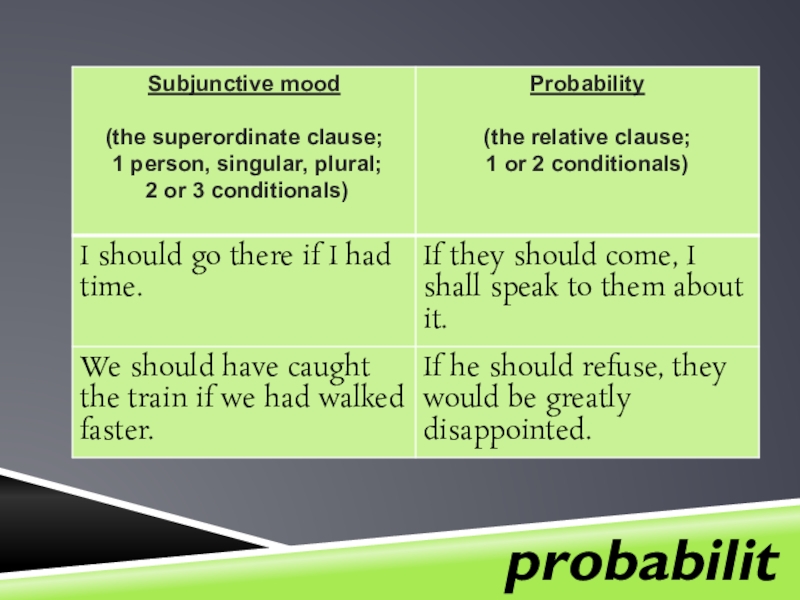
- 8. probability
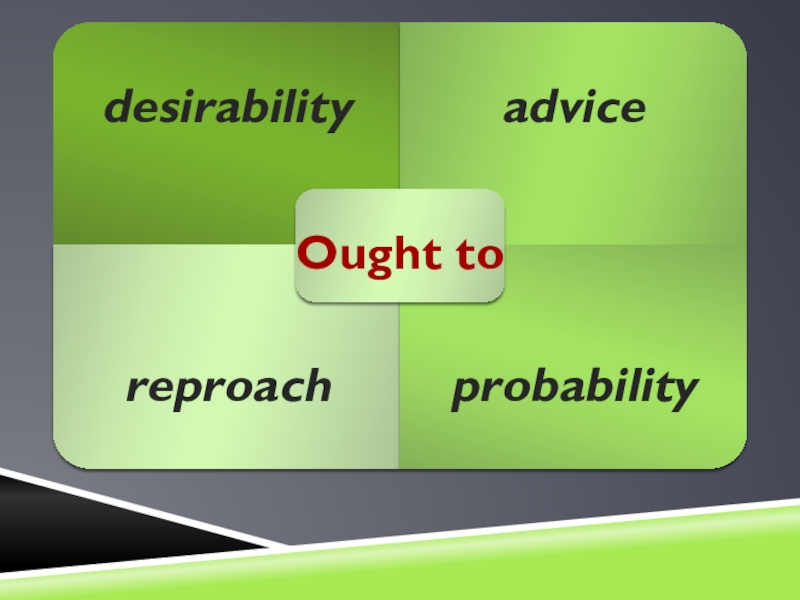
- 9. Ought to
- 10. desirabilityDesirability (=saying that something is the right
- 11. adviceAdviceYou ought to be more careful.
- 12. probabilityProbability (=saying whether something is likely) We ought to be there by 6 o’clock.
- 13. reproachReproach(=a criticism that you make of someone
- 14. Should & Ought todesirabilityIf you want to
- 15. probabilityShould & Ought toIf you want to
- 16. Should vs Ought tonotesOughtn’t is normal in
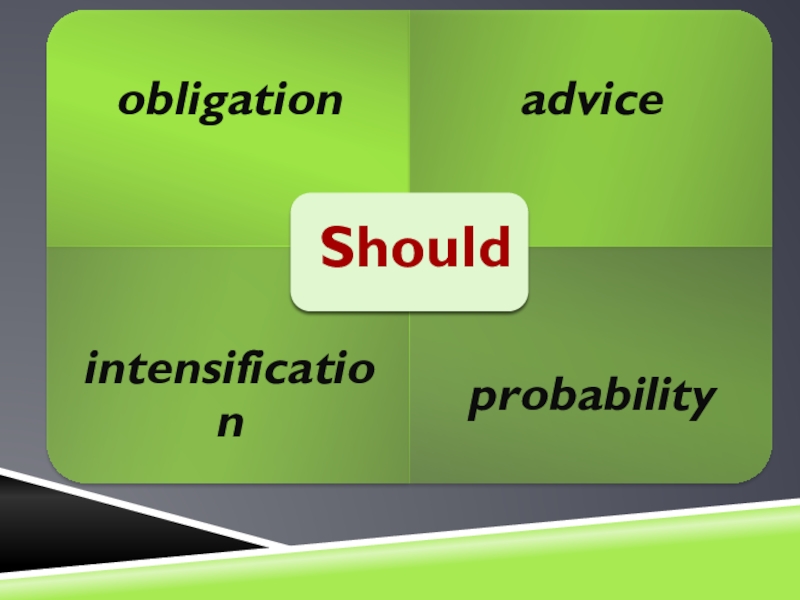
Should

Слайд 3obligation
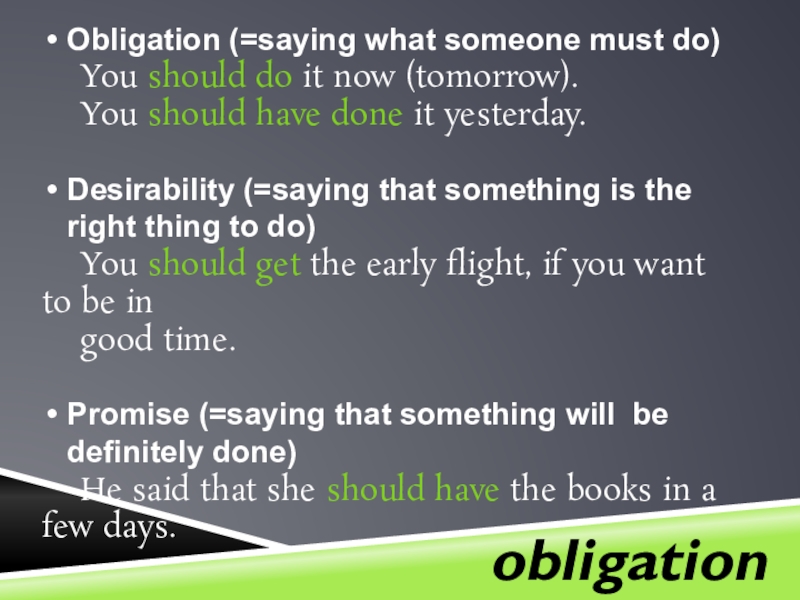
Obligation (=saying what someone must do)
You should do it
now (tomorrow).
You should have done it yesterday.
Desirability (=saying that something is the right thing to do)
You should get the early flight, if you want to be in
good time.
Promise (=saying that something will be definitely done)
He said that she should have the books in a few days.
You should have done it yesterday.
Desirability (=saying that something is the right thing to do)
You should get the early flight, if you want to be in
good time.
Promise (=saying that something will be definitely done)
He said that she should have the books in a few days.
Слайд 4advice
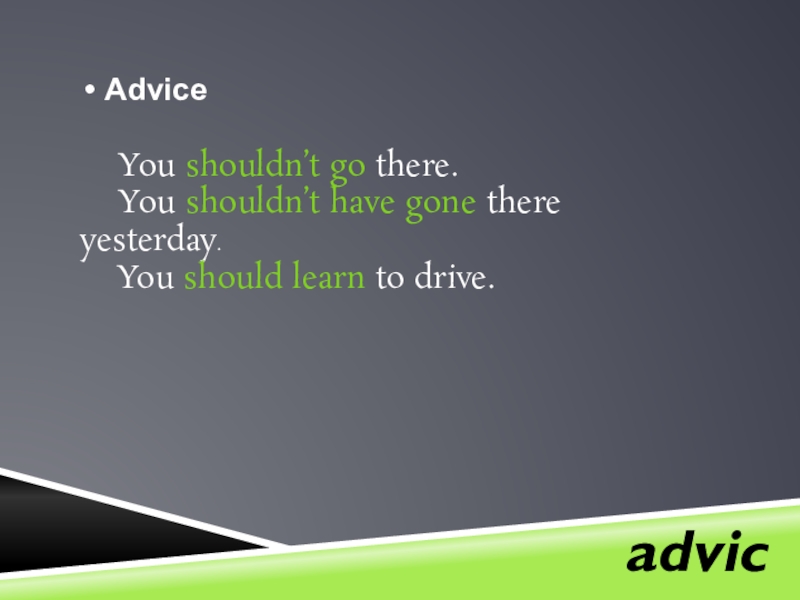
Advice
You shouldn’t go there.
You shouldn’t have gone
there yesterday.
You should learn to drive.
You should learn to drive.
Слайд 5intensification
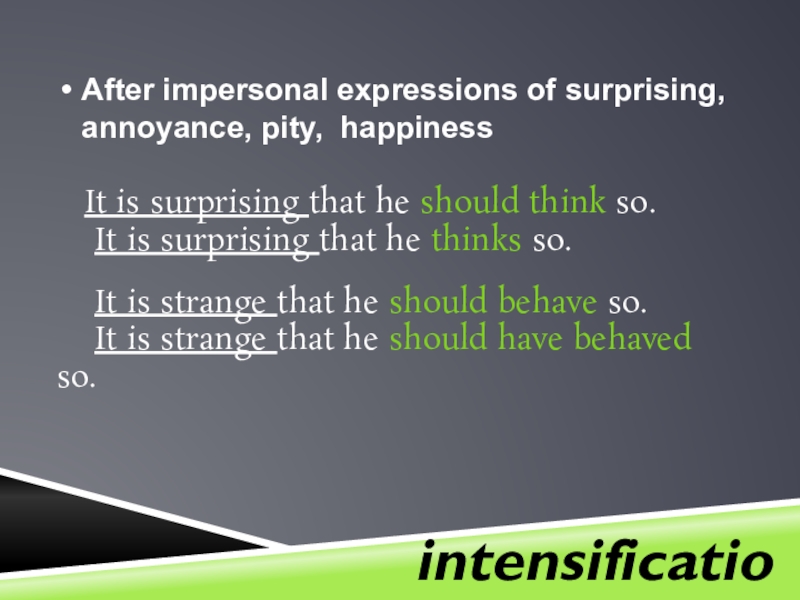
After impersonal expressions of surprising, annoyance, pity, happiness
It
is surprising that he should think so.
It is surprising that he thinks so.
It is strange that he should behave so.
It is strange that he should have behaved so.
It is surprising that he thinks so.
It is strange that he should behave so.
It is strange that he should have behaved so.
Слайд 6intensification
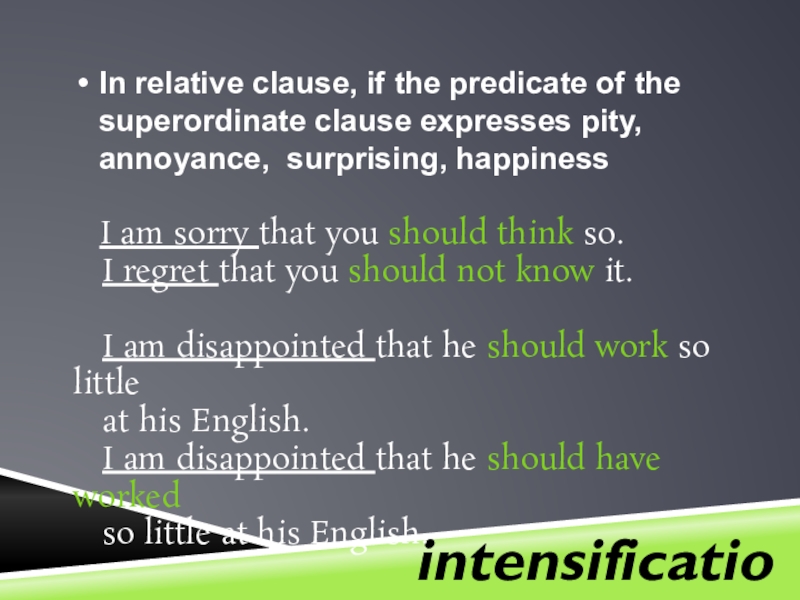
In relative clause, if the predicate of the superordinate clause expresses
pity, annoyance, surprising, happiness
I am sorry that you should think so.
I regret that you should not know it.
I am disappointed that he should work so little
at his English.
I am disappointed that he should have worked
so little at his English.
I am sorry that you should think so.
I regret that you should not know it.
I am disappointed that he should work so little
at his English.
I am disappointed that he should have worked
so little at his English.
Слайд 7intensification
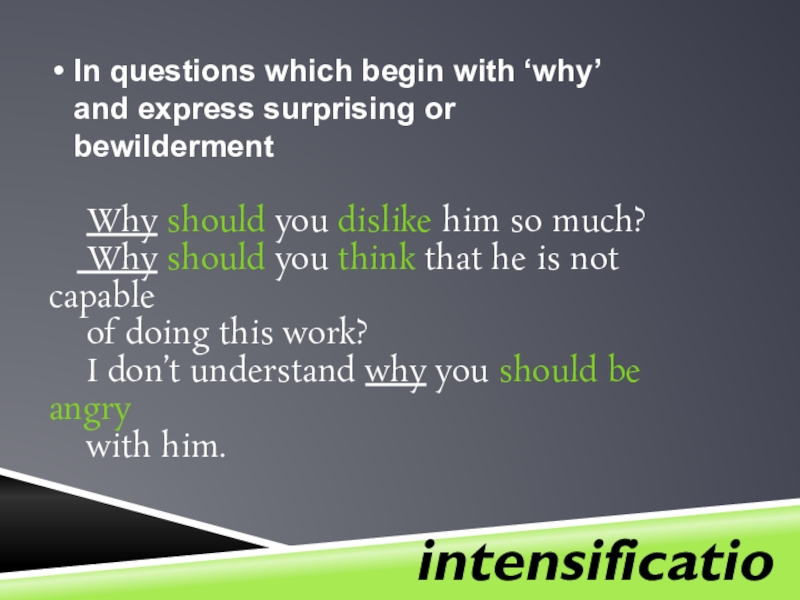
In questions which begin with ‘why’ and express surprising or bewilderment
Why should you dislike him so much?
Why should you think that he is not capable
of doing this work?
I don’t understand why you should be angry
with him.
Why should you think that he is not capable
of doing this work?
I don’t understand why you should be angry
with him.
Слайд 10desirability
Desirability (=saying that something is the right thing to do)
He ought to help his friend.

Слайд 12probability
Probability (=saying whether something is likely)
We ought to be
there by 6 o’clock.
Слайд 13reproach
Reproach(=a criticism that you make of someone because of something bad
that they have done)
ought to + perfect infinitive
You ought to have done it yesterday.
He ought not to have sent this letter.
ought to + perfect infinitive
You ought to have done it yesterday.
He ought not to have sent this letter.
Слайд 14Should & Ought to
desirability
If you want to say that you think
it is good thing for something to happen, use should or ought to. If you think that it is a bad thing for something to happen, put these verbs into the negative
You should get the early flight, if you want to be in good time.
You ought to see the doctor as soon as possible.
You shouldn’t say things like that.
You oughtn’t to have left the engine running.
You should get the early flight, if you want to be in good time.
You ought to see the doctor as soon as possible.
You shouldn’t say things like that.
You oughtn’t to have left the engine running.
Слайд 15probability
Should & Ought to
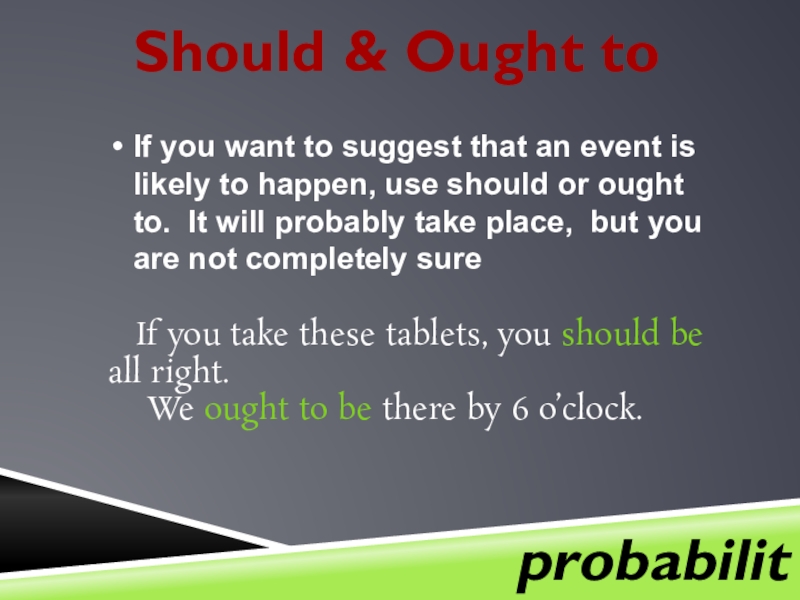
If you want to suggest that an event
is likely to happen, use should or ought to. It will probably take place, but you are not completely sure
If you take these tablets, you should be all right.
We ought to be there by 6 o’clock.
If you take these tablets, you should be all right.
We ought to be there by 6 o’clock.
Слайд 16Should vs Ought to
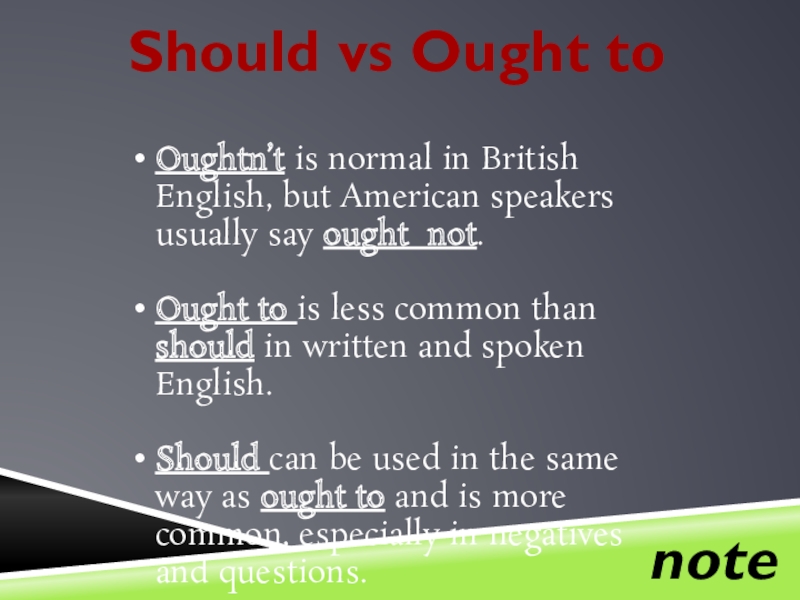
notes
Oughtn’t is normal in British English, but American
speakers usually say ought not.
Ought to is less common than should in written and spoken English.
Should can be used in the same way as ought to and is more common, especially in negatives and questions.
Ought to is less common than should in written and spoken English.
Should can be used in the same way as ought to and is more common, especially in negatives and questions.