- Главная
- Разное
- Образование
- Спорт
- Естествознание
- Природоведение
- Религиоведение
- Французский язык
- Черчение
- Английский язык
- Астрономия
- Алгебра
- Биология
- География
- Геометрия
- Детские презентации
- Информатика
- История
- Литература
- Математика
- Музыка
- МХК
- Немецкий язык
- ОБЖ
- Обществознание
- Окружающий мир
- Педагогика
- Русский язык
- Технология
- Физика
- Философия
- Химия
- Шаблоны, фоны, картинки для презентаций
- Экология
- Экономика
Презентация, доклад на английском языке
Содержание
- 1. Презентация на английском языке
- 2. History of LondonLondon was founded as a
- 3. The TowerThe Tower of London is one of the
- 4. The Tower BridgeThe Tower Bridge , near
- 5. London nowadays Modern London is a political,
- 6. LONDON EYEA giant Ferris wheel rises 135 m high
- 7. Westminster PalaceThe Houses of Parliament are located
- 8. Big Ben Westminster Palace is the seat
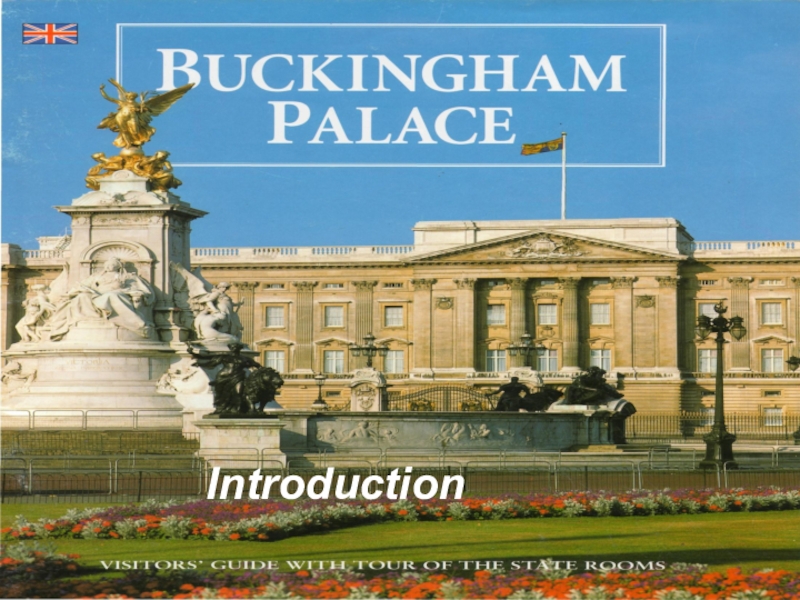
- 9. Buckingham PalaceBuckingham Palace is the most famous
- 10. Changing of the GuardsChanging the Guard begins
- 11. Queen Victoria’s MonumentSituated right in front of Buckingham
- 12. Victoria and Albert MuseumThe most important monument
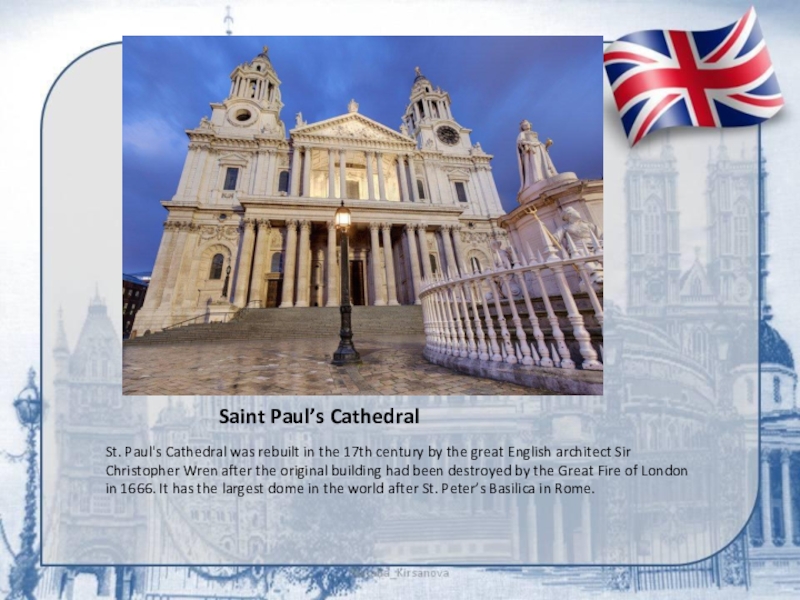
- 13. Saint Paul’s CathedralSt. Paul's Cathedral was rebuilt
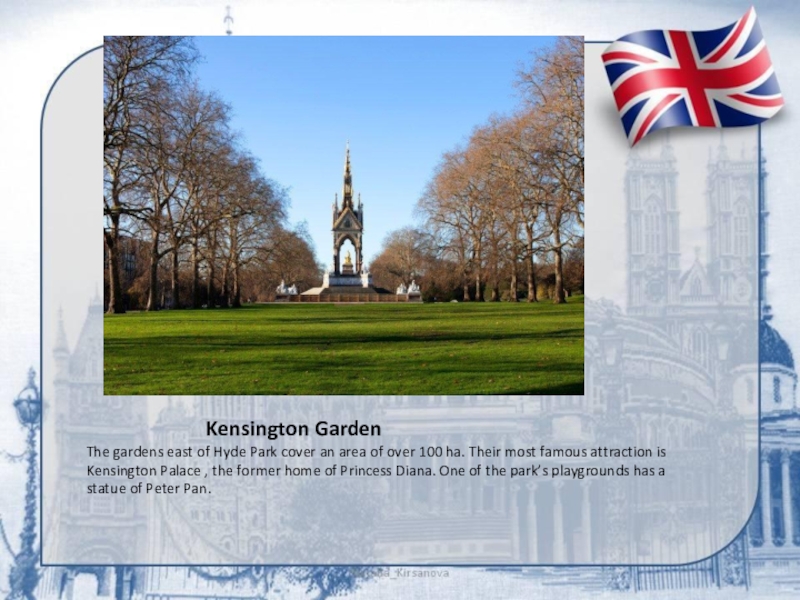
- 14. Kensington GardenThe gardens east of Hyde Park
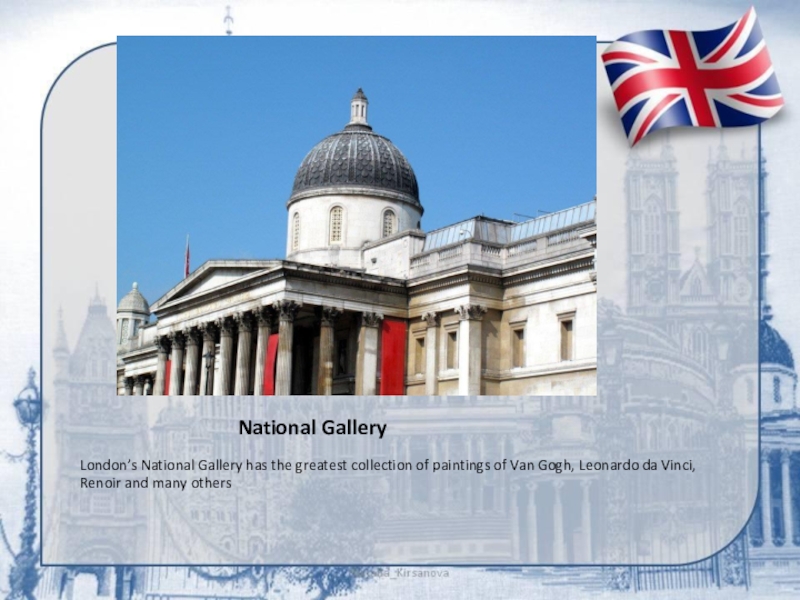
- 15. National GalleryLondon’s National Gallery has the greatest
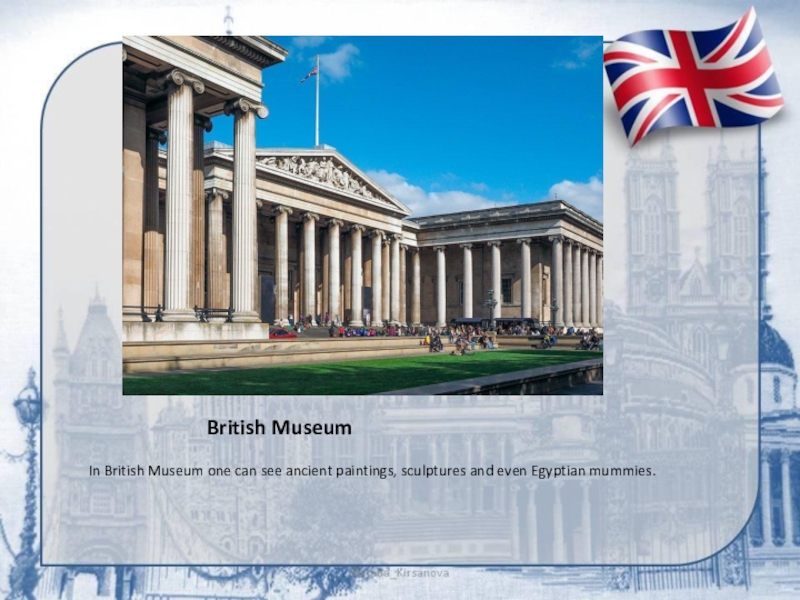
- 16. British MuseumIn British Museum one can see ancient paintings, sculptures and even Egyptian mummies.
- 17. Natural History MuseumThe Natural History Museum boasts
- 18. Hyde ParkHyde Park is a popular area
- 19. Regent’s ParkRegent’s Park is the home of London Zoo.
- 20. Oxford StreetOxford Street is a major road in
- 21. Shakespeare’s Globe TheatreLondon’s most famous theatre ,
- 22. London TubeThe London Underground (also known simply as the Underground,
- 23. Слайд 23
- 24. Используемые источникиВеликобританияhttp://irecommend.ru/sites/default/files/imagecache/copyright1/user-images/168052/london_otshityy_ves_0.jpgФлаг Великобританииhttp://www.onlinecasinorussia.net/wp-content/uploads/2016/03/britaniya.pngАвтор шаблона: Кирсанова Н.Н
Слайд 2History of London
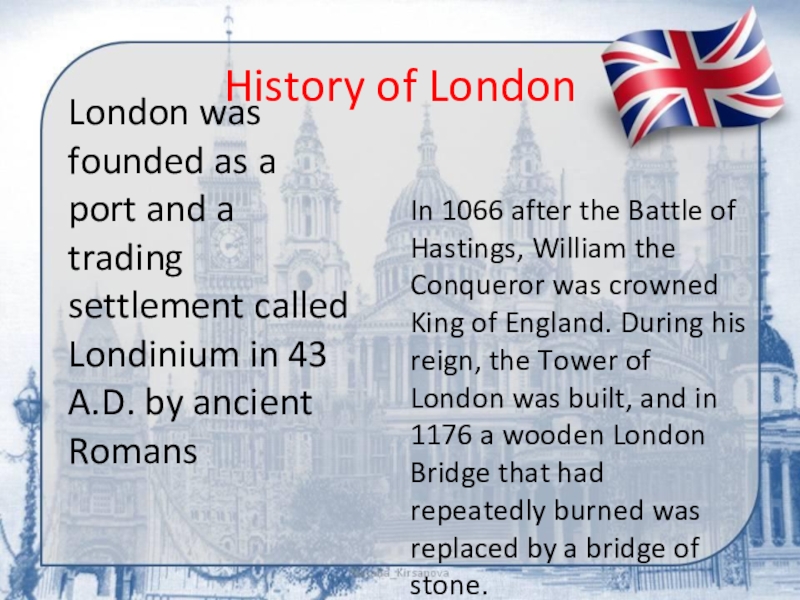
London was founded as a port and a trading
In 1066 after the Battle of Hastings, William the Conqueror was crowned King of England. During his reign, the Tower of London was built, and in 1176 a wooden London Bridge that had repeatedly burned was replaced by a bridge of stone.
Слайд 3The Tower
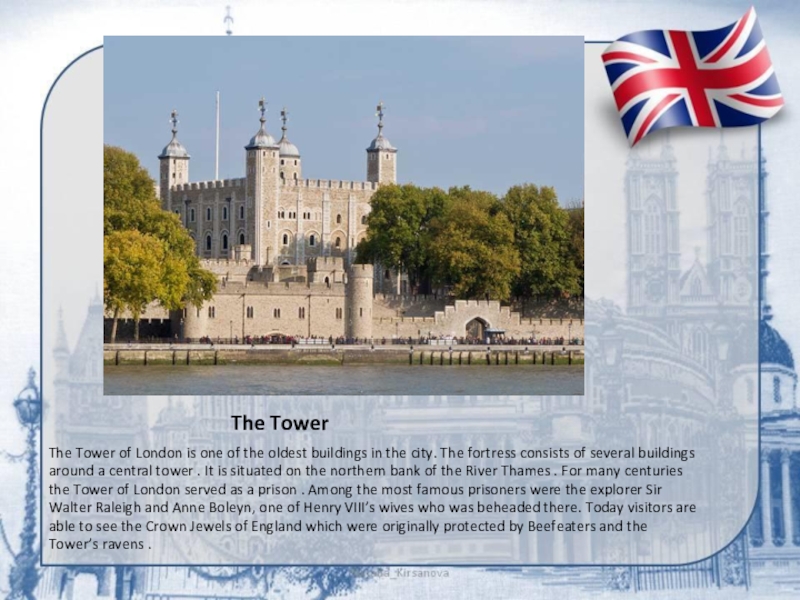
The Tower of London is one of the oldest buildings in the
Слайд 4The Tower Bridge
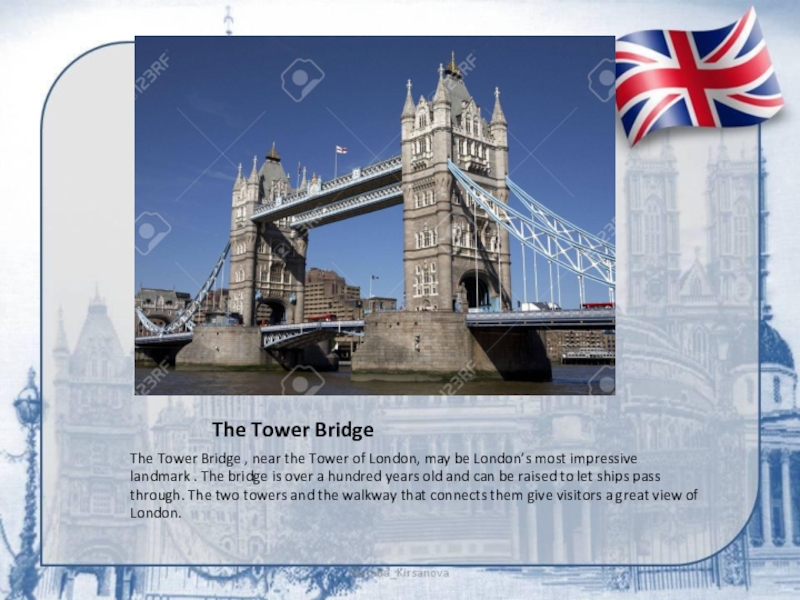
The Tower Bridge , near the Tower of London,
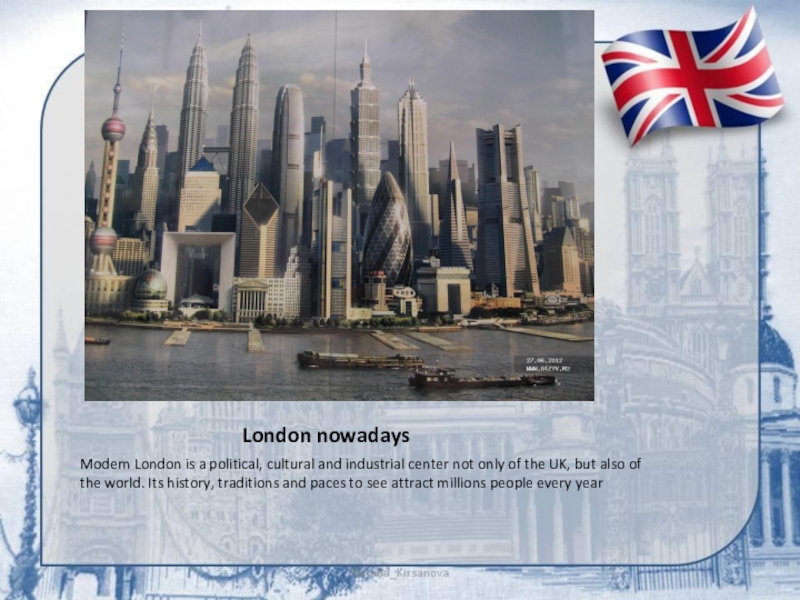
Слайд 5London nowadays
Modern London is a political, cultural and industrial center
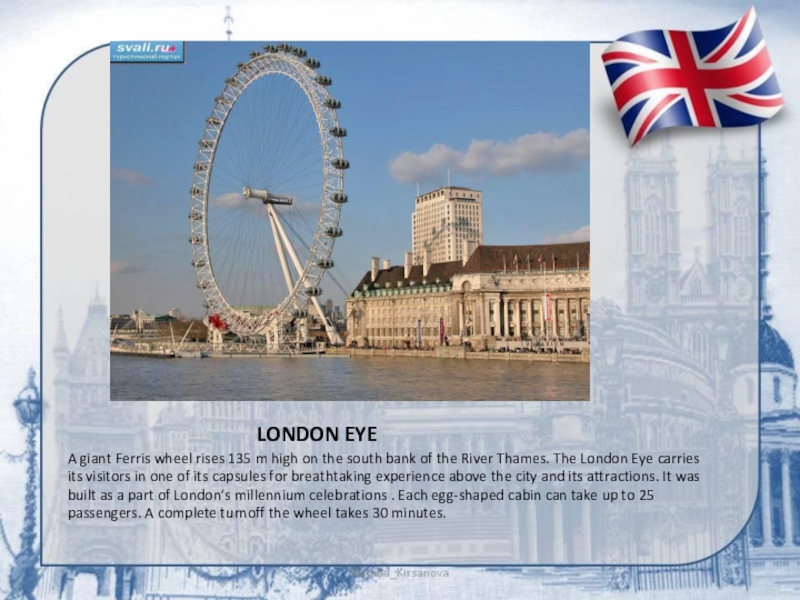
Слайд 6LONDON EYE
A giant Ferris wheel rises 135 m high on the south bank of the
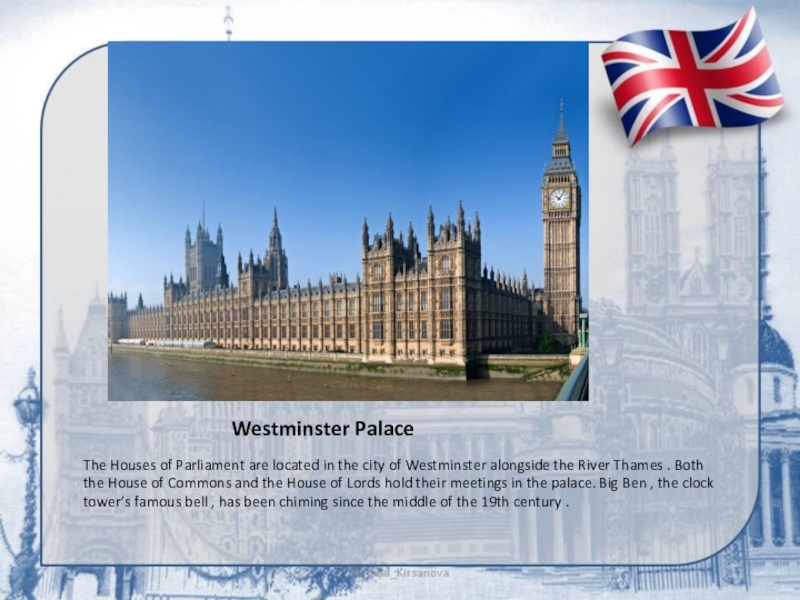
Слайд 7Westminster Palace
The Houses of Parliament are located in the city of
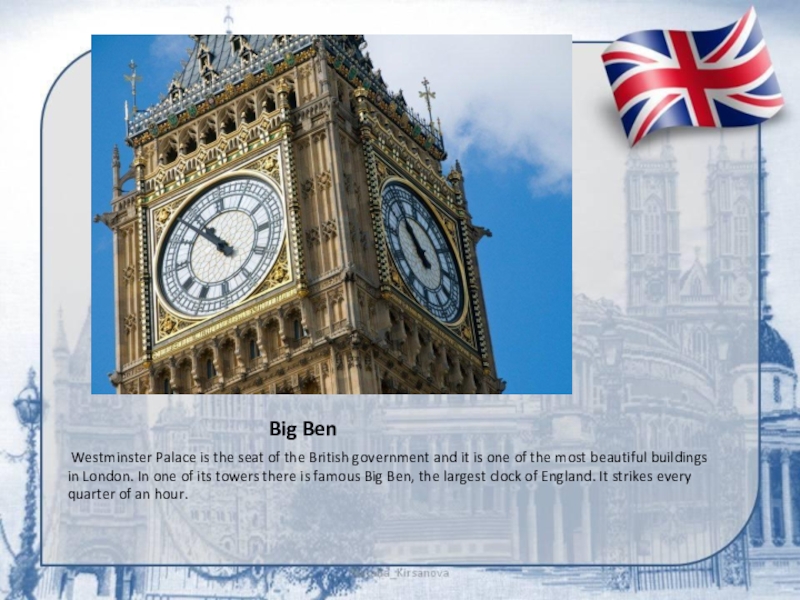
Слайд 8Big Ben
Westminster Palace is the seat of the British government
Слайд 9Buckingham Palace
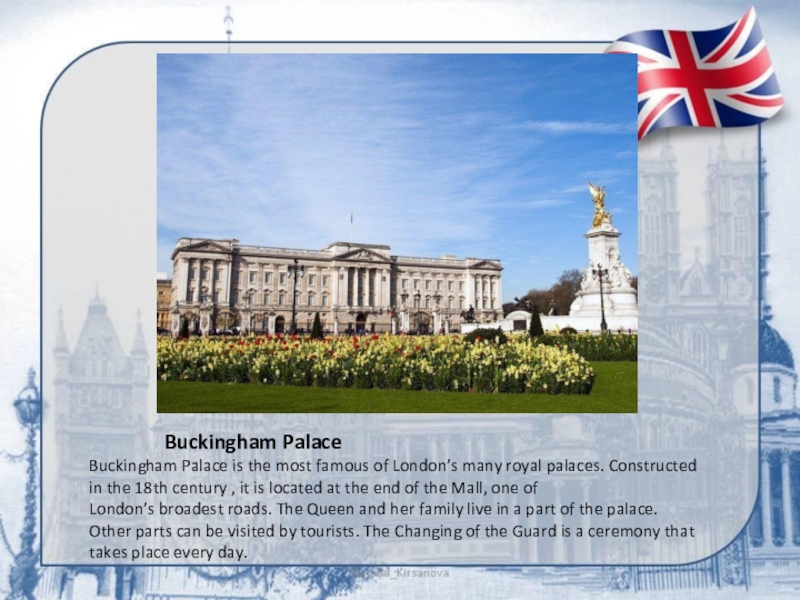
Buckingham Palace is the most famous of London’s many royal palaces. Constructed
Слайд 10Changing of the Guards
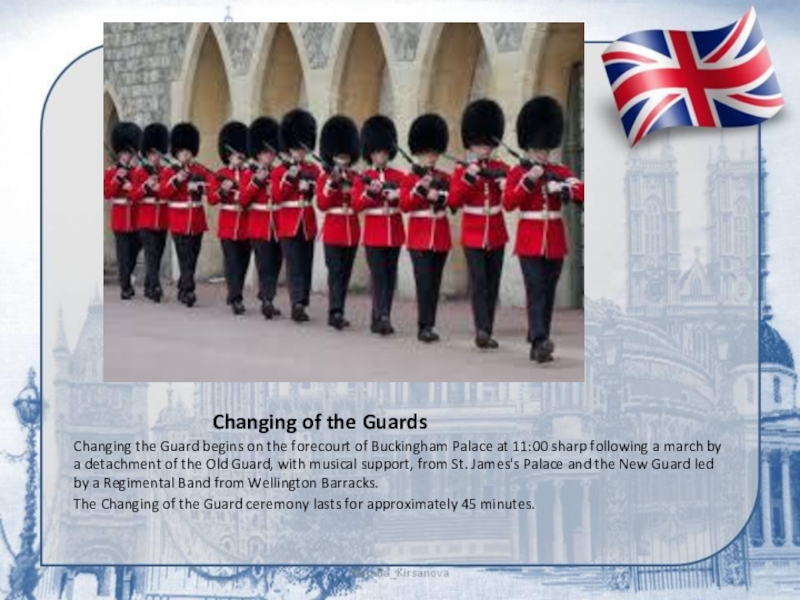
Changing the Guard begins on the forecourt of
The Changing of the Guard ceremony lasts for approximately 45 minutes.
Слайд 11Queen Victoria’s Monument
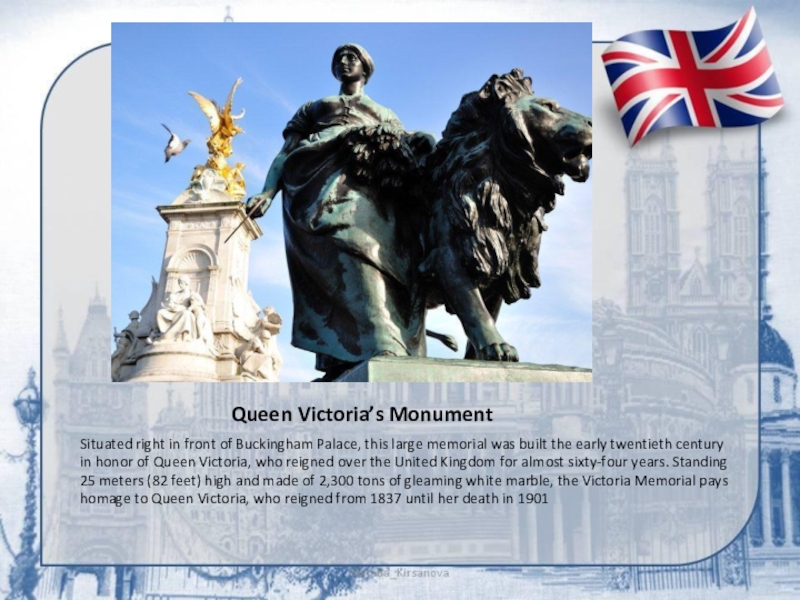
Situated right in front of Buckingham Palace, this large memorial
Слайд 12Victoria and Albert Museum
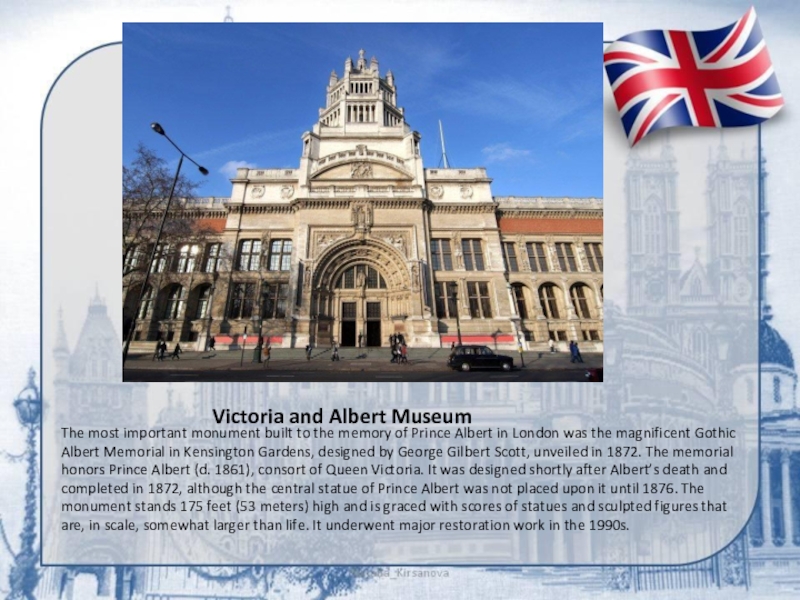
The most important monument built to the memory
Слайд 13Saint Paul’s Cathedral
St. Paul's Cathedral was rebuilt in the 17th century
Слайд 14Kensington Garden
The gardens east of Hyde Park cover an area of
Слайд 15National Gallery
London’s National Gallery has the greatest collection of paintings of
Слайд 16British Museum
In British Museum one can see ancient paintings, sculptures and
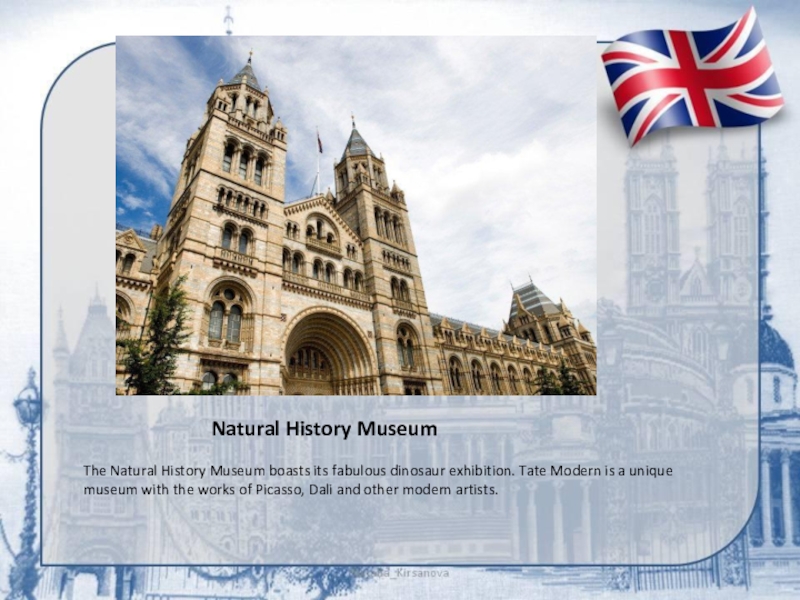
Слайд 17Natural History Museum
The Natural History Museum boasts its fabulous dinosaur exhibition.
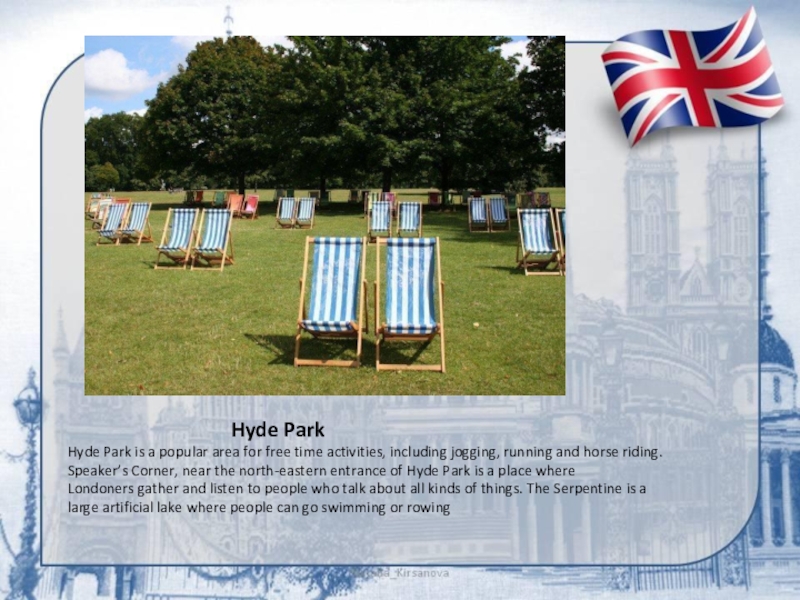
Слайд 18Hyde Park
Hyde Park is a popular area for free time activities,
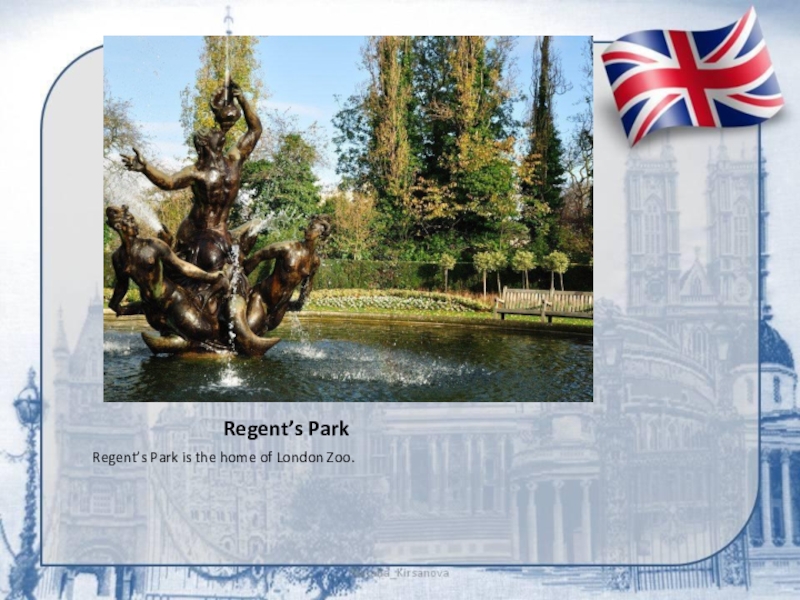
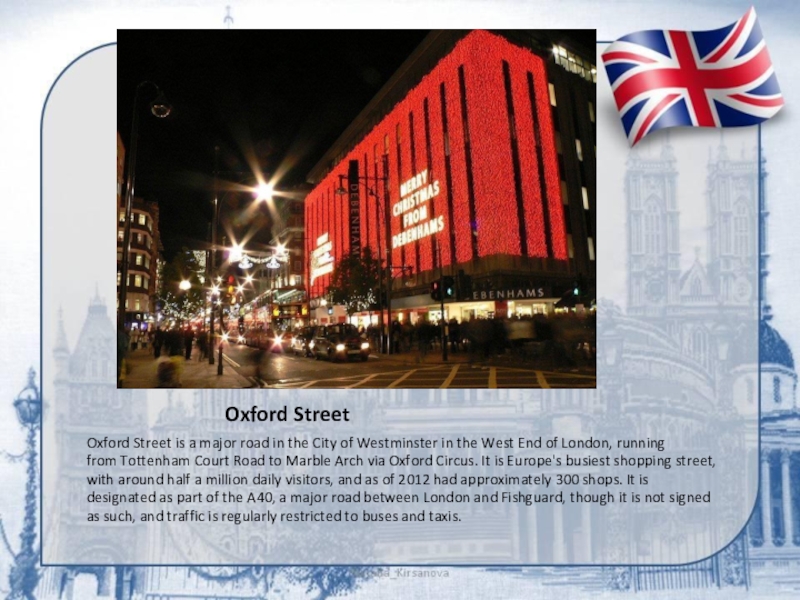
Слайд 20Oxford Street
Oxford Street is a major road in the City of Westminster in the West
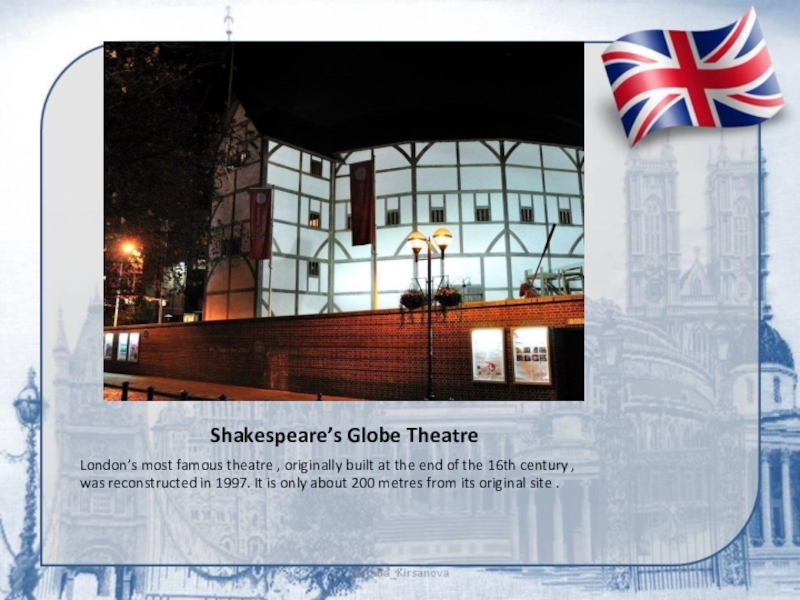
Слайд 21Shakespeare’s Globe Theatre
London’s most famous theatre , originally built at the
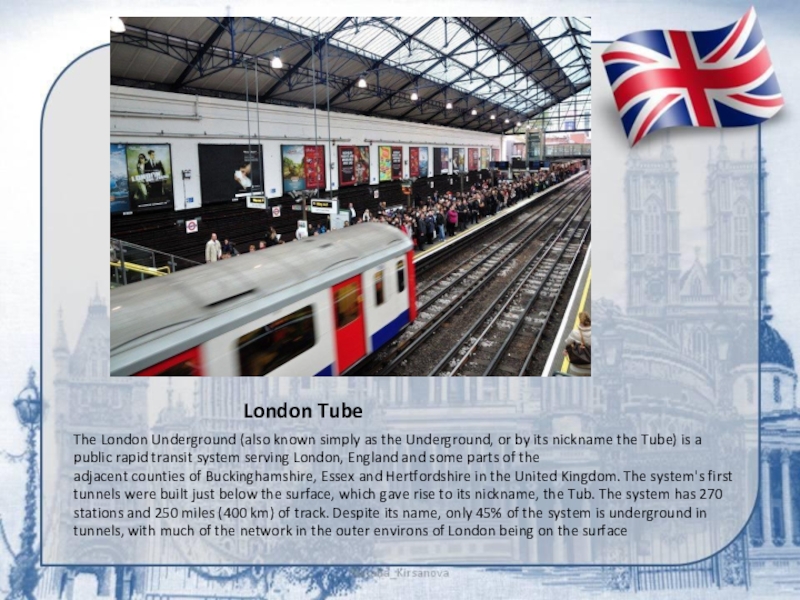
Слайд 22London Tube
The London Underground (also known simply as the Underground, or by its nickname the
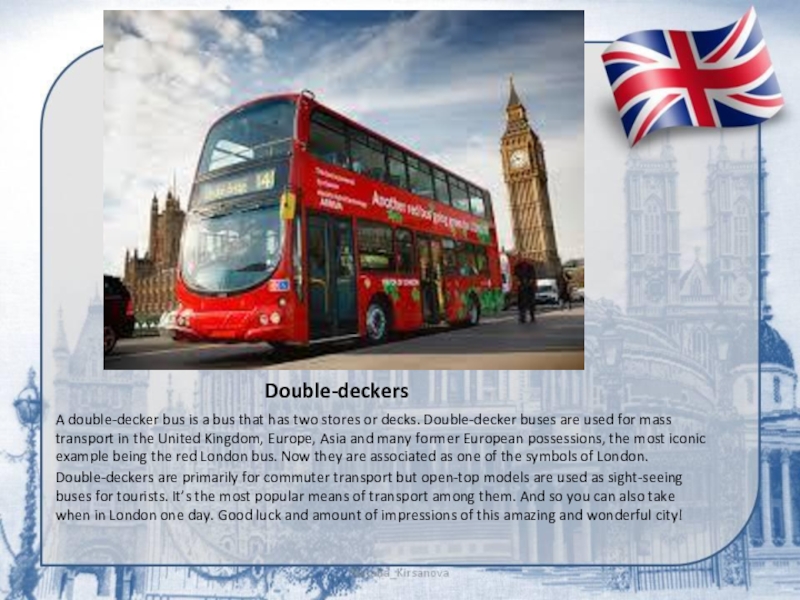
Слайд 23
A double-decker bus is a bus that has two stores or decks. Double-decker buses are used for mass transport in the United Kingdom, Europe, Asia and many former European possessions, the most iconic example being the red London bus. Now they are associated as one of the symbols of London.
Double-deckers are primarily for commuter transport but open-top models are used as sight-seeing buses for tourists. It’s the most popular means of transport among them. And so you can also take when in London one day. Good luck and amount of impressions of this amazing and wonderful city!
Слайд 24 Используемые источники
Великобритания
http://irecommend.ru/sites/default/files/imagecache/copyright1/user-images/168052/london_otshityy_ves_0.jpg
Флаг Великобритании
http://www.onlinecasinorussia.net/wp-content/uploads/2016/03/britaniya.png
Автор шаблона: Кирсанова Н.Н