Слайд 1
Открытый урок:
Виртуальное путешествие по
Лондонскому Тауэру
Министерство образования и науки Краснодарского края
Государственное
бюджетное профессиональное
образовательное учреждение
Краснодарского края
«Апшеронский лесхоз-техникум»
Руководитель проекта:
преподаватель иностранных языков Урюпкина Анна Владимировна.
Слайд 2 The Tower of London
Introduction
Principal part
Fortress
Roil residence
Prison
Place of executions
Ghosts
Menagerie
The ravens
The Royal Mint
Royal Armouries
the Crown Jewels
3. Conclusion
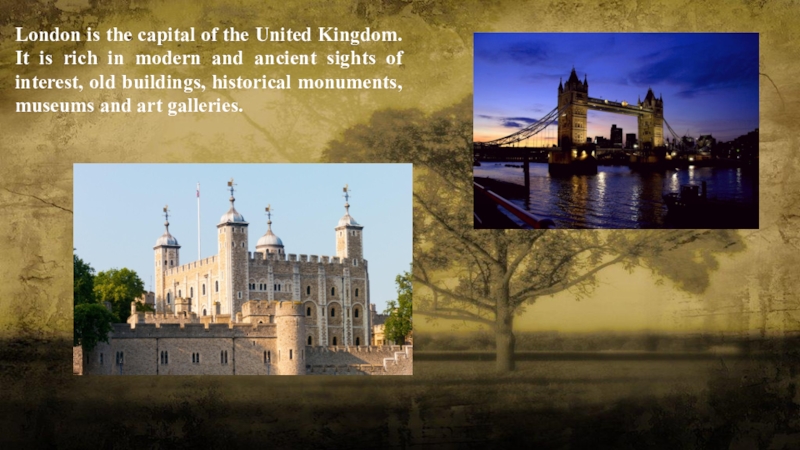
Слайд 3London is the capital of the United Kingdom. It is rich
in modern and ancient sights of interest, old buildings, historical monuments, museums and art galleries.
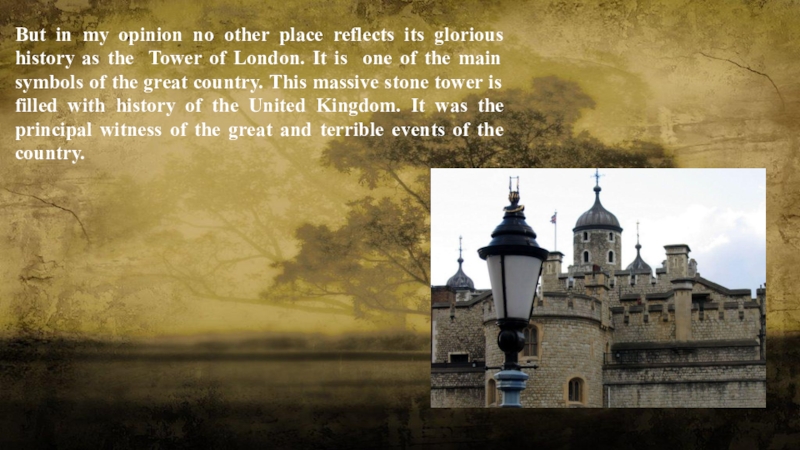
Слайд 4But in my opinion no other place reflects its glorious history
as the Tower of London. It is one of the main symbols of the great country. This massive stone tower is filled with history of the United Kingdom. It was the principal witness of the great and terrible events of the country.
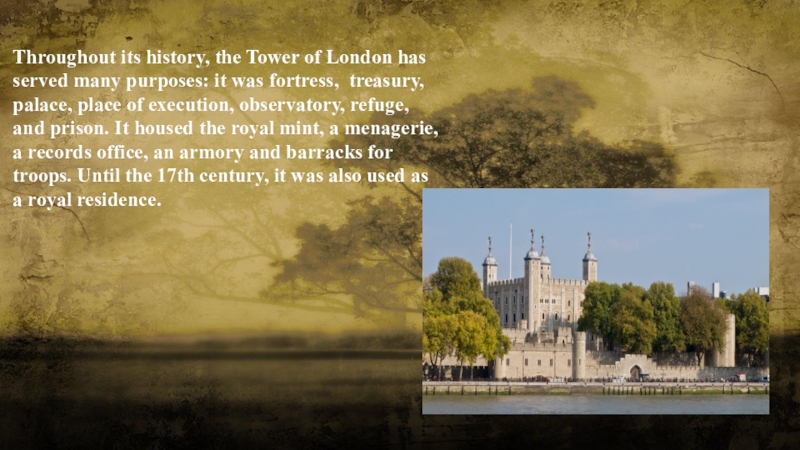
Слайд 5Throughout its history, the Tower of London has served many purposes:
it was fortress, treasury, palace, place of execution, observatory, refuge, and prison. It housed the royal mint, a menagerie, a records office, an armory and barracks for troops. Until the 17th century, it was also used as a royal residence.
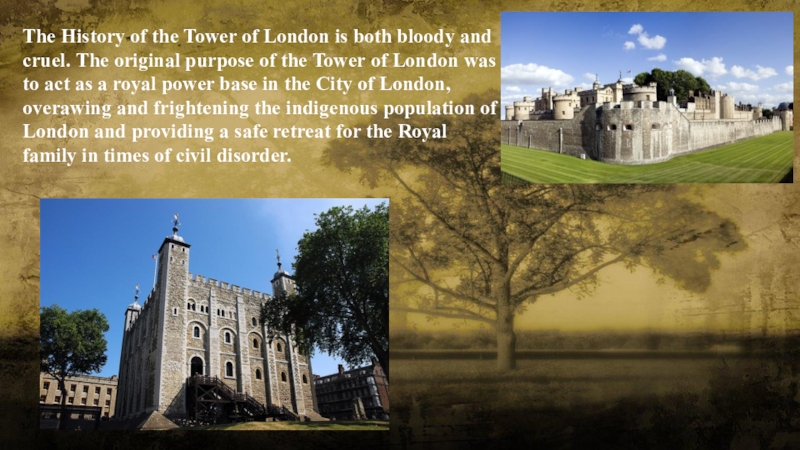
Слайд 6The History of the Tower of London is both bloody and
cruel. The original purpose of the Tower of London was to act as a royal power base in the City of London, overawing and frightening the indigenous population of London and providing a safe retreat for the Royal family in times of civil disorder.
Слайд 7
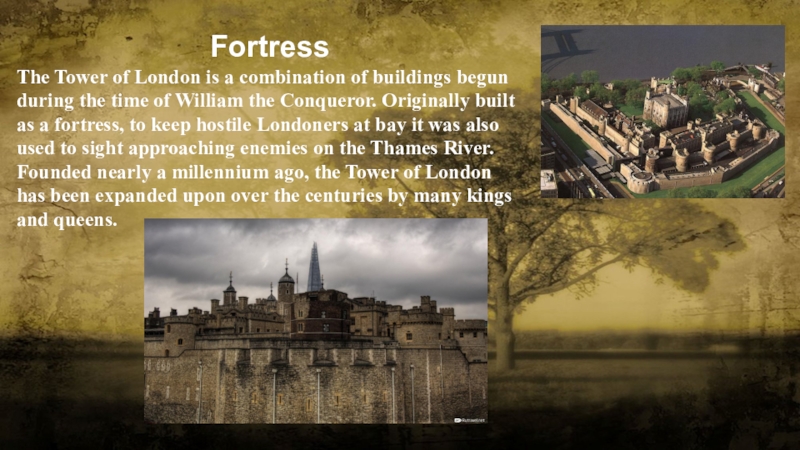
Fortress
The Tower of London is a combination of buildings begun
during the time of William the Conqueror. Originally built as a fortress, to keep hostile Londoners at bay it was also used to sight approaching enemies on the Thames River. Founded nearly a millennium ago, the Tower of London has been expanded upon over the centuries by many kings and queens.
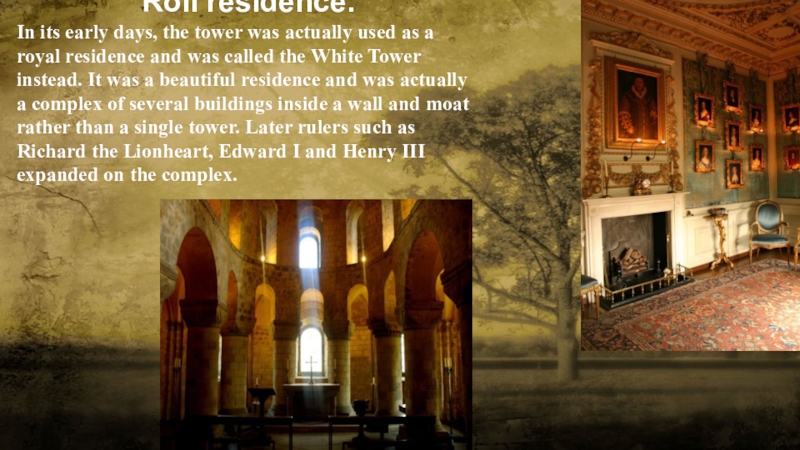
Слайд 8Roil residence.
In its early days, the tower was actually used
as a royal residence and was called the White Tower instead. It was a beautiful residence and was actually a complex of several buildings inside a wall and moat rather than a single tower. Later rulers such as Richard the Lionheart, Edward I and Henry III expanded on the complex.
Слайд 9Prison
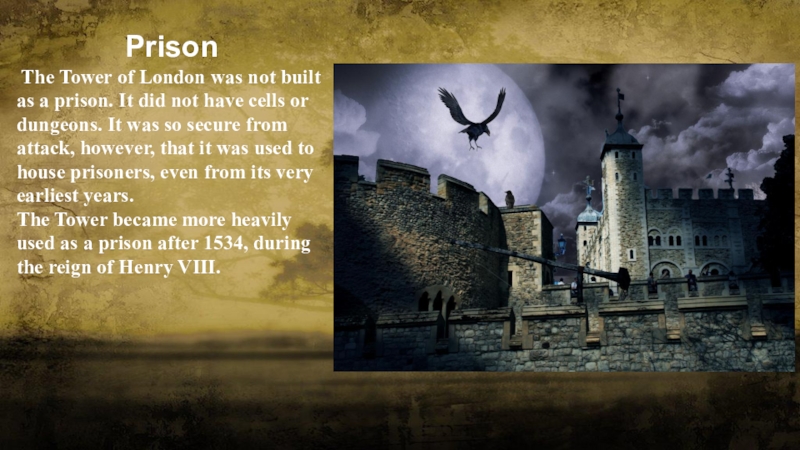
The Tower of London was not built as a prison.
It did not have cells or
dungeons. It was so secure from attack, however, that it was used to house prisoners, even from its very earliest years.
The Tower became more heavily used as a prison after 1534, during the reign of Henry VIII.
Слайд 10
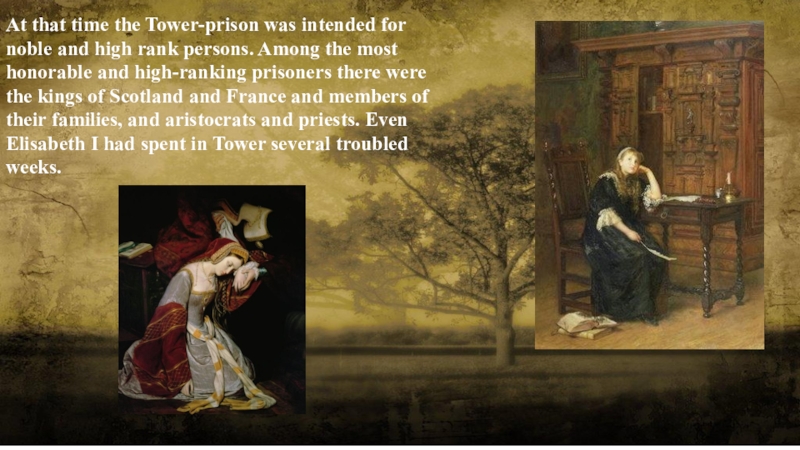
At that time the Tower-prison was intended for noble and high
rank persons. Among the most honorable and high-ranking prisoners there were the kings of Scotland and France and members of their families, and aristocrats and priests. Even Elisabeth I had spent in Tower several troubled weeks.
Слайд 11
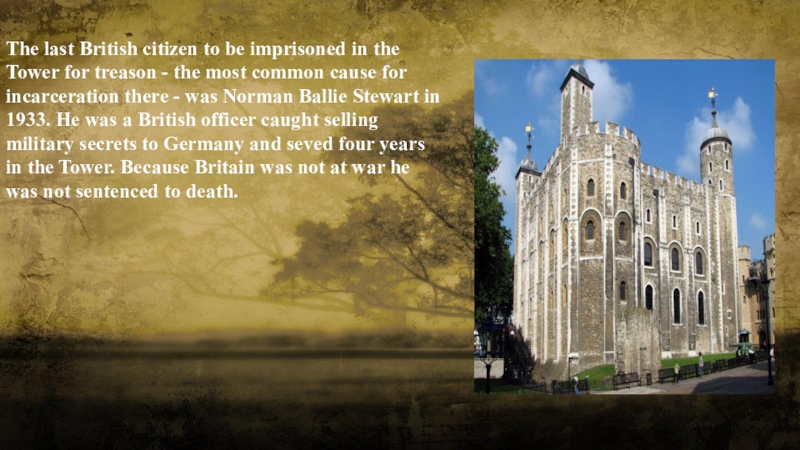
The last British citizen to be imprisoned in the Tower for
treason - the most common cause for incarceration there - was Norman Ballie Stewart in 1933. He was a British officer caught selling military secrets to Germany and seved four years in the Tower. Because Britain was not at war he was not sentenced to death.
Слайд 12
Place of executions
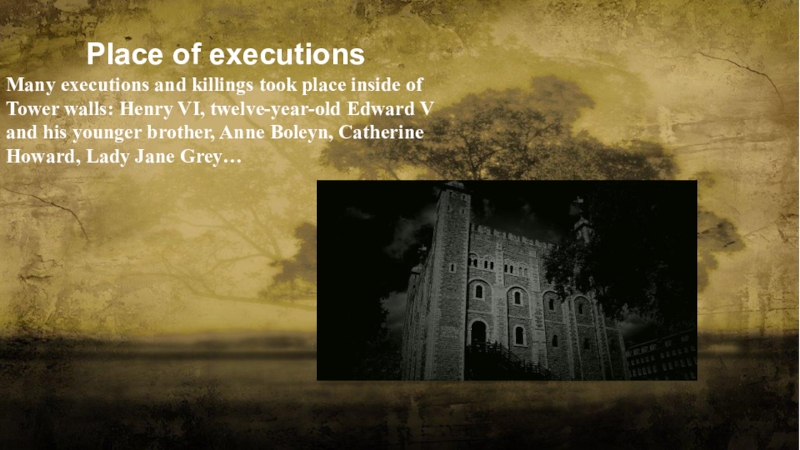
Many executions and killings took place inside of Tower
walls: Henry VI, twelve-year-old Edward V and his younger brother, Anne Boleyn, Catherine Howard, Lady Jane Grey…
Слайд 13Ghosts
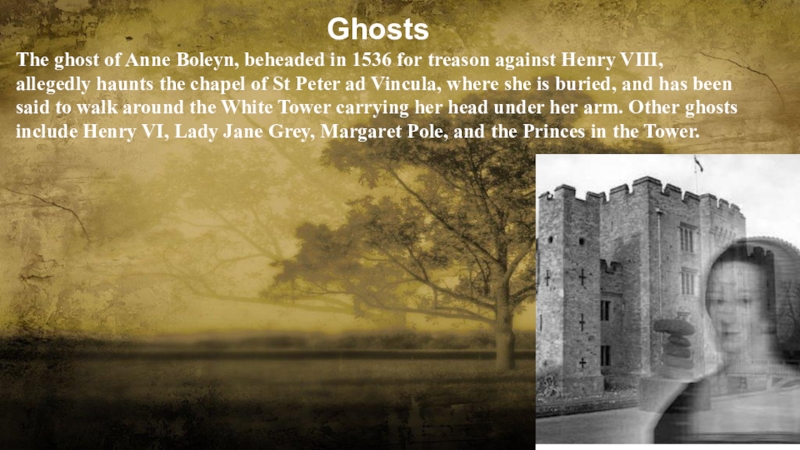
The ghost of Anne Boleyn, beheaded in 1536 for treason against
Henry VIII, allegedly haunts the chapel of St Peter ad Vincula, where she is buried, and has been said to walk around the White Tower carrying her head under her arm. Other ghosts include Henry VI, Lady Jane Grey, Margaret Pole, and the Princes in the Tower.
Слайд 14
Menagerie
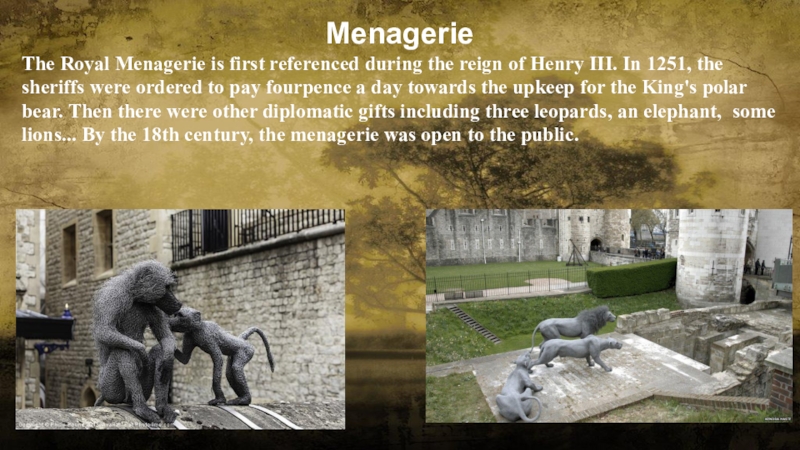
The Royal Menagerie is first referenced during the reign of
Henry III. In 1251, the sheriffs were ordered to pay fourpence a day towards the upkeep for the King's polar bear. Then there were other diplomatic gifts including three leopards, an elephant, some lions... By the 18th century, the menagerie was open to the public.
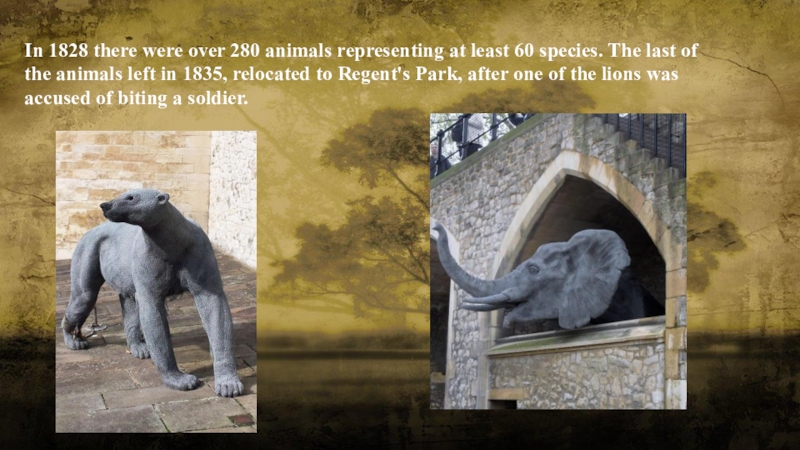
Слайд 15In 1828 there were over 280 animals representing at least 60
species. The last of the animals left in 1835, relocated to Regent's Park, after one of the lions was accused of biting a soldier.
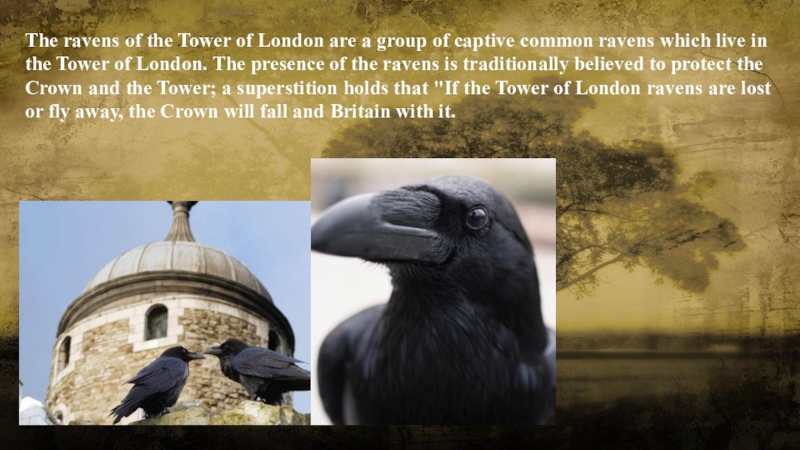
Слайд 16The ravens of the Tower of London are a group of
captive common ravens which live in the Tower of London. The presence of the ravens is traditionally believed to protect the Crown and the Tower; a superstition holds that "If the Tower of London ravens are lost or fly away, the Crown will fall and Britain with it.
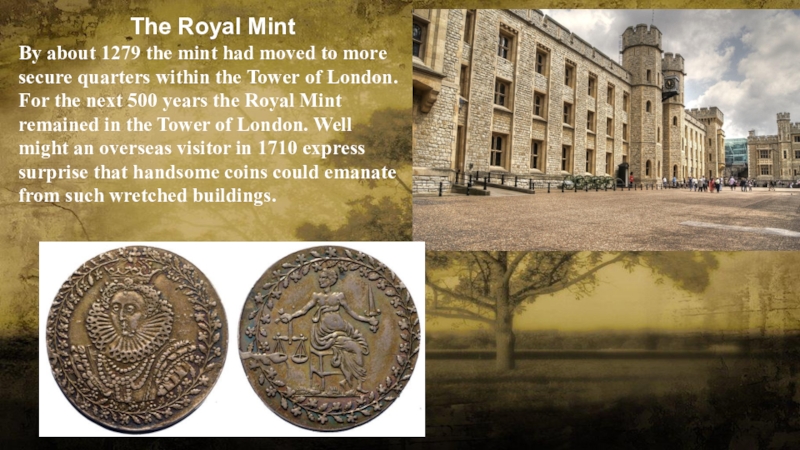
Слайд 17The Royal Mint
By about 1279 the mint had moved to
more secure quarters within the Tower of London. For the next 500 years the Royal Mint remained in the Tower of London. Well might an overseas visitor in 1710 express surprise that handsome coins could emanate from such wretched buildings.
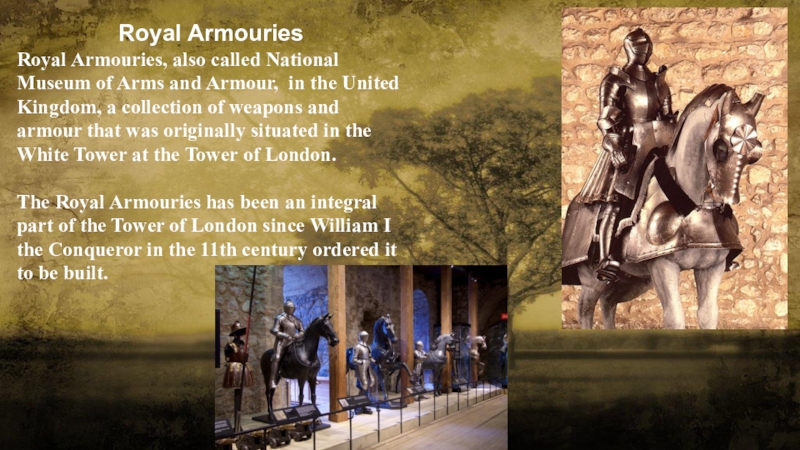
Слайд 18Royal Armouries
Royal Armouries, also called National Museum of Arms and
Armour, in the United Kingdom, a collection of weapons and armour that was originally situated in the White Tower at the Tower of London.
The Royal Armouries has been an integral part of the Tower of London since William I the Conqueror in the 11th century ordered it to be built.
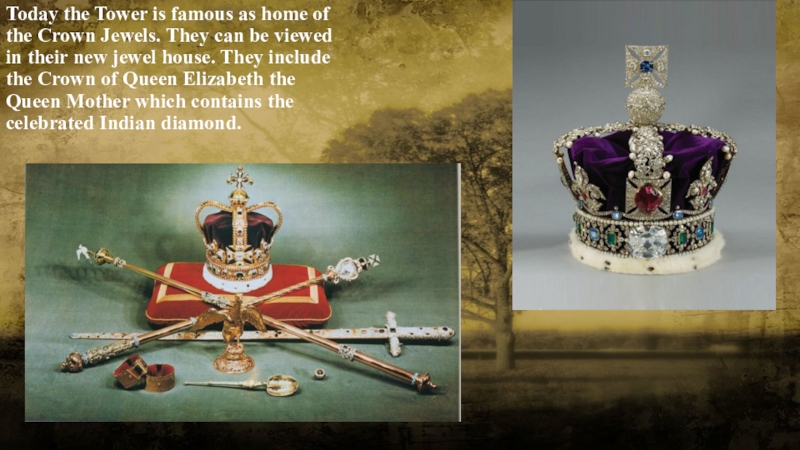
Слайд 19Today the Tower is famous as home of the Crown Jewels.
They can be viewed in their new jewel house. They include the Crown of Queen Elizabeth the Queen Mother which contains the celebrated Indian diamond.
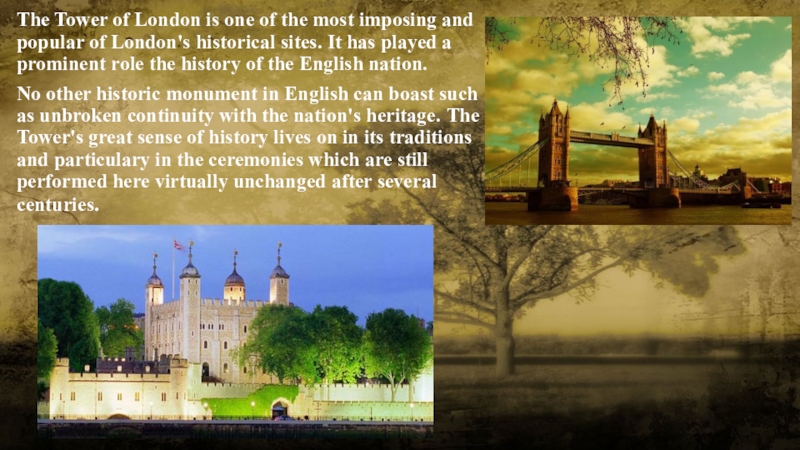
Слайд 20The Tower of London is one of the most imposing and
popular of London's historical sites. It has played a prominent role the history of the English nation.
No other historic monument in English can boast such as unbroken continuity with the nation's heritage. The Tower's great sense of history lives on in its traditions and particulary in the ceremonies which are still performed here virtually unchanged after several centuries.
Слайд 21Список использованной литературы:
http://www.londonpass.com/london-attractions/tower-of-london.html
http://www.britainexpress.com/articles/London/tower-of-london.htm
http://www.hrp.org.uk/TowerOfLondon/Sightsandstories/Prisoners/Meettheprisoners#sthash.0JwnCMSF.dpuf
http://ref.repetiruem.ru/referat/the-history-of-the-tower-of-london
http://www.britainexpress.com/articles/London/tower-of-london.htm