- Главная
- Разное
- Образование
- Спорт
- Естествознание
- Природоведение
- Религиоведение
- Французский язык
- Черчение
- Английский язык
- Астрономия
- Алгебра
- Биология
- География
- Геометрия
- Детские презентации
- Информатика
- История
- Литература
- Математика
- Музыка
- МХК
- Немецкий язык
- ОБЖ
- Обществознание
- Окружающий мир
- Педагогика
- Русский язык
- Технология
- Физика
- Философия
- Химия
- Шаблоны, фоны, картинки для презентаций
- Экология
- Экономика
Презентация, доклад на тему Объяснение материала Косвенная речь
Содержание
- 1. Объяснение материала Косвенная речь
- 2. Reported speech refers to a sentence reporting what
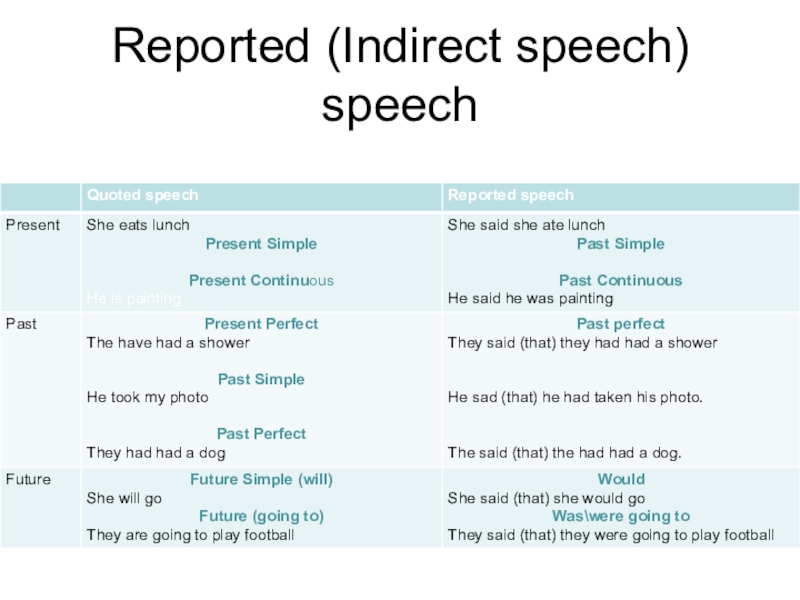
- 3. Reported (Indirect speech) speech
- 4. If the reporting verb (i.e. said) is
- 5. Here is a list of common place and time words, showing how you change them for reported speech:
- 6. He said: "It is cold in here." → He said
- 7. Questions WORD ORDER Normal word order
- 8. YES / NO QUESTIONS This type of
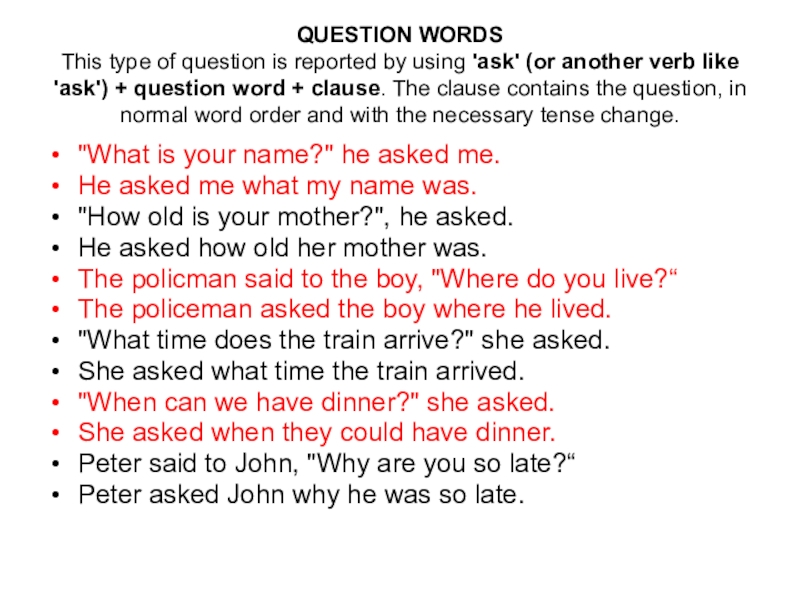
- 9. QUESTION WORDS This type of question is
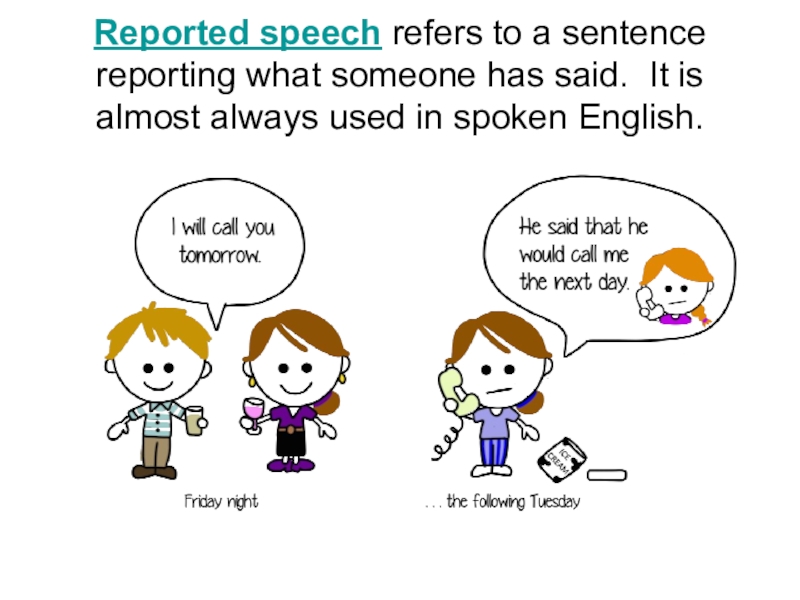
Reported speech refers to a sentence reporting what someone has said. It is almost always used in spoken English.
Слайд 2Reported speech refers to a sentence reporting what someone has said. It is
almost always used in spoken English.
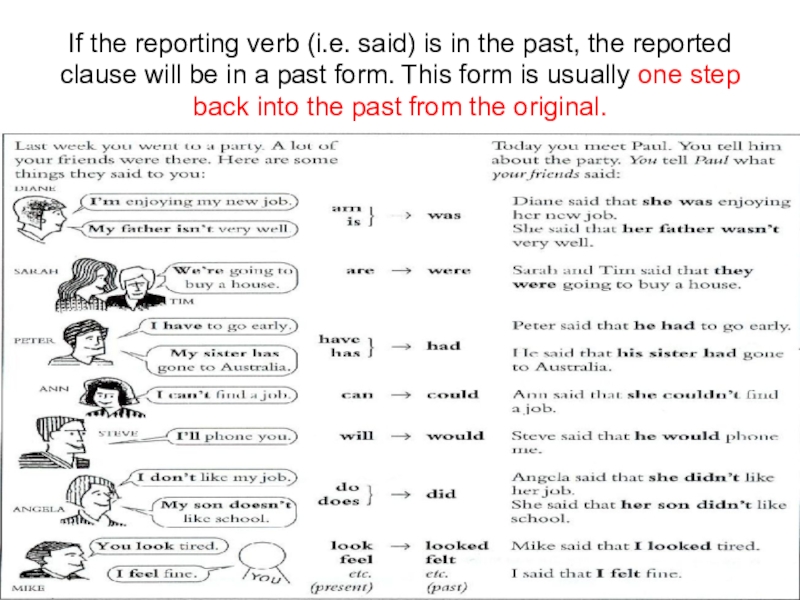
Слайд 4If the reporting verb (i.e. said) is in the past, the
reported clause will be in a past form. This form is usually one step back into the past from the original.
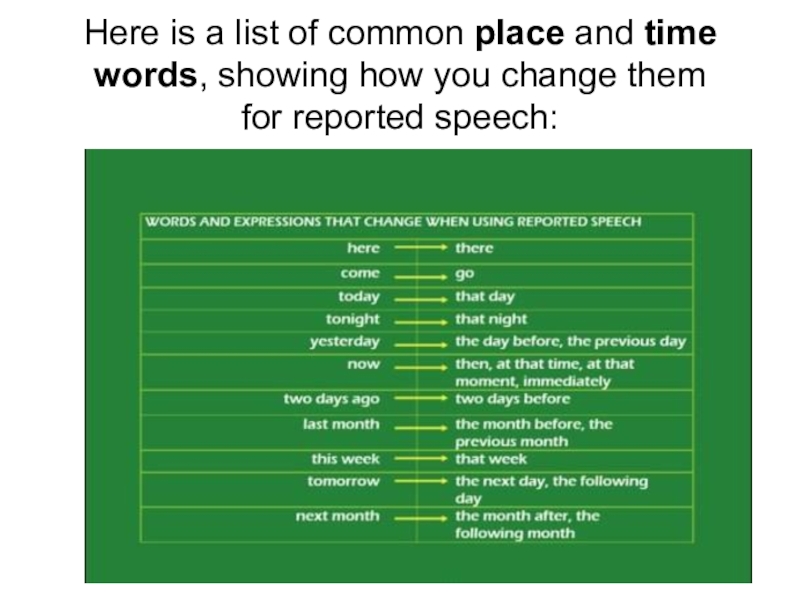
Слайд 5Here is a list of common place and time words, showing how you change
them for reported speech:
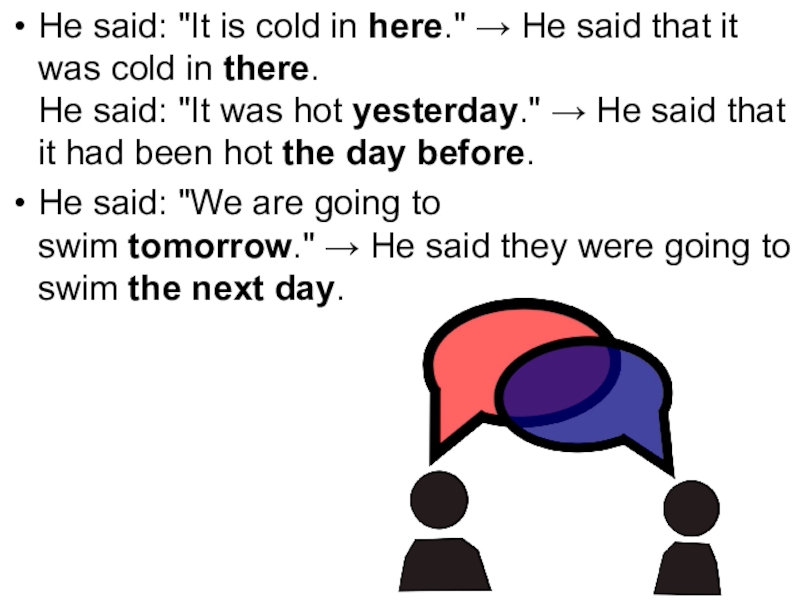
Слайд 6He said: "It is cold in here." → He said that it was cold
in there.
He said: "It was hot yesterday." → He said that it had been hot the day before.
He said: "We are going to swim tomorrow." → He said they were going to swim the next day.
He said: "We are going to swim tomorrow." → He said they were going to swim the next day.
Слайд 7Questions
WORD ORDER
Normal word order is used in reported
questions, that is, the subject comes before the verb, and it is not necessary to use 'do' or 'did':
EXAMPLES
"Where does Peter live?“
She asked him where Peter lived.
"Where are you going?“
She asked where I was going.
"Why is she crying?“
He asked why she was crying.
EXAMPLES
"Where does Peter live?“
She asked him where Peter lived.
"Where are you going?“
She asked where I was going.
"Why is she crying?“
He asked why she was crying.
Слайд 8YES / NO QUESTIONS
This type of question is reported by using 'ask'
+ 'if / whether' + clause:
EXAMPLES
Do you speak English?“
He asked me if I spoke English.
"Are you British or American?“
He asked me whether I was British or American.
"Is it raining?“
She asked if it was raining.
"Have you got a computer?“
He wanted to know whether I had a computer.
"Can you type?“
She asked if I could type.
"Did you come by train?“
He enquired whether I had come by train.
"Have you been to Bristol before?“
She asked if I had been to Bristol before.
EXAMPLES
Do you speak English?“
He asked me if I spoke English.
"Are you British or American?“
He asked me whether I was British or American.
"Is it raining?“
She asked if it was raining.
"Have you got a computer?“
He wanted to know whether I had a computer.
"Can you type?“
She asked if I could type.
"Did you come by train?“
He enquired whether I had come by train.
"Have you been to Bristol before?“
She asked if I had been to Bristol before.
Слайд 9QUESTION WORDS This type of question is reported by using 'ask' (or another
verb like 'ask') + question word + clause. The clause contains the question, in normal word order and with the necessary tense change.
"What is your name?" he asked me.
He asked me what my name was.
"How old is your mother?", he asked.
He asked how old her mother was.
The policman said to the boy, "Where do you live?“
The policeman asked the boy where he lived.
"What time does the train arrive?" she asked.
She asked what time the train arrived.
"When can we have dinner?" she asked.
She asked when they could have dinner.
Peter said to John, "Why are you so late?“
Peter asked John why he was so late.