- Главная
- Разное
- Образование
- Спорт
- Естествознание
- Природоведение
- Религиоведение
- Французский язык
- Черчение
- Английский язык
- Астрономия
- Алгебра
- Биология
- География
- Геометрия
- Детские презентации
- Информатика
- История
- Литература
- Математика
- Музыка
- МХК
- Немецкий язык
- ОБЖ
- Обществознание
- Окружающий мир
- Педагогика
- Русский язык
- Технология
- Физика
- Философия
- Химия
- Шаблоны, фоны, картинки для презентаций
- Экология
- Экономика
Презентация, доклад на тему ENGLISH BULLDOG.HISTORY OF GREAT BRITAIN.
Содержание
- 1. ENGLISH BULLDOG.HISTORY OF GREAT BRITAIN.
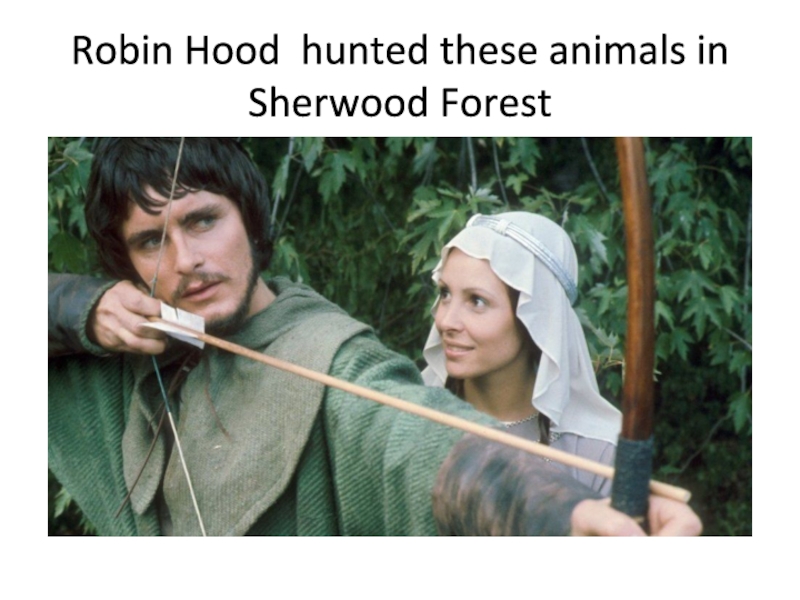
- 2. Robin Hood hunted these animals in Sherwood Forest
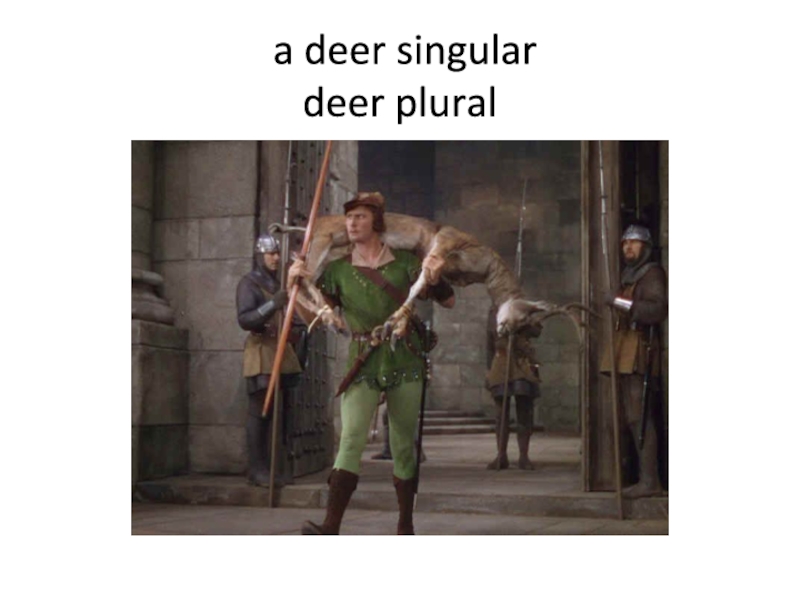
- 3. a deer singular deer plural
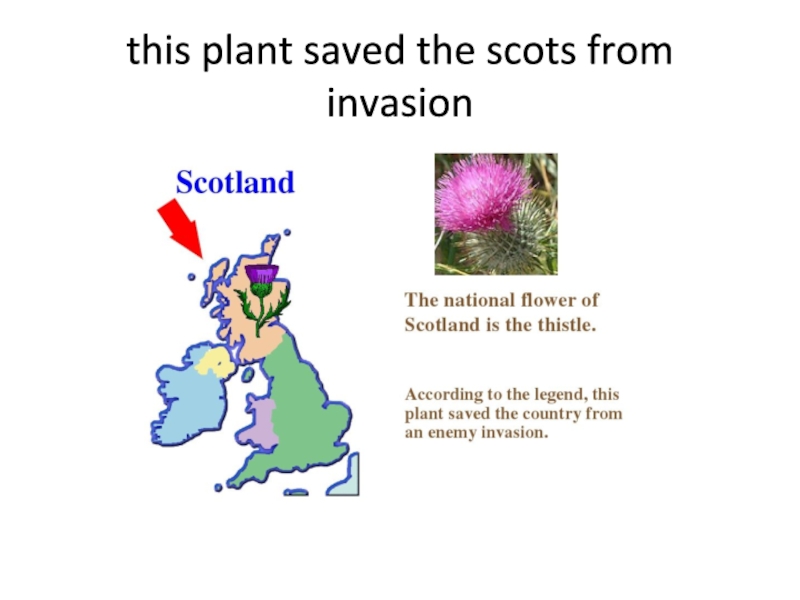
- 4. this plant saved the scots from invasion
- 5. The Scottish emblem is the thistle •the
- 6. people can't imagine the tower of London without these birds
- 7. This is the traditional food at Christmass in Great Britain
- 8. this vegetable is used to make a jack-o'-lantern
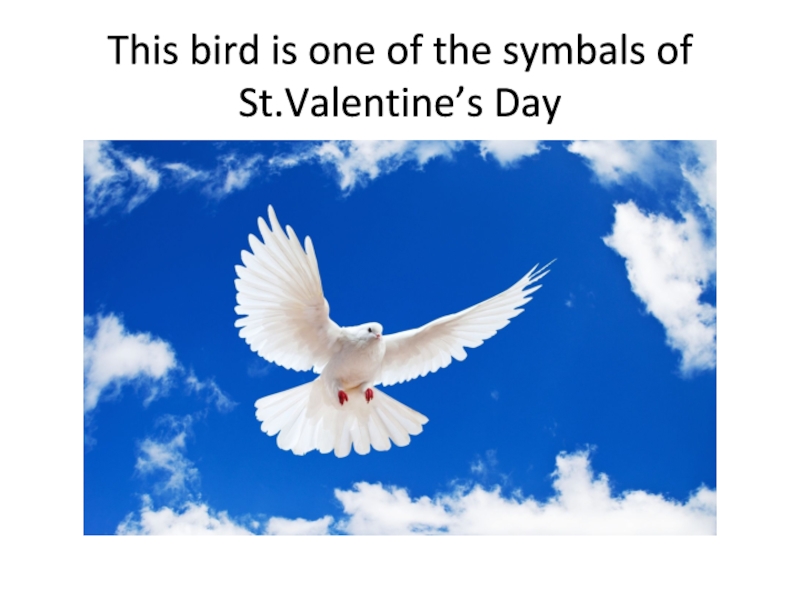
- 9. This bird is one of the symbals of St.Valentine’s Day
- 10. This Queen is called “The Grandmother of
- 11. This Queen is called “The Grandmother of Europe
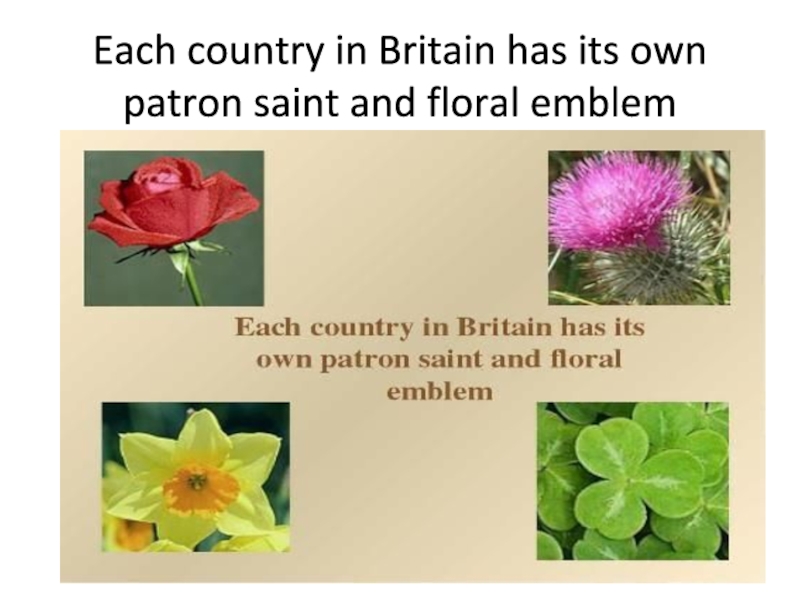
- 12. Each country in Britain has its own patron saint and floral emblem
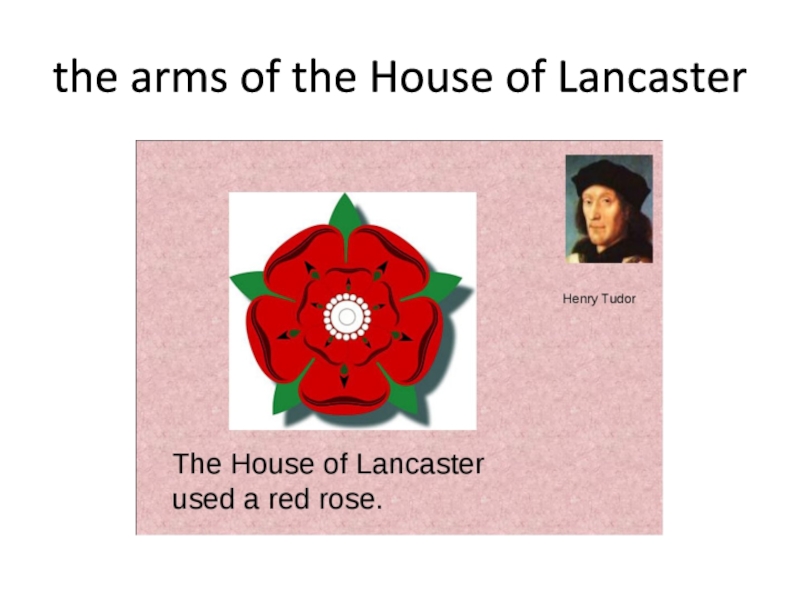
- 13. the arms of the House of Lancaster
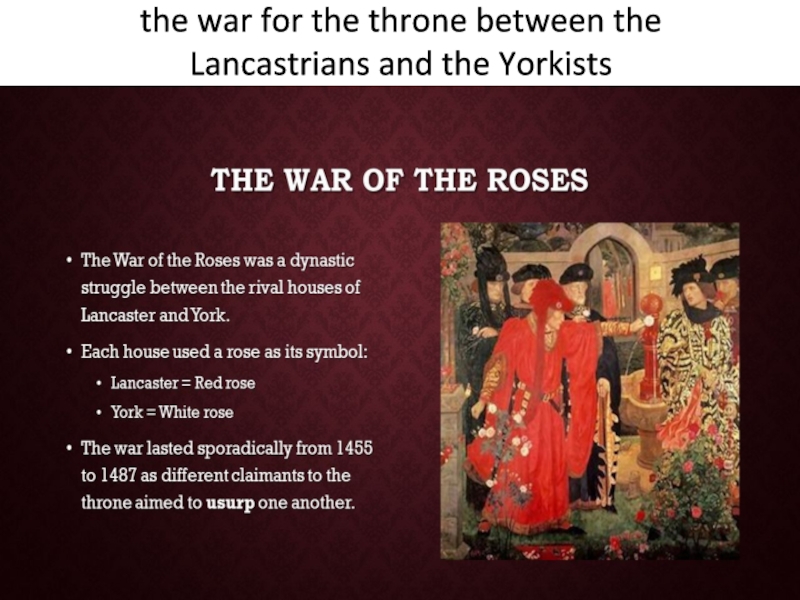
- 14. the war for the throne between the Lancastrians and the Yorkists
- 15. Слайд 15
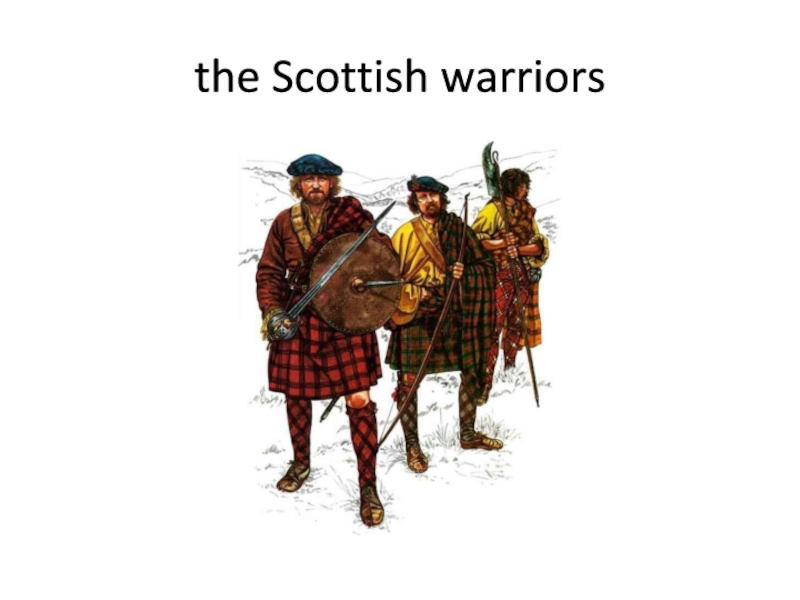
- 16. the Scottish warriors
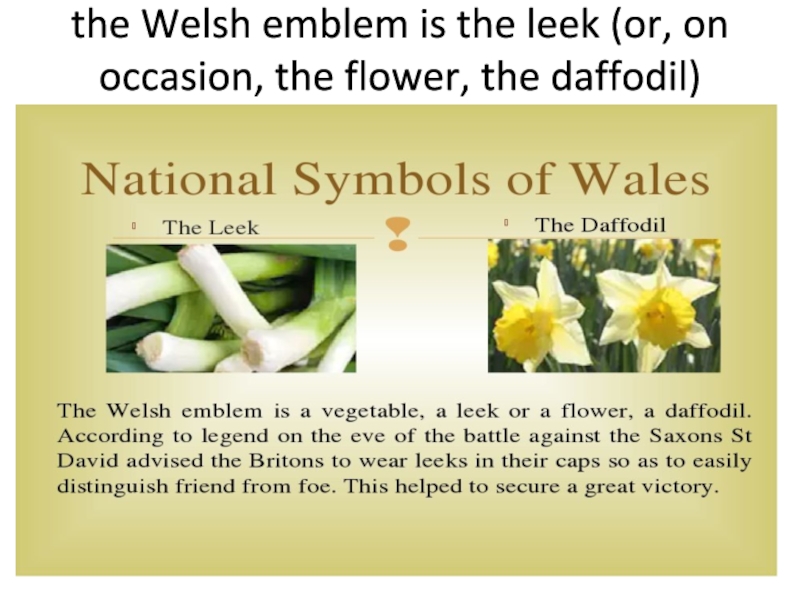
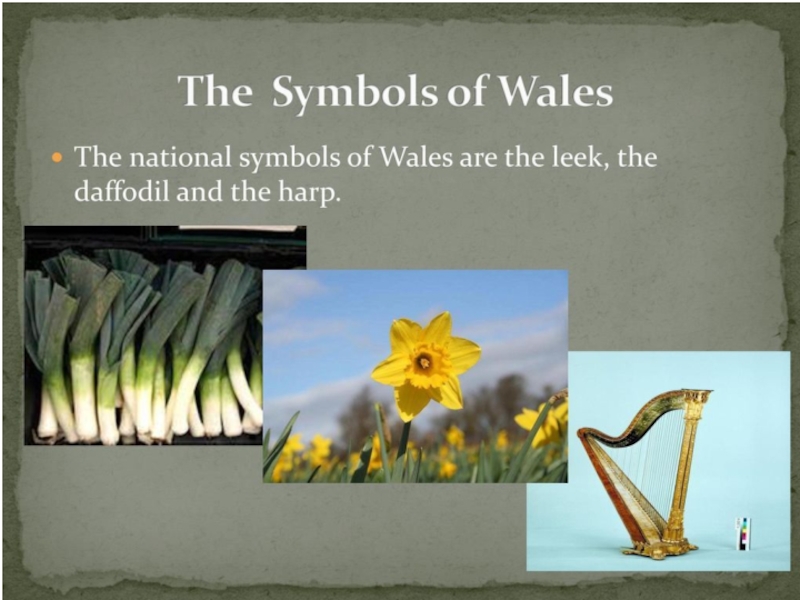
- 17. the Welsh emblem is the leek (or, on occasion, the flower, the daffodil)
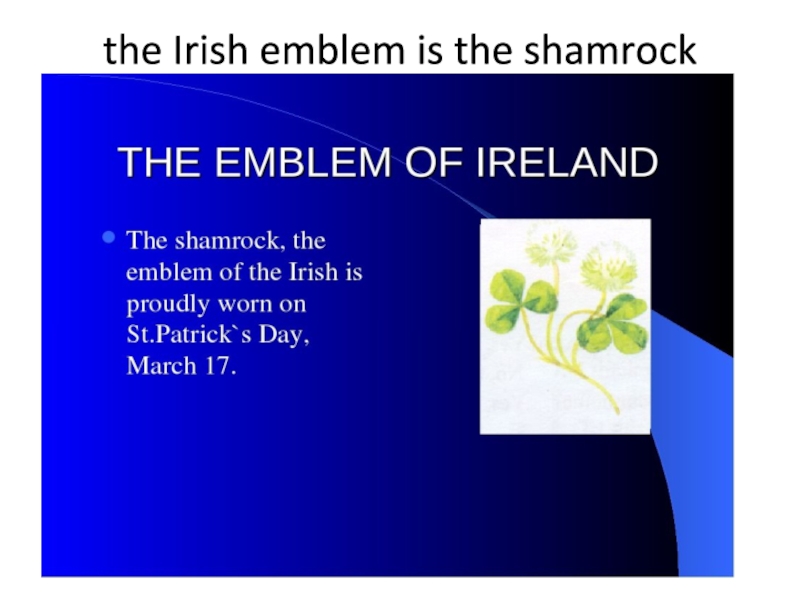
- 18. the Irish emblem is the shamrock
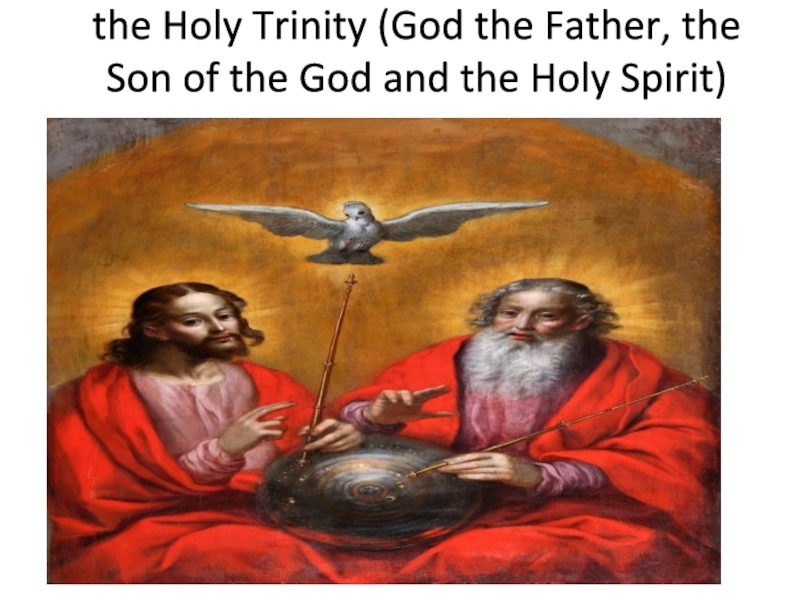
- 19. the Holy Trinity (God the Father, the Son of the God and the Holy Spirit)
- 20. The Rose of England,The National Floral Emblem
- 21. The United Kingdom of Great Britain and
- 22. The Scottish symbol is a wild plant,
- 23. The Welsh symbol is a vegetable called
- 24. The Irish symbol is another wild plant
- 25. Answer the following questions. Use the information
- 26. 1. What four historic parts does the
- 27. The United Kingdom of Great Britain and
- 28. Слайд 28
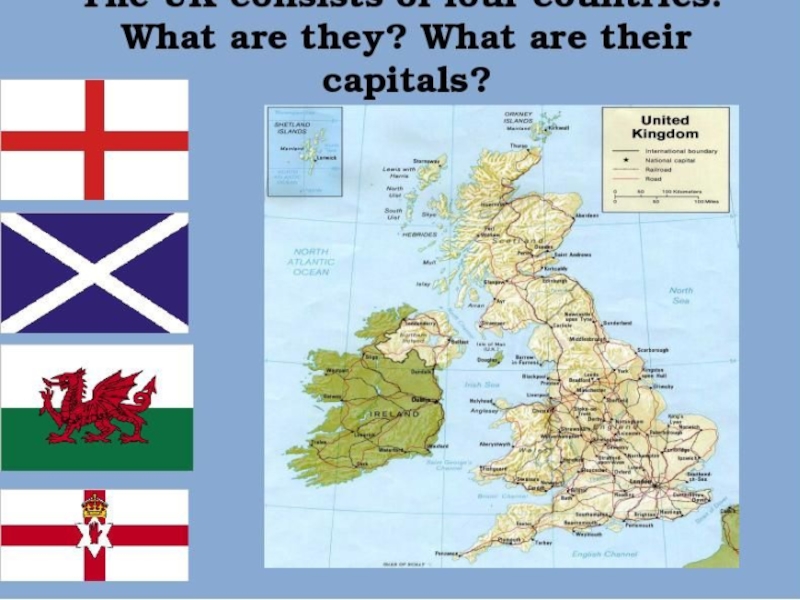
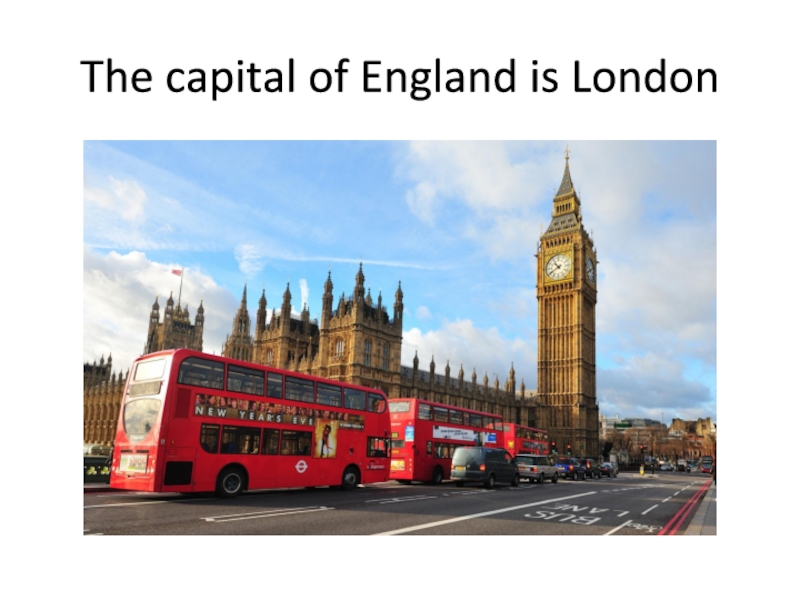
- 29. The capital of England is London
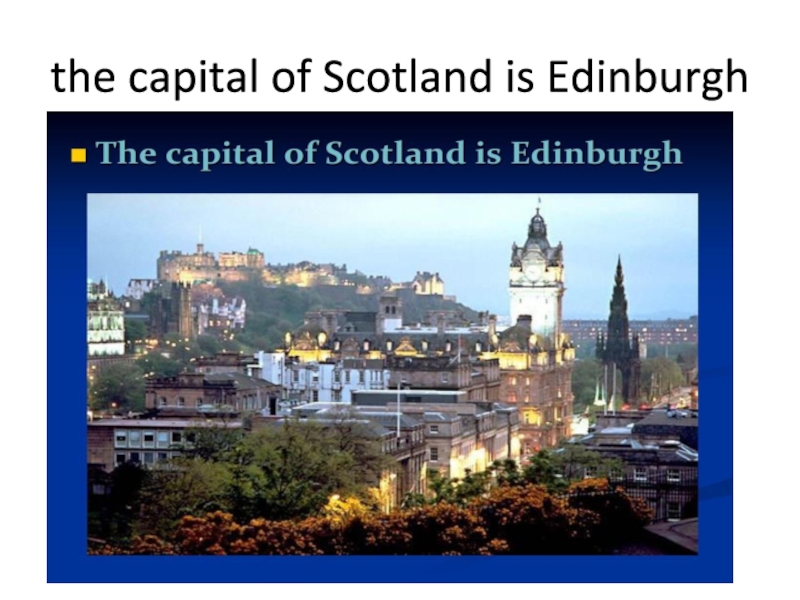
- 30. the capital of Scotland is Edinburgh
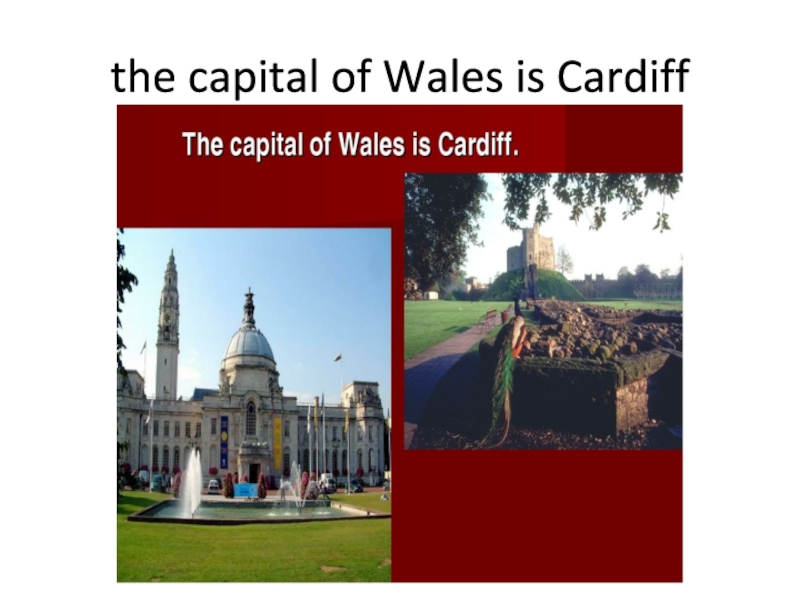
- 31. the capital of Wales is Cardiff
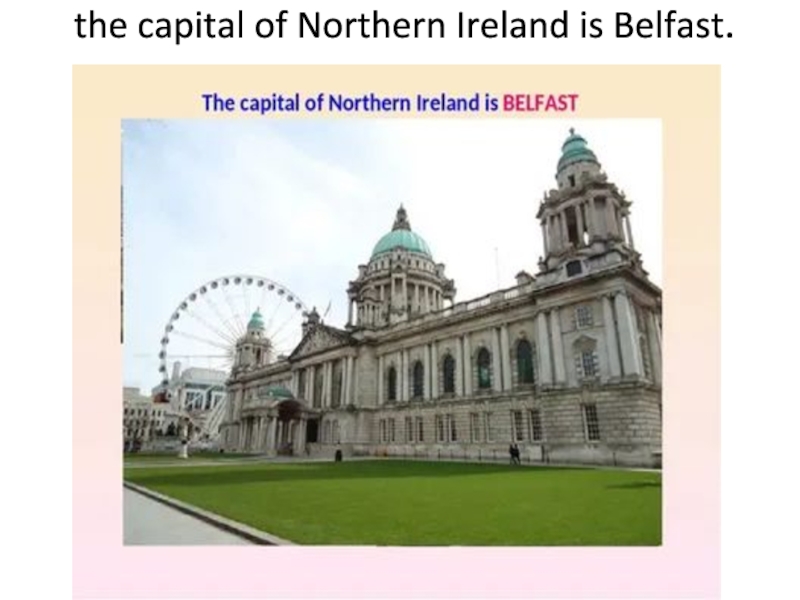
- 32. the capital of Northern Ireland is Belfast.
- 33. Слайд 33
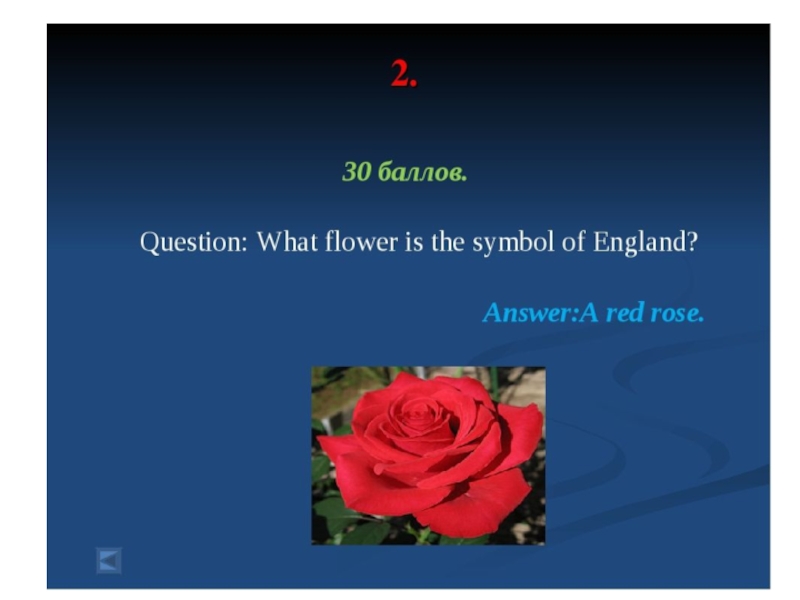
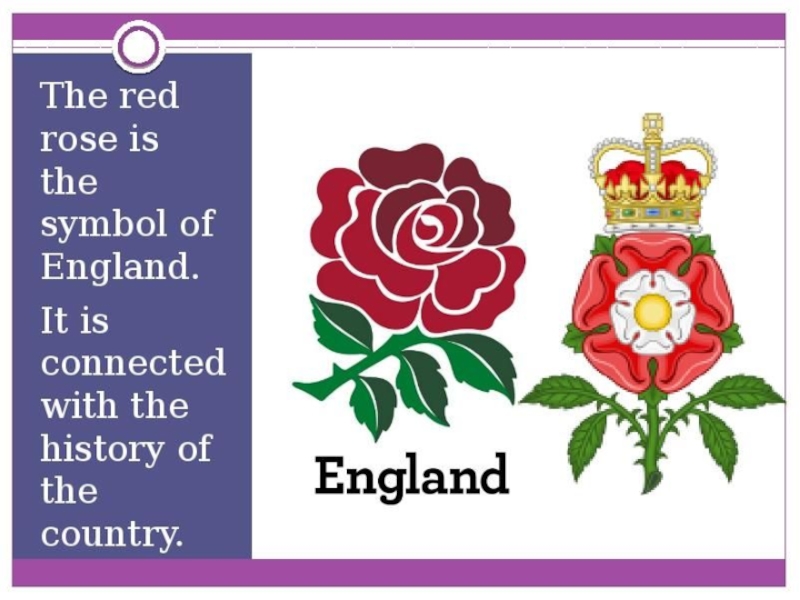
- 34. What is England’s floral symbol?England has got a red rose.
- 35. Слайд 35
- 36. Why did the War of the Red
- 37. The War of the Red and White
- 38. Who won the war? The Lancastrians
- 39. Why did the red rose become the symbol for the whole of England in 1485? –
- 40. A Red Rose became the symbol of
- 41. Слайд 41
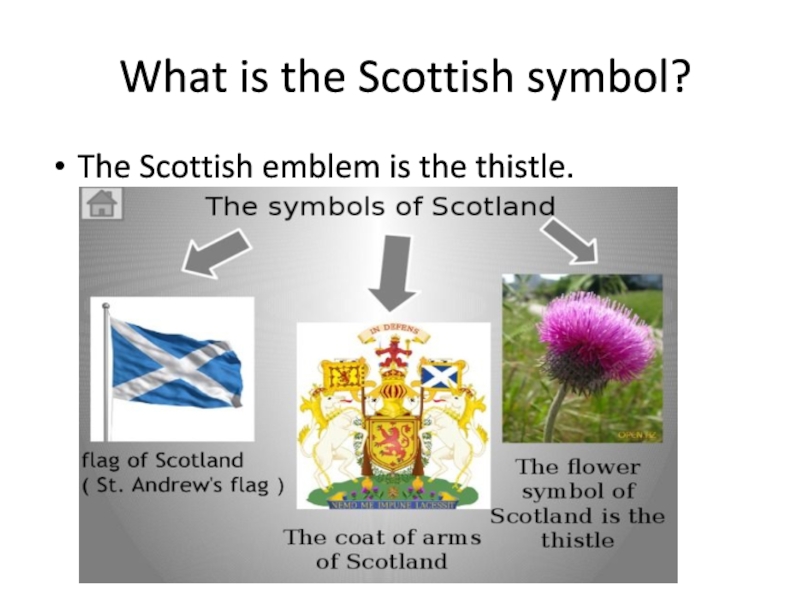
- 42. What is the Scottish symbol?The Scottish emblem is the thistle.
- 43. How did this plant once save the
- 44. What is the floral symbol for
- 45. Слайд 45
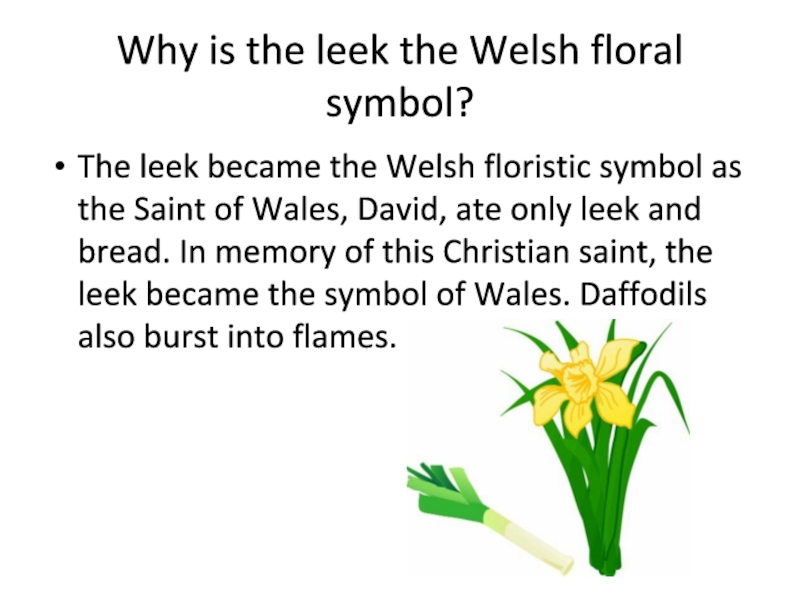
- 46. Why is the leek the Welsh floral
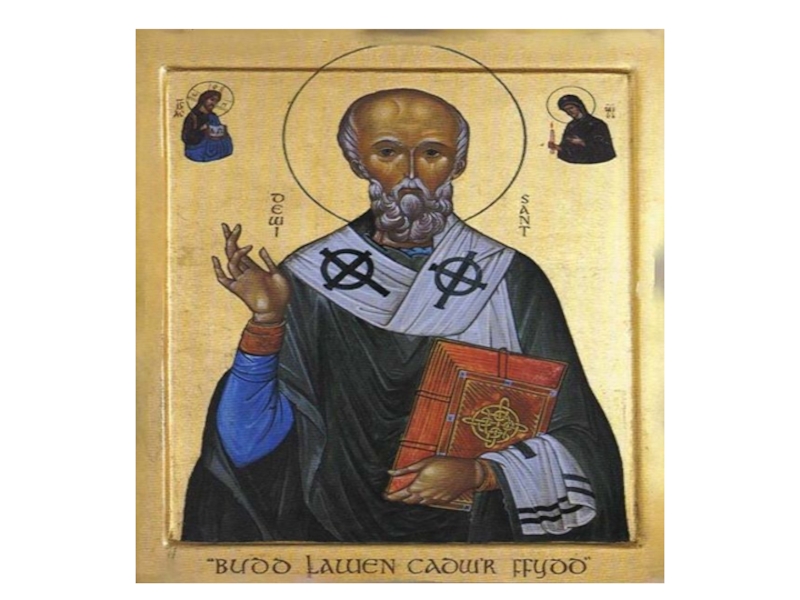
- 47. Who is St David? When do the
- 48. Слайд 48
- 49. What is the Irish floral symbol? Who
- 50. Слайд 50
- 51. How did St Patrick use the shamrock?St.
- 52. What are the historic colours of the
- 53. Слайд 53
- 54. Thanks for attention
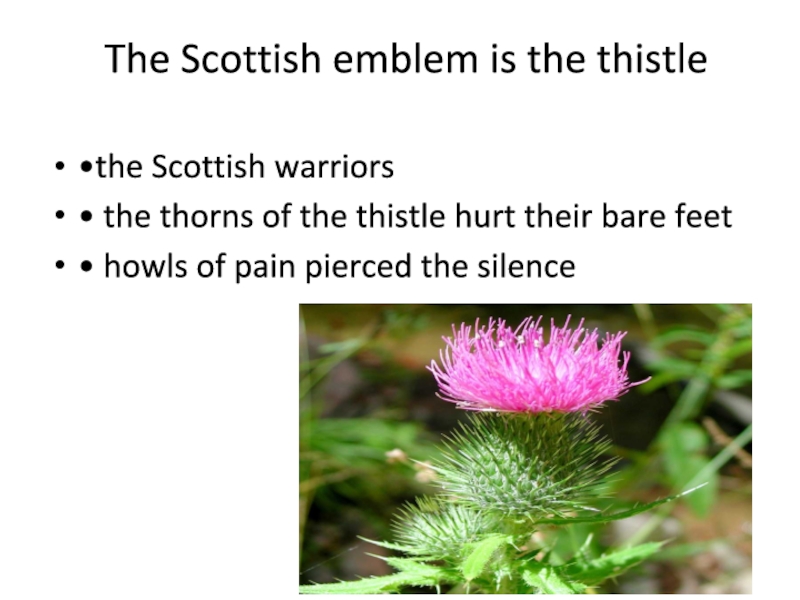
Слайд 5The Scottish emblem is the thistle
•the Scottish warriors
• the thorns of
• howls of pain pierced the silence
Слайд 10This Queen is called “The Grandmother of Europe
Kirsten Ehrlich Davies
Kirsten Ehrlich
Answered Oct 1, 2016 · Author has 517 answers and 1.1m answer views
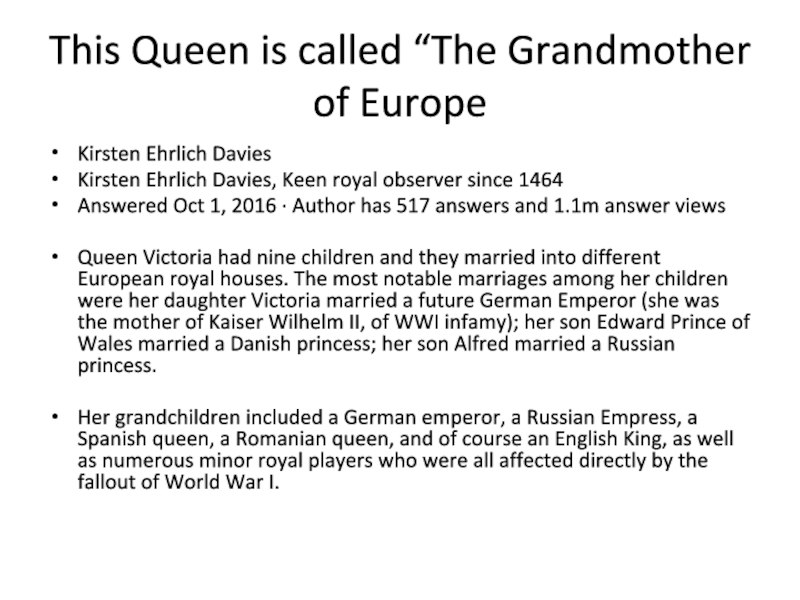
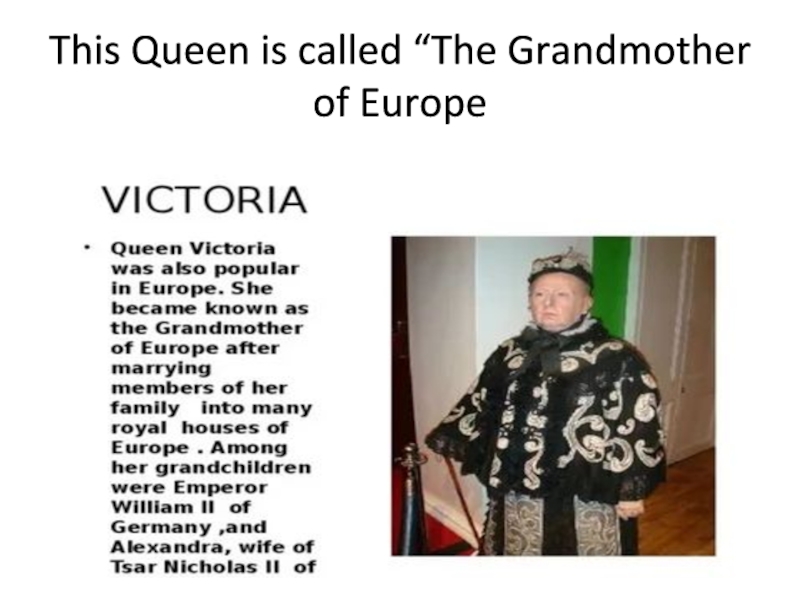
Queen Victoria had nine children and they married into different European royal houses. The most notable marriages among her children were her daughter Victoria married a future German Emperor (she was the mother of Kaiser Wilhelm II, of WWI infamy); her son Edward Prince of Wales married a Danish princess; her son Alfred married a Russian princess.
Her grandchildren included a German emperor, a Russian Empress, a Spanish queen, a Romanian queen, and of course an English King, as well as numerous minor royal players who were all affected directly by the fallout of World War I.
Слайд 20The Rose of England,
The National Floral Emblem . The Tudor Rose
The
Слайд 21The United Kingdom of Great Britain and Northern Ireland has four
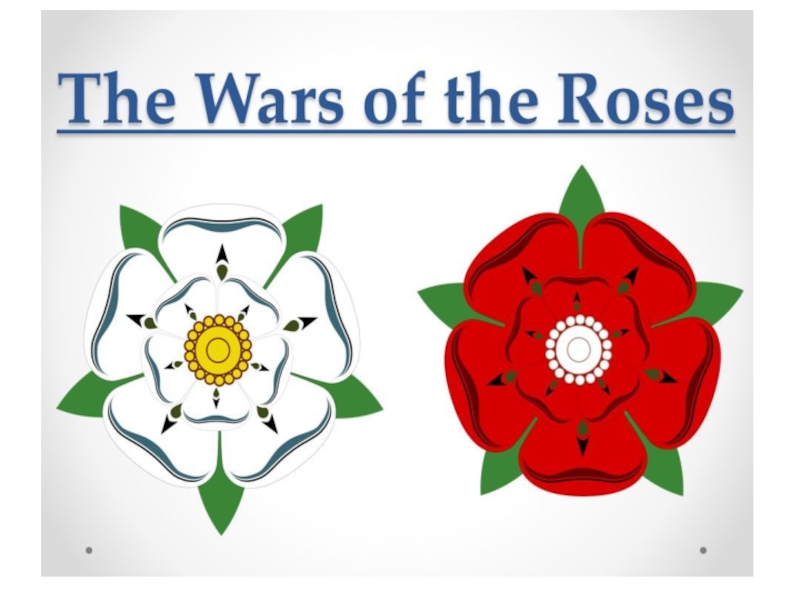
The war for the throne between the Lancastrians and the Yorkists became known in the history of the country as the War of the Red and White Rose. It lasted 30 years (1455 — 1485). When the Lancastrians won the war, their arms of the Red Rose became the symbol of the whole England.
Слайд 22The Scottish symbol is a wild plant, called the THISTLE. At
Late at night, the Scandinavians came in their bare feet so as to not awaken the Scottish warriors in the village. But the thorns of the thistle hurt their bare feet. Their howls of pain pierced the silence and the Scots awoke to fight the enemy.
Слайд 23The Welsh symbol is a vegetable called the LEEK (or, on
The patron saint of Wales, David, ate only leeks and bread. In memory of this Christian saint, the leek became the symbol of Wales. Daffodils which burst into flames by the 1st of March celebrate the revered Welsh saint.
Слайд 24The Irish symbol is another wild plant called the SHAMROCK This
Слайд 25Answer the following questions. Use the information you’ve learned in this
Слайд 261. What four historic parts does the United Kingdom of Great
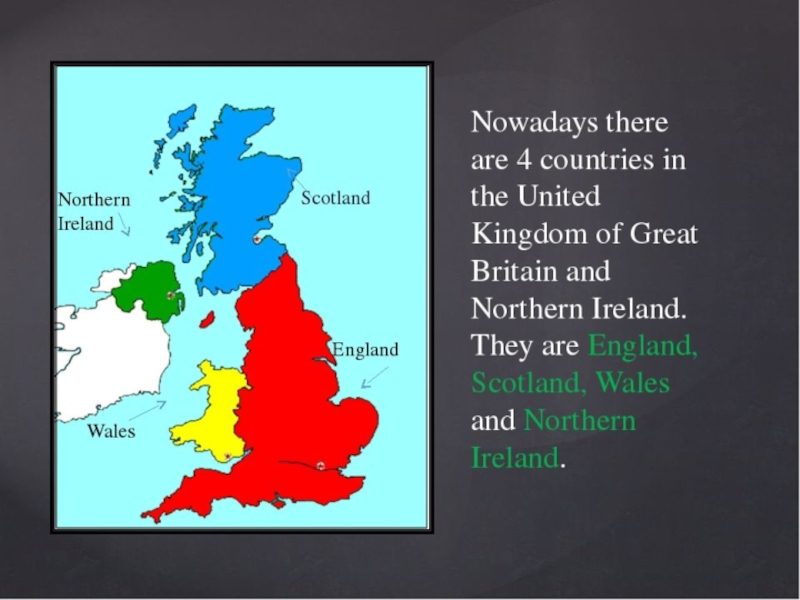
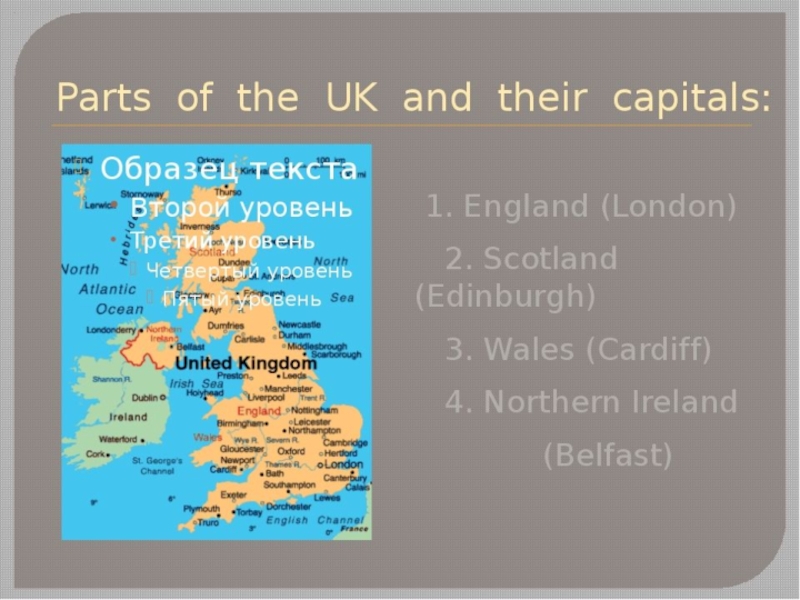
Слайд 27The United Kingdom of Great Britain and Northern Ireland has four
2. What are their capitals? Find the capitals on the map.
Слайд 36Why did the War of the Red and White Roses start?
Once upon a time there were two dukes in Britain. The symbol of the first one was a red rose, of the second one was a white rose. They were at war for the throne of England. The winner was the duke whose symbol was a red rose. So, when he became the king he made this flower the symbol of the country.Do you know that this war is known as the Wars of the Roses in 1455-1485? The name “Wars of the Roses” was not used during the time of the wars but it is associated with the two royal houses.The term came into common use in the nineteenth century, after the publication of Anne of Geierstein by Sir Walter Scott. But why did the war between these houses begin?
Слайд 37The War of the Red and White Roses started because the
Слайд 38 Who won the war?
The Lancastrians won the war and
Слайд 40A Red Rose became the symbol of the whole of England
Слайд 43How did this plant once save the country?
At one point,
Слайд 44 What is the floral symbol for Wales?
The Welsh symbol
Слайд 46Why is the leek the Welsh floral symbol?
The leek became
Слайд 47Who is St David? When do the Welsh celebrate their patron
St David is the Welsh patron saint. The Welsh celebrate their dear saint on the 1st of March.
Слайд 49What is the Irish floral symbol? Who is the Irish national
The Irish symbol is another wild plant — the shamrock. St Patrick is the Irish national saint. With the help of this plant, St Patrick explained to the people of the country what the Holy Trinity is. Shamrock has three leaves to unify the Trinity: God the Father, the Son of God and the Holy Spirit.
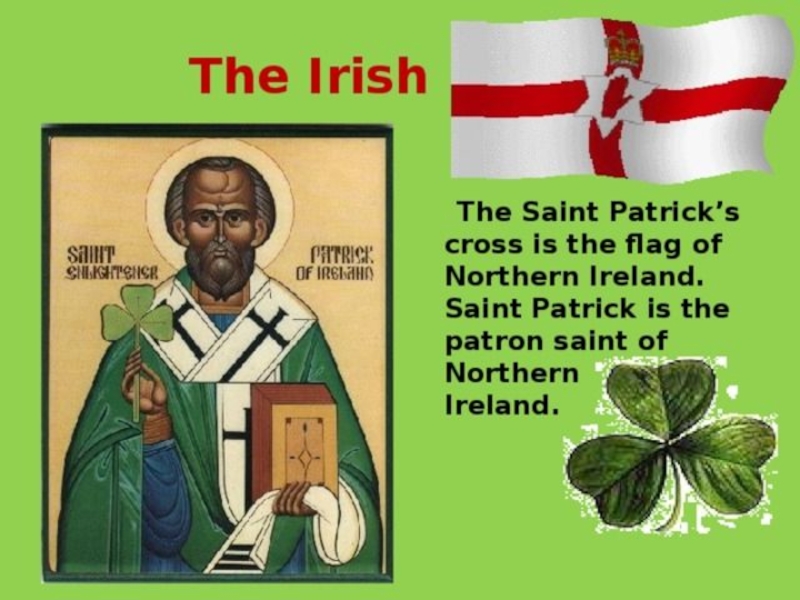
Слайд 51How did St Patrick use the shamrock?
St. Patrick would hold the
Слайд 52What are the historic colours of the parts of the United
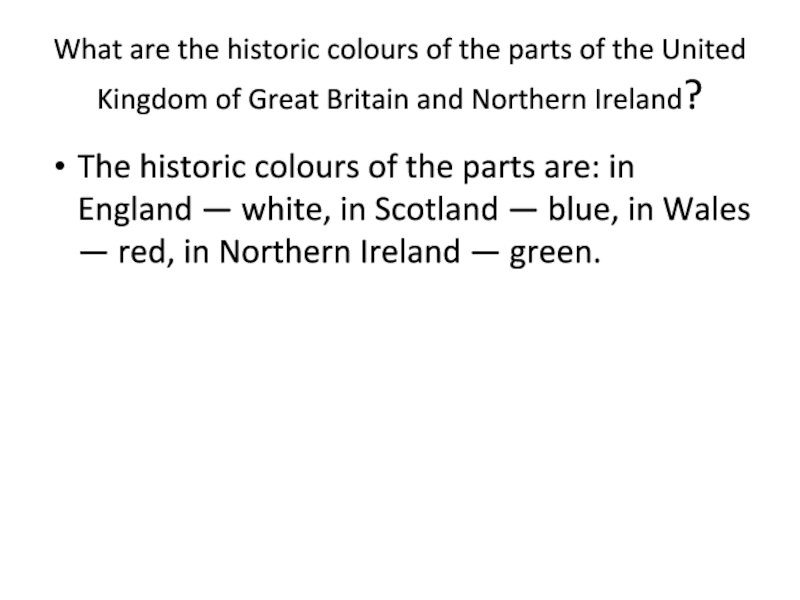
The historic colours of the parts are: in England — white, in Scotland — blue, in Wales — red, in Northern Ireland — green.