- Главная
- Разное
- Образование
- Спорт
- Естествознание
- Природоведение
- Религиоведение
- Французский язык
- Черчение
- Английский язык
- Астрономия
- Алгебра
- Биология
- География
- Геометрия
- Детские презентации
- Информатика
- История
- Литература
- Математика
- Музыка
- МХК
- Немецкий язык
- ОБЖ
- Обществознание
- Окружающий мир
- Педагогика
- Русский язык
- Технология
- Физика
- Философия
- Химия
- Шаблоны, фоны, картинки для презентаций
- Экология
- Экономика
Презентация, доклад на тему British School System 6 grde
Содержание
- 1. British School System 6 grde
- 2. Слайд 2
- 3. Mr. Paddock and I would like to show you how school in England looks like.
- 4. First of all we‘ll give you some
- 5. 1. The School UniformWith the second part
- 6. The third part has everything you have
- 7. But now I have to go to
- 8. The School Uniform
- 9. Great Britain is the birthplace of the
- 10. School uniforms show everybody to which school a pupil goes.Every school has it‘s own uniform.
- 11. This is a typical state school uniform.The
- 12. A number of British schools were originally
- 13. Слайд 13
- 14. State School vs. Private School
- 15. Their parents can choose between a state
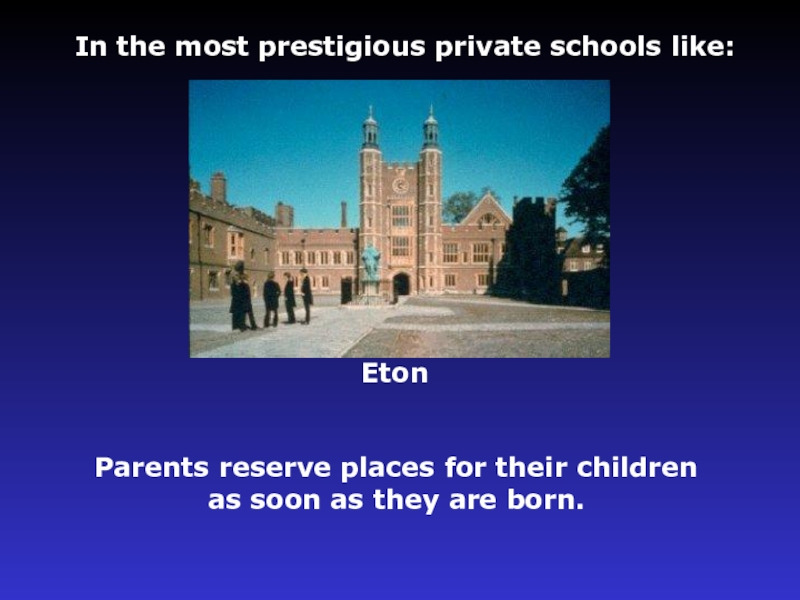
- 16. In the most prestigious private schools like:
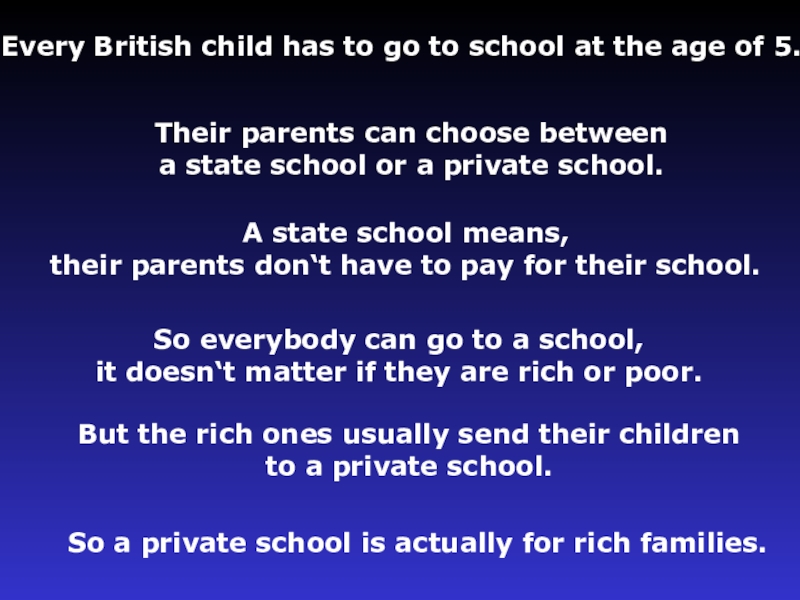
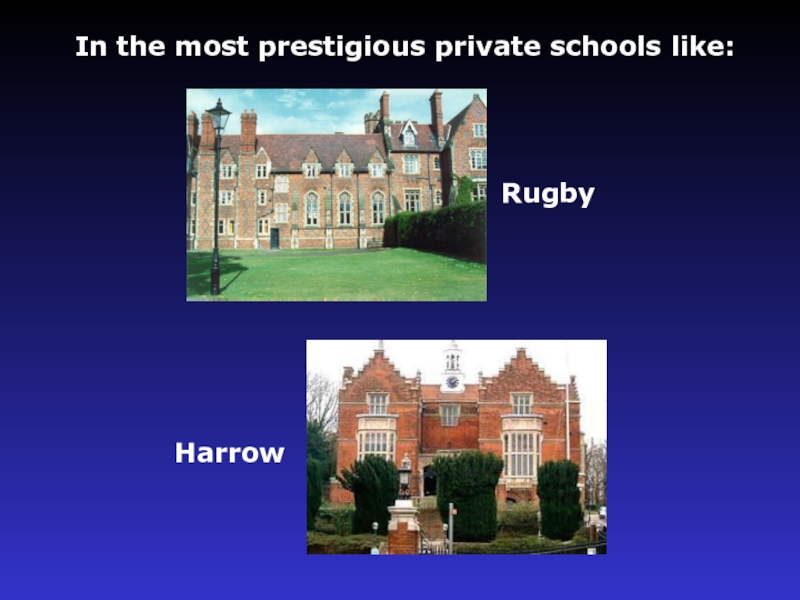
- 17. In the most prestigious private schools like:Parents
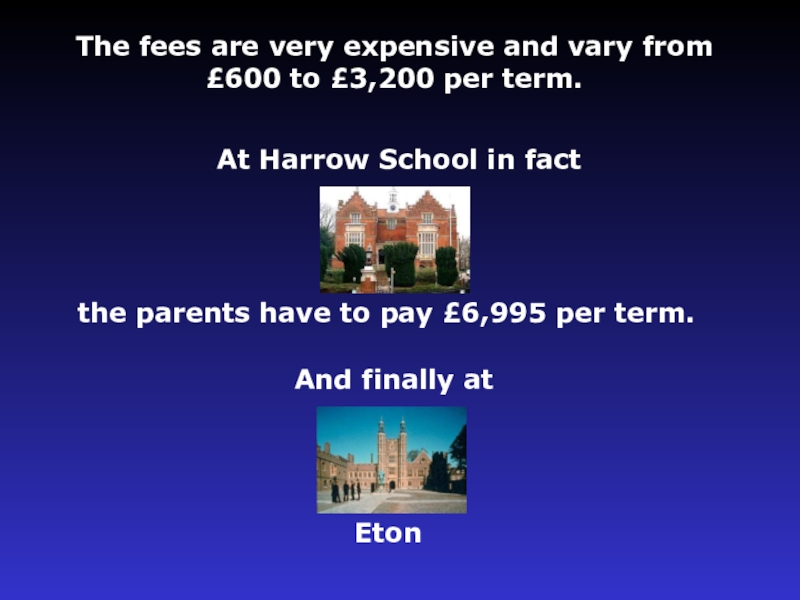
- 18. The fees are very expensive and vary from £600 to £3,200 per term.
- 19. The parents have to pay£22,380 per year.
- 20. The British School System
- 21. School for a British child starts at
- 22. At the age of 7 key stage
- 23. After finishing „Primary Education“The pupils have finished
- 24. At the „Secondary Education“ the pupils have
- 25. With the G.N.V.Q a pupil is able to learn a job like a:PlumberHairdresserMechanic
- 26. If a pupil wants to become rich
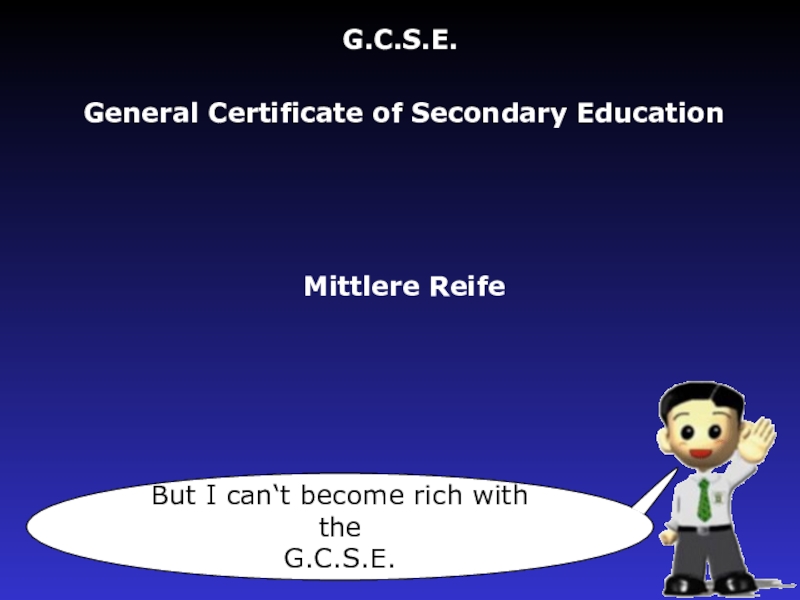
- 27. General Certificate of Secondary EducationG.C.S.E.Mittlere Reife
- 28. So you still have to keep on
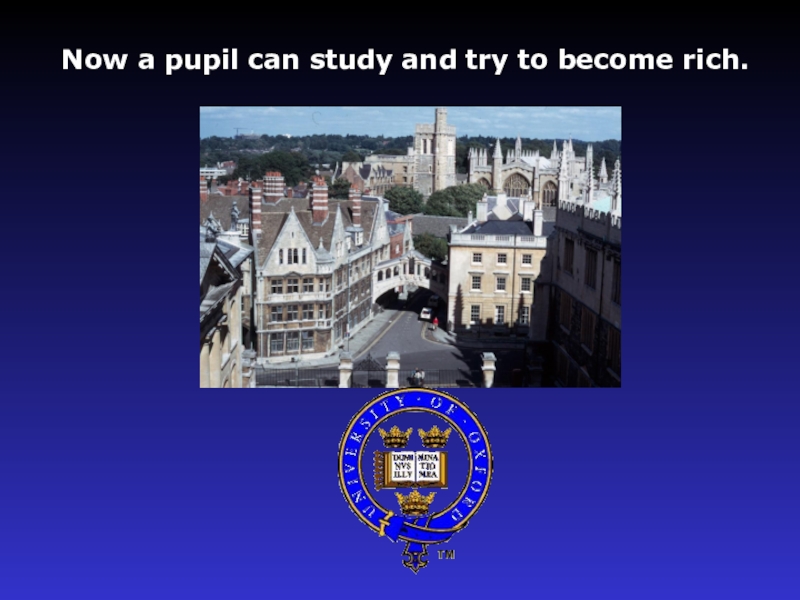
- 29. Now a pupil can study and try to become rich.
- 30. Слайд 30
- 31. The pupils arrive at 8:45 am at
- 32. At 9:10 am the children go to
- 33. The first lesson of the day begins
- 34. Now lesson 2 starts and the pupils
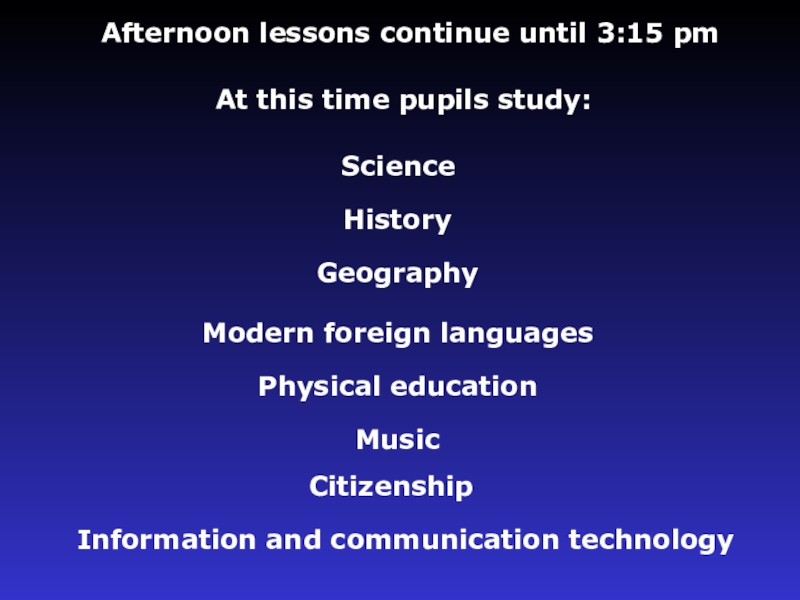
- 35. Afternoon lessons continue until 3:15 pm At
- 36. After 3:15 pm schools out and pupils go home to do their homework.
- 37. The british schoolsystem Was proudly presented byMark PaddockAnd Stephan Schäfer
Слайд 4First of all we‘ll give you some information about the traditional school uniform,
1. The School Uniform
Слайд 51. The School Uniform
With the second part we‘ll show you
the difference
2. State School vs. Private School
Слайд 6The third part has everything you have to know about the British school
1. The School Uniform
2. State School vs. Private School
3. The British School System
Слайд 7But now I have to go to school!
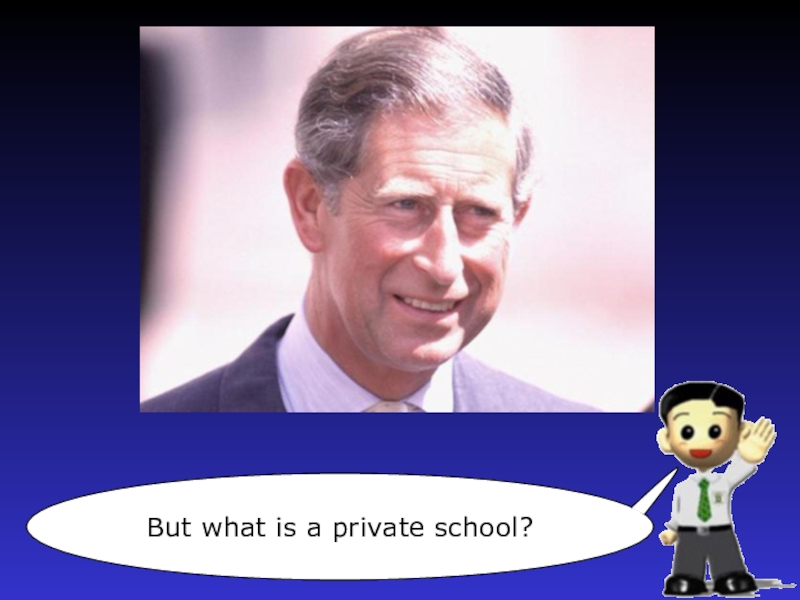
Mr. Paddock please.
1. The
2. State School vs. Private School
3. The British School System
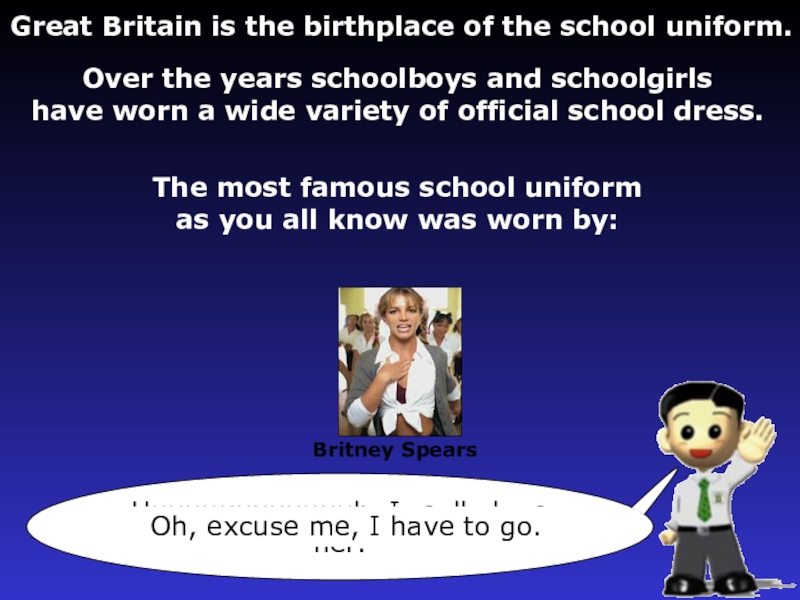
Слайд 9Great Britain is the birthplace of the school uniform.
Over the years
The most famous school uniform
as you all know was worn by:
Oh, excuse me, I have to go.
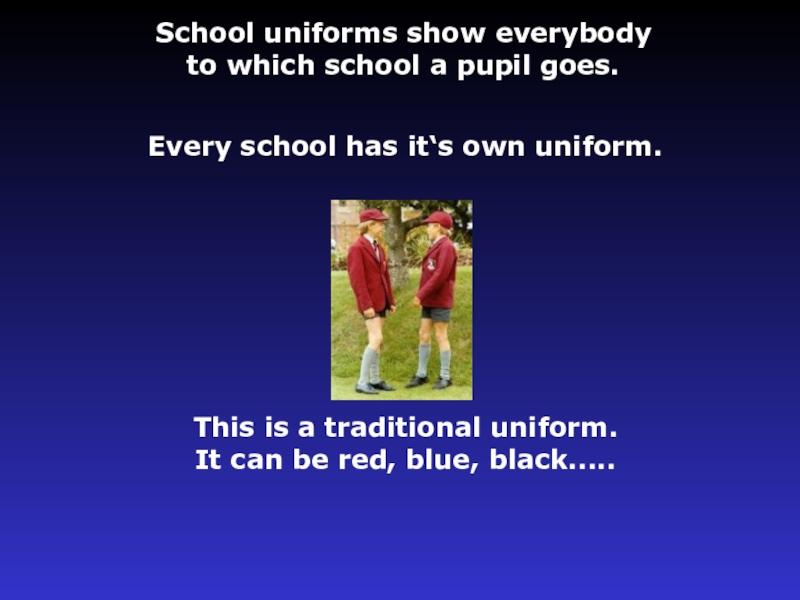
Слайд 10School uniforms show everybody
to which school a pupil goes.
Every school has
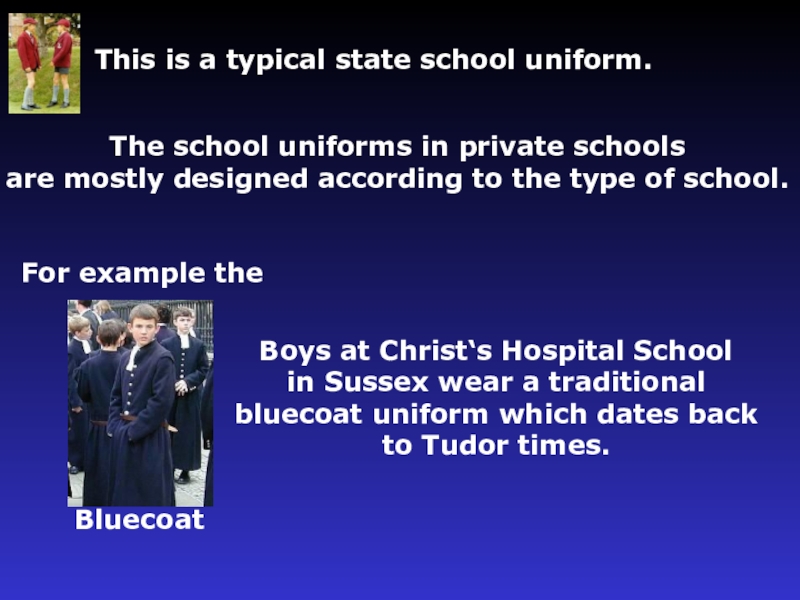
Слайд 11This is a typical state school uniform.
The school uniforms in private
Boys at Christ‘s Hospital School
in Sussex wear a traditional
bluecoat uniform which dates back
to Tudor times.
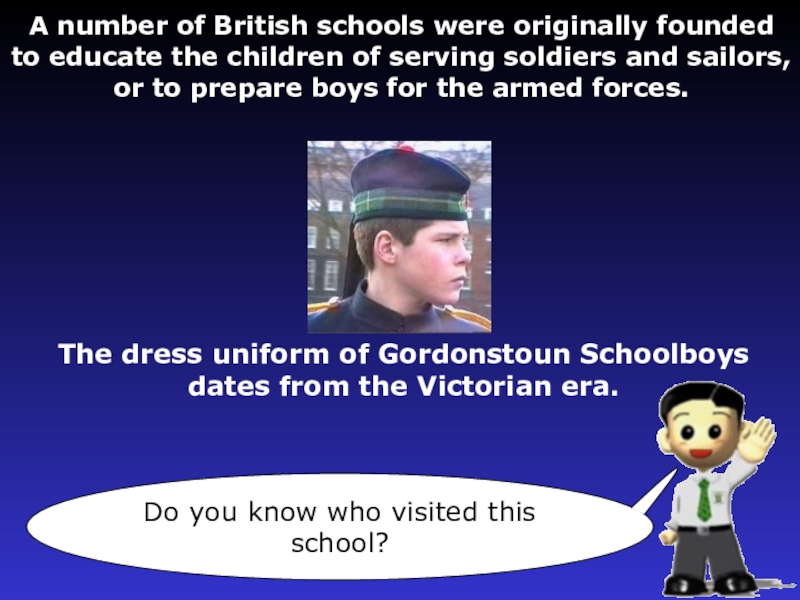
Слайд 12A number of British schools were originally founded to educate the children
Слайд 15Their parents can choose between
a state school or a private school.
Every
A state school means,
their parents don‘t have to pay for their school.
So everybody can go to a school,
it doesn‘t matter if they are rich or poor.
But the rich ones usually send their children
to a private school.
So a private school is actually for rich families.
Слайд 17In the most prestigious private schools like:
Parents reserve places for their
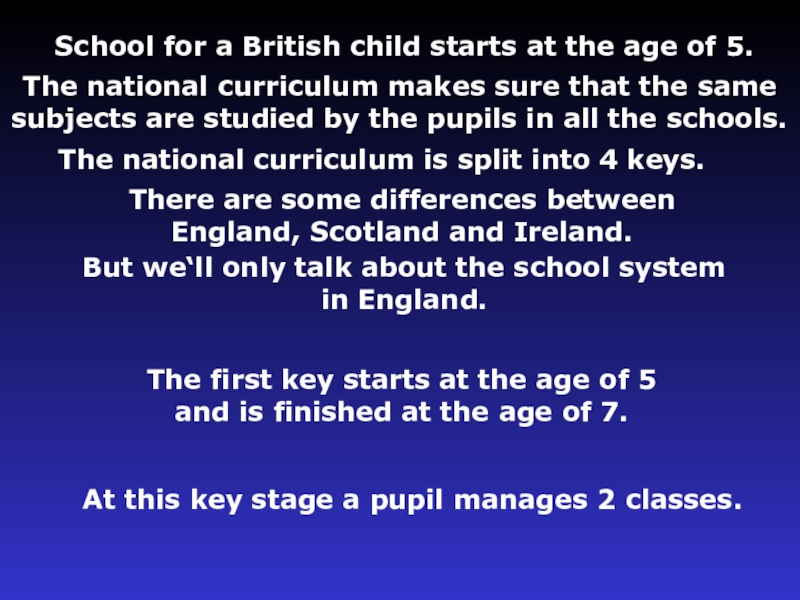
Слайд 21School for a British child starts at the age of 5.
The
There are some differences between
England, Scotland and Ireland.
But we‘ll only talk about the school system
in England.
The first key starts at the age of 5
and is finished at the age of 7.
At this key stage a pupil manages 2 classes.
The national curriculum is split into 4 keys.
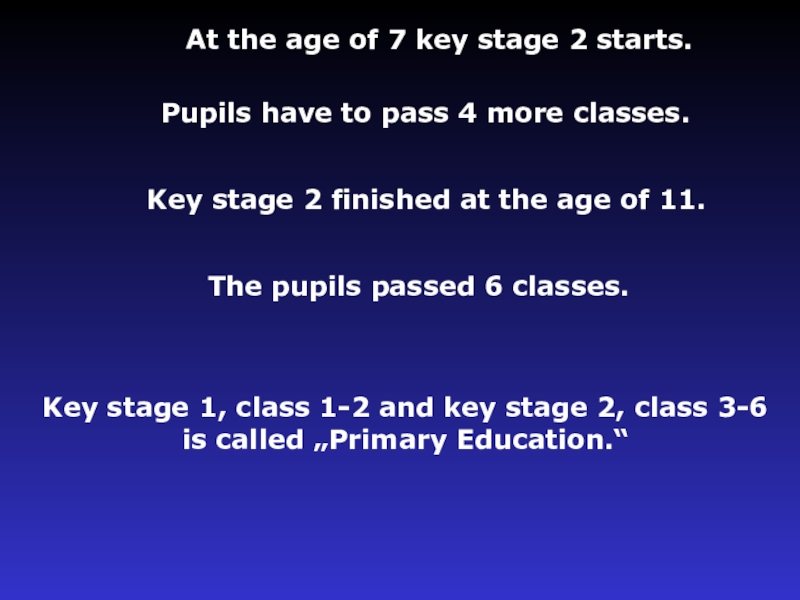
Слайд 22At the age of 7 key stage 2 starts.
Pupils have to
Key stage 2 finished at the age of 11.
The pupils passed 6 classes.
Key stage 1, class 1-2 and key stage 2, class 3-6
is called „Primary Education.“
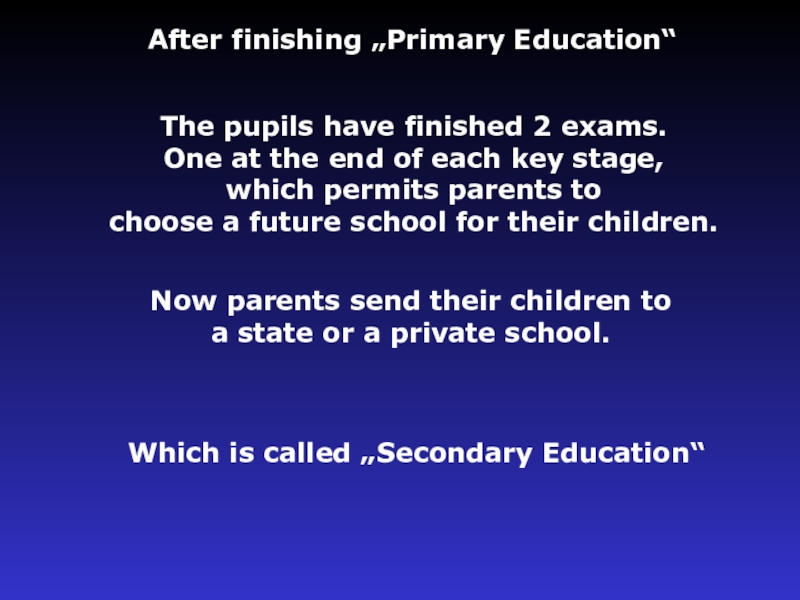
Слайд 23After finishing „Primary Education“
The pupils have finished 2 exams.
One at the
Now parents send their children to
a state or a private school.
Which is called „Secondary Education“
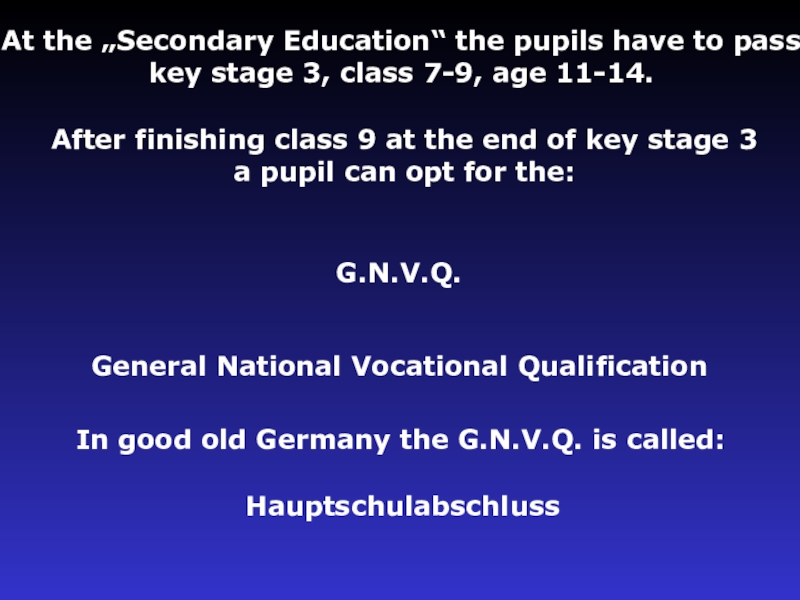
Слайд 24At the „Secondary Education“ the pupils have to pass key stage 3,
After finishing class 9 at the end of key stage 3
a pupil can opt for the:
G.N.V.Q.
General National Vocational Qualification
In good old Germany the G.N.V.Q. is called:
Hauptschulabschluss
Слайд 26If a pupil wants to become rich in future to send his
This means class 10-11.
From the age of 14 to the age of 16.
At the end of key stage 4 the pupils have to manage
their last exam, and have to pass 7 subjects.
If they pass their exams, they‘ll get the:
G.C.S.E.
Слайд 28So you still have to keep on going and make your A
A pupil with a G.C.S.E. has to pass two more years.
After these 2 years the pupils have to pass
another exam in 3 subjects.
Then they get their A Level.
Слайд 31The pupils arrive at 8:45 am at the playground and school starts
At 8:55 am the duty teacher blows a whistle
and the children line up in their classlines.
In the classroom the teacher
reads out each child’s name in turn.
On hearing his/her name, the child replies
„Yes Mr./Mrs (teacher's name)“‚
and the teacher notes down if the child is in
school or not.
Слайд 32At 9:10 am the children go to assembly in the main hall. They
As the children enter the hall they listen quietly
to the music playing.
Each week has a different musical theme
and the children are asked to listen
out for particular things.
The children listen to a story,
sing a song and pray.
The story is either taken from the Christian Bible
or is a story with a moral.
Слайд 33The first lesson of the day begins at 9:30 am and lasts
Morning lessons are usually Literacy (English)
or Numeracy (Mathematics)
The pupils have their morning break from
10:20 - 10:35 am
The pupils bring a snack from home to
eat in the playgrounds.
This snack is usually a packet of
crisps, fruit or a couple of biscuits.
At the end of break time the duty teacher
blows a whistle.
The children stand still and wait to be told
to line up in their class lines.
Слайд 34Now lesson 2 starts and the pupils have an hour fifteen minutes
Lunch time is from 12 noon to 1:10 pm
Most children bring their own packed
lunch from home.
A packed lunch usually consists of sandwiches,
fruit, a drink and a packet of crisps.
Some children will have a school dinner
cooked in the school kitchen.
At this second lesson the pupils keep on going
with Literacy or Numeracy.
After lunch time the afternoon lessons starts.
Слайд 35Afternoon lessons continue until 3:15 pm
At this time pupils study:
Science
History
Geography
Modern
Physical education
Music
Citizenship
Information and communication technology