- Главная
- Разное
- Образование
- Спорт
- Естествознание
- Природоведение
- Религиоведение
- Французский язык
- Черчение
- Английский язык
- Астрономия
- Алгебра
- Биология
- География
- Геометрия
- Детские презентации
- Информатика
- История
- Литература
- Математика
- Музыка
- МХК
- Немецкий язык
- ОБЖ
- Обществознание
- Окружающий мир
- Педагогика
- Русский язык
- Технология
- Физика
- Философия
- Химия
- Шаблоны, фоны, картинки для презентаций
- Экология
- Экономика
Презентация, доклад Загрязнение окружающей среды
Содержание
- 1. Презентация Загрязнение окружающей среды
- 2. Air Pollution
- 3. IntroductionWe could live about a month without
- 4. What is air pollution?
- 5. What is air pollution?Is fart or bad
- 6. Indoor PollutionsThere are many sources of indoor
- 7. ExplanationWhile air pollution is thought to be
- 8. Outdoor Pollutionsautomobile exhaust industrial emissionsNatural PollutionWildfiresWindblown dustVolcanic eruptionsBurning of fossil fuels (Chemistry Book)
- 9. Explanation-Natural PollutionEven before there were people, there
- 10. Causes of Air Pollution
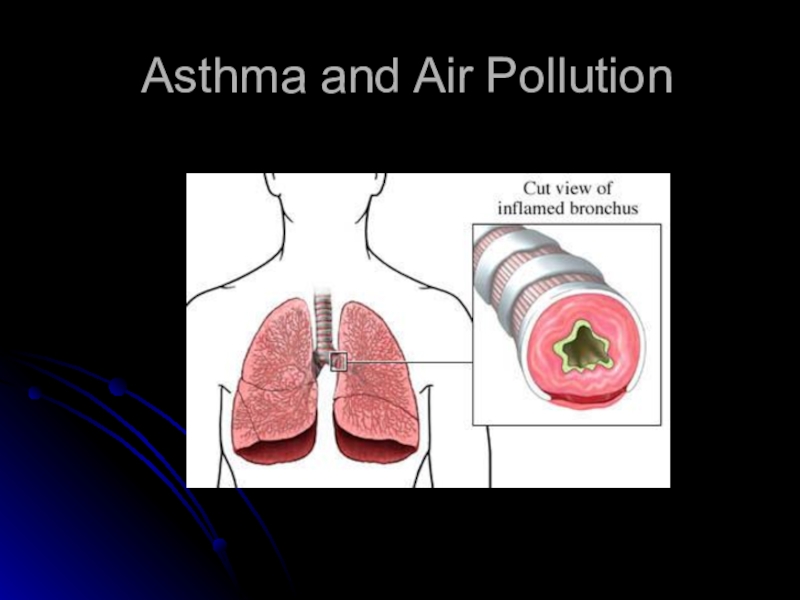
- 11. Asthma and Air Pollution
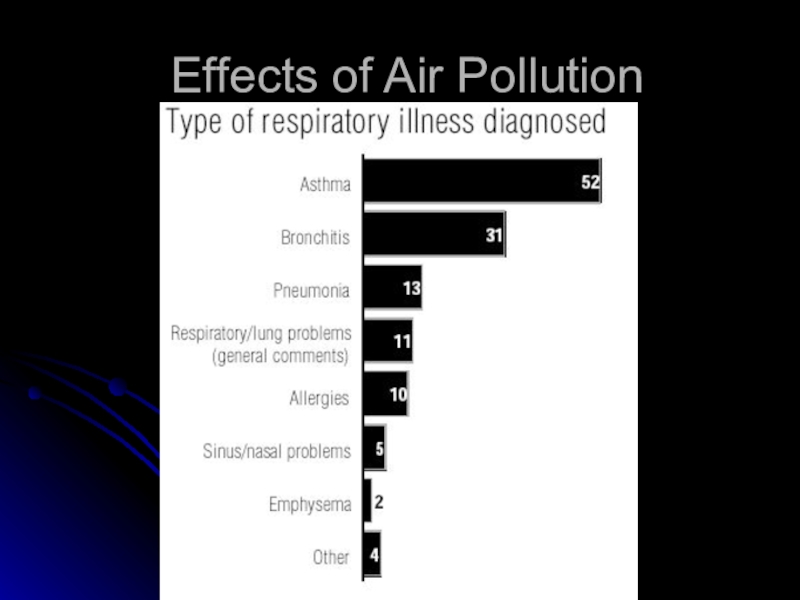
- 12. Effects of Air Pollution
- 13. Effects of Air PollutionAir pollution can cause
- 14. Effects of Air PollutionGlobal Warming– the increased
Air Pollution
Слайд 3Introduction
We could live about a month without food. We could even
live for several days without water. But without air, we cannot live more than a few minutes.
We might foul the air so badly in some places that it could become unfit to breath. In some areas, the air is so bad that people become sick from breathing it, and some even die because of it.
The World Health Organization estimates that a billion people live in places where the air is substandard and that air pollution kills 8,000 people a day worldwide. About 90% of the deaths occur in developing countries.
We might foul the air so badly in some places that it could become unfit to breath. In some areas, the air is so bad that people become sick from breathing it, and some even die because of it.
The World Health Organization estimates that a billion people live in places where the air is substandard and that air pollution kills 8,000 people a day worldwide. About 90% of the deaths occur in developing countries.
Слайд 5What is air pollution?
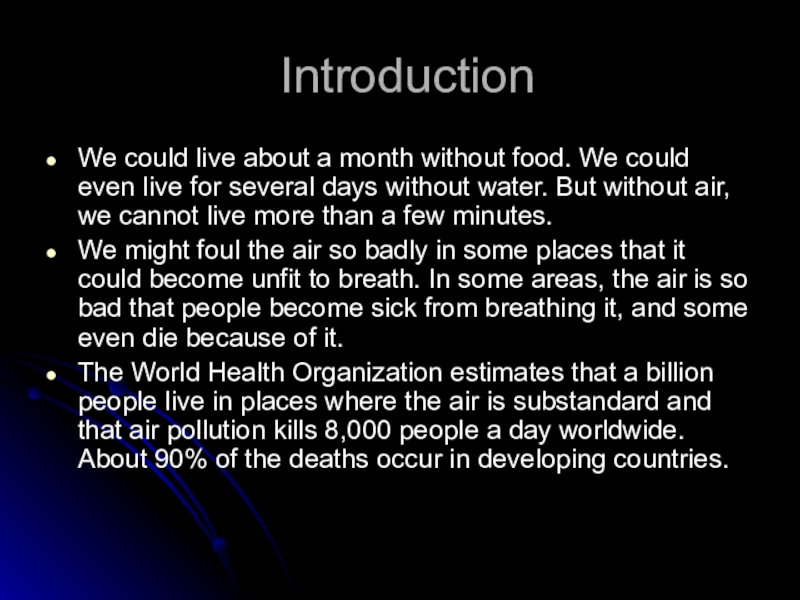
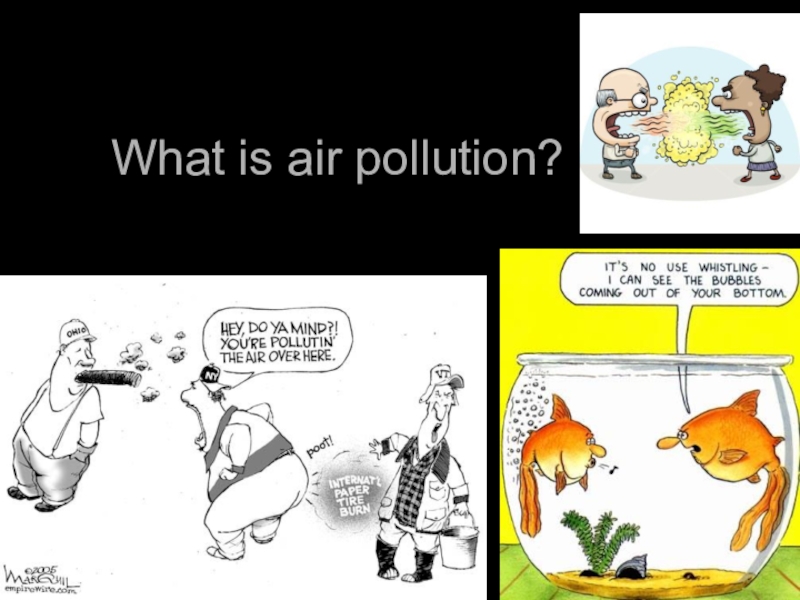
Is fart or bad breath air pollution?
Air pollution
is the contamination of air by the discharge of harmful substances.
Слайд 6Indoor Pollutions
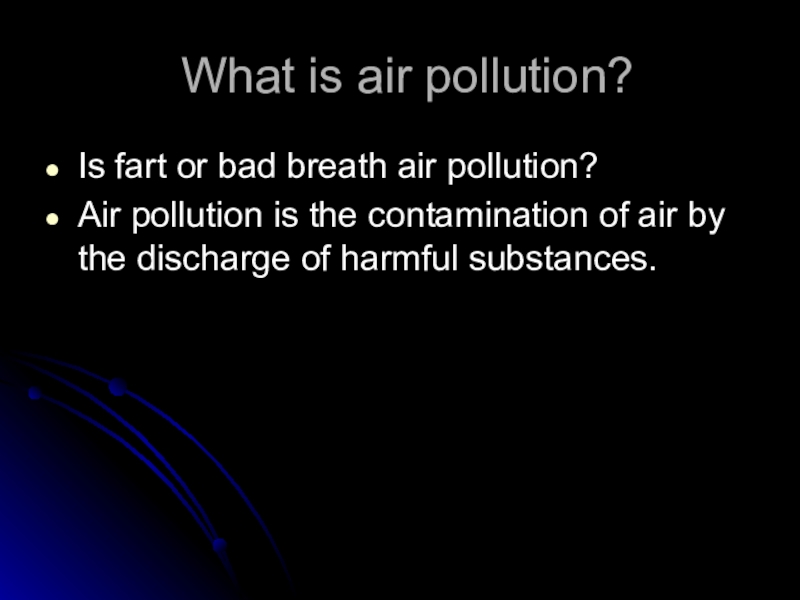
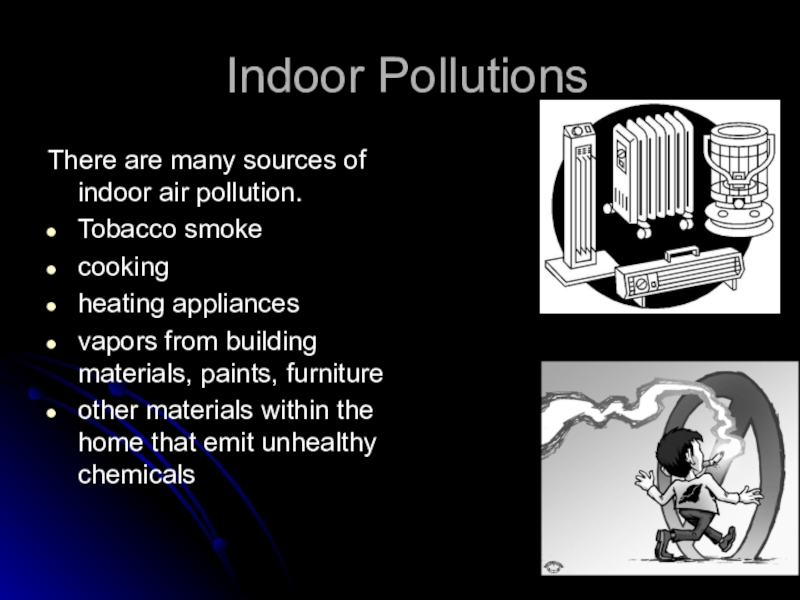
There are many sources of indoor air pollution.
Tobacco smoke
cooking
heating
appliances
vapors from building materials, paints, furniture
other materials within the home that emit unhealthy chemicals
vapors from building materials, paints, furniture
other materials within the home that emit unhealthy chemicals
Слайд 7Explanation
While air pollution is thought to be a problem related to
outdoor air, the same pollutants can be found indoors. We spend up to 60% of our time indoors and our homes are not always the safe places we would like them to be.
These chemicals, some of which are called volatile organic compounds (VOC) can cause ill health and they are found in carpets, chipboard, furnishing fabrics, clothing pesticides, cleaning products, toiletries, cosmetics and hobby products.
Pollution exposure at home and work is often greater than outdoors. The California Air Resources BoardPollution exposure at home and work is often greater than outdoors. The California Air Resources Board estimates that indoor air pollutant levels are 25-62% greater than outside levels and can pose serious health problems.
These chemicals, some of which are called volatile organic compounds (VOC) can cause ill health and they are found in carpets, chipboard, furnishing fabrics, clothing pesticides, cleaning products, toiletries, cosmetics and hobby products.
Pollution exposure at home and work is often greater than outdoors. The California Air Resources BoardPollution exposure at home and work is often greater than outdoors. The California Air Resources Board estimates that indoor air pollutant levels are 25-62% greater than outside levels and can pose serious health problems.
Слайд 8Outdoor Pollutions
automobile exhaust
industrial emissions
Natural Pollution
Wildfires
Windblown dust
Volcanic eruptions
Burning of fossil fuels
(Chemistry Book)
Слайд 9Explanation-Natural Pollution
Even before there were people, there were air pollution. Wildfires,
windblown dust, and volcanic eruptions added pollutants to the atmosphere, and they still do so. Volcanoes spew ash and poisonous gases into the atmosphere.
Example: In 1995 eruptions of the Soufriere Hills volcano on Montserrat covered much of the Caribbean island with ash. The ash and fear of further eruptions caused the evacuation of more than half the country.
Dust storms, especially in arid regions, add massive amounts of particulate matter to the atmosphere.
Example: In 1995 eruptions of the Soufriere Hills volcano on Montserrat covered much of the Caribbean island with ash. The ash and fear of further eruptions caused the evacuation of more than half the country.
Dust storms, especially in arid regions, add massive amounts of particulate matter to the atmosphere.
Слайд 13Effects of Air Pollution
Air pollution can cause health problems including burning
eyes and nose, itchy irritated throat, and breathing problems. Some chemicals found in polluted air can cause cancer, birth defects, brain and nerve damage, and long-term injury to the lungs and breathing passages in certain circumstances. Above certain concentrations and durations, certain air pollutants are extremely dangerous and can cause severe injury or death.
Air pollution can also damage the environment and property. Trees, lakes, and animals have been harmed by air pollution. Air pollution has thinned the protective ozone layer above the Earth. Air pollution can damage buildings, monuments, statues, and other structures.
Air pollution also can result in haze, which reduces visibility in national parks and elsewhere, and can sometimes interfere with aviation.
Air pollution can also damage the environment and property. Trees, lakes, and animals have been harmed by air pollution. Air pollution has thinned the protective ozone layer above the Earth. Air pollution can damage buildings, monuments, statues, and other structures.
Air pollution also can result in haze, which reduces visibility in national parks and elsewhere, and can sometimes interfere with aviation.
Слайд 14Effects of Air Pollution
Global Warming– the increased concentration of carbon dioxide
and other greenhouse gases in the atmosphere lead to rise in earth’s average temperature.
Ozone
Greenhouse Effect
Acid Rain comes mainly from sulfur dioxide emitted from power plants and smelters and from nitrogen oxides discharges from power plant and automobiles. These acids are often carried far before falling as rain or snow. Acids corrode metals and even erode stone buildings and statues.
Ozone
Greenhouse Effect
Acid Rain comes mainly from sulfur dioxide emitted from power plants and smelters and from nitrogen oxides discharges from power plant and automobiles. These acids are often carried far before falling as rain or snow. Acids corrode metals and even erode stone buildings and statues.