- Главная
- Разное
- Образование
- Спорт
- Естествознание
- Природоведение
- Религиоведение
- Французский язык
- Черчение
- Английский язык
- Астрономия
- Алгебра
- Биология
- География
- Геометрия
- Детские презентации
- Информатика
- История
- Литература
- Математика
- Музыка
- МХК
- Немецкий язык
- ОБЖ
- Обществознание
- Окружающий мир
- Педагогика
- Русский язык
- Технология
- Физика
- Философия
- Химия
- Шаблоны, фоны, картинки для презентаций
- Экология
- Экономика
Презентация, доклад USA (дополнение к конспекту)
Содержание
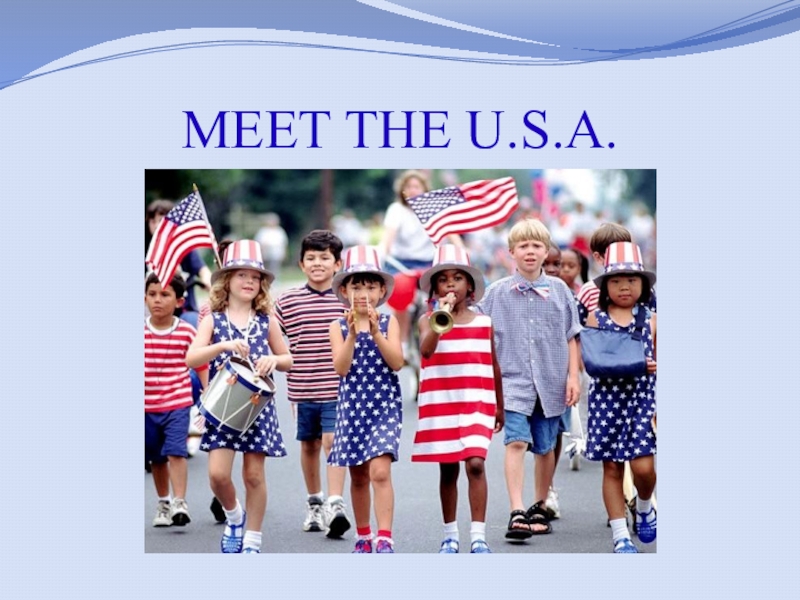
- 1. Презентация USA (дополнение к конспекту)
- 2. American National AnthemO say does that star
- 3. Слайд 3
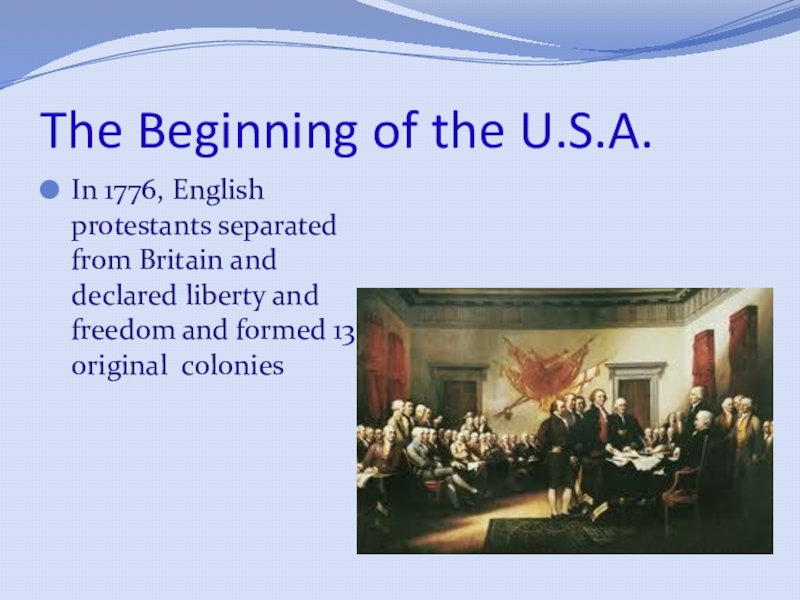
- 4. The Beginning of the U.S.A.In 1776, English
- 5. Слайд 5
- 6. National Population313,847,4651) China: 1,343,239,9232) India: 1,205,073,6123) United States: 313,847,465
- 7. The Flag“Old Glory”, “The Stars and the
- 8. The American Bald Eagle is the national
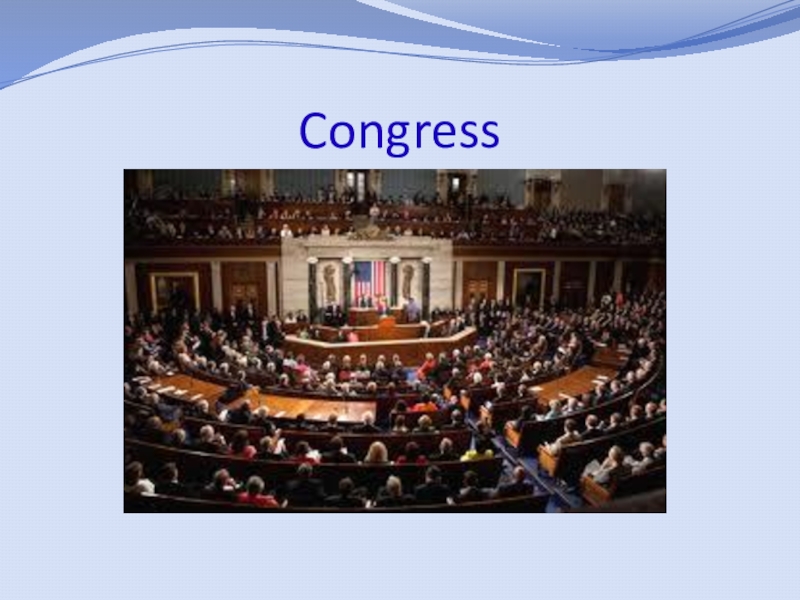
- 9. Congress
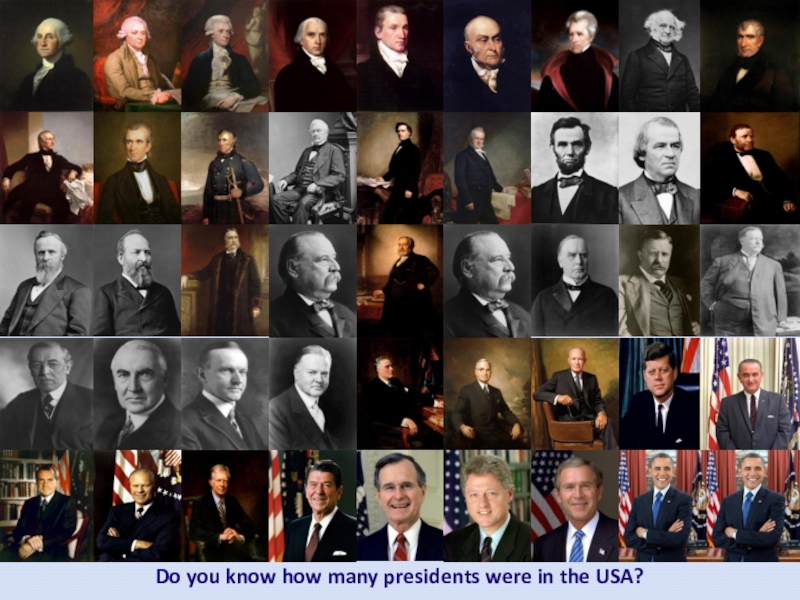
- 10. Do you know how many presidents were in the USA?
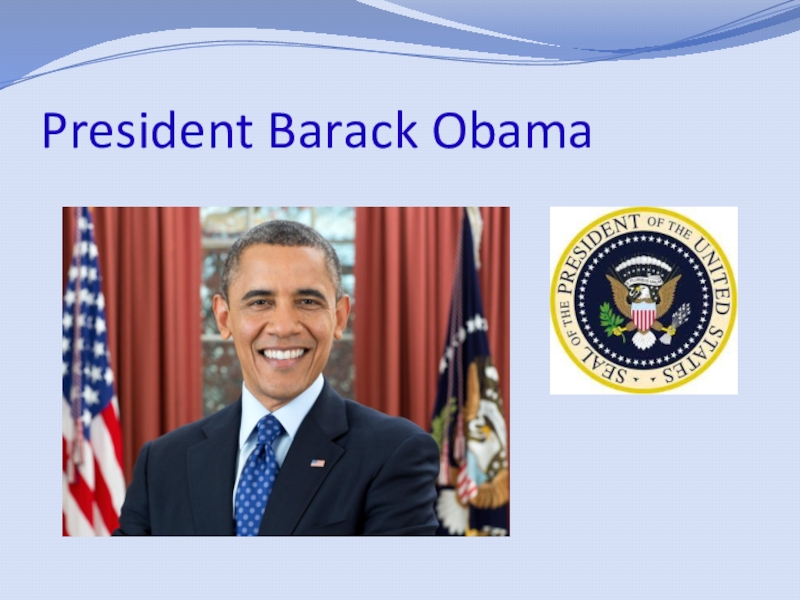
- 11. President Barack Obama
- 12. Слайд 12
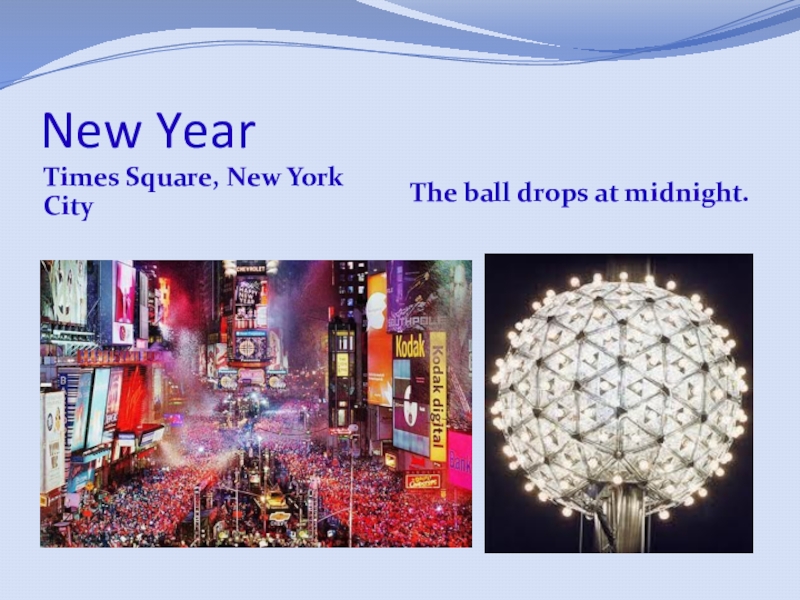
- 13. New YearTimes Square, New York CityThe ball drops at midnight.
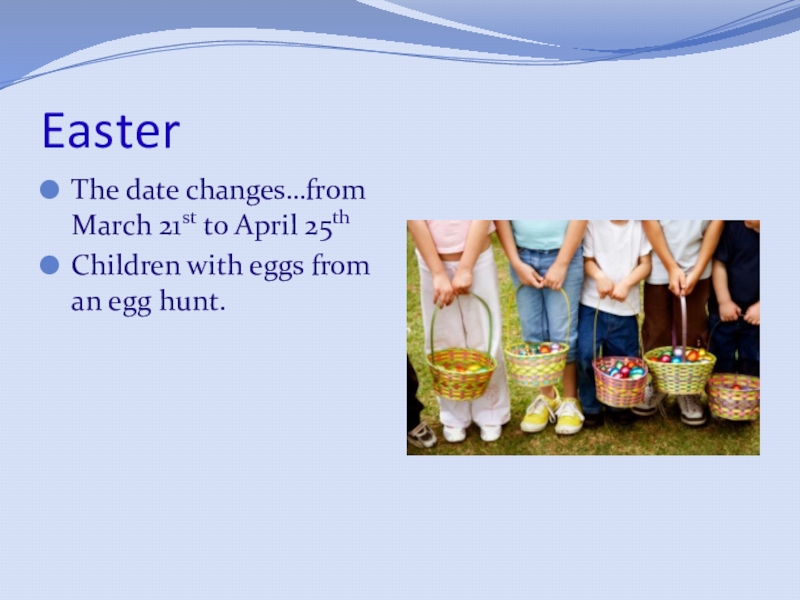
- 14. EasterThe date changes…from March 21st to April 25thChildren with eggs from an egg hunt.
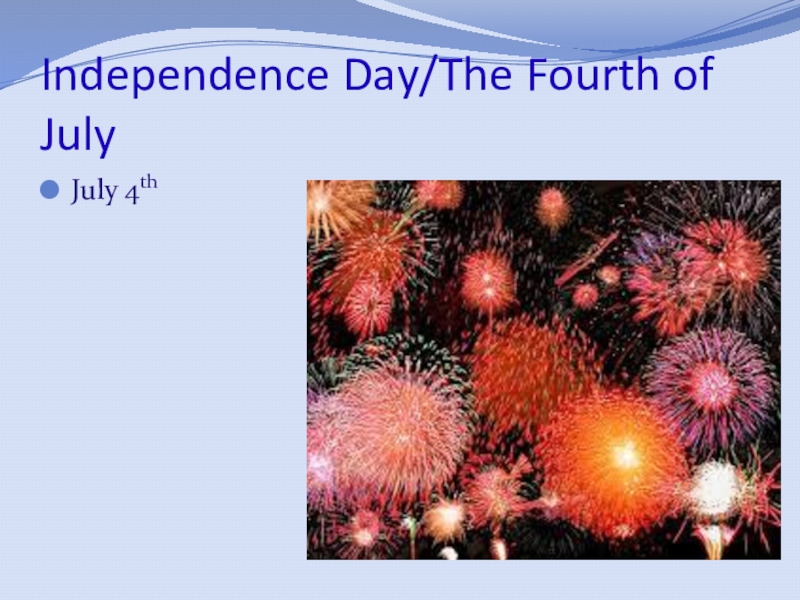
- 15. Independence Day/The Fourth of JulyJuly 4th
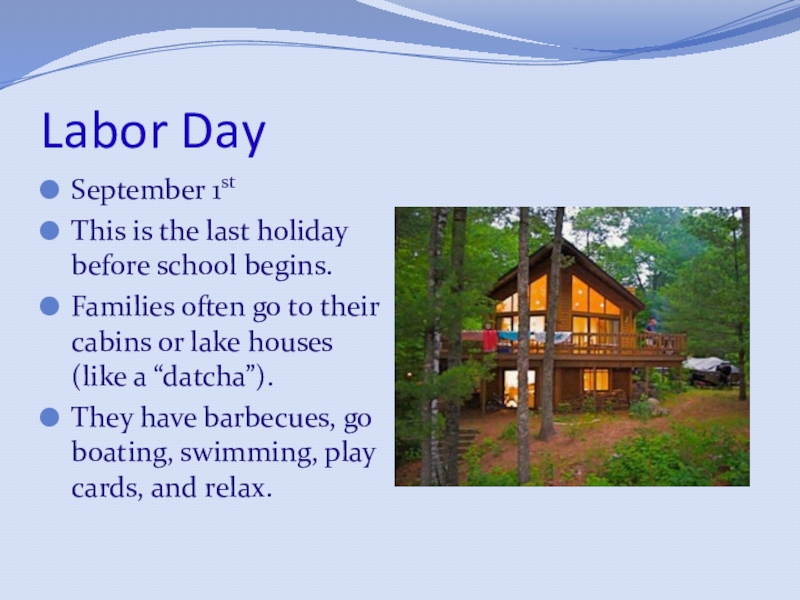
- 16. Labor DaySeptember 1stThis is the last holiday
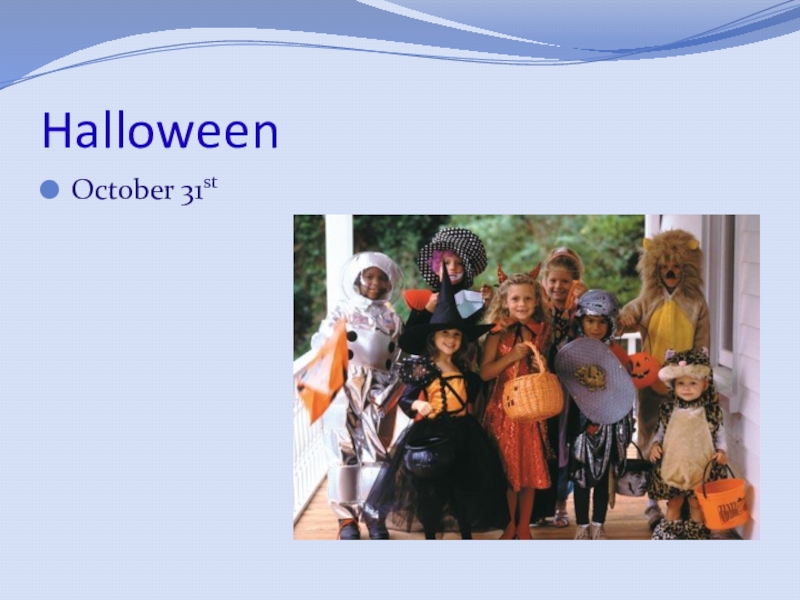
- 17. HalloweenOctober 31st
- 18. ThanksgivingThe last Thursday of November
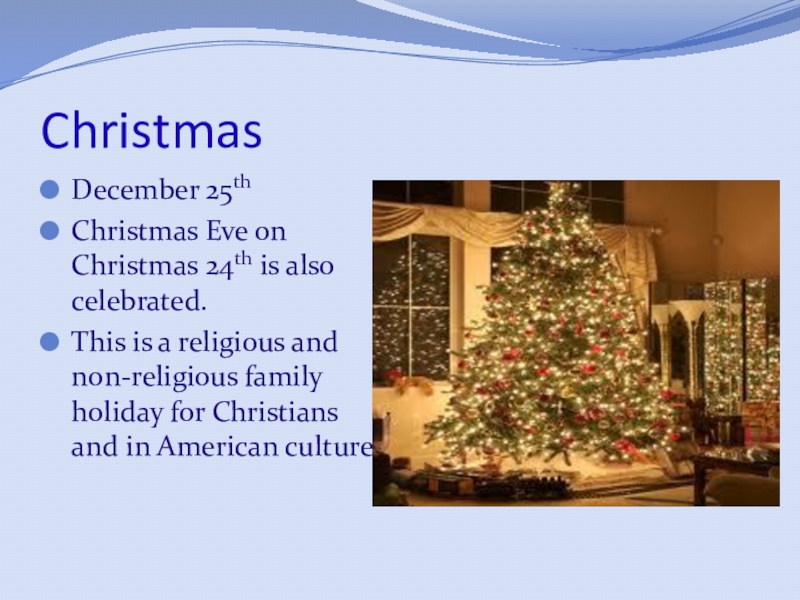
- 19. ChristmasDecember 25thChristmas Eve on Christmas 24th is
- 20. Mother’s DayThe first Sunday in May
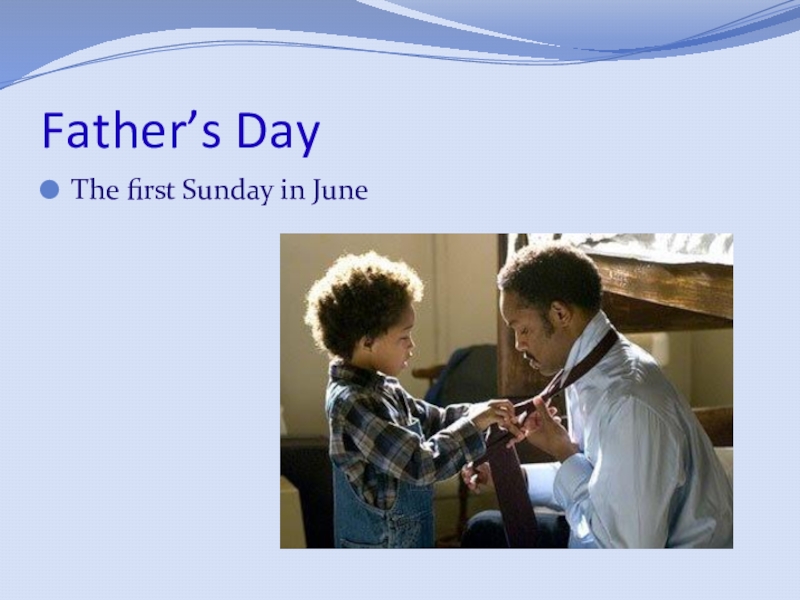
- 21. Father’s DayThe first Sunday in June
- 22. St. Valentine’s DayFebruary 14th
- 23. Слайд 23
- 24. Слайд 24
- 25. After-Reading Tasks I.
- 26. Слайд 26
- 27. Listen to the text and finish the
- 28. Слайд 28
- 29. Слайд 29
- 30. Слайд 30
- 31. Слайд 31
- 32. MUSIC
- 33. RockRock has a large variety of styles,
- 34. PopPopular music has many styles and has
- 35. CountryBegan in the countryside of the Southern
- 36. BluesFrom the “Deep South” of the U.S.—origins
- 37. JazzMix of African and European musicBegan in
- 38. ReggaeDeveloped in Jamaica in the 1960s and
- 39. Welcome to theUSA
Слайд 2American National Anthem
O say does that star spangled banner yet wave
O’er
Слайд 4The Beginning of the U.S.A.
In 1776, English protestants separated from Britain
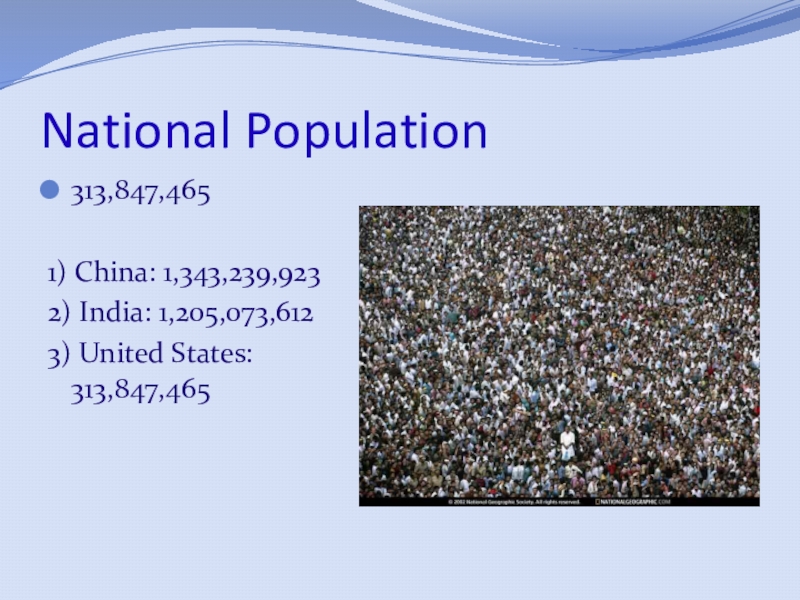
Слайд 6National Population
313,847,465
1) China: 1,343,239,923
2) India: 1,205,073,612
3) United States: 313,847,465
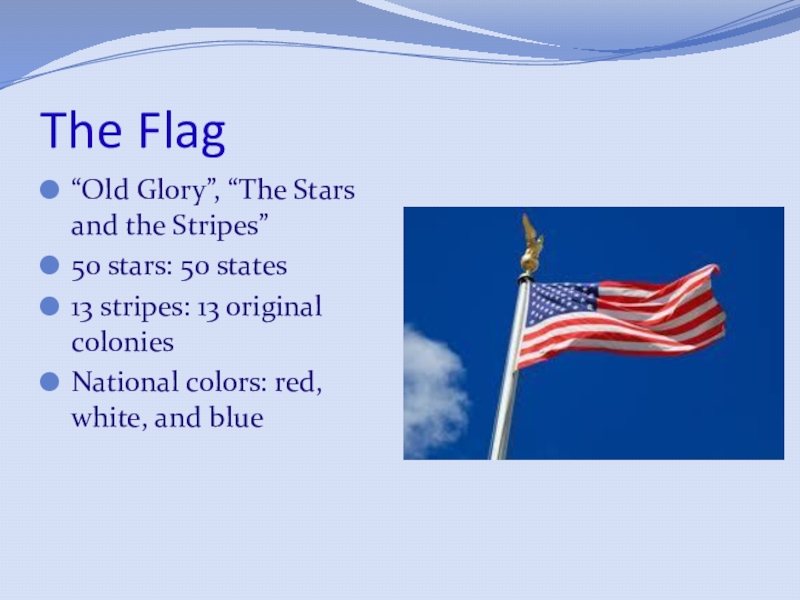
Слайд 7The Flag
“Old Glory”, “The Stars and the Stripes”
50 stars: 50 states
13
National colors: red, white, and blue
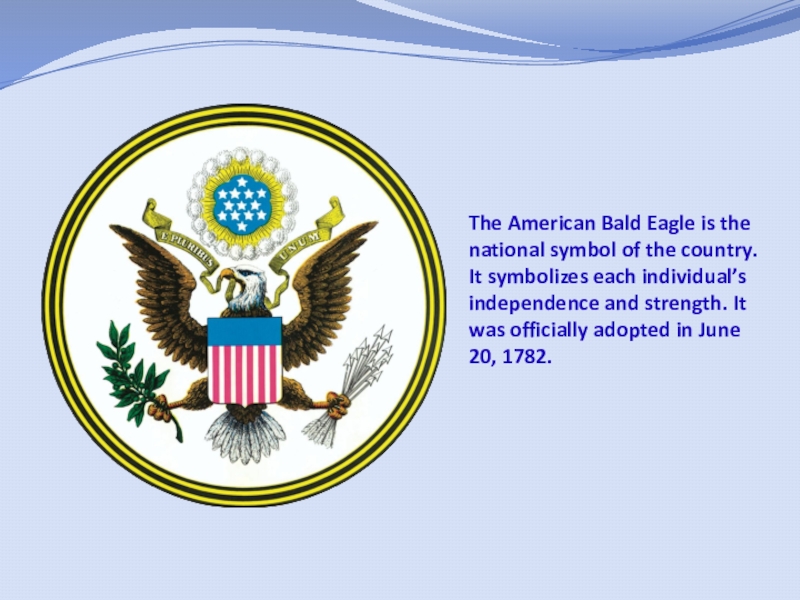
Слайд 8The American Bald Eagle is the national symbol of the country.
Слайд 16Labor Day
September 1st
This is the last holiday before school begins.
Families often
They have barbecues, go boating, swimming, play cards, and relax.

Слайд 19Christmas
December 25th
Christmas Eve on Christmas 24th is also celebrated.
This is a

Слайд 23 READING
Pre-Reading Tasks
I.
Write down three things that each of you thinks foreigners consider typical for the USA. Discuss whether the stereotypes are right or wrong.
II. Think of each thing below and decide if it is lucky or unlucky in the USA.
Opening an umbrella in the house …
A black cat …
Number 13 …
A four-leaf clover …
A horse-shoe …
Walking under a ladder …
Breaking a mirror …
Crossing your fingers …
Слайд 24 Reading Tasks
I.
At first sight …
I am sure …
As for me, I think …
In my opinion …
II. Answer the questions.
Do you think Americans differ from Europeans?
Compare American and our nation and specify the common things and differences.
Слайд 25 After-Reading Tasks
I. Answer the questions.
Did
Why do you think the Americans are proud of their country and themselves?
What do you think of Americans?
What are they like?
What American features of character do you like?
II. Think of some positive and negative qualities of European and American people. Fill in the chart.
Europeans Americans
Positive Negative Positive Negative
Слайд 26 Listening
Before listening to the text “Alaska” read the words and their definitions.
Wilderness – wild uncultivated waste land;
Inlet – strip of water extending into the land from a larger body of water (the sea, a lake) or between islands;
Glaciers – mass of ice, formed by snow or mountains, moving slowly along a valley;
Canyon – deep gorge (usually with a river flowing through it);
Salmon – large fish, valued for food;
Halibut – large, flat sea fish used as food;
Barley – grass-like plant, seeds used for food and for making beer;
Hardly crops – plants able to endure frost without being injured.
Слайд 27Listen to the text and finish the sentences.
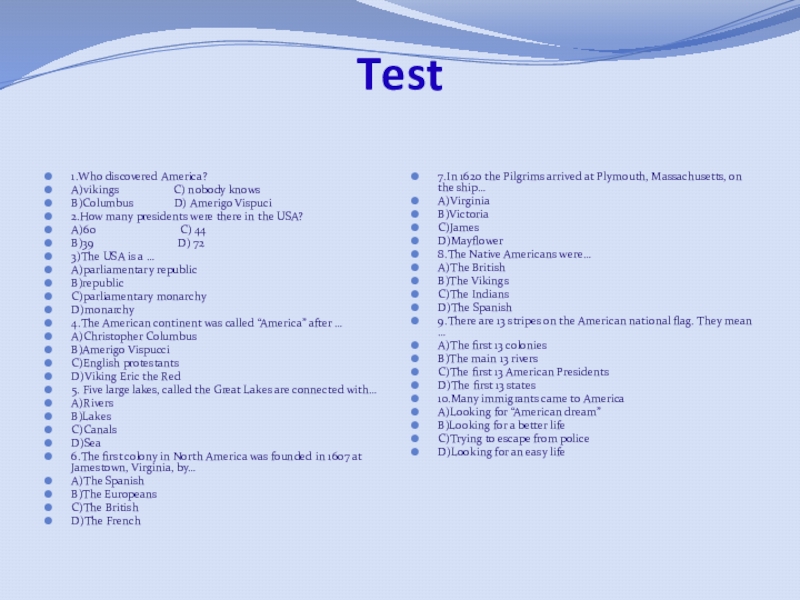
The name Alaska comes
Alaska is by far the largest_______________________________.
Spreading across the northwest corner of North America, it is separated from Washington state ________________________--.
The Pacific Coast Ranges reach into Alaska, where ____________.
Alaska has almost all the active volcanoes in the United States, as well as ____________________________-__________________.
Mount McKinley rises 20320 feet (6194 metres) above the sea level, _________________________________________________.
Huge forests cover about _________________________________.
The middle section has low, rolling hills and __________________.
The southern coast is cut by hundreds of small bays and narrow steep-sided inlets, while thousands of glaciers________________.
Wild animals include polar bears, grizzly bears, _______________.
The world’s largest population of northern fur seals ___________.
The climate and soil allow farmers to grow barley, ____________.
Crops grow rapidly because the summer ____________________.
At Point Barrow in the Arctic, from May 10 to August 2, the sun _______________________.
Слайд 28 Grammar
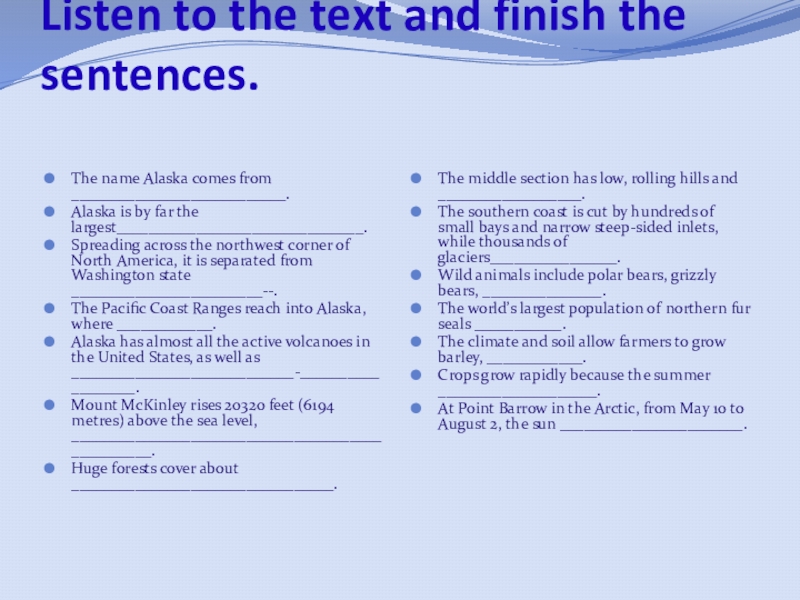
I. Review the rules of forming and using the Passive Voice and put the verbs in brackets in the Passive Voice.
1.Many things now considered American – or enjoyed by Americans –actually(to introduce) by immigrants, or created by them after they arrived.
2.There are almost 2 million Oriental Americans ( from Japan, China and Philippines), who (to concentrate) mainly in California.
3.America (to discover) by Christopher Columbus.
4.The region that is now the South-western United States (to colonize) by Spain in 1500s.
5.By the end of the 18th century, the whole of the Eastern coast of North America (to colonize), largely by the British.
6.The formal Declaration of Independence (to make) on 4 July1776.
7.Washington (to divide)into four quadrants; inconsequence street addresses (to repeat) 4 times.
8.Football (to play) by two teams of 11 players each.
9.Soap operas (to sponsor) by soap advertisers.
10.Harvard University (to name) for a Puritan minister, John Harvard, who left the college his books and half of his estate.
Слайд 29 Grammar
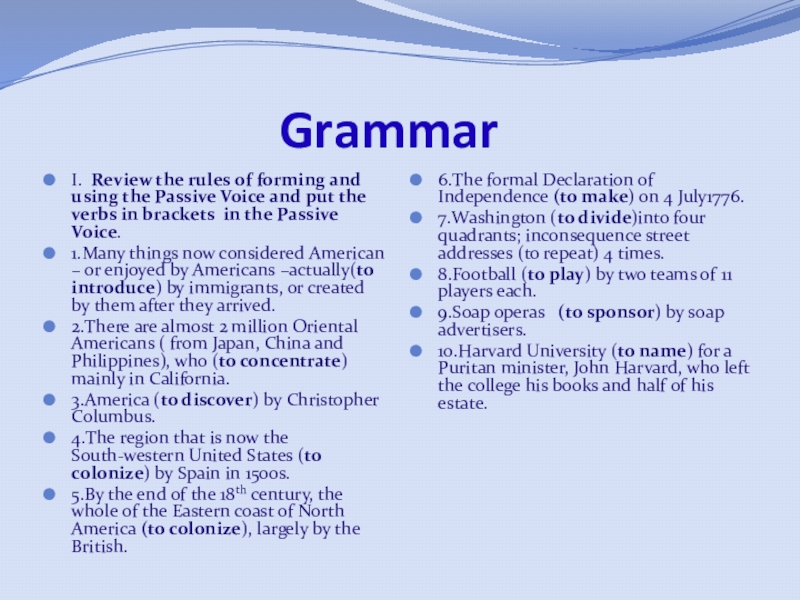
II. Use
1. … Rio Grande flows on the border between … United States and … Mexico.
2…. Times Square is the central square in … New York City.
3….Fifth Avenue is the street which is famous for its expensive shops.
4….USA has never had an official language, but … English has always been … chief language spoken in … country.
5. …Spanish is … second most common language in … United States.
6.Other languages spoken include … Chinese, … Polish, … Korean, …Vietnamese, … Portuguese, …Japanese, … Greek, … Arabic, … Russian, …Ukrainian, …French.
7. …American War of … Independence lasted over six years.
8. To … west of … Great Plains is … Cordillera.
9. …Missouri is … longest river in …eastern part of … country.
10. … Natural Channels connect … Great lakes in … north of … USA.
Слайд 30
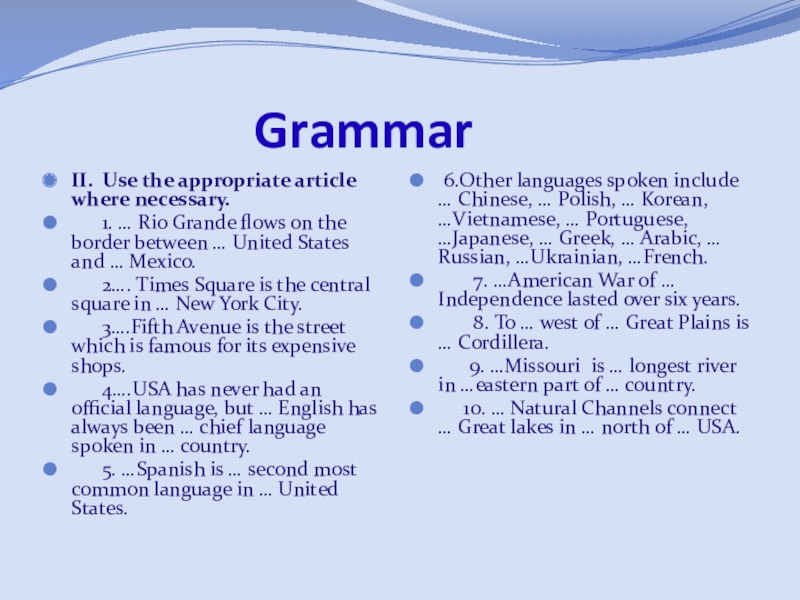
1.Who discovered America?
A)vikings C) nobody knows
B)Columbus D) Amerigo Vispuci
2.How many presidents were there in the USA?
A)60 C) 44
B)39 D) 72
3)The USA is a …
A)parliamentary republic
B)republic
C)parliamentary monarchy
D)monarchy
4.The American continent was called “America” after …
A)Christopher Columbus
B)Amerigo Vispucci
C)English protestants
D)Viking Eric the Red
5. Five large lakes, called the Great Lakes are connected with…
A)Rivers
B)Lakes
C)Canals
D)Sea
6.The first colony in North America was founded in 1607 at Jamestown, Virginia, by…
A)The Spanish
B)The Europeans
C)The British
D)The French
7.In 1620 the Pilgrims arrived at Plymouth, Massachusetts, on the ship…
A)Virginia
B)Victoria
C)James
D)Mayflower
8.The Native Americans were…
A)The British
B)The Vikings
C)The Indians
D)The Spanish
9.There are 13 stripes on the American national flag. They mean …
A)The first 13 colonies
B)The main 13 rivers
C)The first 13 American Presidents
D)The first 13 states
10.Many immigrants came to America
A)Looking for “American dream”
B)Looking for a better life
C)Trying to escape from police
D)Looking for an easy life
Слайд 33Rock
Rock has a large variety of styles, with famous artists from
It’s the “all-American” music.
Elvis Presley became famous for “rock and roll” in the 1950s.
Слайд 34Pop
Popular music has many styles and has grown into other genres.
The
Слайд 35Country
Began in the countryside of the Southern U.S. in the 1920s
Famous
Слайд 36Blues
From the “Deep South” of the U.S.—origins in African American work
Famous blues artists: John Lee Hooker, Charles Brown, Nat “King” Cole, B.B King
Слайд 37Jazz
Mix of African and European music
Began in the Southern U.S.
Many
Famous jazz artists: Jelly Roll Morton, Duke Ellington, Louis Armstrong, Miles Davis, Ella Fitzgerald
Слайд 38Reggae
Developed in Jamaica in the 1960s and came over to the
Famous reggae musicians: Bob Marley, Lee “Scratch” Perry, Beenie Man,