- Главная
- Разное
- Образование
- Спорт
- Естествознание
- Природоведение
- Религиоведение
- Французский язык
- Черчение
- Английский язык
- Астрономия
- Алгебра
- Биология
- География
- Геометрия
- Детские презентации
- Информатика
- История
- Литература
- Математика
- Музыка
- МХК
- Немецкий язык
- ОБЖ
- Обществознание
- Окружающий мир
- Педагогика
- Русский язык
- Технология
- Физика
- Философия
- Химия
- Шаблоны, фоны, картинки для презентаций
- Экология
- Экономика
Презентация, доклад Стоунхендж по английскому языку 8класс
Содержание
- 1. Презентация Стоунхендж по английскому языку 8класс
- 2. Stonehenge is the most famous prehistoric monument
- 3. Even
- 4. Stonehenge
- 5. It was started about 2700 B.C. by
- 6. Later a double semicircle of Bluestones was
- 7. The lintel Stones (horizontal ones)
- 8. It was used: i. as temple to
- 9. At one time, people thought that Stonehange was a Druid temple
- 10. Druids
- 11. There were many beliefs and superstitions concerning
- 12. Midsummer
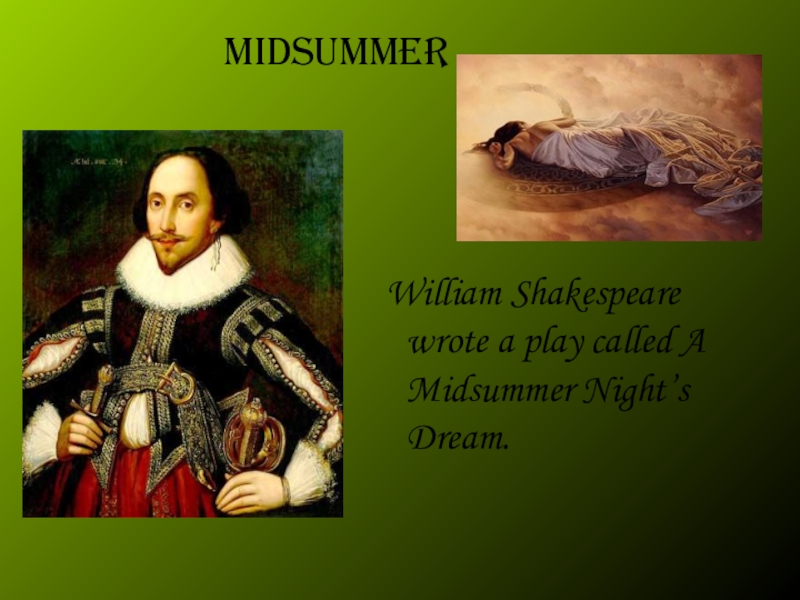
- 13. William Shakespeare wrote a play called A Midsummer Night’s Dream.Midsummer
- 14. Stonehenge LegendsThere are probably hundreds of myths
- 15. According to one of this legends
- 16. The stone which the devil threw is
- 17. References Atcinson, R J C, Stonehenge (Penguin
- 18. Hawley, Lt-Col W, Second Report on the
- 19. North, J, Stonehenge: Ritual Origins and Astronomy
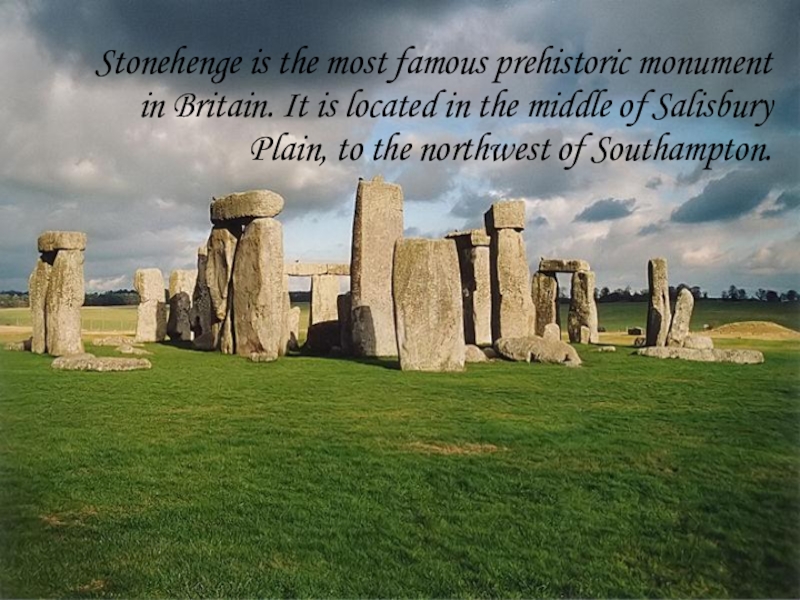
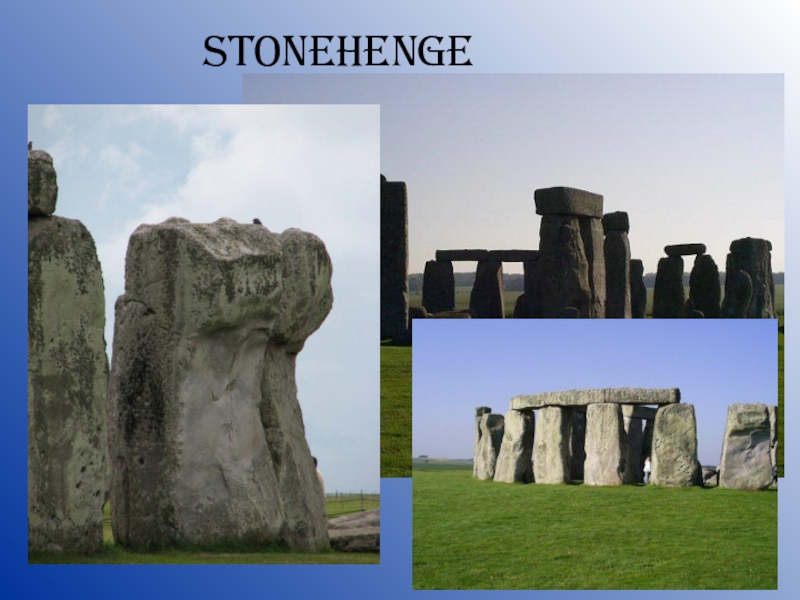
Stonehenge is the most famous prehistoric monument in Britain. It is located in the middle of Salisbury Plain, to the northwest of Southampton.
Слайд 2Stonehenge is the most famous prehistoric monument in Britain. It is
located in the middle of Salisbury Plain, to the northwest of Southampton.
Слайд 3
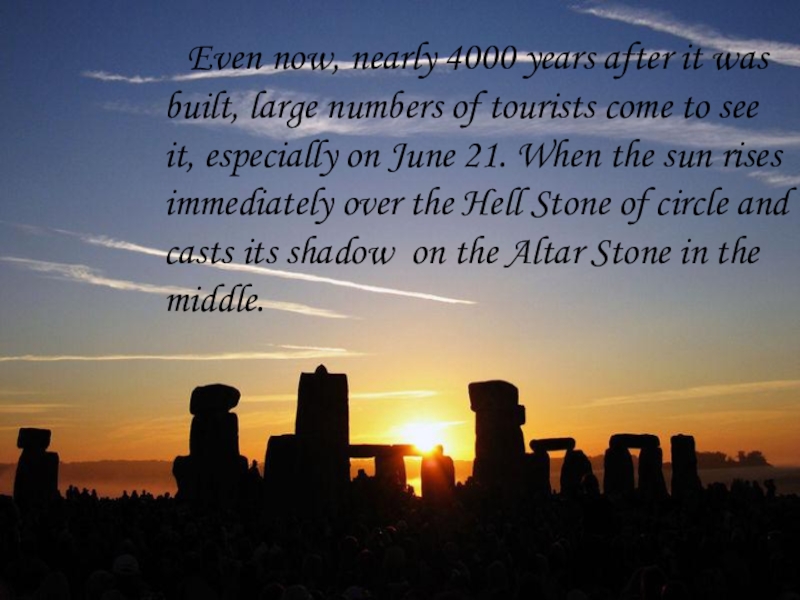
Even now, nearly 4000 years
after it was built, large numbers of tourists come to see it, especially on June 21. When the sun rises immediately over the Hell Stone of circle and casts its shadow on the Altar Stone in the middle.
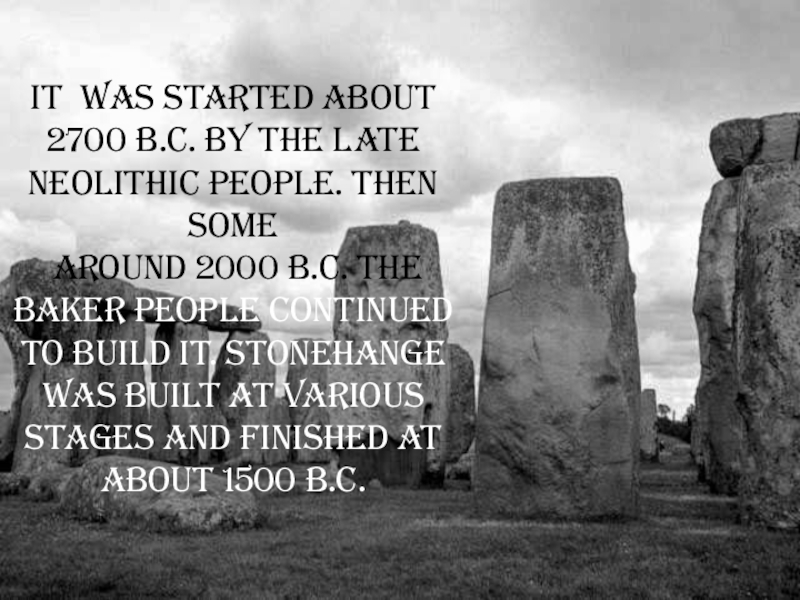
Слайд 5It was started about 2700 B.C. by the late Neolithic people.
Then Some
around 2000 B.C. the Baker people continued to build it. Stonehange was built at various stages and finished at about 1500 B.C.
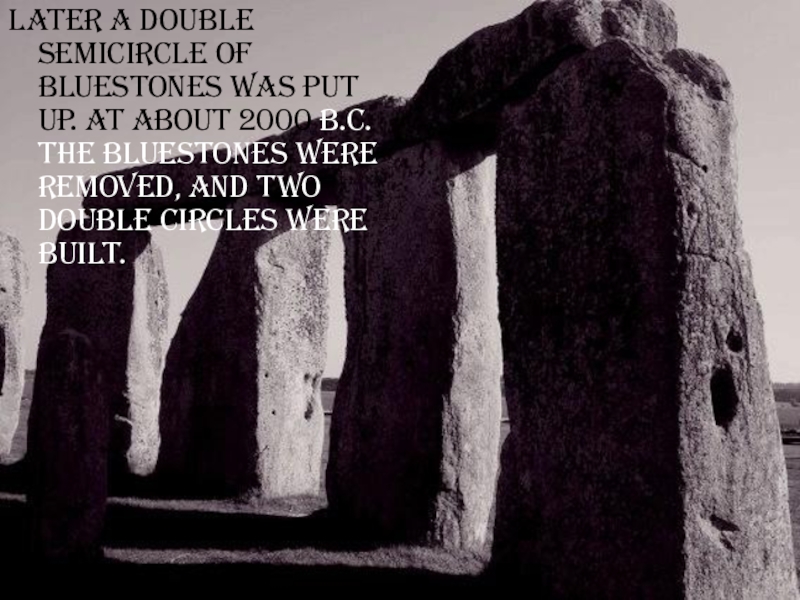
Слайд 6Later a double semicircle of Bluestones was put up. At about
2000 B.C. the Bluestones were removed, and two double circles were built.
Слайд 7
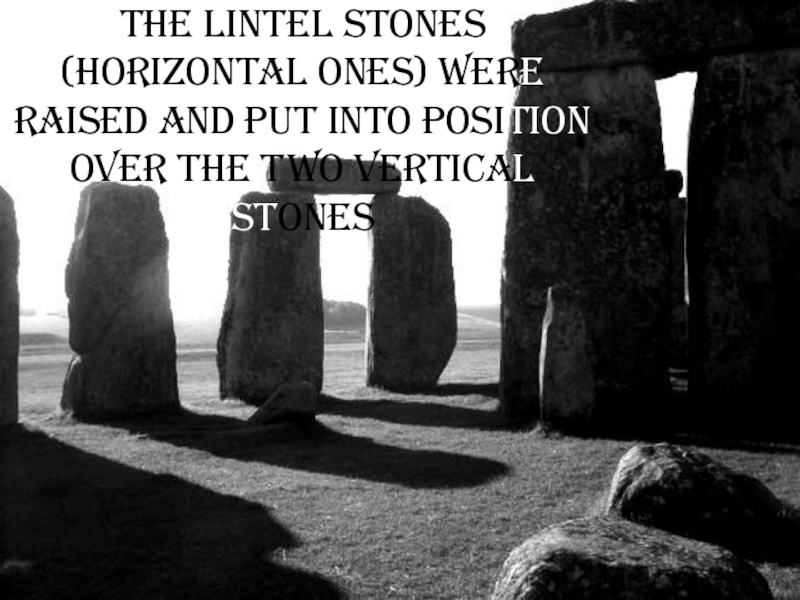
The lintel Stones (horizontal ones) were raised and put
into position over the two vertical stones
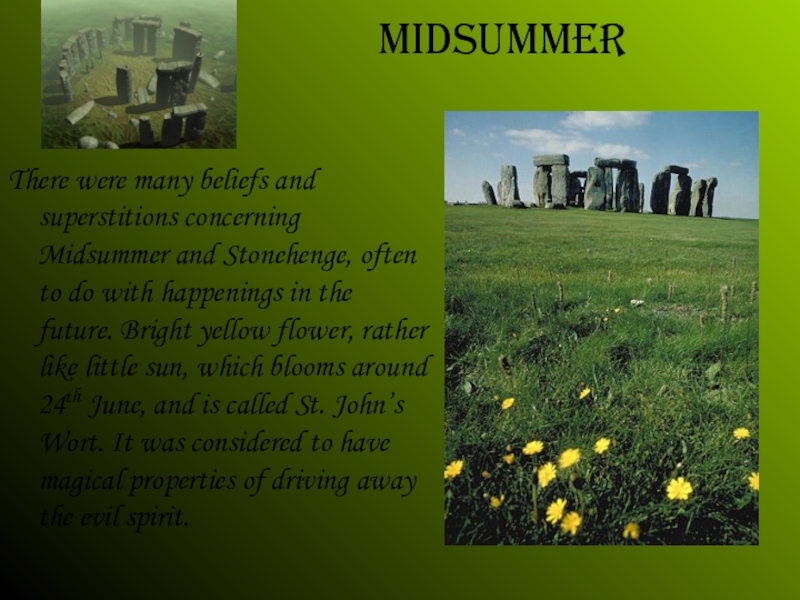
Слайд 11There were many beliefs and superstitions concerning Midsummer and Stonehenge, often
to do with happenings in the future. Bright yellow flower, rather like little sun, which blooms around 24th June, and is called St. John’s Wort. It was considered to have magical properties of driving away the evil spirit.
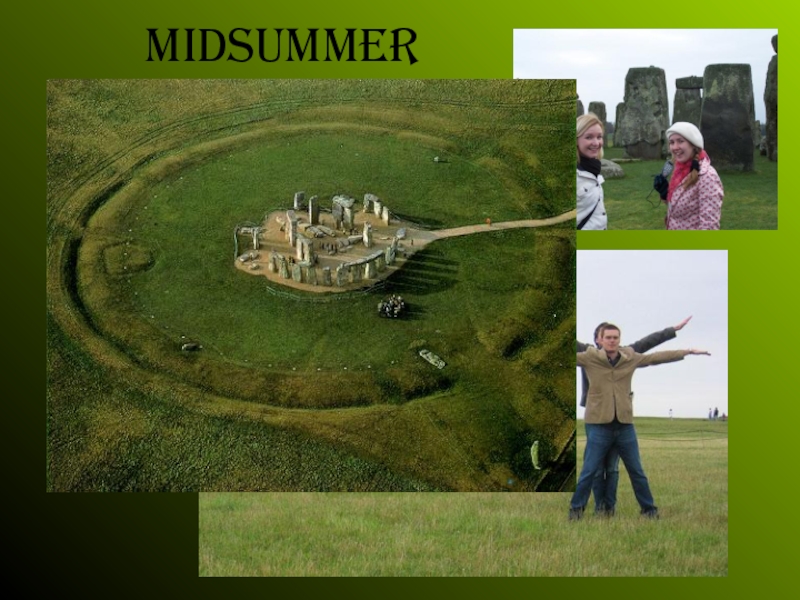
Midsummer
Слайд 14Stonehenge Legends
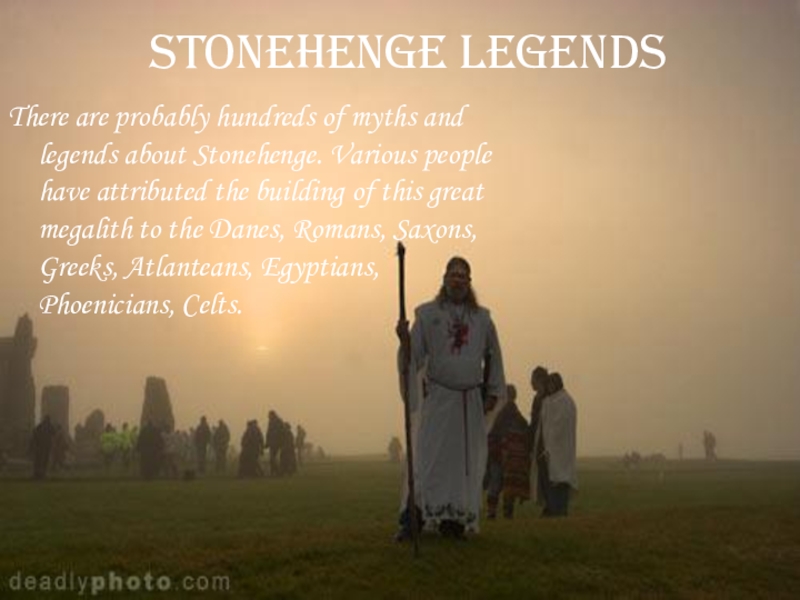
There are probably hundreds of myths and legends about Stonehenge.
Various people have attributed the building of this great megalith to the Danes, Romans, Saxons, Greeks, Atlanteans, Egyptians, Phoenicians, Celts.
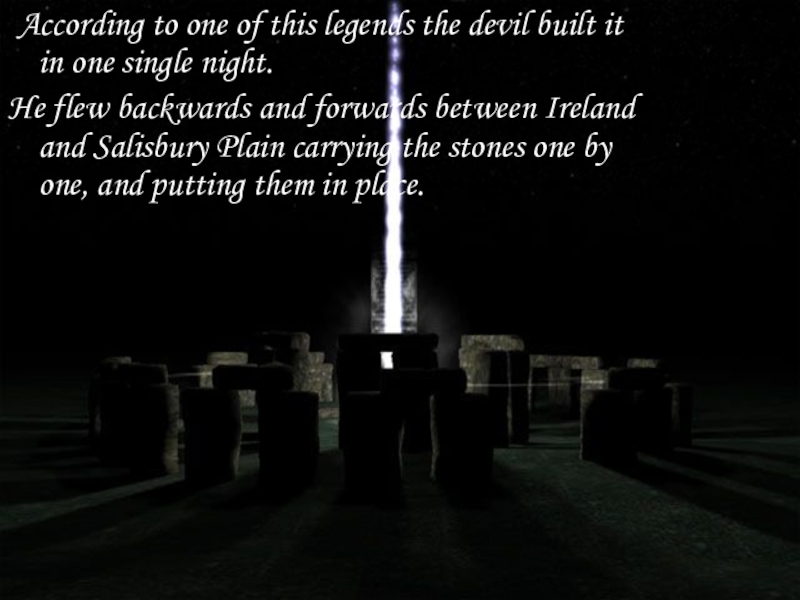
Слайд 15 According to one of this legends the devil built it
in one single night.
He flew backwards and forwards between Ireland and Salisbury Plain carrying the stones one by one, and putting them in place.
He flew backwards and forwards between Ireland and Salisbury Plain carrying the stones one by one, and putting them in place.
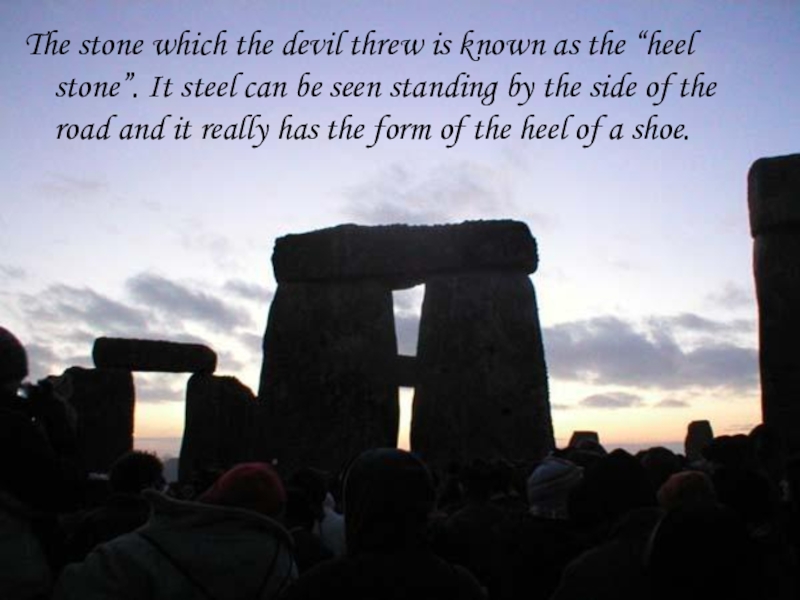
Слайд 16The stone which the devil threw is known as the “heel
stone”. It steel can be seen standing by the side of the road and it really has the form of the heel of a shoe.
Слайд 17References
Atcinson, R J C, Stonehenge (Penguin Books, 1956)
Bender, B, Stonehenge:
Making Space (Berg Publishers, 1998)
Burl, A, Prehistoric Stone Circles (Shire, 2001) (In Burl's Stonehenge (Constable, 2006), he notes, cf. the meaning of the name in paragraph two above, that "the Saxons called the ring 'the hanging stones', as though they were gibbets.")
Chippendale, C, Stonehenge Complete (Thames and Hudson, London, 2004) ISBN 0500284679
Chippindale, C, et al, Who owns Stonehenge? (B T Batsford Ltd, 1990)
Cleal, R. M. J., Walker, K. E. & Montague, R., Stonehenge in its Landscape (English Heritage, London, 1995)
Cunliffe, B, & Renfrew, C, Science and Stonehenge (The British Academy 92, Oxford University Press, 1997)
Hall, R, Leather, K, & Dobson, G, Stonehenge Aotearoa (Awa Press, 2005)
Hawley, Lt-Col W, The Excavations at Stonehenge. (The Antiquaries Journal 1, Oxford University Press, 19-41). 1921.
Burl, A, Prehistoric Stone Circles (Shire, 2001) (In Burl's Stonehenge (Constable, 2006), he notes, cf. the meaning of the name in paragraph two above, that "the Saxons called the ring 'the hanging stones', as though they were gibbets.")
Chippendale, C, Stonehenge Complete (Thames and Hudson, London, 2004) ISBN 0500284679
Chippindale, C, et al, Who owns Stonehenge? (B T Batsford Ltd, 1990)
Cleal, R. M. J., Walker, K. E. & Montague, R., Stonehenge in its Landscape (English Heritage, London, 1995)
Cunliffe, B, & Renfrew, C, Science and Stonehenge (The British Academy 92, Oxford University Press, 1997)
Hall, R, Leather, K, & Dobson, G, Stonehenge Aotearoa (Awa Press, 2005)
Hawley, Lt-Col W, The Excavations at Stonehenge. (The Antiquaries Journal 1, Oxford University Press, 19-41). 1921.
Слайд 18
Hawley, Lt-Col W, Second Report on the Excavations at Stonehenge. (The
Antiquaries Journal 2, Oxford University Press, 1922)
Hawley, Lt-Col W, Third Report on the Excavations at Stonehenge. (The Antiquaries Journal 3, Oxford University Press, 1923)
Hawley, Lt-Col W, Fourth Report on the Excavations at Stonehenge. (The Antiquaries Journal 4, Oxford University Press, 1923)
Hawley, Lt-Col W, Report on the Excavations at Stonehenge during the season of 1923. (The Antiquaries Journal 5, Oxford University Press, 1925)
Hawley, Lt-Col W, Report on the Excavations at Stonehenge during the season of 1924. (The Antiquaries Journal 6, Oxford University Press, 1926)
Hawley, Lt-Col W, Report on the Excavations at Stonehenge during 1925 and 1926. (The Antiquaries Journal 8, Oxford University Press, 1928)
Hutton R, From Universal Bond to Public Free For All (British Archaeology 83, 2005)
Mooney, J, Encyclopedia of the Bizarre (Black Dog & Leventhal Publishers, 2002)
Newall, R S, Stonehenge, Wiltshire -Ancient monuments and historic buildings- (Her Majesty's Stationery Office, London, 1959)
Hawley, Lt-Col W, Third Report on the Excavations at Stonehenge. (The Antiquaries Journal 3, Oxford University Press, 1923)
Hawley, Lt-Col W, Fourth Report on the Excavations at Stonehenge. (The Antiquaries Journal 4, Oxford University Press, 1923)
Hawley, Lt-Col W, Report on the Excavations at Stonehenge during the season of 1923. (The Antiquaries Journal 5, Oxford University Press, 1925)
Hawley, Lt-Col W, Report on the Excavations at Stonehenge during the season of 1924. (The Antiquaries Journal 6, Oxford University Press, 1926)
Hawley, Lt-Col W, Report on the Excavations at Stonehenge during 1925 and 1926. (The Antiquaries Journal 8, Oxford University Press, 1928)
Hutton R, From Universal Bond to Public Free For All (British Archaeology 83, 2005)
Mooney, J, Encyclopedia of the Bizarre (Black Dog & Leventhal Publishers, 2002)
Newall, R S, Stonehenge, Wiltshire -Ancient monuments and historic buildings- (Her Majesty's Stationery Office, London, 1959)
Слайд 19North, J, Stonehenge: Ritual Origins and Astronomy (HarperCollins, 1997)
Pitts, M,
Hengeworld (Arrow, London, 2001)
Pitts, M W, On the Road to Stonehenge: Report on Investigations beside the A344 in 1968, 1979 and 1980 (Proceedings of the Prehistoric Society 48, 1982)
Richards, J, English Heritage Book of Stonehenge (B T Batsford Ltd, 1991)
Richards, J Stonehenge: A History in Photographs (English Heritage, London, 2004)
Stone, J F S, Wessex Before the Celts (Frederick A Praeger Publishers, 1958)
Worthington, A, Stonehenge: Celebration and Subversion (Alternative Albion, 2004)
English Heritage: Stonehenge: Historical Background
Pitts, M W, On the Road to Stonehenge: Report on Investigations beside the A344 in 1968, 1979 and 1980 (Proceedings of the Prehistoric Society 48, 1982)
Richards, J, English Heritage Book of Stonehenge (B T Batsford Ltd, 1991)
Richards, J Stonehenge: A History in Photographs (English Heritage, London, 2004)
Stone, J F S, Wessex Before the Celts (Frederick A Praeger Publishers, 1958)
Worthington, A, Stonehenge: Celebration and Subversion (Alternative Albion, 2004)
English Heritage: Stonehenge: Historical Background