- Главная
- Разное
- Образование
- Спорт
- Естествознание
- Природоведение
- Религиоведение
- Французский язык
- Черчение
- Английский язык
- Астрономия
- Алгебра
- Биология
- География
- Геометрия
- Детские презентации
- Информатика
- История
- Литература
- Математика
- Музыка
- МХК
- Немецкий язык
- ОБЖ
- Обществознание
- Окружающий мир
- Педагогика
- Русский язык
- Технология
- Физика
- Философия
- Химия
- Шаблоны, фоны, картинки для презентаций
- Экология
- Экономика
Презентация, доклад Schools in Britain (6 класс)
Содержание
- 1. Презентация. Schools in Britain (6 класс)
- 2. Education in Great Britain is compulsory and
- 3. Слайд 3
- 4. Nursery schools or playgroups
- 5. Many British children attend a
- 6. Primary schools
- 7. Primary
- 8. In infant schools children don't
- 9. When pupils are 7, real
- 10. Secondary schools
- 11. Слайд 11
- 12. There are also about 500
- 13. Слайд 13
- 14. Слайд 14
- 15. 40 % of pupils
- 16. School year The
- 17. School day Pupils usally have five
- 18. There is a long lunch
- 19. Marks A – 90-100 - excellent B
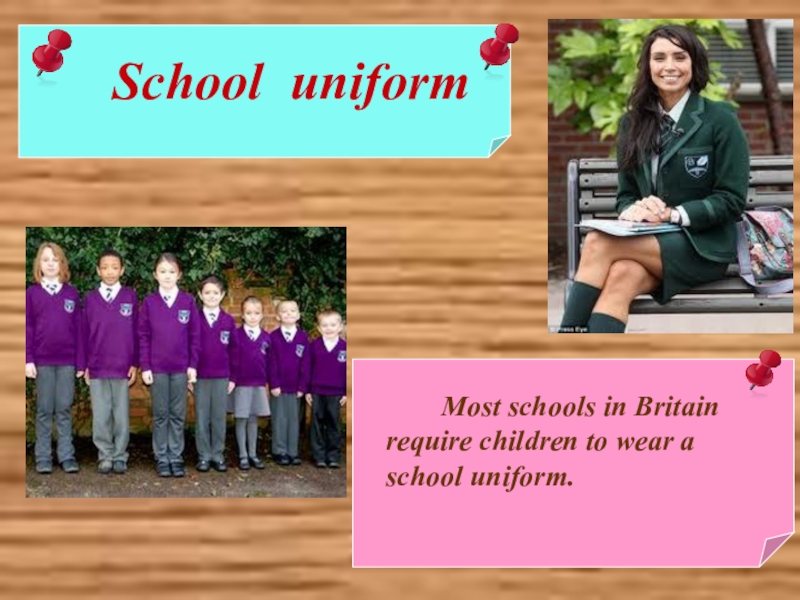
- 20. Most schools
- 21. Sport Sport is important in
- 22. Слайд 22
- 23. What is bad behaviour?• not coming to
- 24. Слайд 24
- 25. Слайд 25
- 26. Слайд 26
- 27. Слайд 27
- 28. Слайд 28
- 29. Слайд 29
- 30. Слайд 30
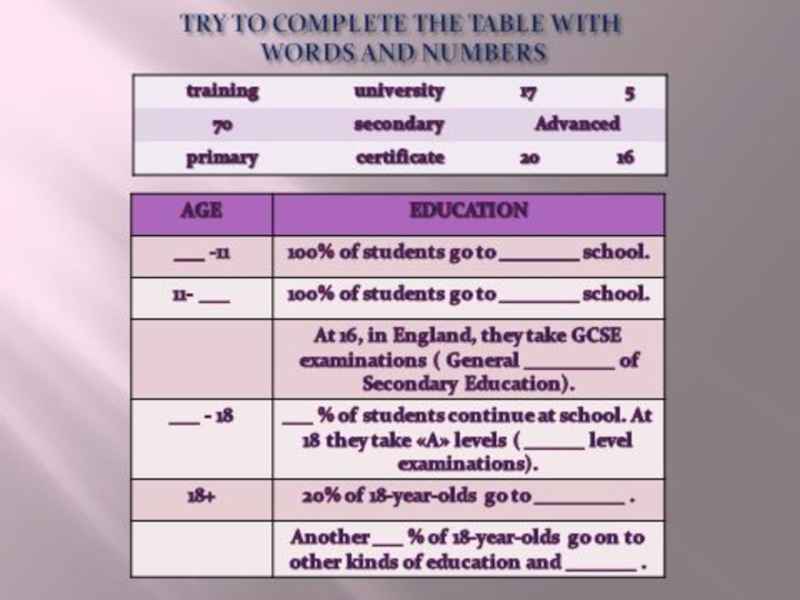
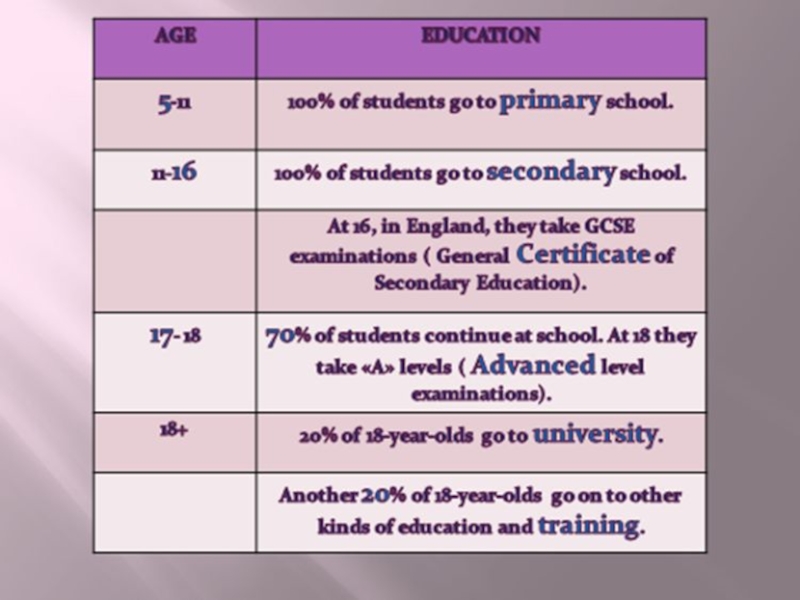
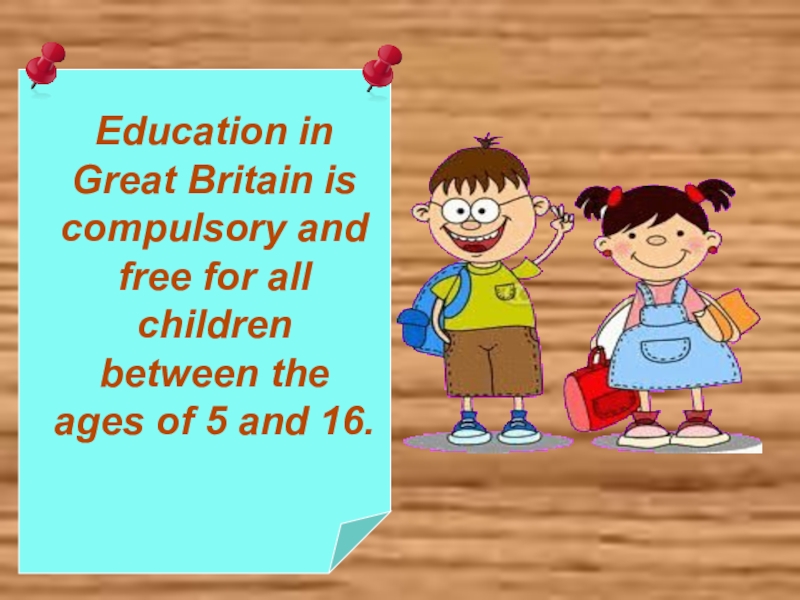
Education in Great Britain is compulsory and free for all children between the ages of 5 and 16.
Слайд 2
Education in Great Britain is compulsory and free for all children
between the ages of 5 and 16.
Слайд 5
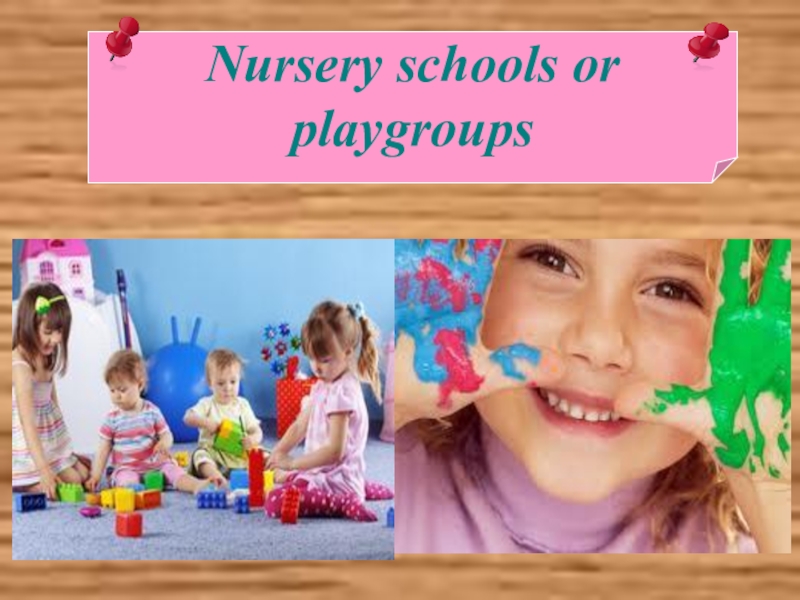
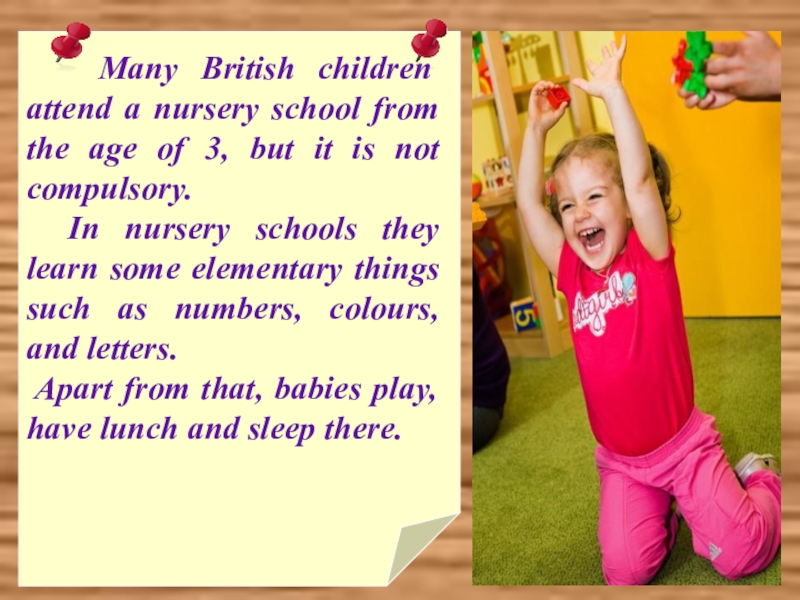
Many British children attend a nursery school from the
age of 3, but it is not compulsory.
In nursery schools they learn some elementary things such as numbers, colours, and letters.
Apart from that, babies play, have lunch and sleep there.
In nursery schools they learn some elementary things such as numbers, colours, and letters.
Apart from that, babies play, have lunch and sleep there.
Слайд 7
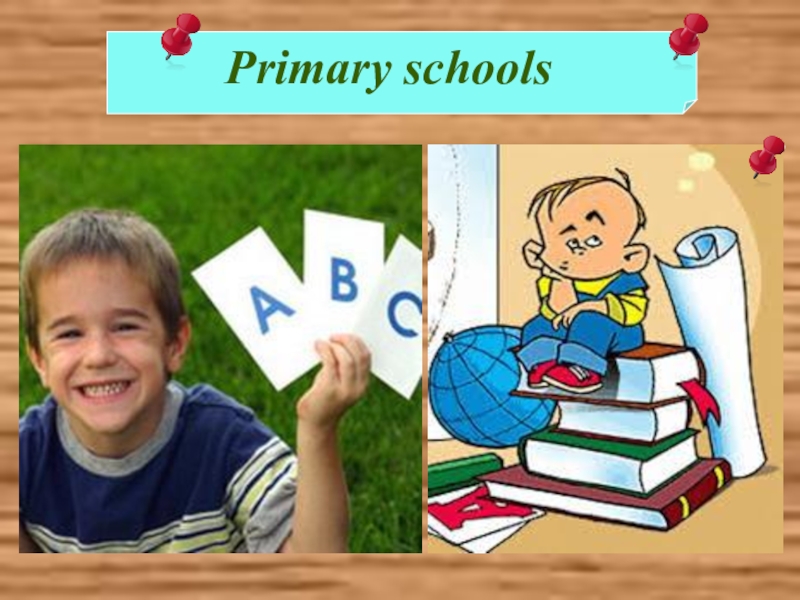
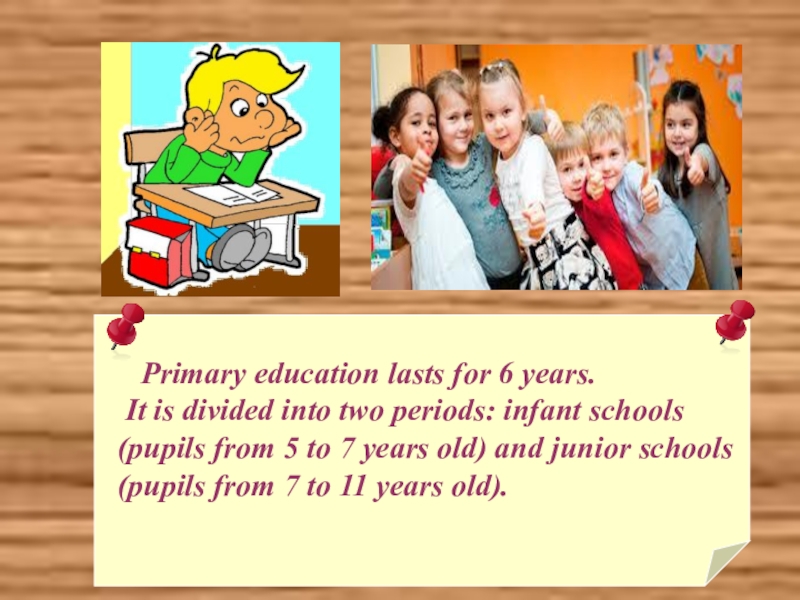
Primary education lasts for 6
years.
It is divided into two periods: infant schools
(pupils from 5 to 7 years old) and junior schools
(pupils from 7 to 11 years old).
It is divided into two periods: infant schools
(pupils from 5 to 7 years old) and junior schools
(pupils from 7 to 11 years old).
Слайд 8
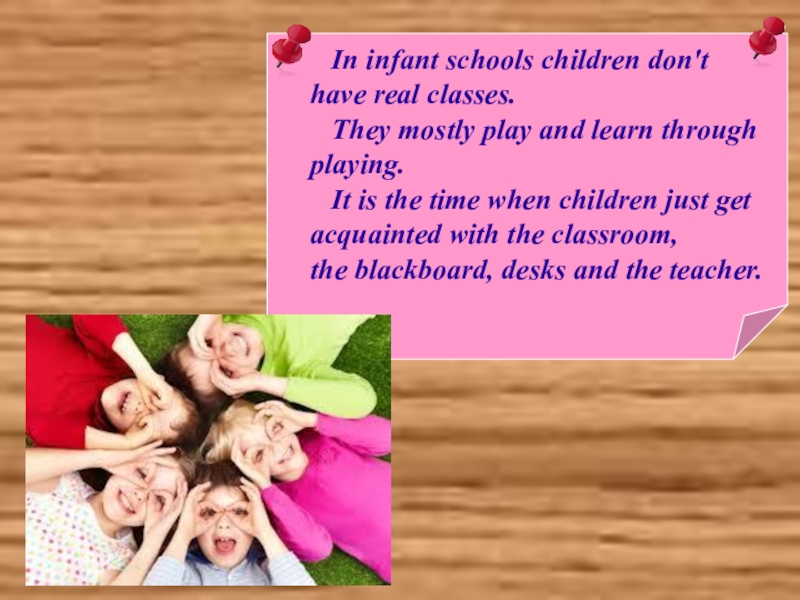
In infant schools children don't have real classes.
They mostly play and learn through playing.
It is the time when children just get acquainted with the classroom,
the blackboard, desks and the teacher.
It is the time when children just get acquainted with the classroom,
the blackboard, desks and the teacher.
Слайд 9
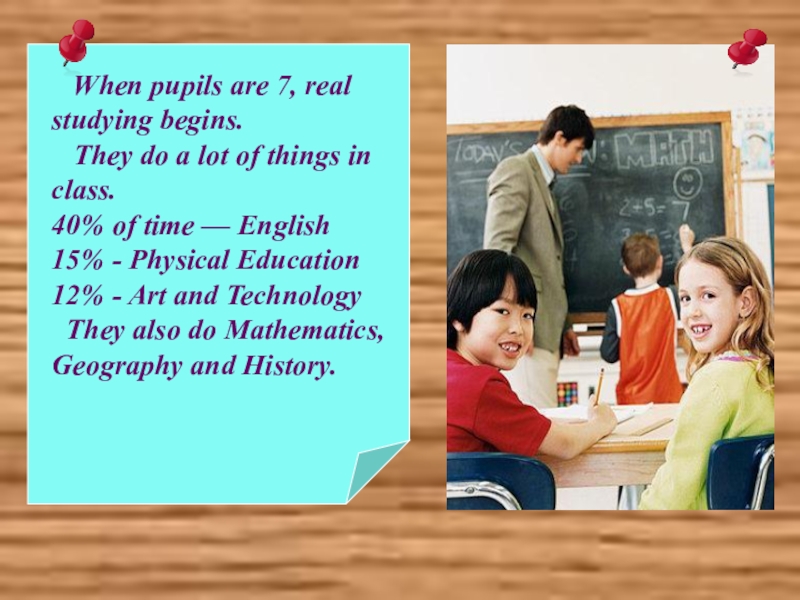
When pupils are 7, real studying begins.
They do a lot of things in class.
40% of time — English
15% - Physical Education
12% - Art and Technology
They also do Mathematics, Geography and History.
40% of time — English
15% - Physical Education
12% - Art and Technology
They also do Mathematics, Geography and History.
Слайд 11
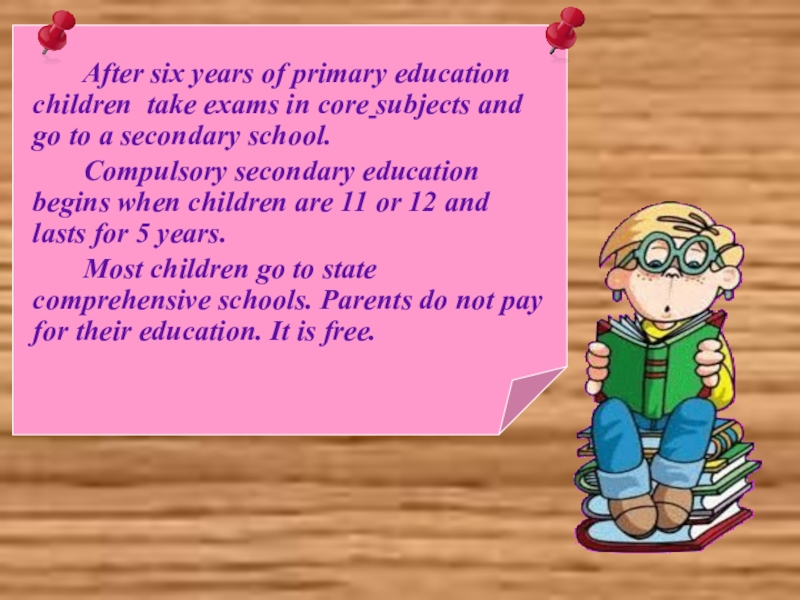
After six years
of primary education children take exams in core subjects and go to a secondary school.
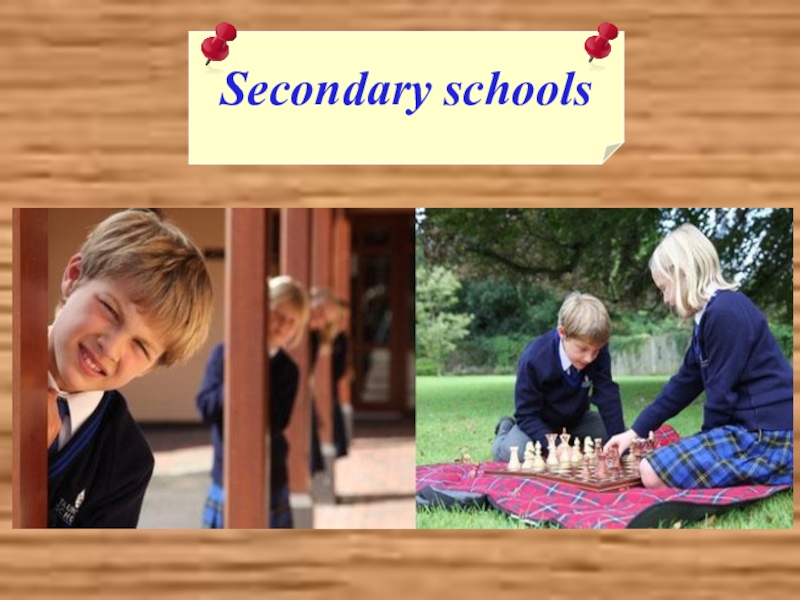
Compulsory secondary education begins when children are 11 or 12 and lasts for 5 years.
Most children go to state comprehensive schools. Parents do not pay for their education. It is free.
Compulsory secondary education begins when children are 11 or 12 and lasts for 5 years.
Most children go to state comprehensive schools. Parents do not pay for their education. It is free.
Слайд 12
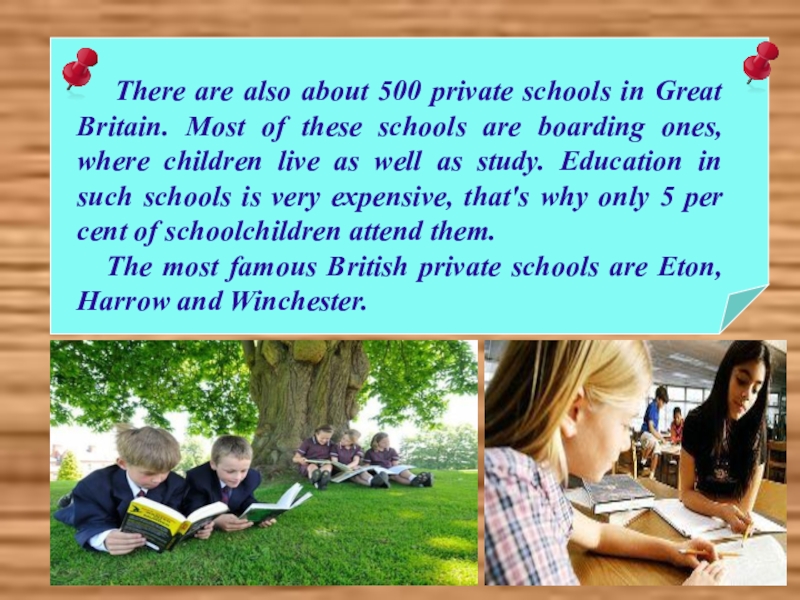
There are also about 500 private schools in Great
Britain. Most of these schools are boarding ones, where children live as well as study. Education in such schools is very expensive, that's why only 5 per cent of schoolchildren attend them.
The most famous British private schools are Eton, Harrow and Winchester.
The most famous British private schools are Eton, Harrow and Winchester.
Слайд 13
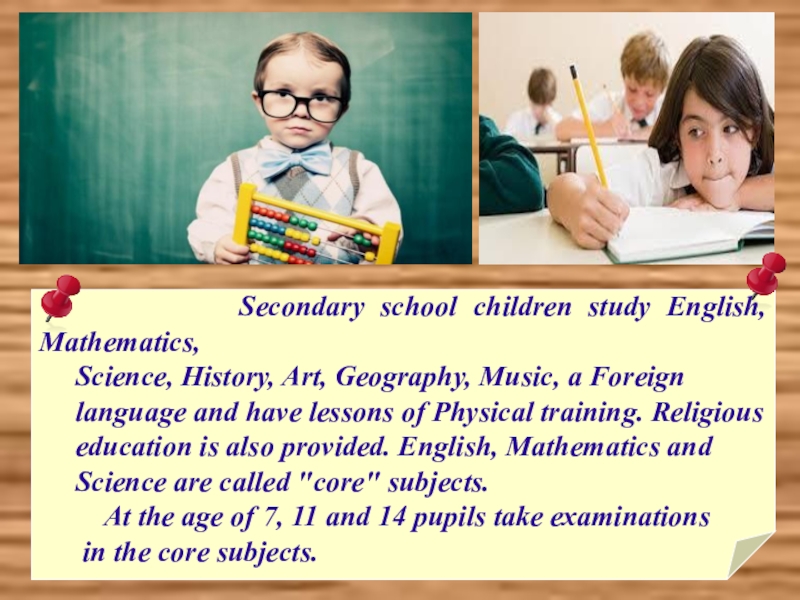
Secondary school children study English, Mathematics,
Science, History, Art, Geography, Music, a Foreign
language and have lessons of Physical training. Religious
education is also provided. English, Mathematics and
Science are called "core" subjects.
At the age of 7, 11 and 14 pupils take examinations
in the core subjects.
Science, History, Art, Geography, Music, a Foreign
language and have lessons of Physical training. Religious
education is also provided. English, Mathematics and
Science are called "core" subjects.
At the age of 7, 11 and 14 pupils take examinations
in the core subjects.
Слайд 14
After five years of secondary education, pupils take
GCSE (General Certificate of Secondary Education)
examination.
60 % of children leave school and go to colleges
for further education.
Слайд 15
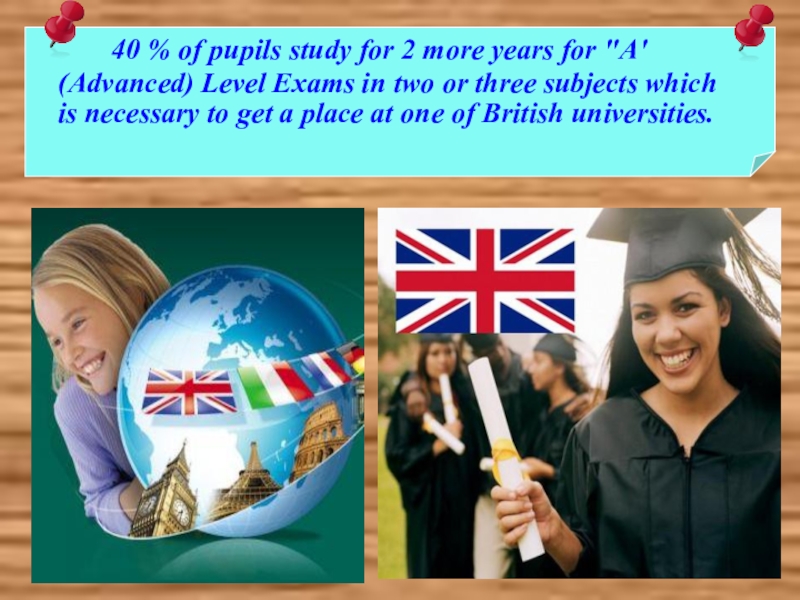
40 % of pupils study for 2 more
years for "A' (Advanced) Level Exams in two or three subjects which is necessary to get a place at one of British universities.
Слайд 16School year
The school year begins in
September. It never begins
on Monday. The English don't think it is good to start
a new thing on Monday, so school usually begins on the
first Tuesday of September.
There are three terms in a school year. When the term
is over, schoolchildren have holidays:
Christmas holidays - 2 weeks
Easter holidays — 2 weeks
Summer holidays — 6 weeks
on Monday. The English don't think it is good to start
a new thing on Monday, so school usually begins on the
first Tuesday of September.
There are three terms in a school year. When the term
is over, schoolchildren have holidays:
Christmas holidays - 2 weeks
Easter holidays — 2 weeks
Summer holidays — 6 weeks
Слайд 17School day
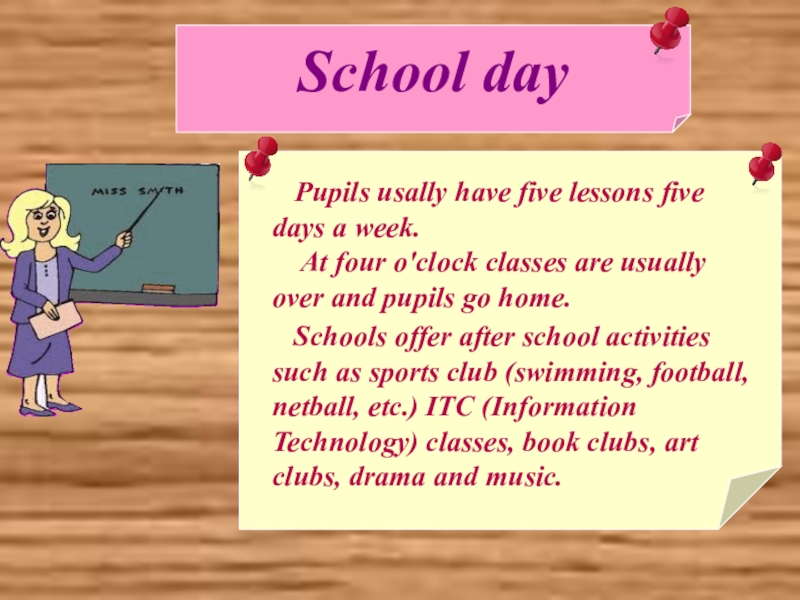
Pupils usally have five lessons five days a
week.
At four o'clock classes are usually over and pupils go home.
At four o'clock classes are usually over and pupils go home.
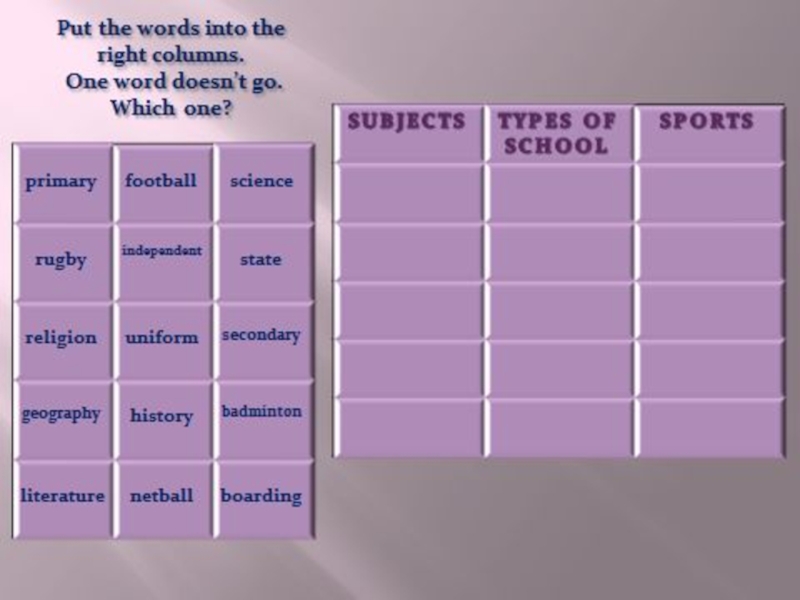
Schools offer after school activities such as sports club (swimming, football, netball, etc.) ITC (Information Technology) classes, book clubs, art clubs, drama and music.
Слайд 18
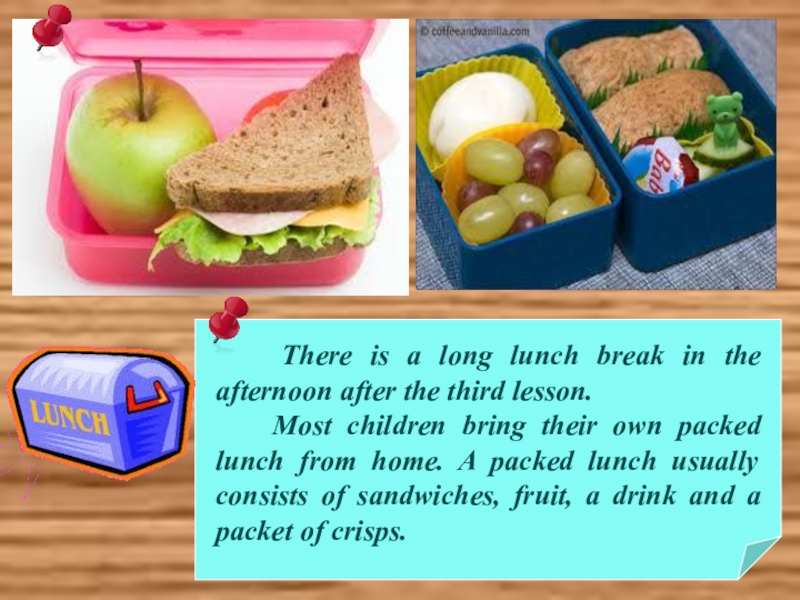
There is a long lunch break in the afternoon
after the third lesson.
Most children bring their own packed lunch from home. A packed lunch usually consists of sandwiches, fruit, a drink and a packet of crisps.
Most children bring their own packed lunch from home. A packed lunch usually consists of sandwiches, fruit, a drink and a packet of crisps.
Слайд 19Marks
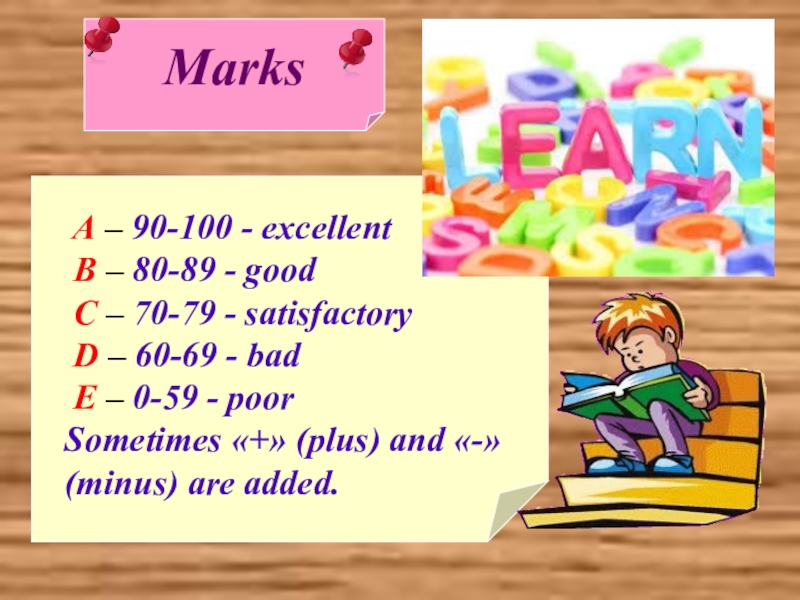
A – 90-100 - excellent
B – 80-89 -
good
C – 70-79 - satisfactory
D – 60-69 - bad
E – 0-59 - poor
Sometimes «+» (plus) and «-» (minus) are added.
C – 70-79 - satisfactory
D – 60-69 - bad
E – 0-59 - poor
Sometimes «+» (plus) and «-» (minus) are added.
Слайд 21 Sport
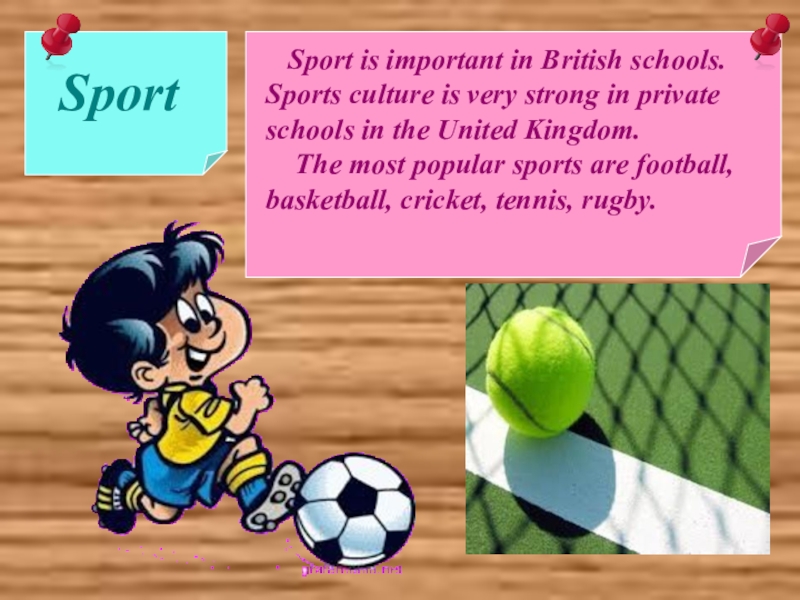
Sport is important in British schools.
Sports culture
is very strong in private schools in the United Kingdom.
The most popular sports are football, basketball, cricket, tennis, rugby.
The most popular sports are football, basketball, cricket, tennis, rugby.
Слайд 23
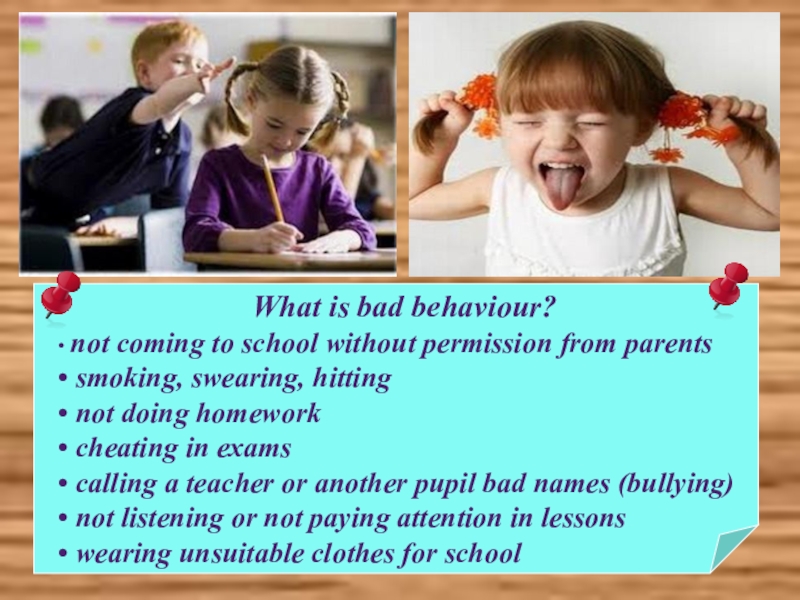
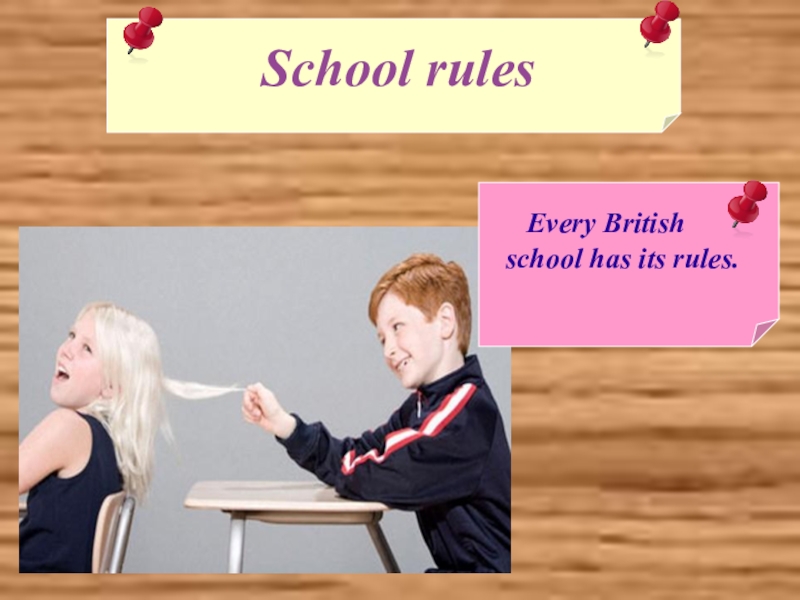
What is bad behaviour?
• not coming to school without permission from
parents
• smoking, swearing, hitting
• not doing homework
• cheating in exams
• calling a teacher or another pupil bad names (bullying)
• not listening or not paying attention in lessons
• wearing unsuitable clothes for school
• smoking, swearing, hitting
• not doing homework
• cheating in exams
• calling a teacher or another pupil bad names (bullying)
• not listening or not paying attention in lessons
• wearing unsuitable clothes for school