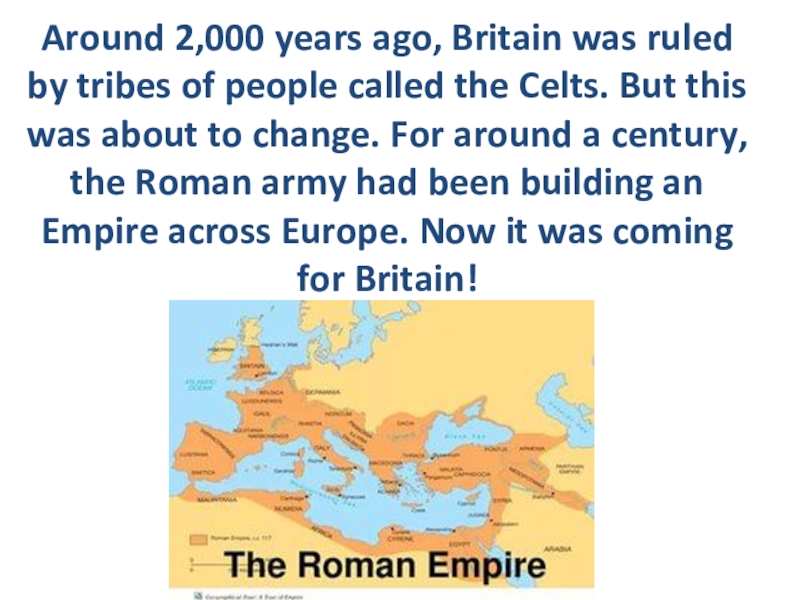
called the Celts. But this was about to change. For around a century, the Roman army had been building an Empire across Europe. Now it was coming for Britain!
- Главная
- Разное
- Образование
- Спорт
- Естествознание
- Природоведение
- Религиоведение
- Французский язык
- Черчение
- Английский язык
- Астрономия
- Алгебра
- Биология
- География
- Геометрия
- Детские презентации
- Информатика
- История
- Литература
- Математика
- Музыка
- МХК
- Немецкий язык
- ОБЖ
- Обществознание
- Окружающий мир
- Педагогика
- Русский язык
- Технология
- Физика
- Философия
- Химия
- Шаблоны, фоны, картинки для презентаций
- Экология
- Экономика
Презентация, доклад по теме Romans in Britain к курсу страноведение
Содержание
- 1. Презентация по теме Romans in Britain к курсу страноведение
- 2. In AD43, the full might of the
- 3. The Romans wanted Britain's precious metals. They
- 4. Caesar wrote, "The Britons have a huge
- 5. Julius Caesar - 55 and 54BC In
- 6. "All Britons used woad to dye their
- 7. The Celts also put lime in
- 8. They used their chariots in battle, steering
- 9. The next year, he was back with
- 10. It was
- 11. Слайд 11
- 12. Claudius - AD43 Nearly a hundred years
- 13. How did the Celts fight back?When the
- 14. . King Caratacus was the King of
- 15. What happened to King Caratacus?Caratacus fought against
- 16. After years of heavy taxes and the
- 17. When the Roman army heard about this,
- 18. By the end of the first
- 19. Слайд 19
- 20. In the summer of AD84 some Caledonian
- 21. The Caledonians had 30,000 warriors, about twice
- 22. Why did the Romans build walls?
- 23. They did it to protect themselves from
- 24. In AD140 the Romans added another wall
- 25. Слайд 25
- 26. What was it like in Roman Britain?
- 27. The Romans built new towns. These were
- 28. What were houses like?People mainly lived in
- 29. However, some wealthy Romans lived in villas
- 30. Some Roman homes were kept warm with
- 31. Слайд 31
- 32. Слайд 32
- 33. In AD 410, the Roman Emperor
- 34. After they left, the country fell into
- 35. What did the Romans give the British?
- 36. Roman roads Britain had no proper
- 37. The Romans introduced the idea of living
- 38. The Romans built walls around many of
- 39. Language, writing and numbersBefore the Romans came,
- 40. We've still got lots of words and
- 41. The Calendar Did you know that the
- 42. Laws and a legal system The laws
- 43. The Census The Roman Empire was huge
- 44. The Romans also gave Britons : straight roads central heating concrete aqueducts (bridges for water)
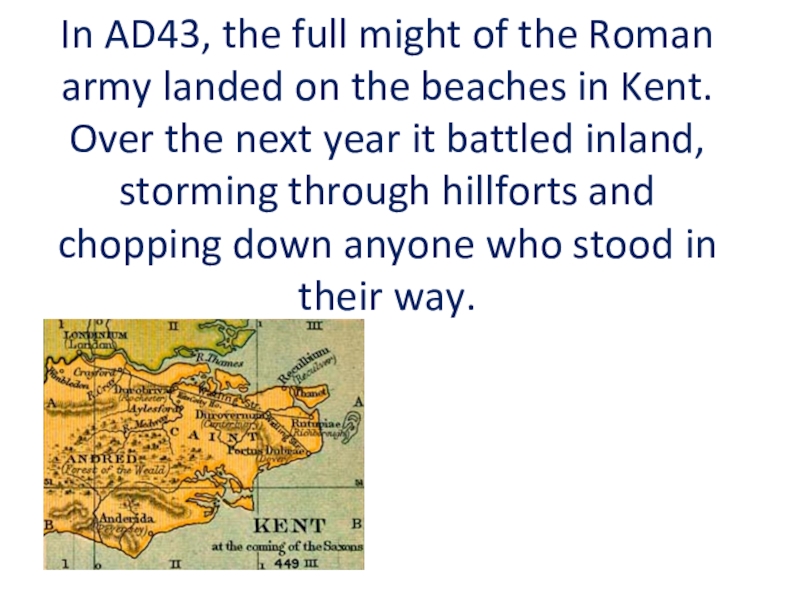
In AD43, the full might of the Roman army landed on the beaches in Kent. Over the next year it battled inland, storming through hillforts and chopping down anyone who stood in their way.
Слайд 2In AD43, the full might of the Roman army landed on
the beaches in Kent. Over the next year it battled inland, storming through hillforts and chopping down anyone who stood in their way.
Слайд 3The Romans wanted Britain's precious metals. They called the land ‘Britannia’,
which meant 'land of tin'. However, they weren't just a destructive force - they built new forts, new settlements and roads. They spread their culture, language and laws.
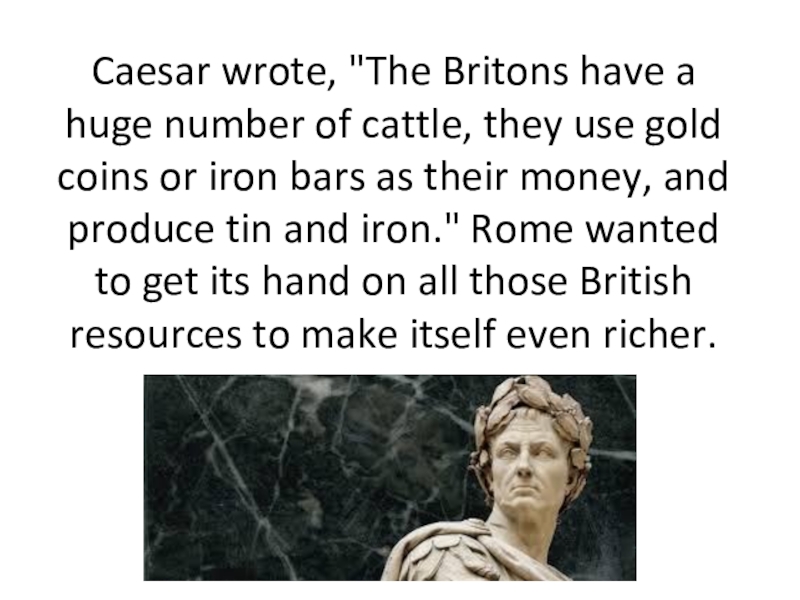
Слайд 4Caesar wrote, "The Britons have a huge number of cattle, they
use gold coins or iron bars as their money, and produce tin and iron." Rome wanted to get its hand on all those British resources to make itself even richer.
Слайд 5Julius Caesar - 55 and 54BC
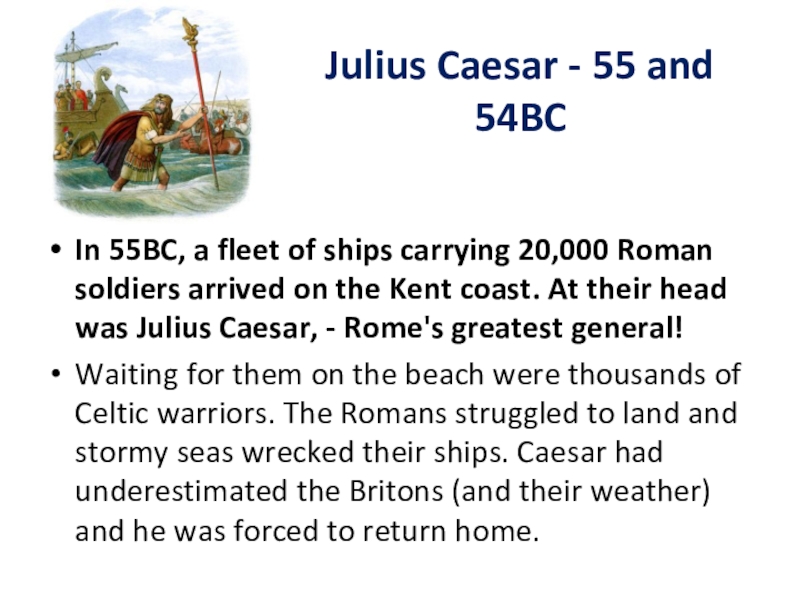
In 55BC, a fleet of ships
carrying 20,000 Roman soldiers arrived on the Kent coast. At their head was Julius Caesar, - Rome's greatest general!
Waiting for them on the beach were thousands of Celtic warriors. The Romans struggled to land and stormy seas wrecked their ships. Caesar had underestimated the Britons (and their weather) and he was forced to return home.
Waiting for them on the beach were thousands of Celtic warriors. The Romans struggled to land and stormy seas wrecked their ships. Caesar had underestimated the Britons (and their weather) and he was forced to return home.
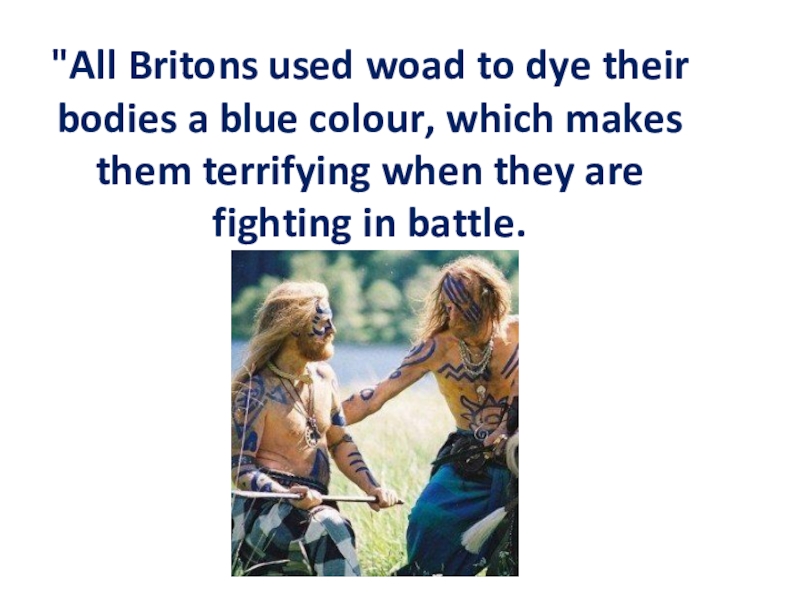
Слайд 6"All Britons used woad to dye their bodies a blue colour,
which makes them terrifying when they are fighting in battle.
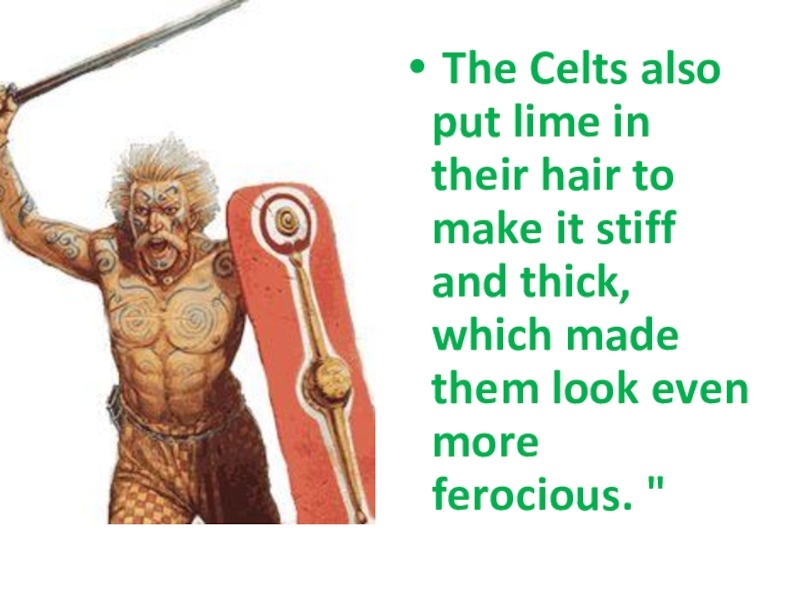
Слайд 7 The Celts also put lime in their hair to make
it stiff and thick, which made them look even more ferocious. "
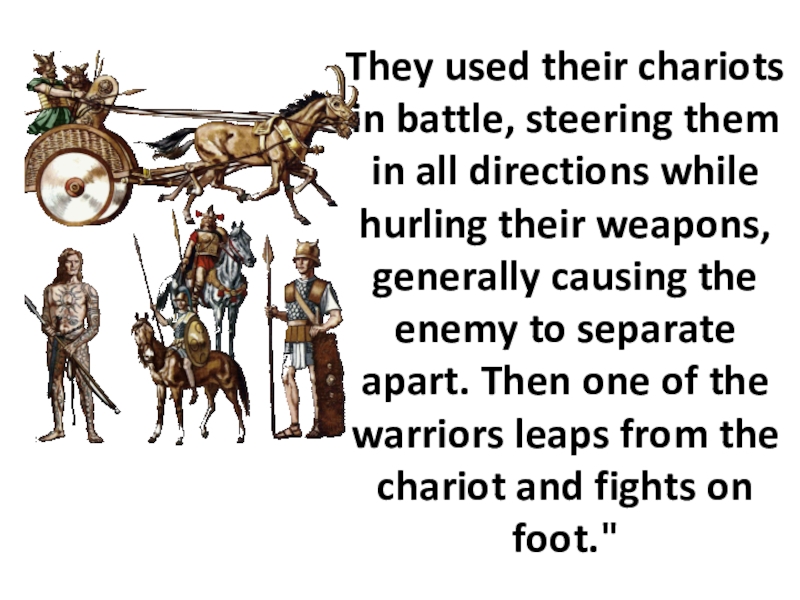
Слайд 8They used their chariots in battle, steering them in all directions
while hurling their weapons, generally causing the enemy to separate apart. Then one of the warriors leaps from the chariot and fights on foot."
Слайд 9The next year, he was back with 50,000 soldiers. This time
the Romans were too strong. They defeated many tribes and marched all the way to the River Thames. After three months of fighting, the Romans left Britain to stop a rebellion in Gaul.
Слайд 10 It was all just too much for Caesar. He invaded the
country twice, but he never actually managed to take over. That would have to wait until 100 years later when the Emperor Claudius tried again and this time, he succeeded.
Слайд 12Claudius - AD43
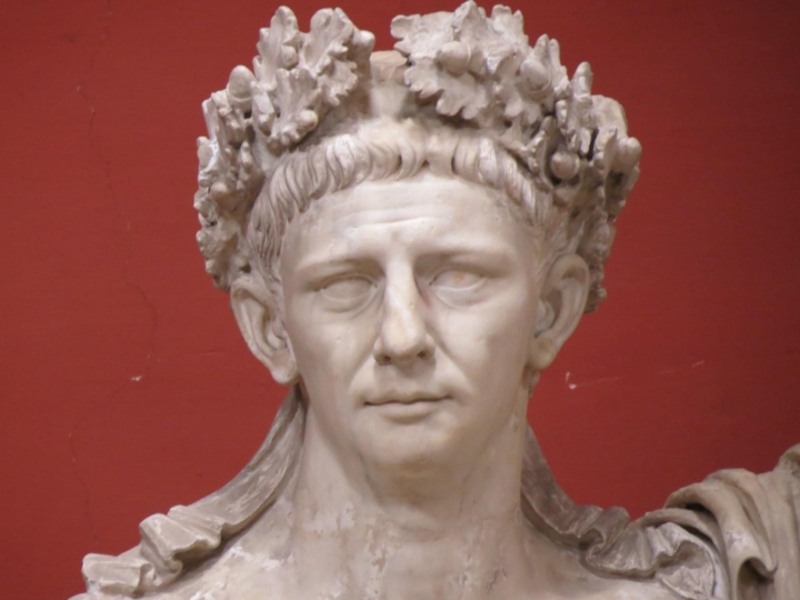
Nearly a hundred years after Julius Caesar first tried
to invade Britain, the Emperor Claudius finally succeeded. This time the Romans were here to stay!
They brought with them new weapons, like huge catapults called ballistas. Claudius himself even turned up with a troop of war elephants to make sure the battle was won.
But Britain wasn't conquered overnight. It took around 30 years of fighting for the Romans to control most of southern Britain.
They brought with them new weapons, like huge catapults called ballistas. Claudius himself even turned up with a troop of war elephants to make sure the battle was won.
But Britain wasn't conquered overnight. It took around 30 years of fighting for the Romans to control most of southern Britain.
Слайд 13How did the Celts fight back?
When the Romans invaded, the Celtic
tribes had to decide whether or not to fight back. If they made peace, they agreed to obey Roman laws and pay taxes. In return, they could keep their kingdoms. However, some Celtic leaders chose to fight.
Слайд 14
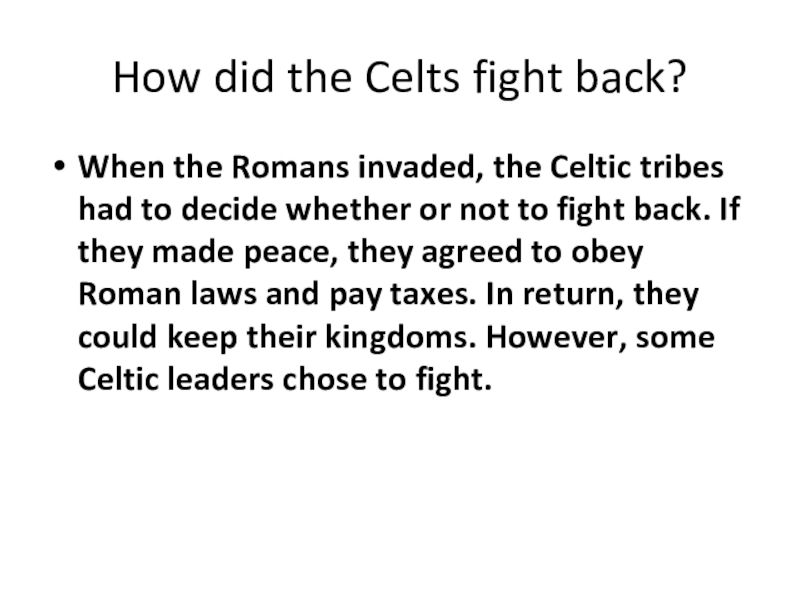
. King Caratacus was the King of a British tribe called
Catuvellaunians (cat-u-vell-aneans). They tried to stop the Romans taking over Britain.
Caratacus was the first King to unite British tribes against the Romans.
Caratacus was the first King to unite British tribes against the Romans.
Слайд 15What happened to King Caratacus?
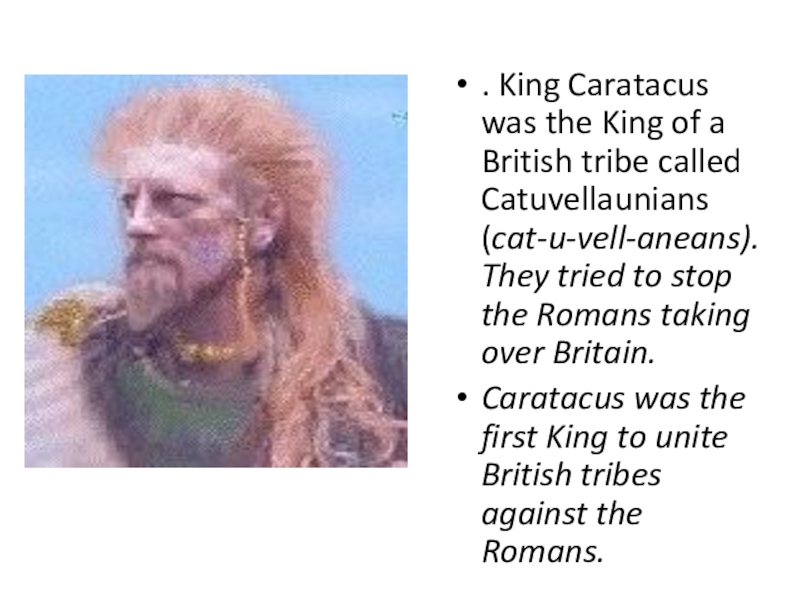
Caratacus fought against the Romans for 8
years but was beaten in the end.
He got taken to Rome. He thought he was going to be killed. Instead they let him go and he came back to Britain and died.
He got taken to Rome. He thought he was going to be killed. Instead they let him go and he came back to Britain and died.
Слайд 16After years of heavy taxes and the Romans taking their land,
some Celtic tribes were desperate for revenge. In AD60, one leader who chose to fight was Queen Boudicca of the Iceni tribe. She raised a huge army and went on a rampage, burning the Roman towns of Colchester and London, before heading north to St Albans.
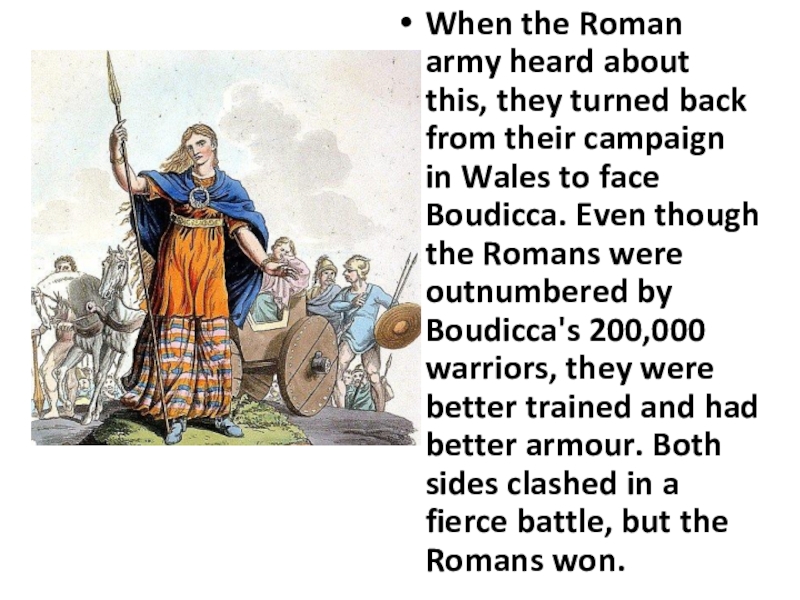
Слайд 17When the Roman army heard about this, they turned back from
their campaign in Wales to face Boudicca. Even though the Romans were outnumbered by Boudicca's 200,000 warriors, they were better trained and had better armour. Both sides clashed in a fierce battle, but the Romans won.
Слайд 18
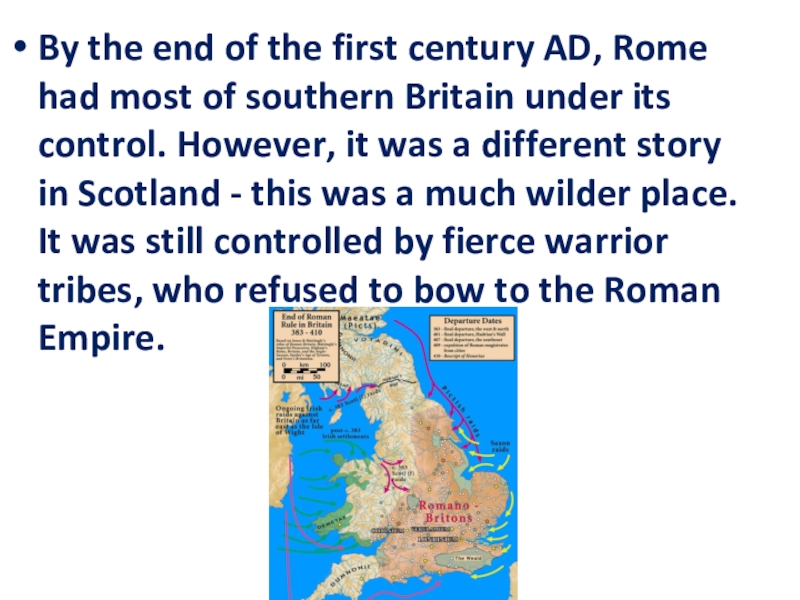
By the end of the first century AD, Rome had most
of southern Britain under its control. However, it was a different story in Scotland - this was a much wilder place. It was still controlled by fierce warrior tribes, who refused to bow to the Roman Empire.
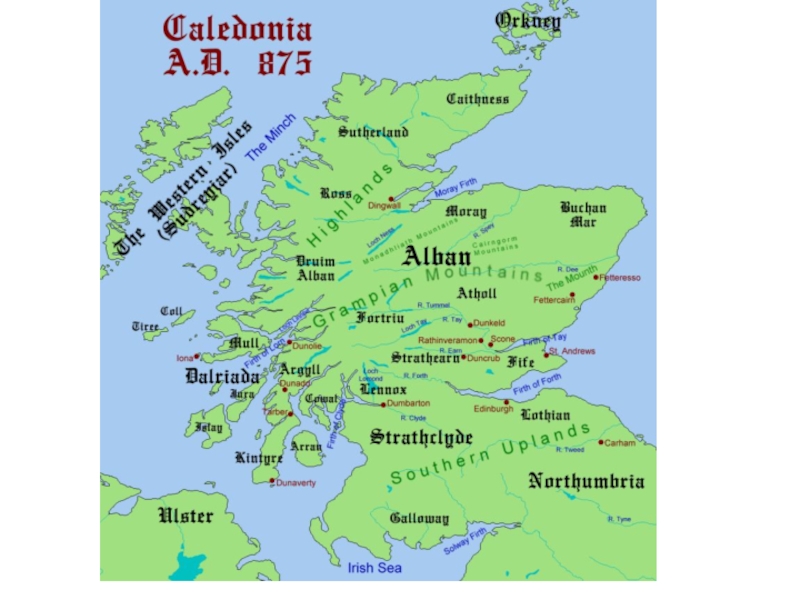
Слайд 20In the summer of AD84 some Caledonian tribes joined forces and
made a stand against the invading Roman army. The two sides fought at a place called Mons Graupius (the Grampian Mountains). The Romans were led by the Roman general Julius Agricola and the Caledonians were led by a fierce chief named Calgacus.
Слайд 21The Caledonians had 30,000 warriors, about twice as many as the
Romans. But the Romans were better organised and defeated the Caledonians. Even though Calgacus and his army had fled, the Caledonians returned many times to raid the Roman frontier.
A particularly troublesome tribe for the Romans were the Picts. ‘Picti’ means ‘painted ones’ in Latin, because the tribe were known for painting their bodies with tattoos.
A particularly troublesome tribe for the Romans were the Picts. ‘Picti’ means ‘painted ones’ in Latin, because the tribe were known for painting their bodies with tattoos.
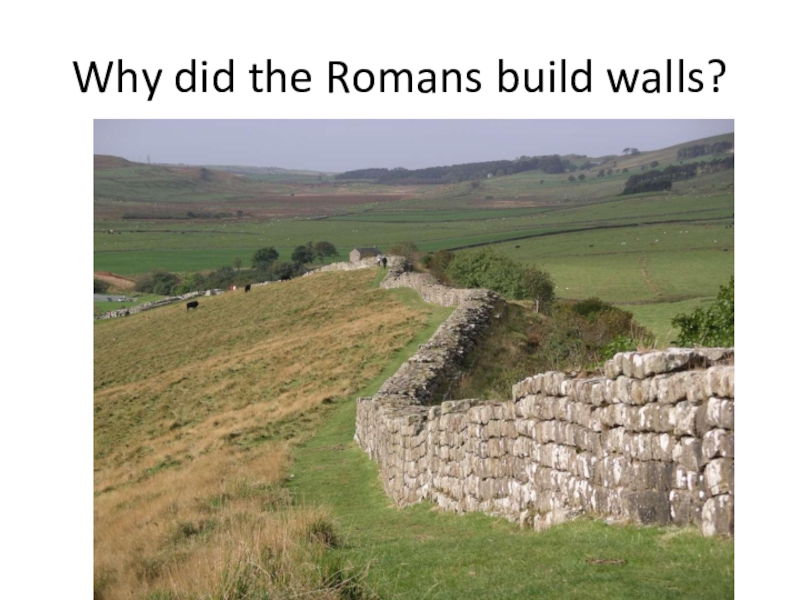
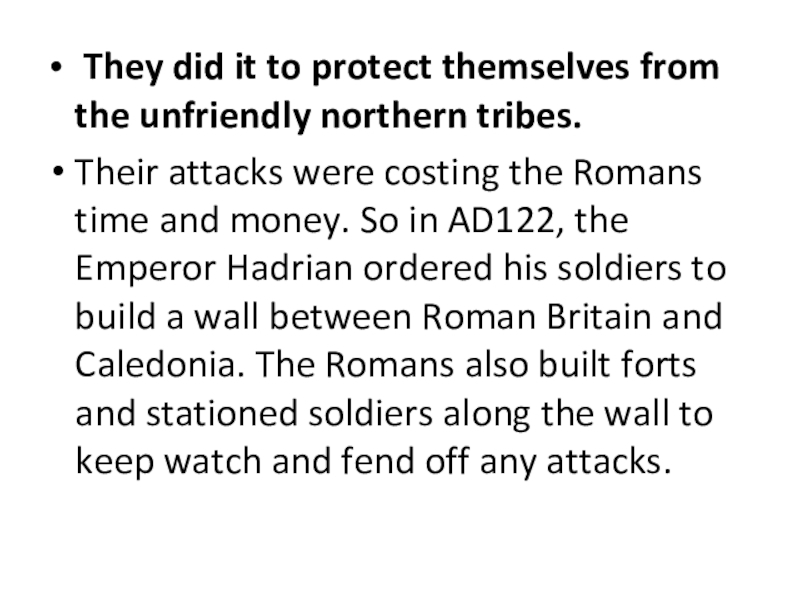
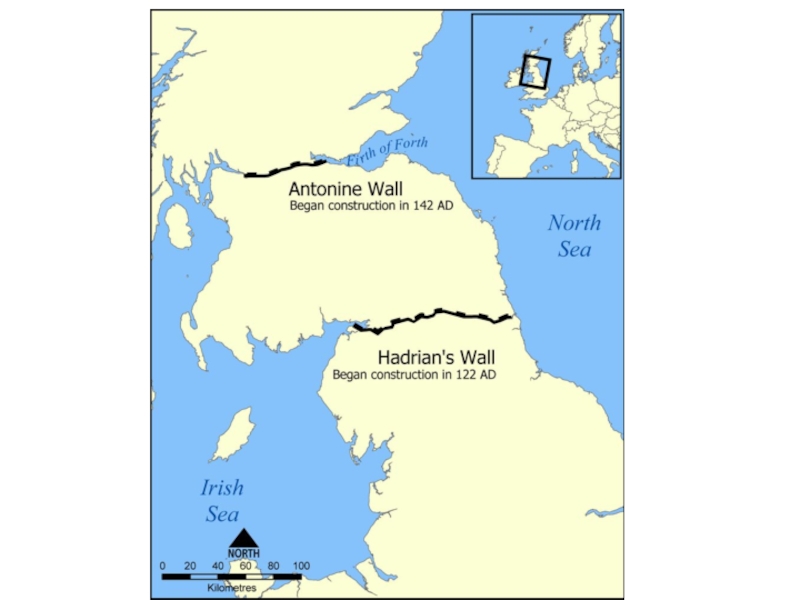
Слайд 23 They did it to protect themselves from the unfriendly northern tribes.
Their
attacks were costing the Romans time and money. So in AD122, the Emperor Hadrian ordered his soldiers to build a wall between Roman Britain and Caledonia. The Romans also built forts and stationed soldiers along the wall to keep watch and fend off any attacks.
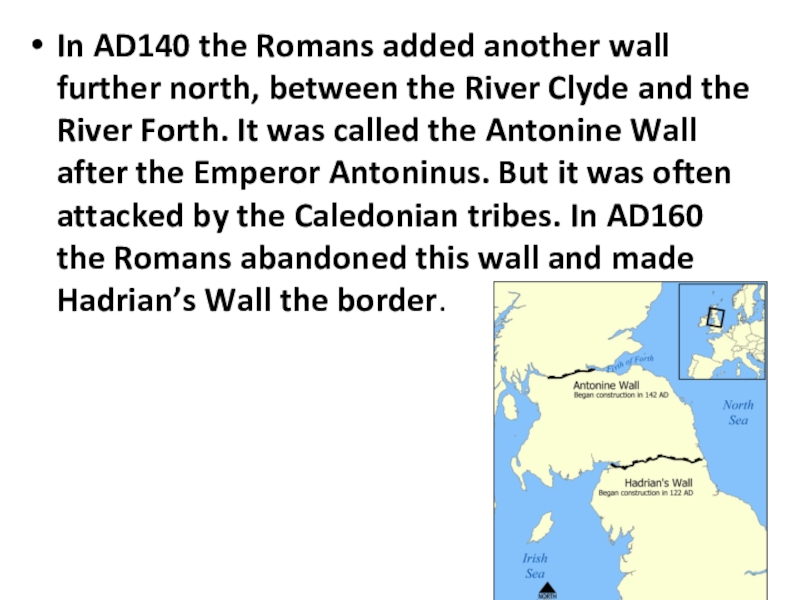
Слайд 24In AD140 the Romans added another wall further north, between the
River Clyde and the River Forth. It was called the Antonine Wall after the Emperor Antoninus. But it was often attacked by the Caledonian tribes. In AD160 the Romans abandoned this wall and made Hadrian’s Wall the border.
Слайд 26What was it like in Roman Britain?
When the Romans came to
Britain they brought their way of life with them. Over time, the people of Britain and the Romans mixed. The Britons began to live the Roman lifestyle and the Romans took on local customs.
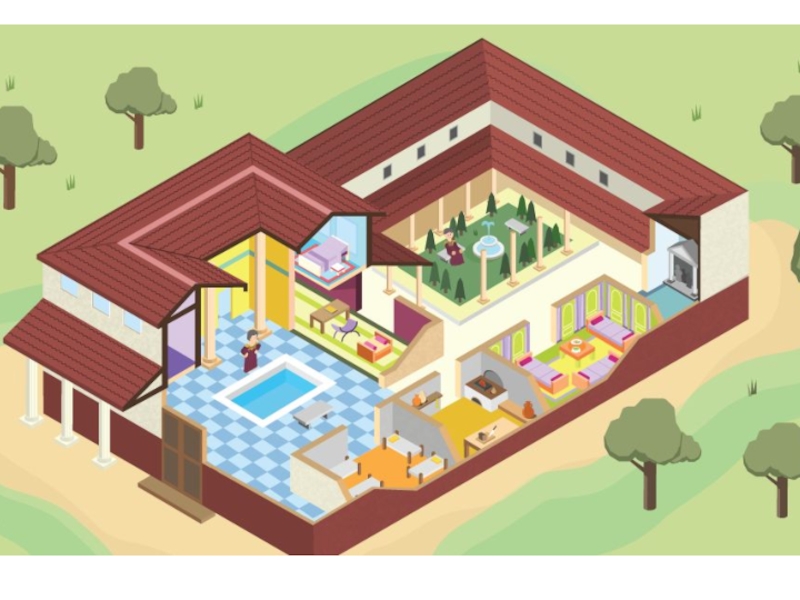
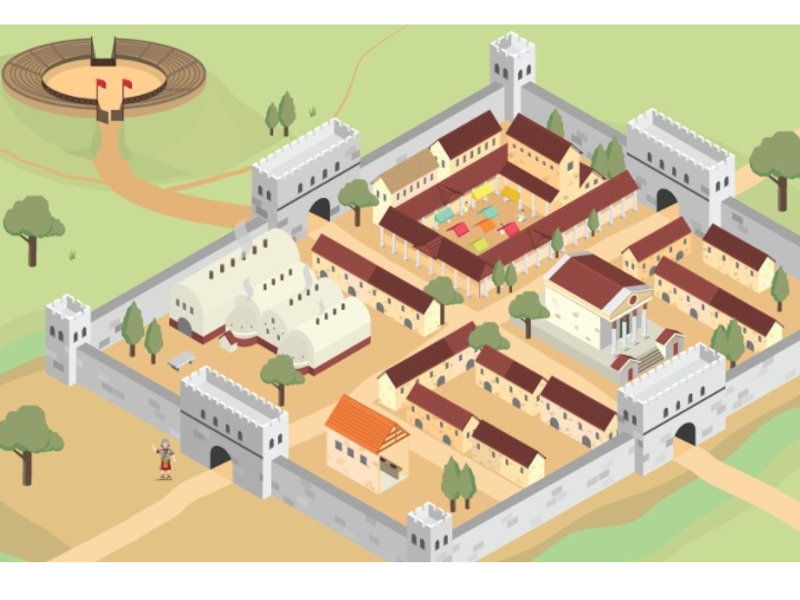
Слайд 27The Romans built new towns. These were often protected by walls
and there was everything a citizen of Roman Britain would need inside - houses, shops, meeting spaces, workshops, temples and bathhouses.
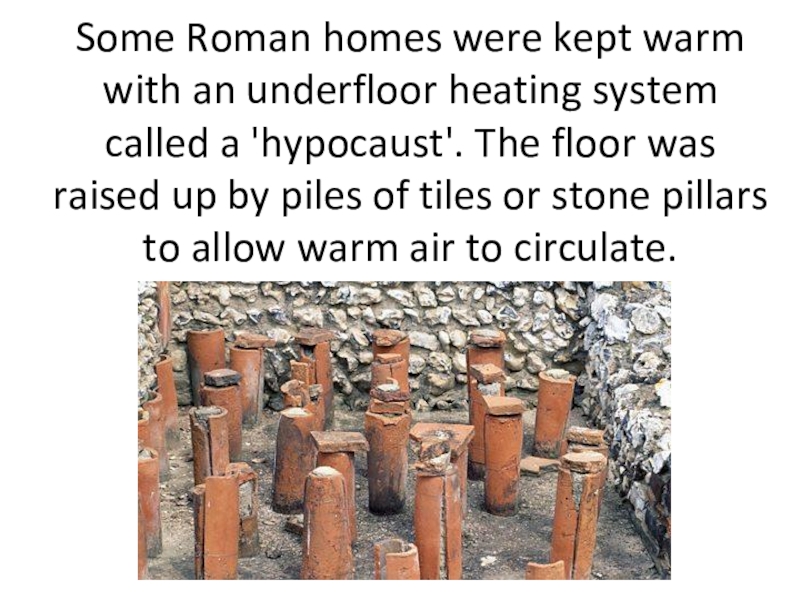
They also built grand country houses called 'villas'. These had many rooms, some with beautifully painted walls, mosaic floors and even central heating.
They also built grand country houses called 'villas'. These had many rooms, some with beautifully painted walls, mosaic floors and even central heating.
Слайд 28What were houses like?
People mainly lived in small villages of wooden
houses with thatched roofs, much as they had before the Romans arrived.
Слайд 29However, some wealthy Romans lived in villas and palaces. Villas were
large farms with a big house for the owners. They had lots of servants and farm workers to help run the villa.
Most of the Roman villas found by archaeologists are in the south of England. The governor of Britain had a palace in London. Another palace was beside the sea, at Fishbourne (near Chichester in West Sussex).
Most of the Roman villas found by archaeologists are in the south of England. The governor of Britain had a palace in London. Another palace was beside the sea, at Fishbourne (near Chichester in West Sussex).
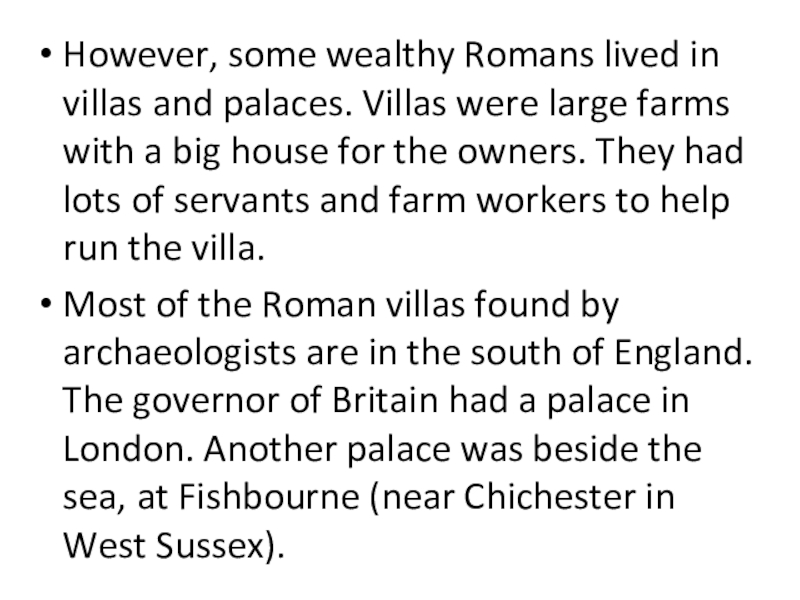
Слайд 30Some Roman homes were kept warm with an underfloor heating system
called a 'hypocaust'. The floor was raised up by piles of tiles or stone pillars to allow warm air to circulate.
Слайд 33
In AD 410, the Roman Emperor Honorius sent a goodbye letter
to the people of Britain. He wrote, “fight bravely and defend your lives... you are on your own now”. The city of Rome was under attack and the empire was falling apart, so the Romans had to leave to take care of matters back home.
Слайд 34After they left, the country fell into chaos. Native tribes and
foreign invaders battled each other for power. Many of the Roman towns in Britain crumbled away as people went back to living in the countryside.
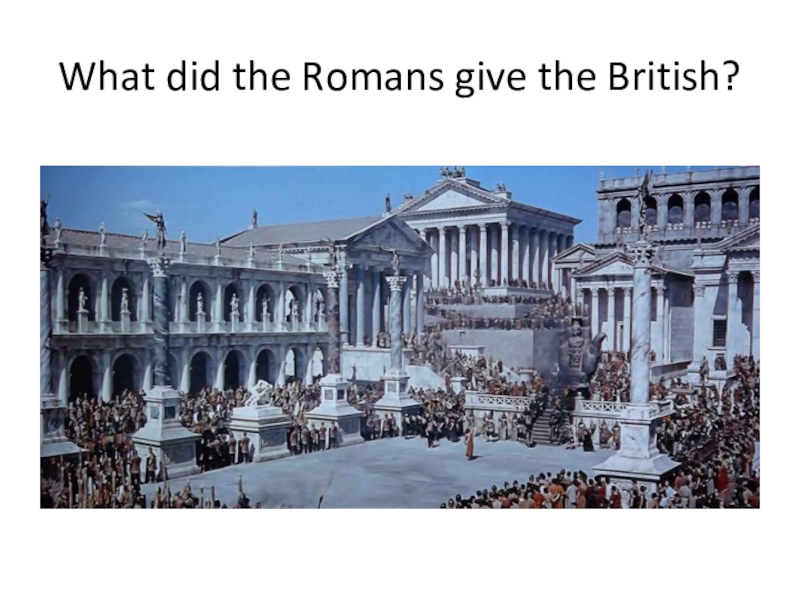
But even after they were gone, the Romans left their mark all over the country. They gave us new towns, plants, animals, a new religion and ways of reading and counting. Even the word ‘Britain’ came from the Romans.
But even after they were gone, the Romans left their mark all over the country. They gave us new towns, plants, animals, a new religion and ways of reading and counting. Even the word ‘Britain’ came from the Romans.
Слайд 36Roman roads
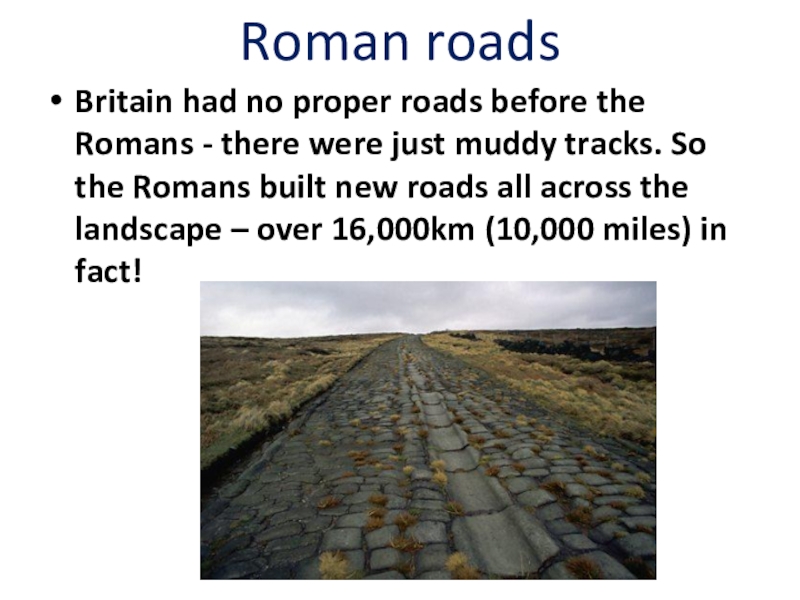
Britain had no proper roads before the Romans -
there were just muddy tracks. So the Romans built new roads all across the landscape – over 16,000km (10,000 miles) in fact!
Слайд 37The Romans introduced the idea of living in big towns and
cities. Roman towns were laid out in a grid. Streets criss-crossed the town to form blocks called ‘insulae’. In the middle was the ‘forum’, a big market square where people came to trade.
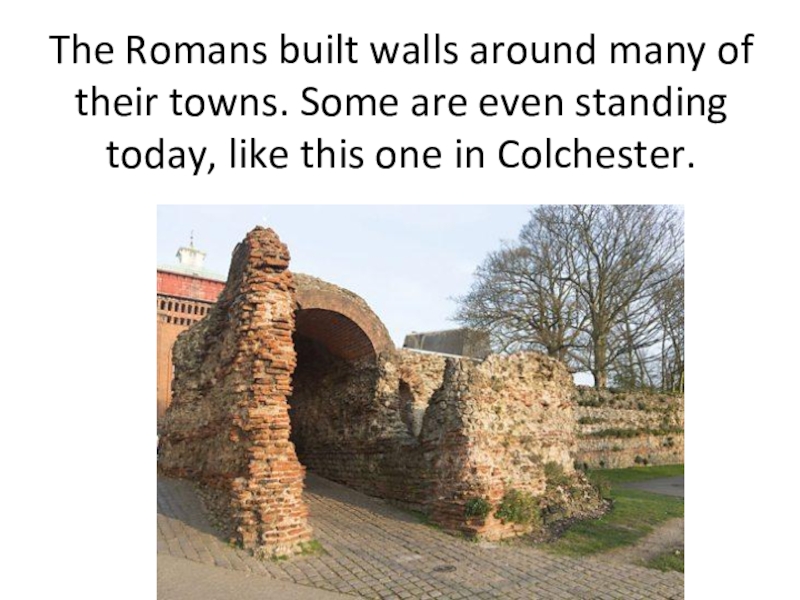
Слайд 38The Romans built walls around many of their towns. Some are
even standing today, like this one in Colchester.
Слайд 39Language, writing and numbers
Before the Romans came, very few people could
read or write in Britain. Instead, information was usually passed from person to person by word of mouth.
The Romans wrote down their history, their literature and their laws. Their language was called Latin, and it wasn’t long before some people in Britain started to use it too.
The Romans wrote down their history, their literature and their laws. Their language was called Latin, and it wasn’t long before some people in Britain started to use it too.
Слайд 40We've still got lots of words and phrases today that come
from Latin. Words like ‘exit’, which means ‘he or she goes out’, and ‘pedestrian’, which means ‘going on foot’.
If a place-name has 'chester', 'caster' or 'cester' in it, it's almost certainly Roman (for example, Gloucester, Doncaster and Manchester). The word ‘chester’ comes from the Latin word ‘castrum’ which means ‘a fort’.
If a place-name has 'chester', 'caster' or 'cester' in it, it's almost certainly Roman (for example, Gloucester, Doncaster and Manchester). The word ‘chester’ comes from the Latin word ‘castrum’ which means ‘a fort’.
Слайд 41The Calendar Did you know that the calendar we use today is
more than 2,000 years old? It was started by Julius Caesar, a Roman ruler. It is based on the movement of the earth around the sun, and so is called the 'solar calendar.' The solar calendar has 365 days a year, and 366 days every leap year, or every fourth year. The names of our months are taken from the names of Roman gods and rulers. The month 'July,' in fact, is named after Julius Caesar himself!
Слайд 42Laws and a legal system The laws and ways we determine what
to do with someone who is accused of breaking a law came originally from the Roman Empire.
Слайд 43The Census The Roman Empire was huge and included millions of people
living over a large area. How did they keep track of all these people? Easy! They counted them! The Roman Empire began the practice of taking a census, or a 'count,' of all the people within its boundaries every so often. Today, many countries like ours take a census every 10 years.
Слайд 44The Romans also gave Britons :
straight roads
central heating
concrete
aqueducts (bridges for water)