- Главная
- Разное
- Образование
- Спорт
- Естествознание
- Природоведение
- Религиоведение
- Французский язык
- Черчение
- Английский язык
- Астрономия
- Алгебра
- Биология
- География
- Геометрия
- Детские презентации
- Информатика
- История
- Литература
- Математика
- Музыка
- МХК
- Немецкий язык
- ОБЖ
- Обществознание
- Окружающий мир
- Педагогика
- Русский язык
- Технология
- Физика
- Философия
- Химия
- Шаблоны, фоны, картинки для презентаций
- Экология
- Экономика
Презентация, доклад по страноведению на тему The USA history. Lecture.
Содержание
- 1. Презентация по страноведению на тему The USA history. Lecture.
- 2. The discovery of America (the New World)Colonial
- 3. New trade routesNew enterprises and richesNew lands
- 4. 986 ADa norseman Bjarni Herjolfsson sailed from
- 5. Around 1000 AD A norseman Leif Ericsson
- 6. 1492 an italian sailor Christopher Columbus sailed
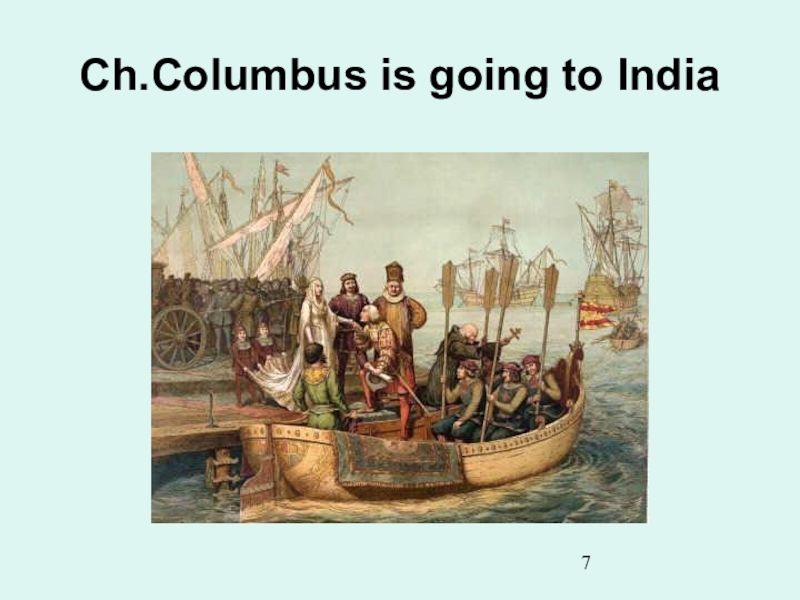
- 7. Ch.Columbus is going to India
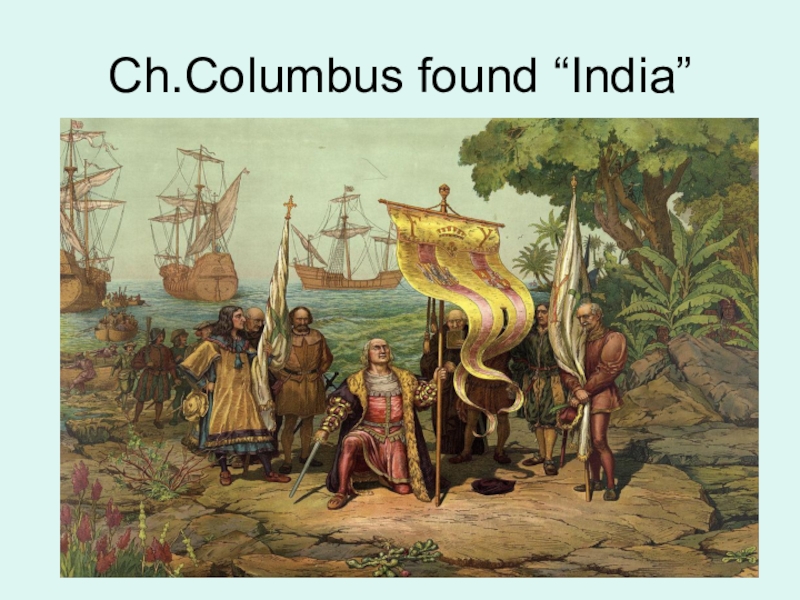
- 8. Ch.Columbus found “India”
- 9. 1497 an englishman John CabotEngland - the
- 10. 1499 an italian sailor Amerigo Vespucci explored
- 11. a German, Martin Waldseemuller was working on
- 12. The Geradus Mercator World Map
- 13. The chief nations - Spain, England and
- 14. Florida, Texas, and the Southwest, including California
- 15. English Puritans came to
- 16. 1630 - Massachusetts Bay colony 1636 -
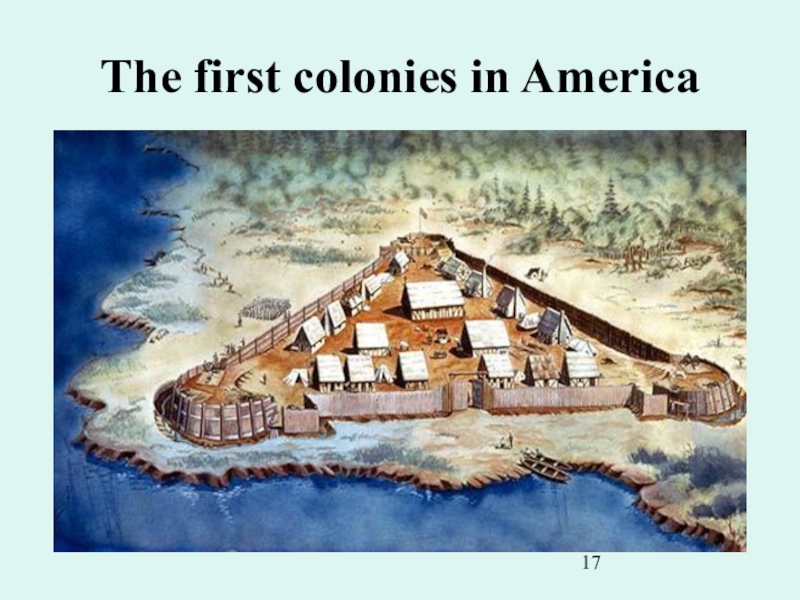
- 17. The first colonies in America
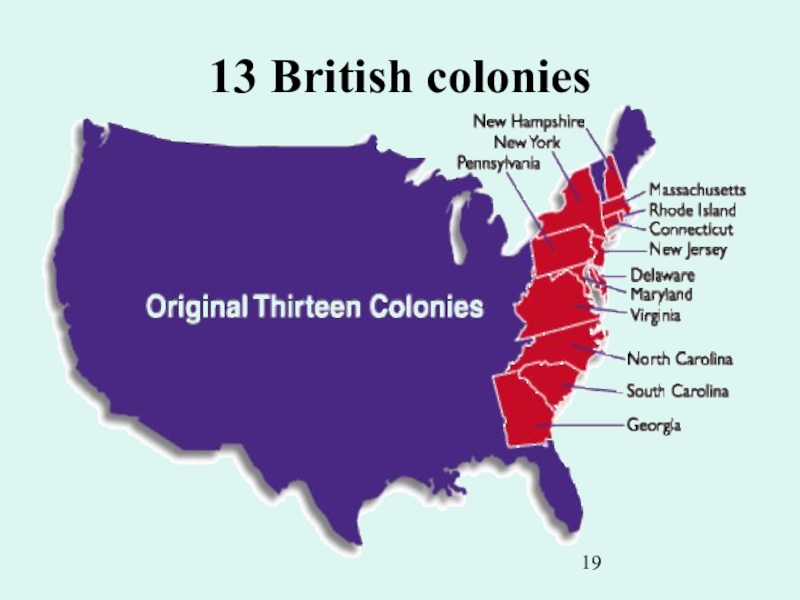
- 18. 1733 - 13 English colonies along
- 19. 13 British colonies
- 20. Слайд 20
- 21. - Europeans – mostly
- 22. - The Indians' inventions are
- 23. Europeans : - took the lands of
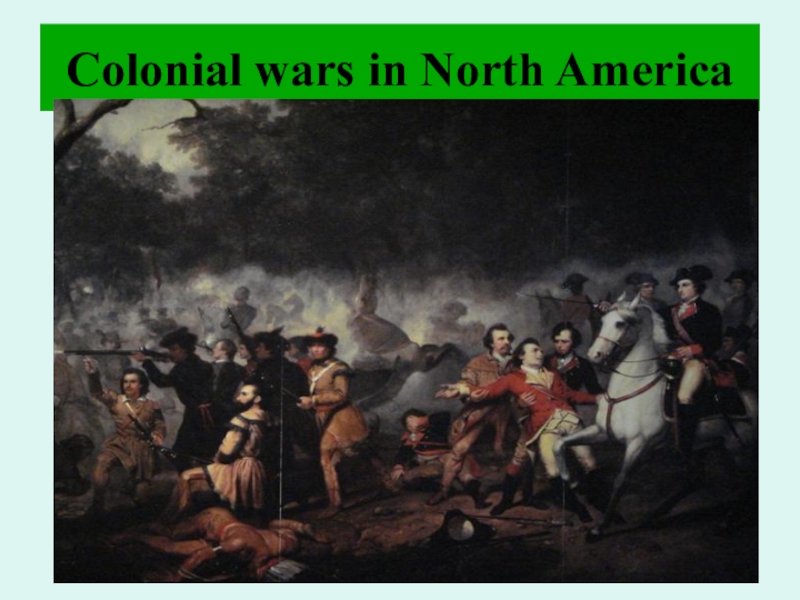
- 24. Colonial wars in North America
- 25. 1619 - several Negroes were
- 26. The beginning of slavery in Americasmall farms
- 27. The War for Independence (1775-1783):1) The Seven
- 28. The Seven Years War (1756-1763)
- 29. After the war:Britain – the greatest colonial
- 30. 1773 The British government allowed “The East
- 31. “Boston Tea Party” - Closing of the
- 32. - 1774 – the First Continental CongressApril
- 33. - 1777 – American soldiers defeated British
- 34. The consequences of the war:no feudalismdevelopment of
- 35. The American Civil War (1861-1865)The USA was
- 36. 186111 southern states left the Union and
- 37. General Grant - commander-in-chief in the Norththe
- 38. The Civil War - traumatic
- 39. By the end of the 19-th century1869
- 40. By the end of the 19-th centuryMultiple
- 41. The 1920sHenry Ford The Model T 1929
- 42. By 1932Failure of thousands of American banks,
- 43. December 1941 - the bombing
- 44. The United NationsThe USA and the Soviet
- 45. April, 1949 The US and Belgium,
- 46. 1945-1970 55 percent of all households owned
The discovery of America (the New World)Colonial AmericaThe war for independence (1775- 1783)The American civil war (1861-1865)The 20th centuryAmerica in the 21st century
Слайд 2
The discovery of America (the New World)
Colonial America
The war for independence
(1775- 1783)
The American civil war (1861-1865)
The 20th century
America in the 21st century
The American civil war (1861-1865)
The 20th century
America in the 21st century
Слайд 3
New trade routes
New enterprises and riches
New lands to build an empire
for their mother country
New lands to spread Christianity
New lands to spread Christianity
Слайд 4986 AD
a norseman Bjarni Herjolfsson sailed from Iceland to Greenland
a
shore with low-lying hills covered in vegetation
remains of a 1000-year-old viking-type settlement were found by archaeologists in Canada (1963)
remains of a 1000-year-old viking-type settlement were found by archaeologists in Canada (1963)
Слайд 5Around 1000 AD
A norseman Leif Ericsson - the first European
to visit the New World
many grape-vines
Vinland (Wineland)
many grape-vines
Vinland (Wineland)
Слайд 61492
an italian sailor Christopher Columbus sailed to search for a
new trade route to India
3 months of a difficult voyage
the Bahama Islands
the new land for Spain
3 months of a difficult voyage
the Bahama Islands
the new land for Spain
Слайд 91497
an englishman John Cabot
England - the North Atlantic - America
(north of Nova Scotia)
the new land for England
the new land for England
Слайд 101499
an italian sailor Amerigo Vespucci explored the coast of South
America
the New World was not India
the land of Amerigo
the New World was not India
the land of Amerigo
Слайд 11
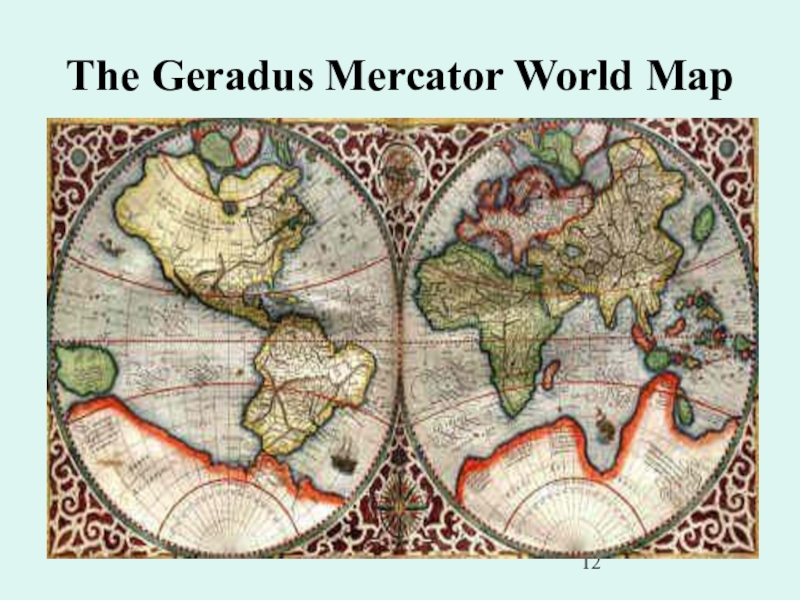
a German, Martin Waldseemuller was working on a world map, based
on the work of Ptolemy [‘tolimi]
the name "America" - across the southern continent of the New World
1000 copies of the map - in Europe
1538 - Geradus Mercator produced the first world map with printed names of North America and South America on the two continents
the name "America" - across the southern continent of the New World
1000 copies of the map - in Europe
1538 - Geradus Mercator produced the first world map with printed names of North America and South America on the two continents
![a German, Martin Waldseemuller was working on a world map, based on the work of Ptolemy [‘tolimi]](/img/thumbs/00ac57badab5848a75d086e11268a917-800x.jpg "Презентация по страноведению на тему The USA history. Lecture. a German, Martin Waldseemuller was working on a world map, based")
Слайд 13
The chief nations - Spain, England and France
1565 - the
first Spanish settlement Saint Augustine (North America)
Слайд 14
Florida, Texas, and the Southwest, including California - under control of
the Spanish
1607 - the first successful English settlement Jamestown (Virginia)
1607 - the first successful English settlement Jamestown (Virginia)
Слайд 15
English Puritans came to America to
escape religious persecution
1620 - Plymouth Colony [‘plimәθ] - the second permanent British settlement in North America and the first in New England
1620 - Plymouth Colony [‘plimәθ] - the second permanent British settlement in North America and the first in New England
Слайд 16
1630 - Massachusetts Bay colony
1636 - an English clergyman
Roger Williams left Massachusetts and founded the colony of Rhode Island
Слайд 18
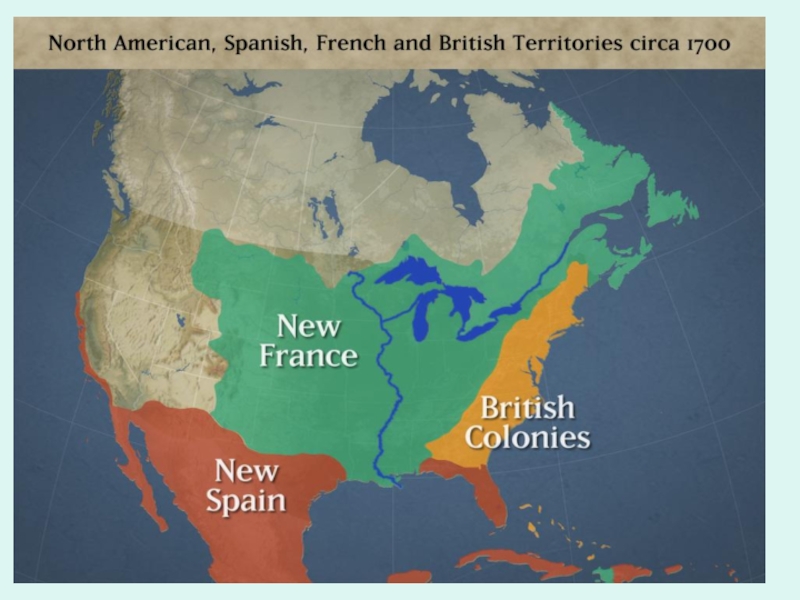
1733 - 13 English colonies along the Atlantic
Coast, from New Hampshire in the North to Georgia in the South
The French controlled Canada and Louisiana
The French controlled Canada and Louisiana
Слайд 21
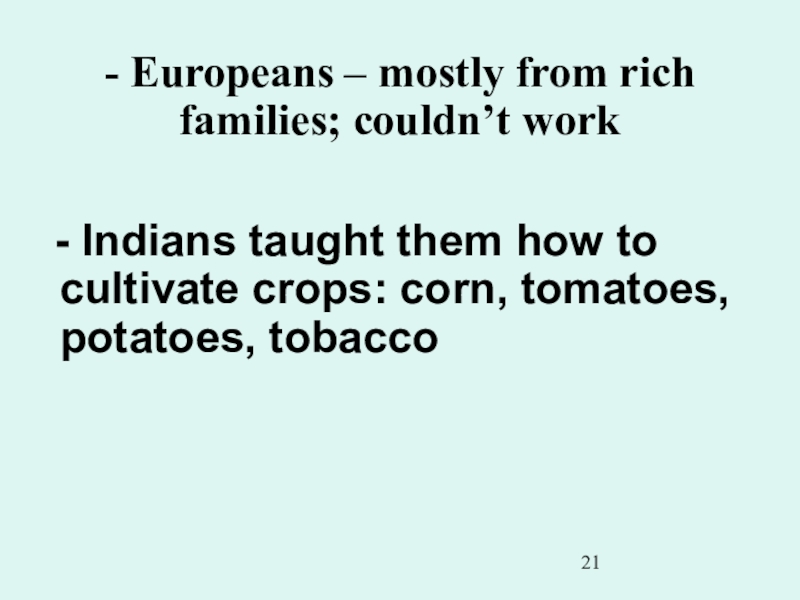
- Europeans – mostly from rich families; couldn’t work
- Indians
taught them how to cultivate crops: corn, tomatoes, potatoes, tobacco
Слайд 22
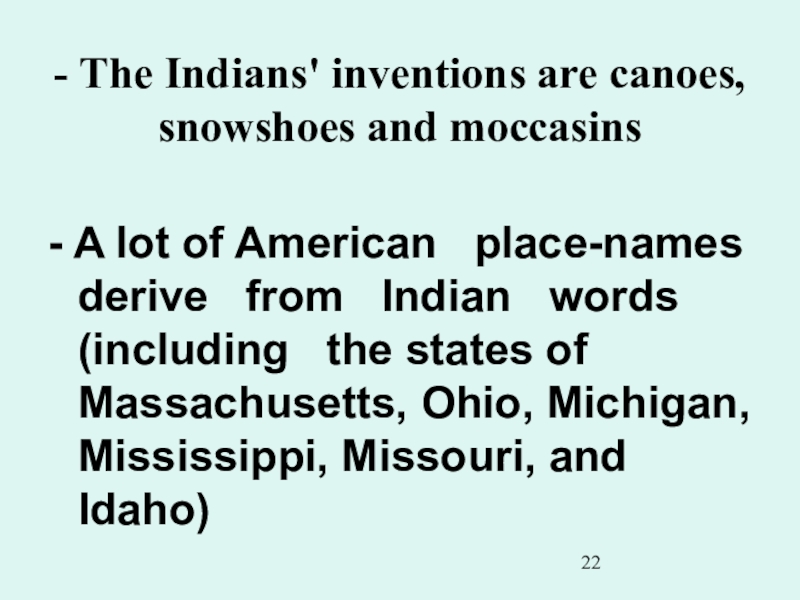
- The Indians' inventions are canoes, snowshoes and moccasins
- A lot
of American place-names derive from Indian words (including the states of Massachusetts, Ohio, Michigan, Mississippi, Missouri, and Idaho)
Слайд 23Europeans :
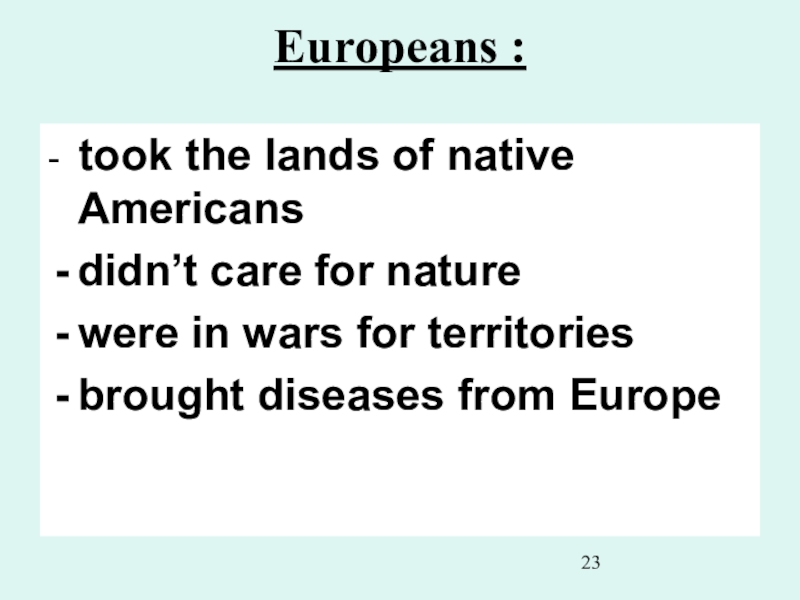
- took the lands of native Americans
didn’t care for nature
were
in wars for territories
brought diseases from Europe
brought diseases from Europe
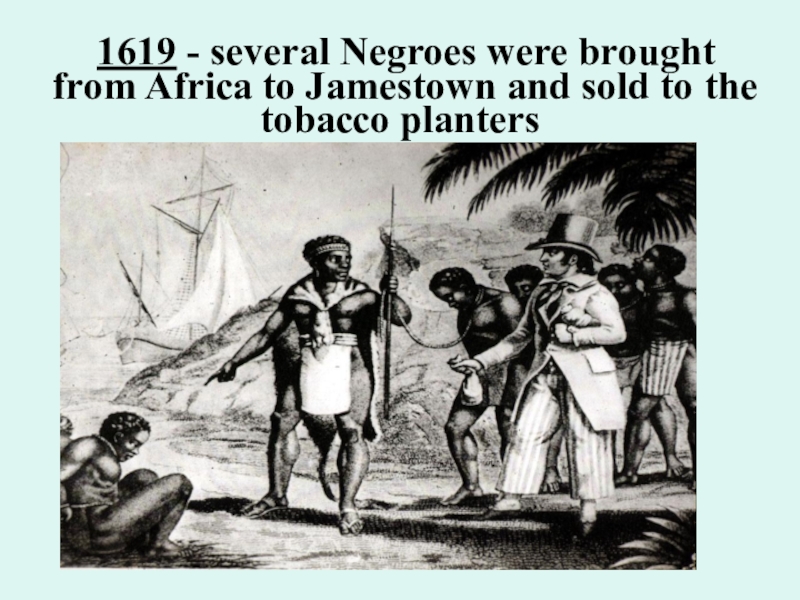
Слайд 25 1619 - several Negroes were brought from Africa to Jamestown
and sold to the tobacco planters
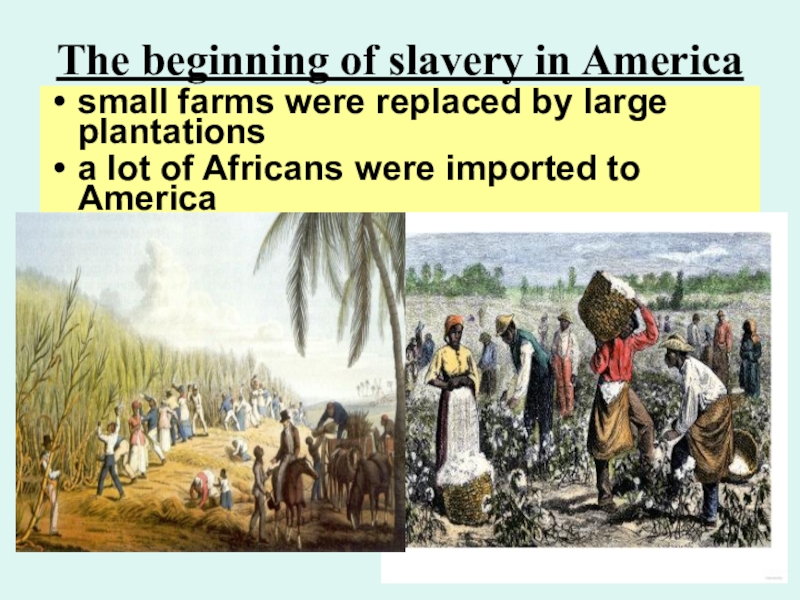
Слайд 26The beginning of slavery in America
small farms were replaced by large
plantations
a lot of Africans were imported to America
a lot of Africans were imported to America
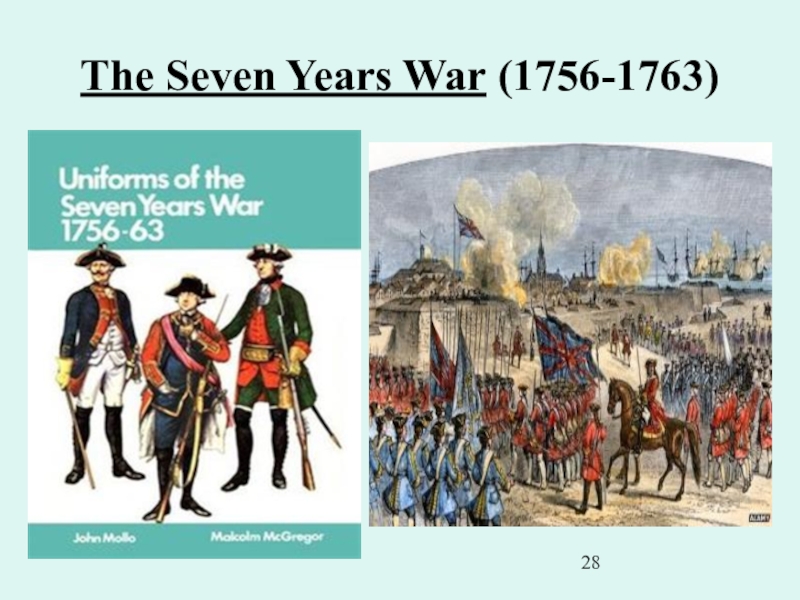
Слайд 27The War for Independence (1775-1783):
1) The Seven Years War (1756-1763):
- the
hostility between Prussia and Austria in Europe
- the colonial rivalries between Britain, France and Spain
- the colonial rivalries between Britain, France and Spain
Слайд 29After the war:
Britain – the greatest colonial power (India and North
America)
Britain wants to defray the cost of the war
New taxes on the colonies
Boycott of the British goods
Britain wants to defray the cost of the war
New taxes on the colonies
Boycott of the British goods
Слайд 301773
The British government allowed “The East India Company” to export
tax-free tea to the colonies
Colonists’ indignation
“Boston Tea Party”:
In Boston port, members of “Sons of Liberty” boarded British ships and dropped all boxes of tea into the water
Colonists’ indignation
“Boston Tea Party”:
In Boston port, members of “Sons of Liberty” boarded British ships and dropped all boxes of tea into the water
Слайд 31“Boston Tea Party”
- Closing of the Boston port
Sending a lot of
British soldiers to Boston
Sharpening of the conflict between Britain and its colonies
The War for Independence of American colonies from British rule
Sharpening of the conflict between Britain and its colonies
The War for Independence of American colonies from British rule
Слайд 32- 1774 – the First Continental Congress
April 19, 1775 – victorious
battle of colonists (Lexington, Massachusetts)
July 4, 1776 – the Continental Congress adopted the Declaration of Independence
Thomas Jefferson – the author and the 3d president (1801); 1803 – purchased Louisiana
The Declaration: the equality, the right to “life, freedom & pursuit of happiness”
July 4, 1776 – the Continental Congress adopted the Declaration of Independence
Thomas Jefferson – the author and the 3d president (1801); 1803 – purchased Louisiana
The Declaration: the equality, the right to “life, freedom & pursuit of happiness”
Слайд 33- 1777 – American soldiers defeated British (Saratoga, New York)
France &
America signed treaties of alliance
1783 – the Treaty of Paris – official ending of the war England recognized American independence
1783 – the Treaty of Paris – official ending of the war England recognized American independence
Слайд 34The consequences of the war:
no feudalism
development of capitalism in trade, industry
and agriculture
forming of 13 states
George Washington – the first president (commander-in-chief of the North American; did very much for the victory of the colonists)
forming of 13 states
George Washington – the first president (commander-in-chief of the North American; did very much for the victory of the colonists)
Слайд 35The American Civil War (1861-1865)
The USA was divided into 2 regions:
-
the industrializing North with free labour;
the agricultural South with slave labour.
1854 – foundation of the Republican Party (their rival - Democratic Party, founded in 1828, stood for slavery).
1860 - Abraham Lincoln - the president of the USA
the agricultural South with slave labour.
1854 – foundation of the Republican Party (their rival - Democratic Party, founded in 1828, stood for slavery).
1860 - Abraham Lincoln - the president of the USA
Слайд 361861
11 southern states left the Union and founded a Confederation (the
Confederate States of America)
The Civil war - the 2nd American revolution
The army of the South: fewer soldiers, but well-organized, brilliant tacticians among commanders
The Civil war - the 2nd American revolution
The army of the South: fewer soldiers, but well-organized, brilliant tacticians among commanders
Слайд 37
General Grant - commander-in-chief in the North
the North began to win
April,
1865 - the end of the Civil war
Слайд 38The Civil War - traumatic episode with important results
The
end of slavery
No more obstacles to capitalist development
the American nation - an indivisible whole both territorially and ethnically
No more obstacles to capitalist development
the American nation - an indivisible whole both territorially and ethnically
Слайд 39By the end of the 19-th century
1869 - the first transcontinental
railroad
By 1900 more rail mileage than all of Europe
The prosperity of the petroleum industry
Andrew Carnegie - a founder of the vast empire of steel mills
By 1900 more rail mileage than all of Europe
The prosperity of the petroleum industry
Andrew Carnegie - a founder of the vast empire of steel mills
Слайд 40By the end of the 19-th century
Multiple textile mills (in the
South)
Meat-packing plants (in Chicago, Illinois)
Electricity - to power streetcars, railways and subways
an architect Louis Sullivan - the first skyscraper using steel-frame (Chicago)
Meat-packing plants (in Chicago, Illinois)
Electricity - to power streetcars, railways and subways
an architect Louis Sullivan - the first skyscraper using steel-frame (Chicago)
Слайд 42By 1932
Failure of thousands of American banks, 100 000 businesses
Industrial
production - cut in half
Wages decreased 60 percent
Unemployment
Franklin D. Roosevelt – a president
Wages decreased 60 percent
Unemployment
Franklin D. Roosevelt – a president
Слайд 43
December 1941 - the bombing of Pearl
Harbor naval base in Hawaii by the Japanese
the World war II:
against Japan
against Germany and Italy
the World war II:
against Japan
against Germany and Italy
Слайд 44
The United Nations
The USA and the Soviet Union - worse relations
1963
- the US and the Soviet Union came to agreement on a limited ban of nuclear testing
the tension of the cold war eased
the tension of the cold war eased
Слайд 45April, 1949
The US and Belgium, Canada, Denmark, France, Iceland,
Italy, Luxembourg, the Netherlands, Norway, Portugal, and the United Kingdom - the North Atlantic Treaty Organization (NATO)
Слайд 461945-1970
55 percent of all households owned washing machines
77 percent owned
cars
90 percent had television sets
nearly all had refrigerators
90 percent had television sets
nearly all had refrigerators