- Главная
- Разное
- Образование
- Спорт
- Естествознание
- Природоведение
- Религиоведение
- Французский язык
- Черчение
- Английский язык
- Астрономия
- Алгебра
- Биология
- География
- Геометрия
- Детские презентации
- Информатика
- История
- Литература
- Математика
- Музыка
- МХК
- Немецкий язык
- ОБЖ
- Обществознание
- Окружающий мир
- Педагогика
- Русский язык
- Технология
- Физика
- Философия
- Химия
- Шаблоны, фоны, картинки для презентаций
- Экология
- Экономика
Презентация, доклад по иностранному языку на тему Крупный рогатый скот.
Содержание
- 1. Презентация по иностранному языку на тему Крупный рогатый скот.
- 2. Cattle are large grass-eating mammals with two-toed
- 3. The horns come out on either side
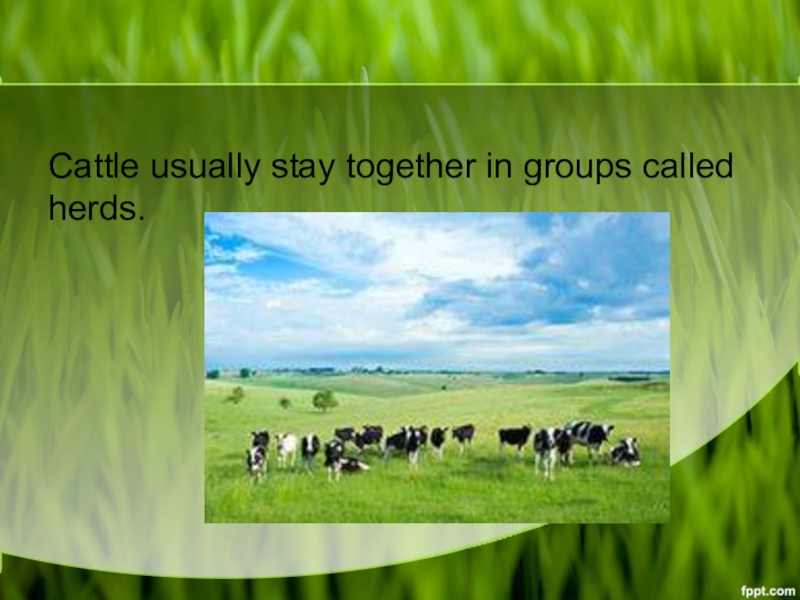
- 4. Cattle usually stay together in groups called herds.
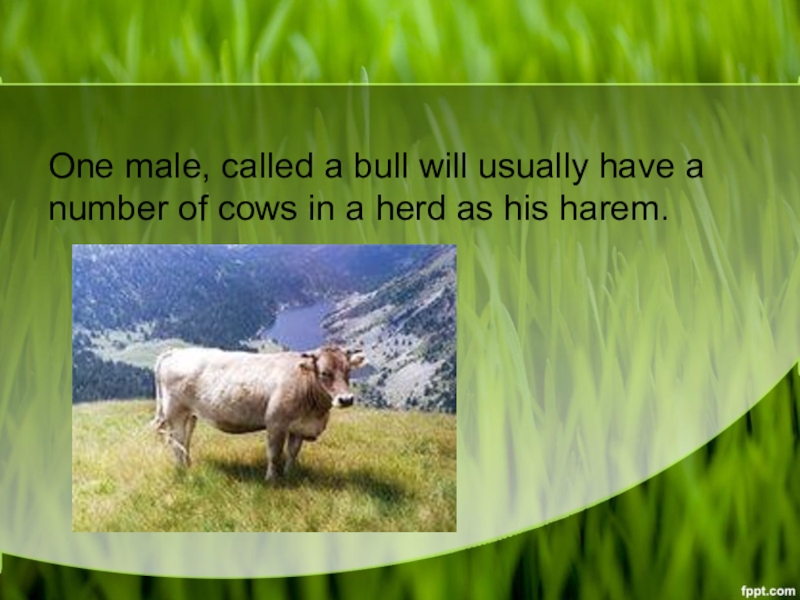
- 5. One male, called a bull will usually
- 6. The cows usually give birth to one
- 7. Cattle are native to most tropical and
- 8. Cattle are herbivorous, meaning that they are
- 9. Cattle are ruminants which mean they have
- 10. Слайд 10
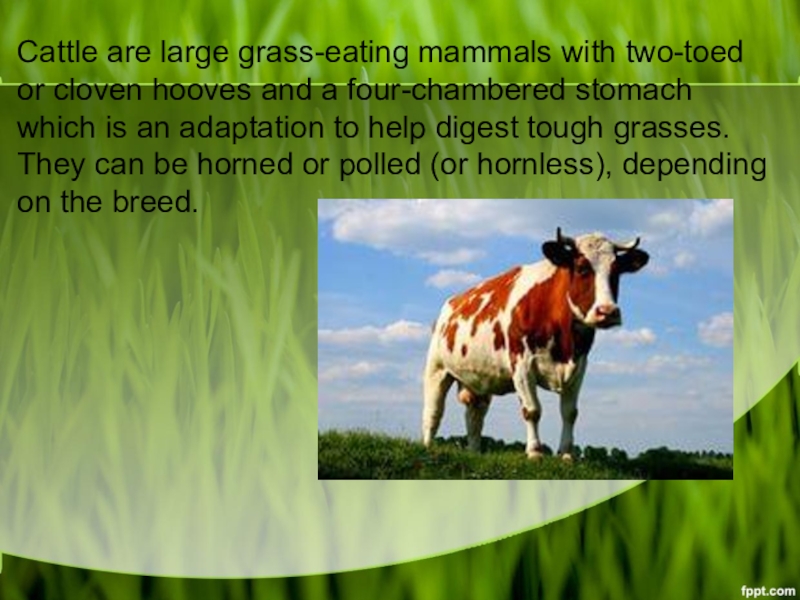
Cattle are large grass-eating mammals with two-toed or cloven hooves and a four-chambered stomach which is an adaptation to help digest tough grasses. They can be horned or polled (or hornless), depending on the breed.
Слайд 2
Cattle are large grass-eating mammals with two-toed or cloven hooves and
a four-chambered stomach which is an adaptation to help digest tough grasses. They can be horned or polled (or hornless), depending on the breed.
Слайд 3
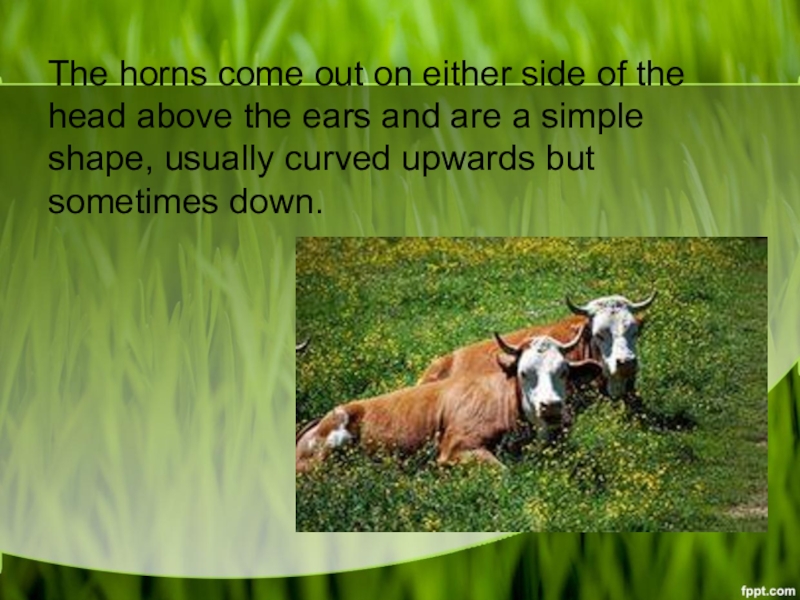
The horns come out on either side of the head above
the ears and are a simple shape, usually curved upwards but sometimes down.
Слайд 6
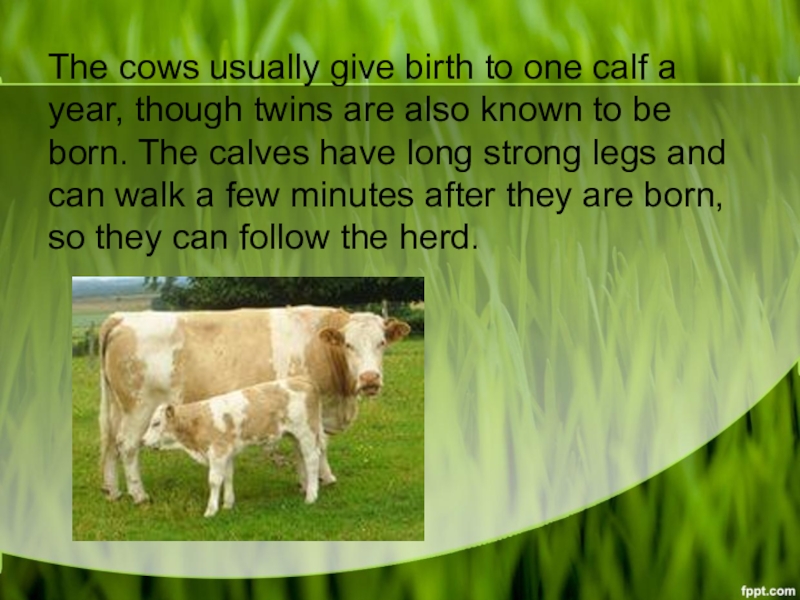
The cows usually give birth to one calf a year, though
twins are also known to be born. The calves have long strong legs and can walk a few minutes after they are born, so they can follow the herd.
Слайд 7
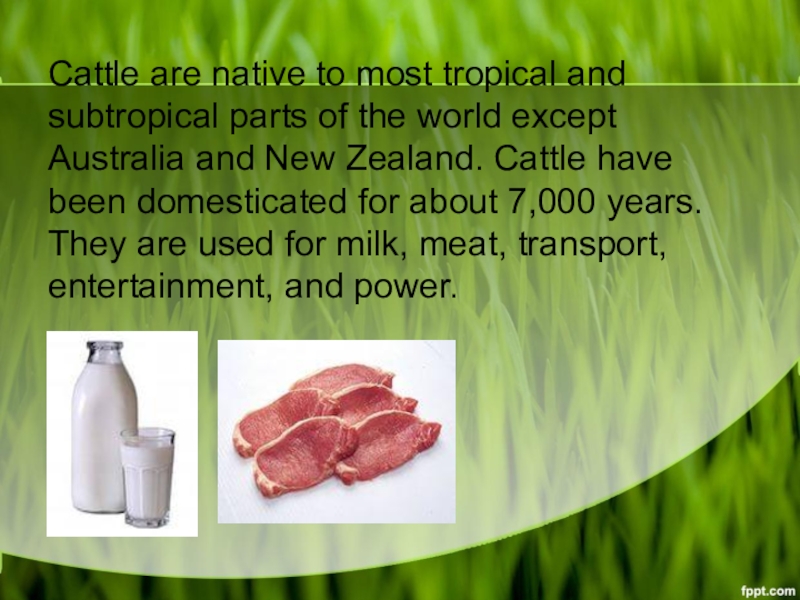
Cattle are native to most tropical and subtropical parts of the
world except Australia and New Zealand. Cattle have been domesticated for about 7,000 years. They are used for milk, meat, transport, entertainment, and power.
Слайд 8
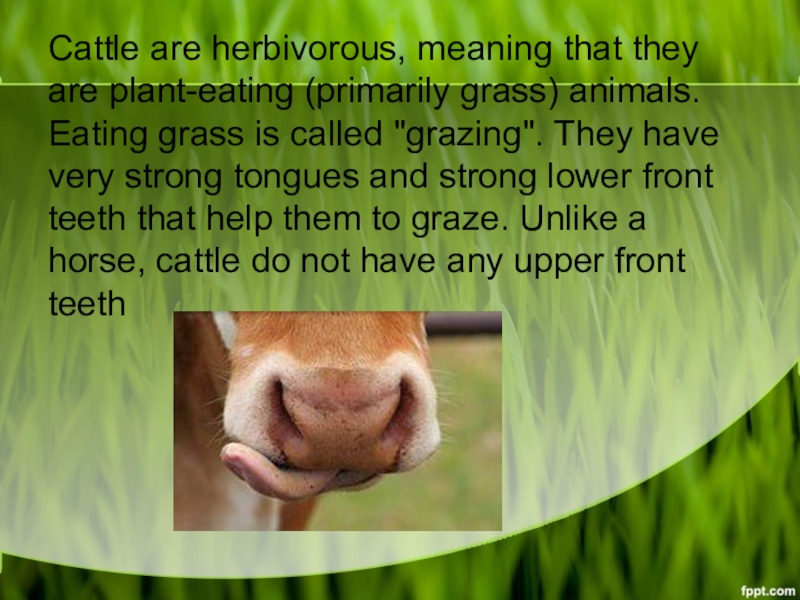
Cattle are herbivorous, meaning that they are plant-eating (primarily grass) animals.
Eating grass is called "grazing". They have very strong tongues and strong lower front teeth that help them to graze. Unlike a horse, cattle do not have any upper front teeth
Слайд 9
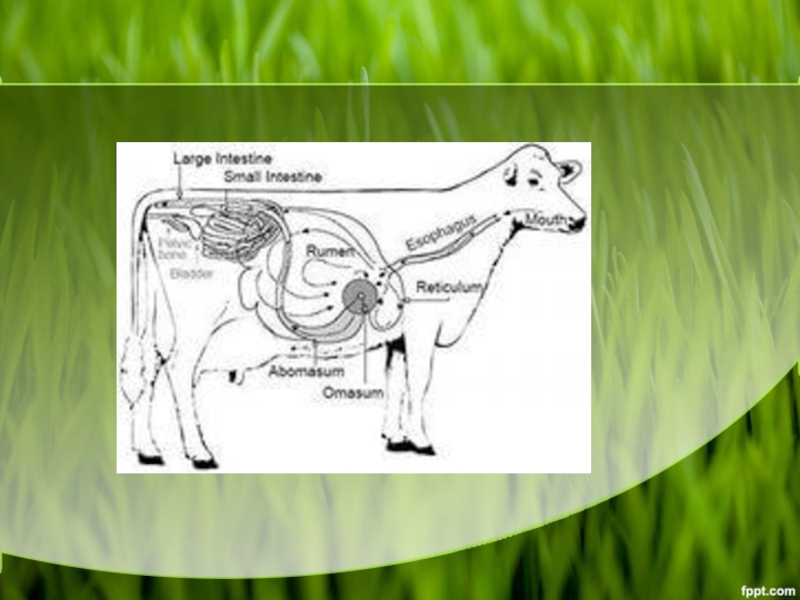
Cattle are ruminants which mean they have a stomach with several
chambers which helps digest their food more efficiently. A cow's stomach has four chambers called the reticulum, rumen, omasum and abomasum. The reticulum is known as the "hardware" stomach because it is mainly used as a storage area for hard things that the cow might accidentally swallow like nails, rocks and other objects. The rumen is the largest chamber in a ruminant's stomach, and in cattle it can hold up to 50 gallons feed. It is the chamber were fermentation takes place to help break down the grass that the cow has eaten. The omasum, also known as "many piles" is a compartment that squeezes or absorbs all the water that has accumulated from the digestion that has gone on in the rumen. The fourth chamber is the abomasum which similar in function to a human's stomach, and so is called the "true stomach."