- Главная
- Разное
- Образование
- Спорт
- Естествознание
- Природоведение
- Религиоведение
- Французский язык
- Черчение
- Английский язык
- Астрономия
- Алгебра
- Биология
- География
- Геометрия
- Детские презентации
- Информатика
- История
- Литература
- Математика
- Музыка
- МХК
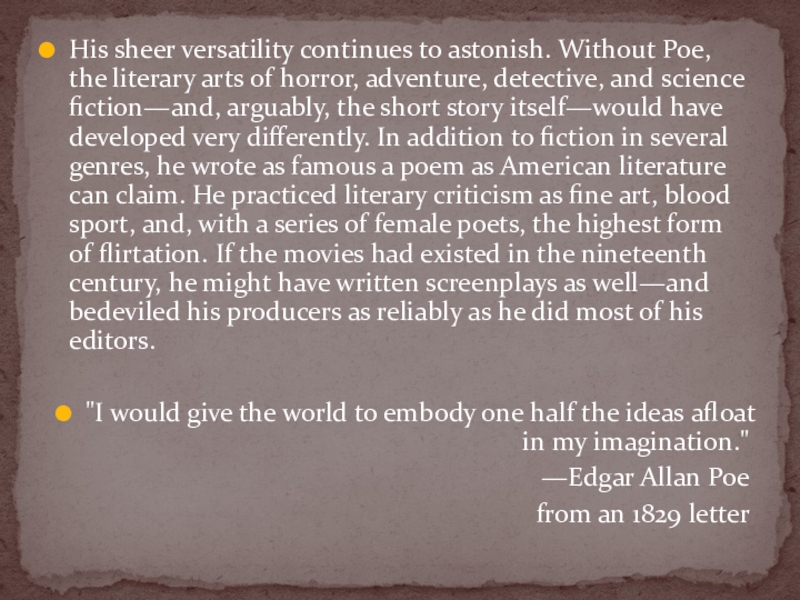
- Немецкий язык
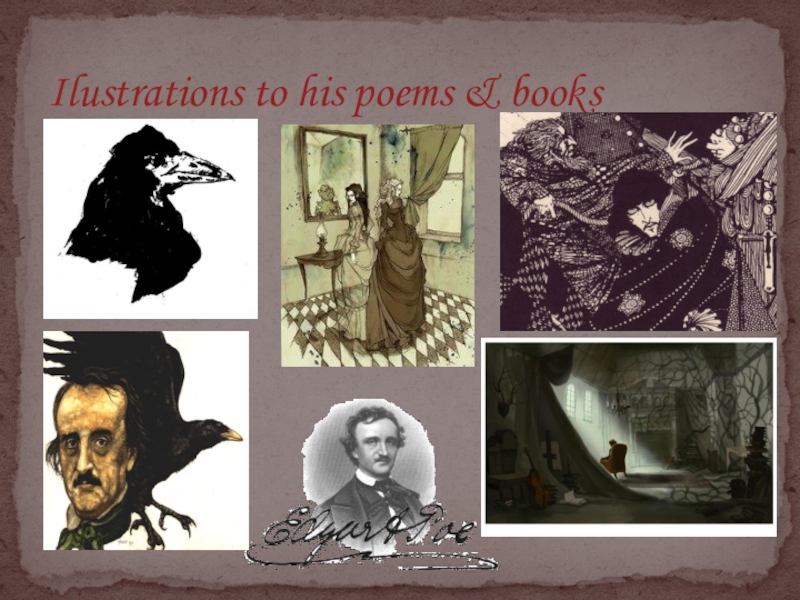
- ОБЖ
- Обществознание
- Окружающий мир
- Педагогика
- Русский язык
- Технология
- Физика
- Философия
- Химия
- Шаблоны, фоны, картинки для презентаций
- Экология
- Экономика
Презентация, доклад по английской литературе на тему Robert Burns
Содержание
- 1. Презентация по английской литературе на тему Robert Burns
- 2. Слайд 2
- 3. Слайд 3
- 4. Robert Burns (25 January 1759 – 21
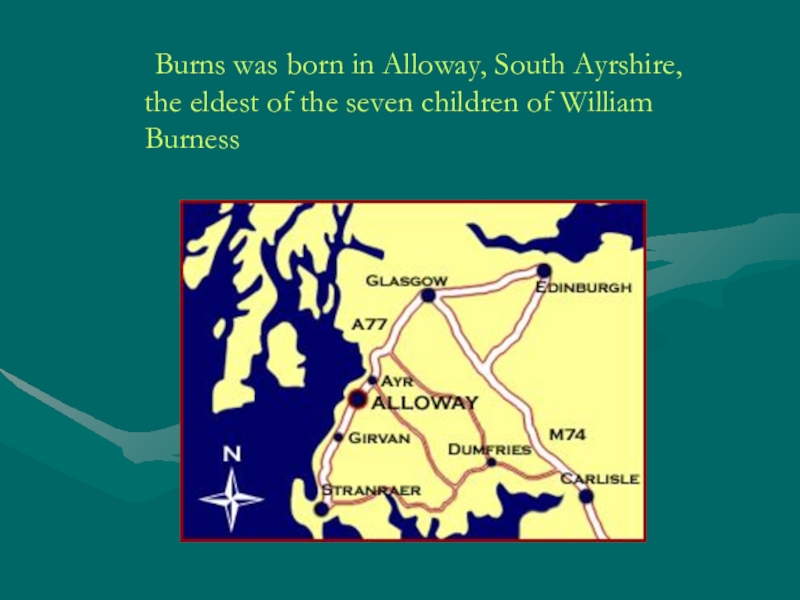
- 5. Burns was born in Alloway, South Ayrshire, the eldest of the seven children of William Burness
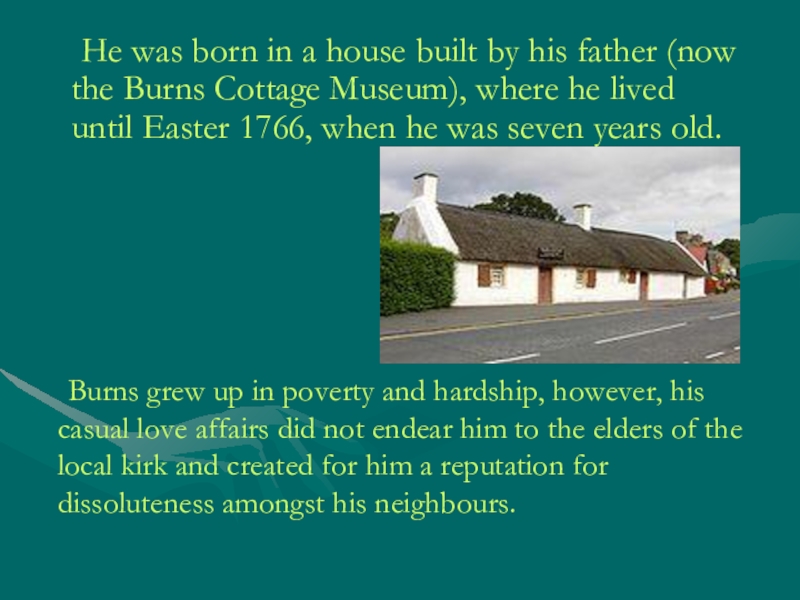
- 6. He was born in a house built
- 7. He got little school education.He could never
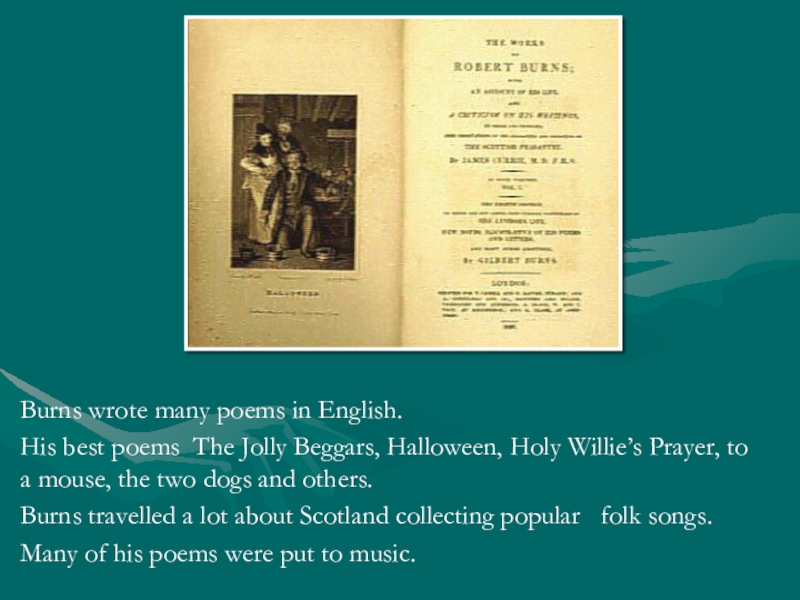
- 8. Burns wrote many poems in English. His
- 9. Poetry
- 10. Works of BurnsAmong 560 poems and songs
- 11. Lyrical: A red, red rosewritten in 1794, published in 1796
- 12. The poet’s song «Oh, my love is
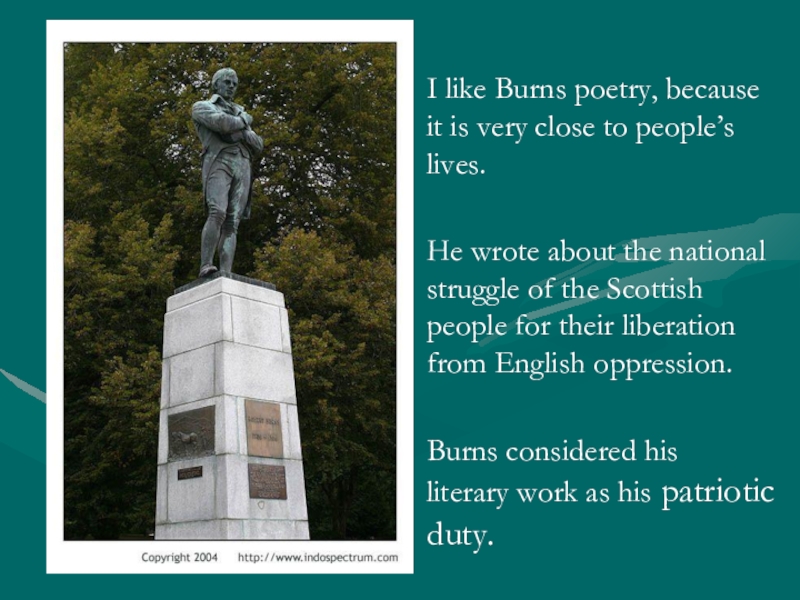
- 13. I like Burns poetry, because it is
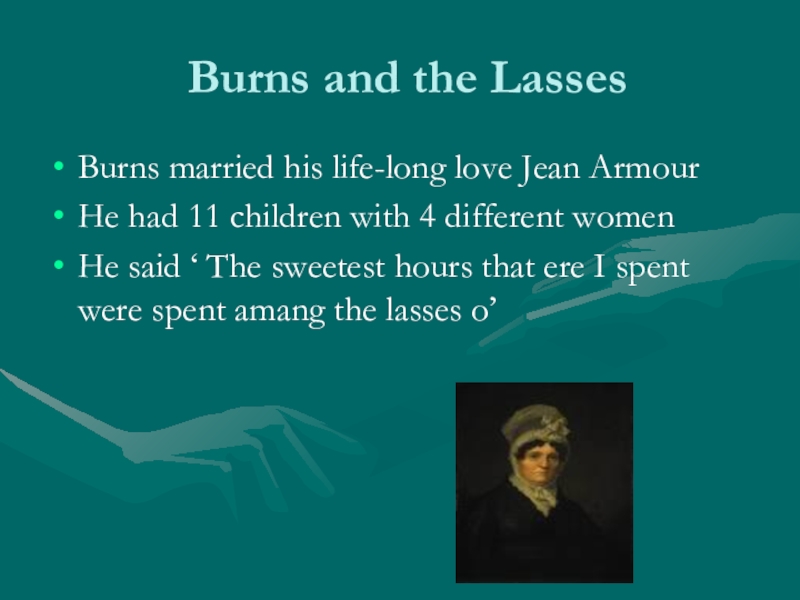
- 14. Burns and the LassesBurns married his life-long
- 15. Burns DayCelebrated all over the world
- 16. Thanks for attention!
- 17. Edgar Allan Po & his creation
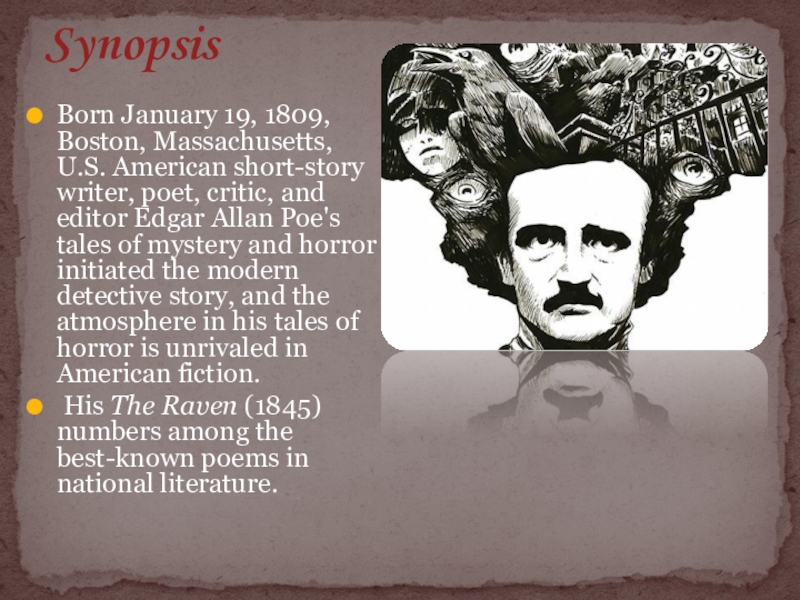
- 18. Born January 19, 1809, Boston, Massachusetts, U.S.
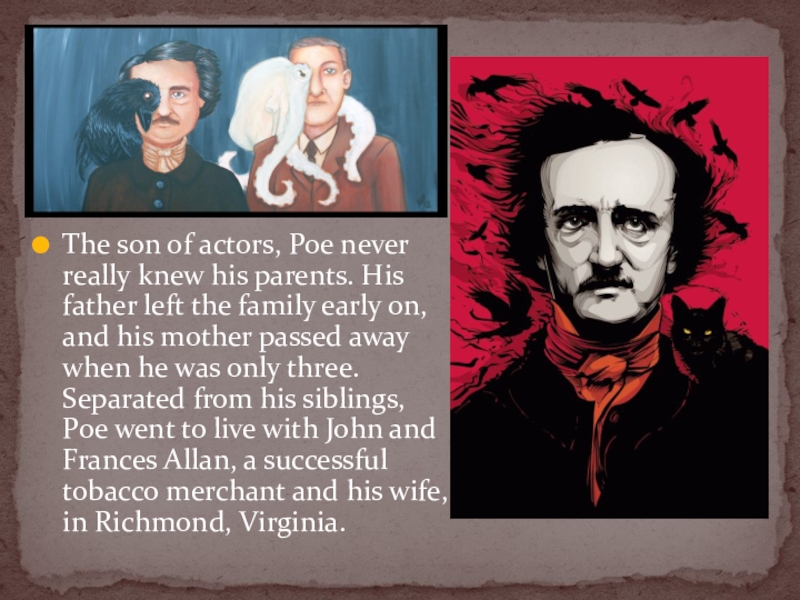
- 19. The son of actors, Poe never really
- 20. Poe turned to gambling to cover the
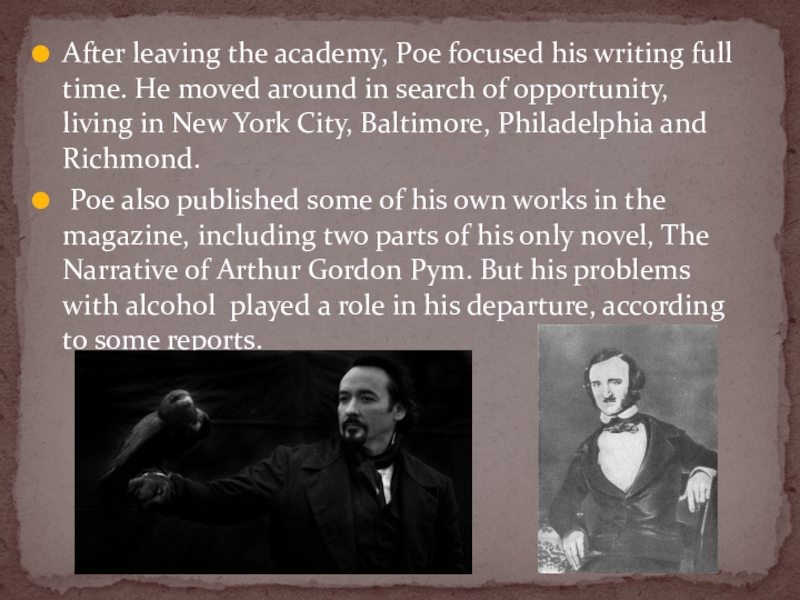
- 21. After leaving the academy, Poe focused his
- 22. His sheer versatility continues to astonish. Without
- 23. Ilustrations to his poems & books
- 24. Thank You For Watching my presentation!
- 25. Mark Twain
- 26. IntroductionMark Twain was the most celebrated writer
- 27. Father and MotherJohn Clemens- lawyer, storekeeper,
- 28. ChildhoodBorn Samuel Langhorne Clemens on November 30,
- 29. ChildhoodFather and uncle owned slavesSpent summer days
- 30. Young AdultAt 18 went to Philadelphia, New
- 31. Young AdultAt 21 he convinced Horace Bixby
- 32. Steamboat Pilot
- 33. Young AdultIn 1861, at 26 followed his
- 34. Twain’s TwentiesUnable to be profitable in either
- 35. Twain’s TwentiesWrote for the Territorial Enterprise for
- 36. Notable Quotes“Get your facts first, and then
- 37. Twain’s ThirtiesHis big break came in 1865
- 38. Twain’s Thirties In 1867, hired by Alto
- 39. Twain’s ThirtiesBig names of literary America where
- 40. Twain’s ThirtiesIn 1870,after dating for two years
- 41. Twain’s FortiesAlthough living in Hartford Twain found
- 42. Notable Quotes“I am opposed to millionaires, but
- 43. Twain’s FortiesIn 1880, Twain writes the book
- 44. Twain’s FortiesTwain rounds out his forties with
- 45. Twain’s FiftiesAfter writing “A Connecticut Yankee in
- 46. Twain’s FiftiesIn 1884, Twain started his own
- 47. Twain’s FiftiesTwain made some bad investments; one
- 48. Books
- 49. Twain’s FiftiesIn 1894, Twain writes “Tom Sawyer
- 50. Twain’s SixtiesIn 19oo Twain finishes paying off
- 51. James Fenimore Cooper
- 52. LifeWashington Irving (April 3, 1783 – November
- 53. Lifeboth of which appear in his book
- 54. Oliver Goldsmith and Muhammad, and several histories
- 55. He made his literary debut in 1802
- 56. After moving to England for the family
- 57. in 1819. He continued to publish regularly—and
- 58. Irving, along with James Fenimore Cooper, was
- 59. LifeHerman Melville, Henry Wadsworth Longfellow, and Edgar
- 60. LifeThomas Campbell, Francis Jeffrey, and Charles Dickens.
- 61. StoriesLetters of Jonathan OldstyleSalmagundiA History of New YorkThe Sketch Book of Geoffrey Crayon, Gent.
- 62. Name of PresentationCompany Name
- 63. Your text here Your Text HereYour Text HereYour Text Here
- 64. Your Text HereYour text here Your text
- 65. Your Text HereYour text here Your text
- 66. Your Text HereYour text here Your text
- 67. Your Text HereYour text here Your text
- 68. Your Text HereYour text here Your text
- 69. Your Text HereYour text here Your text
- 70. Your Text HereYour text here Your text
- 71. Mark Twain Running for GovernorNadya KalachyovaForm 11 ‘B’School 1
- 72. Mark TwainSamuel Langhorne Clemens (November 30, 1835 –
- 73. Twain grew up in Hannibal, Missouri, which
- 74. Mark Twain(1835-1910)
- 75. Mark Twain’s Masterpieces
- 76. Writing Characteristics of Mark TwainLiterature is
- 77. "Running for Governor""Running for Governor" appears to
- 78. Moreover it's clear as a day -
- 79. Surely, there are hints that remind of
- 80. As a result, such a great stream
- 81. Слайд 81
- 82. Слайд 82
- 83. Слайд 83
- 84. Mark Twain Running for GovernorNadya KalachyovaForm 11 ‘B’School 1
- 85. Mark TwainSamuel Langhorne Clemens (November 30, 1835 –
- 86. Twain grew up in Hannibal, Missouri, which
- 87. Mark Twain(1835-1910)
- 88. Mark Twain’s Masterpieces
- 89. Writing Characteristics of Mark TwainLiterature is
- 90. "Running for Governor""Running for Governor" appears to
- 91. Moreover it's clear as a day -
- 92. Surely, there are hints that remind of
- 93. As a result, such a great stream
- 94. Слайд 94
- 95. Слайд 95
- 96. Слайд 96
- 97. Demyanov Sergey11-A
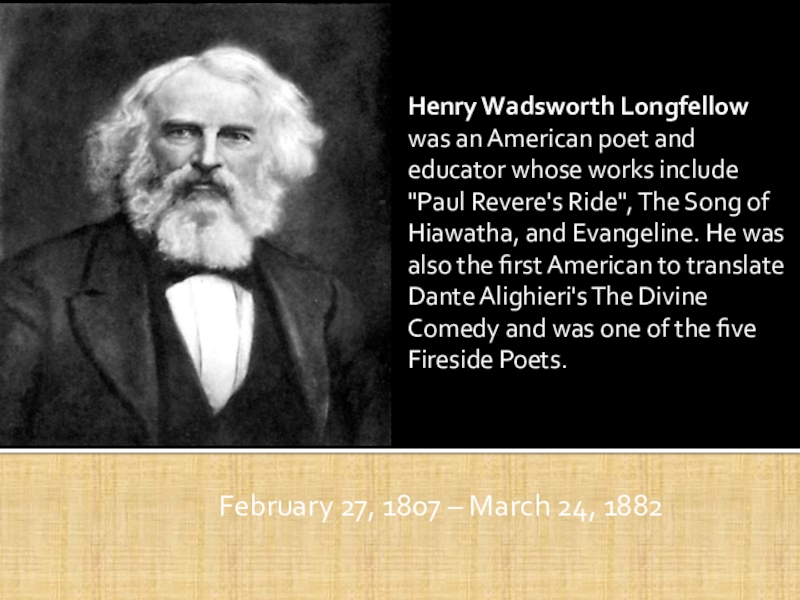
- 98. February 27, 1807 – March 24, 1882Henry
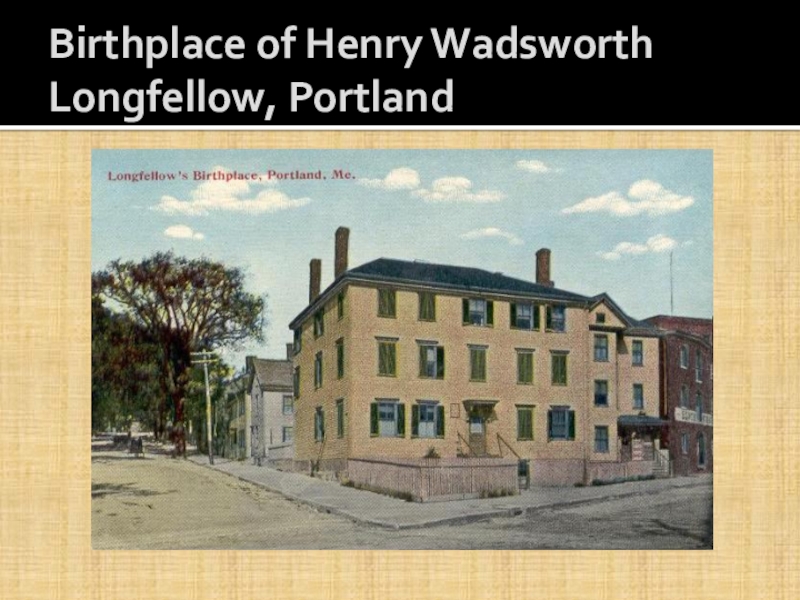
- 99. Longfellow was born in Portland, Maine, which
- 100. Birthplace of Henry Wadsworth Longfellow, Portland
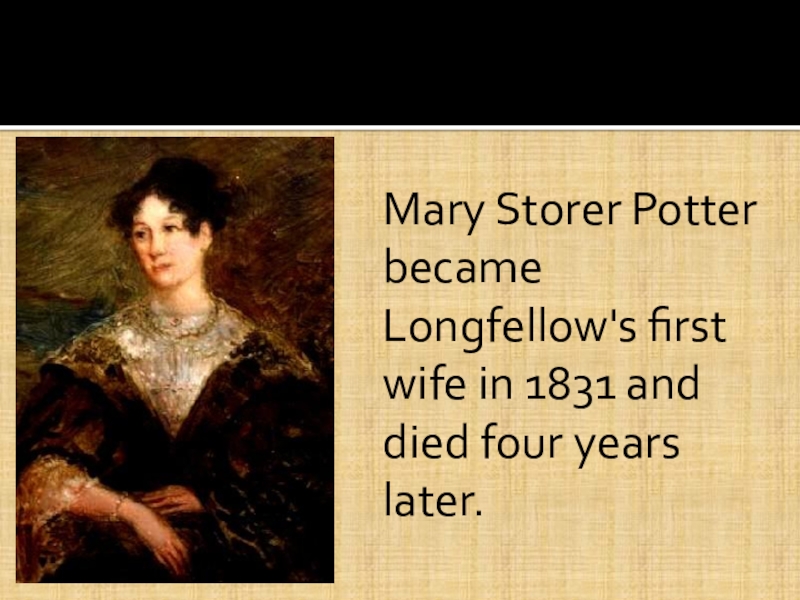
- 101. Mary Storer Potter became Longfellow's first wife in 1831 and died four years later.
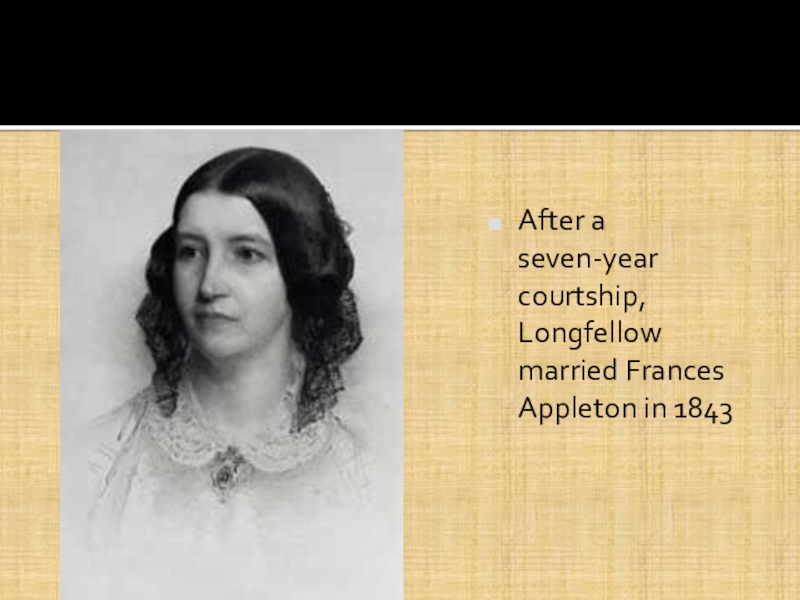
- 102. After a seven-year courtship, Longfellow married Frances Appleton in 1843
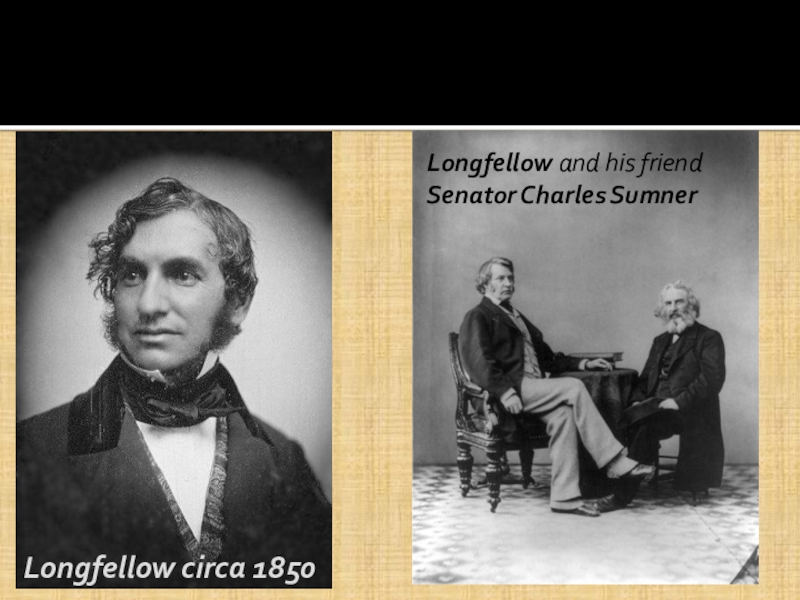
- 103. Longfellow circa 1850Longfellow and his friend Senator Charles Sumner
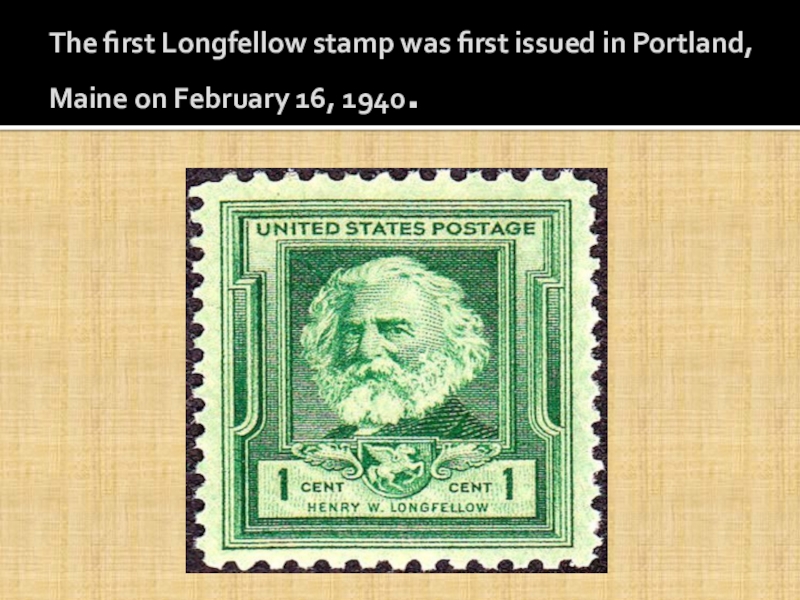
- 104. The first Longfellow stamp was first issued in Portland, Maine on February 16, 1940.
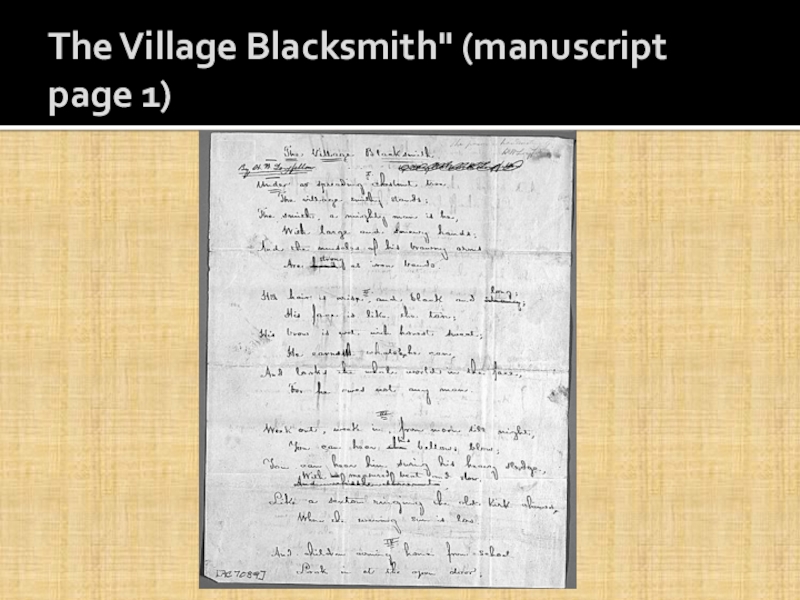
- 105. The Village Blacksmith" (manuscript page 1)
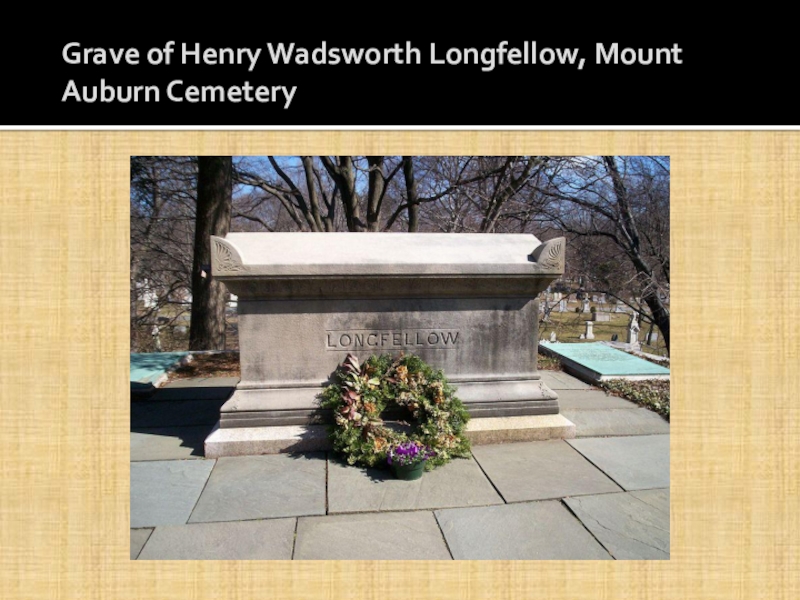
- 106. Grave of Henry Wadsworth Longfellow, Mount Auburn Cemetery
- 107. PSALM OF LIFE
- 108. THE SLAVE'S DREAMBeside the
- 109. Слайд 109

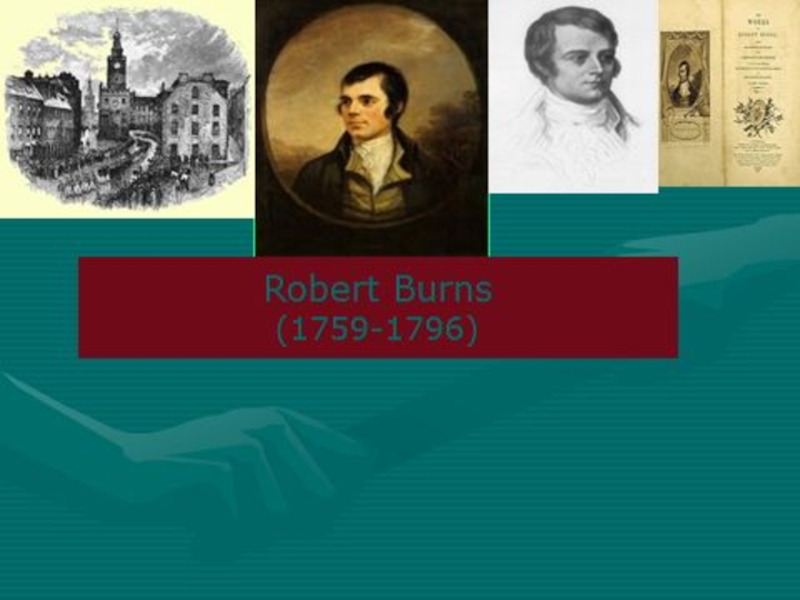
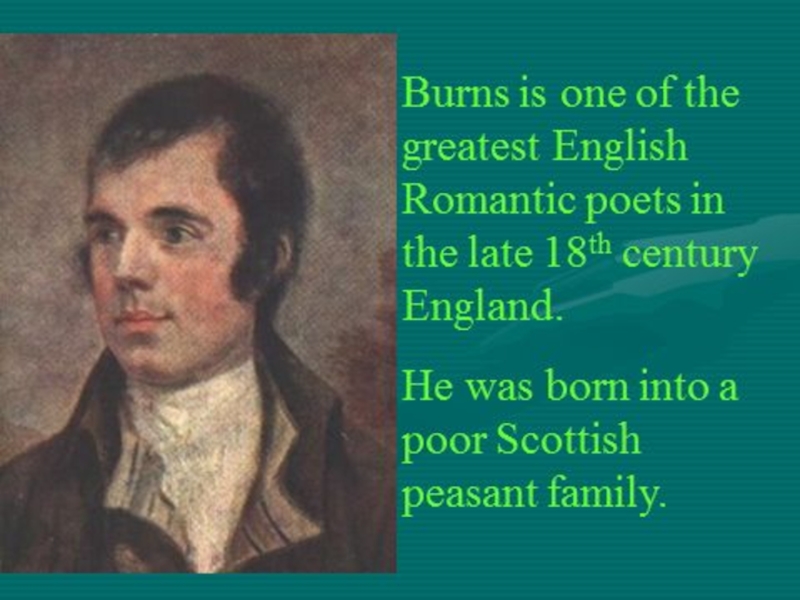
Слайд 4Robert Burns (25 January 1759 – 21 July 1796) (also known
HIS LIFE
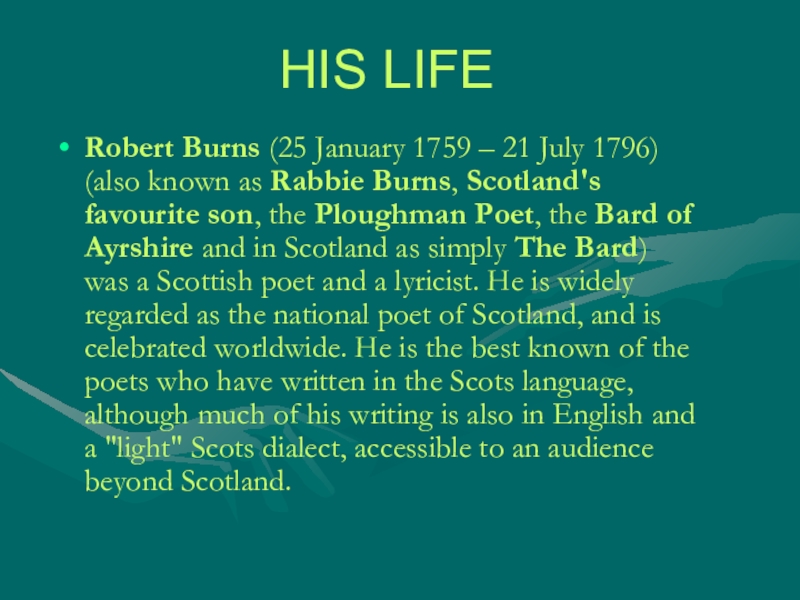
Слайд 5 Burns was born in Alloway, South Ayrshire, the eldest of the
Слайд 6 He was born in a house built by his father (now
Burns grew up in poverty and hardship, however, his casual love affairs did not endear him to the elders of the local kirk and created for him a reputation for dissoluteness amongst his neighbours.
Слайд 7He got little school education.
He could never earn enough money to
He was a poetic genius. He had an aptitude for Scottish folk songs.

Слайд 8Burns wrote many poems in English.
His best poems The Jolly
Burns travelled a lot about Scotland collecting popular folk songs.
Many of his poems were put to music.
Слайд 9 Poetry of Burns
The poems of
1) Political poems
2) Satirical poems
3) Lyrics
Mainly, 3 kinds
Examples
Слайд 10Works of Burns
Among 560 poems and songs , the most loved
Ae Fond Kiss
A Red Red Rose
Tam O’Shanter
Address to the Haggis
Tae a Moose
A Man’s a Man for A’ That and
Auld Lang Syne


Слайд 12The poet’s song «Oh, my love is like a Red rose»,
Many of songs he devoted to his wife.
Burns songs are the soul of music.
Beethoven, Schuman, Mendelssohn, others compose music to the poets verses.

Слайд 13I like Burns poetry, because it is very close to people’s
He wrote about the national struggle of the Scottish people for their liberation from English oppression.
Burns considered his literary work as his patriotic duty.
Слайд 14Burns and the Lasses
Burns married his life-long love Jean Armour
He had
He said ‘ The sweetest hours that ere I spent were spent amang the lasses o’

Слайд 18Born January 19, 1809, Boston, Massachusetts, U.S. American short-story writer, poet,
His The Raven (1845) numbers among the best-known poems in national literature.
Synopsis
Слайд 19The son of actors, Poe never really knew his parents. His
Слайд 20Poe turned to gambling to cover the difference, but ended up
At first, Poe seemed to be harboring twin aspirations. Poe published his first book, Tamerlane and Other Poems in 1827, and he had joined the army around this time. Poe wanted to go to West Point, a military academy, and won a spot there in 1830. Before going to West Point, he published a second collection Al Aaraaf, Tamberlane, and Minor Poems in 1829. Poe excelled at his studies at West Point, but he was kicked out after a year for his poor handling of his duties
Слайд 21After leaving the academy, Poe focused his writing full time. He
Poe also published some of his own works in the magazine, including two parts of his only novel, The Narrative of Arthur Gordon Pym. But his problems with alcohol played a role in his departure, according to some reports.
Слайд 22His sheer versatility continues to astonish. Without Poe, the literary arts
"I would give the world to embody one half the ideas afloat in my imagination."
—Edgar Allan Poe
from an 1829 letter
Слайд 25Mark Twain
Novels; Humor/Satire; Short
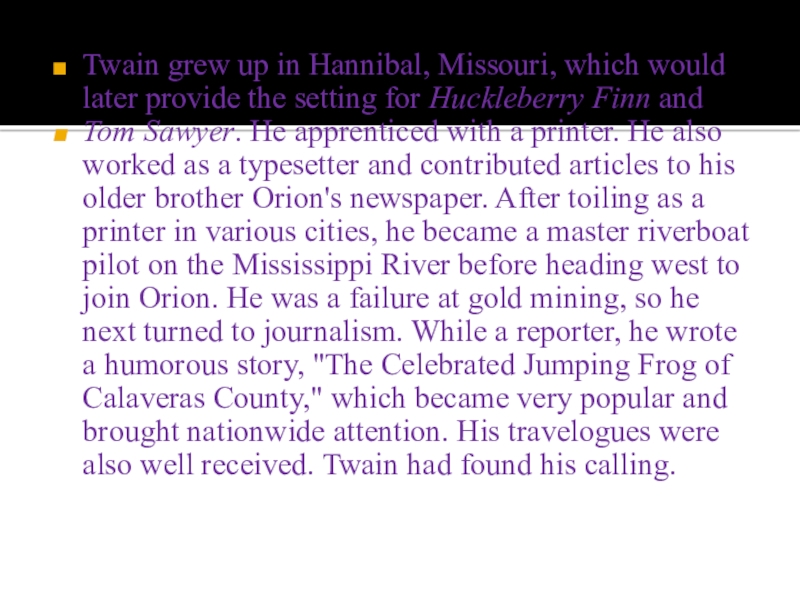
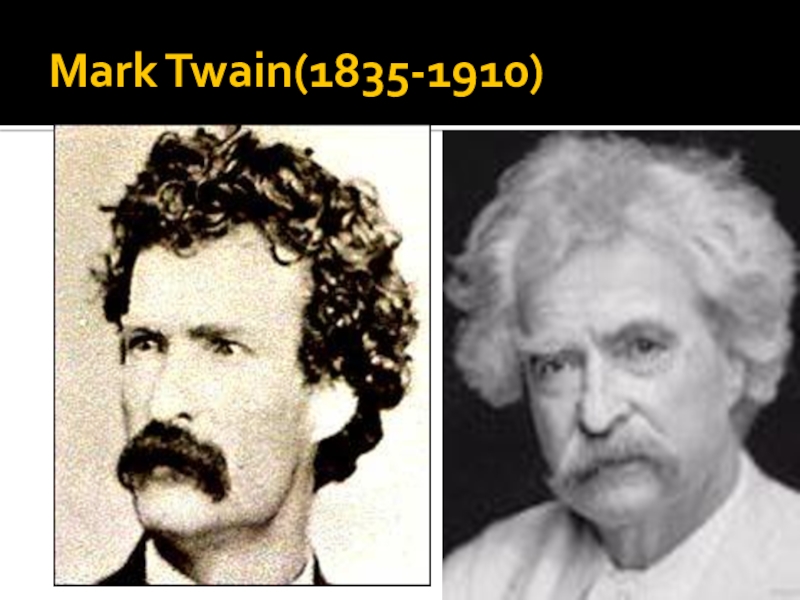
Mark Twain (1835-1910)

Слайд 26Introduction
Mark Twain was the most celebrated writer of his time. He
He hated wealth because of its collateral damage of corruption it caused at the expense of the less fortunate. However, that didn’t deter him from trying to attain it. He poured money into get rich quick schemes of which none availed his desired hopes, in fact, it caused him to go bankrupt. He defended the slaves and the Chinese immigrants of the indignities brought upon them by the rich. He poked at that values that rich American’s held to the delight of the underdog. History would judge him on his writings causing him to hold the title of an American icon.
Слайд 27 Father and Mother
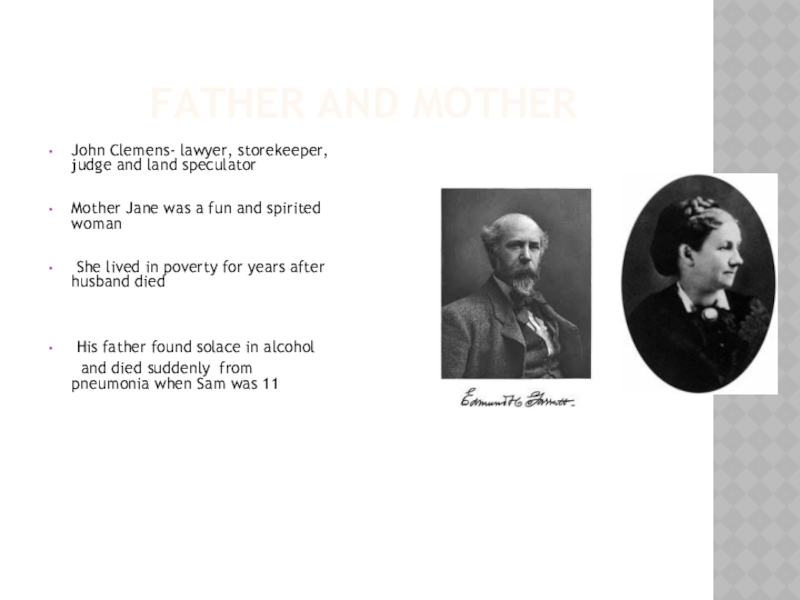
John Clemens- lawyer, storekeeper, judge and land speculator
Mother
She lived in poverty for years after husband died
His father found solace in alcohol
and died suddenly from pneumonia when Sam was 11
Слайд 28Childhood
Born Samuel Langhorne Clemens on November 30, 1835 in Florida Missouri
Sixth
Moved to Hannibal, Missouri at age 4
Quit school at the age of twelve
Слайд 29Childhood
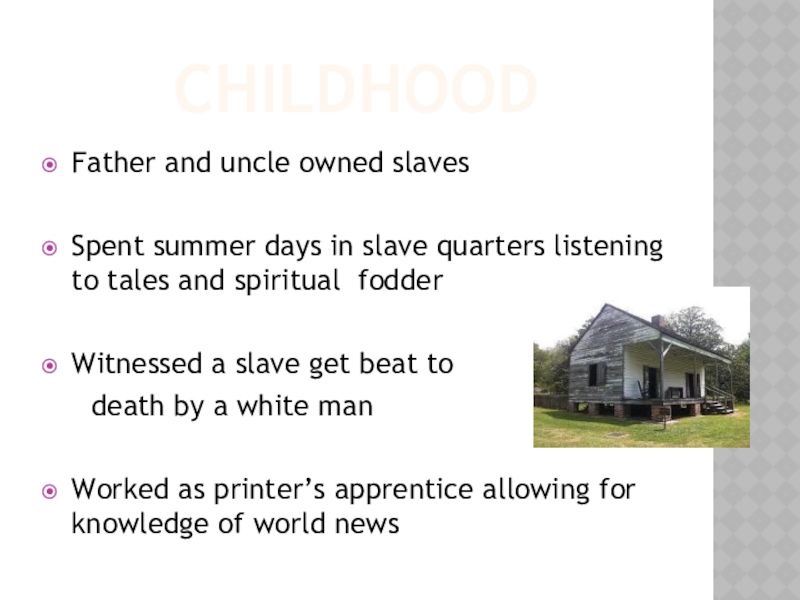
Father and uncle owned slaves
Spent summer days in slave quarters listening
Witnessed a slave get beat to
death by a white man
Worked as printer’s apprentice allowing for knowledge of world news
Слайд 30Young Adult
At 18 went to Philadelphia, New York and Washington working
His brother Orion published Sam’s work in his Muscatine Journal

Слайд 31Young Adult
At 21 he convinced Horace Bixby to teach him the
From 1816-1870 the steamboat carried cotton and sugar also passengers
Piloted for two years before the Civil War started
Joined a confederate unit called the Marion Rangers and quit after two weeks

Слайд 33Young Adult
In 1861, at 26 followed his brother Orion, appointed by
Hoped to strike it rich in Nevada's silver rush
The journey’s trials and tribulations became fodder for his book, Roughing It
Слайд 34Twain’s Twenties
Unable to be profitable in either mining or assisting his
Sept. of 1861 became a writer for the Virginia City Territorial, Nevada
Uses the pseudonym “Mark Twain” for first time-which is a steamboat term that means 12 feet of water
Слайд 35Twain’s Twenties
Wrote for the Territorial Enterprise for 3 years under the
Wrote editorials, articles and featured funny stories with a sharp wit
Needing a change of scenery he headed to San Francisco in 1865
Continued to write stories for local news papers becoming a favorite story teller to many fans
Слайд 36Notable Quotes
“Get your facts first, and then you can distort them
“Grief can take care of itself, but to get the full value of a joy you must have somebody to divide it with.”
“By trying we can easily learn to endure adversity -- another man's I mean.”
“Humor is the great thing, the saving thing. The minute it crops up, all our irritations and resentments slip away and a sunny spirit takes their place.”
“I thoroughly disapprove of duels. If a man should challenge me, I would take him kindly and forgivingly by the hand and lead him to a quiet place and kill him.”

Слайд 37Twain’s Thirties
His big break came in 1865 mocking the mining camp
Became so popular he started on lecture tours
Слайд 38Twain’s Thirties
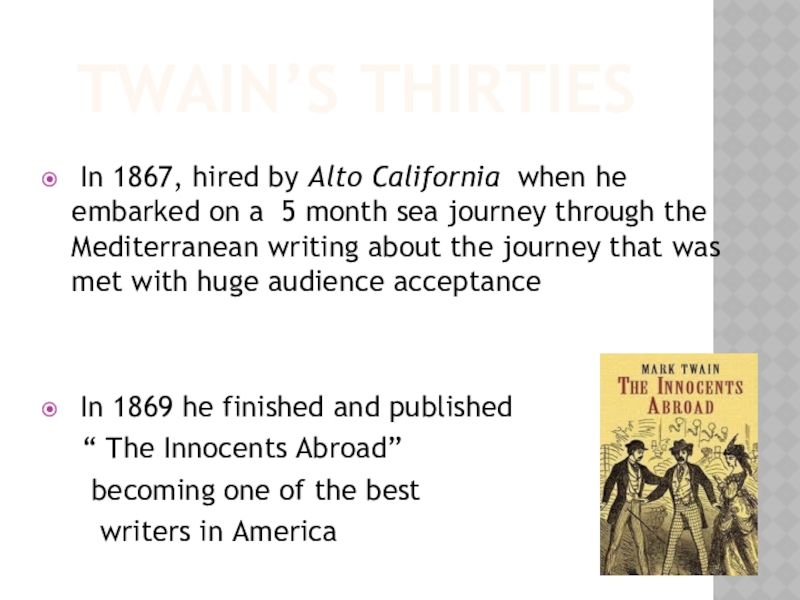
In 1867, hired by Alto California when he embarked
In 1869 he finished and published
“ The Innocents Abroad”
becoming one of the best
writers in America
Слайд 39Twain’s Thirties
Big names of literary America where centered in Boston and
Twain was quoted as saying, “ I want to obtain the respectful regard of high eastern civilization” and said it with a serious face
He felt like he was crude and lacking class
Слайд 40Twain’s Thirties
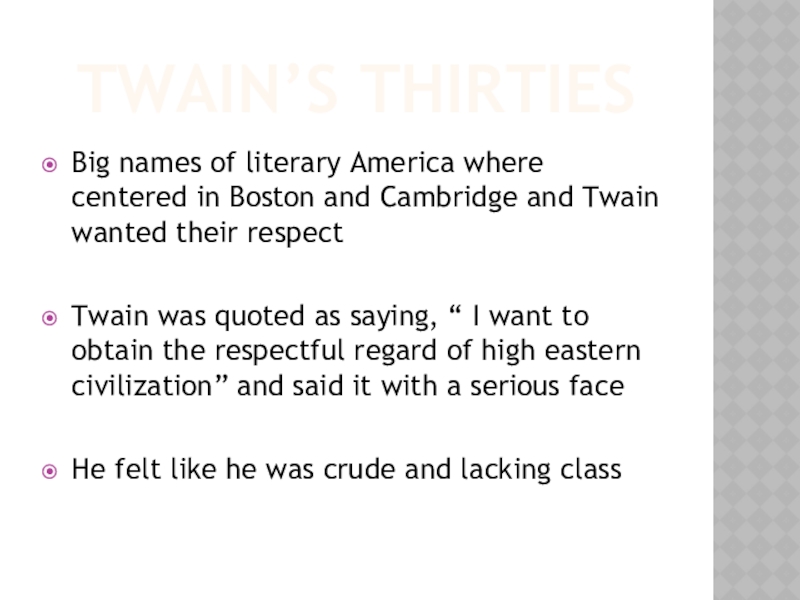
In 1870,after dating for two years he marries the daughter
improving his social status,
asking her to help ‘”reform” his
western ways
Joins the Buffalo Express
as a partner, editor and writer
Becomes a father for the first time to Langdon Clemens who dies at the age of two from diphtheria
Слайд 41Twain’s Forties
Although living in Hartford Twain found the most solitude at
Twain’s style captured the conscience of America by writing about his own history, political corruption, greed, slavery and the Reconstruction era
Слайд 42Notable Quotes
“I am opposed to millionaires, but it would be dangerous
I didn't attend the funeral, but I sent a nice letter saying that I approved of it.
Courage is resistance to fear, mastery of fear - not absence of fear.
I have never let my schooling interfere with my education.
A man cannot be comfortable without his own approval.

Слайд 43Twain’s Forties
In 1880, Twain writes the book “The Tramp Abroad” depicting
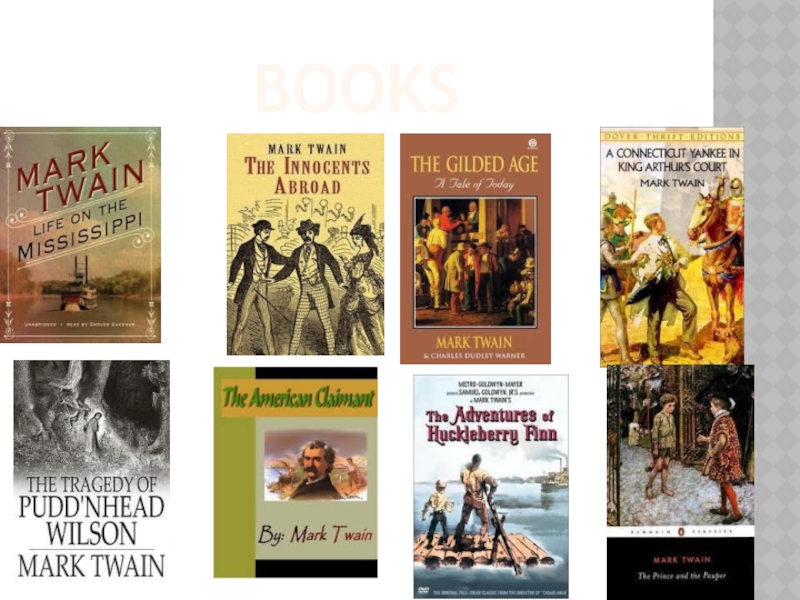
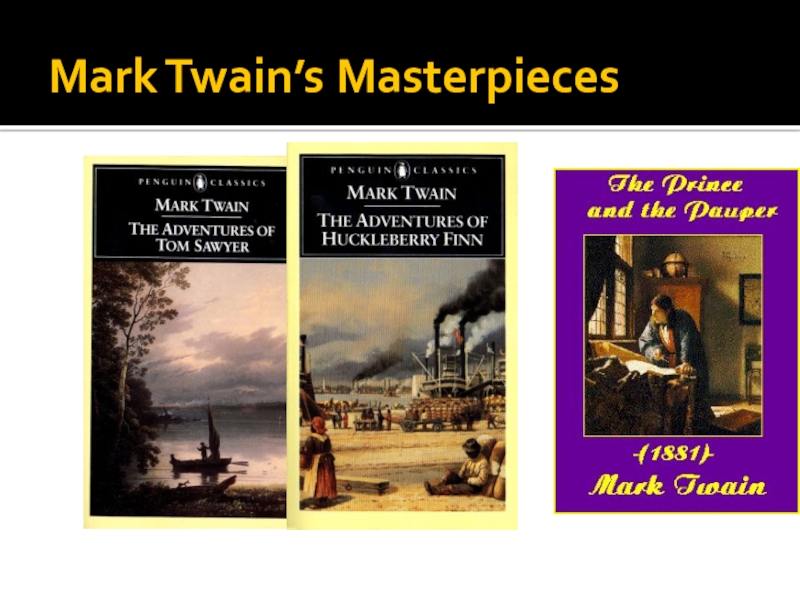
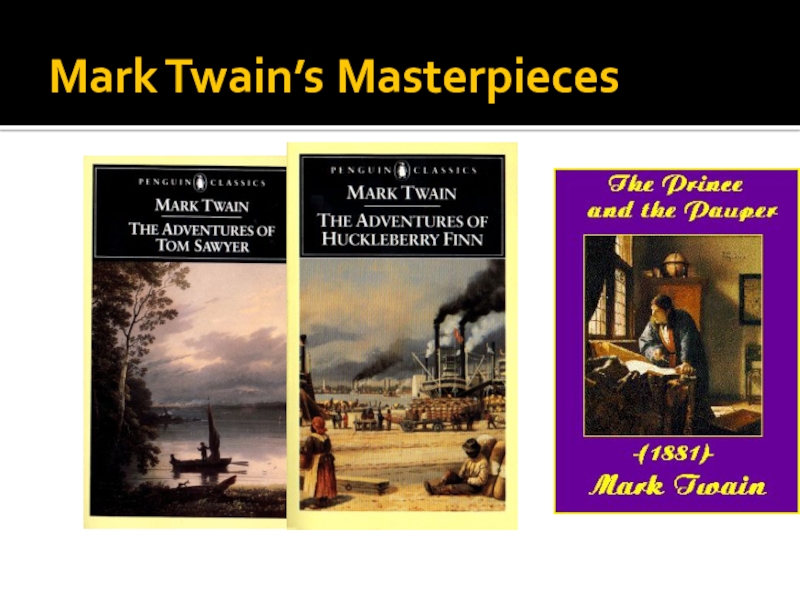
In 1882, he turns out another 2 books that deal with the social injustices and class relations in America called “The Prince and the Pauper and again in 1889 with “Connecticut Yankee in King Arthur’s Court
Слайд 44Twain’s Forties
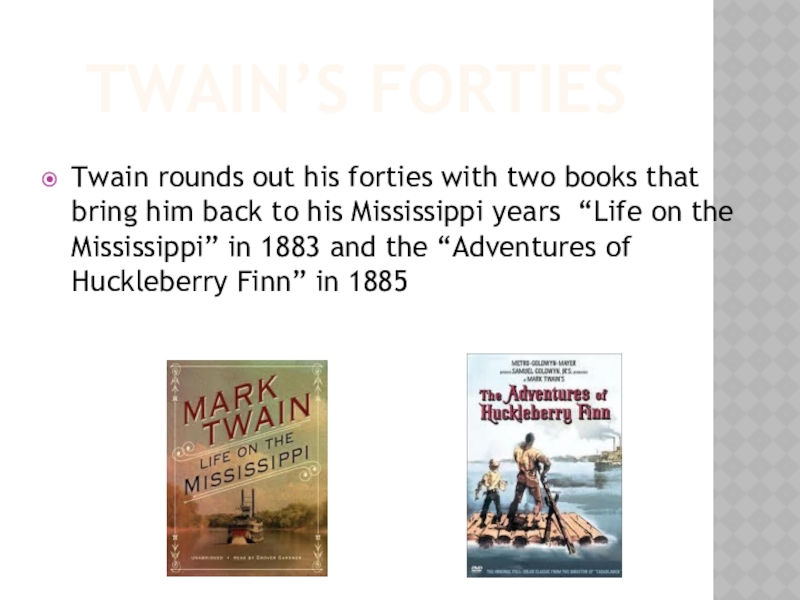
Twain rounds out his forties with two books that bring
Слайд 45Twain’s Fifties
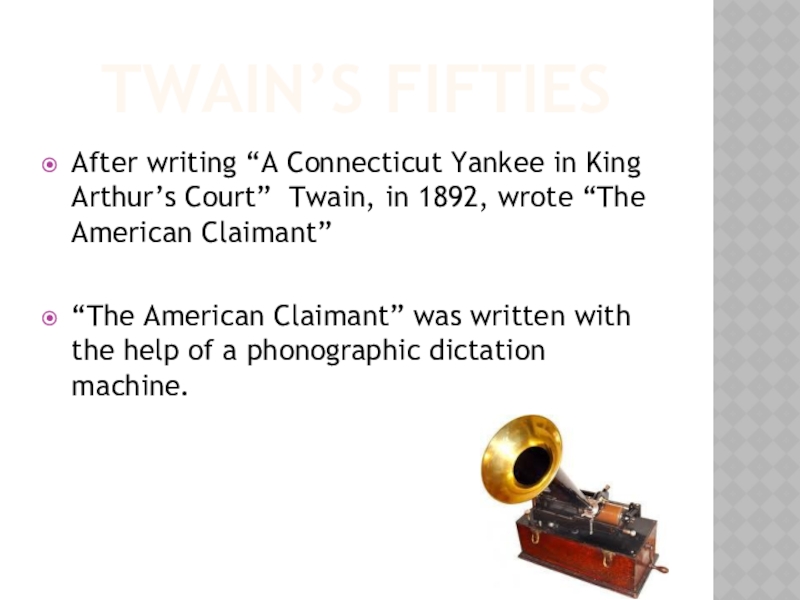
After writing “A Connecticut Yankee in King Arthur’s Court” Twain,
“The American Claimant” was written with the help of a phonographic dictation machine.
Слайд 46Twain’s Fifties
In 1884, Twain started his own publishing firm in order
Huckleberry Finn was the first book published by his new found company
Ulysses S. Grant published his memoir papers through Twain’s company and was very profitable for Twain and the Grant estate
Слайд 47Twain’s Fifties
Twain made some bad investments; one being, investing $250,000 in
in 1891,Twain’s bad investments on new inventions was the cause of going bankrupt and having to pack up his family and move to Europe were it was cheaper to live in hopes of paying of creditors by lecturing he never returned until 1900
Слайд 49Twain’s Fifties
In 1894, Twain writes “Tom Sawyer Abroad” that entails Tom
This same year he published “The Tragedy of Pudd’nhead Wilson” which again took on the social issues of slavery
c. 1895 his daughter Susy dies from meningitis
Слайд 50Twain’s Sixties
In 19oo Twain finishes paying off his debts and returns
Twain died at the age 0f 74 of a heart attack at his home in Redding Conn. and buried far from Hannibal, MO in Elmira, New York

Слайд 52Life
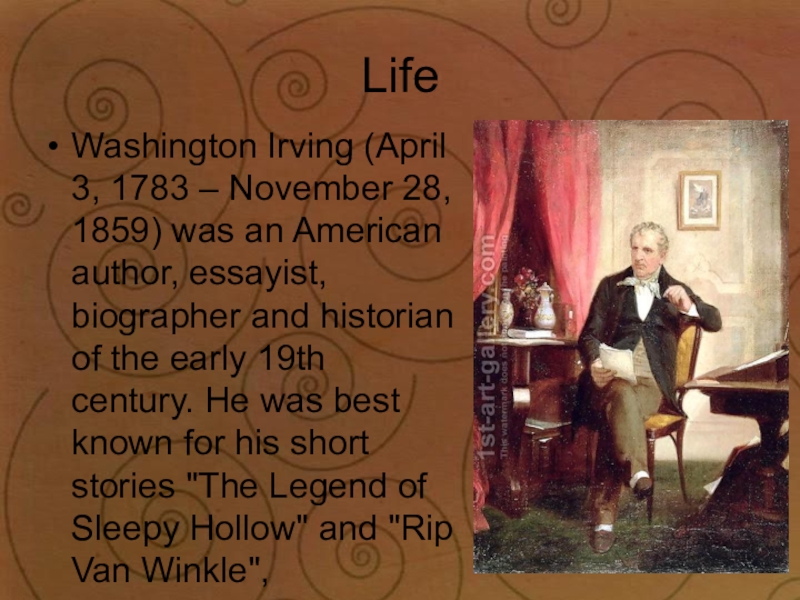
Washington Irving (April 3, 1783 – November 28, 1859) was an
Слайд 53Life
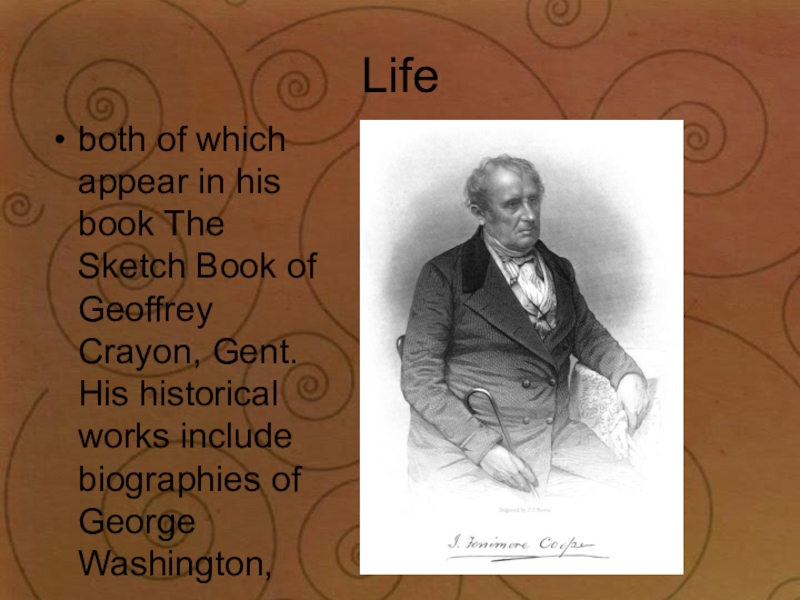
both of which appear in his book The Sketch Book of
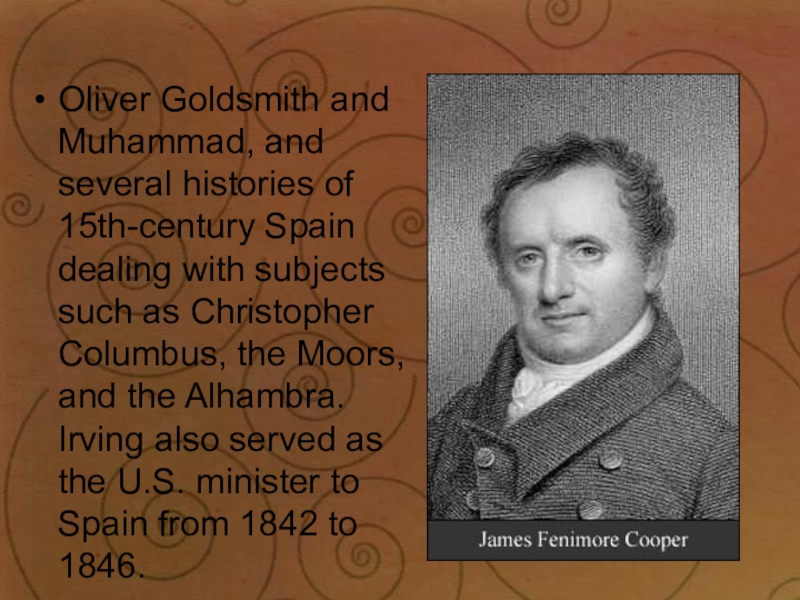
Слайд 54Oliver Goldsmith and Muhammad, and several histories of 15th-century Spain dealing
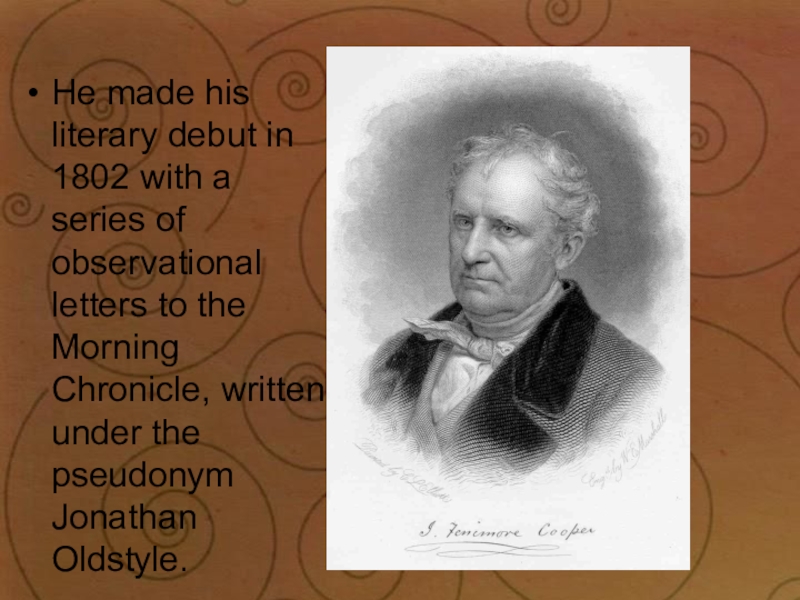
Слайд 55He made his literary debut in 1802 with a series of
Слайд 56After moving to England for the family business in 1815, he
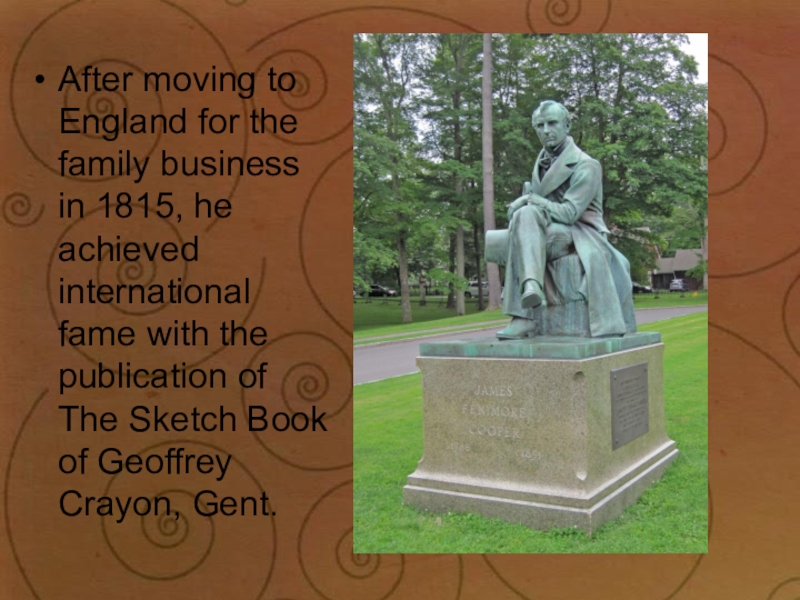
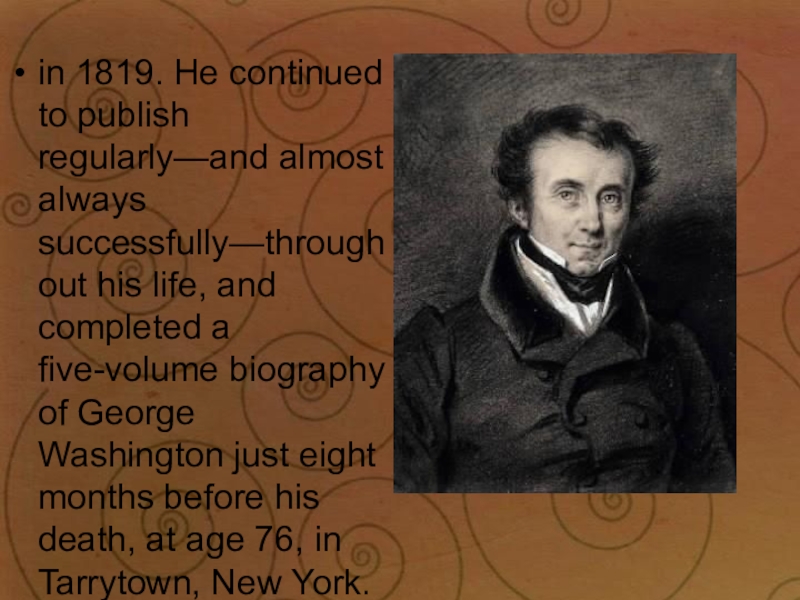
Слайд 57in 1819. He continued to publish regularly—and almost always successfully—throughout his
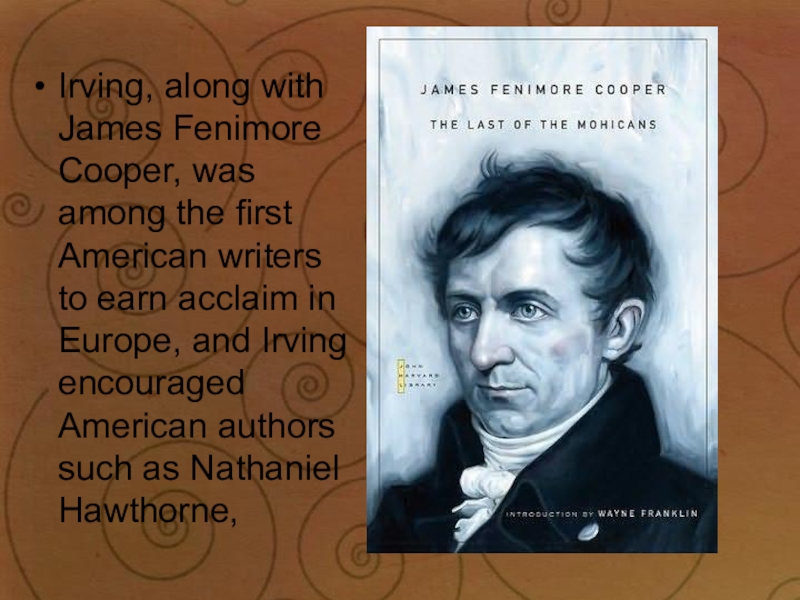
Слайд 58Irving, along with James Fenimore Cooper, was among the first American
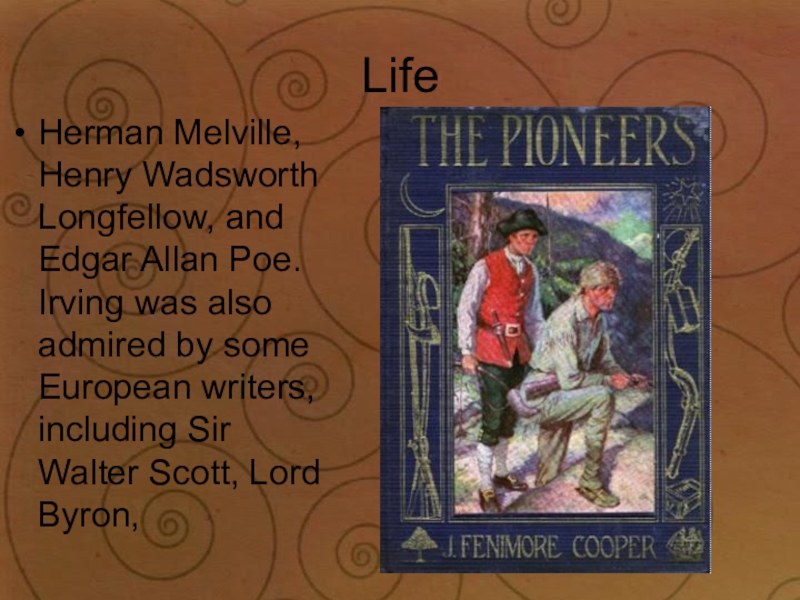
Слайд 59Life
Herman Melville, Henry Wadsworth Longfellow, and Edgar Allan Poe. Irving was
Слайд 60Life
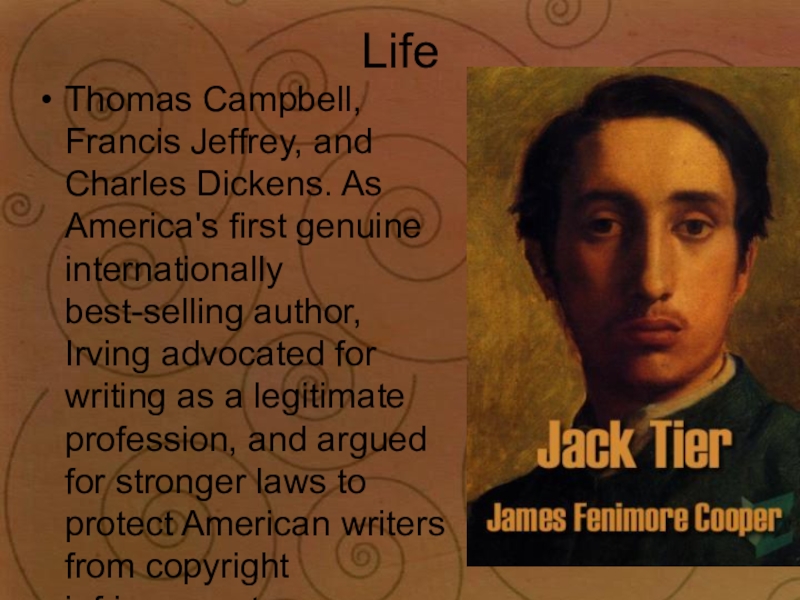
Thomas Campbell, Francis Jeffrey, and Charles Dickens. As America's first genuine
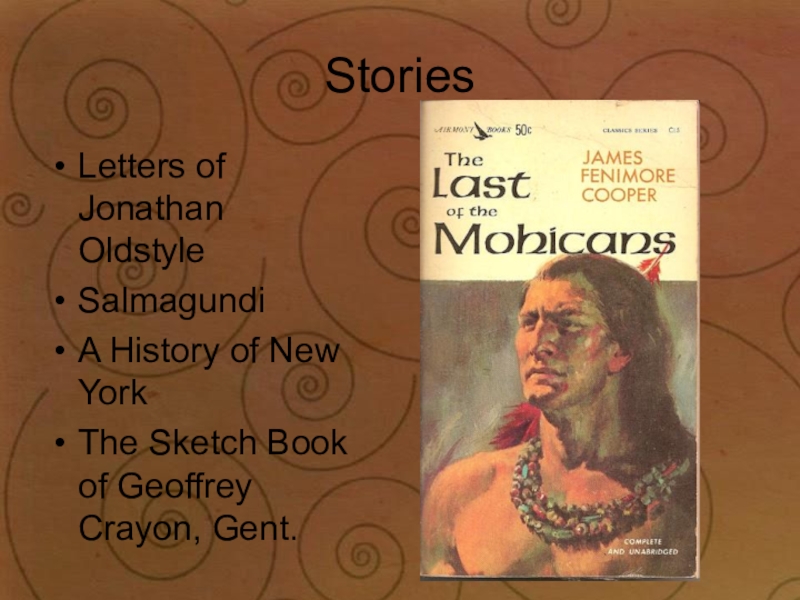
Слайд 61Stories
Letters of Jonathan Oldstyle
Salmagundi
A History of New York
The Sketch Book of

Слайд 64Your Text Here
Your text here
Your text here
Your text here
Your
Your text here
Your text here
Your text here
Your text here
Your text here
Your text here
Слайд 65Your Text Here
Your text here
Your text here
Your text here
Your text here
Your Text Here
Your Text Here
Your Text Here

Слайд 66Your Text Here
Your text here
Your text here
Your text here
Your text here
Your Text Here
Your Text Here
Your Text Here

Слайд 67Your Text Here
Your text here
Your text here
Your text here
Your text here
Your Text Here
Your Text Here
Your Text Here
Слайд 68Your Text Here
Your text here
Your text here
Your text here
Your text here
Your Text Here
Your Text Here
Your Text Here
Слайд 69Your Text Here
Your text here
Your text here
Your text here
Your text here
Your Text Here
Your Text Here
Your Text Here
Слайд 70Your Text Here
Your text here
Your text here
Your text here
Your text here
Your Text Here
Your Text Here
Your Text Here

Слайд 72Mark Twain
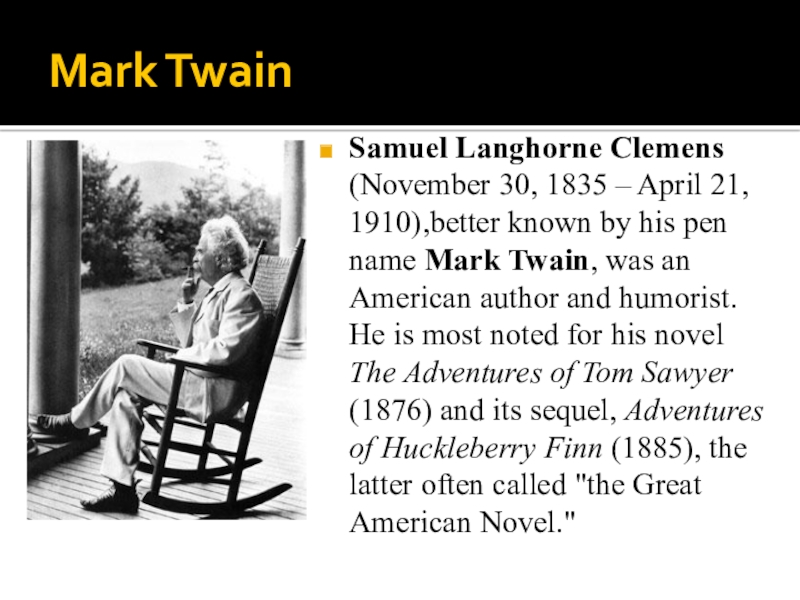
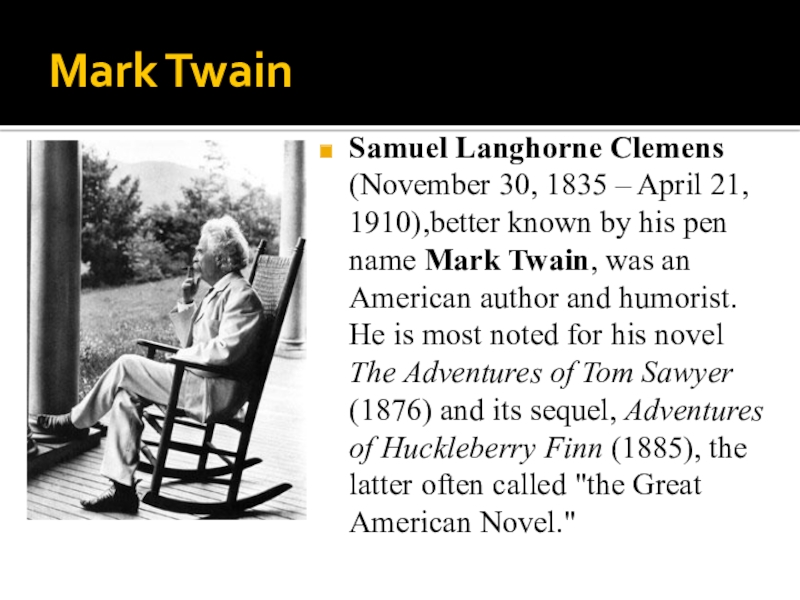
Samuel Langhorne Clemens (November 30, 1835 – April 21, 1910),better known
Слайд 73Twain grew up in Hannibal, Missouri, which would later provide the
Tom Sawyer. He apprenticed with a printer. He also worked as a typesetter and contributed articles to his older brother Orion's newspaper. After toiling as a printer in various cities, he became a master riverboat pilot on the Mississippi River before heading west to join Orion. He was a failure at gold mining, so he next turned to journalism. While a reporter, he wrote a humorous story, "The Celebrated Jumping Frog of Calaveras County," which became very popular and brought nationwide attention. His travelogues were also well received. Twain had found his calling.
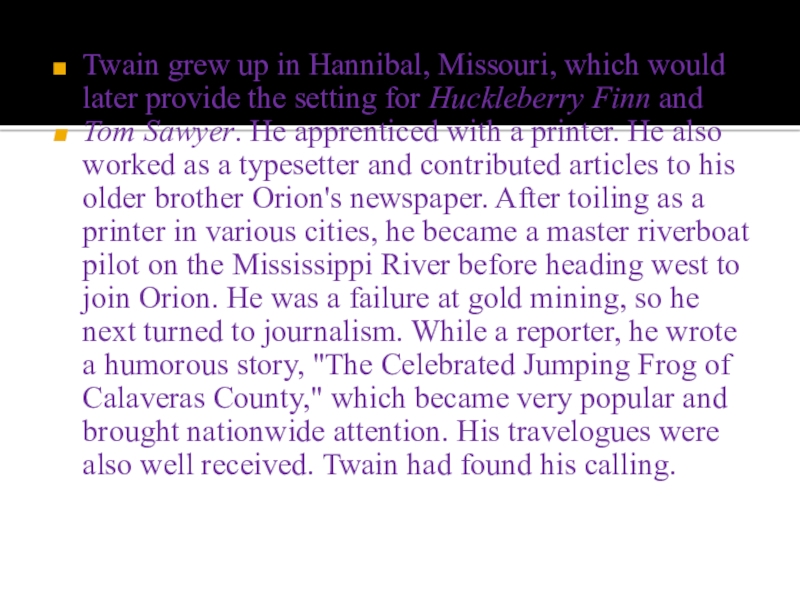
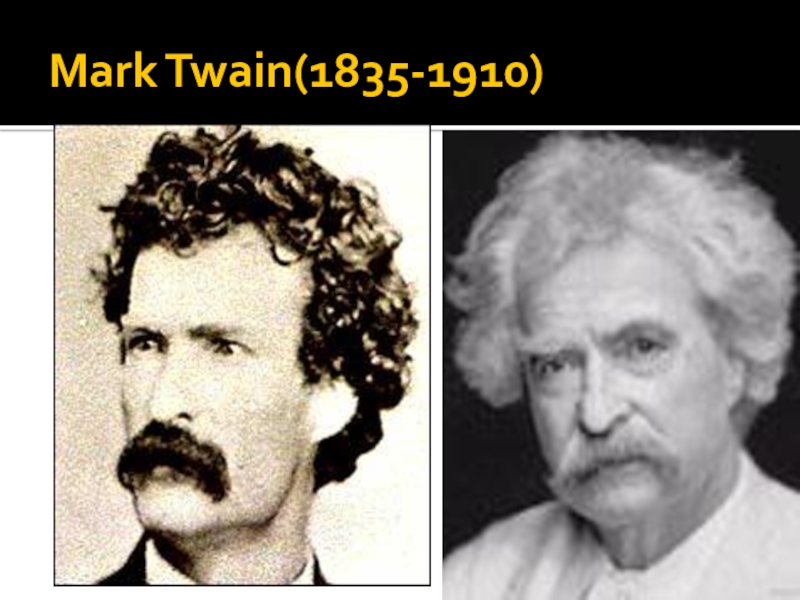
Слайд 76Writing Characteristics of
Mark Twain
Literature is an art of language. Mark
Mark Twain’s humor is based on the humor of the Western in America.
He used a lot of colloquial idioms and colloquial syntax.
He often described persons who was innocent, simple, naive, and ignorant as his heroes or heroines.
He used the artistic style of hyperbole on the basis of the western traditional humor and made his writing full of allegories that lay behind the humor.
Слайд 77"Running for Governor"
"Running for Governor" appears to be an excellent example
Right from the beginning we get involved in the preelectoral race where the narrator is the main aspirant to the post. The narrator and the author coincide, this and the fact that the story is told in the first person narrative bring us close to Mark Twain and we take his point of view and believe him or at least sympathize with him.
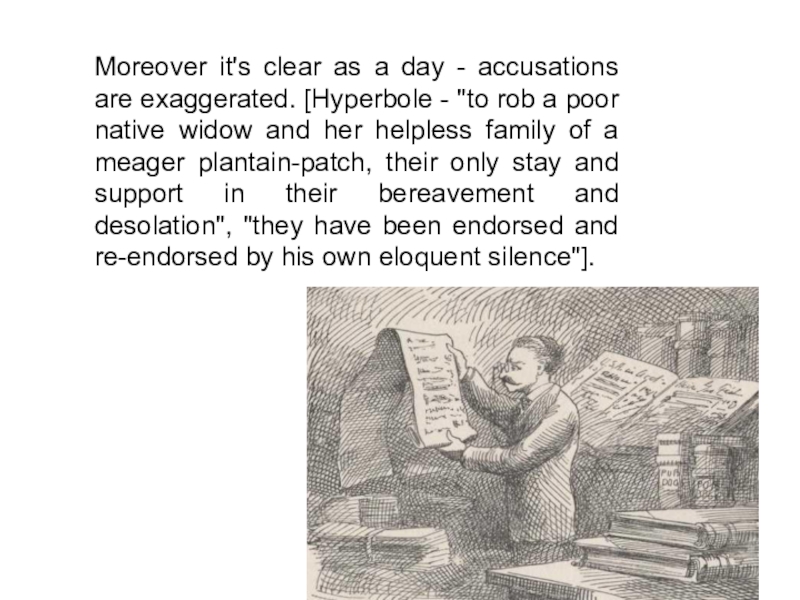
Слайд 78Moreover it's clear as a day - accusations are exaggerated. [Hyperbole
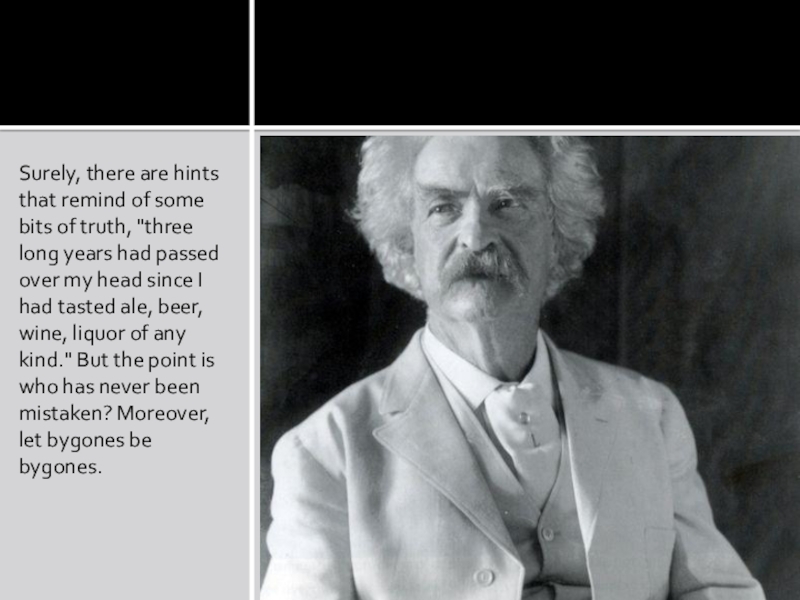
Слайд 79Surely, there are hints that remind of some bits of truth,
Слайд 80As a result, such a great stream of charges washed away
Thus, his opponents got rid of him.

Слайд 85Mark Twain
Samuel Langhorne Clemens (November 30, 1835 – April 21, 1910),better known
Слайд 86Twain grew up in Hannibal, Missouri, which would later provide the
Tom Sawyer. He apprenticed with a printer. He also worked as a typesetter and contributed articles to his older brother Orion's newspaper. After toiling as a printer in various cities, he became a master riverboat pilot on the Mississippi River before heading west to join Orion. He was a failure at gold mining, so he next turned to journalism. While a reporter, he wrote a humorous story, "The Celebrated Jumping Frog of Calaveras County," which became very popular and brought nationwide attention. His travelogues were also well received. Twain had found his calling.
Слайд 89Writing Characteristics of
Mark Twain
Literature is an art of language. Mark
Mark Twain’s humor is based on the humor of the Western in America.
He used a lot of colloquial idioms and colloquial syntax.
He often described persons who was innocent, simple, naive, and ignorant as his heroes or heroines.
He used the artistic style of hyperbole on the basis of the western traditional humor and made his writing full of allegories that lay behind the humor.
Слайд 90"Running for Governor"
"Running for Governor" appears to be an excellent example
Right from the beginning we get involved in the preelectoral race where the narrator is the main aspirant to the post. The narrator and the author coincide, this and the fact that the story is told in the first person narrative bring us close to Mark Twain and we take his point of view and believe him or at least sympathize with him.
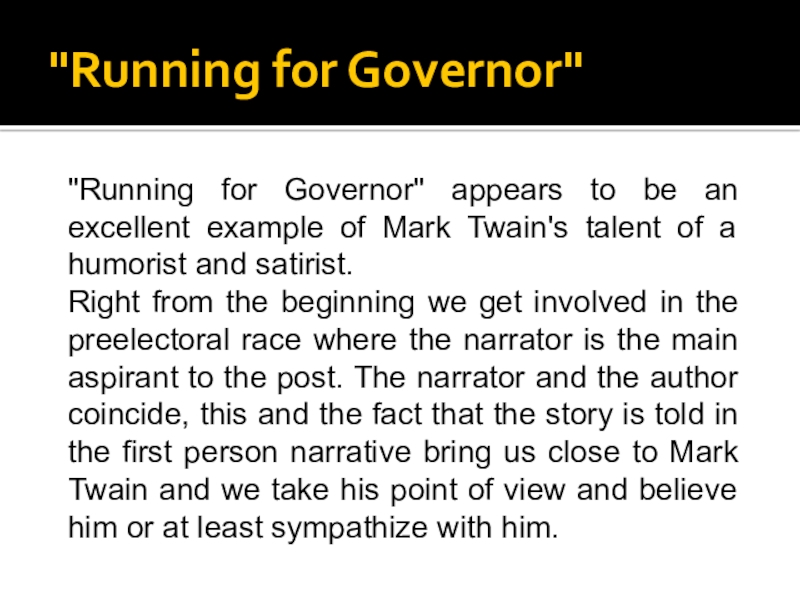
Слайд 91Moreover it's clear as a day - accusations are exaggerated. [Hyperbole
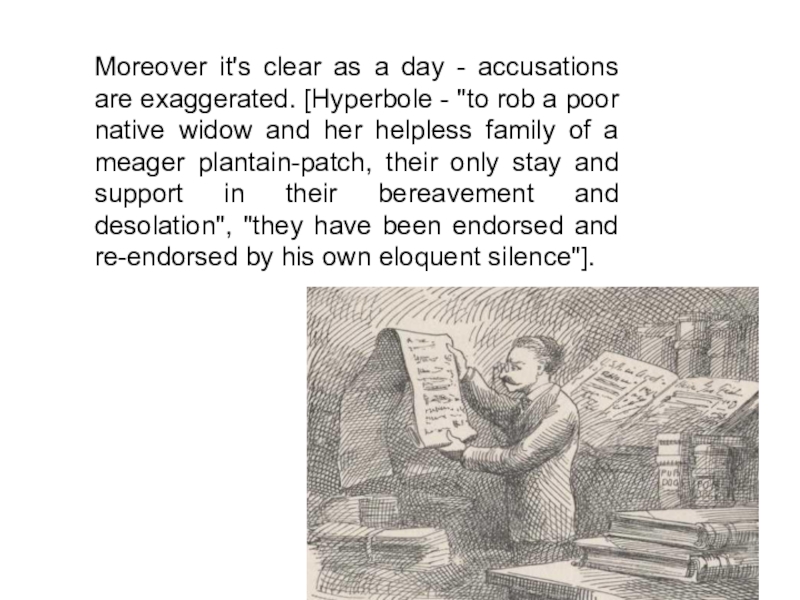
Слайд 92Surely, there are hints that remind of some bits of truth,
Слайд 93As a result, such a great stream of charges washed away
Thus, his opponents got rid of him.

Слайд 98February 27, 1807 – March 24, 1882
Henry Wadsworth Longfellow was an
Слайд 99Longfellow was born in Portland, Maine, which was then a part

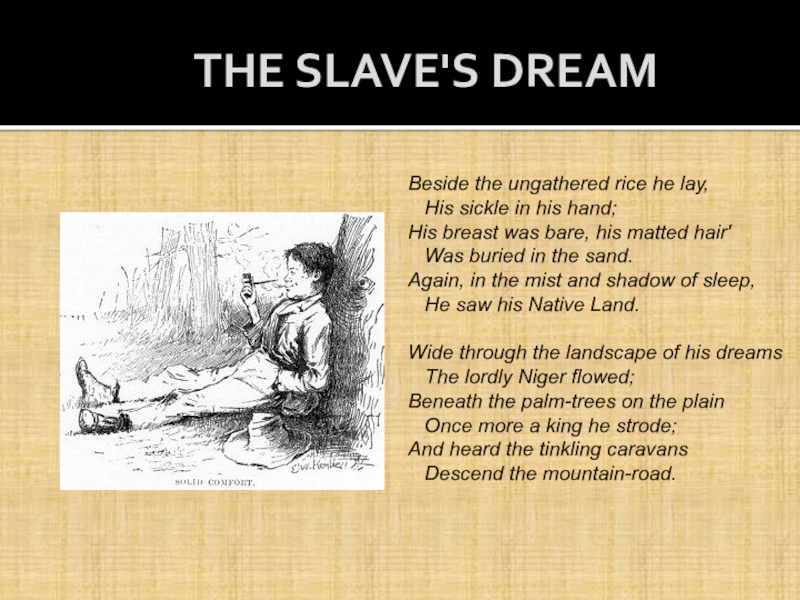
Слайд 108 THE SLAVE'S DREAM
Beside the ungathered rice he lay,
His breast was bare, his matted hair'
Was buried in the sand.
Again, in the mist and shadow of sleep,
He saw his Native Land.
Wide through the landscape of his dreams
The lordly Niger flowed;
Beneath the palm-trees on the plain
Once more a king he strode;
And heard the tinkling caravans
Descend the mountain-road.
Слайд 109
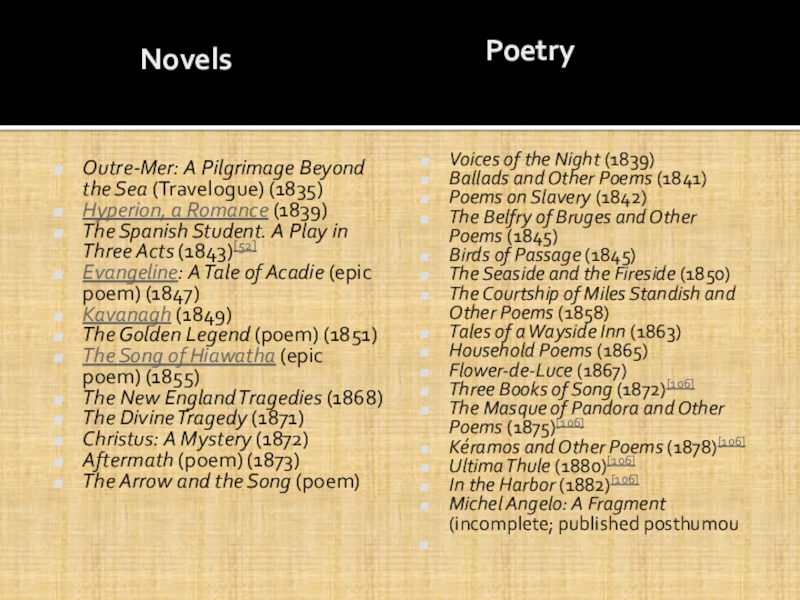
Outre-Mer: A Pilgrimage Beyond the Sea (Travelogue) (1835)
Hyperion, a Romance (1839)
The Spanish Student. A Play in Three Acts (1843)[52]
Evangeline: A Tale of Acadie (epic poem) (1847)
Kavanagh (1849)
The Golden Legend (poem) (1851)
The Song of Hiawatha (epic poem) (1855)
The New England Tragedies (1868)
The Divine Tragedy (1871)
Christus: A Mystery (1872)
Aftermath (poem) (1873)
The Arrow and the Song (poem)
Poetry
Voices of the Night (1839)
Ballads and Other Poems (1841)
Poems on Slavery (1842)
The Belfry of Bruges and Other Poems (1845)
Birds of Passage (1845)
The Seaside and the Fireside (1850)
The Courtship of Miles Standish and Other Poems (1858)
Tales of a Wayside Inn (1863)
Household Poems (1865)
Flower-de-Luce (1867)
Three Books of Song (1872)[106]
The Masque of Pandora and Other Poems (1875)[106]
Kéramos and Other Poems (1878)[106]
Ultima Thule (1880)[106]
In the Harbor (1882)[106]
Michel Angelo: A Fragment (incomplete; published posthumou