п.Правокубанский
- Главная
- Разное
- Образование
- Спорт
- Естествознание
- Природоведение
- Религиоведение
- Французский язык
- Черчение
- Английский язык
- Астрономия
- Алгебра
- Биология
- География
- Геометрия
- Детские презентации
- Информатика
- История
- Литература
- Математика
- Музыка
- МХК
- Немецкий язык
- ОБЖ
- Обществознание
- Окружающий мир
- Педагогика
- Русский язык
- Технология
- Физика
- Философия
- Химия
- Шаблоны, фоны, картинки для презентаций
- Экология
- Экономика
Презентация, доклад по английскому языку Заимствования в английском языке
Содержание
- 1. Презентация по английскому языку Заимствования в английском языке
- 2. СОДЕРЖАНИЕ:ВведениеI. Процентный состав английского языка.II. Заимствования:1.Кельтские
- 3. Англоязычный мир English-speaking world
- 4. The Contemporary English language belongs to the
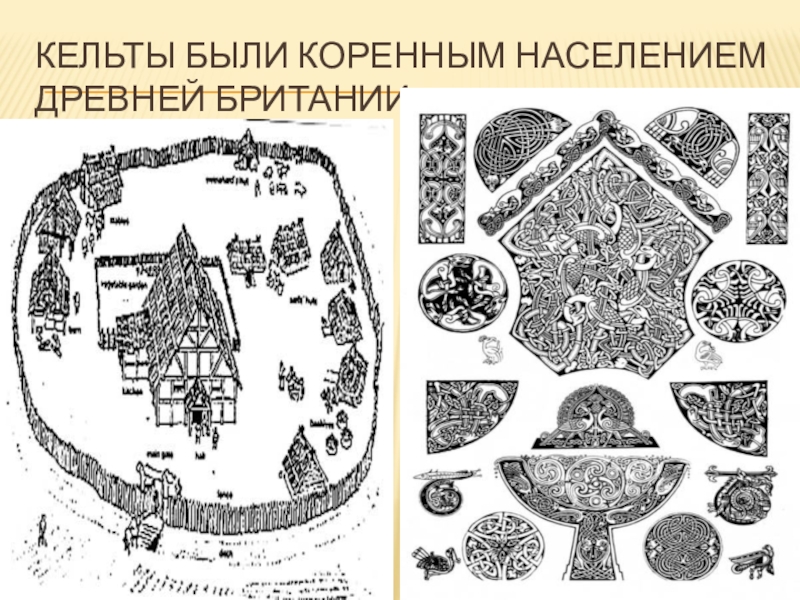
- 5. Кельты были коренным населением Древней Британии
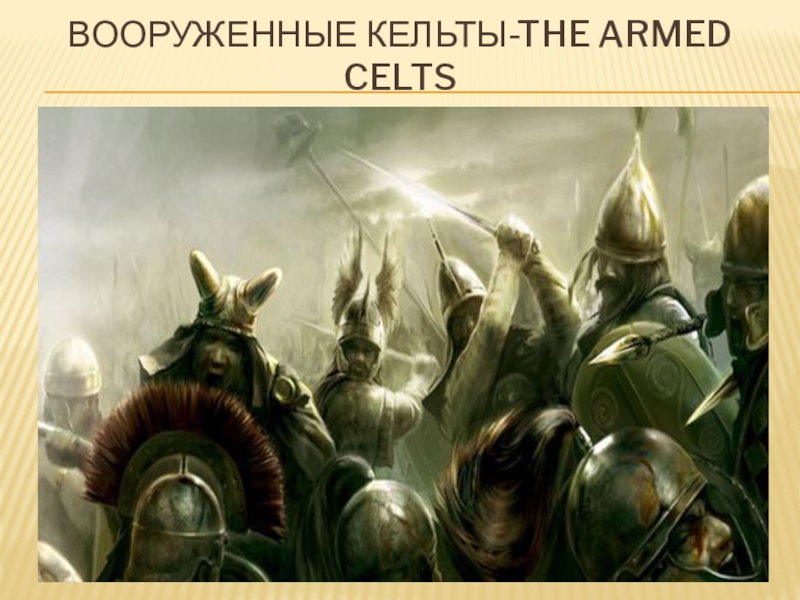
- 6. Вооруженные кельты-The armed Celts
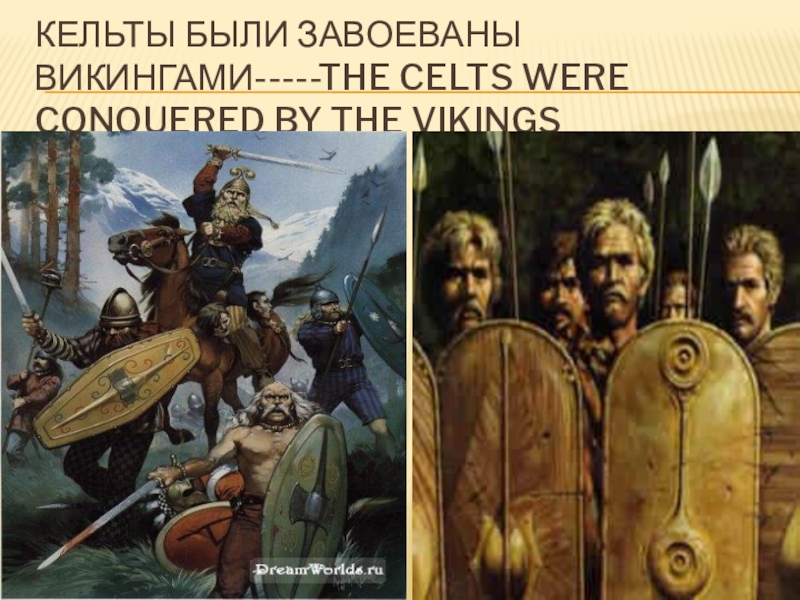
- 7. Кельты были завоеваны викингами-----The Celts were conquered by the Vikings
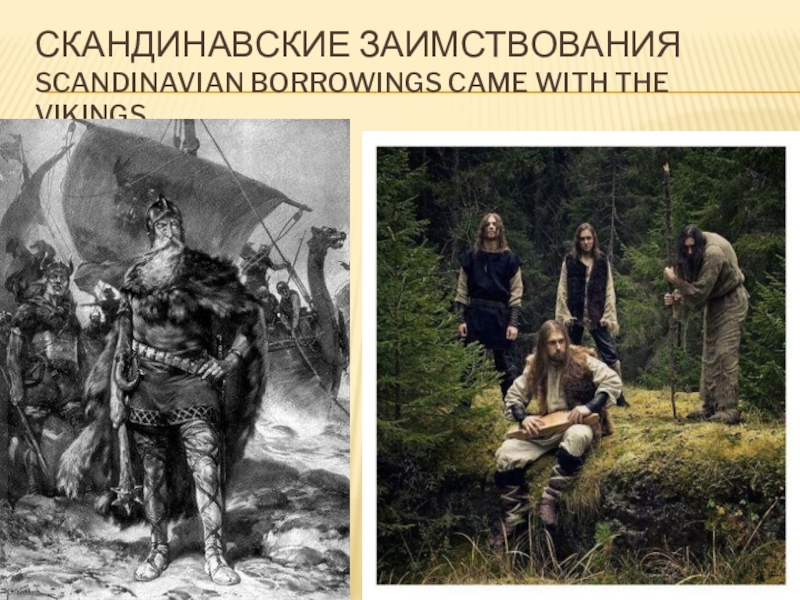
- 8. Скандинавские заимствования Scandinavian borrowings came with the Vikings
- 9. Названия самых простых вещей являются коренными The
- 10. Слова скандинавского происхождения Scandinavian Borrowings
- 11. rome С 5 века Британия стала частью
- 12. Битвы с римлянами Battles with Romans
- 13. Римская культура ввела понятия, не известные коренному населению
- 14. Латынь была языком религии и науки Latin was the language of church and science
- 15. Вильгельм завоеватель-- William the ConqurerThe
- 16. There are the following groups of
- 17. Заимствования из европейских языков в 17-18вв -
- 18. Торговля способствовала проникновению испанских слов в английский
- 19. Слова испанского происхождения-- Spanish Borrowings:
- 20. Слова немецкого происхождения German borrowings. There
- 21. Голландия всегда имела тесные контакты с Великобританией --Holland and England have constant contacts for many centuries
- 22. слова голландского происхождения- Holland borrowings.
- 23. Заимствования из русского языка -- Russian Borrowins
- 24. Русские слова – следствие торговых отношений Russian words came into English due to trade relations
- 25. Соболь-первое русское слово в английском языке
- 26. Заключение: In conclusion :
- 27. Список литературы:1. В.П. Секирин «Заимствования в английском
- 28. Thank you for your attention!Спасибо за внимание!
СОДЕРЖАНИЕ:ВведениеI. Процентный состав английского языка.II. Заимствования:1.Кельтские заимствования.2.Латинские заимствования.2.1 Первый слой латинских заимствований.2.2 Второй слой латинских заимствований.2.3 Третий слой латинских заимствований.3. Скандинавские заимствования.4.Французские заимствования.5. Заимствования из европейских языков в 17-18 вв.: 5.1 Заимствования из голландского языка.5.2
Слайд 1Министерство образования и науки КЧР
Карачаевский муниципальный район
Заимствованные слова в английском языке.
Слайд 2СОДЕРЖАНИЕ:
Введение
I. Процентный состав английского языка.
II. Заимствования:
1.Кельтские заимствования.
2.Латинские заимствования.
2.1 Первый слой
латинских заимствований.
2.2 Второй слой латинских заимствований.
2.3 Третий слой латинских заимствований.
3. Скандинавские заимствования.
4.Французские заимствования.
5. Заимствования из европейских языков в 17-18 вв.:
5.1 Заимствования из голландского языка.
5.2 Заимствования из итальянского языка.
5.3 Заимствования из испанского языка.
5.4 Заимствования из немецкого языка в 20 вв.
5.5Заимствования из русского языка.
6. Заключение.
7. Список литературы.
2.2 Второй слой латинских заимствований.
2.3 Третий слой латинских заимствований.
3. Скандинавские заимствования.
4.Французские заимствования.
5. Заимствования из европейских языков в 17-18 вв.:
5.1 Заимствования из голландского языка.
5.2 Заимствования из итальянского языка.
5.3 Заимствования из испанского языка.
5.4 Заимствования из немецкого языка в 20 вв.
5.5Заимствования из русского языка.
6. Заключение.
7. Список литературы.
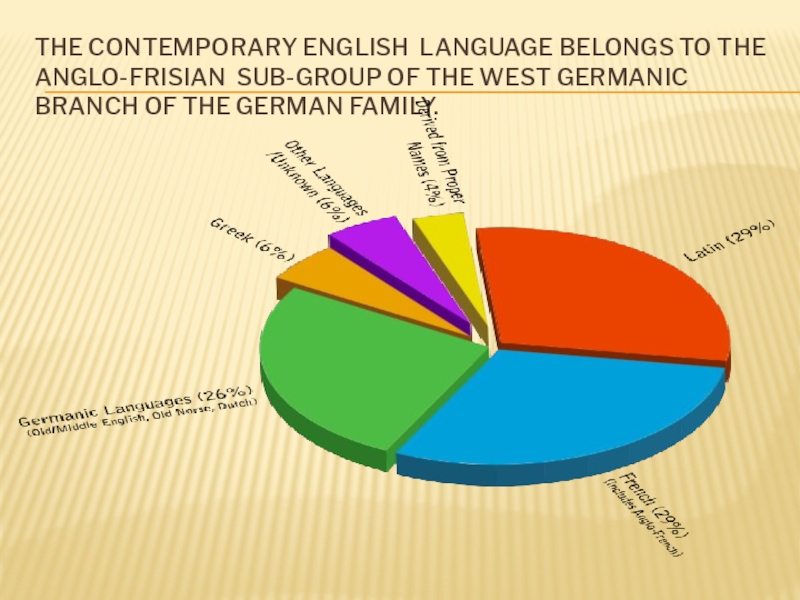
Слайд 4The Contemporary English language belongs to the Anglo-Frisian sub-group of the
West Germanic branch of the German family.
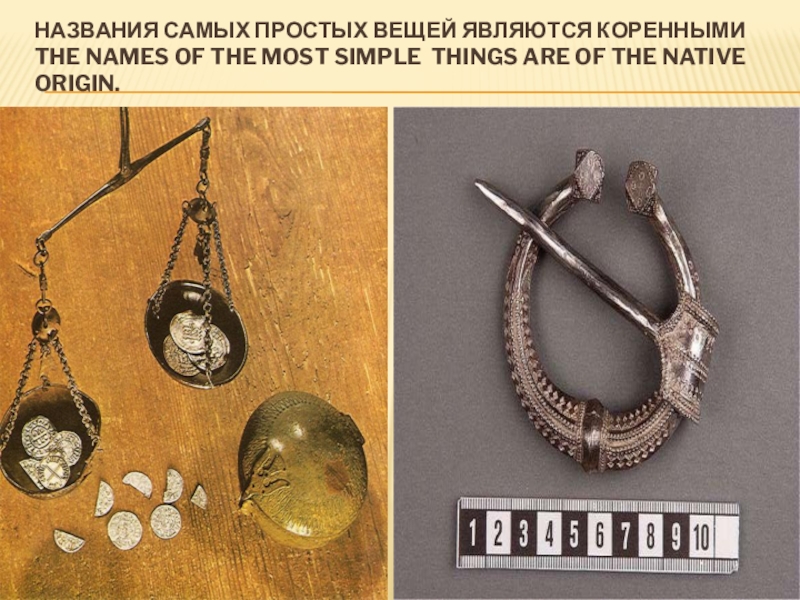
Слайд 9Названия самых простых вещей являются коренными The names of the most simple
things are of the native origin.
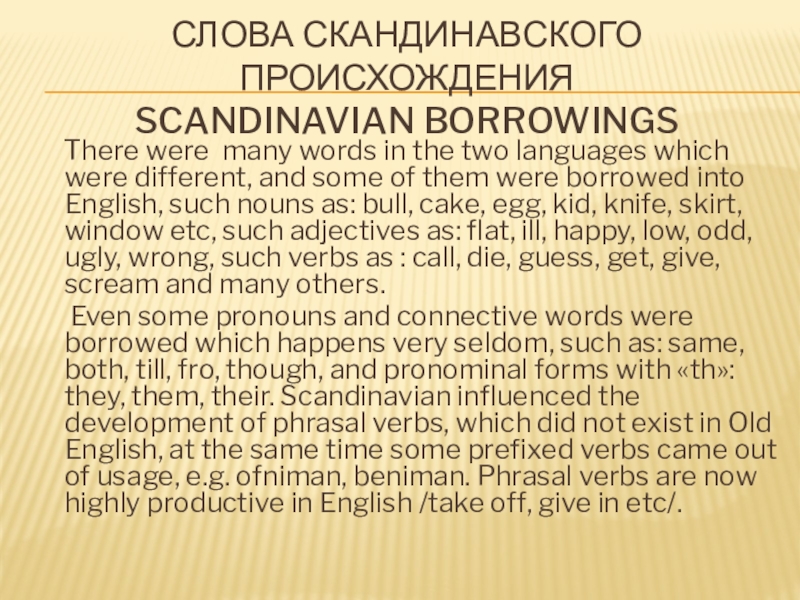
Слайд 10Слова скандинавского происхождения
Scandinavian Borrowings
There were many words in
the two languages which were different, and some of them were borrowed into English, such nouns as: bull, cake, egg, kid, knife, skirt, window etc, such adjectives as: flat, ill, happy, low, odd, ugly, wrong, such verbs as : call, die, guess, get, give, scream and many others.
Even some pronouns and connective words were borrowed which happens very seldom, such as: same, both, till, fro, though, and pronominal forms with «th»: they, them, their. Scandinavian influenced the development of phrasal verbs, which did not exist in Old English, at the same time some prefixed verbs came out of usage, e.g. ofniman, beniman. Phrasal verbs are now highly productive in English /take off, give in etc/.
Even some pronouns and connective words were borrowed which happens very seldom, such as: same, both, till, fro, though, and pronominal forms with «th»: they, them, their. Scandinavian influenced the development of phrasal verbs, which did not exist in Old English, at the same time some prefixed verbs came out of usage, e.g. ofniman, beniman. Phrasal verbs are now highly productive in English /take off, give in etc/.
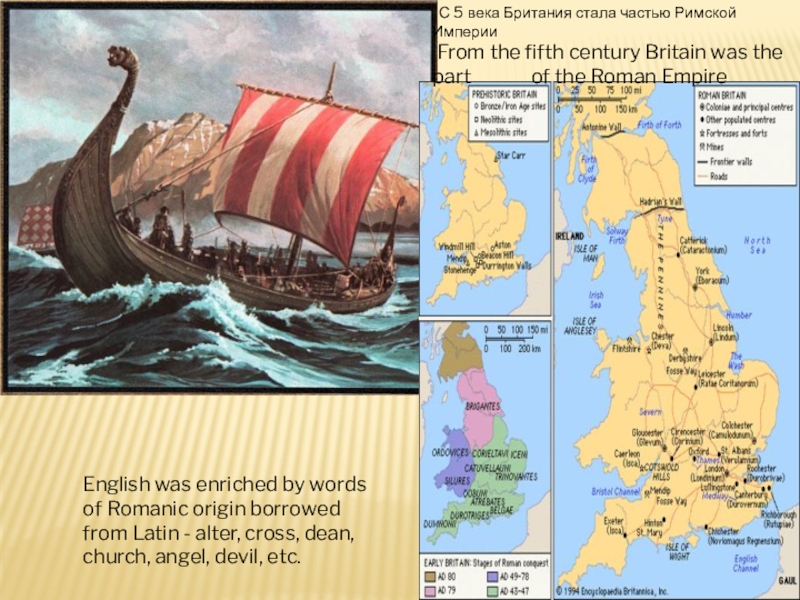
Слайд 11rome
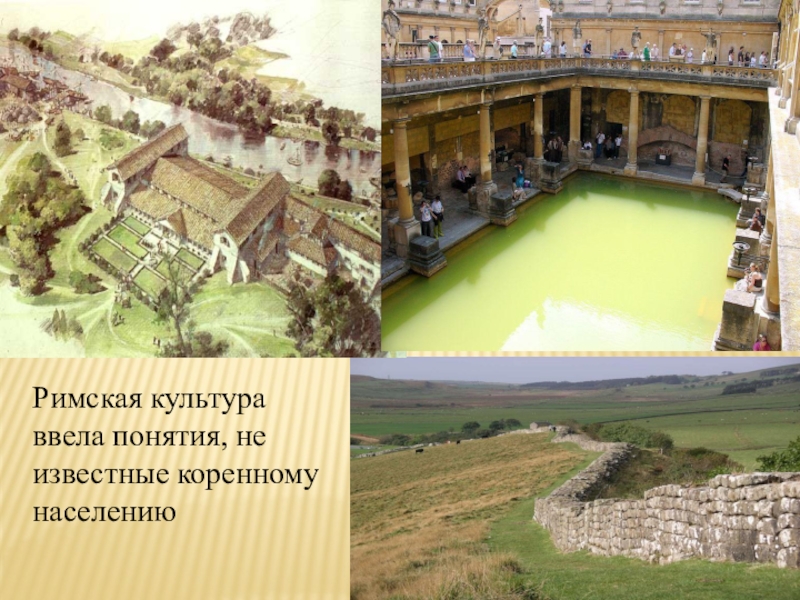
С 5 века Британия стала частью Римской Империи
From the
fifth century Britain was the part of the Roman Empire
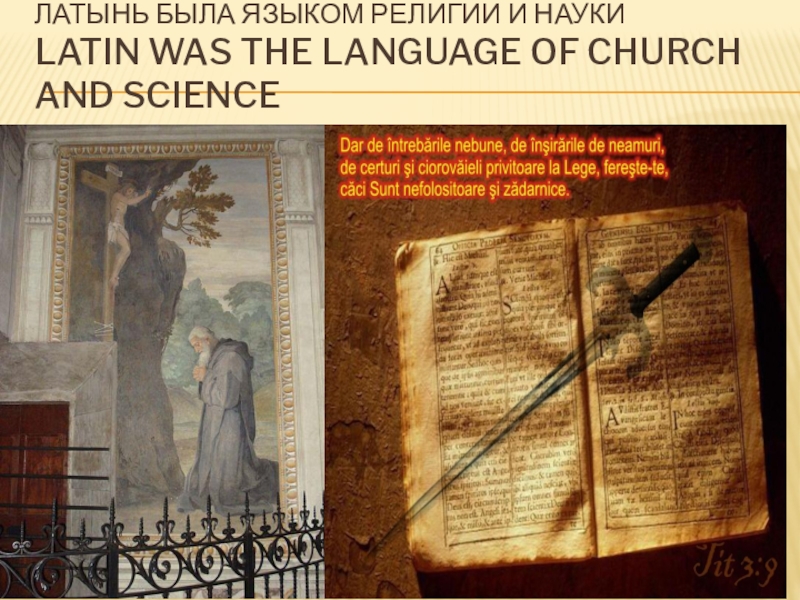
English was enriched by words of Romanic origin borrowed from Latin - alter, cross, dean, church, angel, devil, etc.
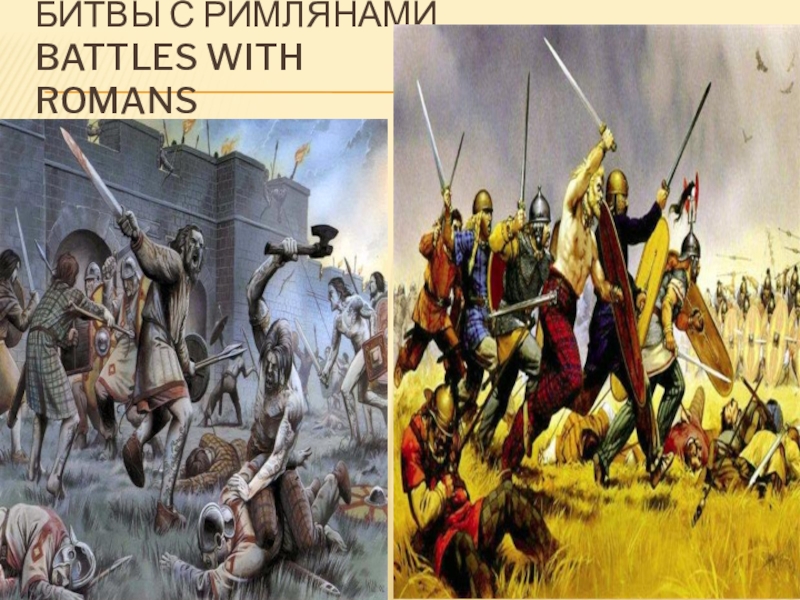
Слайд 15Вильгельм
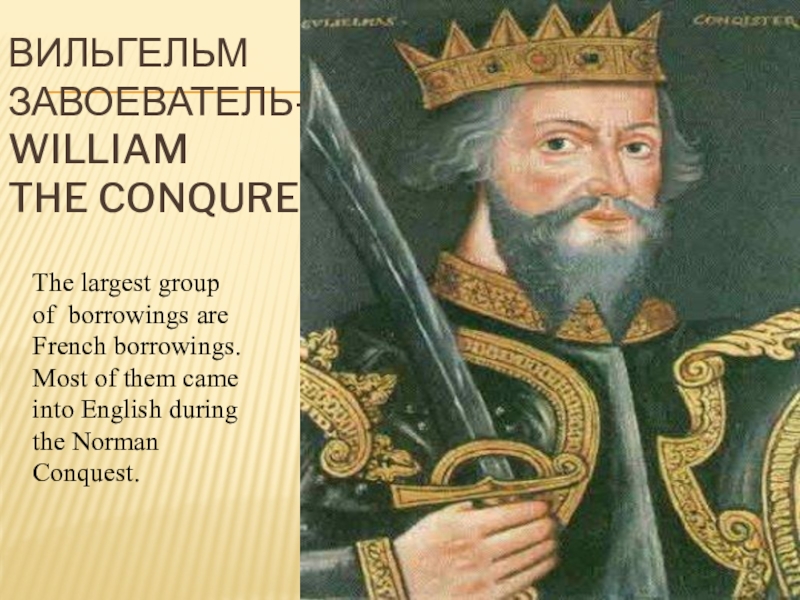
завоеватель--
William
the Conqurer
The largest group of borrowings are French borrowings.
Most of them came into English during the Norman Conquest.
Слайд 16There are the following
groups of French Borrowings:
a) words relating to
government : administer, empire, state, government;
b) words relating to military affairs: army, war, banner, soldier, battle;
c) words relating to jury: advocate, petition, inquest, sentence, barrister;
d) words relating to fashion: luxury, coat, collar, lace, pleat, embroidery;
e) words relating to jewelry: topaz, emerald, ruby, pearl ;
f) words relating to food and cooking: lunch, dinner, appetite, to roast, to stew.
Words were borrowed from French into English after 1650, mainly through French literature, but they were not as numerous and many of them are not completely assimilated. There are the following semantic groups of these borrowings:
a) words relating to literature and music: belle-lettres, conservatorie, brochure, nuance, piruette, vaudeville;
b) words relating to military affairs: corps, echelon, fuselage, manouvre;
c) words relating to buildings and furniture: entresol, chateau, bureau;
d) words relating to food and cooking: ragout, cuisine.
b) words relating to military affairs: army, war, banner, soldier, battle;
c) words relating to jury: advocate, petition, inquest, sentence, barrister;
d) words relating to fashion: luxury, coat, collar, lace, pleat, embroidery;
e) words relating to jewelry: topaz, emerald, ruby, pearl ;
f) words relating to food and cooking: lunch, dinner, appetite, to roast, to stew.
Words were borrowed from French into English after 1650, mainly through French literature, but they were not as numerous and many of them are not completely assimilated. There are the following semantic groups of these borrowings:
a) words relating to literature and music: belle-lettres, conservatorie, brochure, nuance, piruette, vaudeville;
b) words relating to military affairs: corps, echelon, fuselage, manouvre;
c) words relating to buildings and furniture: entresol, chateau, bureau;
d) words relating to food and cooking: ragout, cuisine.
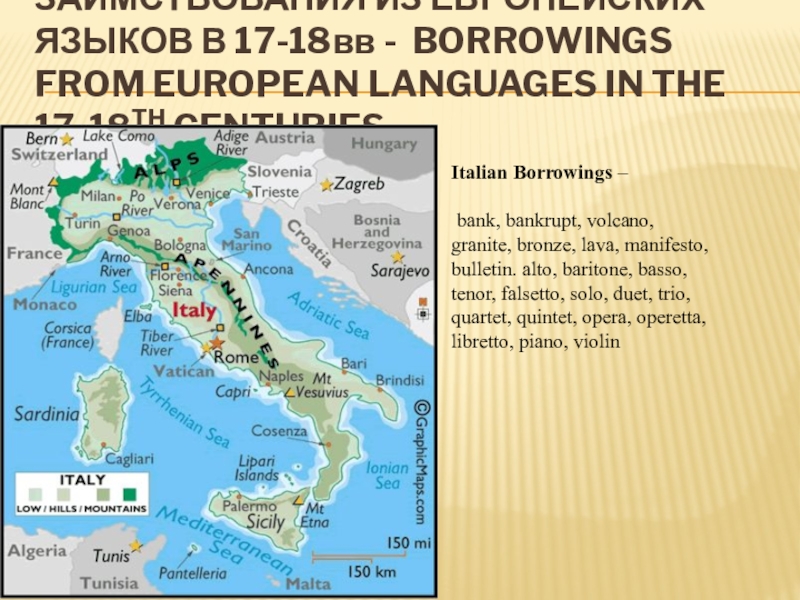
Слайд 17Заимствования из европейских языков в 17-18вв - Borrowings from European Languages
in the 17-18th centuries.
Italian Borrowings –
bank, bankrupt, volcano, granite, bronze, lava, manifesto, bulletin. alto, baritone, basso, tenor, falsetto, solo, duet, trio, quartet, quintet, opera, operetta, libretto, piano, violin
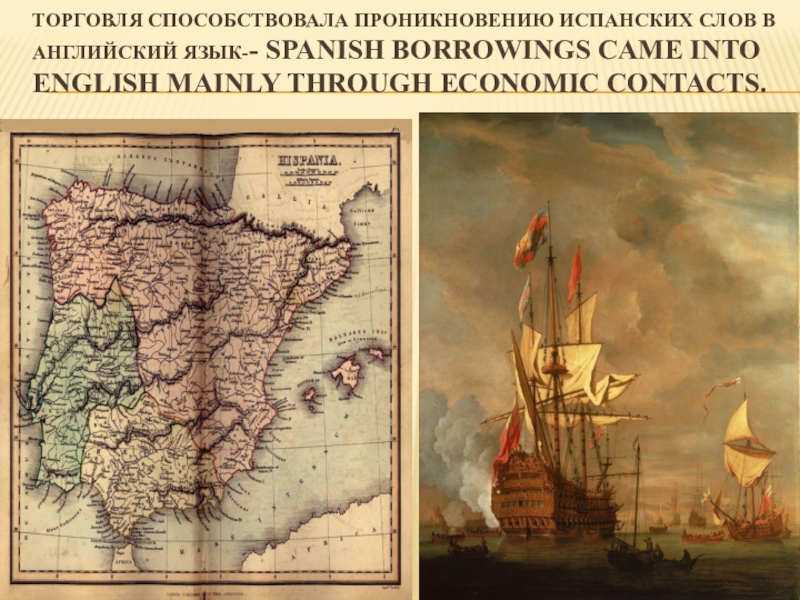
Слайд 18Торговля способствовала проникновению испанских слов в английский язык-- Spanish borrowings came
into English mainly through economic contacts.
Слайд 19Слова испанского
происхождения--
Spanish Borrowings:
There are the following semantic groups of
them:
a) trade terms: cargo, embargo;
b) names of dances and musical instruments: tango, rumba, habanera, guitar;
c) names of vegetables and fruit: tomato, potato, tobacco, cocoa, banana, ananas, apricot etc.
a) trade terms: cargo, embargo;
b) names of dances and musical instruments: tango, rumba, habanera, guitar;
c) names of vegetables and fruit: tomato, potato, tobacco, cocoa, banana, ananas, apricot etc.
Слайд 20Слова
немецкого
происхождения
German
borrowings.
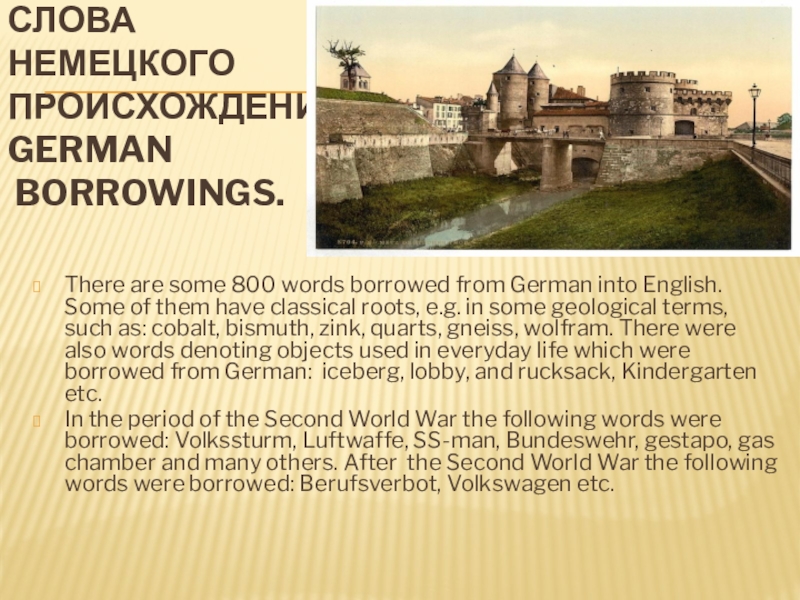
There are some 800 words borrowed from German into English.
Some of them have classical roots, e.g. in some geological terms, such as: cobalt, bismuth, zink, quarts, gneiss, wolfram. There were also words denoting objects used in everyday life which were borrowed from German: iceberg, lobby, and rucksack, Kindergarten etc.
In the period of the Second World War the following words were borrowed: Volkssturm, Luftwaffe, SS-man, Bundeswehr, gestapo, gas chamber and many others. After the Second World War the following words were borrowed: Berufsverbot, Volkswagen etc.
In the period of the Second World War the following words were borrowed: Volkssturm, Luftwaffe, SS-man, Bundeswehr, gestapo, gas chamber and many others. After the Second World War the following words were borrowed: Berufsverbot, Volkswagen etc.
Слайд 21Голландия всегда имела тесные контакты с Великобританией --Holland and England have
constant contacts for many centuries

Слайд 22
слова
голландского
происхождения-
Holland
borrowings.
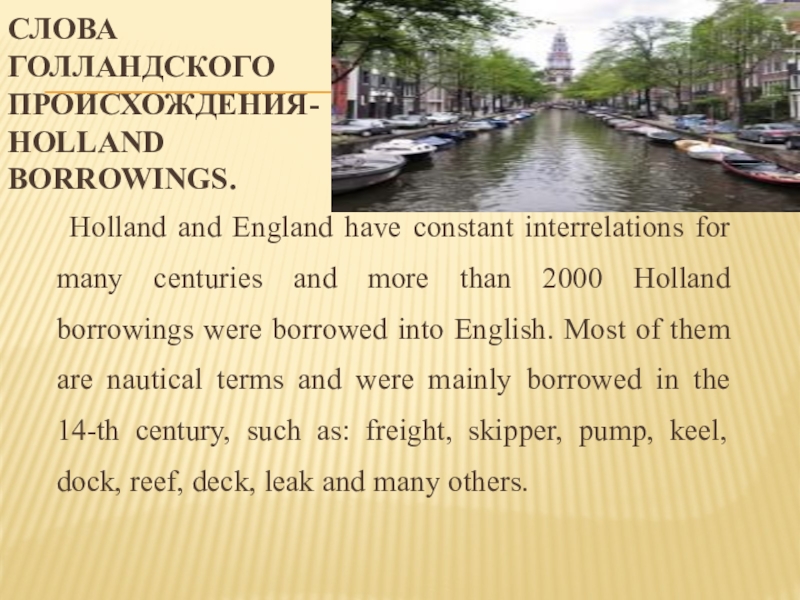
Holland and England have constant interrelations
for many centuries and more than 2000 Holland borrowings were borrowed into English. Most of them are nautical terms and were mainly borrowed in the 14-th century, such as: freight, skipper, pump, keel, dock, reef, deck, leak and many others.
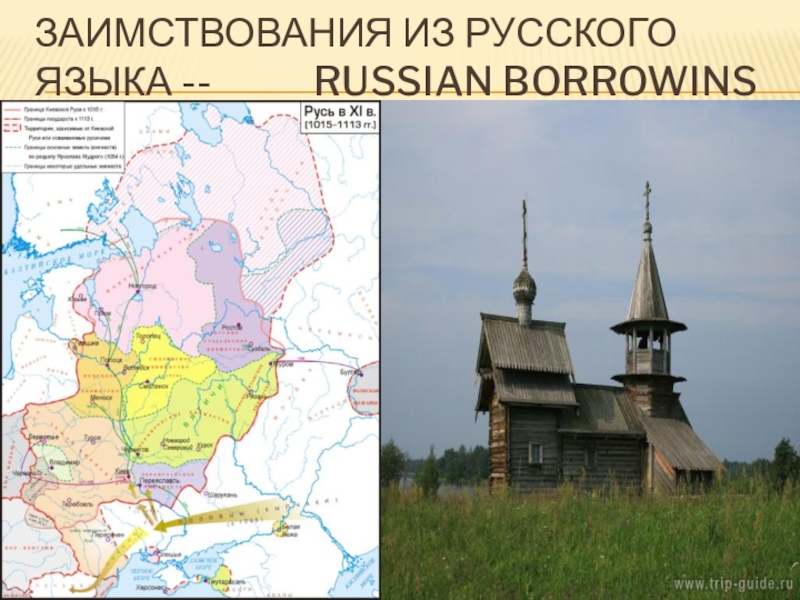
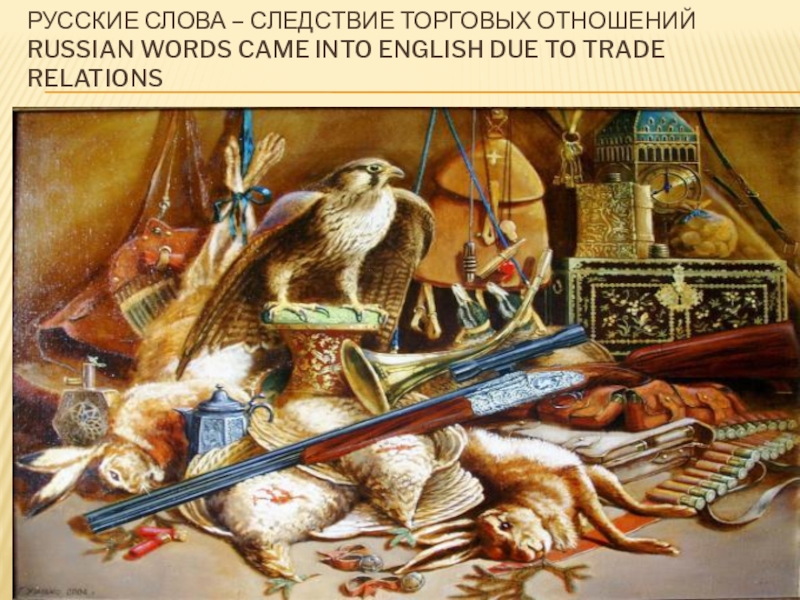
Слайд 24Русские слова – следствие торговых отношений Russian words came into English due
to trade relations
Слайд 26
Заключение:
In conclusion :
English as a global language
English
has often been referred to as a «world language», the lingua franca of the modern era, it is rather a language that is absorbing aspects of cultures worldwide as it continues to grow.
English itself is now open to borrowings, though the purist tendencies are existing too.
English itself is now open to borrowings, though the purist tendencies are existing too.
Слайд 27Список литературы:
1. В.П. Секирин «Заимствования в английском языке»,Санкт-Петербург: изд-во Союз, 2008.
2.
Н.Н. Амосова «Этимологические основы словарного состава современного английского языка»,М:изд-во- Менеджер, 2005.
3. Под редакцией Н.Н. Амосовой «Лексикология английского языка», М: Дрофа, 2009.
4.Г.Б.Антрушина и др. «Лекссикология английского языка»,М: Дрофа, 2011.
4. В.Д. Аракин «Очерки по истории английского языка» М:изд-во Владос, 2002.
3. Под редакцией Н.Н. Амосовой «Лексикология английского языка», М: Дрофа, 2009.
4.Г.Б.Антрушина и др. «Лекссикология английского языка»,М: Дрофа, 2011.
4. В.Д. Аракин «Очерки по истории английского языка» М:изд-во Владос, 2002.