материала, в противном случае урок будет скучным и малоэффективным.
Современный урок английского языка трудно представить без презентаций. Они могут быть использованы абсолютно на всех этапах урока и по любой тематике. Почему? Эффективность воздействия учебного материала на учащихся зависит во многом от степени и уровня иллюстративности материала. Презентация позволяет акцентировать внимание учащихся на самых значимых моментах излагаемой информации и создать образы в виде схем, композиций, иллюстраций. Она воздействует сразу на несколько видов памяти: зрительную, слуховую и эмоциональную. Это и помогает нам повышать мотивацию учащихся в ходе урока, даже если сам по себе материал кажется очень скучным и, порой, не представляет значимости для обучающихся. Хорошим примером тому послужит предлагаемая презентация, которую можно использовать в старших классах в курсе “Страноведение”.
- Главная
- Разное
- Образование
- Спорт
- Естествознание
- Природоведение
- Религиоведение
- Французский язык
- Черчение
- Английский язык
- Астрономия
- Алгебра
- Биология
- География
- Геометрия
- Детские презентации
- Информатика
- История
- Литература
- Математика
- Музыка
- МХК
- Немецкий язык
- ОБЖ
- Обществознание
- Окружающий мир
- Педагогика
- Русский язык
- Технология
- Физика
- Философия
- Химия
- Шаблоны, фоны, картинки для презентаций
- Экология
- Экономика
Презентация, доклад по английскому языку Юлий Цезарь
Содержание
- 1. Презентация по английскому языку Юлий Цезарь
- 2. JULIUS CAESAR IN PLUTARCH’S LIVES AND SHAKESPEARE’S TRAGEDY
- 3. SOURCES OF JULIUS CAESARAmong the plays which
- 4. THE DIFFERENCESThe difference between Plutarch’s prose and
- 5. PLUTARCH’S DESCRIPTIONPlutarch describes the address in these
- 6. Shakespeare’s descriptionYou all do know this mantle:
- 7. The previous chronicle-plays which preceded Julius
- 8. In Julius Caesar a great and
- 9. COMPARING Compare this clear descriptive prose with
- 10. Thank you for your attention.
JULIUS CAESAR IN PLUTARCH’S LIVES AND SHAKESPEARE’S TRAGEDY


Слайд 3SOURCES OF JULIUS CAESAR
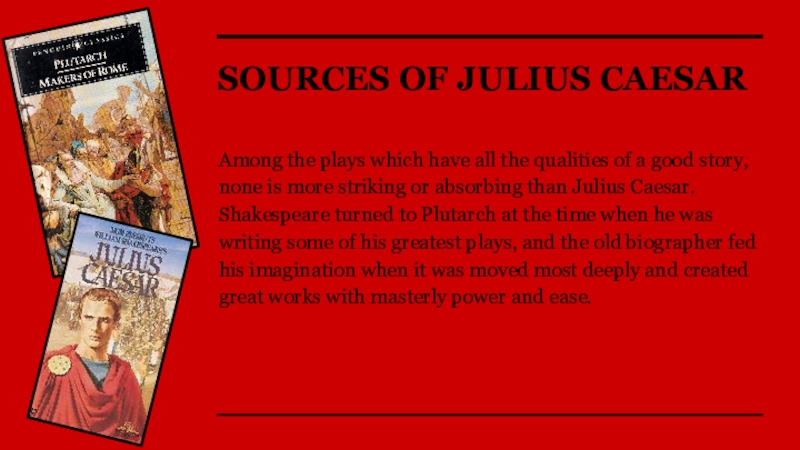
Among the plays which have all the qualities
of a good story, none is more striking or absorbing than Julius Caesar. Shakespeare turned to Plutarch at the time when he was writing some of his greatest plays, and the old biographer fed his imagination when it was moved most deeply and created great works with masterly power and ease.
Слайд 4THE DIFFERENCES
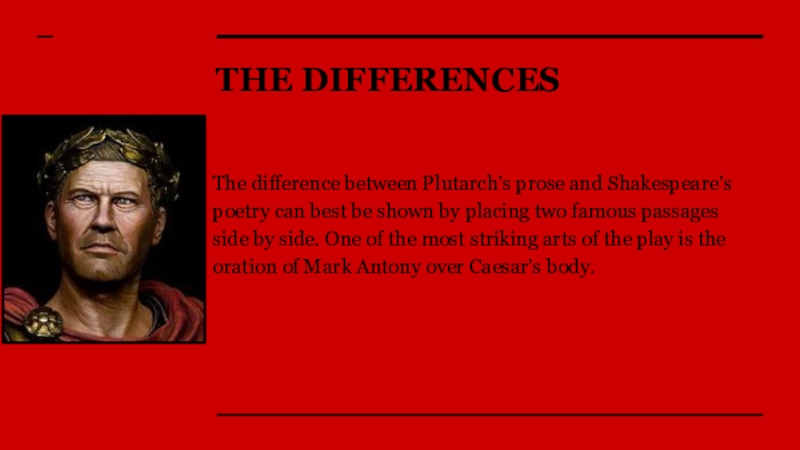
The difference between Plutarch’s prose and Shakespeare’s poetry can best
be shown by placing two famous passages side by side. One of the most striking arts of the play is the oration of Mark Antony over Caesar’s body.
Слайд 5PLUTARCH’S DESCRIPTION
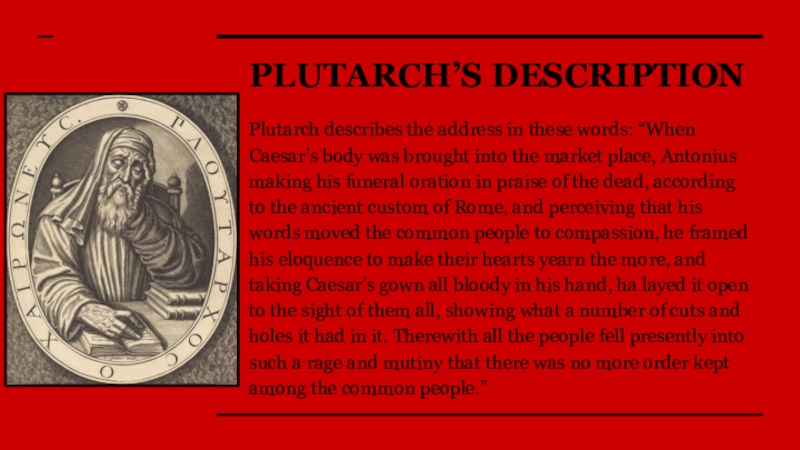
Plutarch describes the address in these words: “When Caesar’s body
was brought into the market place, Antonius making his funeral oration in praise of the dead, according to the ancient custom of Rome, and perceiving that his words moved the common people to compassion, he framed his eloquence to make their hearts yearn the more, and taking Caesar’s gown all bloody in his hand, ha layed it open to the sight of them all, showing what a number of cuts and holes it had in it. Therewith all the people fell presently into such a rage and mutiny that there was no more order kept among the common people.”
Слайд 6Shakespeare’s description
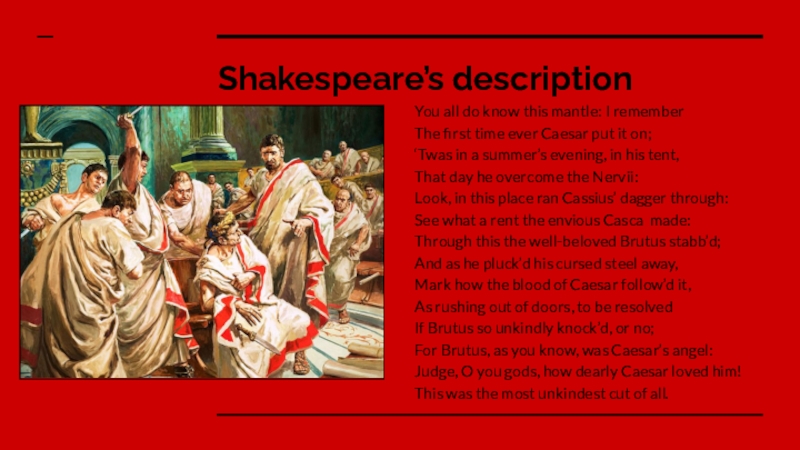
You all do know this mantle: I remember
The first time
ever Caesar put it on;
‘Twas in a summer’s evening, in his tent,
That day he overcome the Nervii:
Look, in this place ran Cassius’ dagger through:
See what a rent the envious Casca made:
Through this the well-beloved Brutus stabb’d;
And as he pluck’d his cursed steel away,
Mark how the blood of Caesar follow’d it,
As rushing out of doors, to be resolved
If Brutus so unkindly knock’d, or no;
For Brutus, as you know, was Caesar’s angel:
Judge, O you gods, how dearly Caesar loved him!
This was the most unkindest cut of all.
Слайд 7
The previous chronicle-plays which preceded Julius Caesar were generally composed
of a series of events; they were panoramas of incidents and read like chapters in an incomplete drama. Julius Caesar is complete in itself. There is no pause of the movement of the play; it flows with the current of a deep stream in human affairs.
Слайд 8
In Julius Caesar a great and radical change has been
made in society. Caesar, - who personifies it, - Octavius, and, to a certain extent, Antony, recognize the new movement in Rome, move with it, and are carried on to fortune.
Слайд 9COMPARING
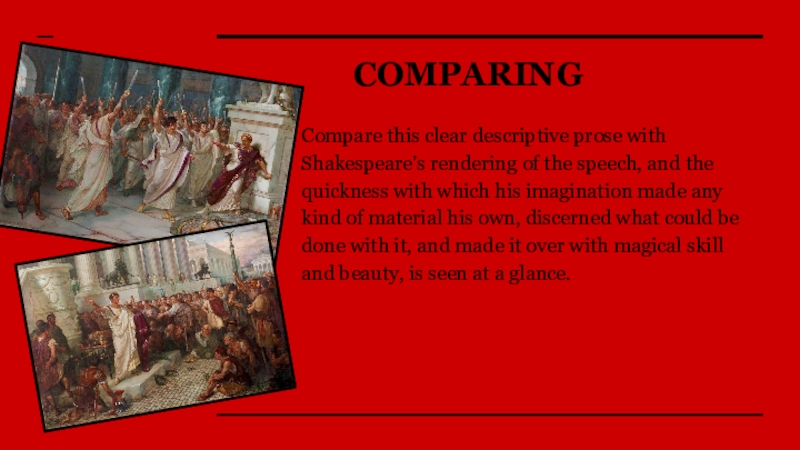
Compare this clear descriptive prose with Shakespeare’s rendering of the
speech, and the quickness with which his imagination made any kind of material his own, discerned what could be done with it, and made it over with magical skill and beauty, is seen at a glance.