- Главная
- Разное
- Образование
- Спорт
- Естествознание
- Природоведение
- Религиоведение
- Французский язык
- Черчение
- Английский язык
- Астрономия
- Алгебра
- Биология
- География
- Геометрия
- Детские презентации
- Информатика
- История
- Литература
- Математика
- Музыка
- МХК
- Немецкий язык
- ОБЖ
- Обществознание
- Окружающий мир
- Педагогика
- Русский язык
- Технология
- Физика
- Философия
- Химия
- Шаблоны, фоны, картинки для презентаций
- Экология
- Экономика
Презентация, доклад по английскому языку Сибирь
Содержание
- 1. Презентация по английскому языку Сибирь
- 2. Siberia is an extensive geographical region, and
- 3. Map of Russian federal subjects belonging to
- 4. The climate of Siberia varies dramatically, but
- 5. Almost all the population lives in the
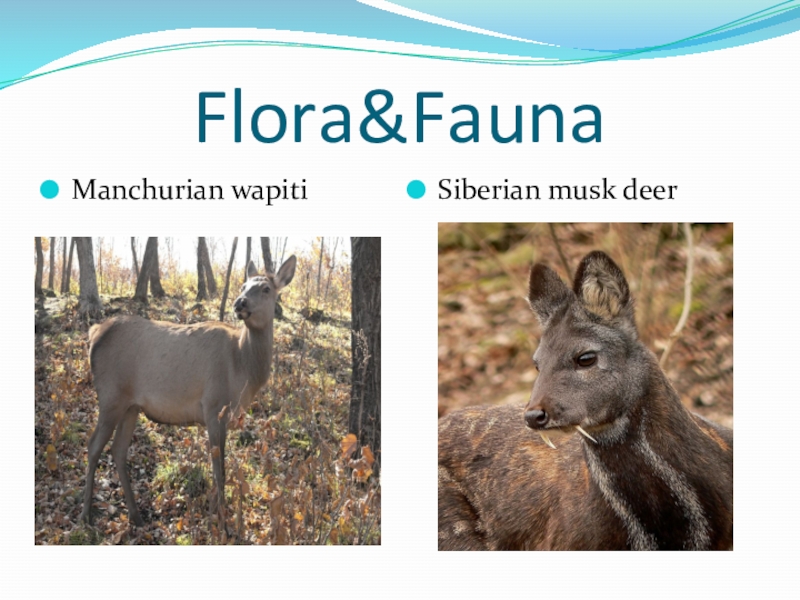
- 6. Flora&FaunaManchurian wapitiSiberian musk deer
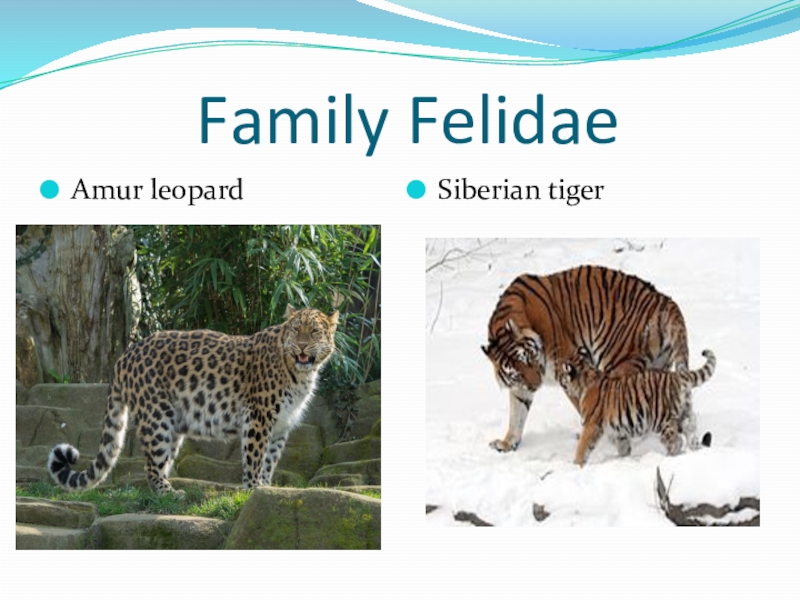
- 7. Family FelidaeAmur leopardSiberian tiger
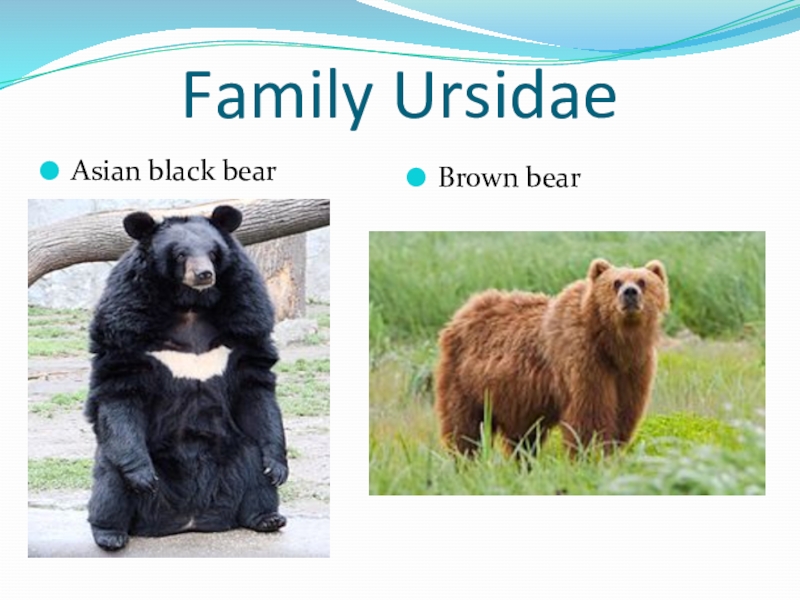
- 8. Family UrsidaeAsian black bearBrown bear
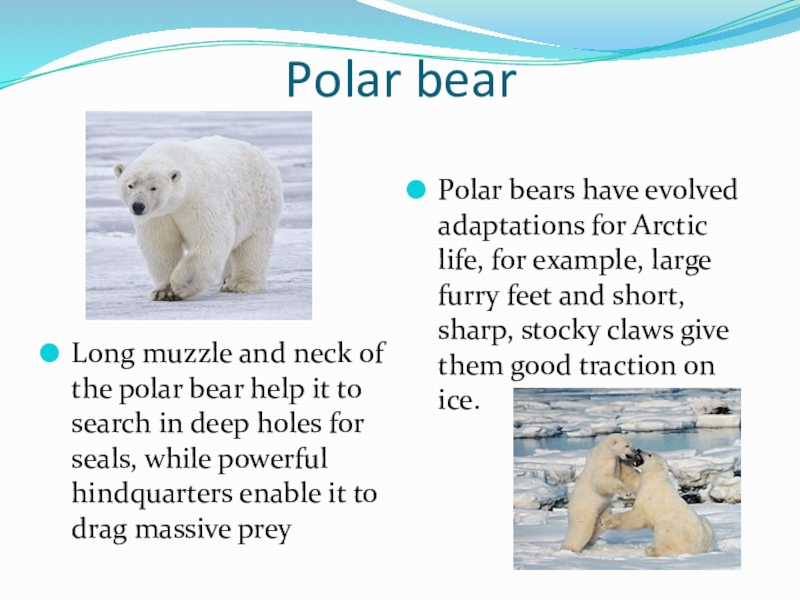
- 9. Polar bearLong muzzle and neck of the
- 10. Picea obovata is a medium-sized evergreen tree
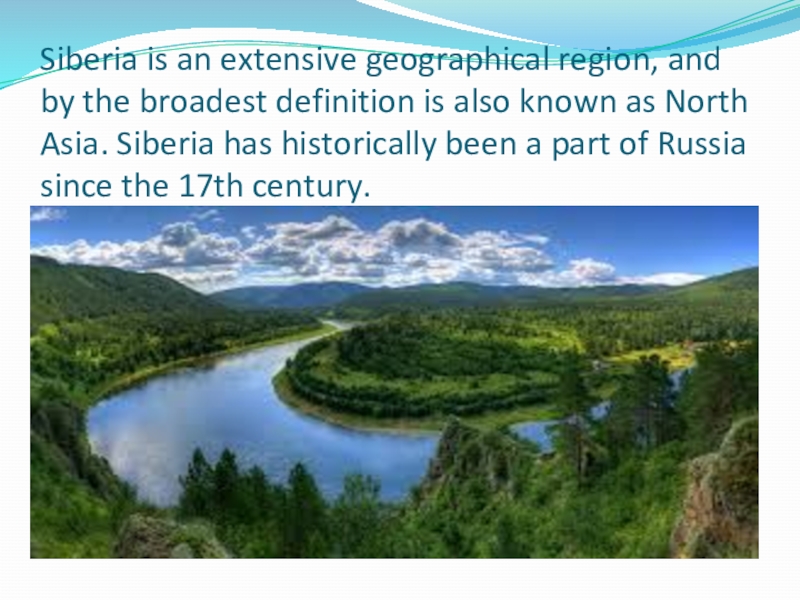
Siberia is an extensive geographical region, and by the broadest definition is also known as North Asia. Siberia has historically been a part of Russia since the 17th century.
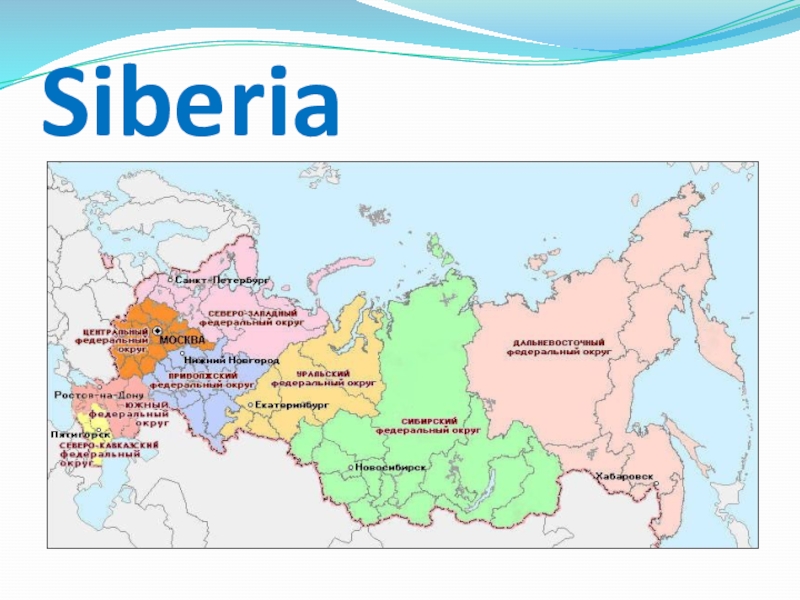
Слайд 2Siberia is an extensive geographical region, and by the broadest definition
is also known as North Asia. Siberia has historically been a part of Russia since the 17th century.
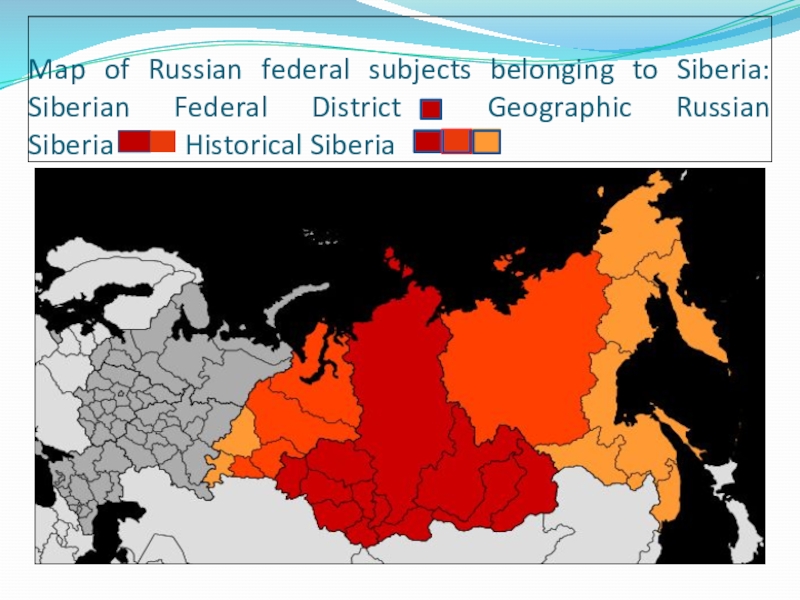
Слайд 3Map of Russian federal subjects belonging to Siberia:
Siberian Federal District Geographic Russian
Siberia Historical Siberia
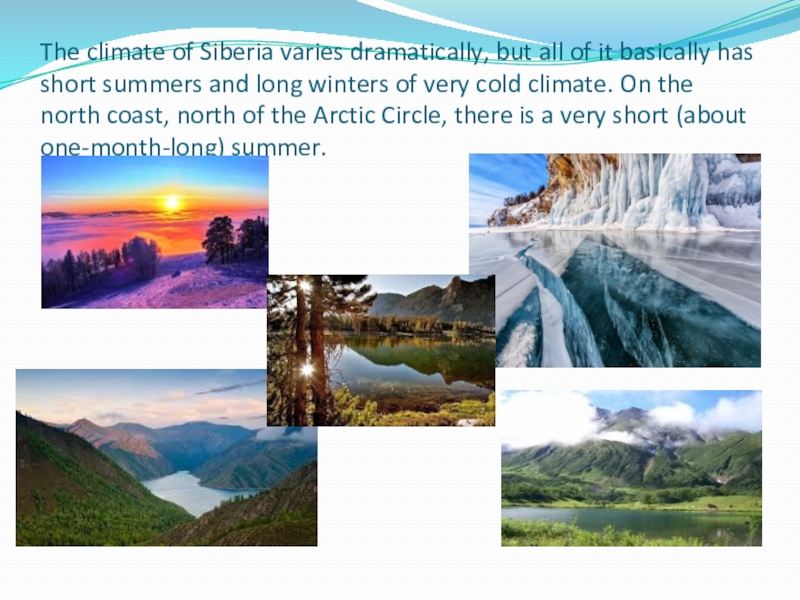
Слайд 4The climate of Siberia varies dramatically, but all of it basically
has short summers and long winters of very cold climate. On the north coast, north of the Arctic Circle, there is a very short (about one-month-long) summer.
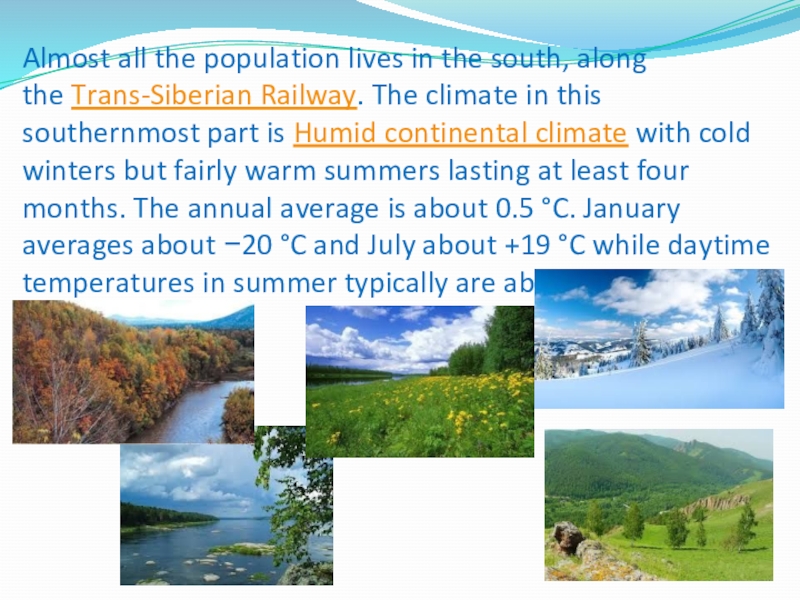
Слайд 5Almost all the population lives in the south, along the Trans-Siberian Railway.
The climate in this southernmost part is Humid continental climate with cold winters but fairly warm summers lasting at least four months. The annual average is about 0.5 °C. January averages about −20 °C and July about +19 °C while daytime temperatures in summer typically are above 20 °C.
Слайд 9Polar bear
Long muzzle and neck of the polar bear help it
to search in deep holes for seals, while powerful hindquarters enable it to drag massive prey
Polar bears have evolved adaptations for Arctic life, for example, large furry feet and short, sharp, stocky claws give them good traction on ice.
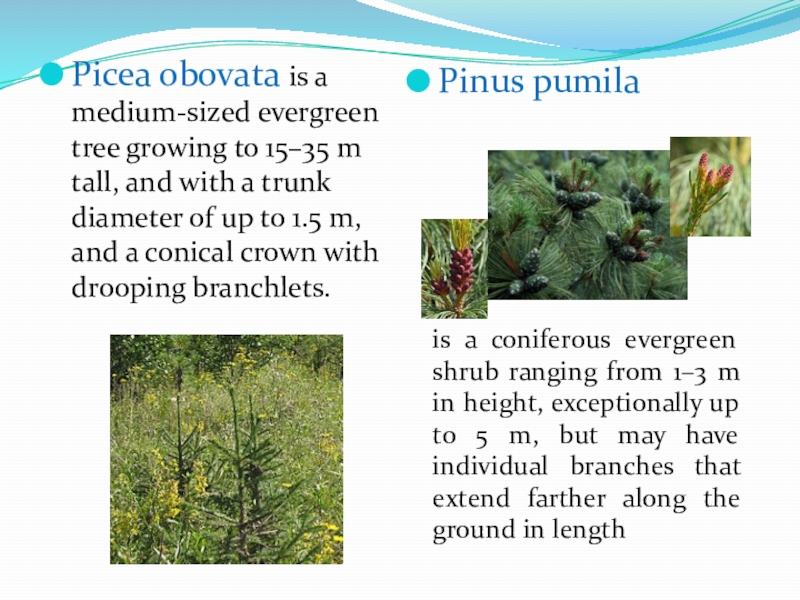
Слайд 10Picea obovata is a medium-sized evergreen tree growing to 15–35 m
tall, and with a trunk diameter of up to 1.5 m, and a conical crown with drooping branchlets.
Pinus pumila
is a coniferous evergreen shrub ranging from 1–3 m in height, exceptionally up to 5 m, but may have individual branches that extend farther along the ground in length