- Главная
- Разное
- Образование
- Спорт
- Естествознание
- Природоведение
- Религиоведение
- Французский язык
- Черчение
- Английский язык
- Астрономия
- Алгебра
- Биология
- География
- Геометрия
- Детские презентации
- Информатика
- История
- Литература
- Математика
- Музыка
- МХК
- Немецкий язык
- ОБЖ
- Обществознание
- Окружающий мир
- Педагогика
- Русский язык
- Технология
- Физика
- Философия
- Химия
- Шаблоны, фоны, картинки для презентаций
- Экология
- Экономика
Презентация, доклад по английскому языку Русские традиции
Содержание
- 1. Презентация по английскому языку Русские традиции
- 2. Every country and every nation has its
- 3. New YearThe New Year celebration is the
- 4. MaslenitsaMaslenitsa (Pancake Week) falls on the final
- 5. Defender of the Fatherland Day (Men's Day)Defender
- 6. International Women's DayMarch 8 marks International
- 7. Day of LaughterThe Day of Laughter has
- 8. Orthodox EasterOrthodox Easter, also known as Paskha,
- 9. Spring and Labour DaySpring and Labour Day
- 10. May 9 is an official holiday in
- 11. Ivan KupalaIvan Kupala is an old pagan
- 12. Thank You for Attention!
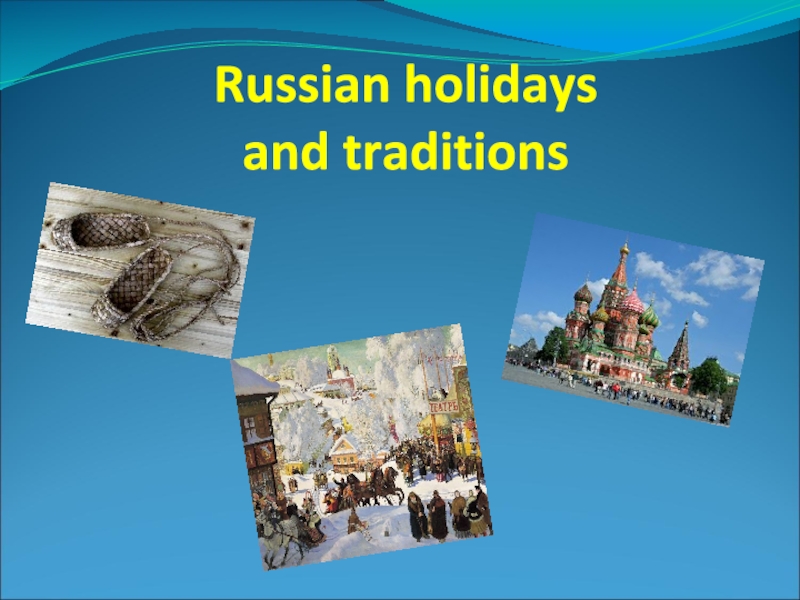
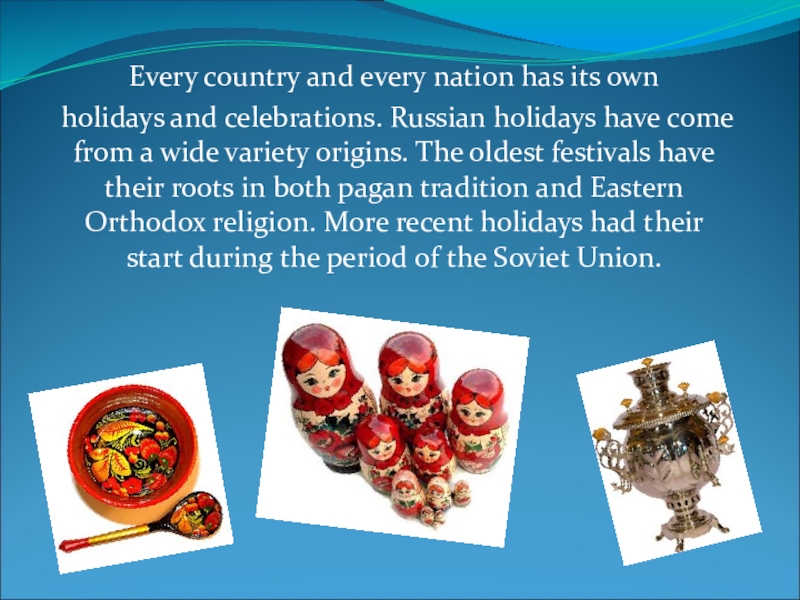
Every country and every nation has its own holidays and celebrations. Russian holidays have come from a wide variety origins. The oldest festivals have their roots in both pagan tradition and Eastern Orthodox religion. More recent
Слайд 2Every country and every nation has its own
holidays and celebrations.
Russian holidays have come from a wide variety origins. The oldest festivals have their roots in both pagan tradition and Eastern Orthodox religion. More recent holidays had their start during the period of the Soviet Union.
Слайд 3New Year
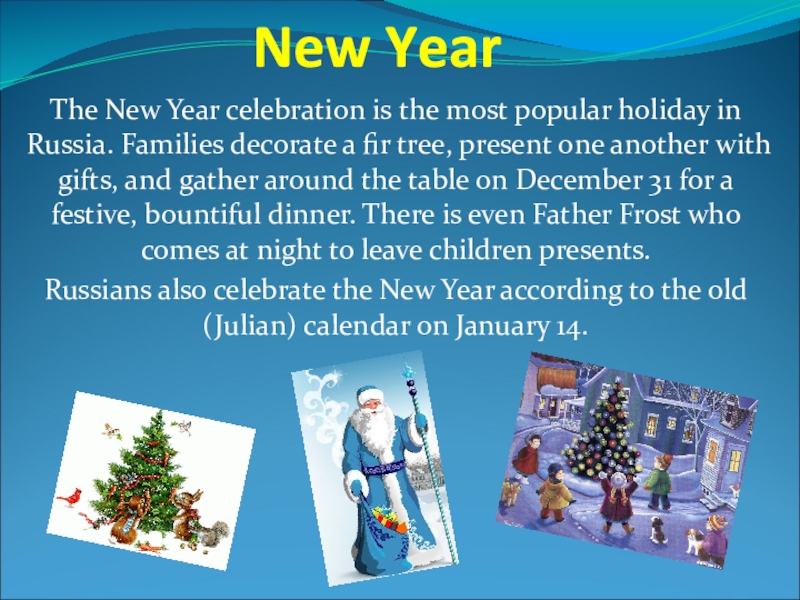
The New Year celebration is the most popular holiday in
Russia. Families decorate a fir tree, present one another with gifts, and gather around the table on December 31 for a festive, bountiful dinner. There is even Father Frost who comes at night to leave children presents.
Russians also celebrate the New Year according to the old (Julian) calendar on January 14.
Russians also celebrate the New Year according to the old (Julian) calendar on January 14.
Слайд 4Maslenitsa
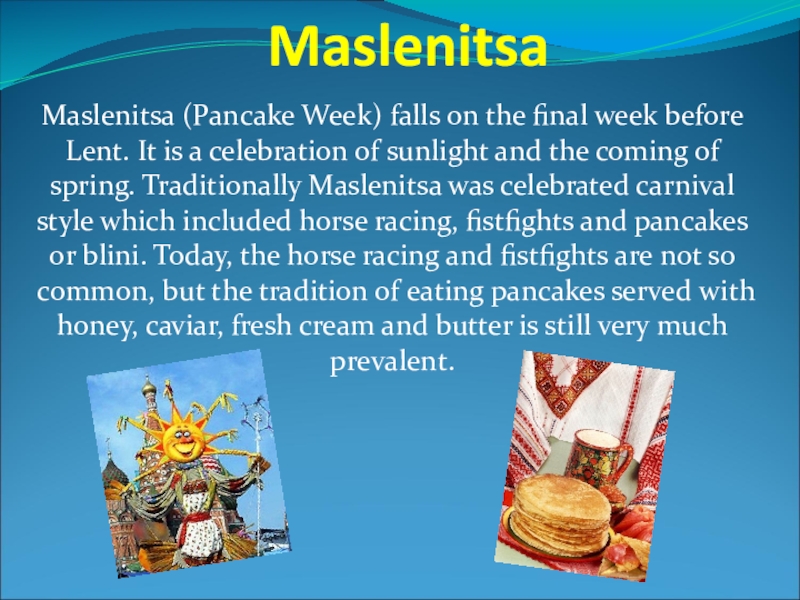
Maslenitsa (Pancake Week) falls on the final week before Lent. It
is a celebration of sunlight and the coming of spring. Traditionally Maslenitsa was celebrated carnival style which included horse racing, fistfights and pancakes or blini. Today, the horse racing and fistfights are not so common, but the tradition of eating pancakes served with honey, caviar, fresh cream and butter is still very much prevalent.
Слайд 5Defender of the Fatherland Day (Men's Day)
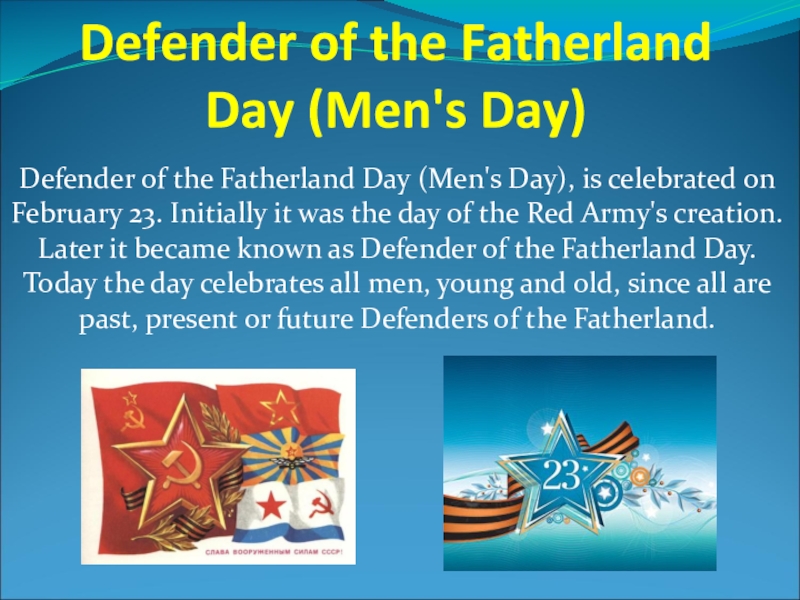
Defender of the Fatherland Day
(Men's Day), is celebrated on February 23. Initially it was the day of the Red Army's creation. Later it became known as Defender of the Fatherland Day. Today the day celebrates all men, young and old, since all are past, present or future Defenders of the Fatherland.
Слайд 6International
Women's Day
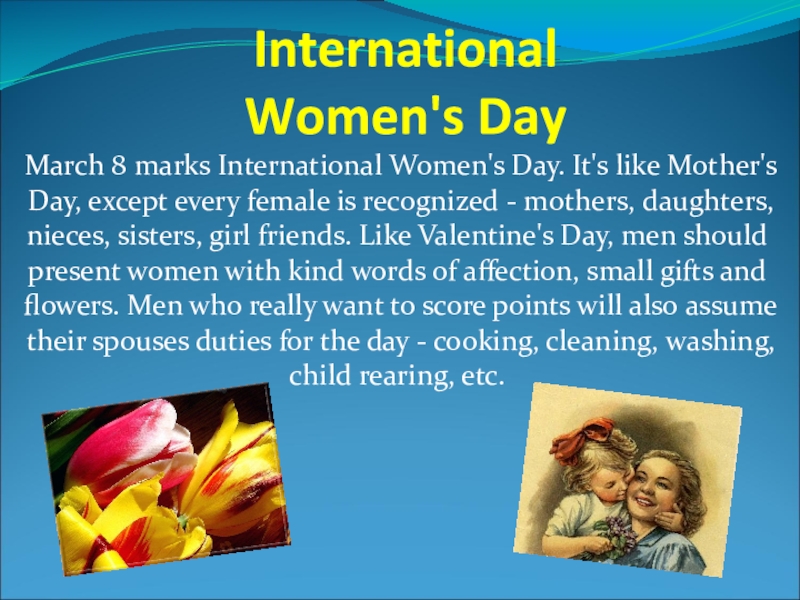
March 8 marks International Women's Day. It's like Mother's
Day, except every female is recognized - mothers, daughters, nieces, sisters, girl friends. Like Valentine's Day, men should present women with kind words of affection, small gifts and flowers. Men who really want to score points will also assume their spouses duties for the day - cooking, cleaning, washing, child rearing, etc.
Слайд 7Day of Laughter
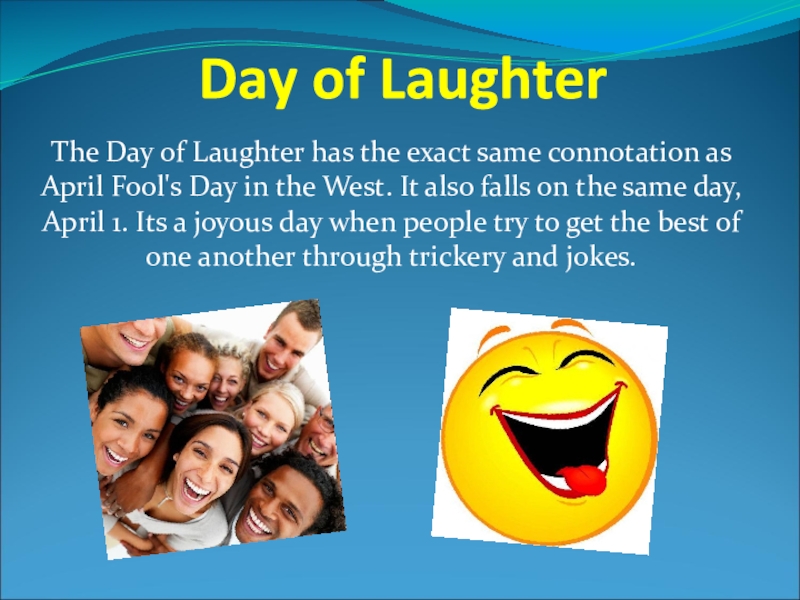
The Day of Laughter has the exact same connotation
as April Fool's Day in the West. It also falls on the same day, April 1. Its a joyous day when people try to get the best of one another through trickery and jokes.
Слайд 8Orthodox Easter
Orthodox Easter, also known as Paskha, takes place in springtime,
usually April or early May. Observed by all Eastern Orthodox.
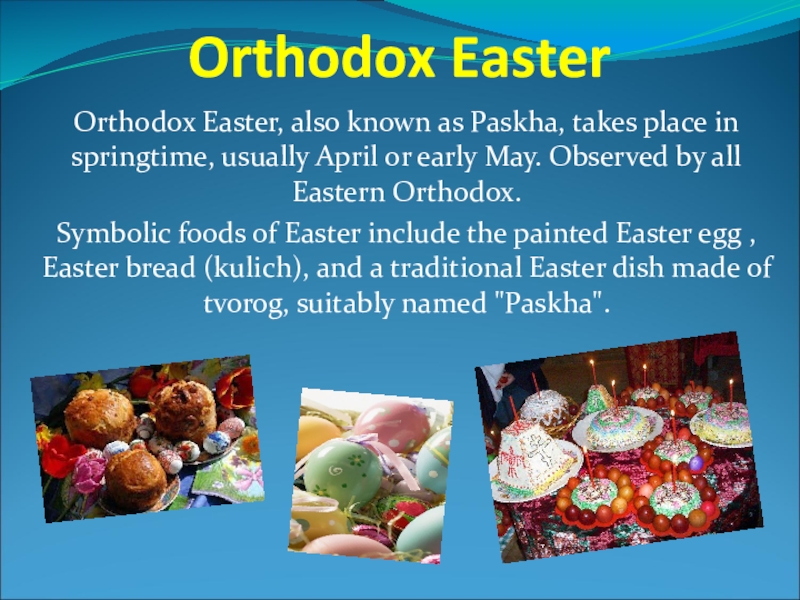
Symbolic foods of Easter include the painted Easter egg , Easter bread (kulich), and a traditional Easter dish made of tvorog, suitably named "Paskha".
Symbolic foods of Easter include the painted Easter egg , Easter bread (kulich), and a traditional Easter dish made of tvorog, suitably named "Paskha".
Слайд 9Spring and Labour Day
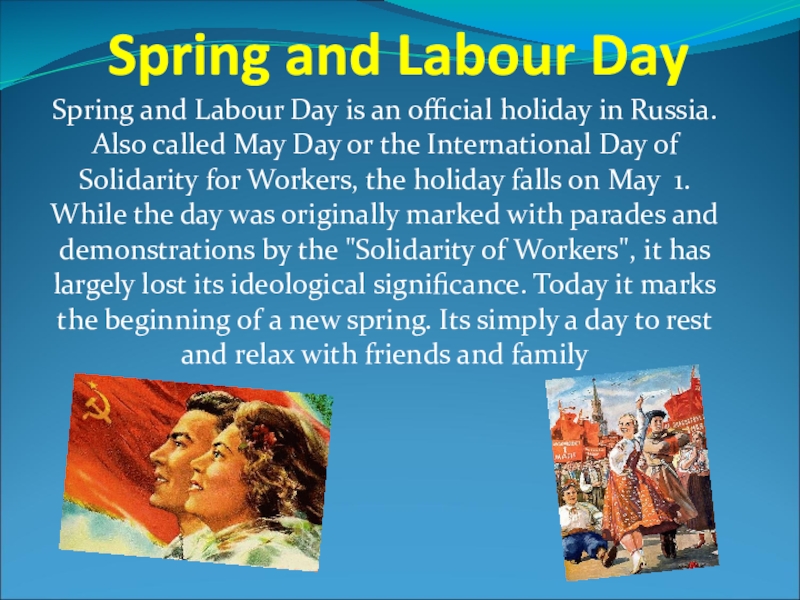
Spring and Labour Day is an official holiday
in Russia. Also called May Day or the International Day of Solidarity for Workers, the holiday falls on May 1. While the day was originally marked with parades and demonstrations by the "Solidarity of Workers", it has largely lost its ideological significance. Today it marks the beginning of a new spring. Its simply a day to rest and relax with friends and family
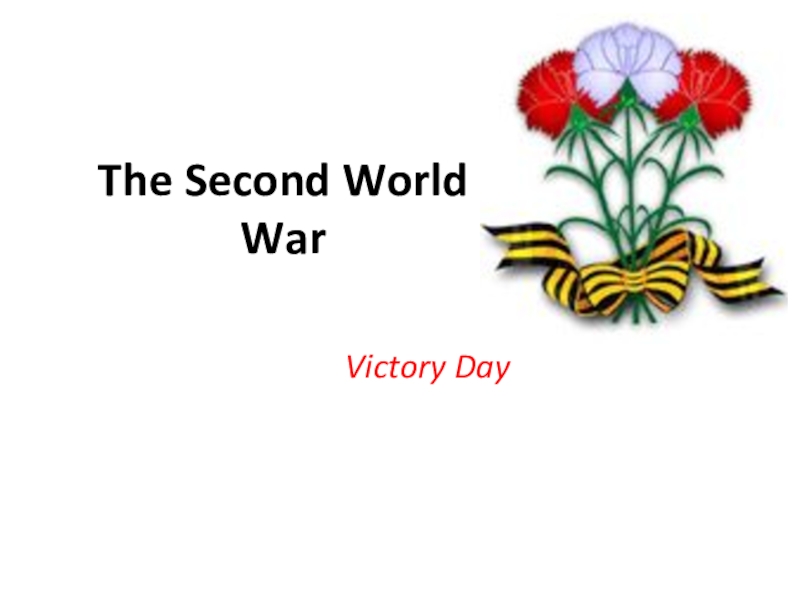
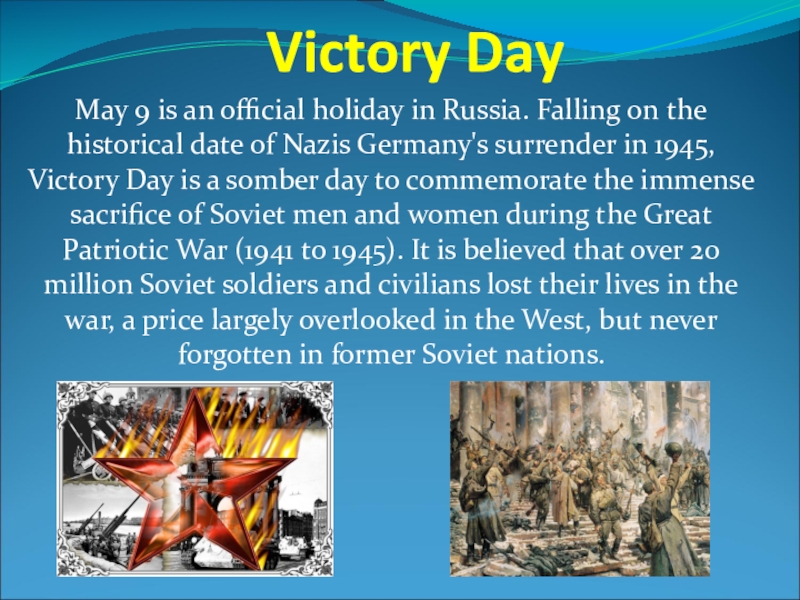
Слайд 10May 9 is an official holiday in Russia. Falling on the
historical date of Nazis Germany's surrender in 1945, Victory Day is a somber day to commemorate the immense sacrifice of Soviet men and women during the Great Patriotic War (1941 to 1945). It is believed that over 20 million Soviet soldiers and civilians lost their lives in the war, a price largely overlooked in the West, but never forgotten in former Soviet nations.
Victory Day
Слайд 11Ivan Kupala
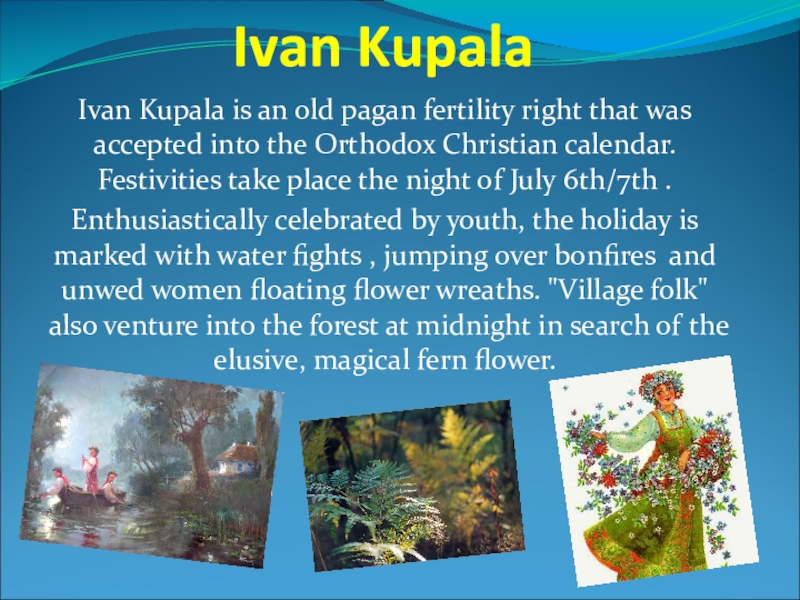
Ivan Kupala is an old pagan fertility right that was
accepted into the Orthodox Christian calendar. Festivities take place the night of July 6th/7th .
Enthusiastically celebrated by youth, the holiday is marked with water fights , jumping over bonfires and unwed women floating flower wreaths. "Village folk" also venture into the forest at midnight in search of the elusive, magical fern flower.
Enthusiastically celebrated by youth, the holiday is marked with water fights , jumping over bonfires and unwed women floating flower wreaths. "Village folk" also venture into the forest at midnight in search of the elusive, magical fern flower.