- Главная
- Разное
- Образование
- Спорт
- Естествознание
- Природоведение
- Религиоведение
- Французский язык
- Черчение
- Английский язык
- Астрономия
- Алгебра
- Биология
- География
- Геометрия
- Детские презентации
- Информатика
- История
- Литература
- Математика
- Музыка
- МХК
- Немецкий язык
- ОБЖ
- Обществознание
- Окружающий мир
- Педагогика
- Русский язык
- Технология
- Физика
- Философия
- Химия
- Шаблоны, фоны, картинки для презентаций
- Экология
- Экономика
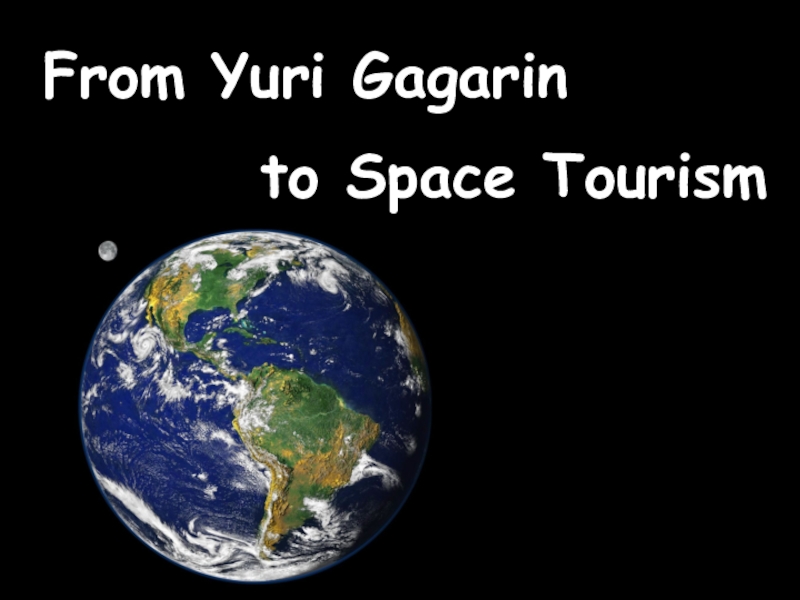
Презентация, доклад по английскому языку От Юрия Гагарина до космического туризма(7 класс)
Содержание
- 1. Презентация по английскому языку От Юрия Гагарина до космического туризма(7 класс)
- 2. To revise the words on the topic
- 3. Warming upReading and doing exercisesListening SpeakingPlan
- 4. SpaceName as many words on the topic “Space” as you can.
- 5. 1: MercuryDistance from Sun: 0.39 AUDiameter: 4,878 kmTemperat.: -170°/+425° CAtmosphere: near noneHuman landing: no
- 6. #2: VenusDist. from Sun: 0.72 AUDiameter: 12,104 kmTemperature: +465° CAtmosphere: CO2, N2Human landing: no
- 7. 3: The EarthDistance from Sun: 1 AUDiameter: 12,756 kmTemperature: -50°/+40° CAtmosphere: N2, O2
- 8. MoonDistance from Sun: 1 AUDiameter: 3,476 kmTemperat.: -150°/+120°CAtmosphere: noneHuman landing: yes
- 9. Moon
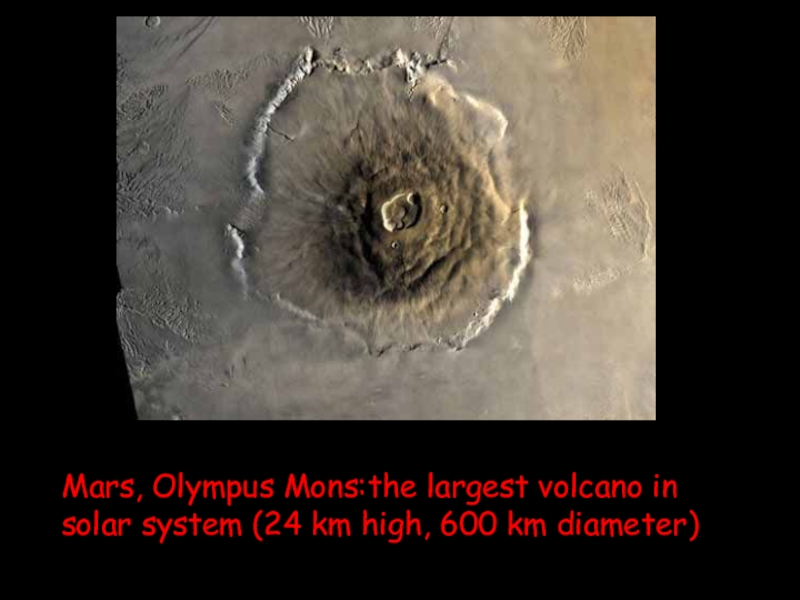
- 10. 4: MarsDistance from Sun: 1.52 AUDiameter: 6,794 kmTemperat.: -130°/+25° CAtmosphere: weak, CO2, N2Human landing: possible
- 11. Mars, Olympus Mons:the largest volcano in solar system (24 km high, 600 km diameter)
- 12. 5: JupiterGas giantDistance from Sun: 5.2 AUDiameter: 140,000 kmTemperature: -150° CAtmosphere: H2, He2Human landing: no
- 13. 6:SaturnGas giantDistance from Sun: 9.5 AUDiameter: 120,000 kmTemperature: -150° CAtmosphere: H2, HeHuman landing: no
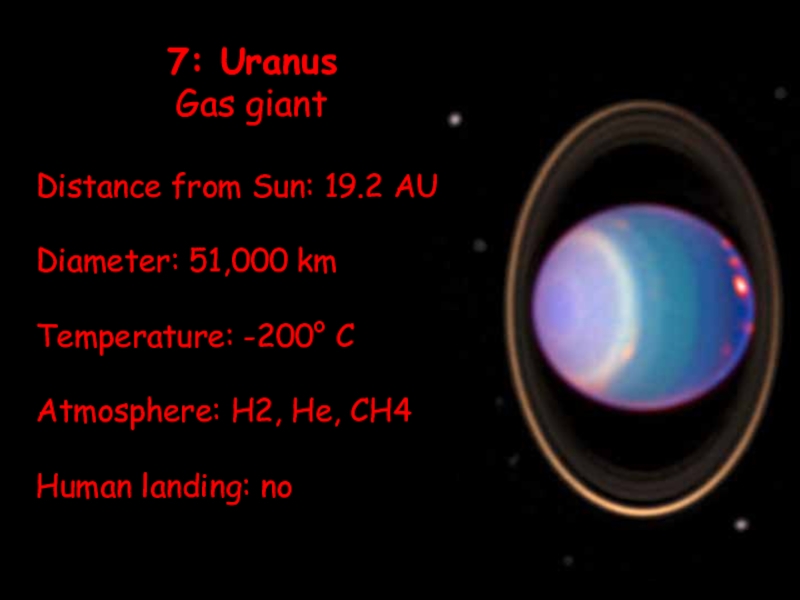
- 14. 7: UranusGas giantDistance from Sun: 19.2 AUDiameter: 51,000 kmTemperature: -200° CAtmosphere: H2, He, CH4Human landing: no
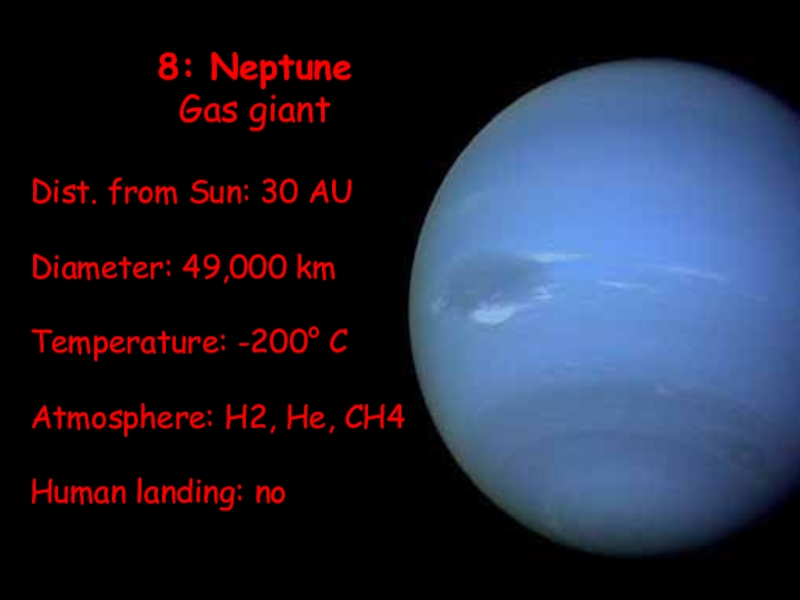
- 15. 8: NeptuneGas giantDist. from Sun: 30 AUDiameter: 49,000 kmTemperature: -200° CAtmosphere: H2, He, CH4Human landing: no
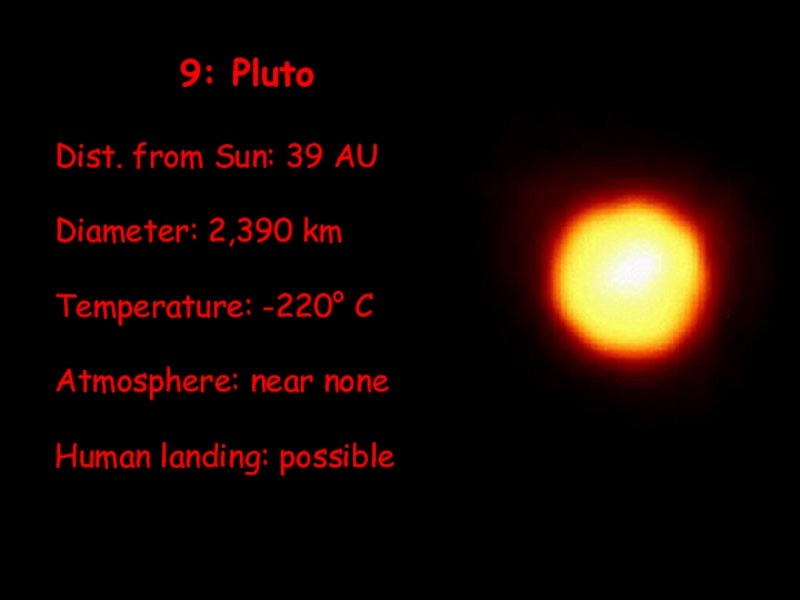
- 16. 9: PlutoDist. from Sun: 39 AUDiameter: 2,390 kmTemperature: -220° CAtmosphere: near noneHuman landing: possible
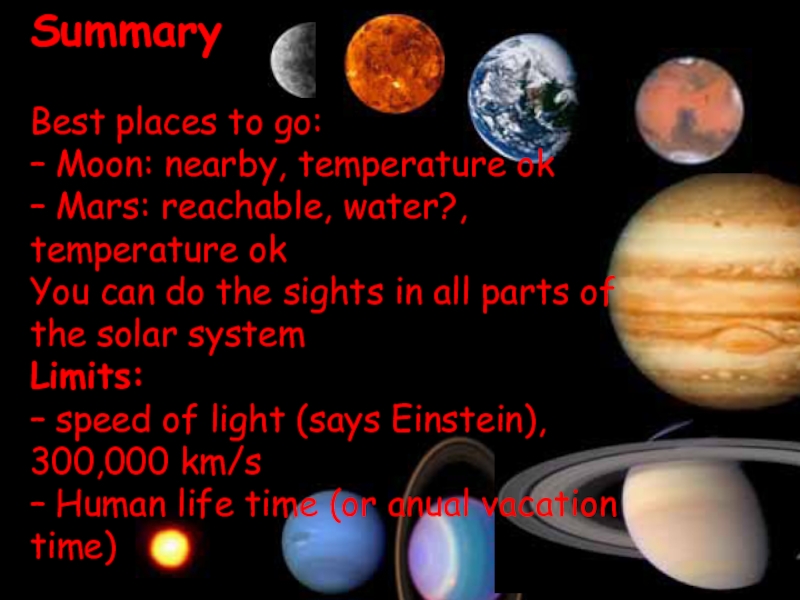
- 17. SummaryBest places to go:– Moon: nearby, temperature
- 18. History of Space TourismDreams of space travel
- 19. History of Space TourismJules Verne published “From
- 20. Yuri Gagarin is a Soviet
- 21. From Yuri Gagarin to Space TourismVocabulary: Exploration
- 22. Task 1. To read and translate the
- 23. 1. SPACE EXPLORATION A. TO
- 24. Task 3. Match the titles to the
- 25. Task 4. Are these statements true (T)
- 26. Task 5. Listen to the radio programme
- 27. Task 6. Listen again and complete notes.Gagarin
- 28. 1998: Japan's first space travel company, Spacetopia
- 29. Space AdventuresGoal: Open the space to everyone
- 30. Would you like to become a space
- 31. HometaskTo find information about the author, Arthur
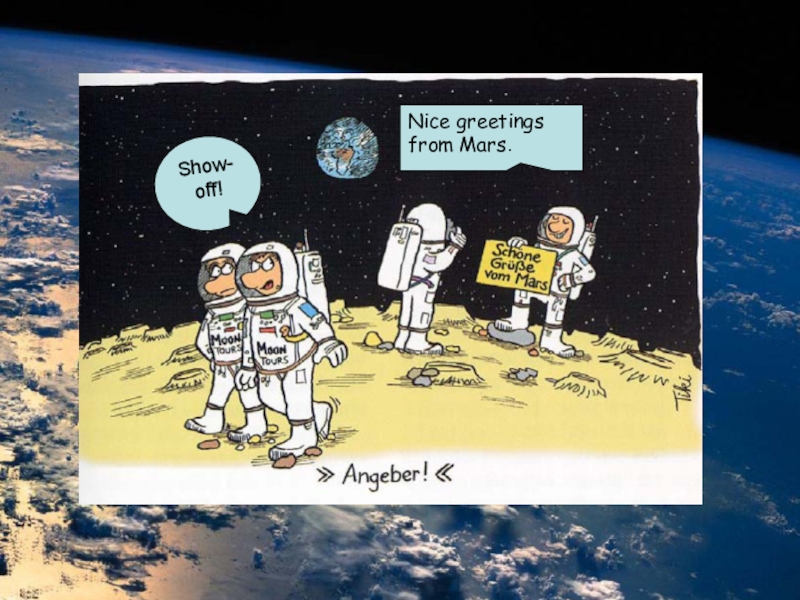
- 32. Nice greetingsfrom Mars.Show-off!
Слайд 2To revise the words on the topic “Space”
To read the text
To listen to and understand the main facts in the radio programme
Today we are going
To answer a question “Would you like to become a space tourist?”
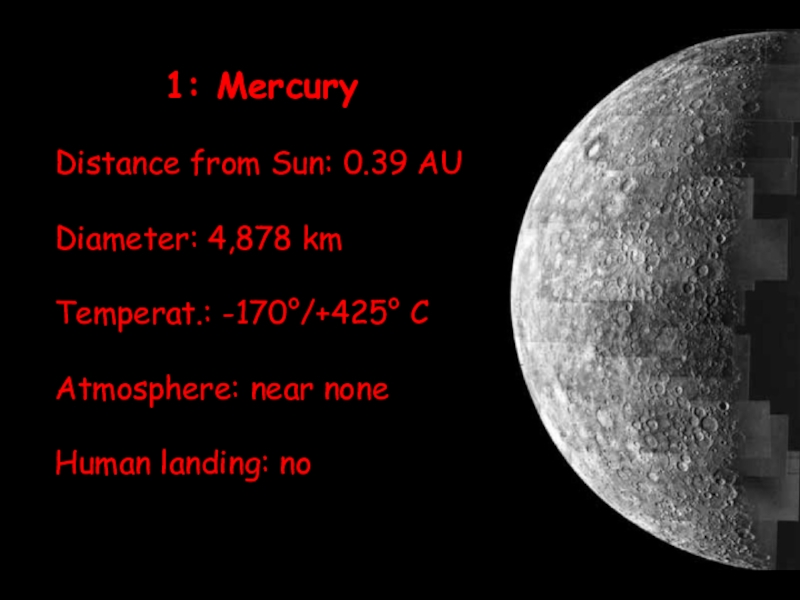
Слайд 51: Mercury
Distance from Sun: 0.39 AU
Diameter: 4,878 km
Temperat.: -170°/+425° C
Atmosphere: near
Human landing: no
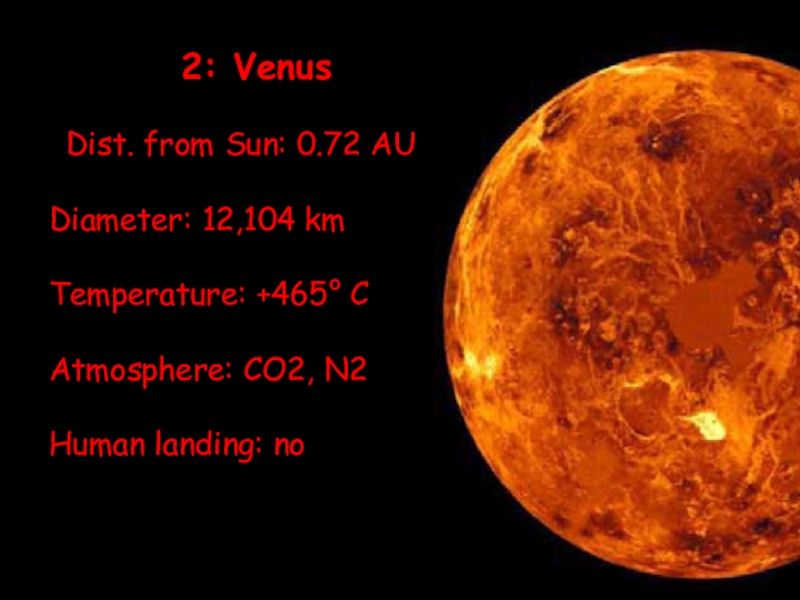
Слайд 6#2: Venus
Dist. from Sun: 0.72 AU
Diameter: 12,104 km
Temperature: +465° C
Atmosphere: CO2,
Human landing: no
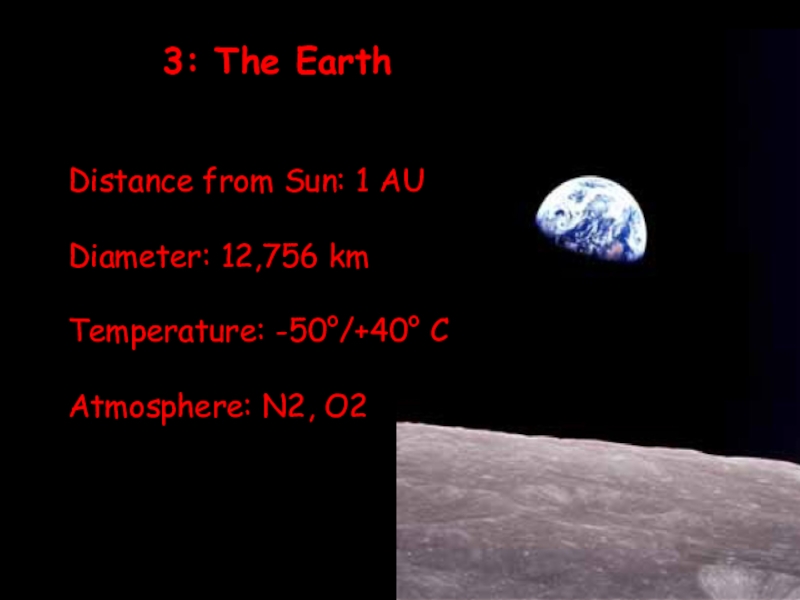
Слайд 73: The Earth
Distance from Sun: 1 AU
Diameter: 12,756 km
Temperature: -50°/+40° C
Atmosphere:
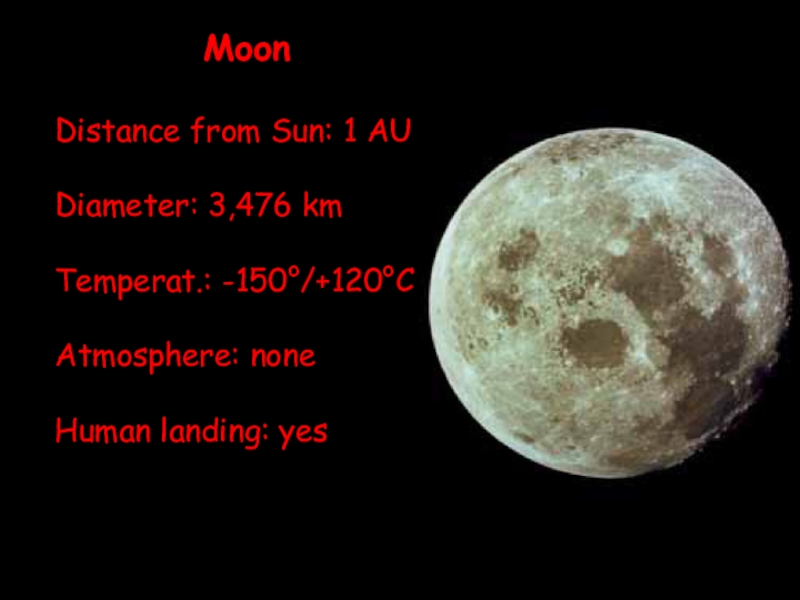
Слайд 8Moon
Distance from Sun: 1 AU
Diameter: 3,476 km
Temperat.: -150°/+120°C
Atmosphere: none
Human landing: yes
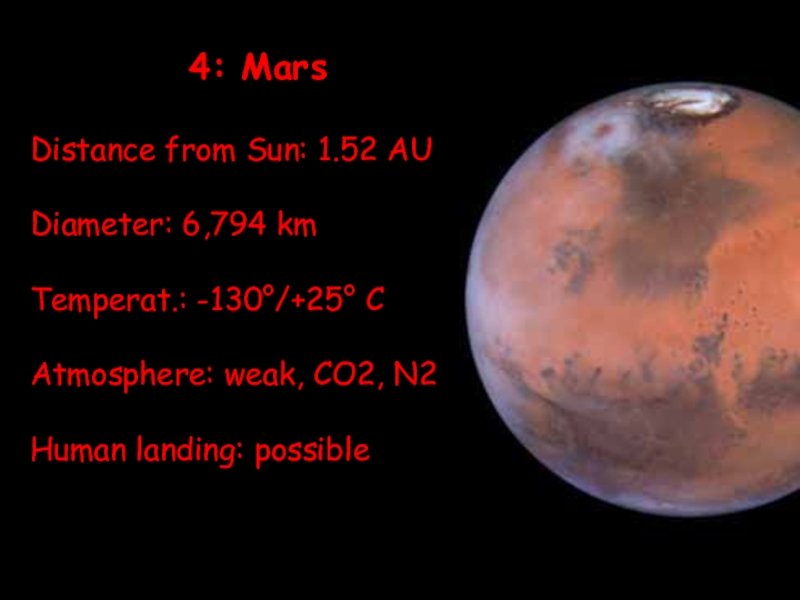
Слайд 104: Mars
Distance from Sun: 1.52 AU
Diameter: 6,794 km
Temperat.: -130°/+25° C
Atmosphere: weak,
Human landing: possible
Слайд 125: Jupiter
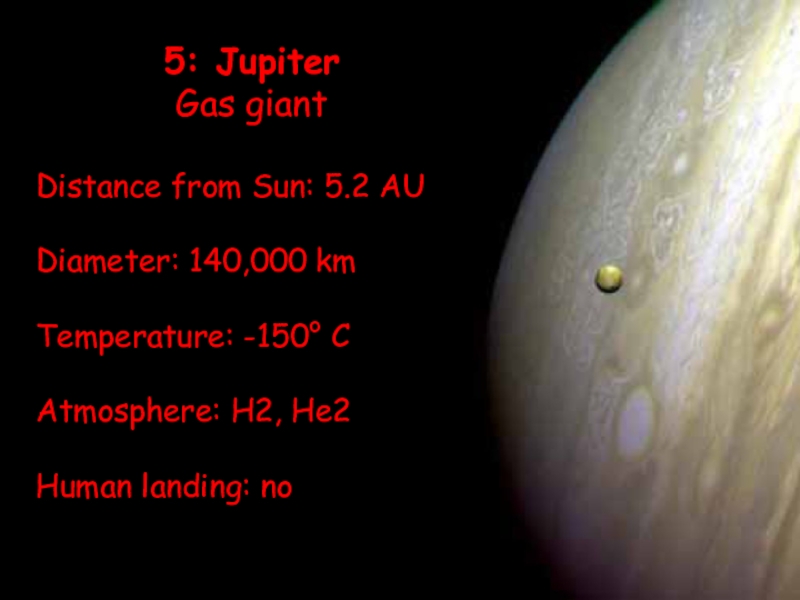
Gas giant
Distance from Sun: 5.2 AU
Diameter: 140,000 km
Temperature: -150° C
Atmosphere:
Human landing: no
Слайд 136:Saturn
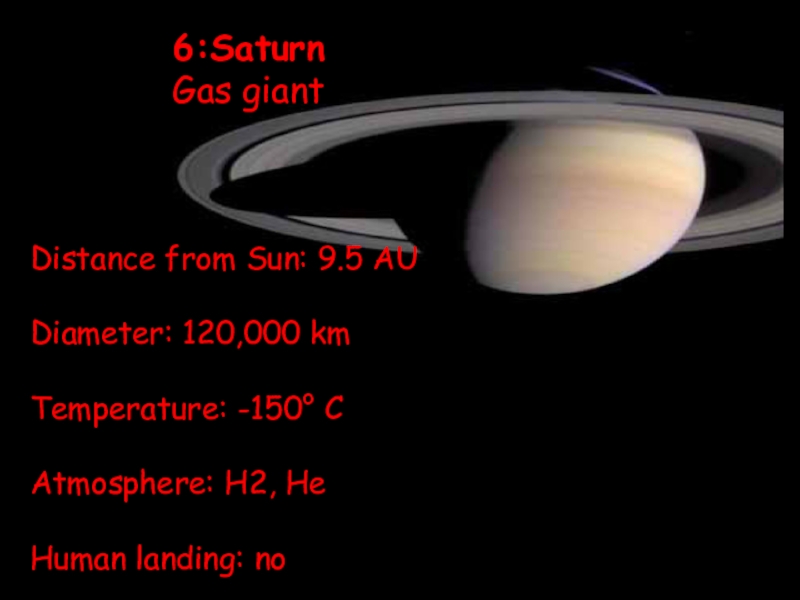
Gas giant
Distance from Sun: 9.5 AU
Diameter: 120,000 km
Temperature: -150° C
Atmosphere: H2,
Human landing: no
Слайд 147: Uranus
Gas giant
Distance from Sun: 19.2 AU
Diameter: 51,000 km
Temperature: -200° C
Atmosphere:
Human landing: no
Слайд 158: Neptune
Gas giant
Dist. from Sun: 30 AU
Diameter: 49,000 km
Temperature: -200° C
Atmosphere:
Human landing: no
Слайд 169: Pluto
Dist. from Sun: 39 AU
Diameter: 2,390 km
Temperature: -220° C
Atmosphere: near
Human landing: possible
Слайд 17Summary
Best places to go:
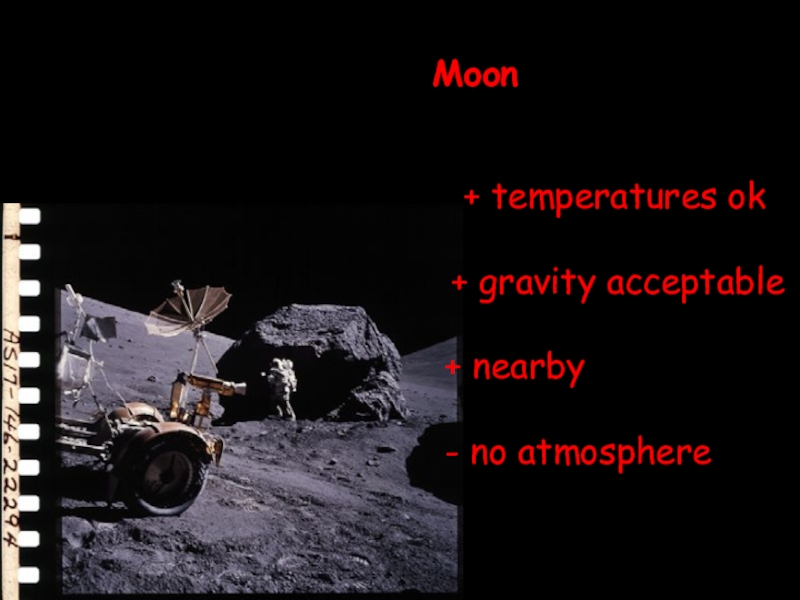
– Moon: nearby, temperature ok
– Mars: reachable, water?,
You can do the sights in all parts of the solar system
Limits:
– speed of light (says Einstein), 300,000 km/s
– Human life time (or anual vacation time)
Слайд 18History of Space Tourism
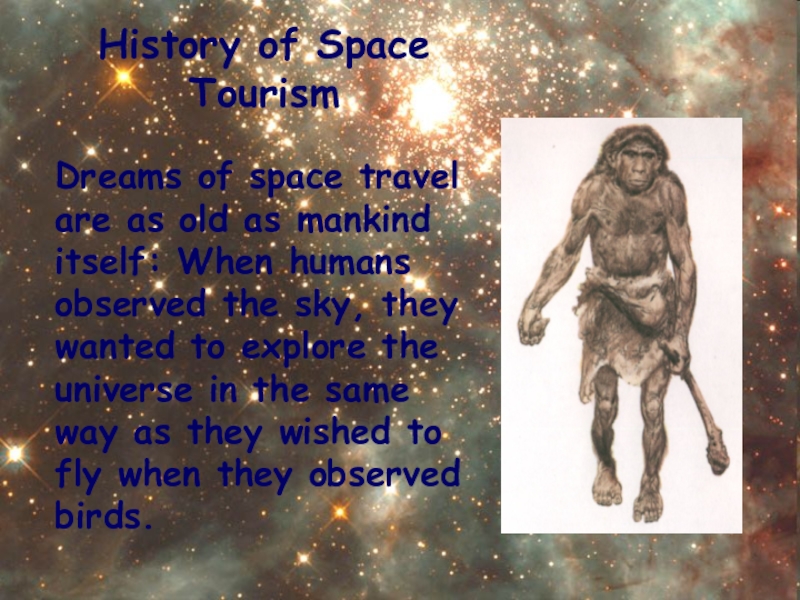
Dreams of space travel are as old as
Слайд 19History of Space Tourism
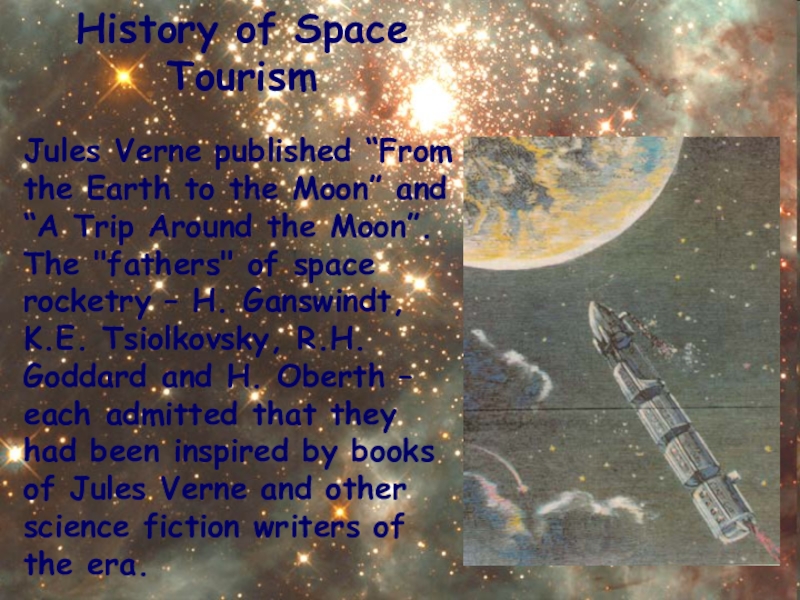
Jules Verne published “From the Earth to the
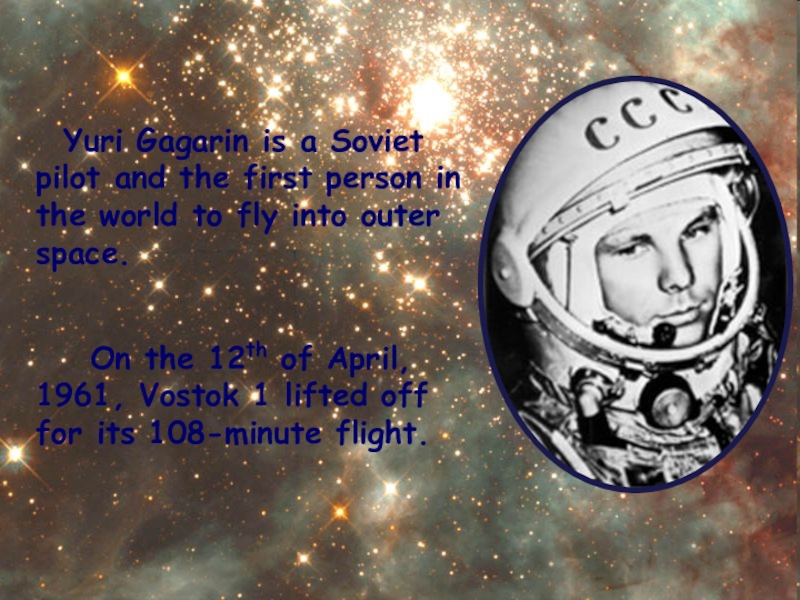
Слайд 20 Yuri Gagarin is a Soviet pilot and the first
On the 12th of April, 1961, Vostok 1 lifted off for its 108-minute flight.
Слайд 21From Yuri Gagarin to Space Tourism
Vocabulary:
Exploration
Launch a rocket Research
Rocket science Predict
Solve a problem Kazakhstan
Lift off Orbit
Conditions Weightlessness
Слайд 22Task 1. To read and translate the text.
Task 2. Match the
Task 3. Match the titles to the numbered paragraphs in the text. There is one extra title.
Task 4. Are these statements true (T) or false (F) ?
Task 5. Listen to the radio programme and choose the best title.
Task 6. Listen again and complete notes.
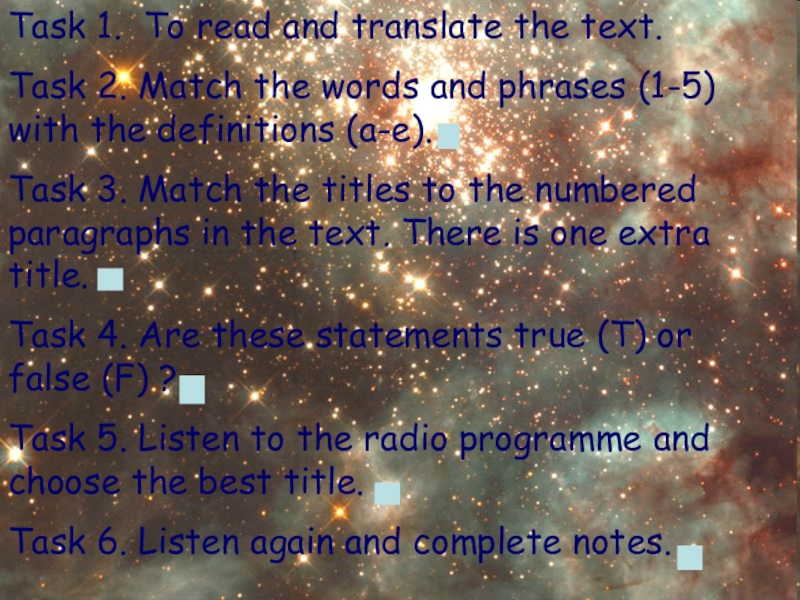
Слайд 231. SPACE EXPLORATION A. TO SEND SOMETHING
2. TO LAUNCH B. THE CONDITION IN SPACE
WHEN NOTHING HAS ANY WEIGHT
3. TO PREDICT C. TO HAPPEN IN REAL LIFE
4. TO COME TRUE D. JOURNEYS TO SPACE TO FIND
OUT WHAT IT’S LIKE
5. WEIGHTLESSNESS E. TO SAY THAT SOMETHING WILL
HAPPEN
Слайд 24
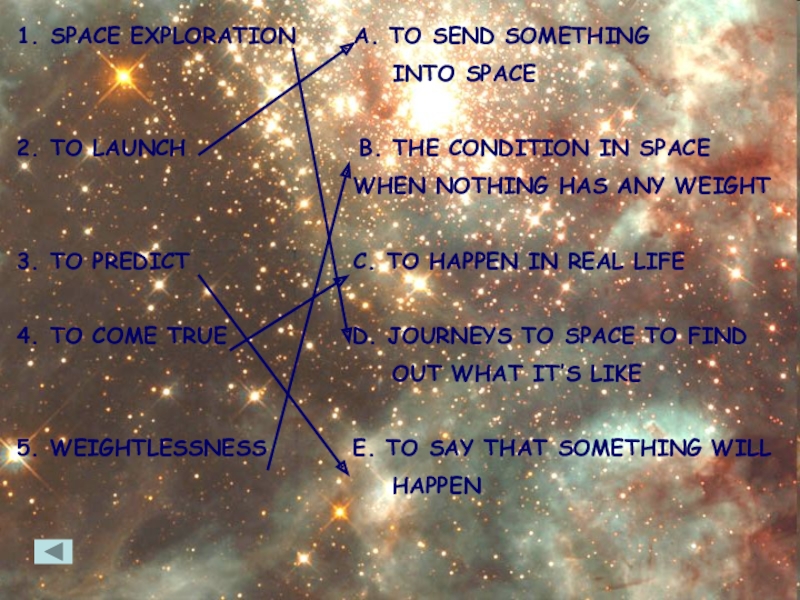
Task 3. Match the titles to the numbered paragraphs in the
Holiday-makers in space
Yuri Gagarin, the first cosmonaut
Outer space as a workplace
Father of rocket science
The flight that changed the world
1
2
4
3
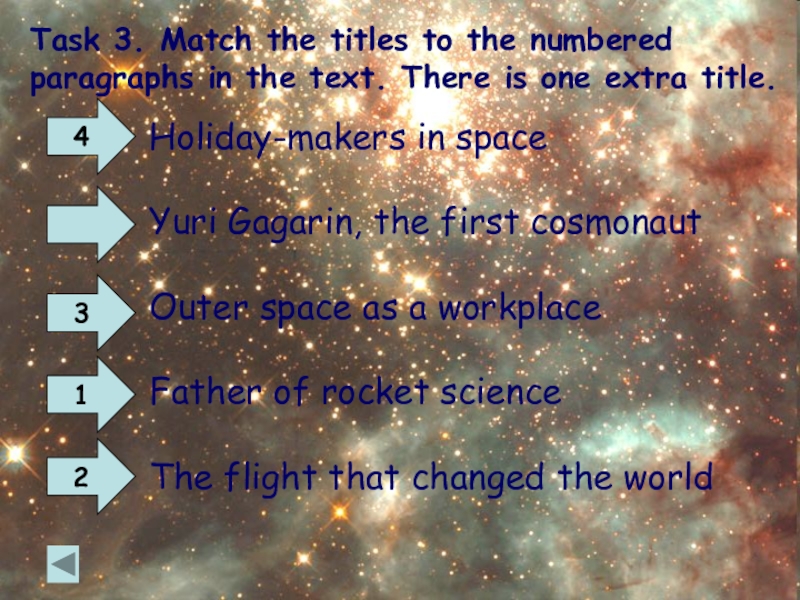
Слайд 25Task 4. Are these statements true (T) or
false (F) ?
1.Konstantin
2.Yuri Gagarin went round the Earth once.
3.During his flight Gagarin took photos of the Earth.
4.Space flight is now international.
5.Space engineers do a lot of scientific work.
6.The Americans took the first tourist into space.
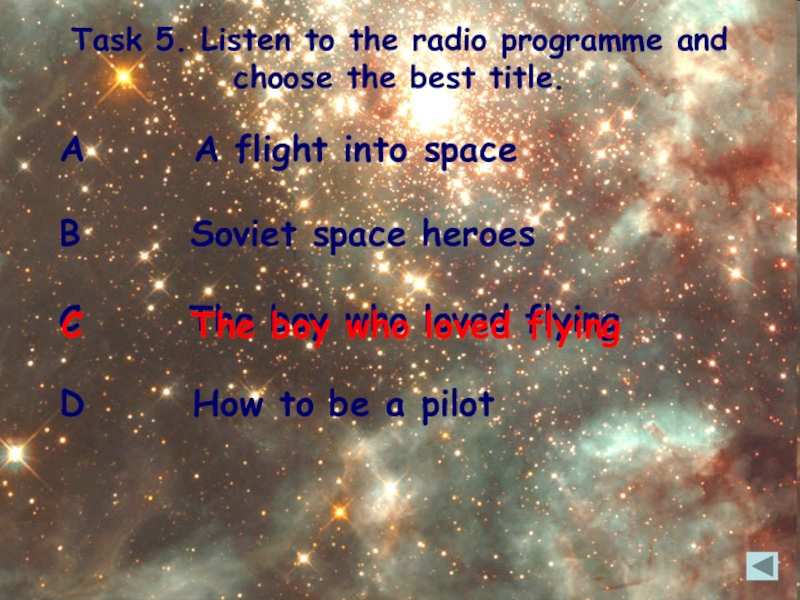
Слайд 26Task 5. Listen to the radio programme and choose the best
A A flight into space
B Soviet space heroes
C The boy who loved flying
D How to be a pilot
C The boy who loved flying
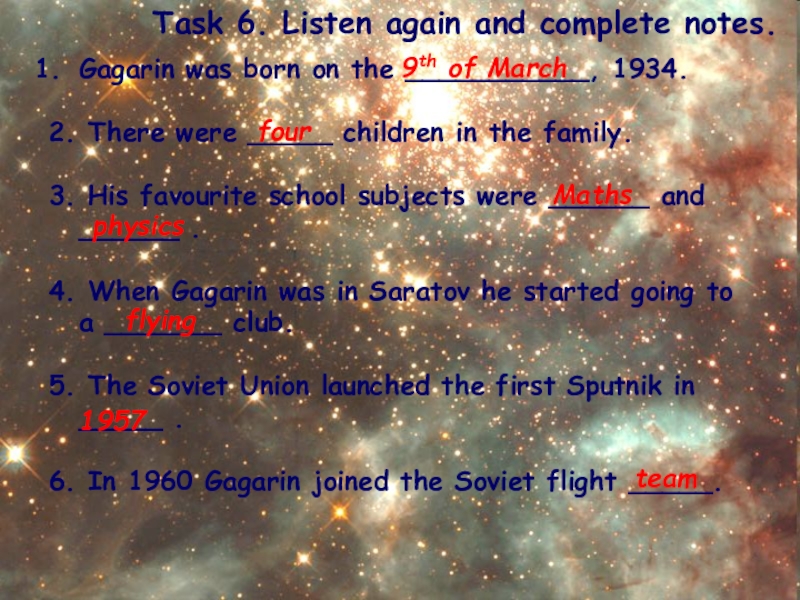
Слайд 27Task 6. Listen again and complete notes.
Gagarin was born on the
2. There were _____ children in the family.
3. His favourite school subjects were ______ and ______ .
4. When Gagarin was in Saratov he started going to a _______ club.
5. The Soviet Union launched the first Sputnik in _____ .
6. In 1960 Gagarin joined the Soviet flight _____.
four
9th of March
Maths
physics
flying
1957
team
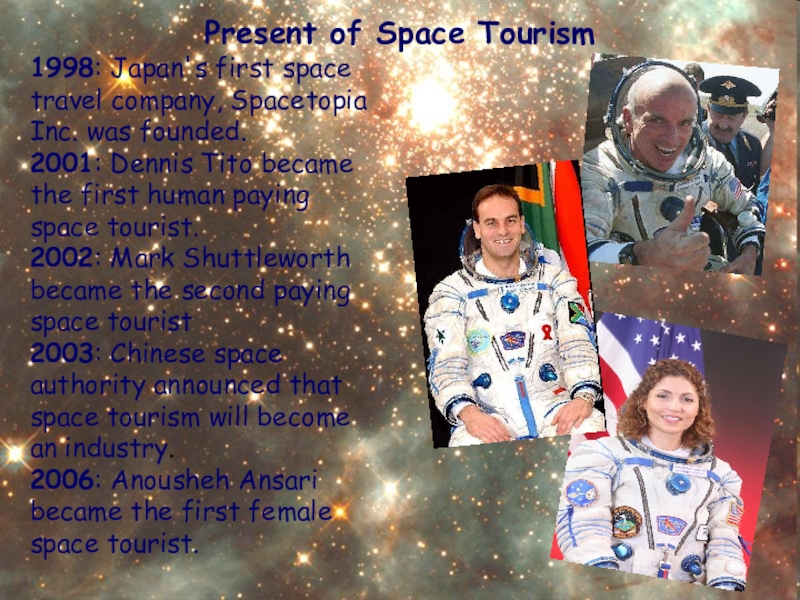
Слайд 281998: Japan's first space travel company, Spacetopia Inc. was founded.
2001: Dennis
2002: Mark Shuttleworth became the second paying space tourist
2003: Chinese space authority announced that space tourism will become an industry.
2006: Anousheh Ansari became the first female space tourist.
Present of Space Tourism
Слайд 29Space Adventures
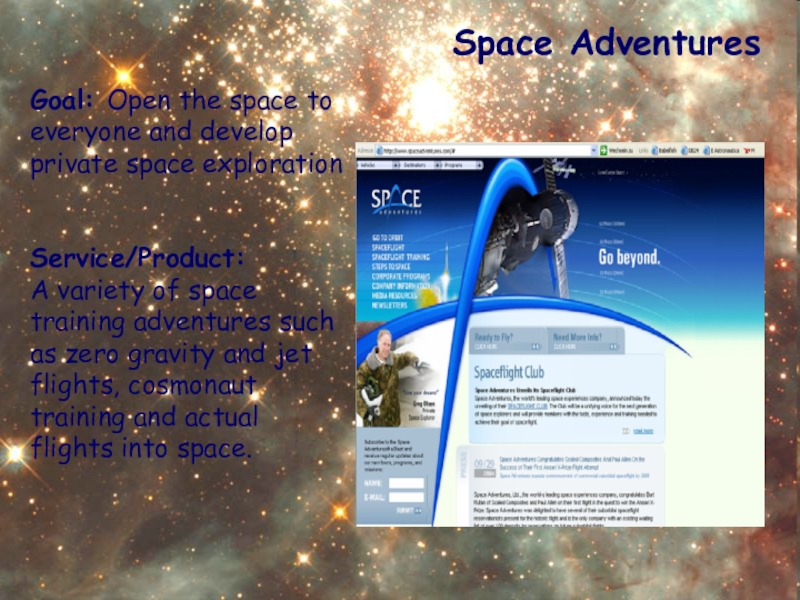
Goal: Open the space to everyone and develop
private space exploration
Service/Product:
A variety of space training adventures such as zero gravity and jet flights, cosmonaut training and actual flights into space.
Слайд 30Would you like to become a space tourist?
Why or why
Would you like to become a space tourist?
Why or why not? Tell the class.
Слайд 31Hometask
To find information about the author, Arthur C. Clarke
To do Ex.1
Hometask
To find information about the author, Arthur C. Clarke
To do Ex.1 p.131