- Главная
- Разное
- Образование
- Спорт
- Естествознание
- Природоведение
- Религиоведение
- Французский язык
- Черчение
- Английский язык
- Астрономия
- Алгебра
- Биология
- География
- Геометрия
- Детские презентации
- Информатика
- История
- Литература
- Математика
- Музыка
- МХК
- Немецкий язык
- ОБЖ
- Обществознание
- Окружающий мир
- Педагогика
- Русский язык
- Технология
- Физика
- Философия
- Химия
- Шаблоны, фоны, картинки для презентаций
- Экология
- Экономика
Презентация, доклад по английскому языку на тему The Tower of London
Содержание
- 1. Презентация по английскому языку на тему The Tower of London
- 2. The Tower of London is a complex
- 3. William the Conqueror founded the Tower of
- 4. The White Tower is a central tower
- 5. Tower of London is composed of
- 6. William ordered the Tower to be built
- 7. Royal Armory While the first inventory of
- 8. The "Line of Kings," which showed some
- 9. The Bloody Tower was built by King
- 10. St Thomas's Tower was built by King
- 11. The Wakefield Tower was built by King
- 12. The Broad Arrow Tower was built by
- 13. The Constable Tower was built by King
- 14. The Martin Tower was built by King
- 15. The Bowyer Tower was built by King
- 16. The Byward Tower was the great Gatehouse
- 17. The Deveraux Towerwas built by King Henry
- 18. The Beauchamp Tower was built by King
- 19. The Bell Tower was built during the
- 20. The Middle Tower was originally built by
- 21. The Salt Tower was built by King
- 22. The Cradle Tower was built by King
- 23. The Brick Tower was built by King
- 24. The Develin Tower was built by King
- 25. The Well Tower was built by King
- 26. The Lanthorn Tower was built by King
- 27. The Wardrobe Tower was built during the
- 28. The Flint Tower was built by King
- 29. THANK FOR ATTENTION!!!
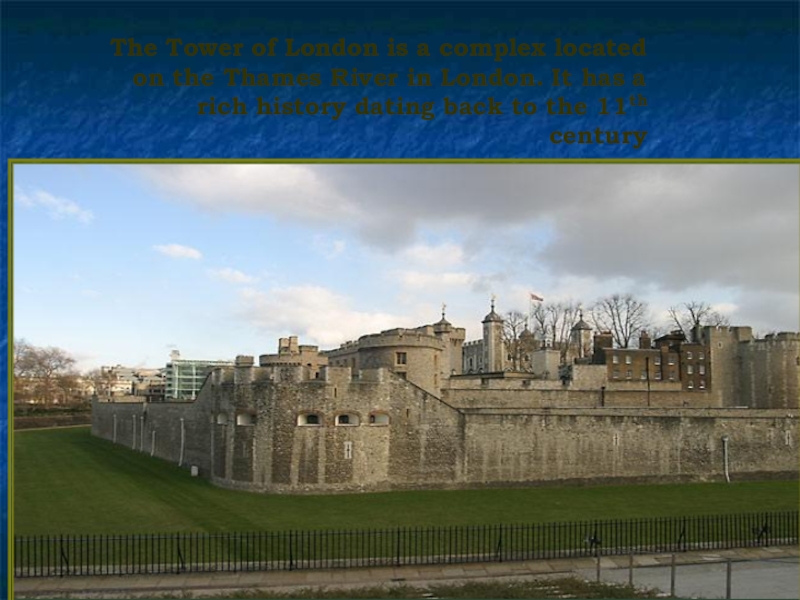
The Tower of London is a complex located on the Thames River in London. It has a rich history dating back to the 11th century
Слайд 2The Tower of London is a complex located on the Thames
River in London. It has a rich history dating back to the 11th century
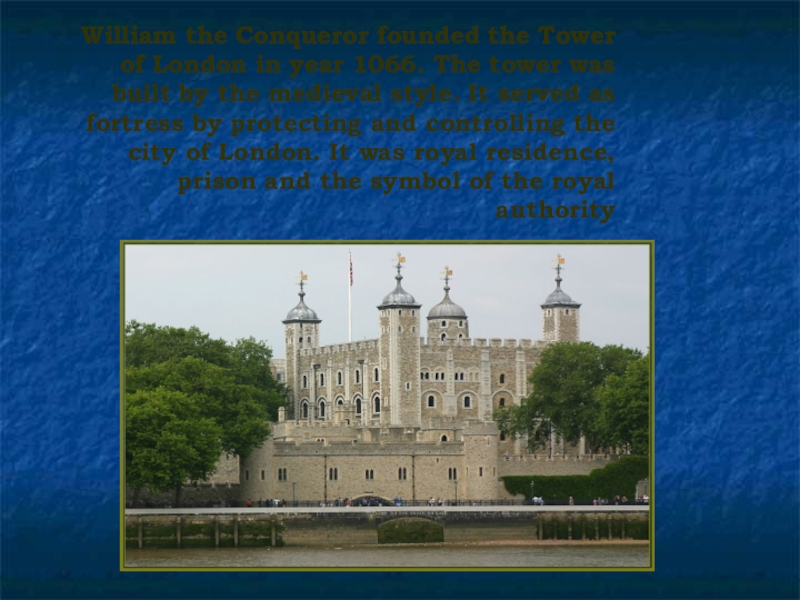
Слайд 3William the Conqueror founded the Tower of London in year 1066.
The tower was built by the medieval style. It served as fortress by protecting and controlling the city of London. It was royal residence, prison and the symbol of the royal authority
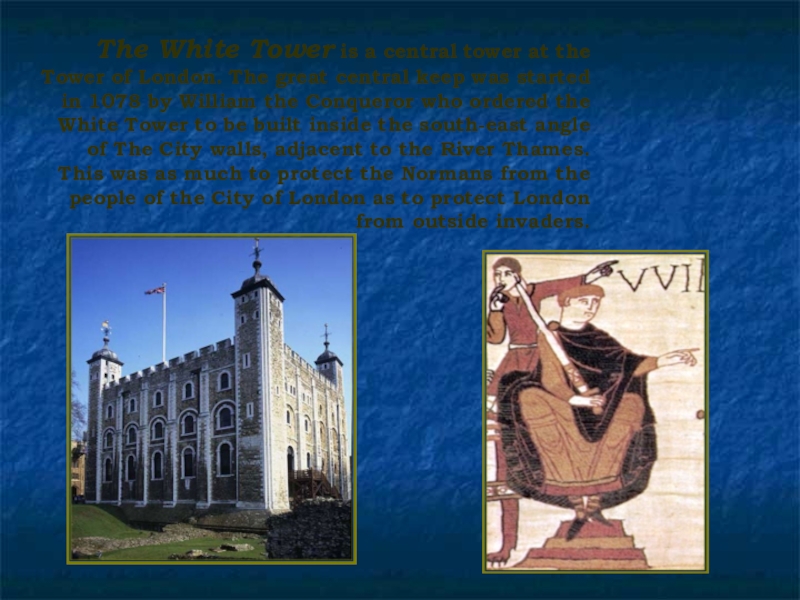
Слайд 4The White Tower is a central tower at the Tower of
London. The great central keep was started in 1078 by William the Conqueror who ordered the White Tower to be built inside the south-east angle of The City walls, adjacent to the River Thames. This was as much to protect the Normans from the people of the City of London as to protect London from outside invaders.
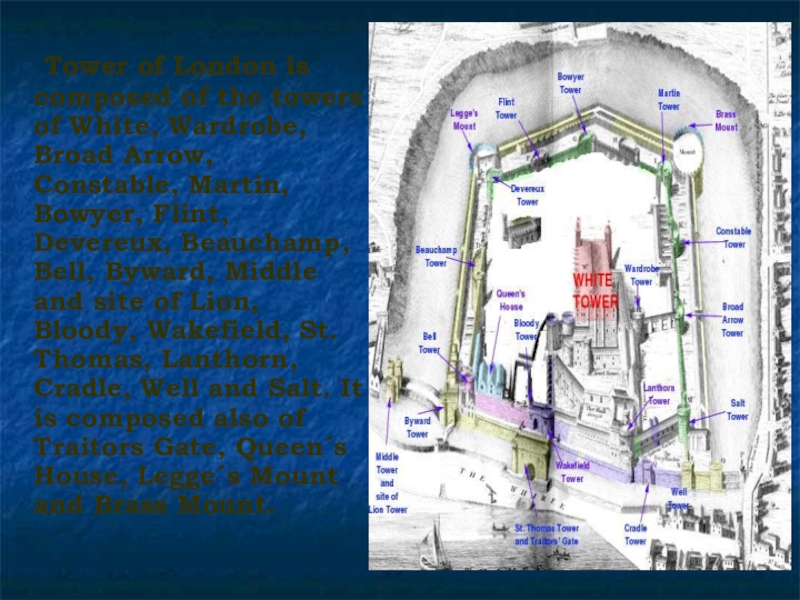
Слайд 5 Tower of London is composed of the towers of White,
Wardrobe, Broad Arrow, Constable, Martin, Bowyer, Flint, Devereux, Beauchamp, Bell, Byward, Middle and site of Lion, Bloody, Wakefield, St. Thomas, Lanthorn, Cradle, Well and Salt. It is composed also of Traitors Gate, Queen´s House, Legge´s Mount and Brass Mount.
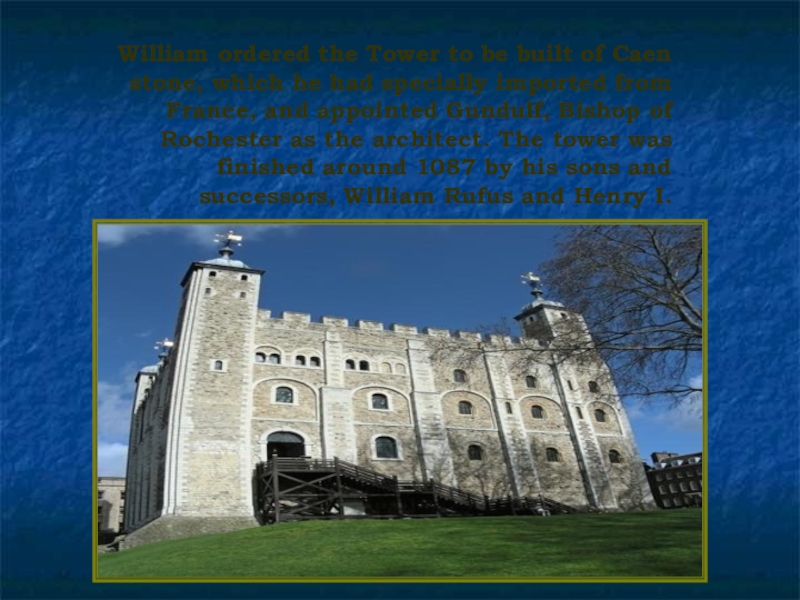
Слайд 6William ordered the Tower to be built of Caen stone, which
he had specially imported from France, and appointed Gundulf, Bishop of Rochester as the architect. The tower was finished around 1087 by his sons and successors, William Rufus and Henry I.
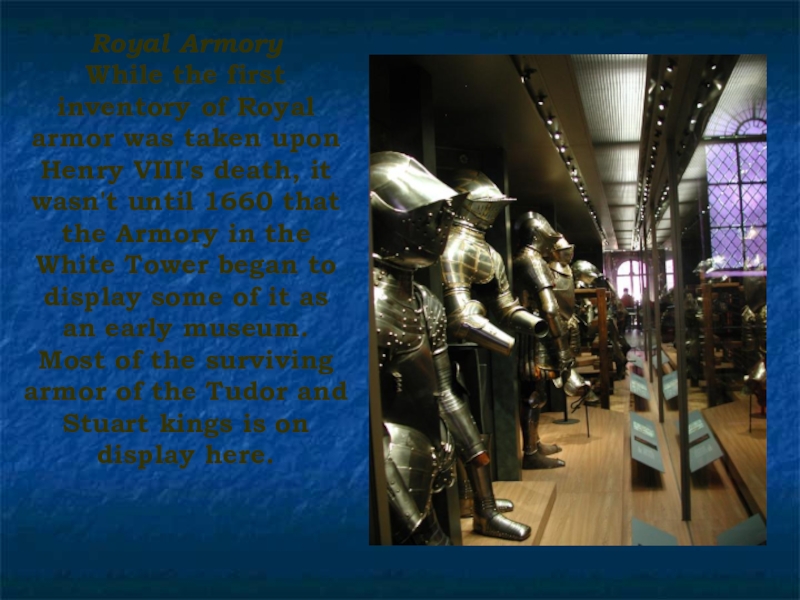
Слайд 7Royal Armory
While the first inventory of Royal armor was taken
upon Henry VIII's death, it wasn't until 1660 that the Armory in the White Tower began to display some of it as an early museum. Most of the surviving armor of the Tudor and Stuart kings is on display here.
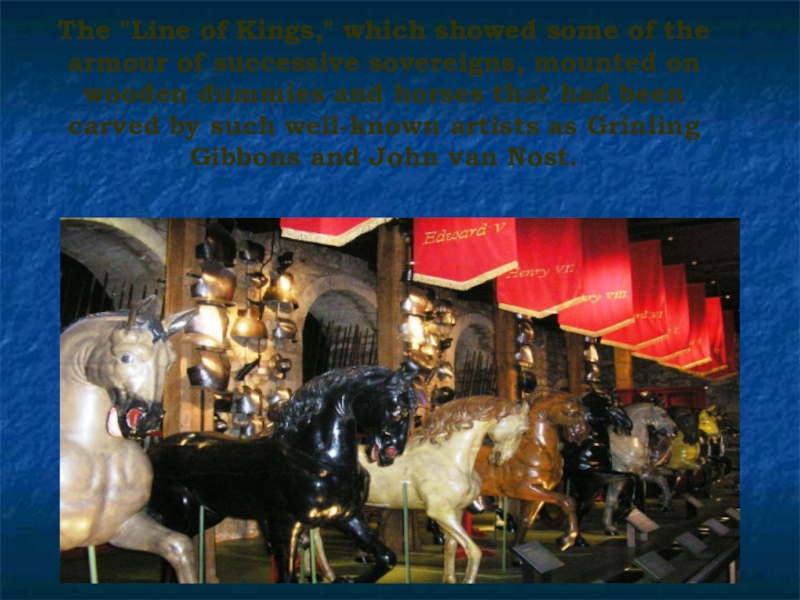
Слайд 8The "Line of Kings," which showed some of the armour of
successive sovereigns, mounted on wooden dummies and horses that had been carved by such well-known artists as Grinling Gibbons and John van Nost.
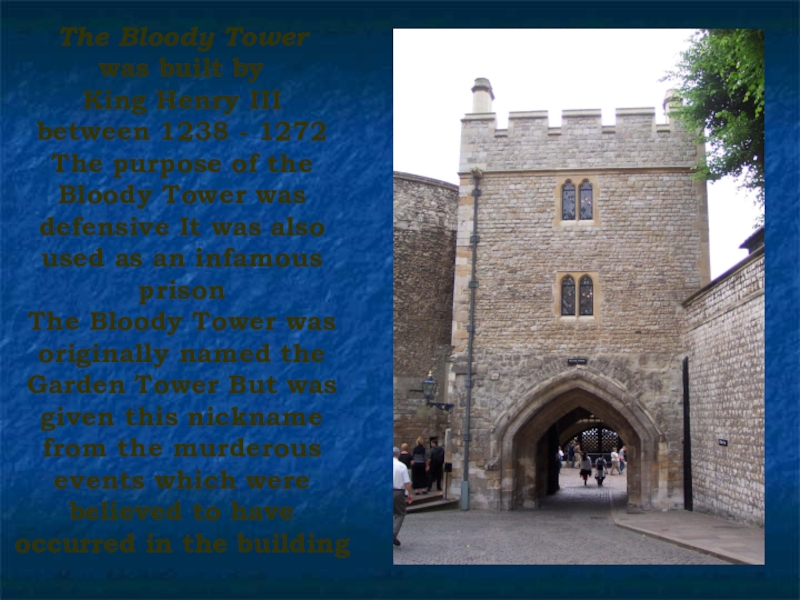
Слайд 9The Bloody Tower
was built by
King Henry III
between 1238 -
1272
The purpose of the Bloody Tower was defensive It was also used as an infamous prison
The Bloody Tower was originally named the Garden Tower But was given this nickname from the murderous events which were believed to have occurred in the building
The purpose of the Bloody Tower was defensive It was also used as an infamous prison
The Bloody Tower was originally named the Garden Tower But was given this nickname from the murderous events which were believed to have occurred in the building
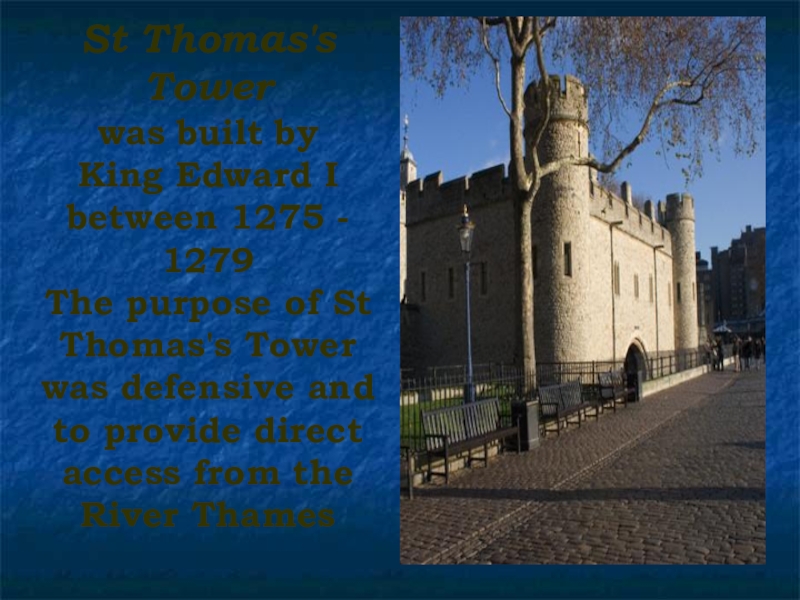
Слайд 10St Thomas's Tower
was built by
King Edward I
between 1275 -
1279
The purpose of St Thomas's Tower was defensive and to provide direct access from the River Thames
The purpose of St Thomas's Tower was defensive and to provide direct access from the River Thames
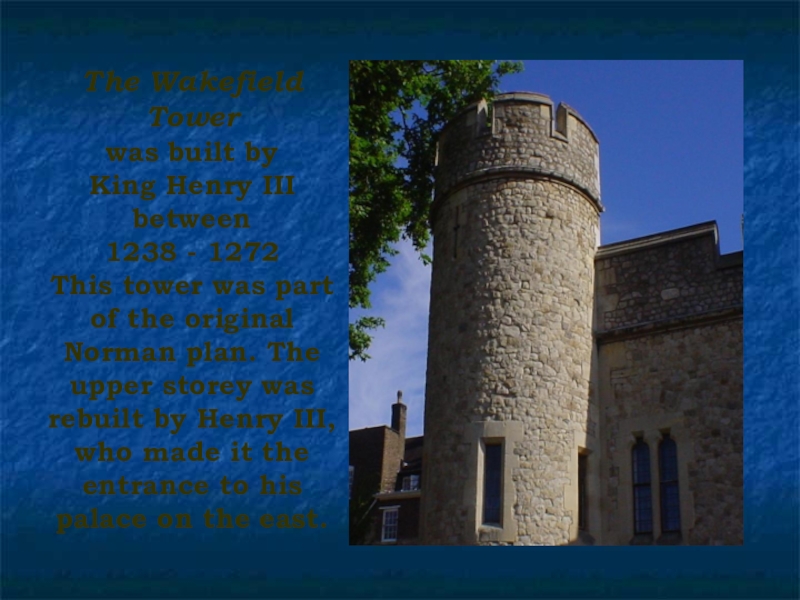
Слайд 11The Wakefield Tower
was built by
King Henry III
between
1238 - 1272
This
tower was part of the original Norman plan. The upper storey was rebuilt by Henry III, who made it the entrance to his palace on the east.
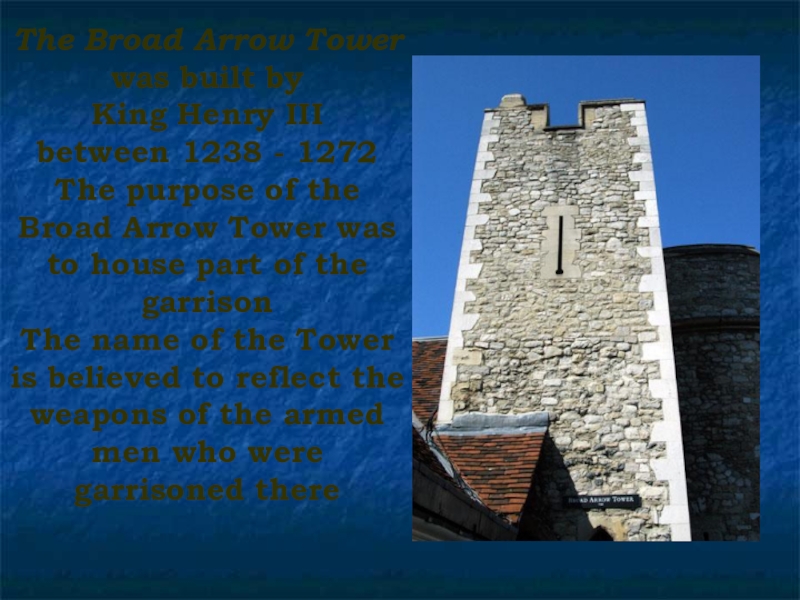
Слайд 12The Broad Arrow Tower
was built by
King Henry III
between 1238
- 1272
The purpose of the Broad Arrow Tower was to house part of the garrison
The name of the Tower is believed to reflect the weapons of the armed men who were garrisoned there
The purpose of the Broad Arrow Tower was to house part of the garrison
The name of the Tower is believed to reflect the weapons of the armed men who were garrisoned there
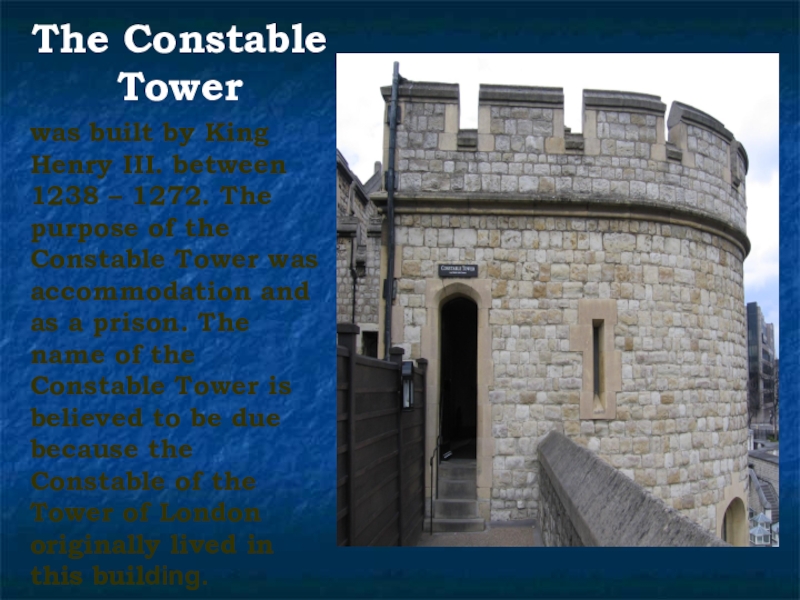
Слайд 13The Constable Tower
was built by King Henry III. between 1238
– 1272. The purpose of the Constable Tower was accommodation and as a prison. The name of the Constable Tower is believed to be due because the Constable of the Tower of London originally lived in this building.
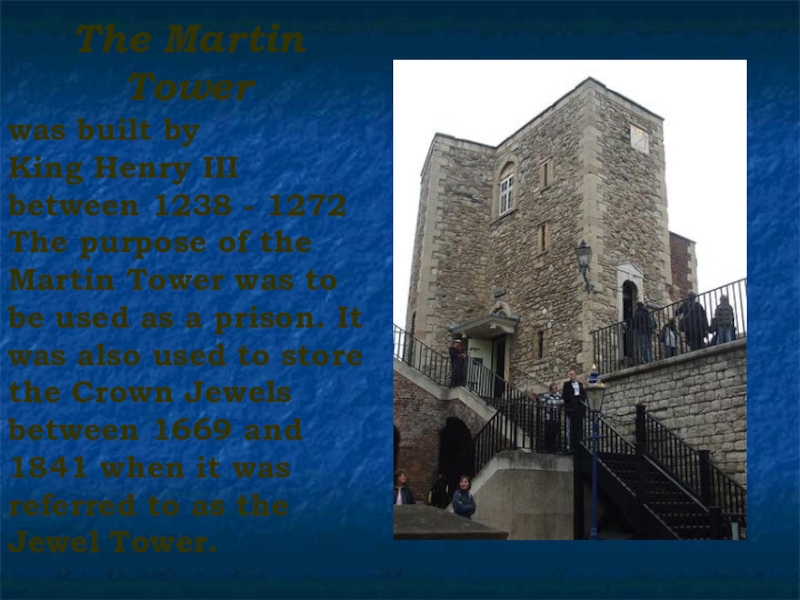
Слайд 14The Martin Tower
was built by
King Henry III
between 1238 -
1272
The purpose of the Martin Tower was to be used as a prison. It was also used to store the Crown Jewels between 1669 and 1841 when it was referred to as the Jewel Tower.
The purpose of the Martin Tower was to be used as a prison. It was also used to store the Crown Jewels between 1669 and 1841 when it was referred to as the Jewel Tower.
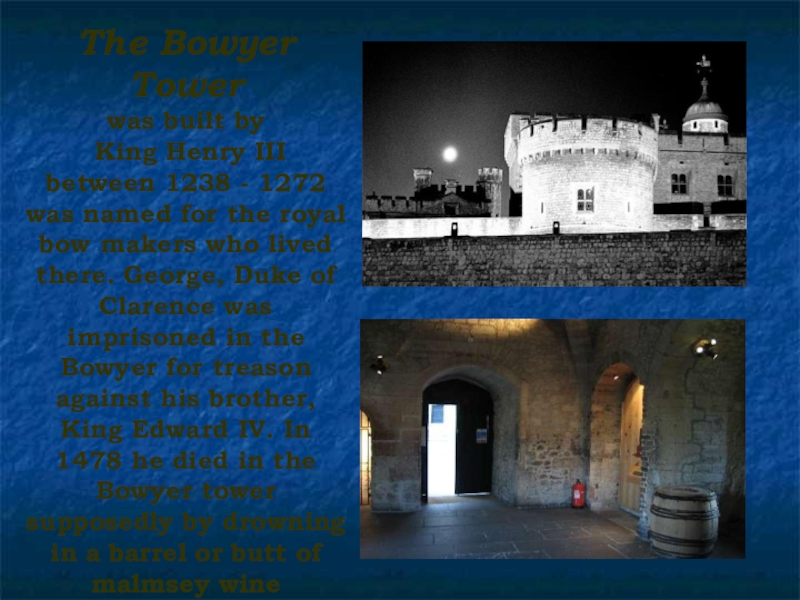
Слайд 15The Bowyer Tower
was built by
King Henry III
between 1238 -
1272
was named for the royal bow makers who lived there. George, Duke of Clarence was imprisoned in the Bowyer for treason against his brother, King Edward IV. In 1478 he died in the Bowyer tower supposedly by drowning in a barrel or butt of malmsey wine
was named for the royal bow makers who lived there. George, Duke of Clarence was imprisoned in the Bowyer for treason against his brother, King Edward IV. In 1478 he died in the Bowyer tower supposedly by drowning in a barrel or butt of malmsey wine
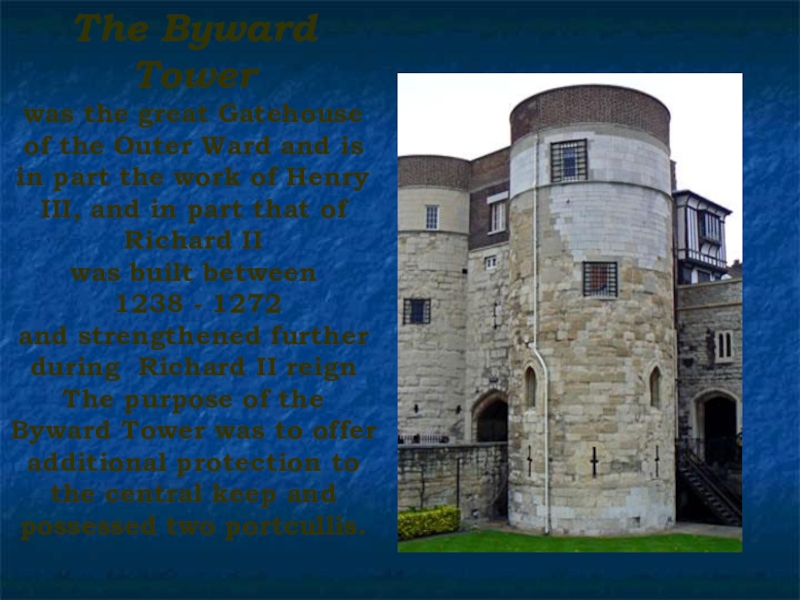
Слайд 16The Byward Tower
was the great Gatehouse of the Outer Ward
and is in part the work of Henry III, and in part that of Richard II
was built between
1238 - 1272
and strengthened further during Richard II reign The purpose of the Byward Tower was to offer additional protection to the central keep and possessed two portcullis.
was built between
1238 - 1272
and strengthened further during Richard II reign The purpose of the Byward Tower was to offer additional protection to the central keep and possessed two portcullis.
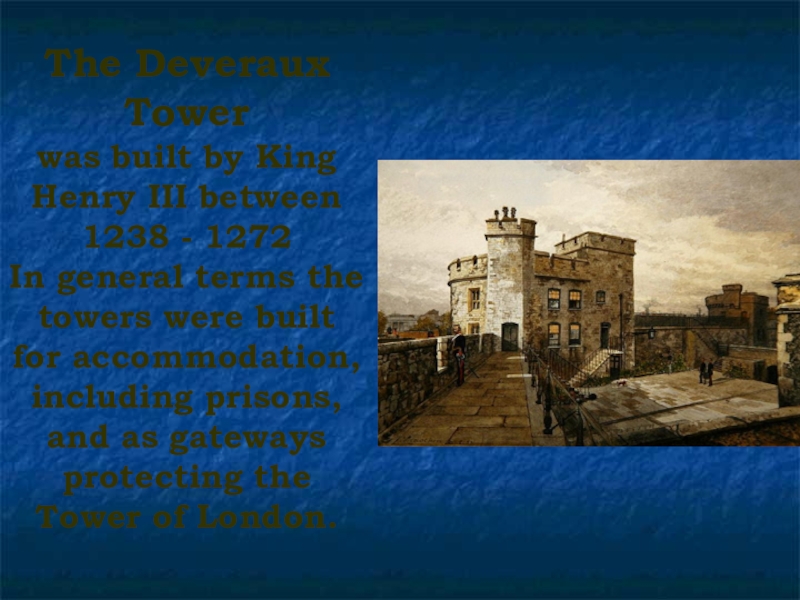
Слайд 17The Deveraux Tower
was built by King Henry III between 1238 -
1272
In general terms the towers were built for accommodation, including prisons, and as gateways protecting the Tower of London.
In general terms the towers were built for accommodation, including prisons, and as gateways protecting the Tower of London.
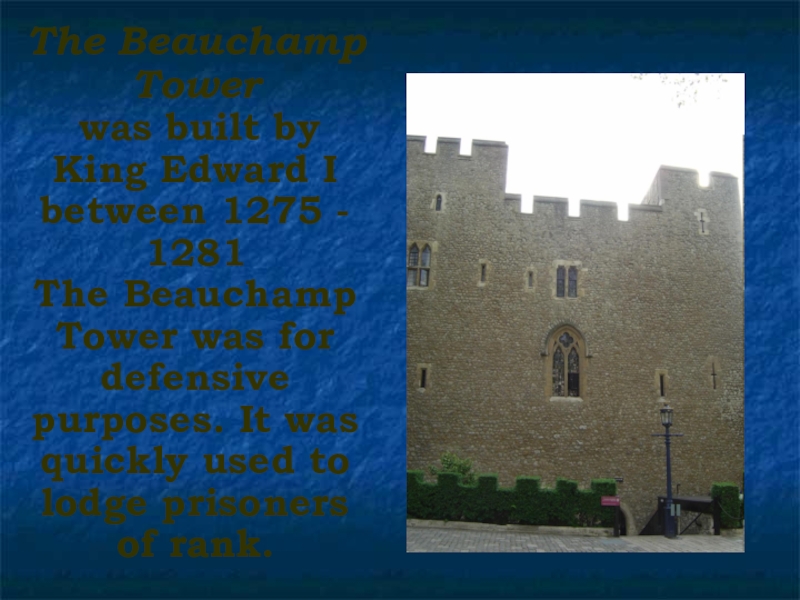
Слайд 18The Beauchamp Tower
was built by
King Edward I
between 1275 -
1281
The Beauchamp Tower was for defensive purposes. It was quickly used to lodge prisoners of rank.
The Beauchamp Tower was for defensive purposes. It was quickly used to lodge prisoners of rank.
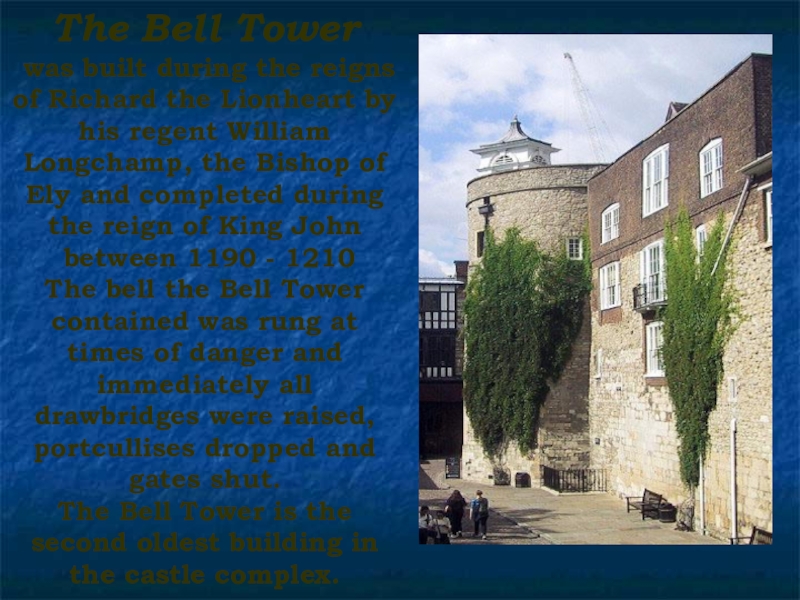
Слайд 19The Bell Tower
was built during the reigns of Richard the
Lionheart by his regent William Longchamp, the Bishop of Ely and completed during the reign of King John
between 1190 - 1210
The bell the Bell Tower contained was rung at times of danger and immediately all drawbridges were raised, portcullises dropped and gates shut.
The Bell Tower is the second oldest building in the castle complex.
between 1190 - 1210
The bell the Bell Tower contained was rung at times of danger and immediately all drawbridges were raised, portcullises dropped and gates shut.
The Bell Tower is the second oldest building in the castle complex.
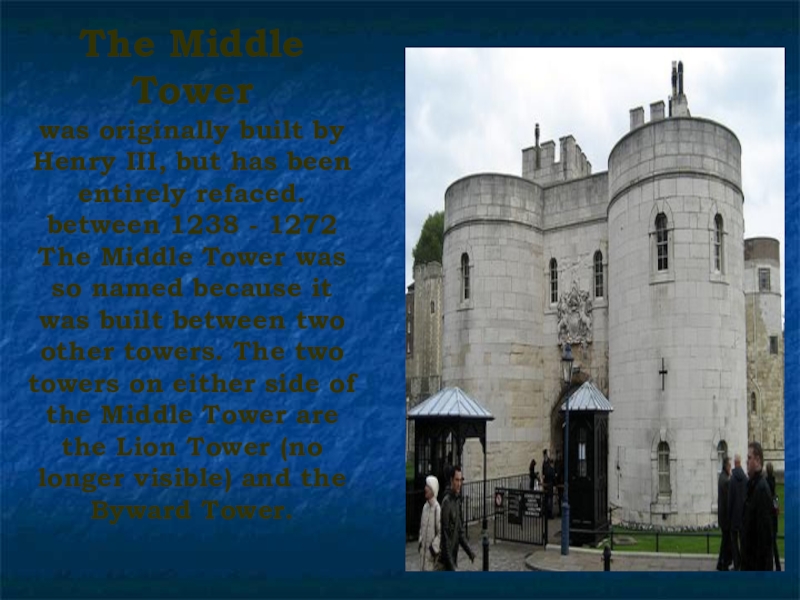
Слайд 20The Middle Tower
was originally built by Henry III, but has
been entirely refaced. between 1238 - 1272
The Middle Tower was so named because it was built between two other towers. The two towers on either side of the Middle Tower are the Lion Tower (no longer visible) and the Byward Tower.
The Middle Tower was so named because it was built between two other towers. The two towers on either side of the Middle Tower are the Lion Tower (no longer visible) and the Byward Tower.
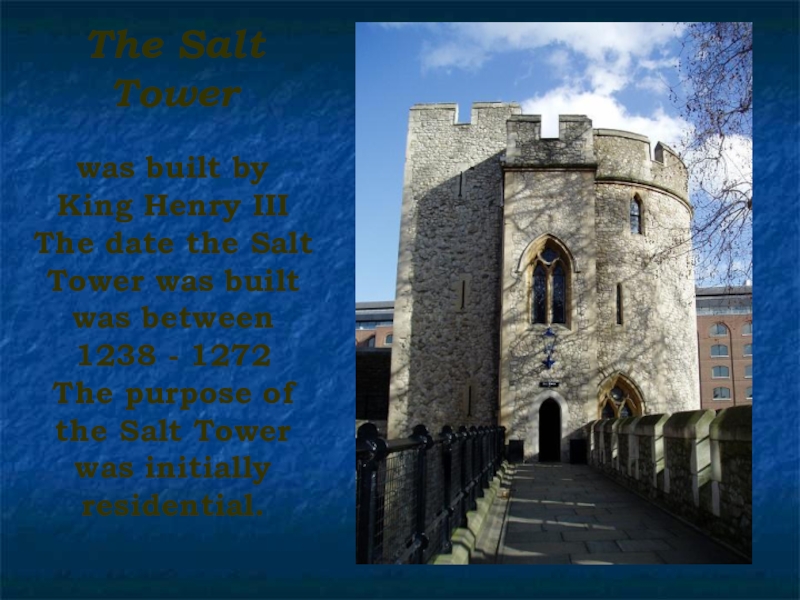
Слайд 21The Salt Tower
was built by
King Henry III
The date the
Salt Tower was built was between
1238 - 1272
The purpose of the Salt Tower was initially residential.
1238 - 1272
The purpose of the Salt Tower was initially residential.
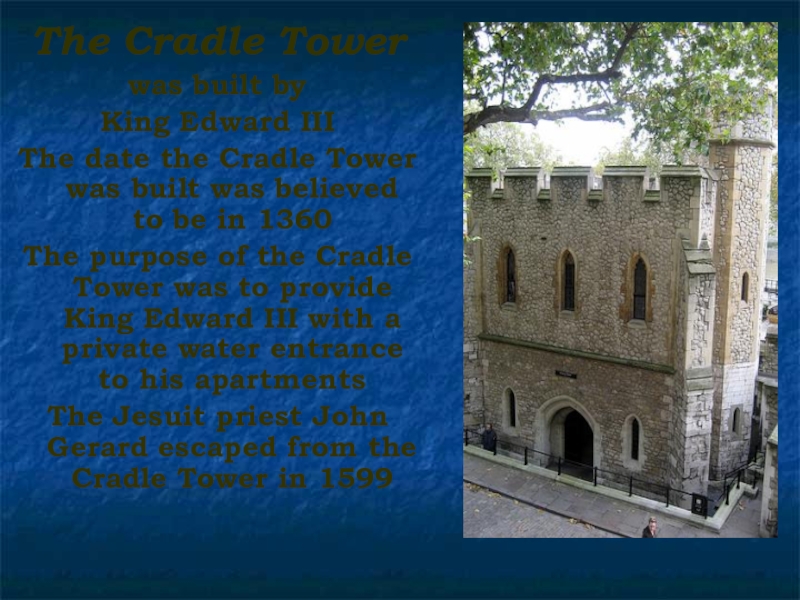
Слайд 22The Cradle Tower
was built by
King Edward III
The date
the Cradle Tower was built was believed to be in 1360
The purpose of the Cradle Tower was to provide King Edward III with a private water entrance to his apartments
The Jesuit priest John Gerard escaped from the Cradle Tower in 1599
The purpose of the Cradle Tower was to provide King Edward III with a private water entrance to his apartments
The Jesuit priest John Gerard escaped from the Cradle Tower in 1599
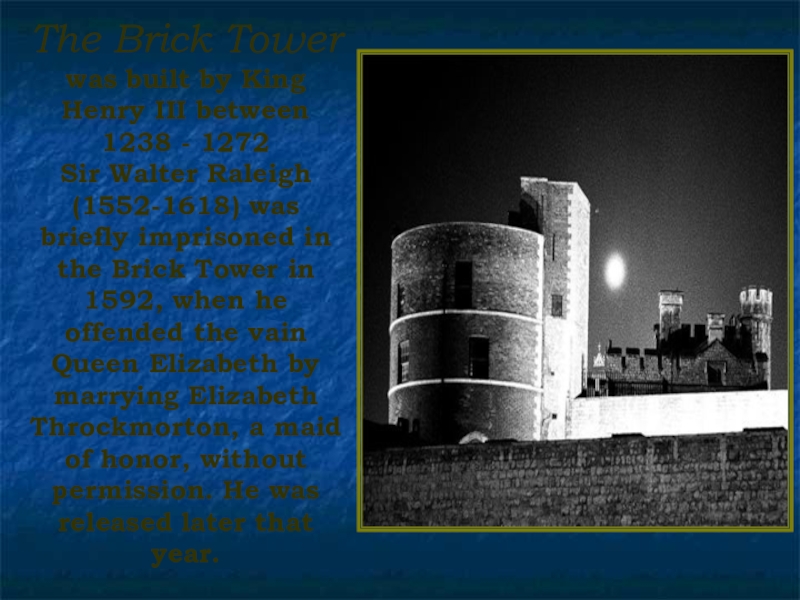
Слайд 23The Brick Tower
was built by King Henry III between 1238
- 1272
Sir Walter Raleigh (1552-1618) was briefly imprisoned in the Brick Tower in 1592, when he offended the vain Queen Elizabeth by marrying Elizabeth Throckmorton, a maid of honor, without permission. He was released later that year.
Sir Walter Raleigh (1552-1618) was briefly imprisoned in the Brick Tower in 1592, when he offended the vain Queen Elizabeth by marrying Elizabeth Throckmorton, a maid of honor, without permission. He was released later that year.
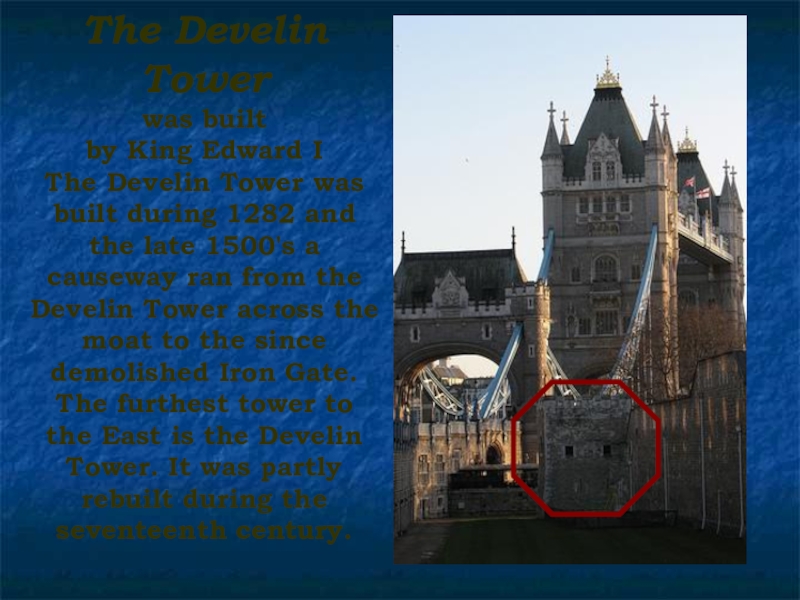
Слайд 24The Develin Tower
was built
by King Edward I
The Develin Tower
was built during 1282 and the late 1500's a causeway ran from the Develin Tower across the moat to the since demolished Iron Gate.
The furthest tower to the East is the Develin Tower. It was partly rebuilt during the seventeenth century.
The furthest tower to the East is the Develin Tower. It was partly rebuilt during the seventeenth century.
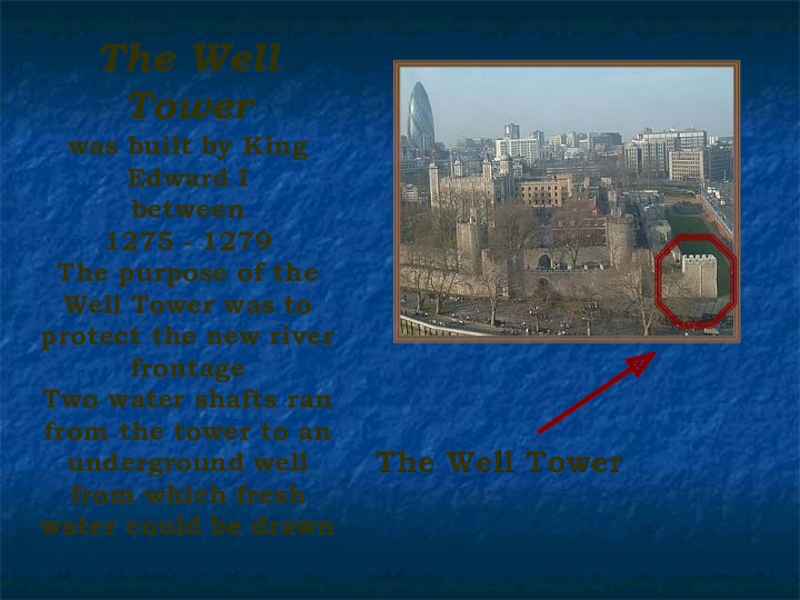
Слайд 25The Well Tower
was built by King Edward I
between
1275 -
1279
The purpose of the Well Tower was to protect the new river frontage
Two water shafts ran from the tower to an underground well from which fresh water could be drawn
The purpose of the Well Tower was to protect the new river frontage
Two water shafts ran from the tower to an underground well from which fresh water could be drawn
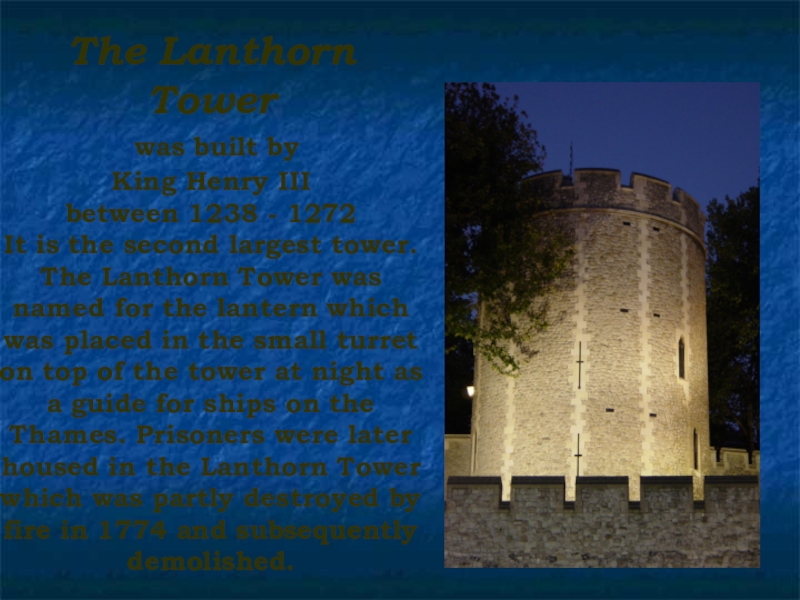
Слайд 26The Lanthorn Tower
was built by
King Henry III
between 1238 -
1272
It is the second largest tower. The Lanthorn Tower was named for the lantern which was placed in the small turret on top of the tower at night as a guide for ships on the Thames. Prisoners were later housed in the Lanthorn Tower which was partly destroyed by fire in 1774 and subsequently demolished.
It is the second largest tower. The Lanthorn Tower was named for the lantern which was placed in the small turret on top of the tower at night as a guide for ships on the Thames. Prisoners were later housed in the Lanthorn Tower which was partly destroyed by fire in 1774 and subsequently demolished.
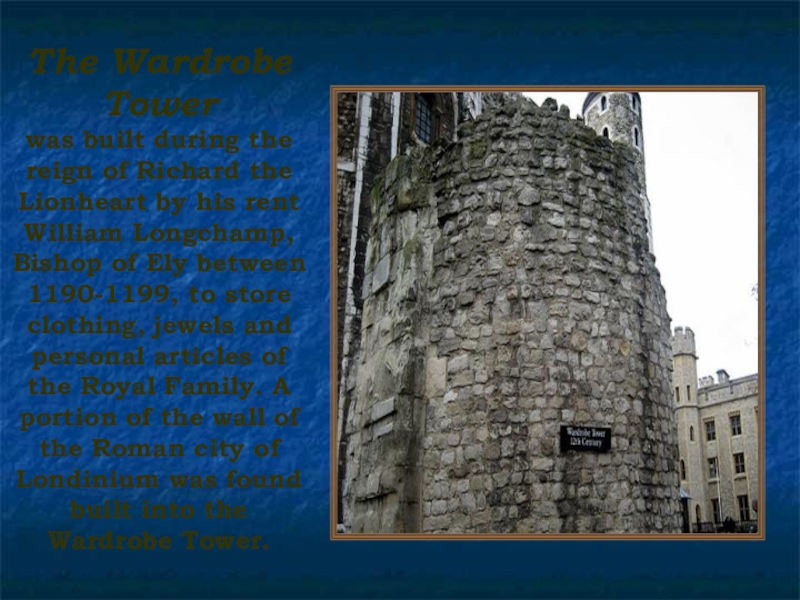
Слайд 27The Wardrobe Tower
was built during the reign of Richard the
Lionheart by his rent William Longchamp, Bishop of Ely between 1190-1199, to store clothing, jewels and personal articles of the Royal Family. A portion of the wall of the Roman city of Londinium was found built into the Wardrobe Tower.
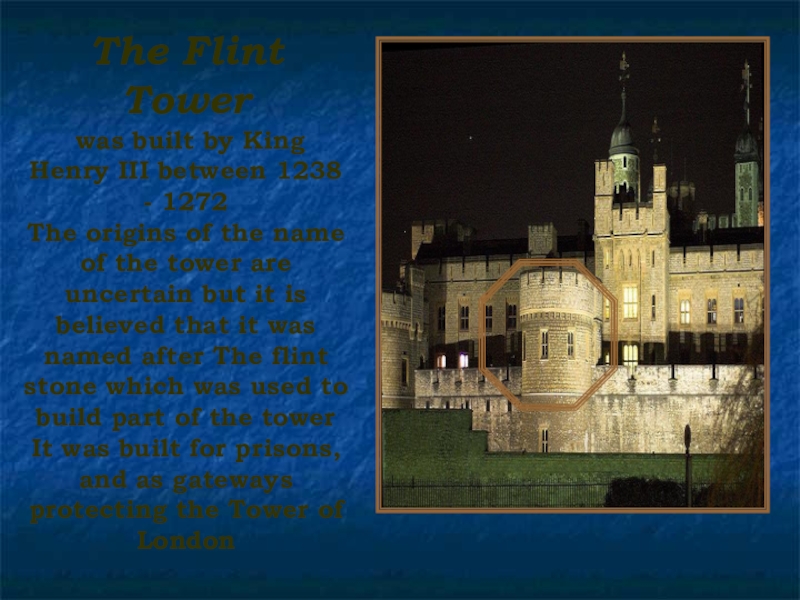
Слайд 28The Flint Tower
was built by King Henry III between 1238
- 1272
The origins of the name of the tower are uncertain but it is believed that it was named after The flint stone which was used to build part of the tower
It was built for prisons, and as gateways protecting the Tower of London
The origins of the name of the tower are uncertain but it is believed that it was named after The flint stone which was used to build part of the tower
It was built for prisons, and as gateways protecting the Tower of London