- Главная
- Разное
- Образование
- Спорт
- Естествознание
- Природоведение
- Религиоведение
- Французский язык
- Черчение
- Английский язык
- Астрономия
- Алгебра
- Биология
- География
- Геометрия
- Детские презентации
- Информатика
- История
- Литература
- Математика
- Музыка
- МХК
- Немецкий язык
- ОБЖ
- Обществознание
- Окружающий мир
- Педагогика
- Русский язык
- Технология
- Физика
- Философия
- Химия
- Шаблоны, фоны, картинки для презентаций
- Экология
- Экономика
Презентация, доклад по английскому языку на тему Традиционный русский костюм
Содержание
- 1. Презентация по английскому языку на тему Традиционный русский костюм
- 2. The Russian women’s costumewas based on
- 3. By the early 20th century the most
- 4. The typical color of the sarafan and
- 5. One of the most common type offestive
- 6. Men’s costumewas composed of a long shirt
- 7. The bast shoes commonly made from fibres
- 8. Слайд 8
- 9. In winter, Russians wore the fur
The Russian women’s costumewas based on the “rubakha” (a linen shirt or blouse). It was made flaxen embroidery, silk lace, golden threads and spangles. Collars and sleeves were decorated extensively.
Слайд 1Russian traditional costumes
By Olga Grigor’eva,
Tri Klyucha Secondary School,
Bashkortostan, Russia

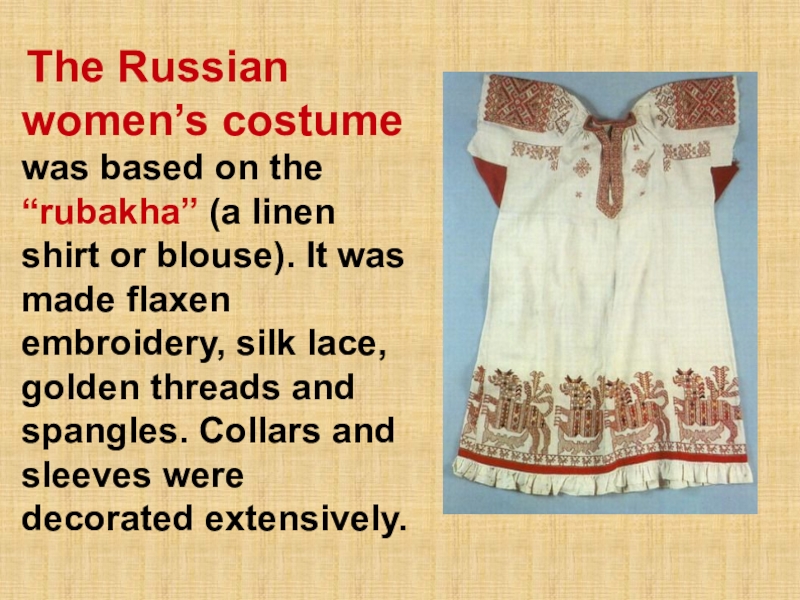
Слайд 2 The Russian women’s costume
was based on the “rubakha” (a linen
shirt or blouse). It was made flaxen embroidery, silk lace, golden threads and spangles. Collars and sleeves were decorated extensively.
Слайд 3
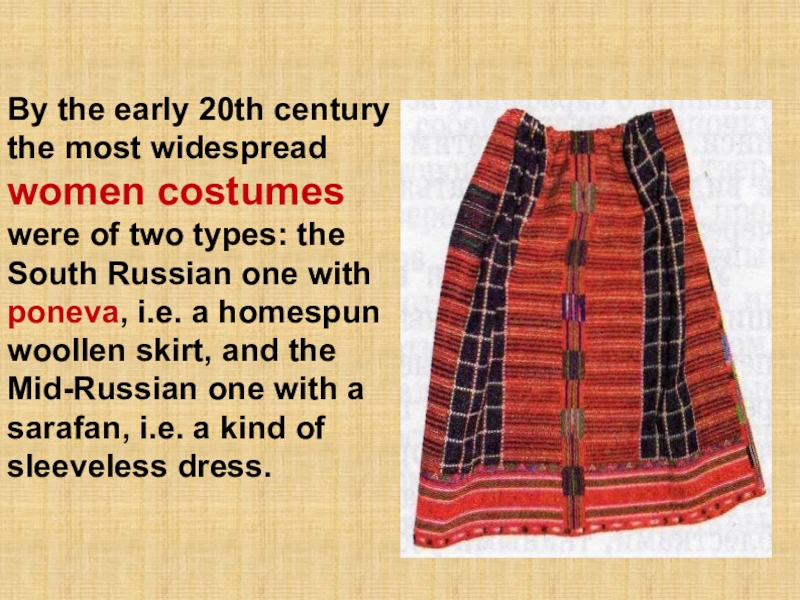
By the early 20th century the most widespread women costumes were
of two types: the South Russian one with poneva, i.e. a homespun woollen skirt, and the Mid-Russian one with a sarafan, i.e. a kind of sleeveless dress.
Слайд 4
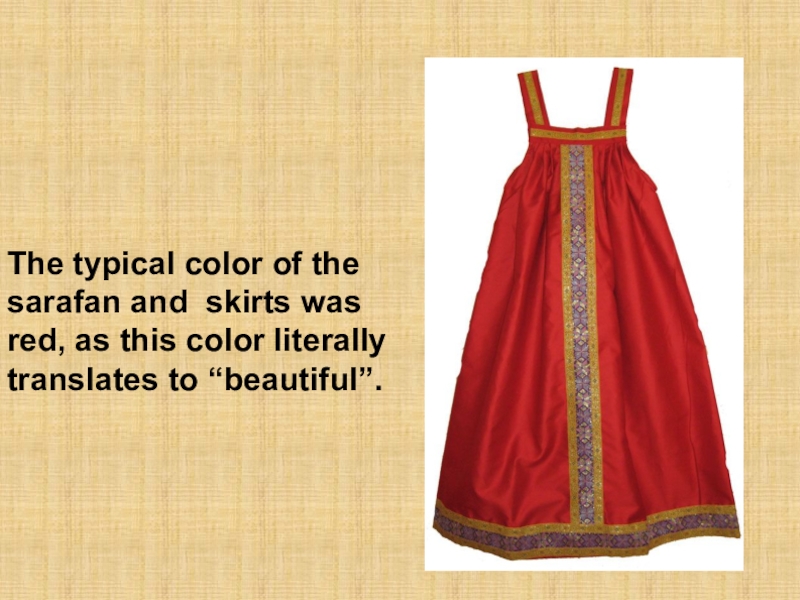
The typical color of the sarafan and skirts was red, as
this color literally translates to “beautiful”.
Слайд 5One of the most common type of
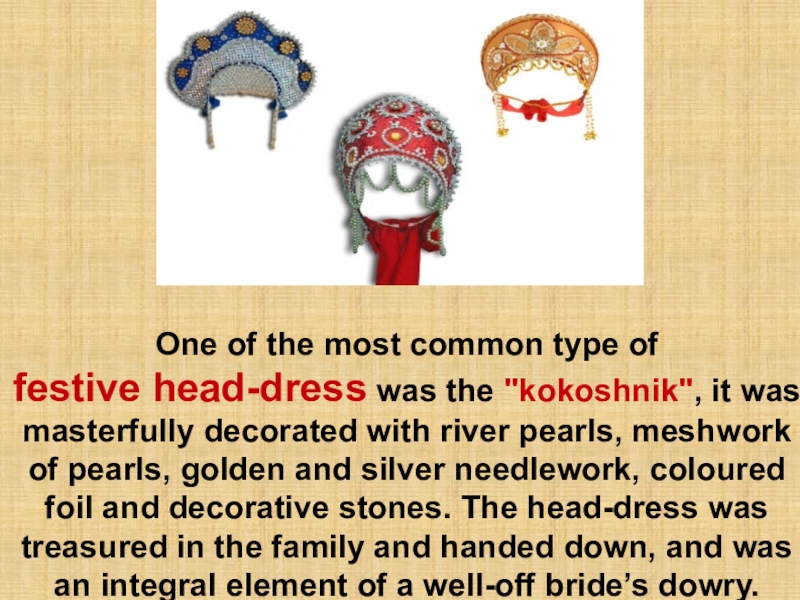
festive head-dress was the "kokoshnik",
it was masterfully decorated with river pearls, meshwork of pearls, golden and silver needlework, coloured foil and decorative stones. The head-dress was treasured in the family and handed down, and was an integral element of a well-off bride’s dowry.
Слайд 6Men’s costume
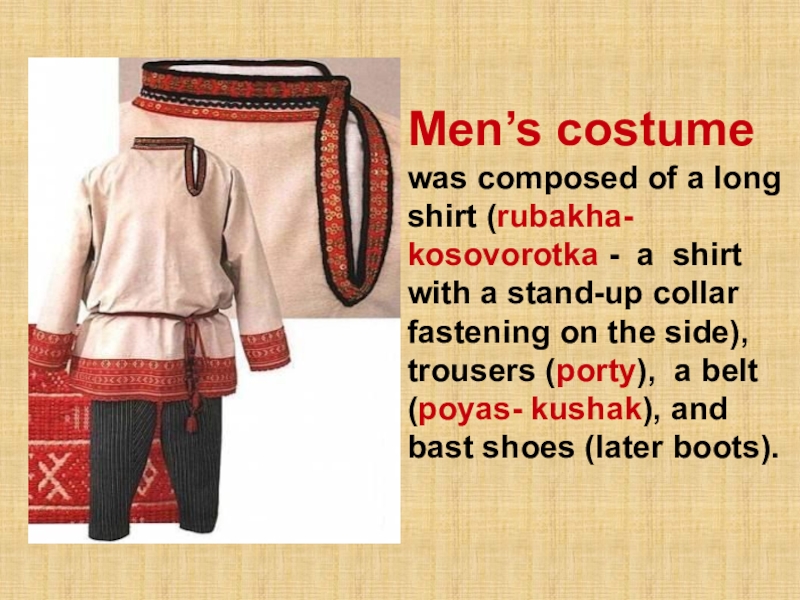
was composed of a long shirt (rubakha- kosovorotka - a
shirt with a stand-up collar fastening on the side), trousers (porty), a belt (poyas- kushak), and bast shoes (later boots).
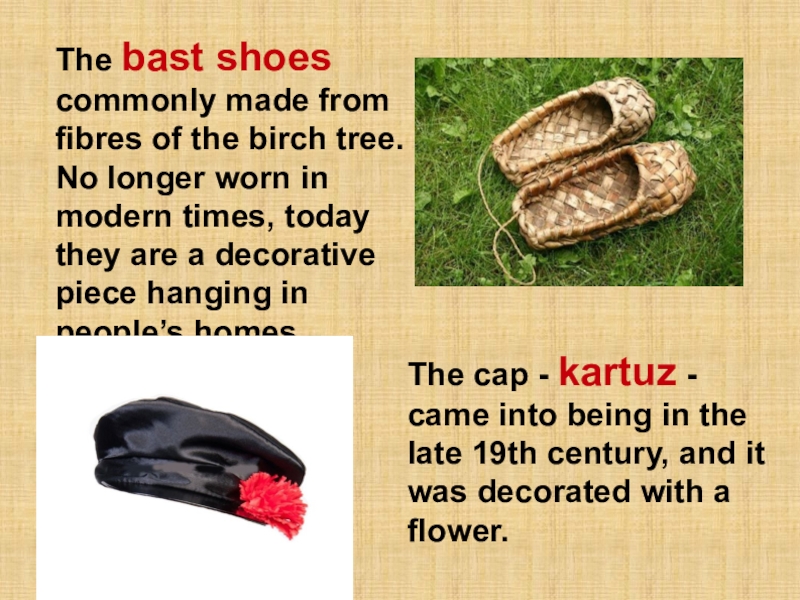
Слайд 7The bast shoes commonly made from fibres of the birch tree.
No longer worn in modern times, today they are a decorative piece hanging in people’s homes.
The cap - kartuz - came into being in the late 19th century, and it was decorated with a flower.
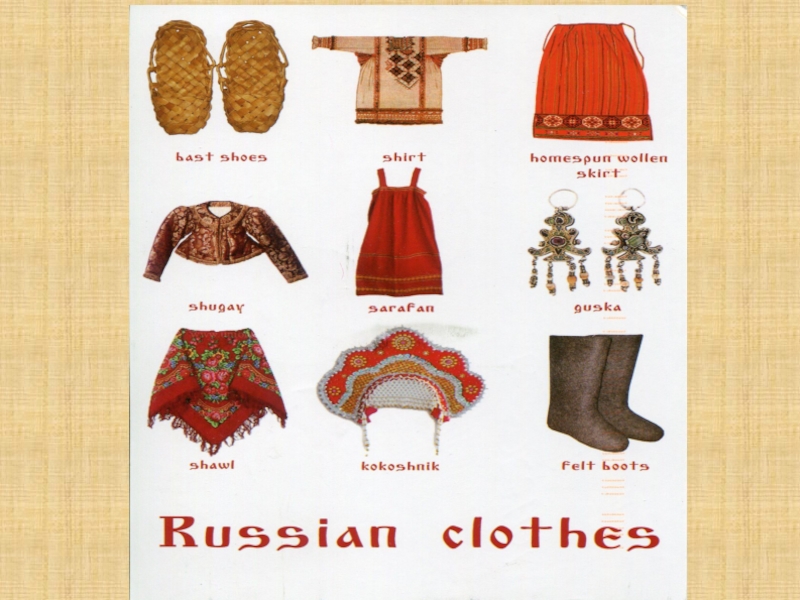
Слайд 9 In winter, Russians wore the fur coat (shuba) and wool
felt footwear (valenki). It was extremely practical and effective in a cold northern climate. Shubas were made of fur turned inside or ‘wrong-side out’. The traditional male warm hat with flaps – ushanka (derived from the word ushi – ears) or treukh - was used to protect the ears from cold. Women worn the traditional Russian knitting shawls and beautiful 100% wool Pavlov Posad scarves.