- Главная
- Разное
- Образование
- Спорт
- Естествознание
- Природоведение
- Религиоведение
- Французский язык
- Черчение
- Английский язык
- Астрономия
- Алгебра
- Биология
- География
- Геометрия
- Детские презентации
- Информатика
- История
- Литература
- Математика
- Музыка
- МХК
- Немецкий язык
- ОБЖ
- Обществознание
- Окружающий мир
- Педагогика
- Русский язык
- Технология
- Физика
- Философия
- Химия
- Шаблоны, фоны, картинки для презентаций
- Экология
- Экономика
Презентация, доклад по английскому языку на тему Синтоизм (11 класс)
Содержание
- 1. Презентация по английскому языку на тему Синтоизм (11 класс)
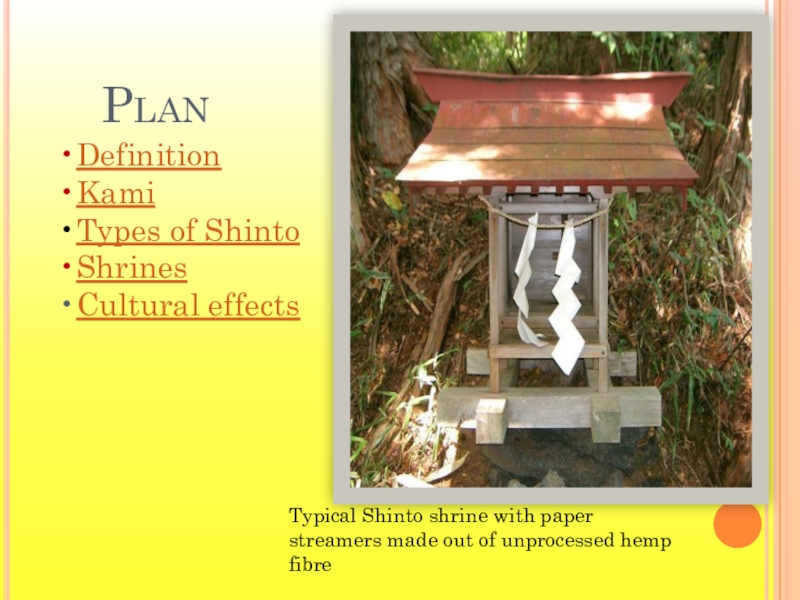
- 2. PlanDefinitionKamiTypes of ShintoShrinesCultural effectsTypical Shinto shrine with paper streamers made out of unprocessed hemp fibre
- 3. ShintoIt is the indigenous religion of Japan
- 4. Shinto can be seen as a form
- 5. Shinto shows that everything has a kami
- 6. Types of ShintoKo Shinto (古神道) is the
- 7. ShrinesThe principal worship of kami is done
- 8. Cultural effectsShinto has been called "the religion
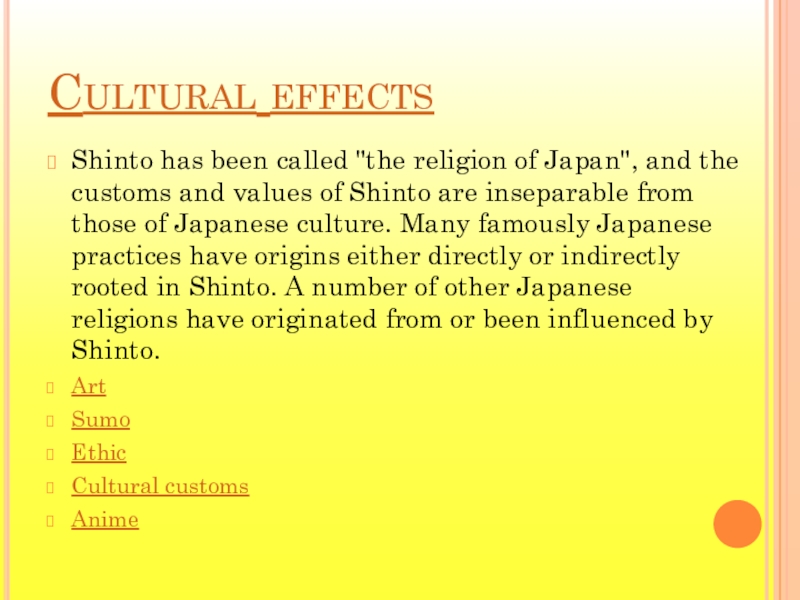
- 9. Art It is clear that the Shinto
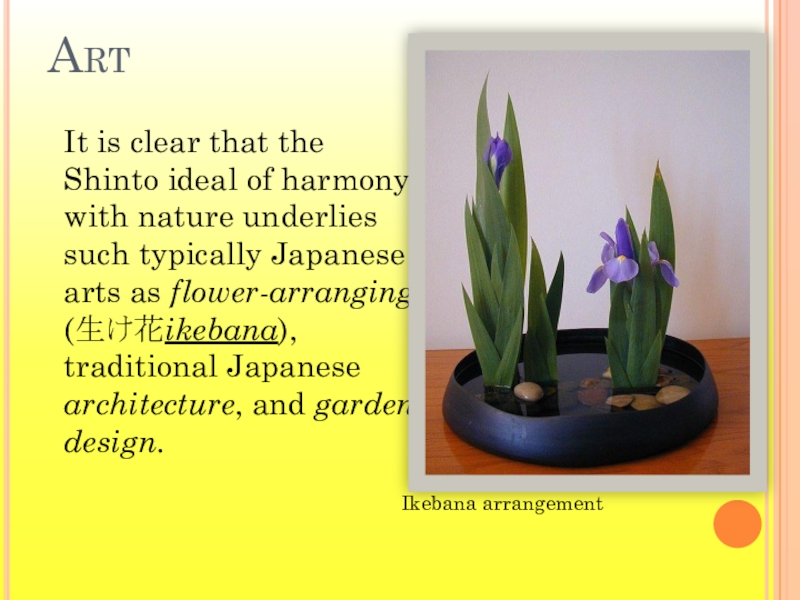
- 10. Sumo A more explicit link to Shinto
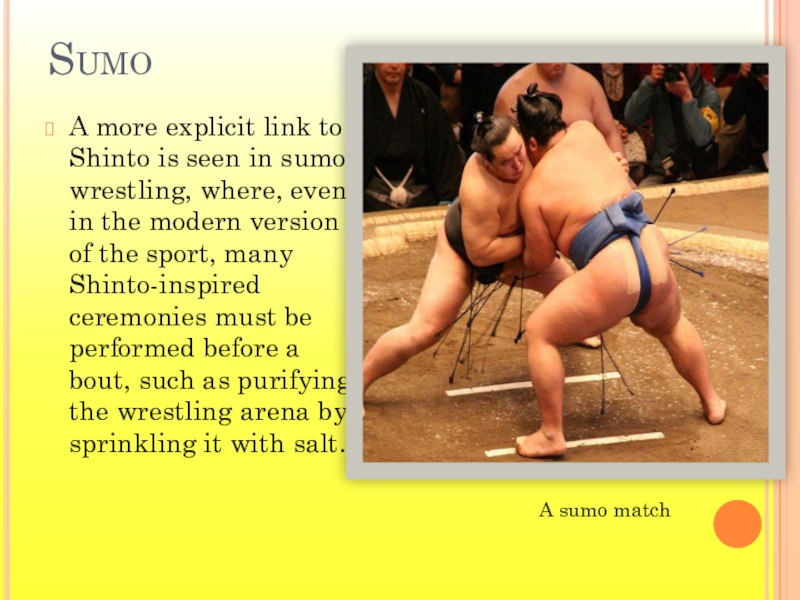
- 11. Ethic The Japanese emphasis on proper greetings
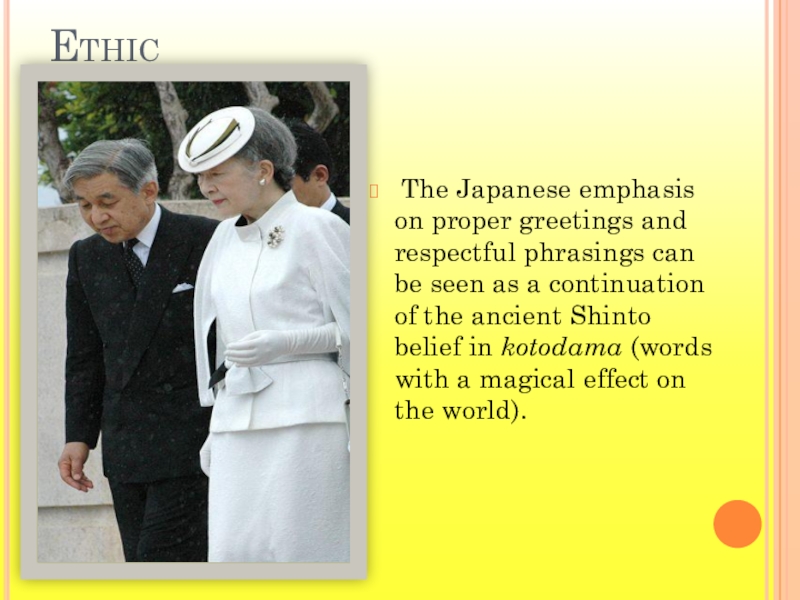
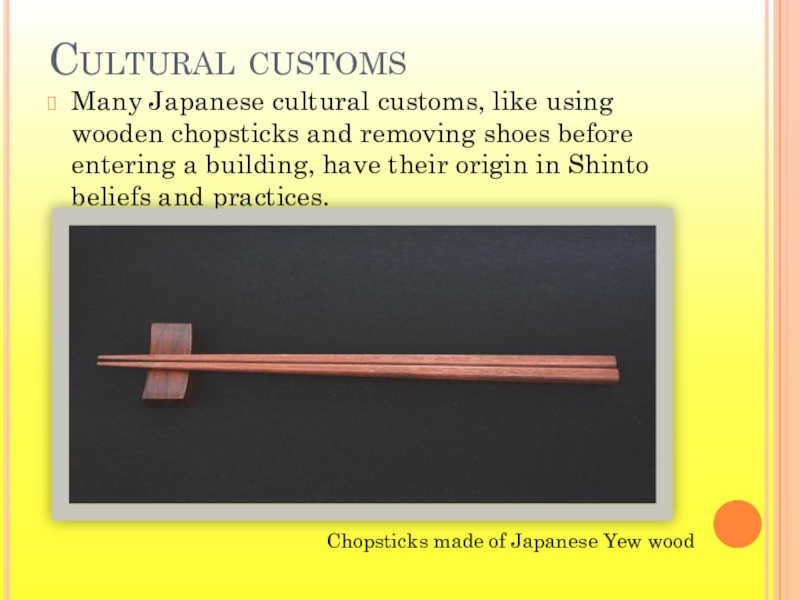
- 12. Cultural customs Many Japanese cultural customs, like
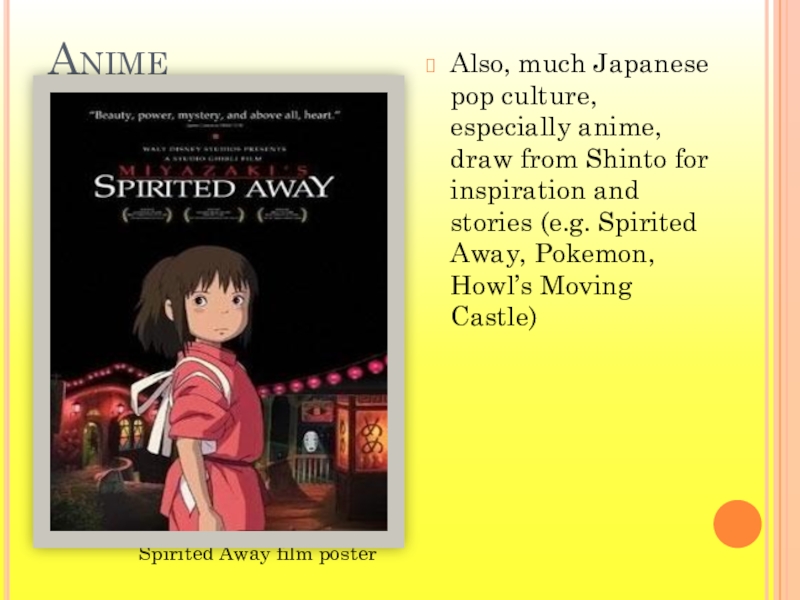
- 13. Anime Also, much Japanese pop culture, especially
PlanDefinitionKamiTypes of ShintoShrinesCultural effectsTypical Shinto shrine with paper streamers made out of unprocessed hemp fibre

Слайд 2Plan
Definition
Kami
Types of Shinto
Shrines
Cultural effects
Typical Shinto shrine with paper streamers made out
of unprocessed hemp fibre
Слайд 3Shinto
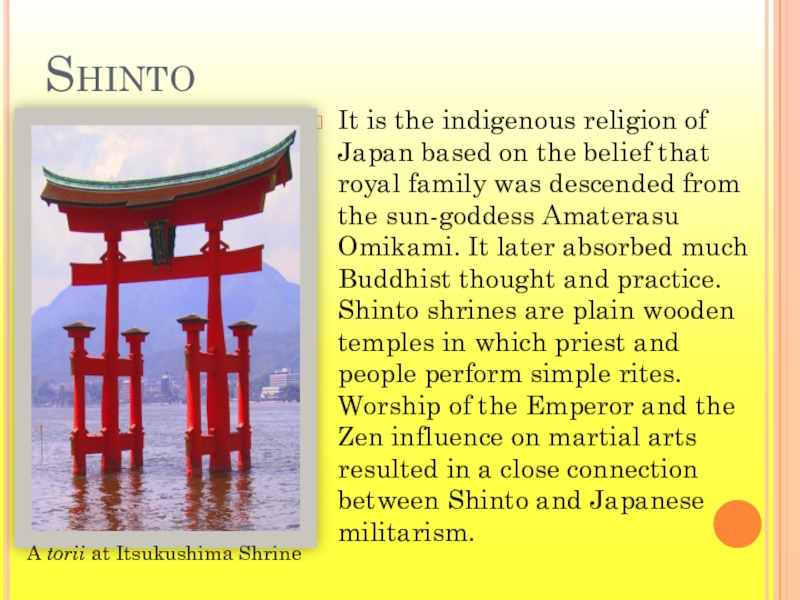
It is the indigenous religion of Japan based on the belief
that royal family was descended from the sun-goddess Amaterasu Omikami. It later absorbed much Buddhist thought and practice. Shinto shrines are plain wooden temples in which priest and people perform simple rites. Worship of the Emperor and the Zen influence on martial arts resulted in a close connection between Shinto and Japanese militarism.
A torii at Itsukushima Shrine
Слайд 4Shinto can be seen as a form of animism and may
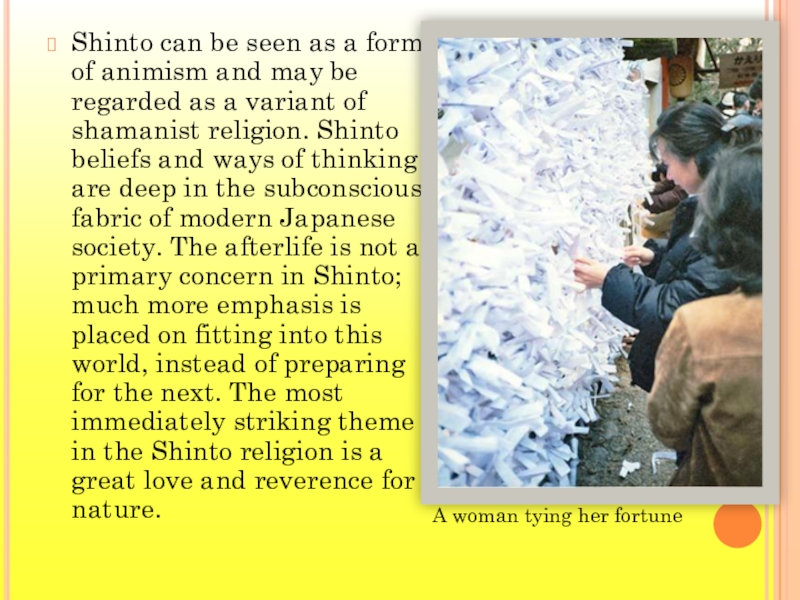
be regarded as a variant of shamanist religion. Shinto beliefs and ways of thinking are deep in the subconscious fabric of modern Japanese society. The afterlife is not a primary concern in Shinto; much more emphasis is placed on fitting into this world, instead of preparing for the next. The most immediately striking theme in the Shinto religion is a great love and reverence for nature.
A woman tying her fortune
Слайд 5Shinto shows that everything has a kami ("spiritual essence" which is
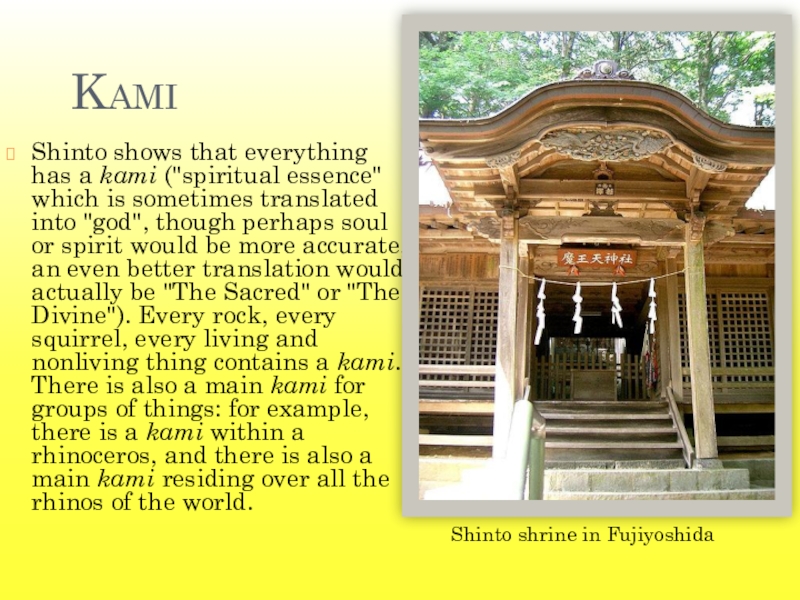
sometimes translated into "god", though perhaps soul or spirit would be more accurate; an even better translation would actually be "The Sacred" or "The Divine"). Every rock, every squirrel, every living and nonliving thing contains a kami. There is also a main kami for groups of things: for example, there is a kami within a rhinoceros, and there is also a main kami residing over all the rhinos of the world.
Kami
Shinto shrine in Fujiyoshida
Слайд 6Types of Shinto
Ko Shinto (古神道) is the oldest line of Shinto
branches, a tradition that values the systematic methods of exercise and training.
Shrine Shinto (神社神道) is the oldest and most prevalent of the Shinto types. It has always been a part of Japan's history and constitutes the main current of Shinto tradition.
Sect Shinto (宗派神道) comprises 13 groups formed during the 19th century. They do not have shrines, but conduct religious activities in meeting halls. Shinto sects include the mountain-worship sects, who focus on worshipping mountains like Mount Fuji, faith-healing sects, purification sects, Confucian sects, and Revival Shinto sects. Konkōkyō, Tenrikyō, and Kurozumikyō, although operating separately from modern Shinto, are considered to be forms of Sect Shinto.
Folk Shinto (民俗神道) includes the numerous but fragmented folk beliefs in deities and spirits. Practices include divination, spirit possession, and shamanic healing. Some of their practices come from Taoism, Buddhism, or Confucianism, but most come from ancient local traditions.
Shrine Shinto (神社神道) is the oldest and most prevalent of the Shinto types. It has always been a part of Japan's history and constitutes the main current of Shinto tradition.
Sect Shinto (宗派神道) comprises 13 groups formed during the 19th century. They do not have shrines, but conduct religious activities in meeting halls. Shinto sects include the mountain-worship sects, who focus on worshipping mountains like Mount Fuji, faith-healing sects, purification sects, Confucian sects, and Revival Shinto sects. Konkōkyō, Tenrikyō, and Kurozumikyō, although operating separately from modern Shinto, are considered to be forms of Sect Shinto.
Folk Shinto (民俗神道) includes the numerous but fragmented folk beliefs in deities and spirits. Practices include divination, spirit possession, and shamanic healing. Some of their practices come from Taoism, Buddhism, or Confucianism, but most come from ancient local traditions.
Слайд 7Shrines
The principal worship of kami is done at public shrines, although
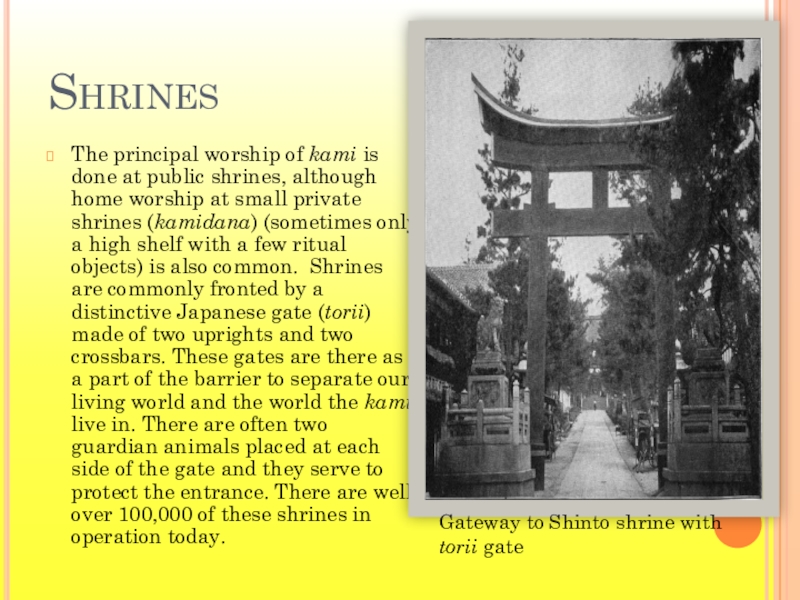
home worship at small private shrines (kamidana) (sometimes only a high shelf with a few ritual objects) is also common. Shrines are commonly fronted by a distinctive Japanese gate (torii) made of two uprights and two crossbars. These gates are there as a part of the barrier to separate our living world and the world the kami live in. There are often two guardian animals placed at each side of the gate and they serve to protect the entrance. There are well over 100,000 of these shrines in operation today.
Gateway to Shinto shrine with torii gate
Слайд 8Cultural effects
Shinto has been called "the religion of Japan", and the
customs and values of Shinto are inseparable from those of Japanese culture. Many famously Japanese practices have origins either directly or indirectly rooted in Shinto. A number of other Japanese religions have originated from or been influenced by Shinto.
Art
Sumo
Ethic
Cultural customs
Anime
Art
Sumo
Ethic
Cultural customs
Anime
Слайд 9Art
It is clear that the Shinto ideal of harmony with nature
underlies such typically Japanese arts as flower-arranging (生け花ikebana), traditional Japanese architecture, and garden design.
Ikebana arrangement
Слайд 10Sumo
A more explicit link to Shinto is seen in sumo wrestling,
where, even in the modern version of the sport, many Shinto-inspired ceremonies must be performed before a bout, such as purifying the wrestling arena by sprinkling it with salt.
A sumo match
Слайд 11Ethic
The Japanese emphasis on proper greetings and respectful phrasings can
be seen as a continuation of the ancient Shinto belief in kotodama (words with a magical effect on the world).
Слайд 12Cultural customs
Many Japanese cultural customs, like using wooden chopsticks and removing
shoes before entering a building, have their origin in Shinto beliefs and practices.
Chopsticks made of Japanese Yew wood
Слайд 13Anime
Also, much Japanese pop culture, especially anime, draw from Shinto for
inspiration and stories (e.g. Spirited Away, Pokemon, Howl’s Moving Castle)
Spirited Away film poster