- Главная
- Разное
- Образование
- Спорт
- Естествознание
- Природоведение
- Религиоведение
- Французский язык
- Черчение
- Английский язык
- Астрономия
- Алгебра
- Биология
- География
- Геометрия
- Детские презентации
- Информатика
- История
- Литература
- Математика
- Музыка
- МХК
- Немецкий язык
- ОБЖ
- Обществознание
- Окружающий мир
- Педагогика
- Русский язык
- Технология
- Физика
- Философия
- Химия
- Шаблоны, фоны, картинки для презентаций
- Экология
- Экономика
Презентация, доклад по английскому языку на тему Saskatchewan
Содержание
- 1. Презентация по английскому языку на тему Saskatchewan
- 2. Saskatchewan is located in the heart of
- 3. Saskatchewan is a prairie province in Canada, which has
- 4. As of December 2013, the population of
- 5. Saskatchewan was first explored by Europeans in
- 6. Saskatchewan's official flag was adopted in 1969.
- 7. In 1941, the western red lily was
- 8. Sylvite, also known as potash, is Saskatchewan's
- 9. Saskatchewan's economy is associated with agriculture; however,
- 10. Beef cattle production in the province is
- 11. A list of the top 100 companies
- 12. Government and politicsSaskatchewan has the same form
- 13. Departmental Structure: Committees and Boards Making Recommendations Directly to Cabinet:
- 14. Provincial politics in Saskatchewan is dominated by
- 15. Saskatchewan has the distinction of being the
- 16. Saskatchewan contains two major natural regions: the
- 17. The province's highest point, 1,468m/m4,816ft is located
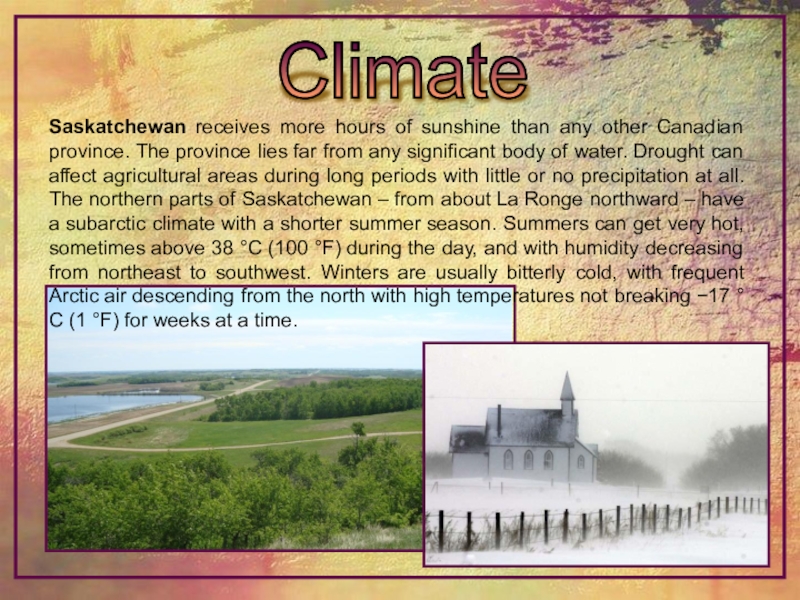
- 18. ClimateSaskatchewan receives more hours of sunshine than
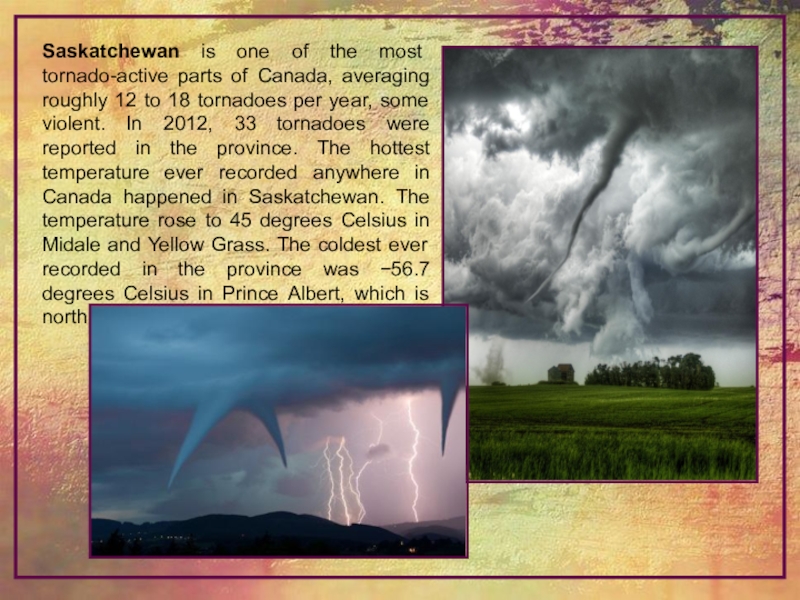
- 19. Saskatchewan is one of the most tornado-active
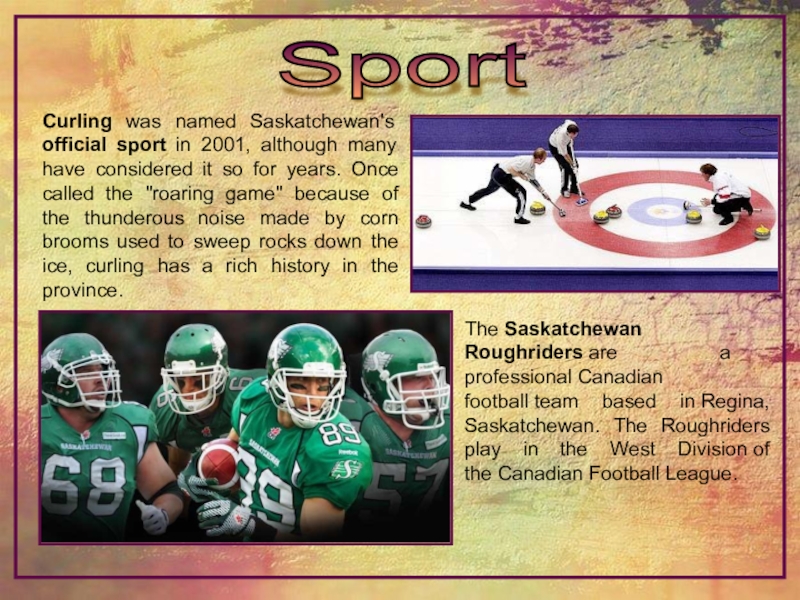
- 20. SportCurling was named Saskatchewan's official sport in
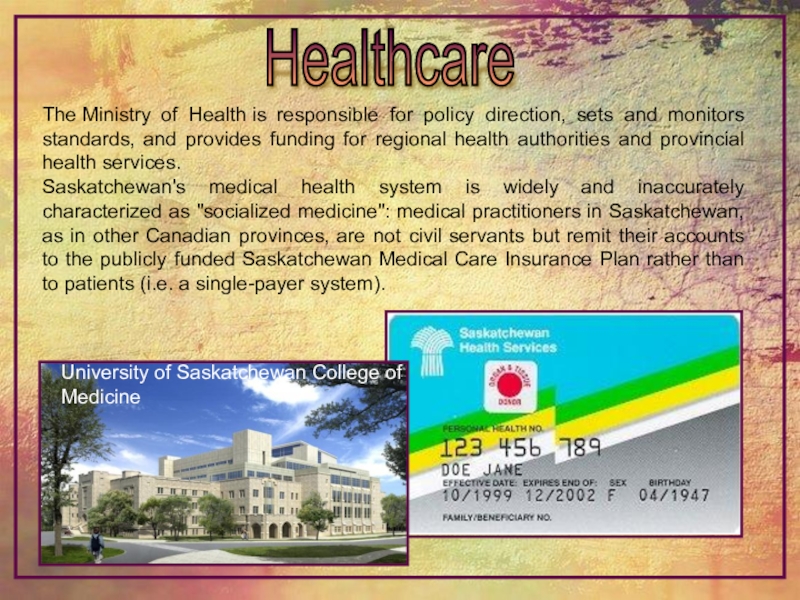
- 21. The Ministry of Health is responsible for policy direction,
- 22. Over 250 museums in every corner of
- 23. Saskatchewan Legislative Building.The Saskatchewan Legislative Building is located in Regina.
- 24. MacKenzie Art Gallery.Located in Regina’s WASCANA CENTRE,
- 25. Sky Trail Bridge.The Sky Trail Bridge is
- 26. Ukrainian Museum of Canada.Between 1891 and 1941
- 27. Saskatchewan's southern prairie landscape and northern wooded
- 28. Saskatchewan is also home to the wonderfully
- 29. Saskatchewan is a unique mix of people,
Слайд 2
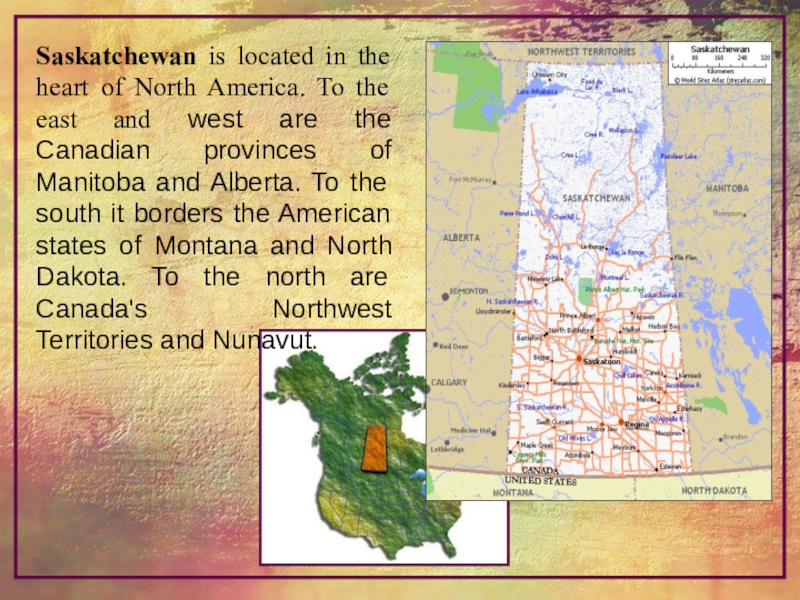
Saskatchewan is located in the heart of North America. To the
Слайд 3
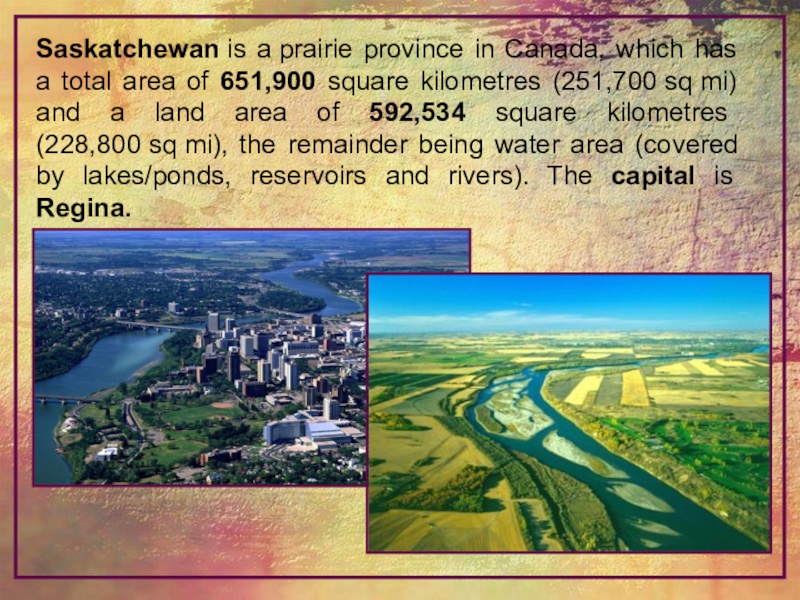
Saskatchewan is a prairie province in Canada, which has a total area of
Слайд 4
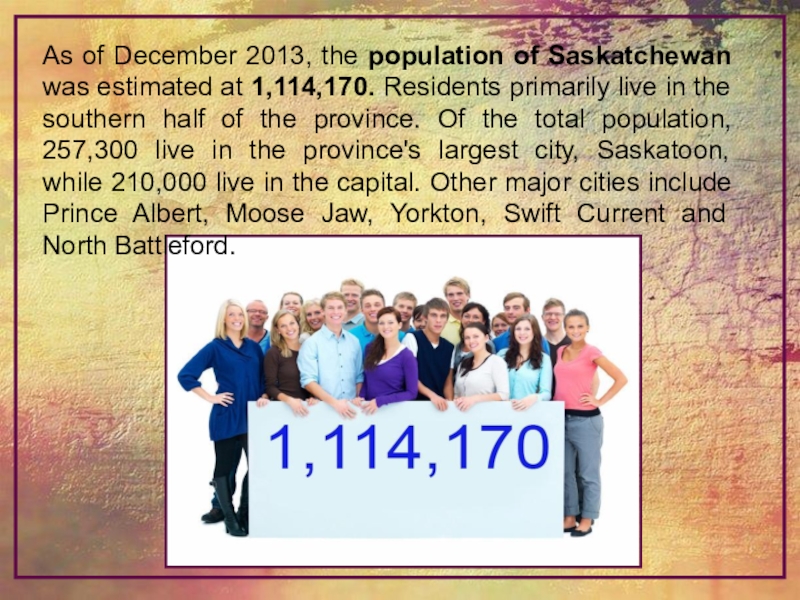
As of December 2013, the population of Saskatchewan was estimated at
Слайд 5
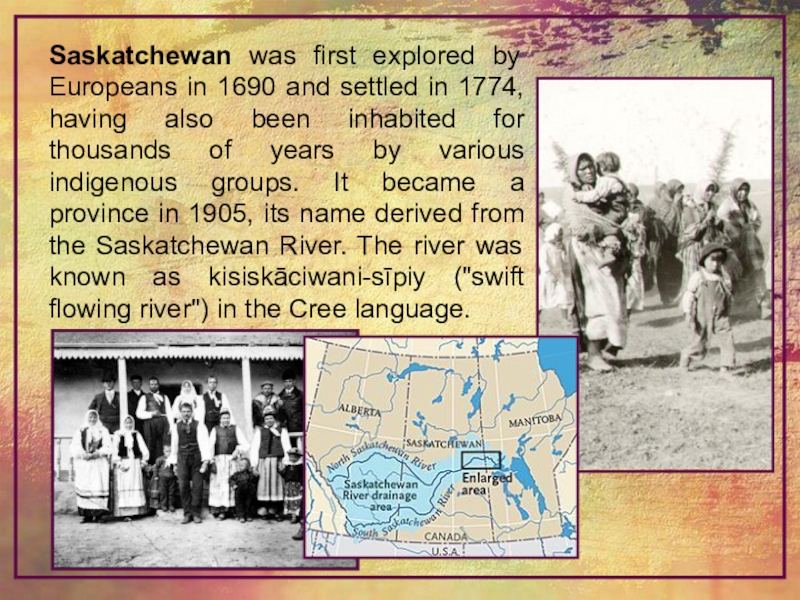
Saskatchewan was first explored by Europeans in 1690 and settled in
Слайд 6
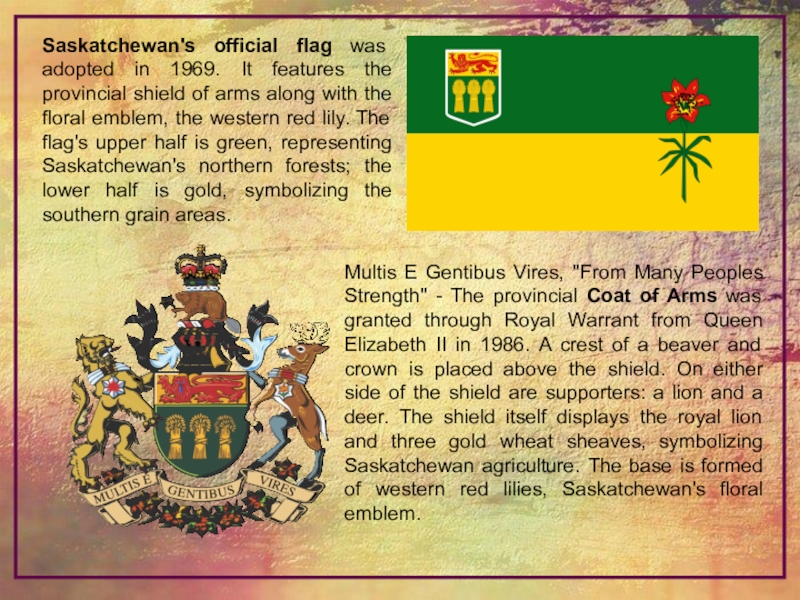
Saskatchewan's official flag was adopted in 1969. It features the provincial
Multis E Gentibus Vires, "From Many Peoples Strength" - The provincial Coat of Arms was granted through Royal Warrant from Queen Elizabeth II in 1986. A crest of a beaver and crown is placed above the shield. On either side of the shield are supporters: a lion and a deer. The shield itself displays the royal lion and three gold wheat sheaves, symbolizing Saskatchewan agriculture. The base is formed of western red lilies, Saskatchewan's floral emblem.
Слайд 7
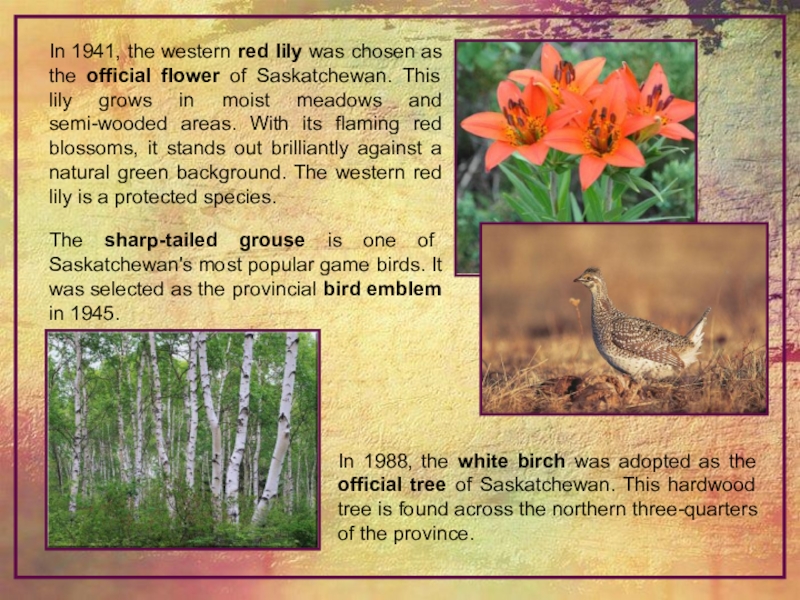
In 1941, the western red lily was chosen as the official
The sharp-tailed grouse is one of Saskatchewan's most popular game birds. It was selected as the provincial bird emblem in 1945.
In 1988, the white birch was adopted as the official tree of Saskatchewan. This hardwood tree is found across the northern three-quarters of the province.
Слайд 8
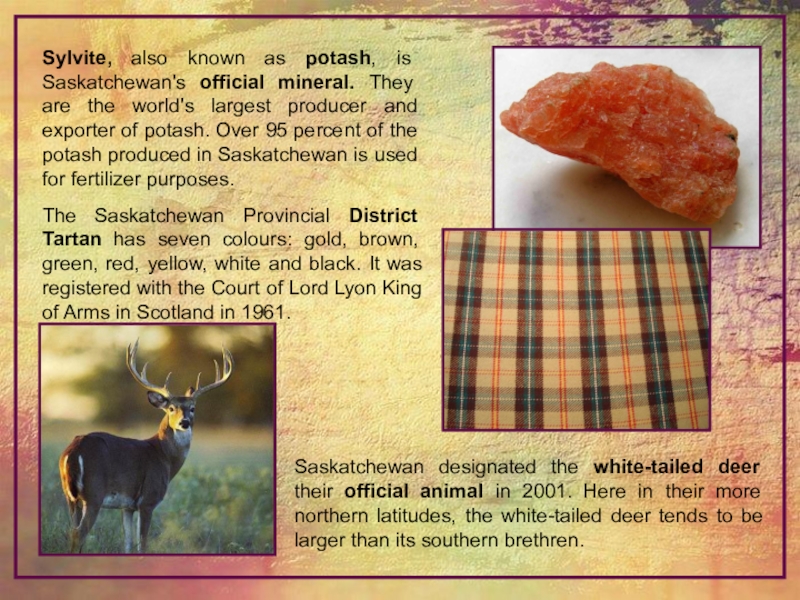
Sylvite, also known as potash, is Saskatchewan's official mineral. They are
The Saskatchewan Provincial District Tartan has seven colours: gold, brown, green, red, yellow, white and black. It was registered with the Court of Lord Lyon King of Arms in Scotland in 1961.
Saskatchewan designated the white-tailed deer their official animal in 2001. Here in their more northern latitudes, the white-tailed deer tends to be larger than its southern brethren.
Слайд 9
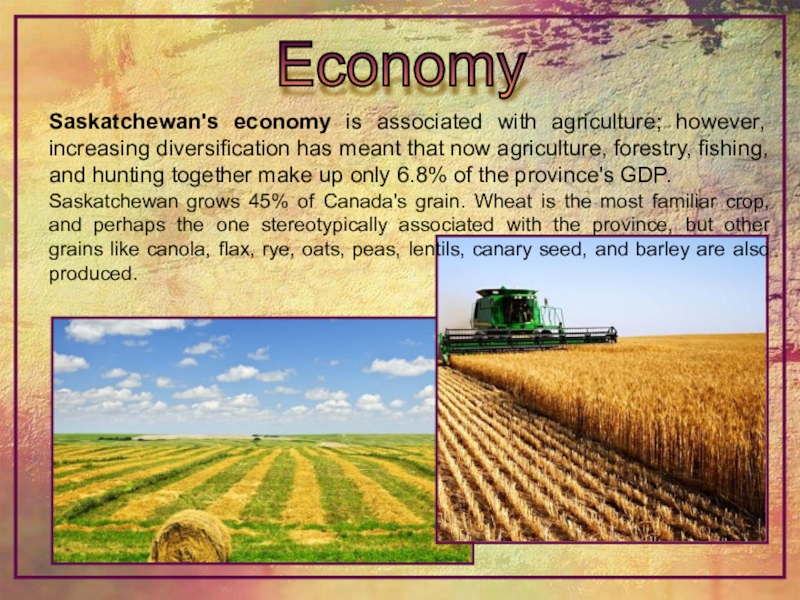
Saskatchewan's economy is associated with agriculture; however, increasing diversification has meant
Saskatchewan grows 45% of Canada's grain. Wheat is the most familiar crop, and perhaps the one stereotypically associated with the province, but other grains like canola, flax, rye, oats, peas, lentils, canary seed, and barley are also produced.
Economy
Слайд 10
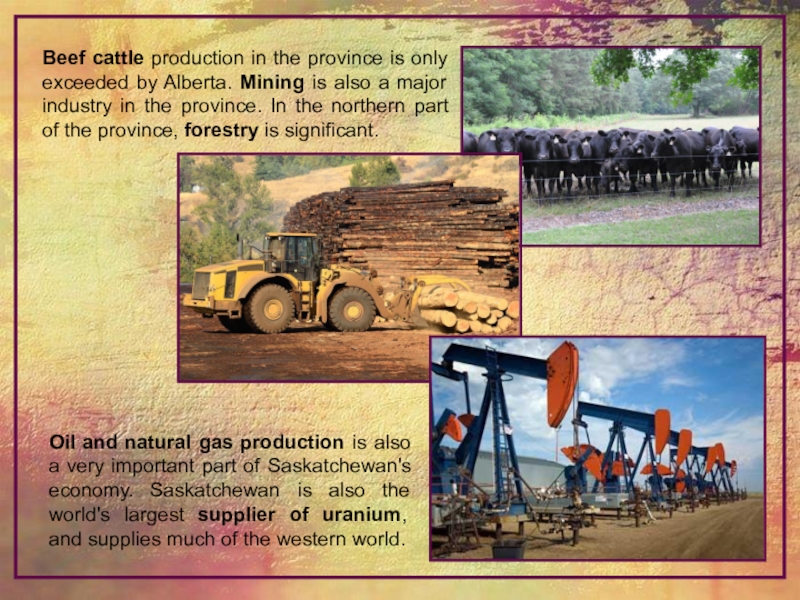
Beef cattle production in the province is only exceeded by Alberta.
Oil and natural gas production is also a very important part of Saskatchewan's economy. Saskatchewan is also the world's largest supplier of uranium, and supplies much of the western world.
Слайд 11
A list of the top 100 companies includes The Potash Corporation
Слайд 12
Government and politics
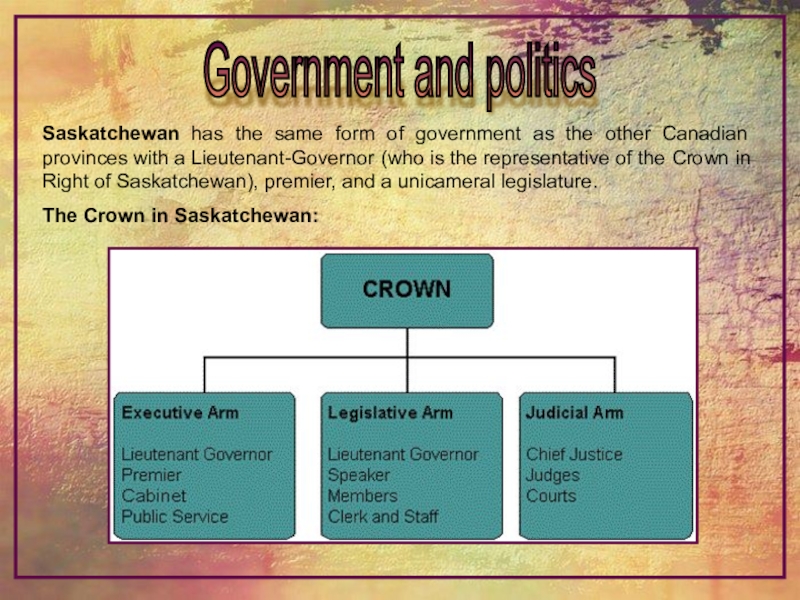
Saskatchewan has the same form of government as the
The Crown in Saskatchewan:

Слайд 14
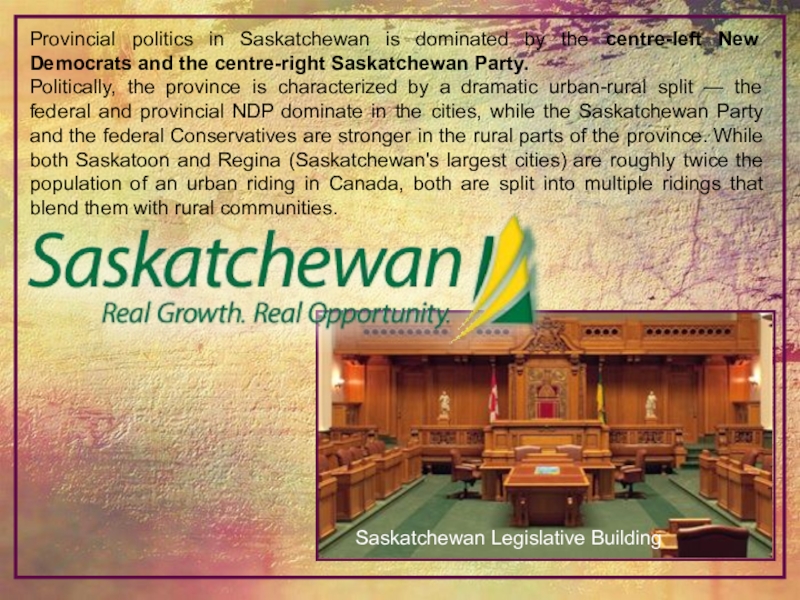
Provincial politics in Saskatchewan is dominated by the centre-left New Democrats
Politically, the province is characterized by a dramatic urban-rural split — the federal and provincial NDP dominate in the cities, while the Saskatchewan Party and the federal Conservatives are stronger in the rural parts of the province. While both Saskatoon and Regina (Saskatchewan's largest cities) are roughly twice the population of an urban riding in Canada, both are split into multiple ridings that blend them with rural communities.
Слайд 15
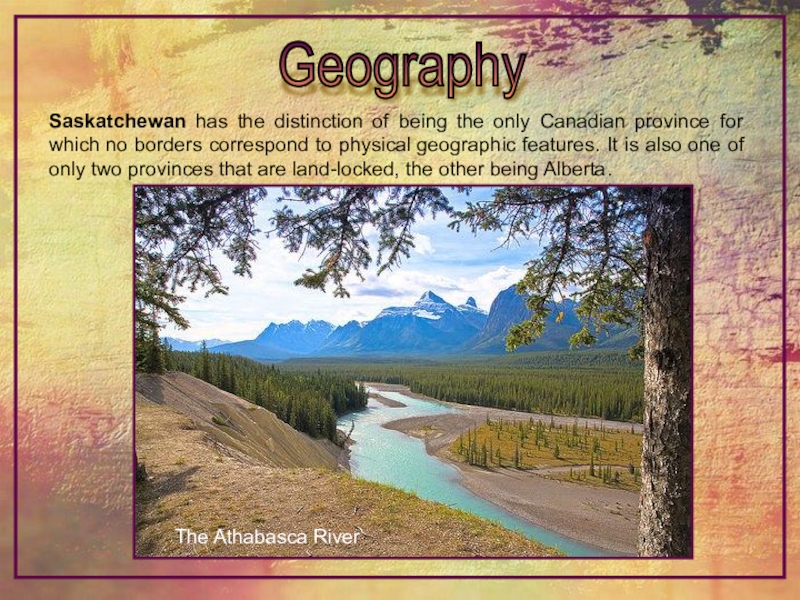
Saskatchewan has the distinction of being the only Canadian province for
Geography
Слайд 16
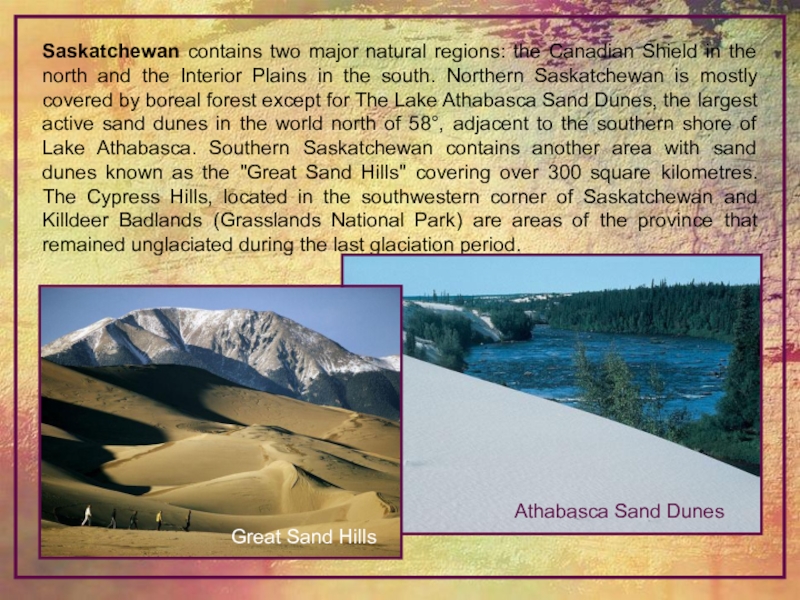
Saskatchewan contains two major natural regions: the Canadian Shield in the
Слайд 17
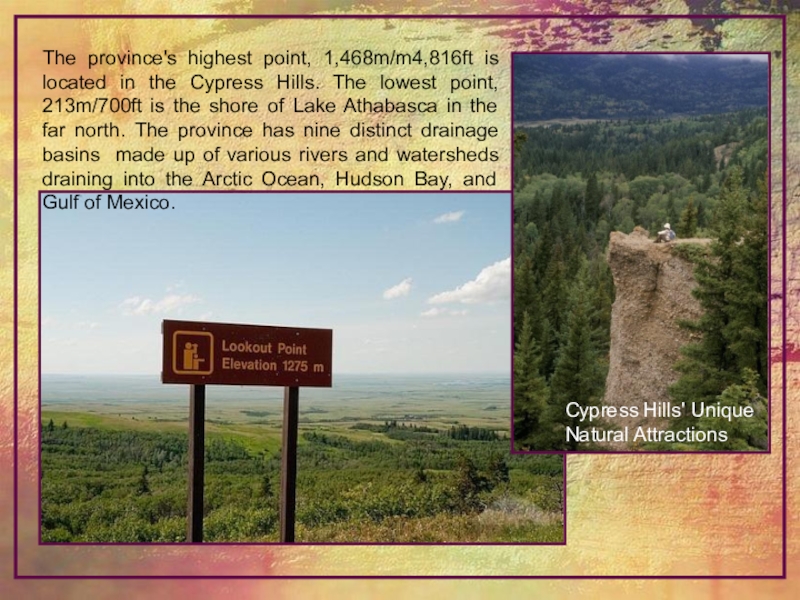
The province's highest point, 1,468m/m4,816ft is located in the Cypress Hills.
Слайд 18
Climate
Saskatchewan receives more hours of sunshine than any other Canadian province.
Climate
Слайд 19
Saskatchewan is one of the most tornado-active parts of Canada, averaging
Слайд 20
Sport
Curling was named Saskatchewan's official sport in 2001, although many have
The Saskatchewan Roughriders are a professional Canadian football team based in Regina, Saskatchewan. The Roughriders play in the West Division of the Canadian Football League.
Слайд 21
The Ministry of Health is responsible for policy direction, sets and monitors standards,
Saskatchewan's medical health system is widely and inaccurately characterized as "socialized medicine": medical practitioners in Saskatchewan, as in other Canadian provinces, are not civil servants but remit their accounts to the publicly funded Saskatchewan Medical Care Insurance Plan rather than to patients (i.e. a single-payer system).
Healthcare
Слайд 22
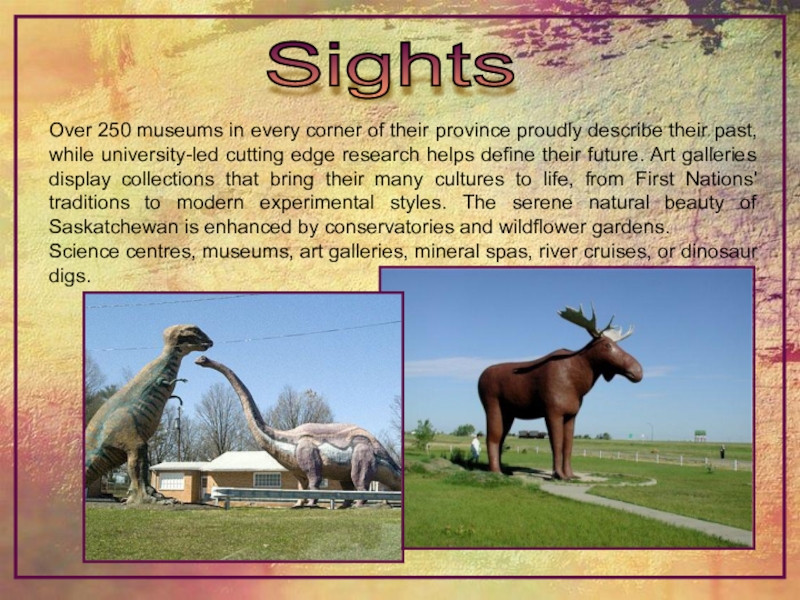
Over 250 museums in every corner of their province proudly describe
Science centres, museums, art galleries, mineral spas, river cruises, or dinosaur digs.
Sights
Слайд 23
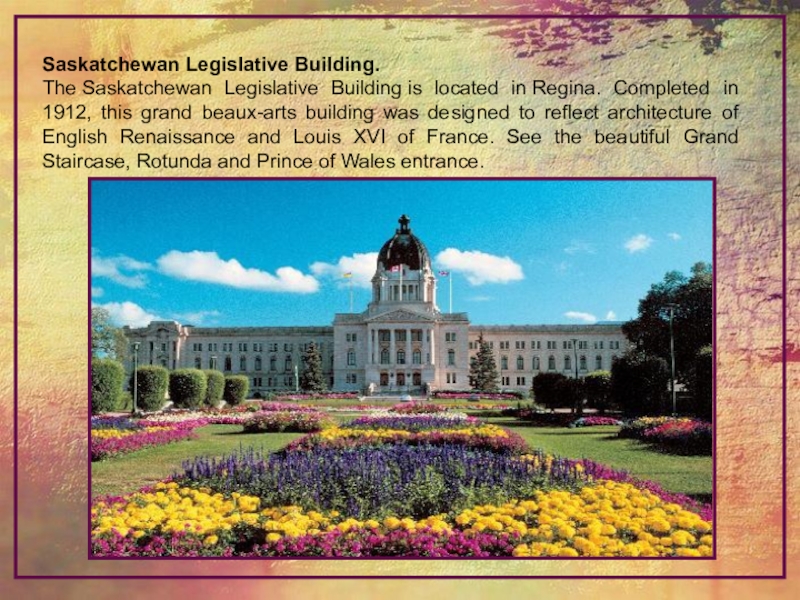
Saskatchewan Legislative Building.
The Saskatchewan Legislative Building is located in Regina. Completed in 1912, this
Слайд 24
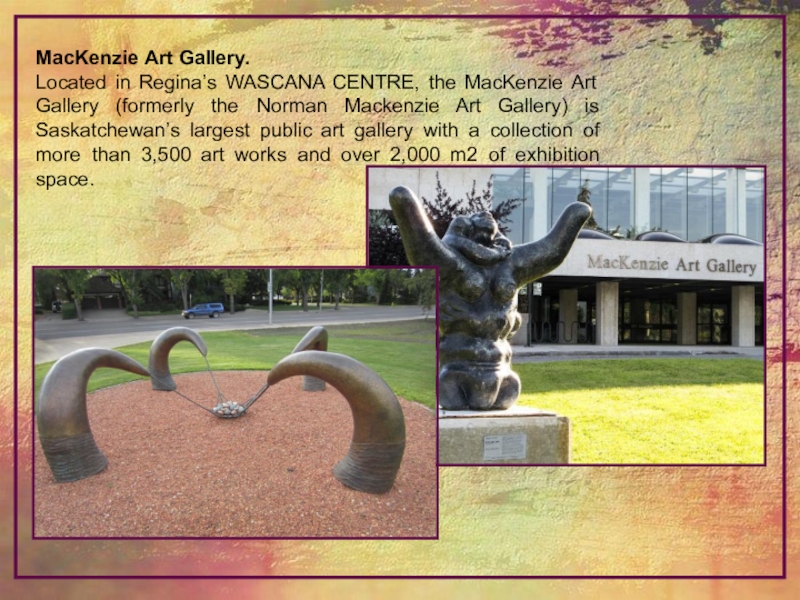
MacKenzie Art Gallery.
Located in Regina’s WASCANA CENTRE, the MacKenzie Art Gallery
Слайд 25
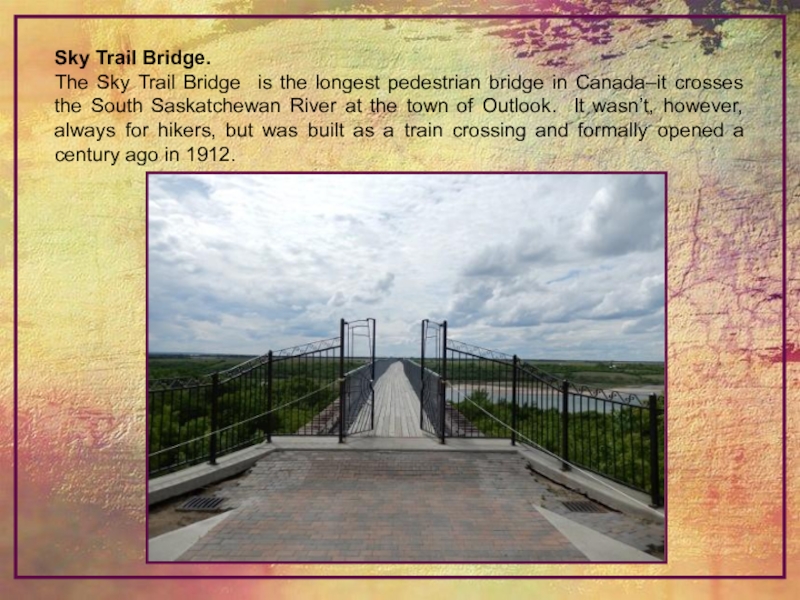
Sky Trail Bridge.
The Sky Trail Bridge is the longest pedestrian bridge
Слайд 26
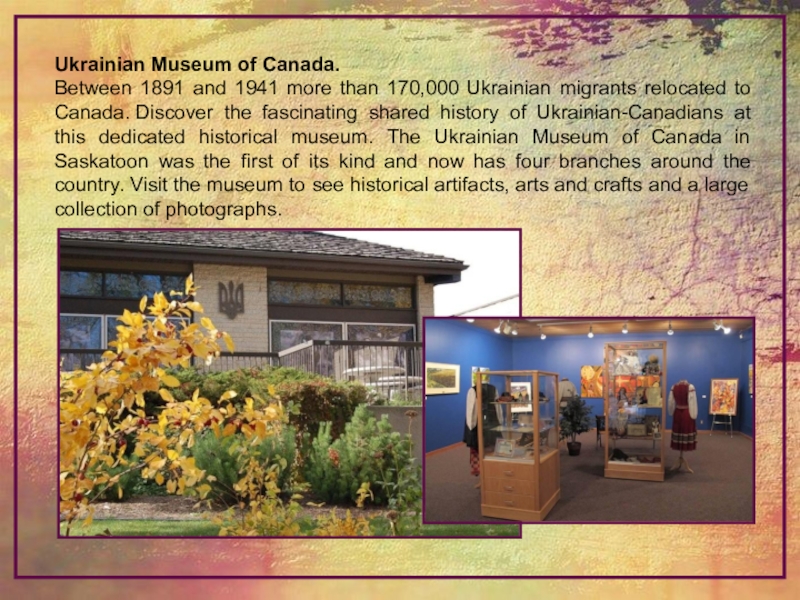
Ukrainian Museum of Canada.
Between 1891 and 1941 more than 170,000 Ukrainian
Слайд 27
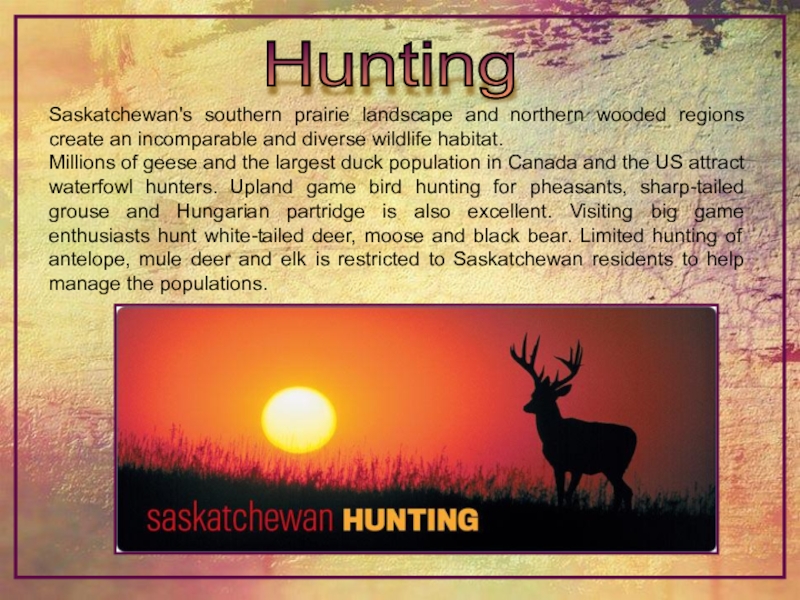
Saskatchewan's southern prairie landscape and northern wooded regions create an incomparable
Millions of geese and the largest duck population in Canada and the US attract waterfowl hunters. Upland game bird hunting for pheasants, sharp-tailed grouse and Hungarian partridge is also excellent. Visiting big game enthusiasts hunt white-tailed deer, moose and black bear. Limited hunting of antelope, mule deer and elk is restricted to Saskatchewan residents to help manage the populations.
Hunting
Слайд 28
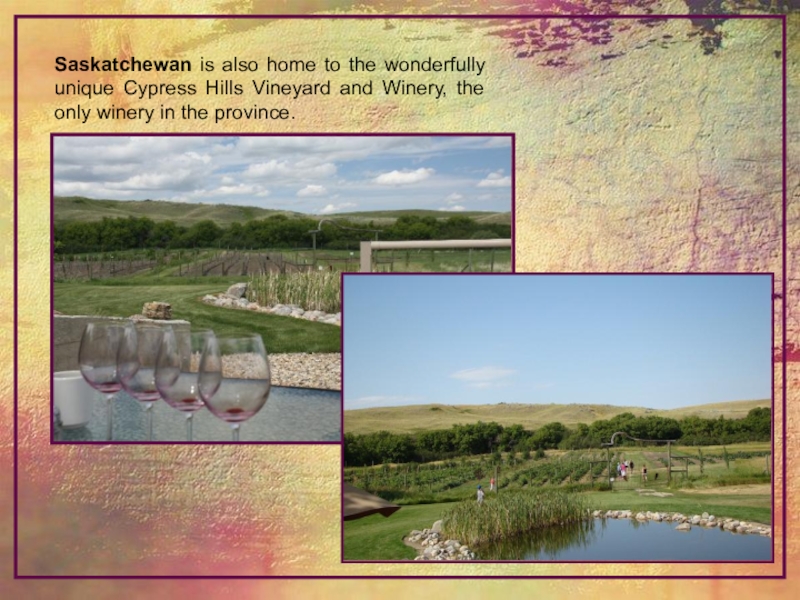
Saskatchewan is also home to the wonderfully unique Cypress Hills Vineyard
Слайд 29
Saskatchewan is a unique mix of people, cultures and geography that