- Главная
- Разное
- Образование
- Спорт
- Естествознание
- Природоведение
- Религиоведение
- Французский язык
- Черчение
- Английский язык
- Астрономия
- Алгебра
- Биология
- География
- Геометрия
- Детские презентации
- Информатика
- История
- Литература
- Математика
- Музыка
- МХК
- Немецкий язык
- ОБЖ
- Обществознание
- Окружающий мир
- Педагогика
- Русский язык
- Технология
- Физика
- Философия
- Химия
- Шаблоны, фоны, картинки для презентаций
- Экология
- Экономика
Презентация, доклад по английскому языку на тему: The Solar System
Содержание
- 1. Презентация по английскому языку на тему: The Solar System
- 2. The Solar System consists of the Sun
- 3. The four smaller inner planets, Mercury, Venus,
- 4. The four outer planets, the gas giants,
- 5. The Solar System is also home to
- 6. Beyond Neptune's orbit lie trans-Neptunian objects composed
- 7. Six of the planets and three of
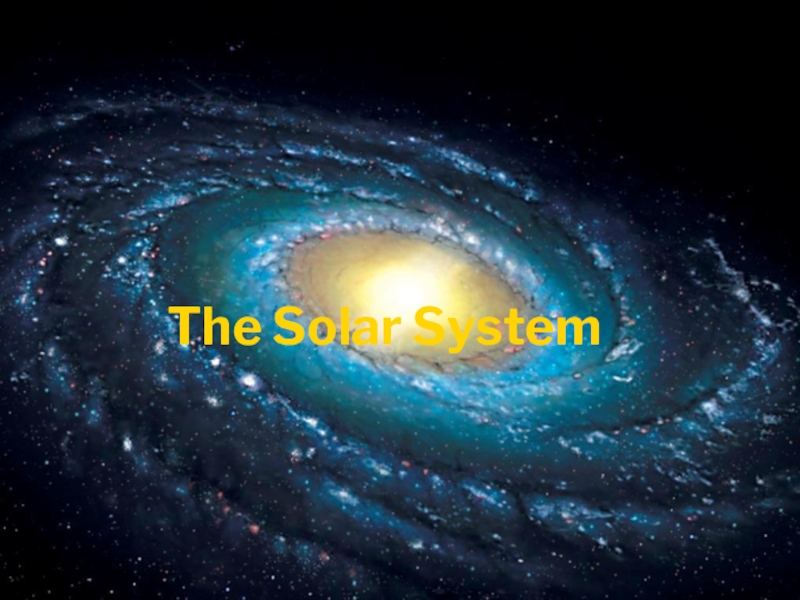
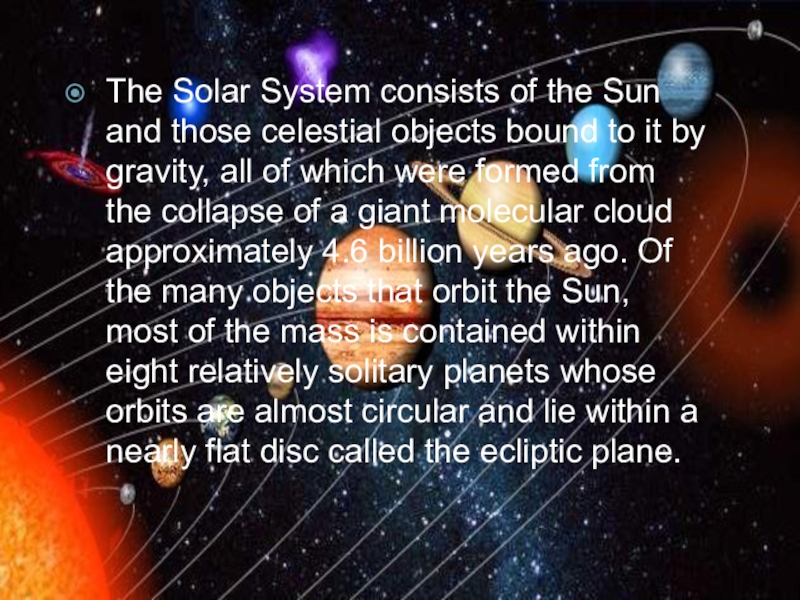
The Solar System consists of the Sun and those celestial objects bound to it by gravity, all of which were formed from the collapse of a giant molecular cloud approximately 4.6 billion years ago. Of the
Слайд 2The Solar System consists of the Sun and those celestial objects
bound to it by gravity, all of which were formed from the collapse of a giant molecular cloud approximately 4.6 billion years ago. Of the many objects that orbit the Sun, most of the mass is contained within eight relatively solitary planets whose orbits are almost circular and lie within a nearly flat disc called the ecliptic plane.
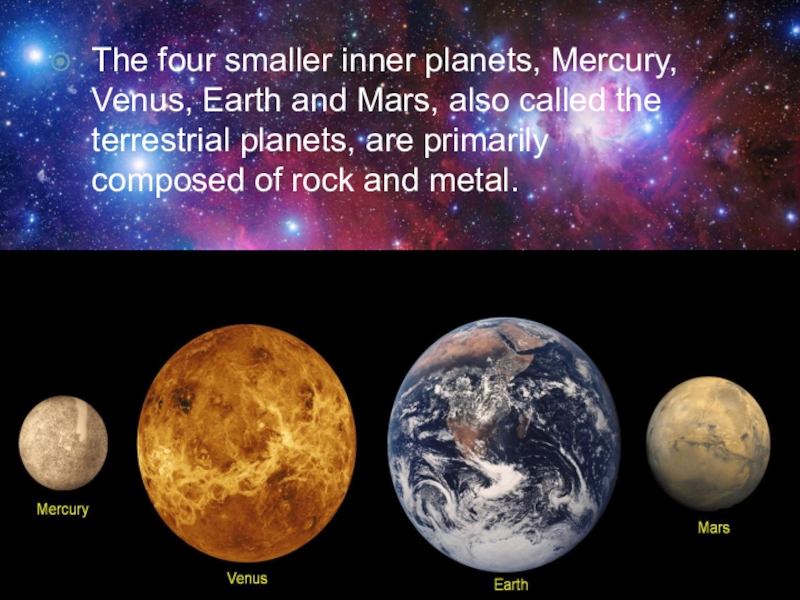
Слайд 3The four smaller inner planets, Mercury, Venus, Earth and Mars, also
called the terrestrial planets, are primarily composed of rock and metal.
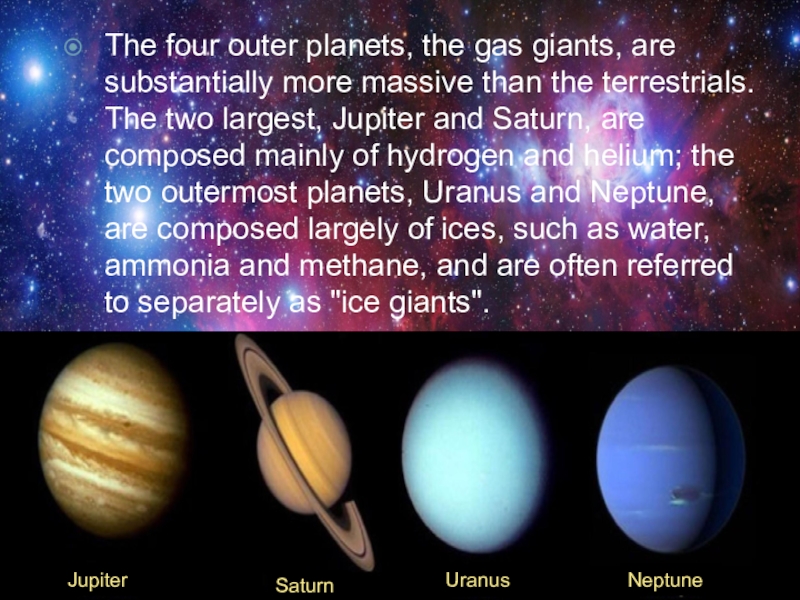
Слайд 4The four outer planets, the gas giants, are substantially more massive
than the terrestrials. The two largest, Jupiter and Saturn, are composed mainly of hydrogen and helium; the two outermost planets, Uranus and Neptune, are composed largely of ices, such as water, ammonia and methane, and are often referred to separately as "ice giants".
Jupiter
Saturn
Uranus
Neptune
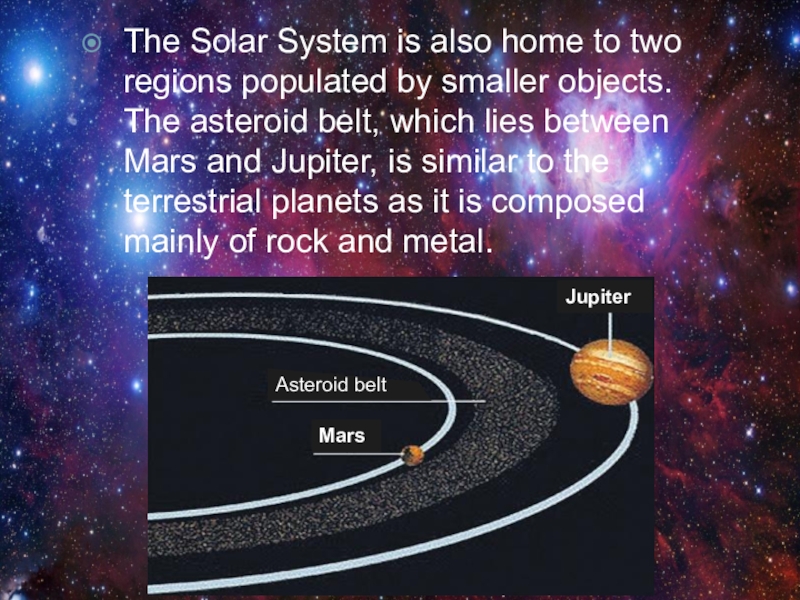
Слайд 5The Solar System is also home to two regions populated by
smaller objects. The asteroid belt, which lies between Mars and Jupiter, is similar to the terrestrial planets as it is composed mainly of rock and metal.
Mars
Jupiter
Аsteroid belt
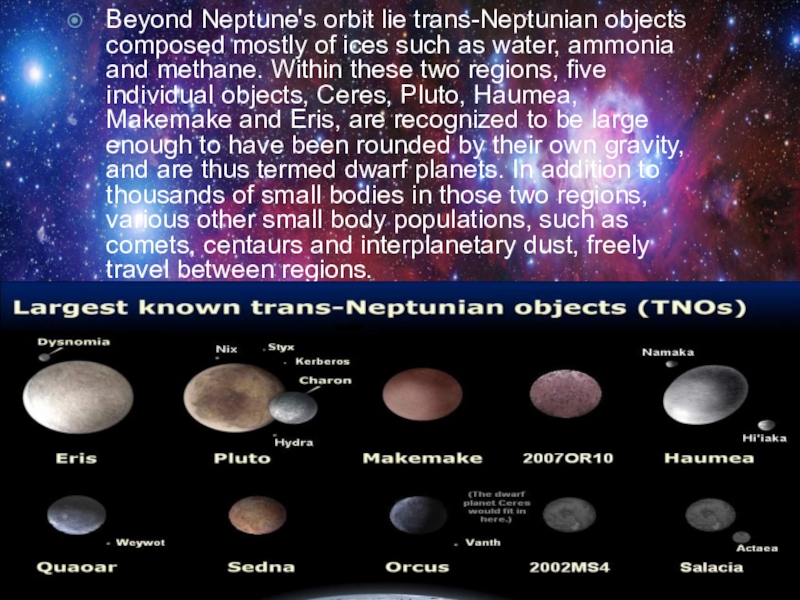
Слайд 6Beyond Neptune's orbit lie trans-Neptunian objects composed mostly of ices such
as water, ammonia and methane. Within these two regions, five individual objects, Ceres, Pluto, Haumea, Makemake and Eris, are recognized to be large enough to have been rounded by their own gravity, and are thus termed dwarf planets. In addition to thousands of small bodies in those two regions, various other small body populations, such as comets, centaurs and interplanetary dust, freely travel between regions.
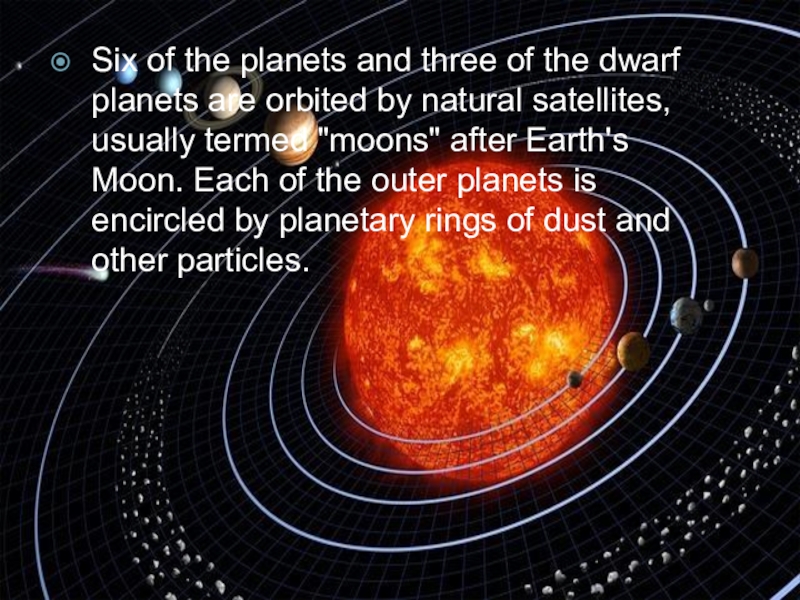
Слайд 7Six of the planets and three of the dwarf planets are
orbited by natural satellites, usually termed "moons" after Earth's Moon. Each of the outer planets is encircled by planetary rings of dust and other particles.