- Главная
- Разное
- Образование
- Спорт
- Естествознание
- Природоведение
- Религиоведение
- Французский язык
- Черчение
- Английский язык
- Астрономия
- Алгебра
- Биология
- География
- Геометрия
- Детские презентации
- Информатика
- История
- Литература
- Математика
- Музыка
- МХК
- Немецкий язык
- ОБЖ
- Обществознание
- Окружающий мир
- Педагогика
- Русский язык
- Технология
- Физика
- Философия
- Химия
- Шаблоны, фоны, картинки для презентаций
- Экология
- Экономика
Презентация, доклад по английскому языку на тему: Лондон
Содержание
- 1. Презентация по английскому языку на тему: Лондон
- 2. Hyde Park, which opened to the public
- 3. Слайд 3
- 4. In 1536 King Henry VIII confiscated Hyde
- 5. Hyde Park boasts plenty of monuments, memorials
- 6. The Serpentine, a large artificial lake, is
- 7. Слайд 7
- 8. Just southwest of the Serpentine is a
- 9. At the south end of Hyde park
- 10. In the nineteenth century Hyde Park had
- 11. Слайд 11
- 12. Near Speakers' Corner, in the north-east corner
- 13. Слайд 13
- 14. The Rose GardenIn the southeast corner of
- 15. The Artemis FountainThe Boy and Dolphin Fountain
- 16. We can also visit such landmarks as
- 17. Regent’s ParkRegent's Park is one of the
- 18. Слайд 18
- 19. The area that would later be known
- 20. The centerpiece of the park is the
- 21. There's also an open air theatre,
- 22. The pretty lake in Regent's Park
- 23. Covent Garden is one of the London's
- 24. Слайд 24
- 25. Covent Garden is known for its many
- 26. In 1830 a central market
- 27. GlossaryMonk [ ] – монарх:Layout [ ]
- 28. Thank you for attention!!!
Hyde Park, which opened to the public in 1637, is the largest of several royal parks in London. Hyde Park covers more than 360 acres and hosts many large events, including celebrations and concerts. It is
Слайд 2Hyde Park, which opened to the public in 1637, is the
largest of several royal parks in London. Hyde Park covers more than 360 acres and hosts many large events, including celebrations and concerts. It is also a popular place for jogging, swimming, rowing, picnicking and even horse riding.
Слайд 4In 1536 King Henry VIII confiscated Hyde Park from the monks
of Westminster Abbey. It was used primarily for hunting. King Charles I opened the park to the public in 1637. The current park layout was planned by architect Decimus Burton in 1825.
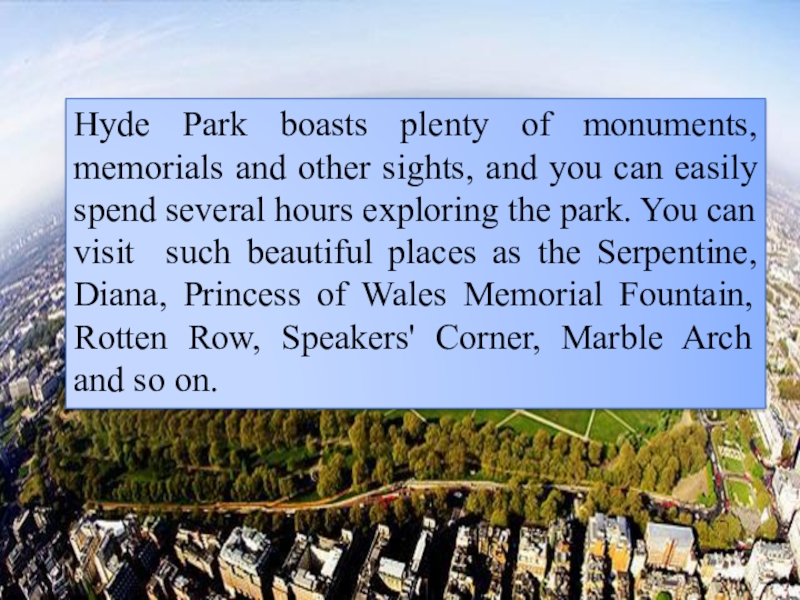
Слайд 5Hyde Park boasts plenty of monuments, memorials and other sights, and
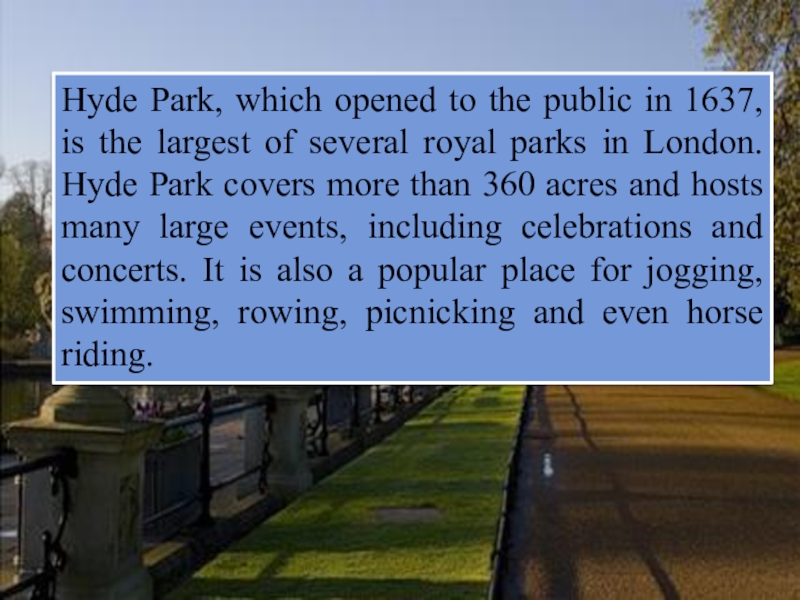
you can easily spend several hours exploring the park. You can visit such beautiful places as the Serpentine, Diana, Princess of Wales Memorial Fountain, Rotten Row, Speakers' Corner, Marble Arch and so on.
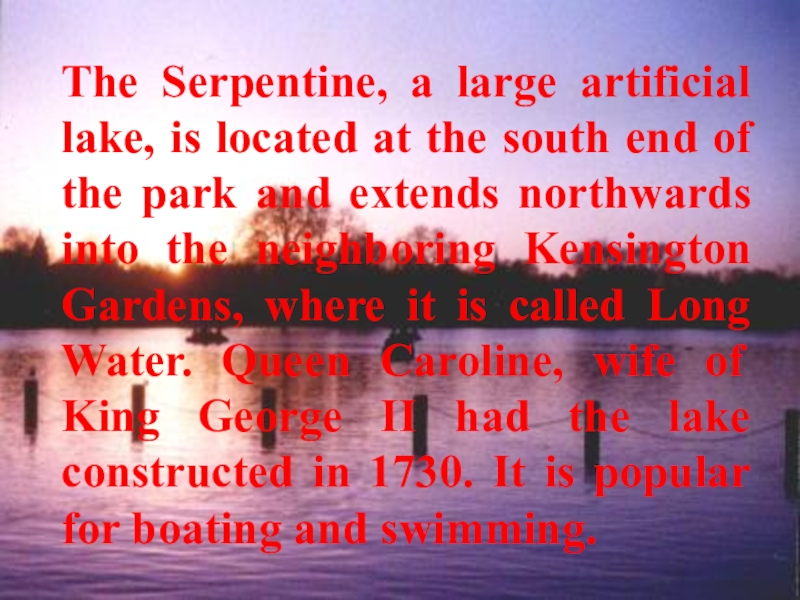
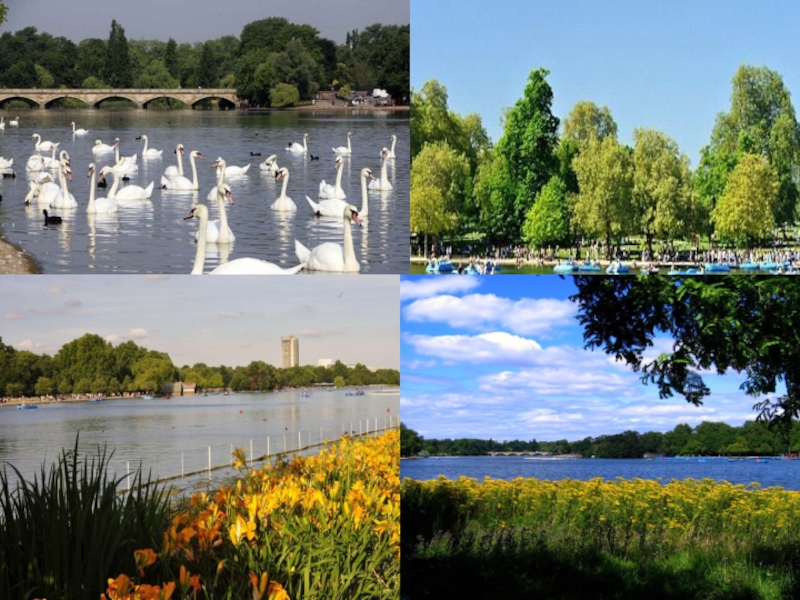
Слайд 6The Serpentine, a large artificial lake, is located at the south
end of the park and extends northwards into the neighboring Kensington Gardens, where it is called Long Water. Queen Caroline, wife of King George II had the lake constructed in 1730. It is popular for boating and swimming.
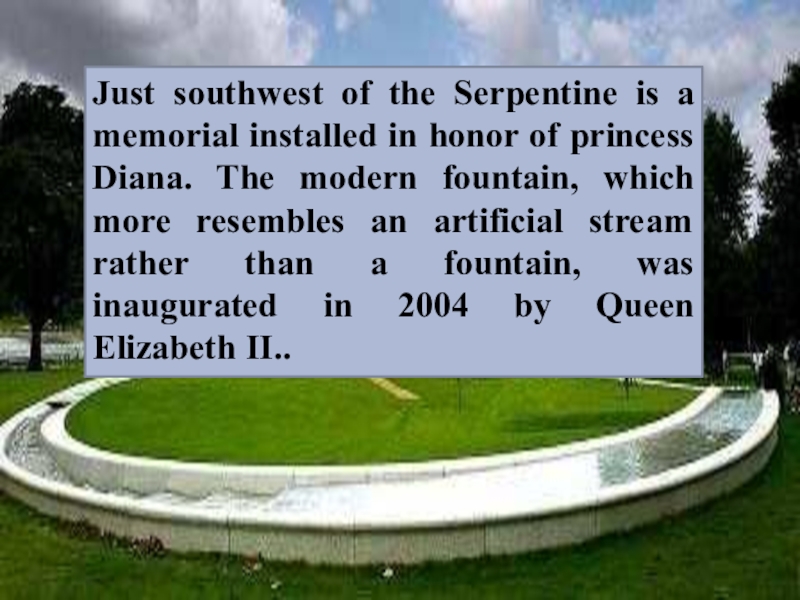
Слайд 8Just southwest of the Serpentine is a memorial installed in honor
of princess Diana. The modern fountain, which more resembles an artificial stream rather than a fountain, was inaugurated in 2004 by Queen Elizabeth II..
Слайд 9At the south end of Hyde park is Rotten Row, a
famous bridle path. The road is almost four miles long (6,4 km) and is now used as a horse riding and jogging route.
In the seventeenth century the road was often used by William III. The king found the walk from Kensington Palace to St. James's Palace too dangerous, so he had oil lamps installed along the route, thus creating the first lit public road in England.
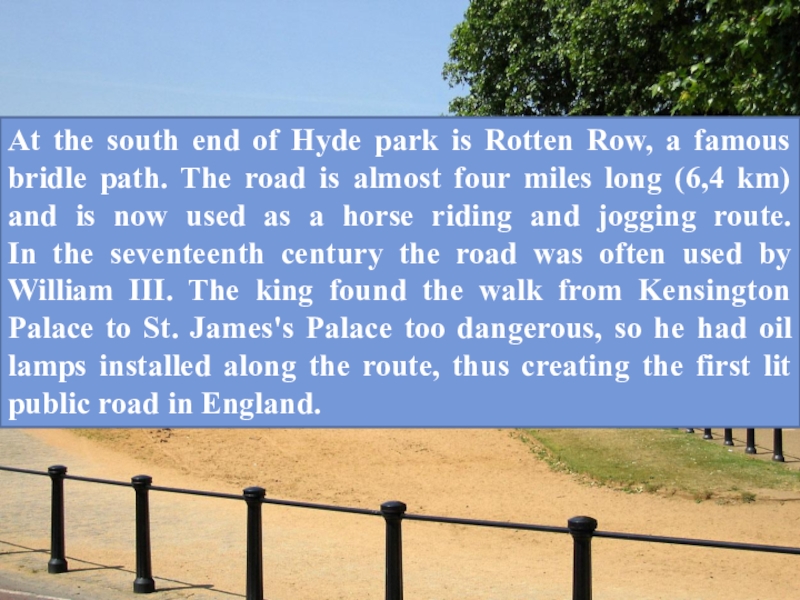
Слайд 10In the nineteenth century Hyde Park had become a popular place
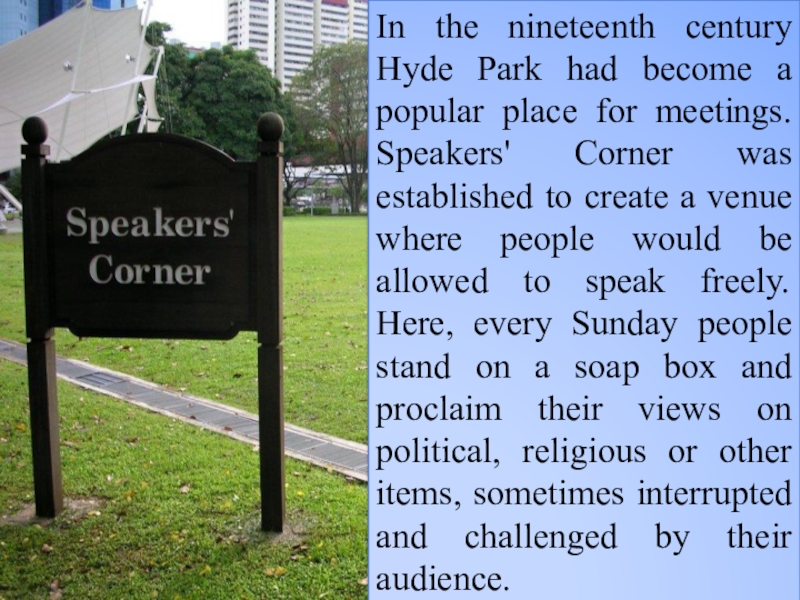
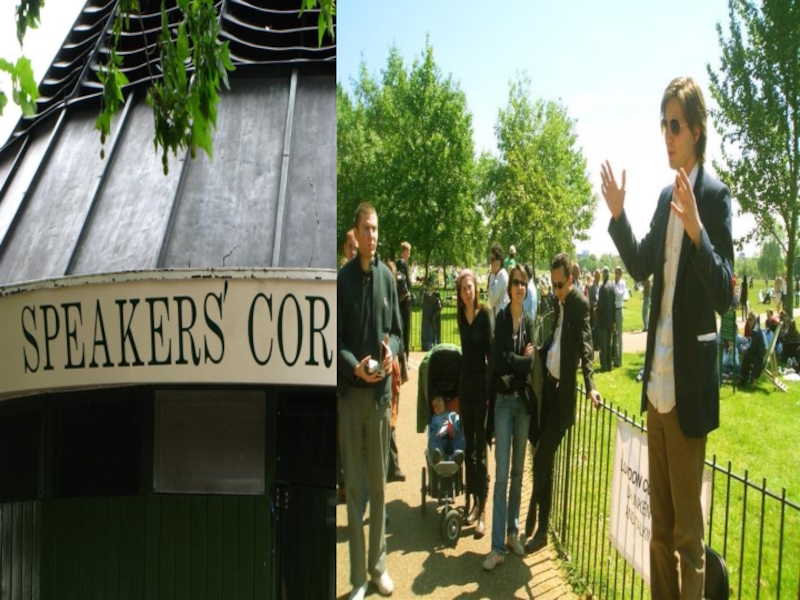
for meetings. Speakers' Corner was established to create a venue where people would be allowed to speak freely. Here, every Sunday people stand on a soap box and proclaim their views on political, religious or other items, sometimes interrupted and challenged by their audience.
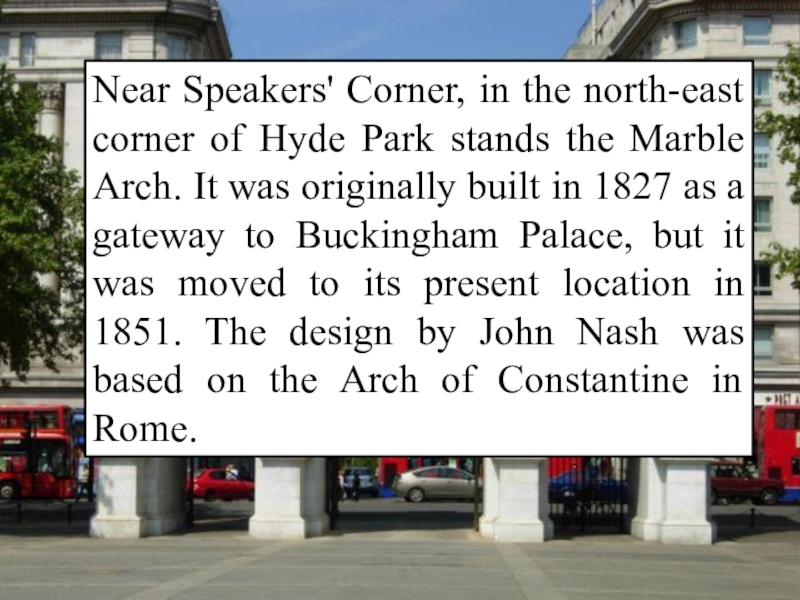
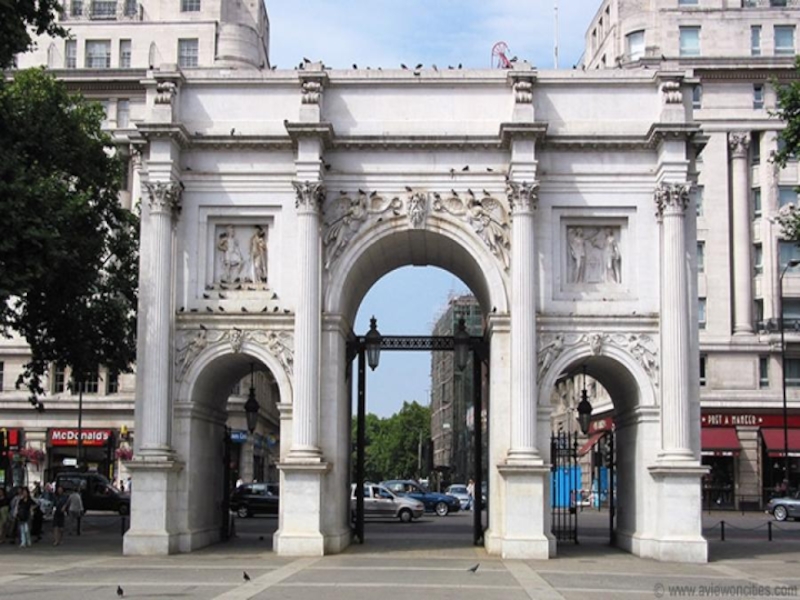
Слайд 12Near Speakers' Corner, in the north-east corner of Hyde Park stands
the Marble Arch. It was originally built in 1827 as a gateway to Buckingham Palace, but it was moved to its present location in 1851. The design by John Nash was based on the Arch of Constantine in Rome.
Слайд 14The Rose Garden
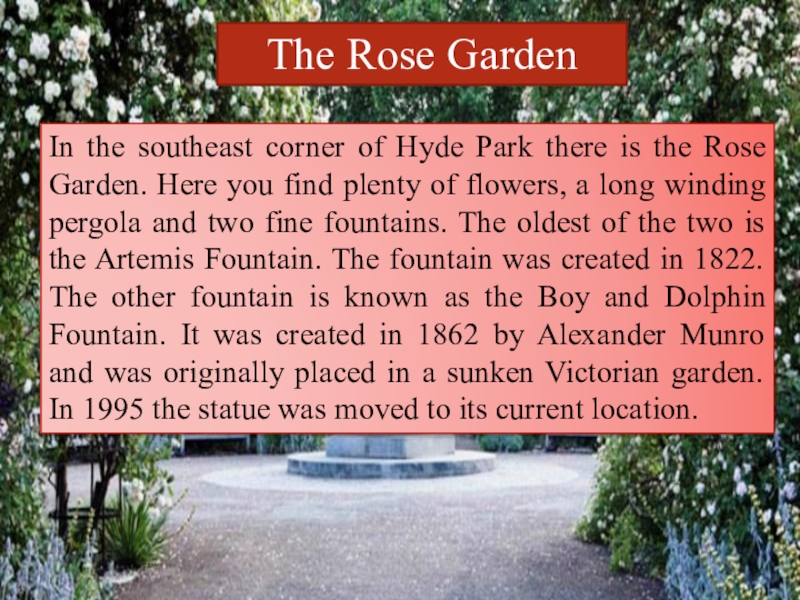
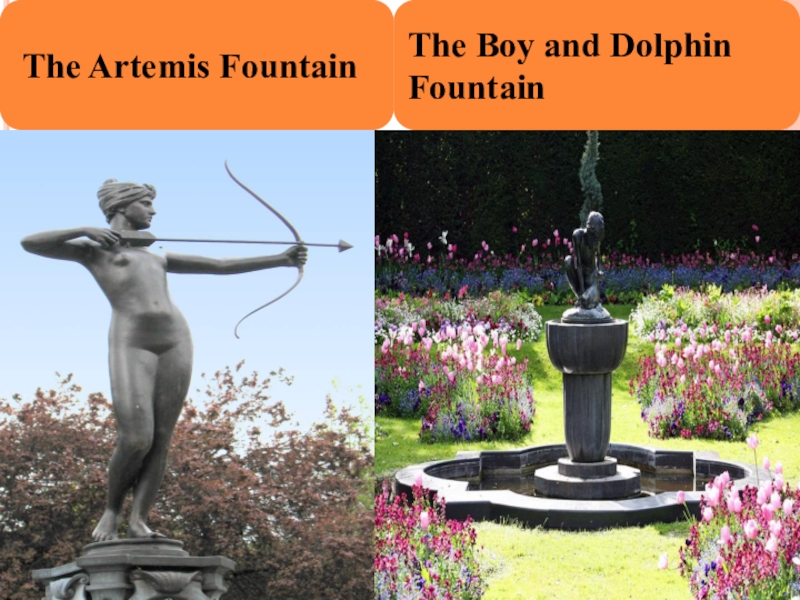
In the southeast corner of Hyde Park there is
the Rose Garden. Here you find plenty of flowers, a long winding pergola and two fine fountains. The oldest of the two is the Artemis Fountain. The fountain was created in 1822. The other fountain is known as the Boy and Dolphin Fountain. It was created in 1862 by Alexander Munro and was originally placed in a sunken Victorian garden. In 1995 the statue was moved to its current location.
Слайд 16We can also visit such landmarks as Still Water and Genghis
Khan, Achilles Statue, the Reformers' Tree, Isis, Joy of Life Fountain.
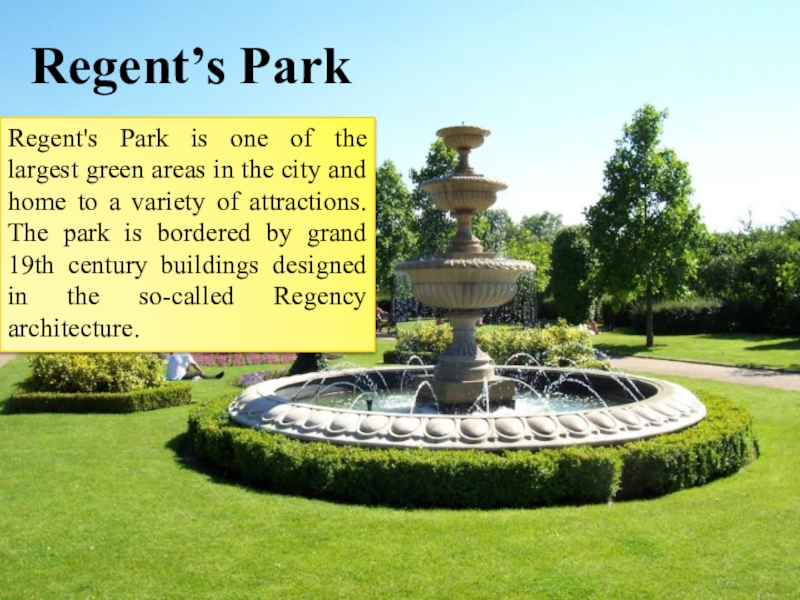
Слайд 17Regent’s Park
Regent's Park is one of the largest green areas in
the city and home to a variety of attractions. The park is bordered by grand 19th century buildings designed in the so-called Regency architecture.
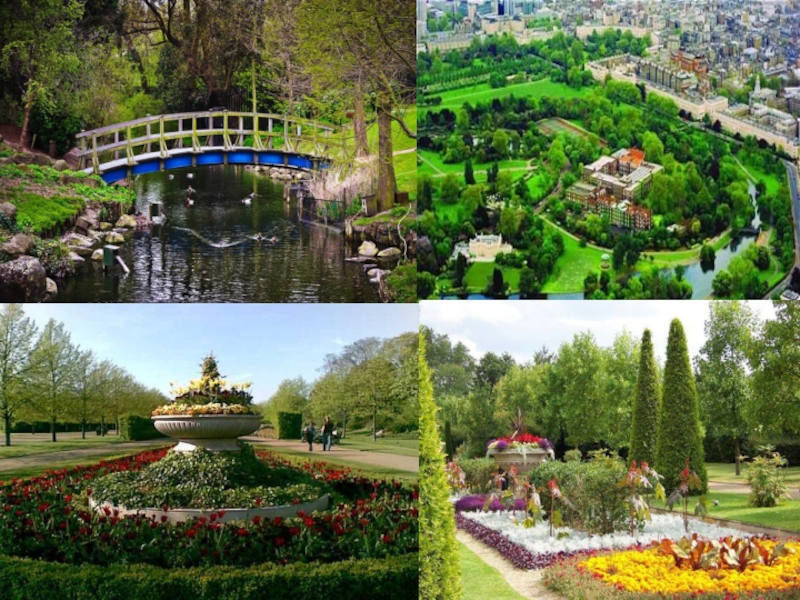
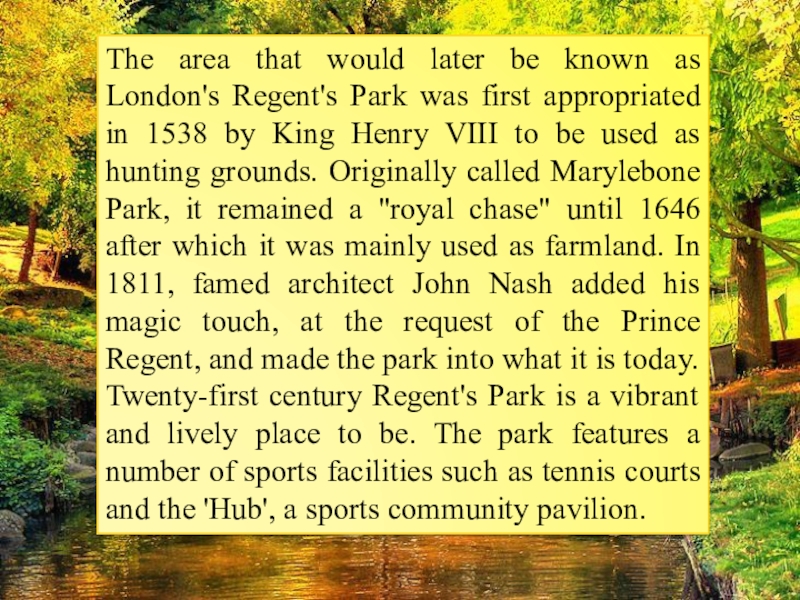
Слайд 19The area that would later be known as London's Regent's Park
was first appropriated in 1538 by King Henry VIII to be used as hunting grounds. Originally called Marylebone Park, it remained a "royal chase" until 1646 after which it was mainly used as farmland. In 1811, famed architect John Nash added his magic touch, at the request of the Prince Regent, and made the park into what it is today. Twenty-first century Regent's Park is a vibrant and lively place to be. The park features a number of sports facilities such as tennis courts and the 'Hub', a sports community pavilion.
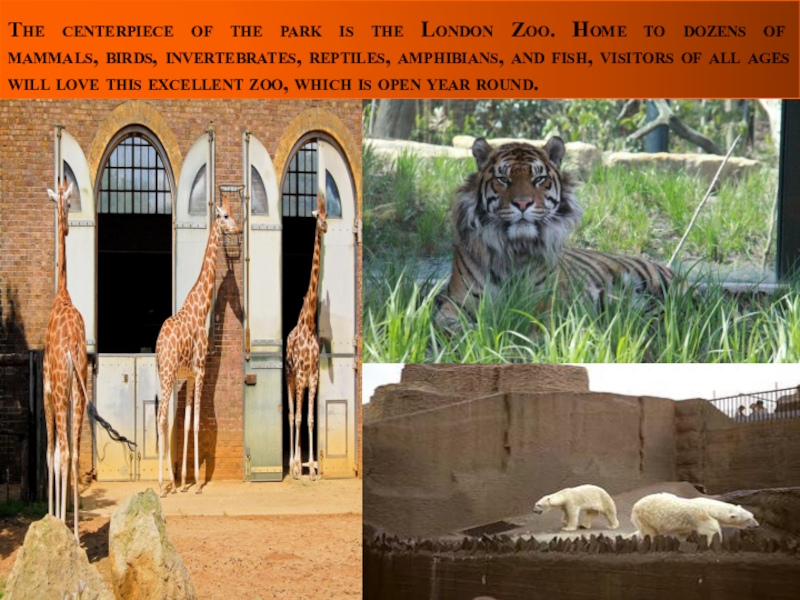
Слайд 20The centerpiece of the park is the London Zoo. Home to
dozens of
mammals, birds, invertebrates, reptiles, amphibians, and fish, visitors of all ages will love this excellent zoo, which is open year round.
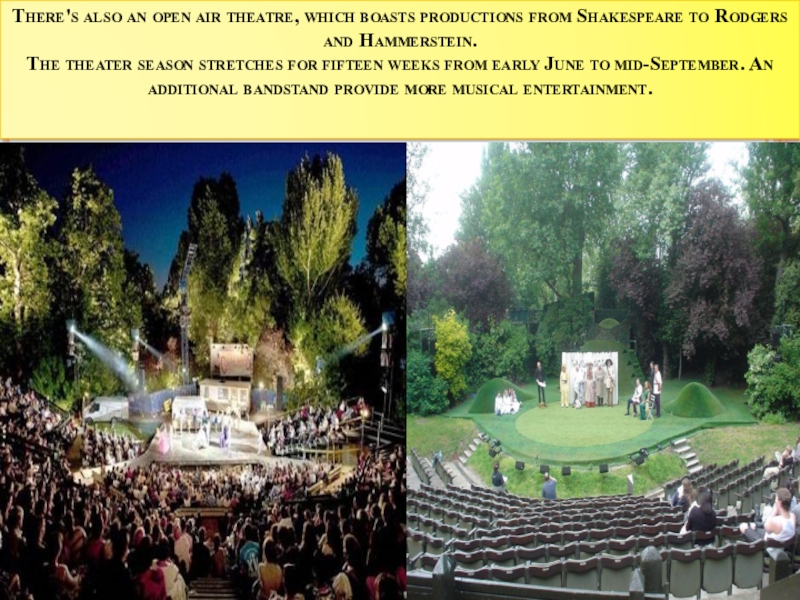
Слайд 21 There's also an open air theatre, which boasts productions from Shakespeare
to Rodgers and Hammerstein.
The theater season stretches for fifteen weeks from early June to mid-September. An additional bandstand provide more musical entertainment.
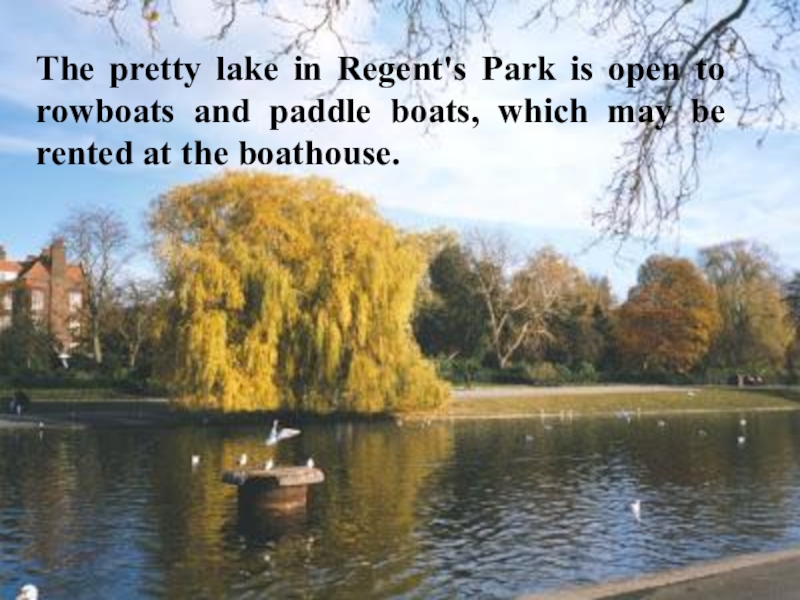
Слайд 22 The pretty lake in Regent's Park is open to rowboats and
paddle boats, which may be rented at the boathouse.
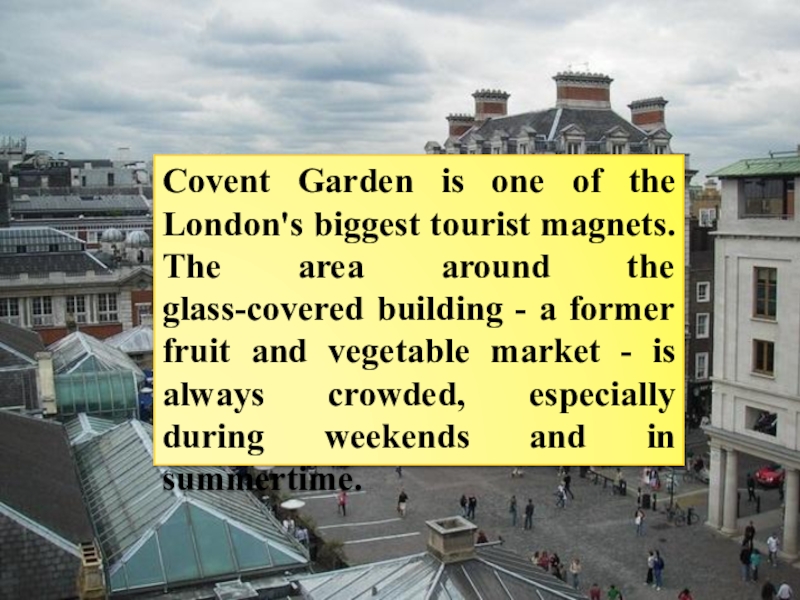
Слайд 23Covent Garden is one of the London's biggest tourist magnets. The
area around the glass-covered building - a former fruit and vegetable market - is always crowded, especially during weekends and in summertime.
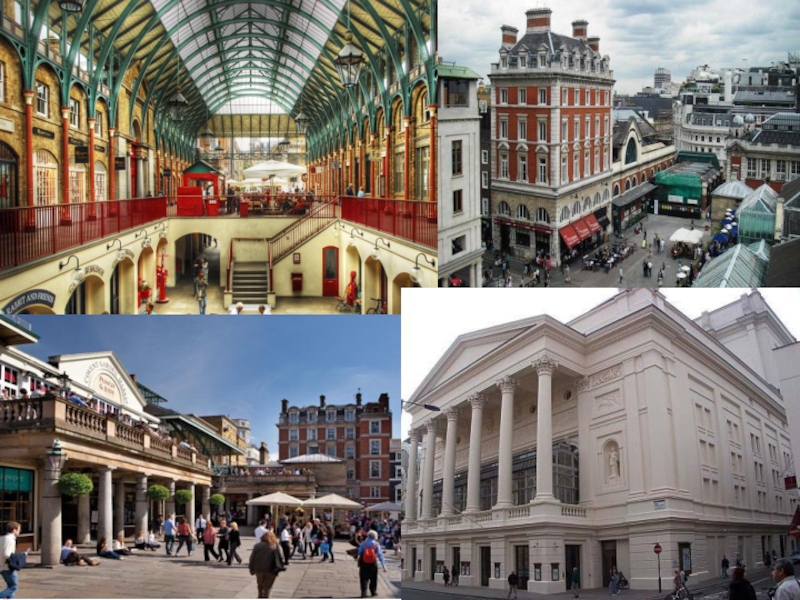
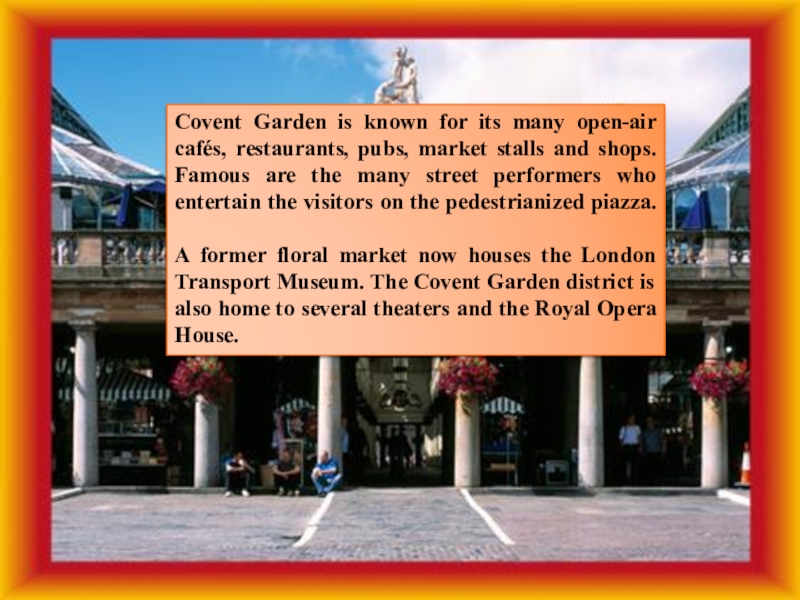
Слайд 25Covent Garden is known for its many open-air cafés, restaurants, pubs,
market stalls and shops. Famous are the many street performers who entertain the visitors on the pedestrianized piazza.
A former floral market now houses the London Transport Museum. The Covent Garden district is also home to several theaters and the Royal Opera House.
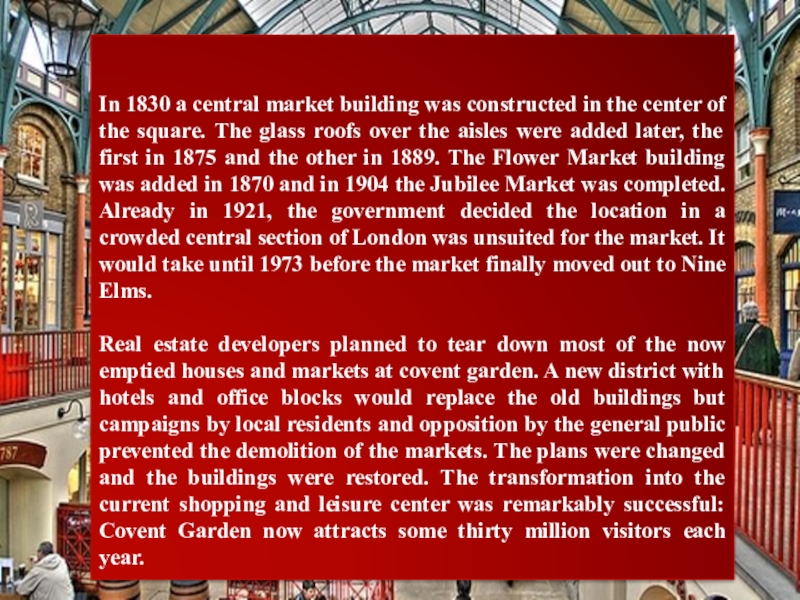
Слайд 26 In 1830 a central market building was constructed in the center
of the square. The glass roofs over the aisles were added later, the first in 1875 and the other in 1889. The Flower Market building was added in 1870 and in 1904 the Jubilee Market was completed. Already in 1921, the government decided the location in a crowded central section of London was unsuited for the market. It would take until 1973 before the market finally moved out to Nine Elms.
Real estate developers planned to tear down most of the now emptied houses and markets at covent garden. A new district with hotels and office blocks would replace the old buildings but campaigns by local residents and opposition by the general public prevented the demolition of the markets. The plans were changed and the buildings were restored. The transformation into the current shopping and leisure center was remarkably successful: Covent Garden now attracts some thirty million visitors each year.
Слайд 27Glossary
Monk [ ] – монарх:
Layout [ ] – планировка, проект:
Inaugurate [
] – открывать;
Bridle path [ ] – дорожка для верховой езды;
Venue [ ] – место для проведения встречи;
Soap box - импровизированная трибуна;
Pergola [ ] – беседка из вьющихся растений;
Сhase [ ] – охота;
Pavilion [ ] – корпус:
Mammal [ ]- млекопитающее;
Invertebrate [ ]- беспозвоночное животное;
Amphibian [ ] – земноводный;
Bandstand [ ] – эстрада, сцена для оркестра;
Rowboat [ ] – гребная шлюпка;
Paddle boat - водный велосипед;
Pedestrianized piazza [ ][ ] – пешеходная веранда;
Demolition [ ] - разрушение.
Bridle path [ ] – дорожка для верховой езды;
Venue [ ] – место для проведения встречи;
Soap box - импровизированная трибуна;
Pergola [ ] – беседка из вьющихся растений;
Сhase [ ] – охота;
Pavilion [ ] – корпус:
Mammal [ ]- млекопитающее;
Invertebrate [ ]- беспозвоночное животное;
Amphibian [ ] – земноводный;
Bandstand [ ] – эстрада, сцена для оркестра;
Rowboat [ ] – гребная шлюпка;
Paddle boat - водный велосипед;
Pedestrianized piazza [ ][ ] – пешеходная веранда;
Demolition [ ] - разрушение.
![GlossaryMonk [ ] – монарх:Layout [ ] – планировка, проект:Inaugurate [ ] – открывать;Bridle path [ ]](/img/tmb/4/385081/c707fc2efa990b71f0c1499d071b6c30-800x.jpg "Презентация по английскому языку на тему: Лондон GlossaryMonk [ ] – монарх:Layout [ ] – планировка, проект:Inaugurate [")