- Главная
- Разное
- Образование
- Спорт
- Естествознание
- Природоведение
- Религиоведение
- Французский язык
- Черчение
- Английский язык
- Астрономия
- Алгебра
- Биология
- География
- Геометрия
- Детские презентации
- Информатика
- История
- Литература
- Математика
- Музыка
- МХК
- Немецкий язык
- ОБЖ
- Обществознание
- Окружающий мир
- Педагогика
- Русский язык
- Технология
- Физика
- Философия
- Химия
- Шаблоны, фоны, картинки для презентаций
- Экология
- Экономика
Презентация, доклад по английскому языку на тему Kamchatka
Содержание
- 1. Презентация по английскому языку на тему Kamchatka
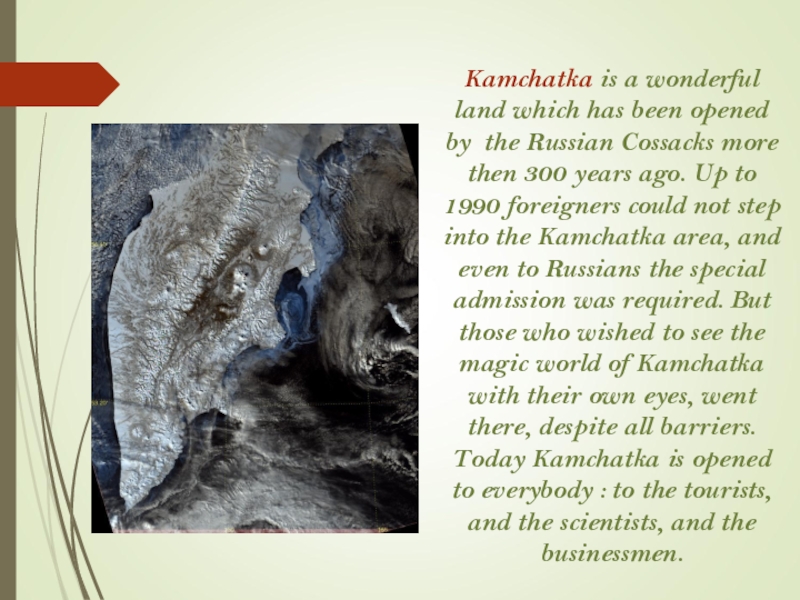
- 2. Kamchatka is a wonderful land which has
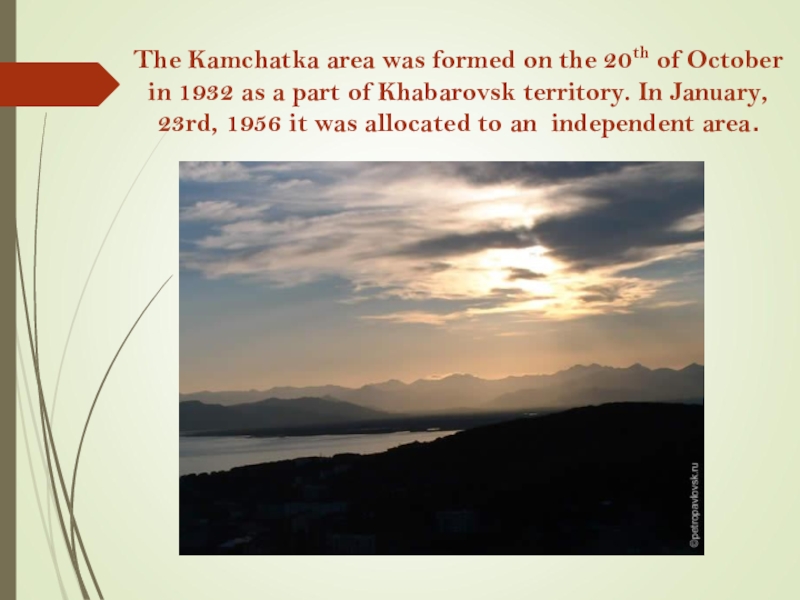
- 3. The Kamchatka area was formed on the
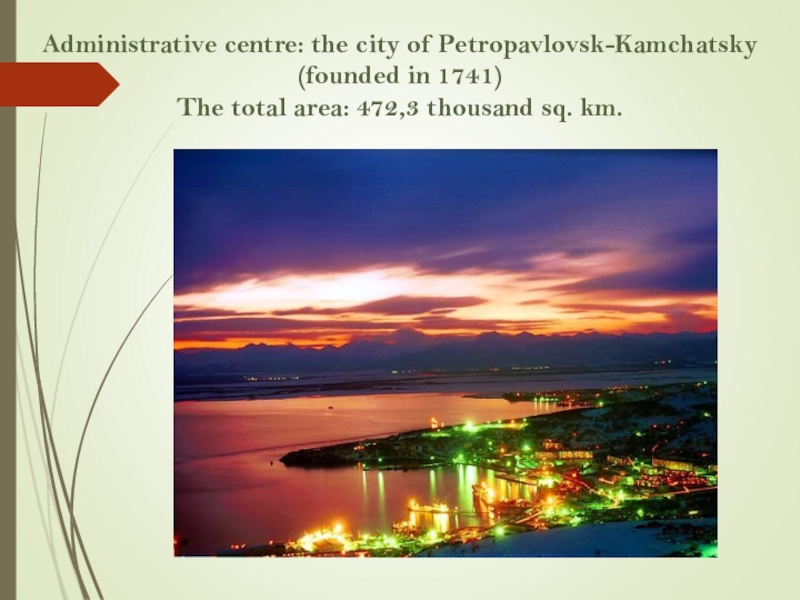
- 4. Administrative centre: the city of Petropavlovsk-Kamchatsky (founded in 1741)The total area: 472,3 thousand sq. km.
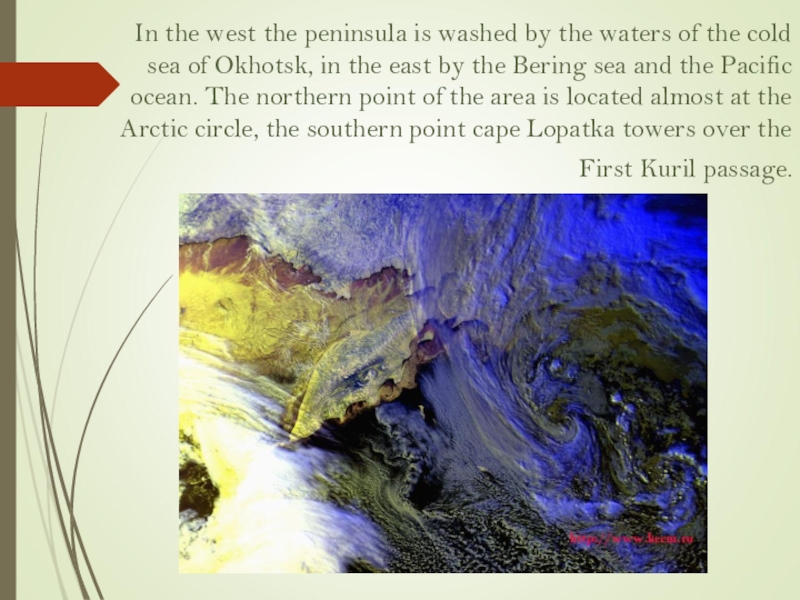
- 5. In the west the peninsula is washed
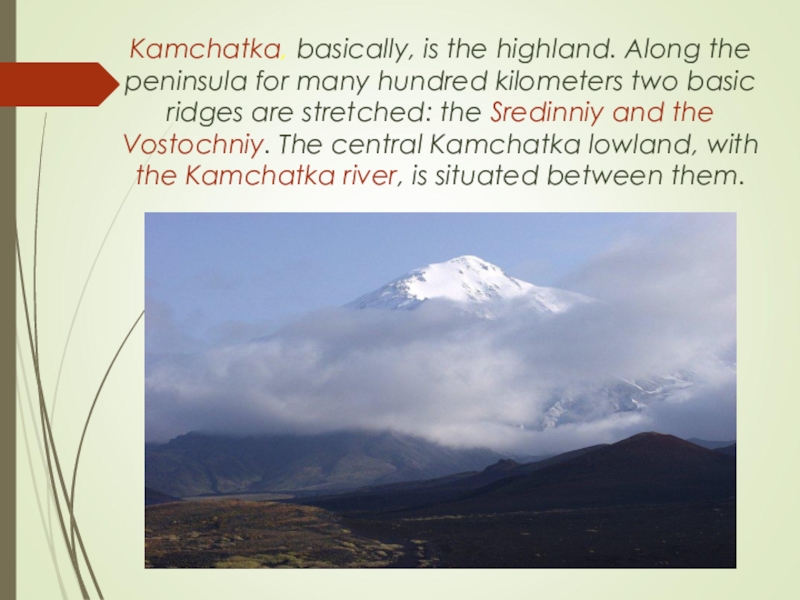
- 6. Kamchatka, basically, is the highland. Along the
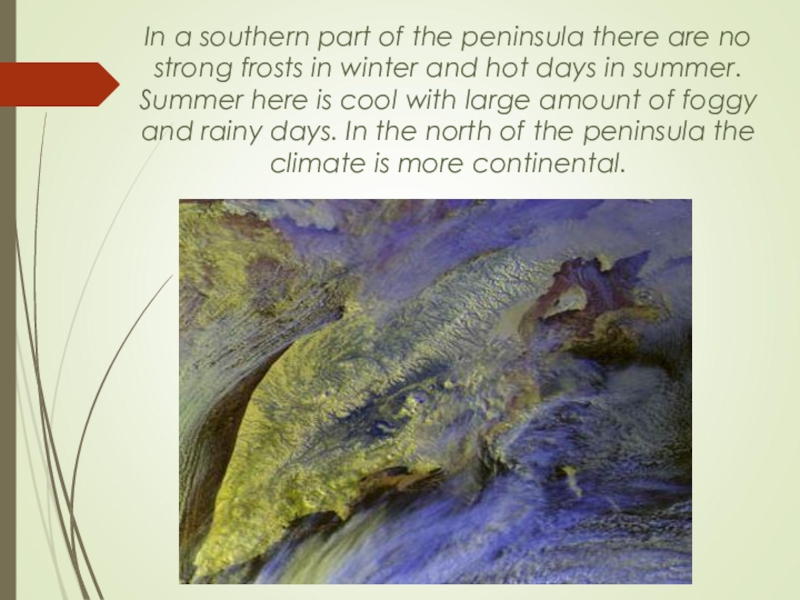
- 7. In a southern part of the peninsula
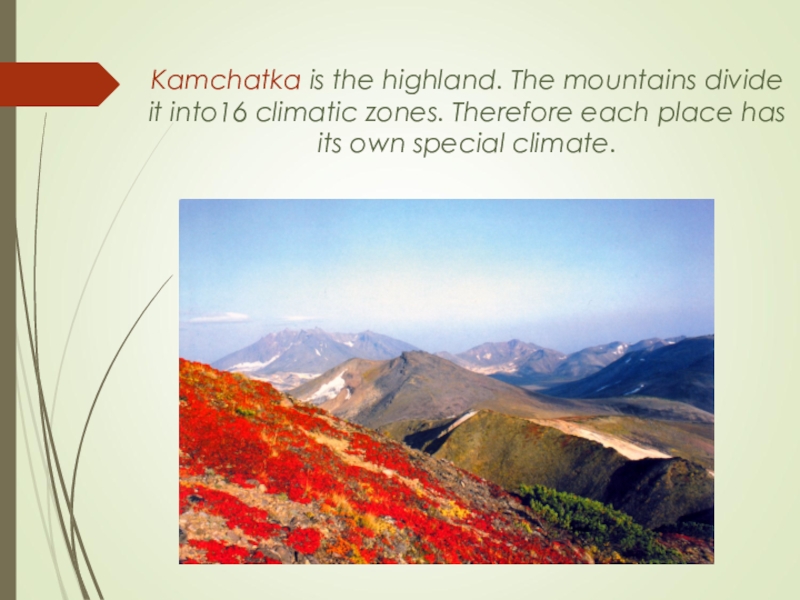
- 8. Kamchatka is the highland. The mountains divide
- 9. Kamchatka and its shelf possess considerable and
- 10. Natural resources of the Western Kamchatka are
- 11. The region has the richest stocks of
- 12. Wood and land resources, which can satisfy
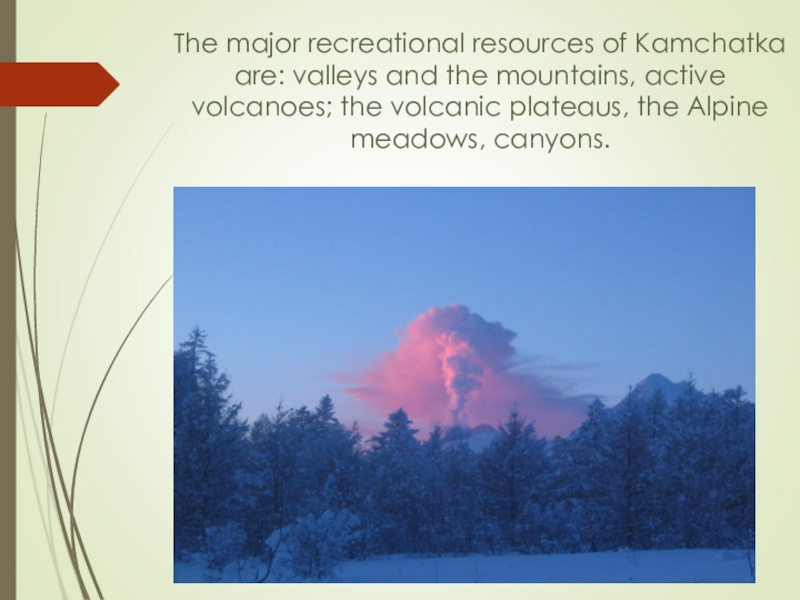
- 13. The major recreational resources of Kamchatka are:
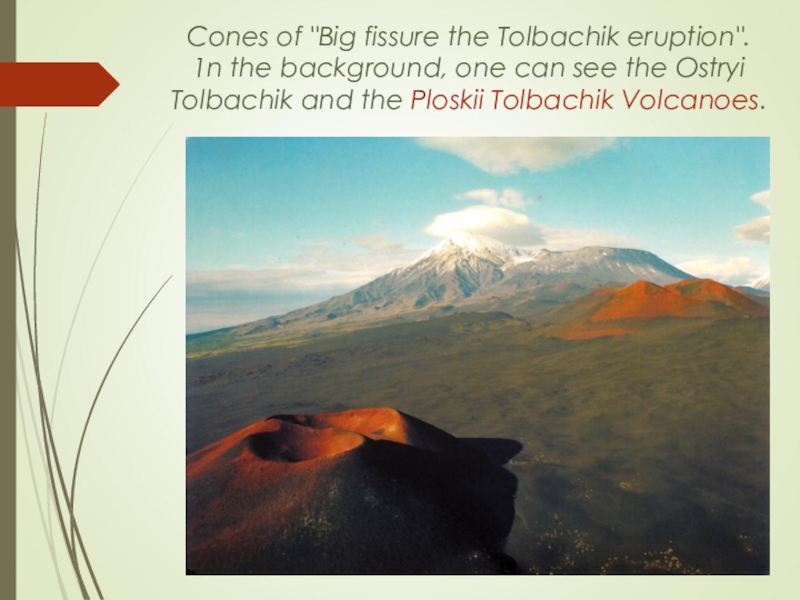
- 14. Cones of "Big fissure the Тolbachik eruption".1n
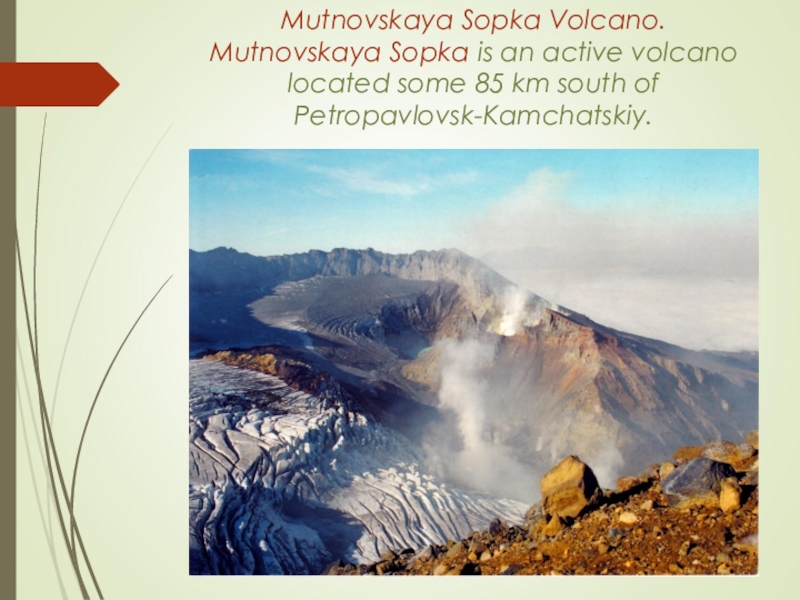
- 15. Mutnovskaya Sopka Volcano.Mutnovskaya Sopka is an active volcano located some 85 km south of Petropavlovsk-Kamchatskiy.
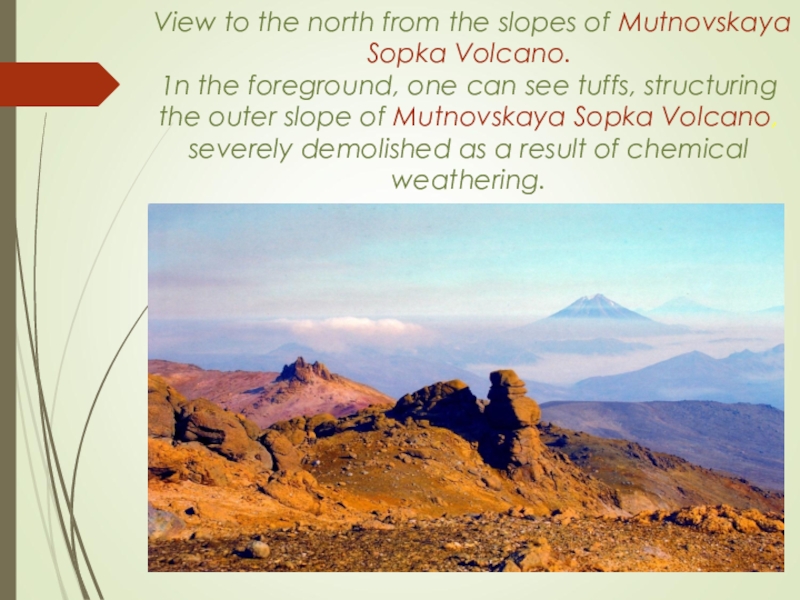
- 16. View to the north from the
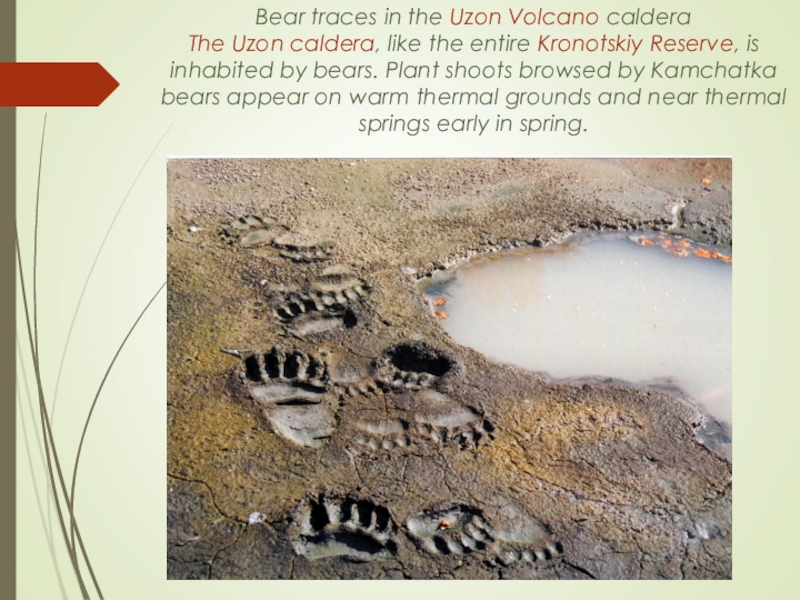
- 17. Bear traces in the Uzon Volcano calderaThe
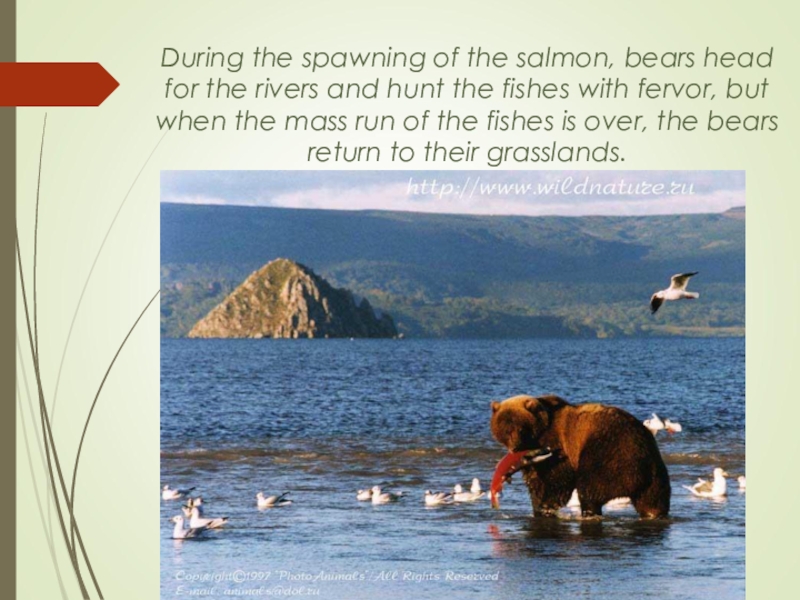
- 18. During the spawning of the salmon, bears
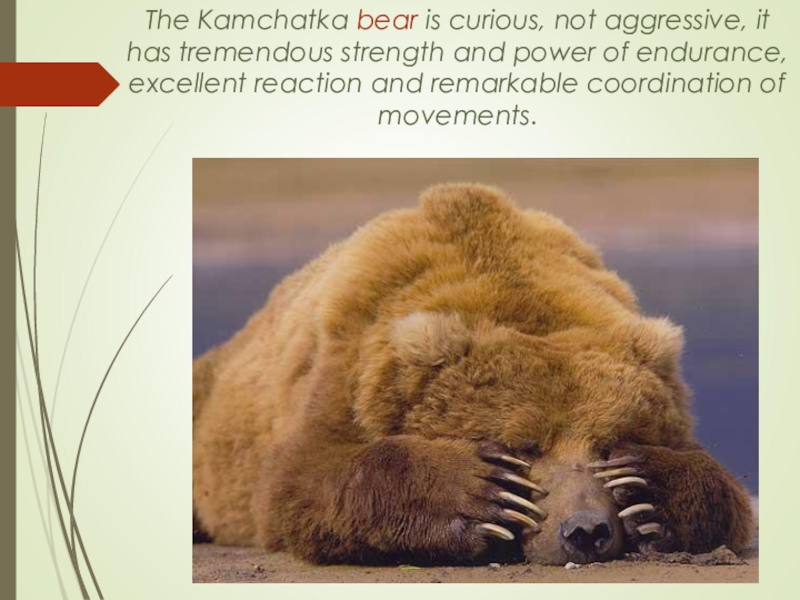
- 19. The Kamchatka bear is curious, not aggressive,
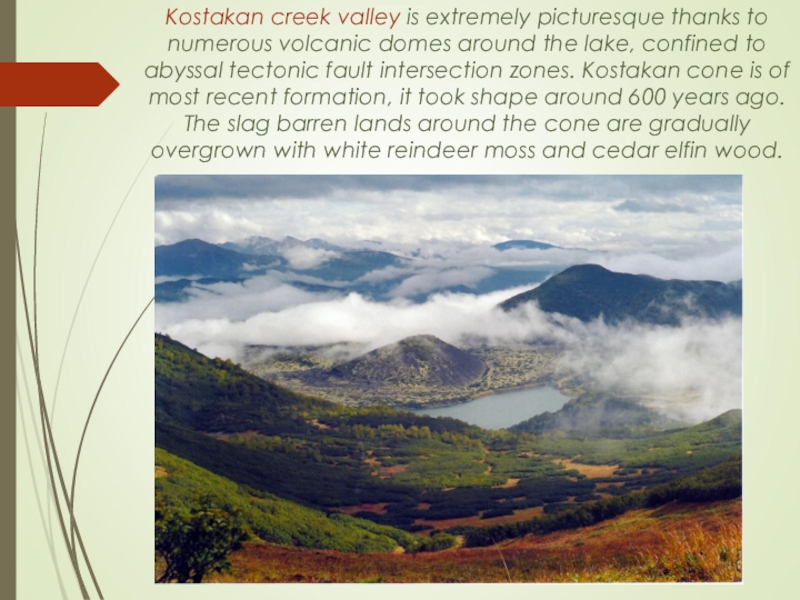
- 20. Кostakan creek valley is extremely picturesque thanks
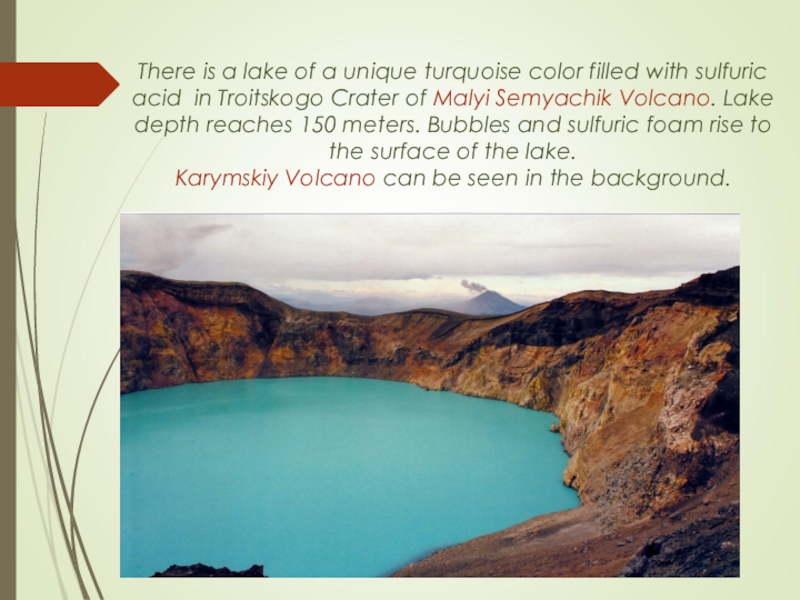
- 21. There is a lake of a unique
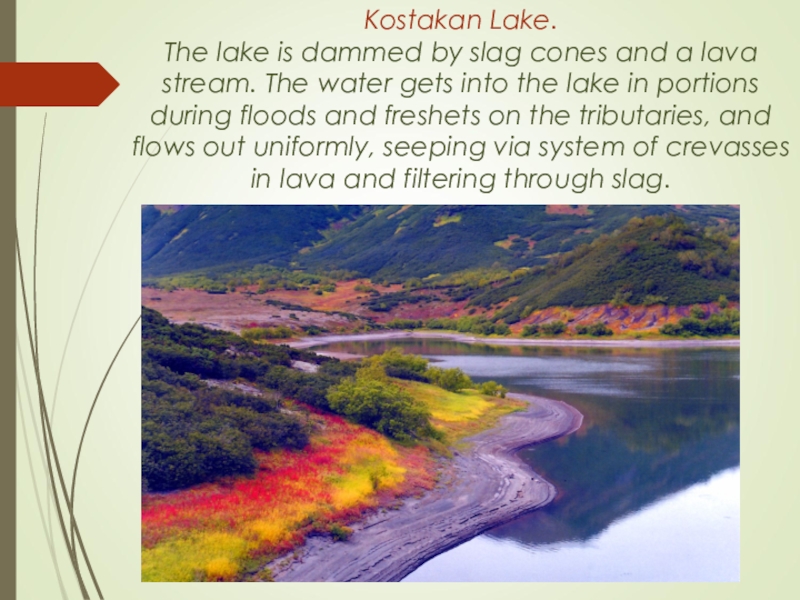
- 22. Кostakan Lake.The lake is dammed by slag
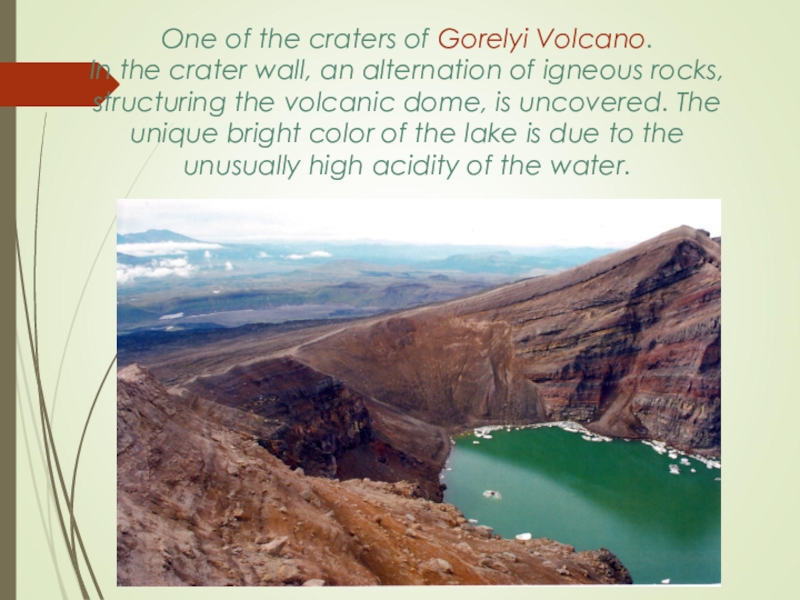
- 23. One of the craters of Gorelyi Volcano.In
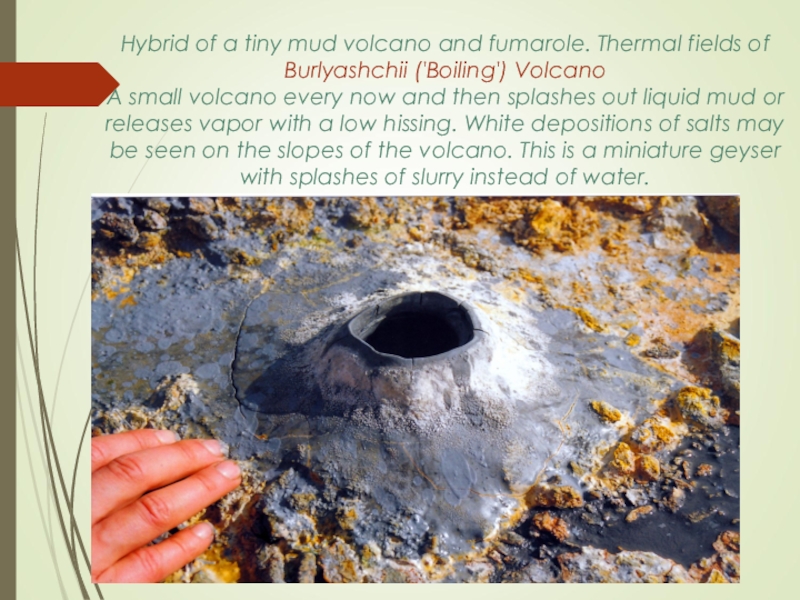
- 24. Hybrid of a tiny mud volcano and
- 25. СПИСОК ЛИТЕРАТУРЫ1. ГОСУДАРСТВЕННЫЙ ДОКЛАД «О СОСТОЯНИИ И
Kamchatka is a wonderful land which has been opened by the Russian Cossacks more then 300 years ago. Up to 1990 foreigners could not step into the Kamchatka area, and even to Russians the special admission
Слайд 1Камчатский Государственный Технический Университет
КОЛЛЕДЖ
Презентация
На тему: Камчатка.
Выполнил: Кокорин Д.И.
Слайд 2Kamchatka is a wonderful land which has been opened by the
Russian Cossacks more then 300 years ago. Up to 1990 foreigners could not step into the Kamchatka area, and even to Russians the special admission was required. But those who wished to see the magic world of Kamchatka with their own eyes, went there, despite all barriers. Today Kamchatka is opened to everybody : to the tourists, and the scientists, and the businessmen.
Слайд 3
The Kamchatka area was formed on the 20th of October in
1932 as a part of Khabarovsk territory. In January, 23rd, 1956 it was allocated to an independent area.
Слайд 4Administrative centre: the city of Petropavlovsk-Kamchatsky (founded in 1741)
The total area:
472,3 thousand sq. km.
Слайд 5In the west the peninsula is washed by the waters of
the cold sea of Okhotsk, in the east by the Bering sea and the Pacific ocean. The northern point of the area is located almost at the Arctic circle, the southern point cape Lopatka towers over the First Kuril passage.
Слайд 6Kamchatka, basically, is the highland. Along the peninsula for many hundred
kilometers two basic ridges are stretched: the Sredinniy and the Vostochniy. The central Kamchatka lowland, with the Kamchatka river, is situated between them.
Слайд 7In a southern part of the peninsula there are no strong
frosts in winter and hot days in summer. Summer here is cool with large amount of foggy and rainy days. In the north of the peninsula the climate is more continental.
Слайд 8
Kamchatka is the highland. The mountains divide it into16 climatic zones.
Therefore each place has its own special climate.
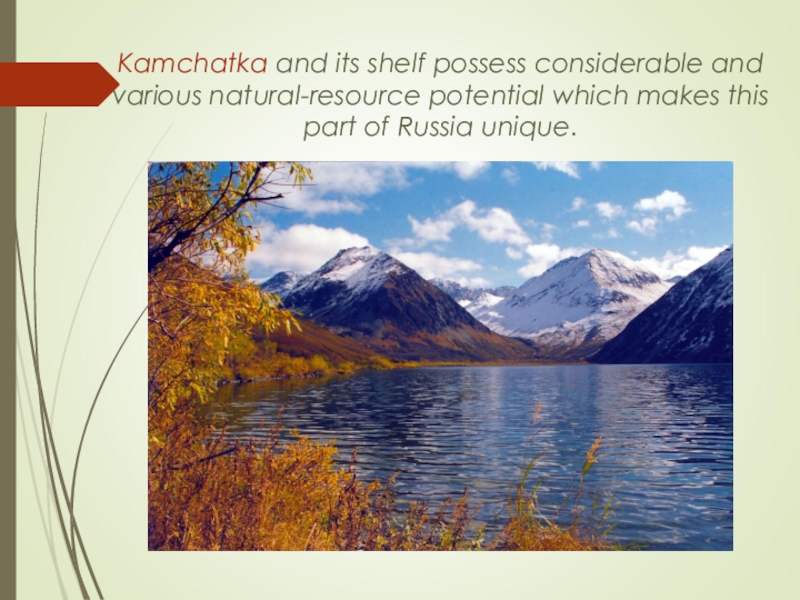
Слайд 9Kamchatka and its shelf possess considerable and various natural-resource potential which
makes this part of Russia unique.
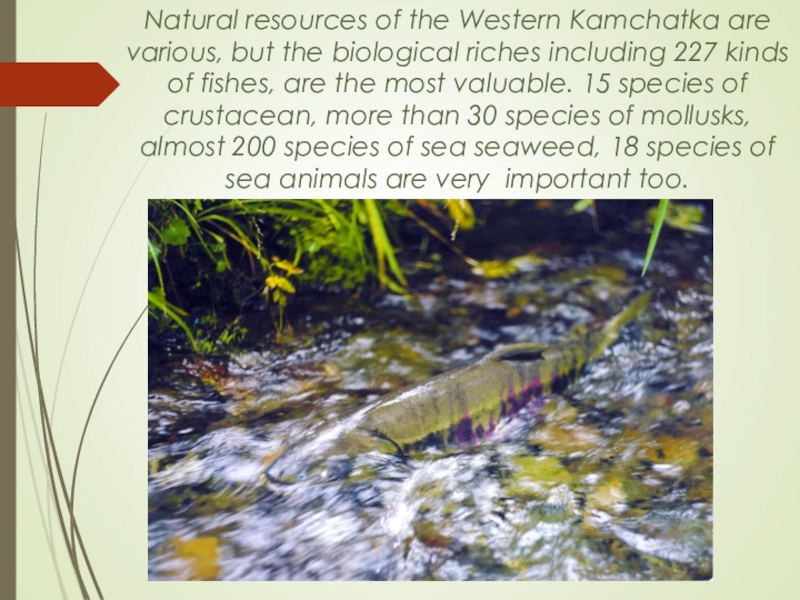
Слайд 10Natural resources of the Western Kamchatka are various, but the biological
riches including 227 kinds of fishes, are the most valuable. 15 species of crustacean, more than 30 species of mollusks, almost 200 species of sea seaweed, 18 species of sea animals are very important too.
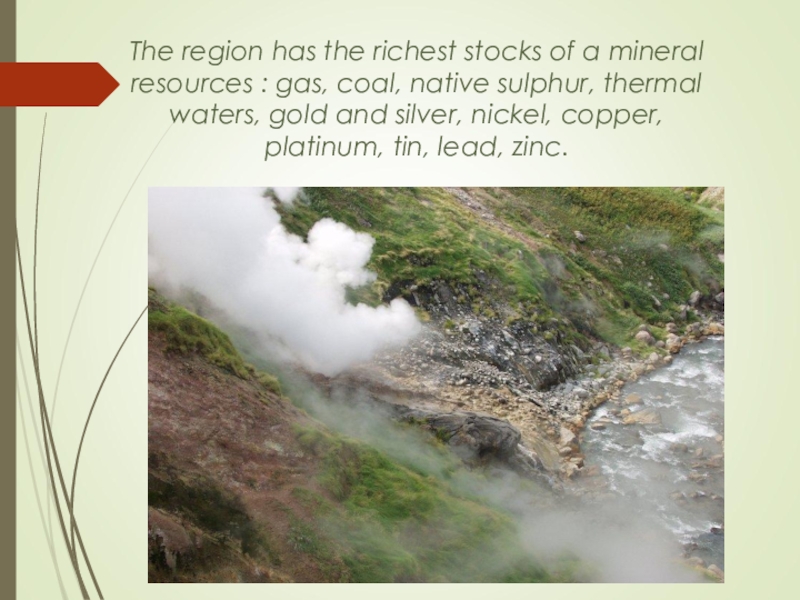
Слайд 11The region has the richest stocks of a mineral resources :
gas, coal, native sulphur, thermal waters, gold and silver, nickel, copper, platinum, tin, lead, zinc.
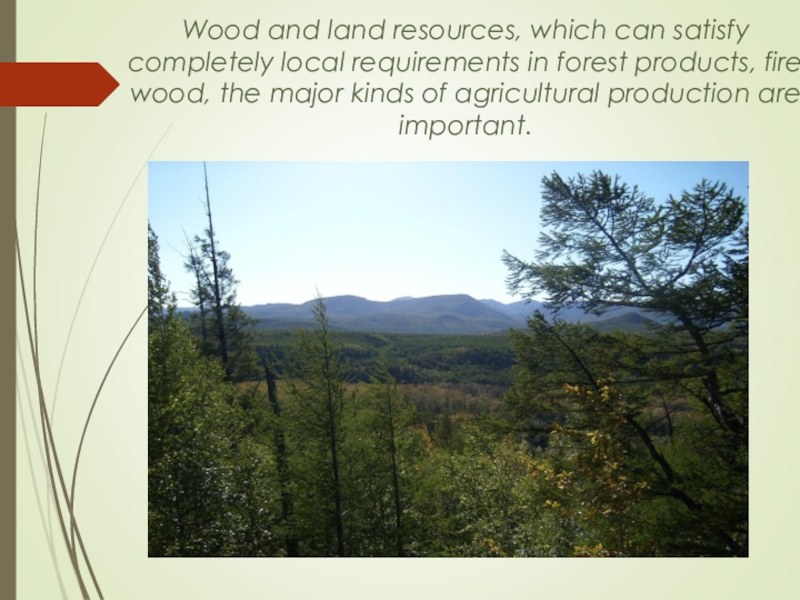
Слайд 12Wood and land resources, which can satisfy completely local requirements in
forest products, fire wood, the major kinds of agricultural production are important.
Слайд 13The major recreational resources of Kamchatka are: valleys and the mountains,
active volcanoes; the volcanic plateaus, the Alpine meadows, canyons.
Слайд 14Cones of "Big fissure the Тolbachik eruption".
1n the background, one can
see the Ostryi Tolbachik and the Ploskii Tolbachik Volcanoes.
Слайд 15Mutnovskaya Sopka Volcano.
Mutnovskaya Sopka is an active volcano located some 85
km south of Petropavlovsk-Kamchatskiy.
Слайд 16 View to the north from the slopes of Mutnovskaya Sopka
Volcano.
1n the foreground, one can see tuffs, structuring the outer slope of Мutnovskaya Sopka Volcano, severely demolished as a result of chemical weathering.
1n the foreground, one can see tuffs, structuring the outer slope of Мutnovskaya Sopka Volcano, severely demolished as a result of chemical weathering.
Слайд 17Bear traces in the Uzon Volcano caldera
The Uzon caldera, like the
entire Кronotskiy Reserve, is inhabited by bears. Plant shoots browsed by Kamchatka bears appear on warm thermal grounds and near thermal springs early in spring.
Слайд 18During the spawning of the salmon, bears head for the rivers
and hunt the fishes with fervor, but when the mass run of the fishes is over, the bears return to their grasslands.
Слайд 19The Kamchatka bear is curious, not aggressive, it has tremendous strength
and power of endurance, excellent reaction and remarkable coordination of movements.
Слайд 20Кostakan creek valley is extremely picturesque thanks to numerous volcanic domes
around the lake, confined to abyssal tectonic fault intersection zones. Кostakan cone is of most recent formation, it took shape around 600 years ago. The slag barren lands around the cone are gradually overgrown with white reindeer moss and cedar elfin wood.
Слайд 21There is a lake of a unique turquoise color filled with
sulfuric acid in Тroitskogo Crater of Мalyi Semyachik Volcano. Lake depth reaches 150 meters. Bubbles and sulfuric foam rise to the surface of the lake.
Кarymskiy Volcano can be seen in the background.
Кarymskiy Volcano can be seen in the background.
Слайд 22Кostakan Lake.
The lake is dammed by slag cones and a lava
stream. The water gets into the lake in portions during floods and freshets on the tributaries, and flows out uniformly, seeping via system of crevasses in lava and filtering through slag.
Слайд 23One of the craters of Gorelyi Volcano.
In the crater wall, an
alternation of igneous rocks, structuring the volcanic dome, is uncovered. The unique bright color of the lake is due to the unusually high acidity of the water.
Слайд 24
Hybrid of a tiny mud volcano and fumarole. Thermal fields of
Вurlyashchii ('Boiling') Volcano
A small volcano every now and then splashes out liquid mud or releases vapor with a low hissing. White depositions of salts may be seen on the slopes of the volcano. This is a miniature geyser with splashes of slurry instead of water.
A small volcano every now and then splashes out liquid mud or releases vapor with a low hissing. White depositions of salts may be seen on the slopes of the volcano. This is a miniature geyser with splashes of slurry instead of water.
Слайд 25СПИСОК ЛИТЕРАТУРЫ
1. ГОСУДАРСТВЕННЫЙ ДОКЛАД «О СОСТОЯНИИ И ОБ ОХРАНЕ ОКРУЖАЮЩЕЙ СРЕДЫ
КАМЧАТСКОЙ ОБЛАСТИ И КОРЯКСКОГО АВТОНОМНОГО ОКРУГА В 2003 ГОДУ». – ПЕТРОПАВЛОВСК-КАМЧАТСКИЙ: УПРАВЛЕНИЕ ПРИРОДНЫХ РЕСУРСОВ И ОХРАНЫ ОКРУЖАЮЩЕЙ СРЕДЫ МПР РОССИИ ПО КАМЧАТСКОЙ ОБЛАСТИ И КОРЯКСКОМУ АВТОНОМНОМУ ОКРУГУ, 2004. - 206С.
2. SALAFSKY, N., D. SALZER, J. ERVIN, T. BOUCHER, AND W. OSTLIE. 2003. CONVENTIONS FOR DEFINING, NAMING, MEASURING, COMBINING, AND MAPPING THREATS IN CONSERVATION: AN INITIAL PROPOSAL FOR A STANDARD SYSTEM. DRAFT WORKING PAPER. - [ЭЛЕКТРОННЫЙ РЕСУРС]. РЕЖИМ ДОСТУПА WWW.CONSERVATIONMEASURES.ORG
3. PROPOSED TAXONOMY OF DIRECT THREATS 2005 - [ЭЛЕКТРОННЫЙ РЕСУРС]. РЕЖИМ ДОСТУПА FOSONLINE.ORG/CMP/TAX/
4. www.petropavlovsk.ru
5. WWW.KCCM.RU
2. SALAFSKY, N., D. SALZER, J. ERVIN, T. BOUCHER, AND W. OSTLIE. 2003. CONVENTIONS FOR DEFINING, NAMING, MEASURING, COMBINING, AND MAPPING THREATS IN CONSERVATION: AN INITIAL PROPOSAL FOR A STANDARD SYSTEM. DRAFT WORKING PAPER. - [ЭЛЕКТРОННЫЙ РЕСУРС]. РЕЖИМ ДОСТУПА WWW.CONSERVATIONMEASURES.ORG
3. PROPOSED TAXONOMY OF DIRECT THREATS 2005 - [ЭЛЕКТРОННЫЙ РЕСУРС]. РЕЖИМ ДОСТУПА FOSONLINE.ORG/CMP/TAX/
4. www.petropavlovsk.ru
5. WWW.KCCM.RU