administrative and political part of the UK.
- Главная
- Разное
- Образование
- Спорт
- Естествознание
- Природоведение
- Религиоведение
- Французский язык
- Черчение
- Английский язык
- Астрономия
- Алгебра
- Биология
- География
- Геометрия
- Детские презентации
- Информатика
- История
- Литература
- Математика
- Музыка
- МХК
- Немецкий язык
- ОБЖ
- Обществознание
- Окружающий мир
- Педагогика
- Русский язык
- Технология
- Физика
- Философия
- Химия
- Шаблоны, фоны, картинки для презентаций
- Экология
- Экономика
Презентация, доклад по английскому языку на тему Scotland
Содержание
- 1. Презентация по английскому языку на тему Scotland
- 2. It occupies the northern part of the
- 3. Fauna of Scotland
- 4. The wildlife of Scotland is typical of
- 5. The capital of Scotland is the city of Edinburgh
- 6. In August, the world's largest annual Edinburgh
- 7. CultureOf the folk instruments, the most famous
- 8. Some famous Scottish writers:Sir Walter Scott –
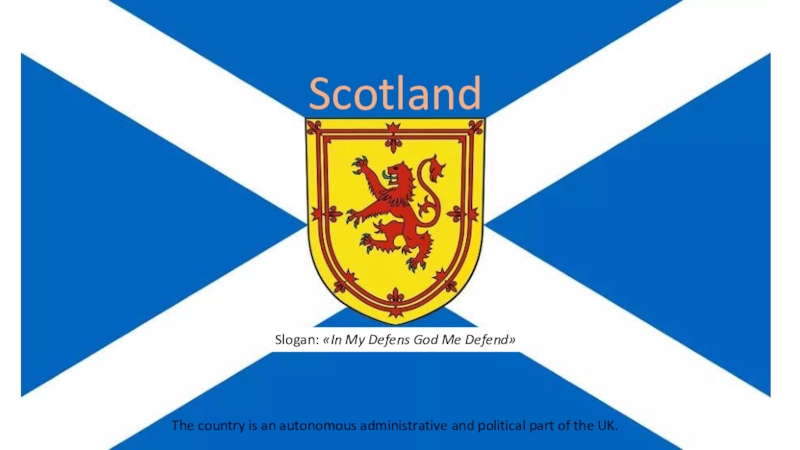
- 9. National symbols:The Apostle Andrew is considered the
- 10. The unicorn has traditionally been included in
- 11. Tartan - fabric with an ornament of
- 12. The thistle flower is a semi-official national
- 13. Thanks for attention
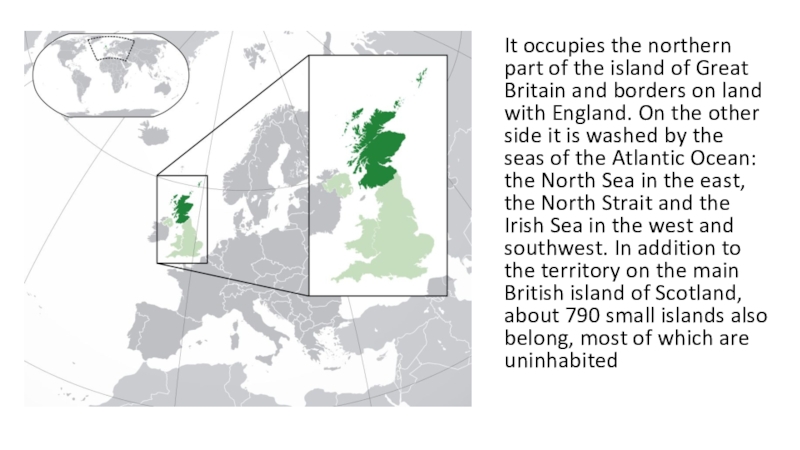
It occupies the northern part of the island of Great Britain and borders on land with England. On the other side it is washed by the seas of the Atlantic Ocean: the North Sea in the
Слайд 2It occupies the northern part of the island of Great Britain
and borders on land with England. On the other side it is washed by the seas of the Atlantic Ocean: the North Sea in the east, the North Strait and the Irish Sea in the west and southwest. In addition to the territory on the main British island of Scotland, about 790 small islands also belong, most of which are uninhabited
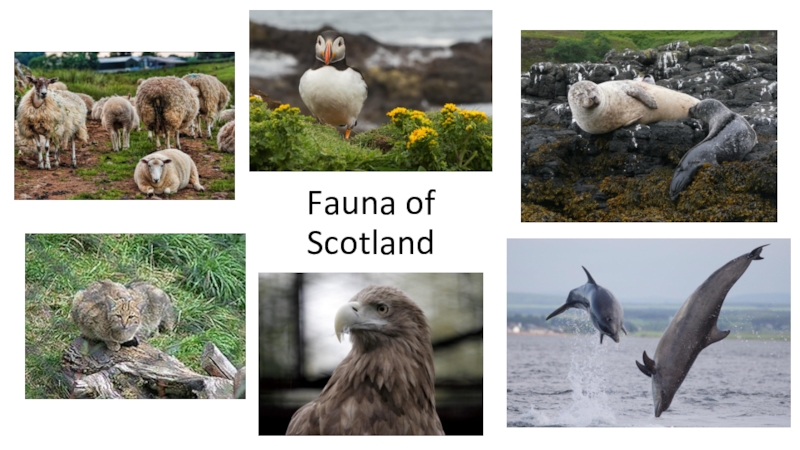
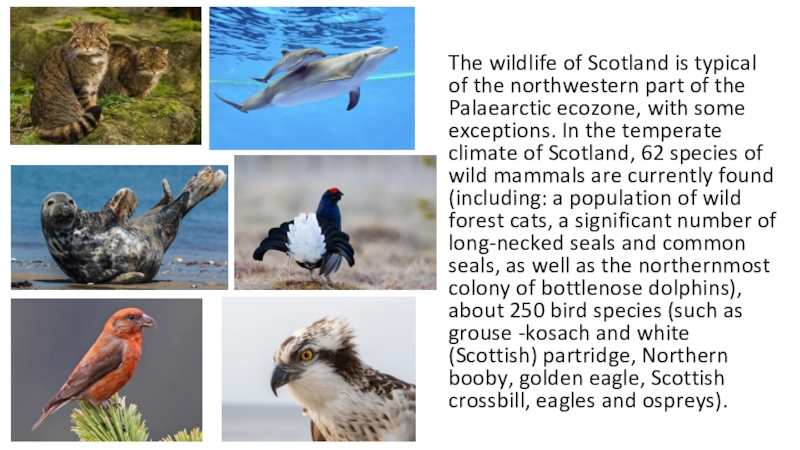
Слайд 4The wildlife of Scotland is typical of the northwestern part of
the Palaearctic ecozone, with some exceptions. In the temperate climate of Scotland, 62 species of wild mammals are currently found (including: a population of wild forest cats, a significant number of long-necked seals and common seals, as well as the northernmost colony of bottlenose dolphins), about 250 bird species (such as grouse -kosach and white (Scottish) partridge, Northern booby, golden eagle, Scottish crossbill, eagles and ospreys).
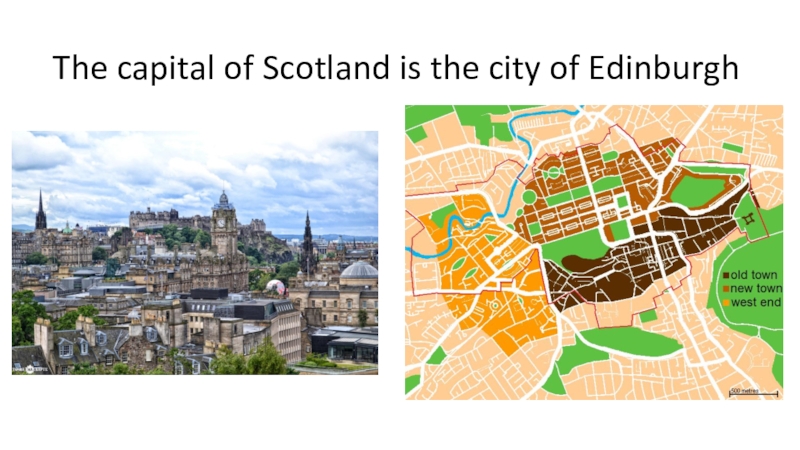
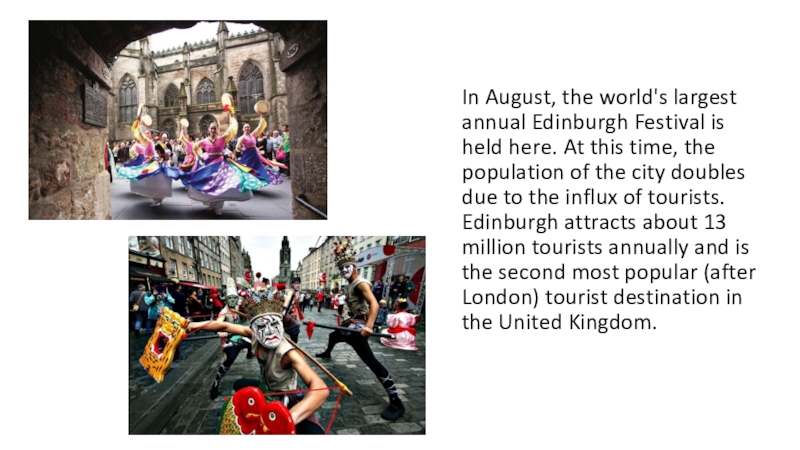
Слайд 6In August, the world's largest annual Edinburgh Festival is held here.
At this time, the population of the city doubles due to the influx of tourists. Edinburgh attracts about 13 million tourists annually and is the second most popular (after London) tourist destination in the United Kingdom.
Слайд 7Culture
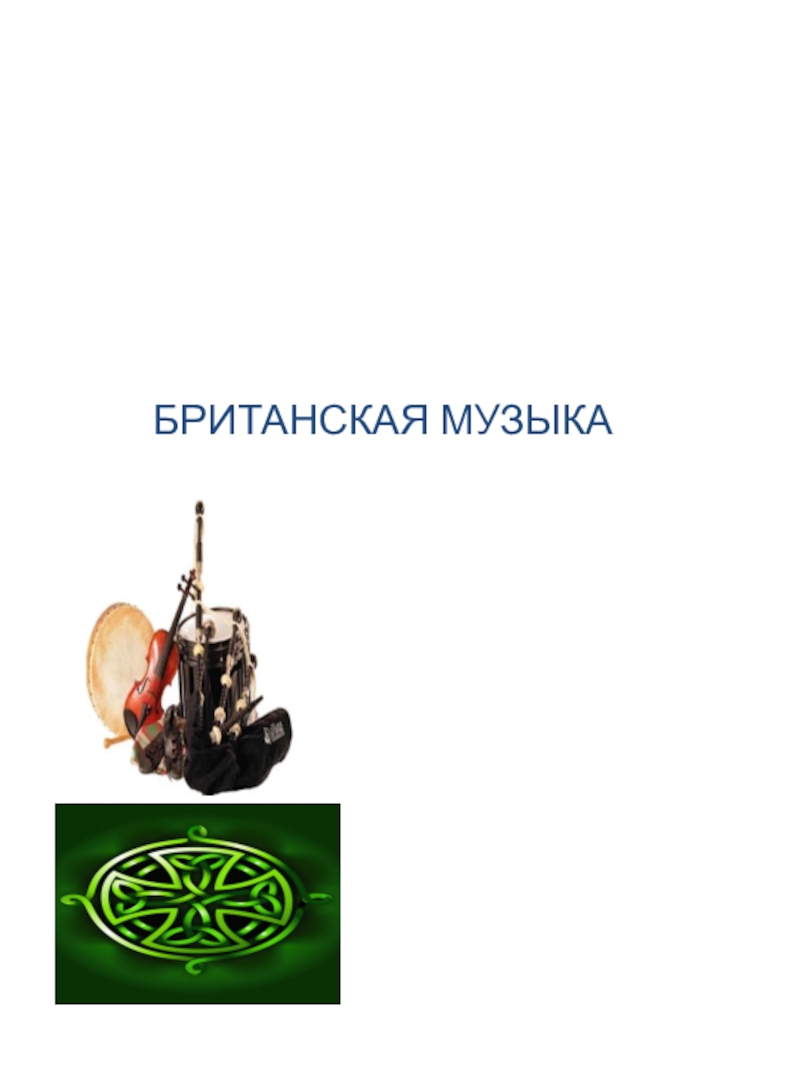
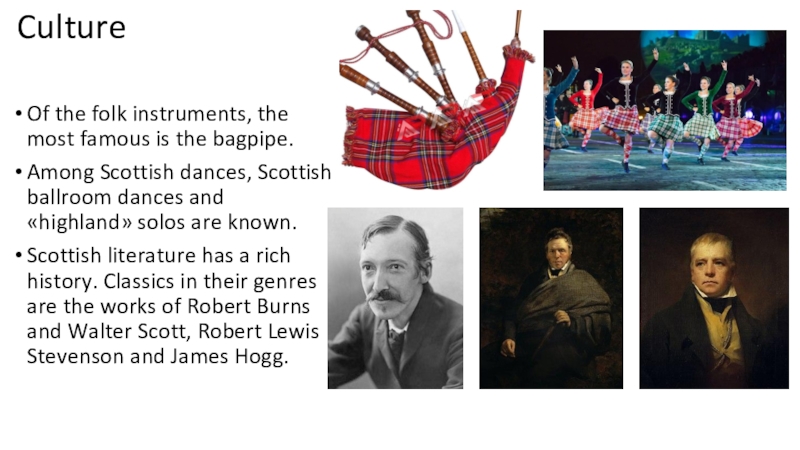
Of the folk instruments, the most famous is the bagpipe.
Among Scottish
dances, Scottish ballroom dances and «highland» solos are known.
Scottish literature has a rich history. Classics in their genres are the works of Robert Burns and Walter Scott, Robert Lewis Stevenson and James Hogg.
Scottish literature has a rich history. Classics in their genres are the works of Robert Burns and Walter Scott, Robert Lewis Stevenson and James Hogg.
Слайд 8Some famous Scottish writers:
Sir Walter Scott – «Aivengo», «Quentin Dorward», «Rob
Roy», and others;
Sir Arthur Conan Doyle – «Sherlock Holmes», «The Lost World»;
Robert Lewis Stevenson – «Treasure Island», «Dr. Jekyll and Mr. Hyde»;
Kenneth Graham – «Wind in the Willows»;
William McGonagall – «The Collapse of the Bridge over the River Thay», «Statue of Burns», «Poetic Pearls», «Execution of James Graham, Marquise Montrose», and others;
Irwin Welsh - «On the Needle», «Nightmares of the Marabou Stork» and others;
James Barry – «Peter Pan».
Sir Arthur Conan Doyle – «Sherlock Holmes», «The Lost World»;
Robert Lewis Stevenson – «Treasure Island», «Dr. Jekyll and Mr. Hyde»;
Kenneth Graham – «Wind in the Willows»;
William McGonagall – «The Collapse of the Bridge over the River Thay», «Statue of Burns», «Poetic Pearls», «Execution of James Graham, Marquise Montrose», and others;
Irwin Welsh - «On the Needle», «Nightmares of the Marabou Stork» and others;
James Barry – «Peter Pan».
Слайд 9National symbols:
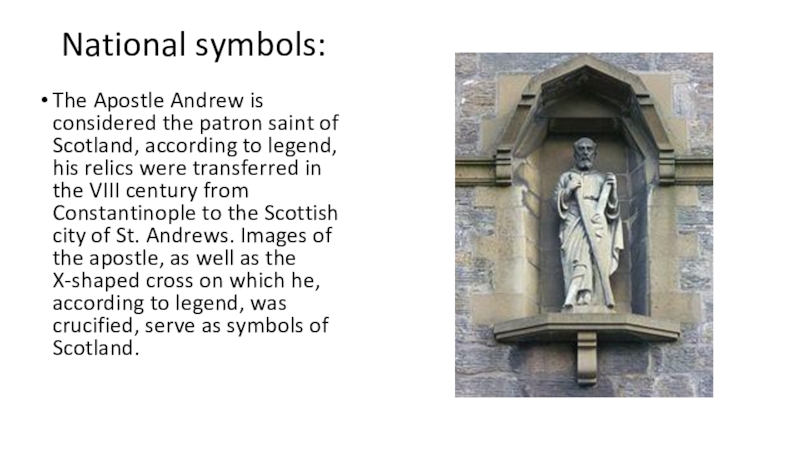
The Apostle Andrew is considered the patron saint of Scotland,
according to legend, his relics were transferred in the VIII century from Constantinople to the Scottish city of St. Andrews. Images of the apostle, as well as the X-shaped cross on which he, according to legend, was crucified, serve as symbols of Scotland.
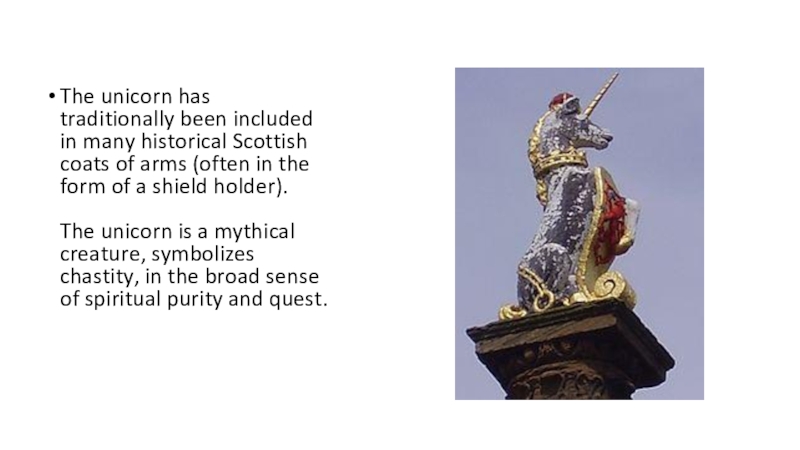
Слайд 10The unicorn has traditionally been included in many historical Scottish coats
of arms (often in the form of a shield holder).
The unicorn is a mythical creature, symbolizes chastity, in the broad sense of spiritual purity and quest.
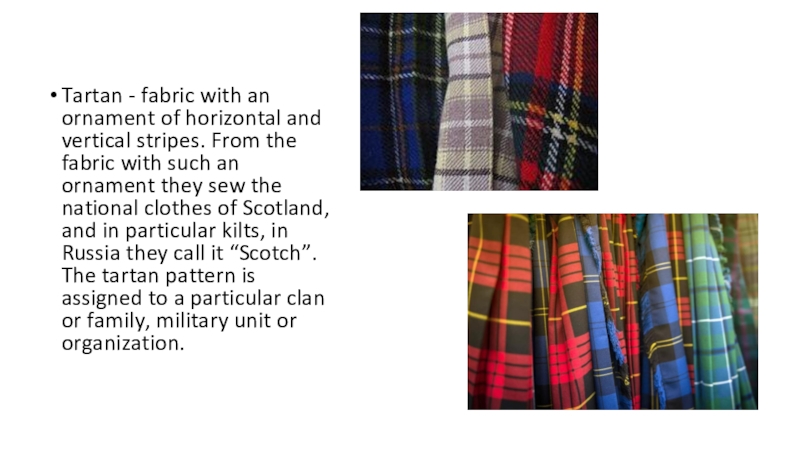
Слайд 11Tartan - fabric with an ornament of horizontal and vertical stripes.
From the fabric with such an ornament they sew the national clothes of Scotland, and in particular kilts, in Russia they call it “Scotch”. The tartan pattern is assigned to a particular clan or family, military unit or organization.
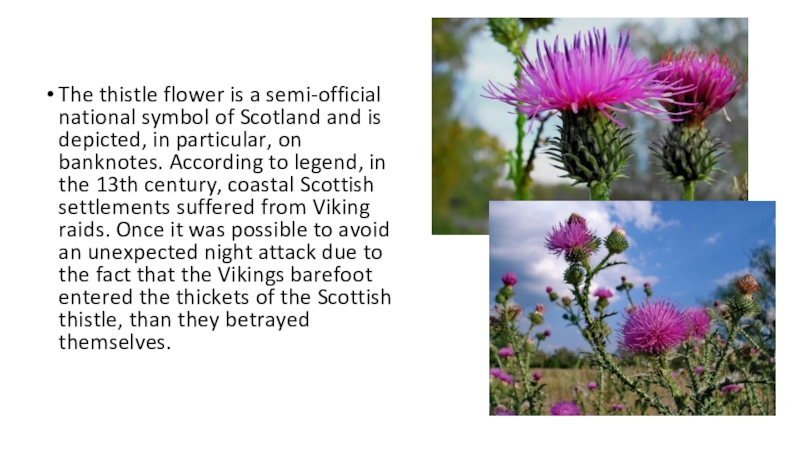
Слайд 12The thistle flower is a semi-official national symbol of Scotland and
is depicted, in particular, on banknotes. According to legend, in the 13th century, coastal Scottish settlements suffered from Viking raids. Once it was possible to avoid an unexpected night attack due to the fact that the Vikings barefoot entered the thickets of the Scottish thistle, than they betrayed themselves.