- Главная
- Разное
- Образование
- Спорт
- Естествознание
- Природоведение
- Религиоведение
- Французский язык
- Черчение
- Английский язык
- Астрономия
- Алгебра
- Биология
- География
- Геометрия
- Детские презентации
- Информатика
- История
- Литература
- Математика
- Музыка
- МХК
- Немецкий язык
- ОБЖ
- Обществознание
- Окружающий мир
- Педагогика
- Русский язык
- Технология
- Физика
- Философия
- Химия
- Шаблоны, фоны, картинки для презентаций
- Экология
- Экономика
Презентация, доклад по английскому языку на тему Middle English dialects
Содержание
- 1. Презентация по английскому языку на тему Middle English dialects
- 2. Middle English was the period of the
- 3. Слайд 3
- 4. Слайд 4
- 5. Слайд 5
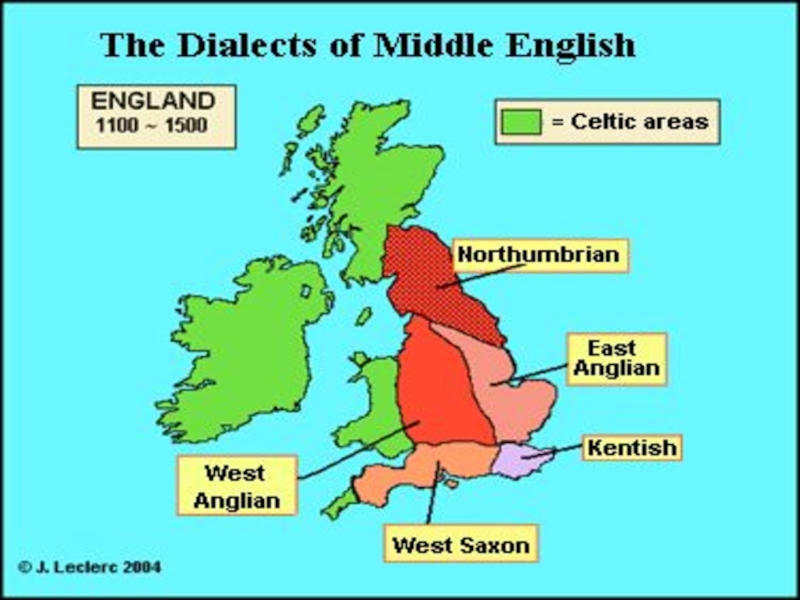
- 6. NORTHERN This dialect is the continuation of the
- 7. Characteristics. Velar stops are retained (i.e. not
- 8. KENTISH This is the most direct continuation
- 9. Characteristics The two most notable features
- 10. WEST MIDLAND This is the most conservative
- 11. Characteristics. The retention of the Old
- 12. EAST MIDLAND This is the dialect out of
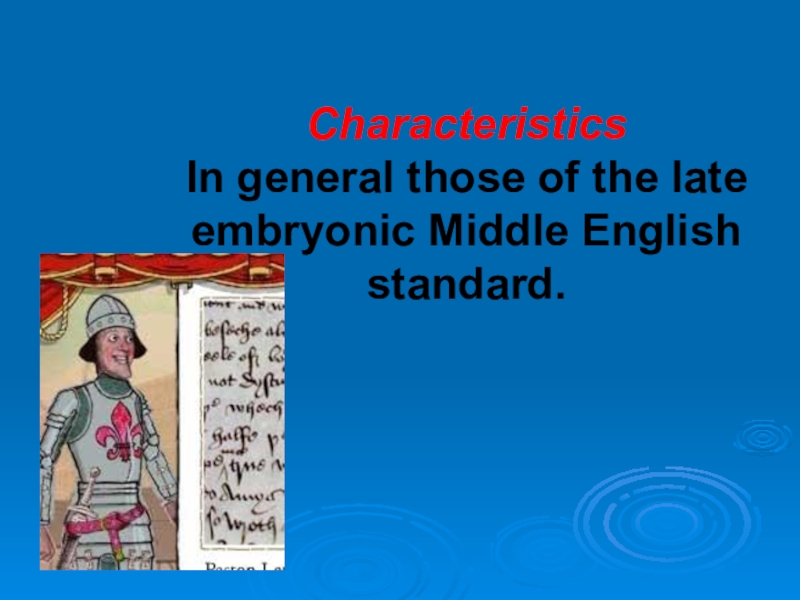
- 13. Characteristics In general those of the late embryonic Middle English standard.
- 14. Слайд 14
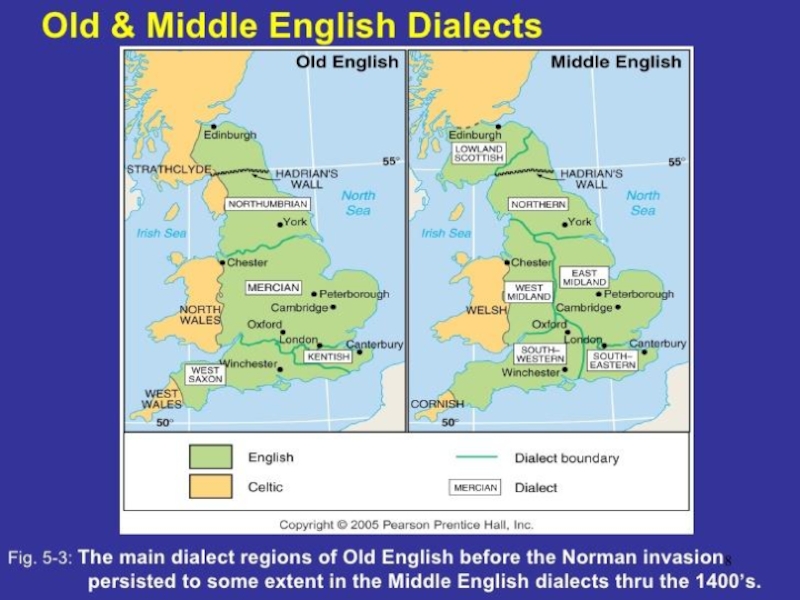
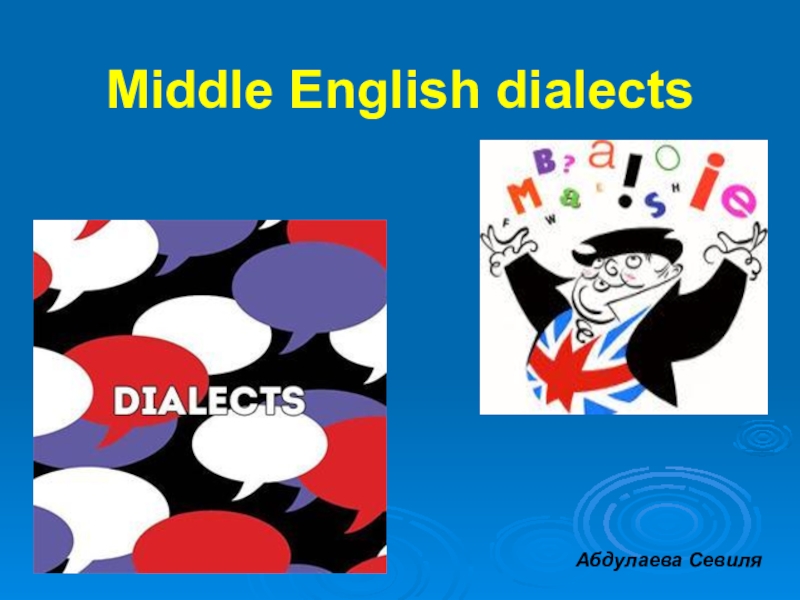
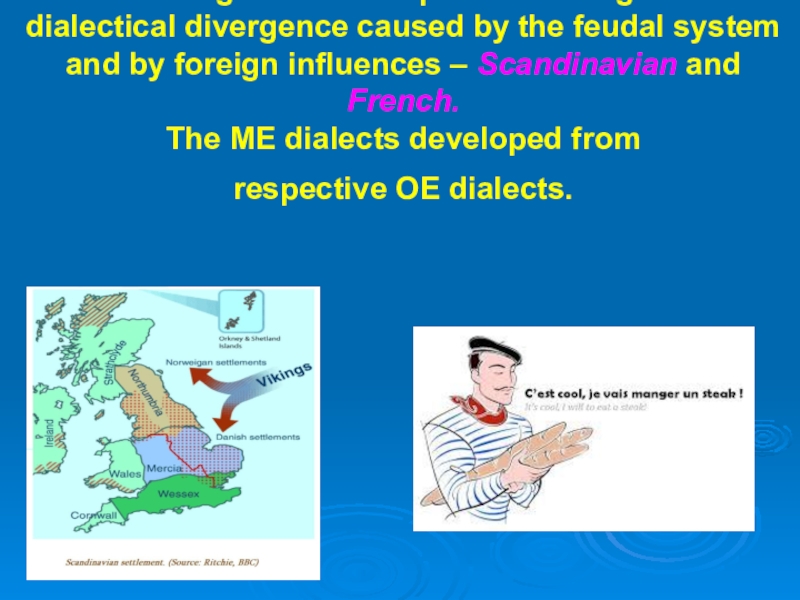
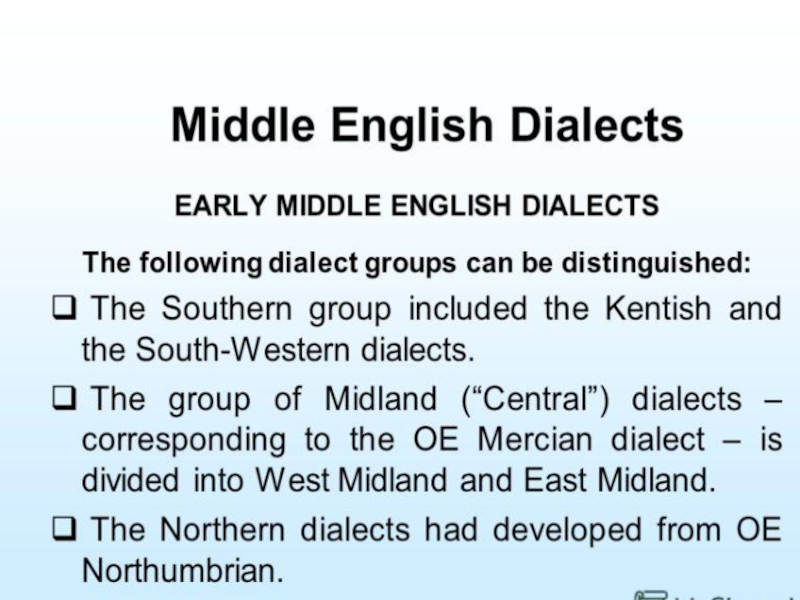
Middle English was the period of the greatest dialectical divergence caused by the feudal system and by foreign influences – Scandinavian and French. The ME dialects developed from respective OE dialects.
Слайд 2Middle English was the period of the greatest dialectical divergence caused
by the feudal system and by foreign influences – Scandinavian and French.
The ME dialects developed from
respective OE dialects.
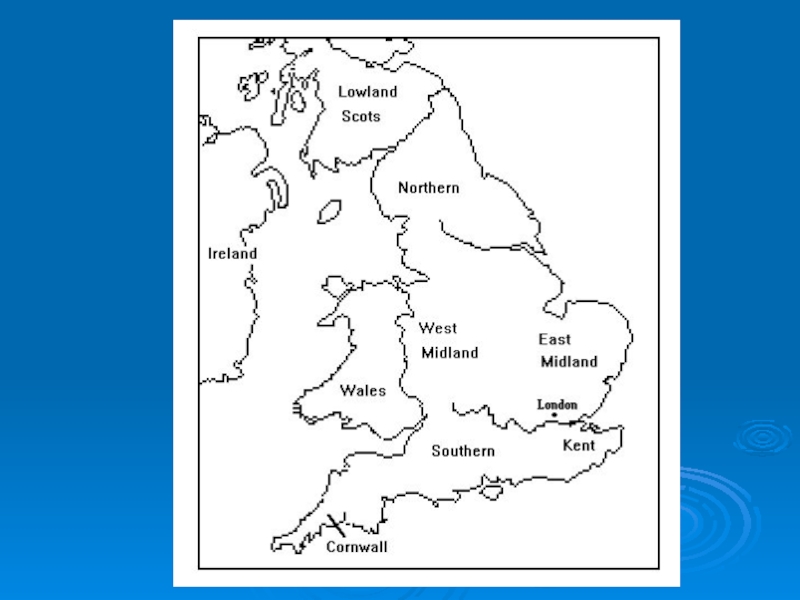
Слайд 6NORTHERN This dialect is the continuation of the Northumbrian variant of Old
English. Note that by Middle English times English had spread to (Lowland) Scotland and indeed led to a certain literary tradition developing there at the end of the Middle English period which has been continued up to the present time (with certain breaks, admittedly).
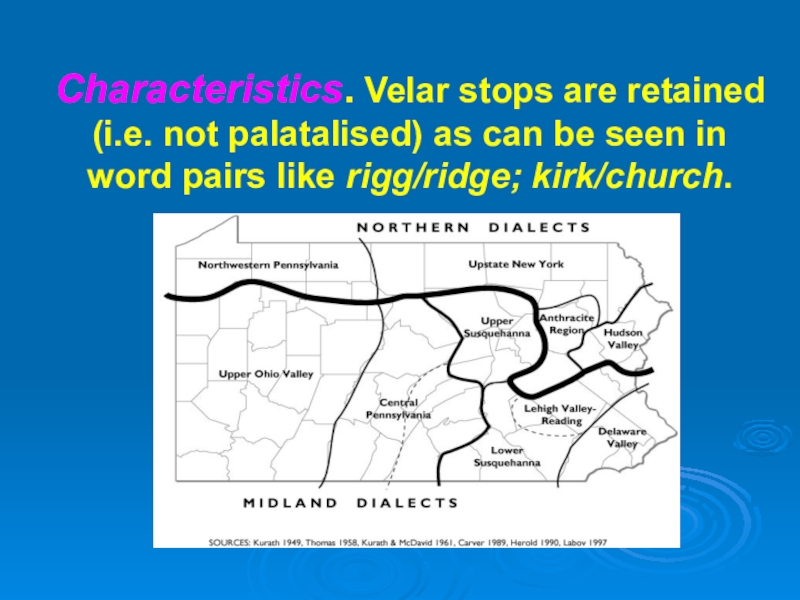
Слайд 7Characteristics. Velar stops are retained (i.e. not palatalised) as can be
seen in word pairs like rigg/ridge; kirk/church.
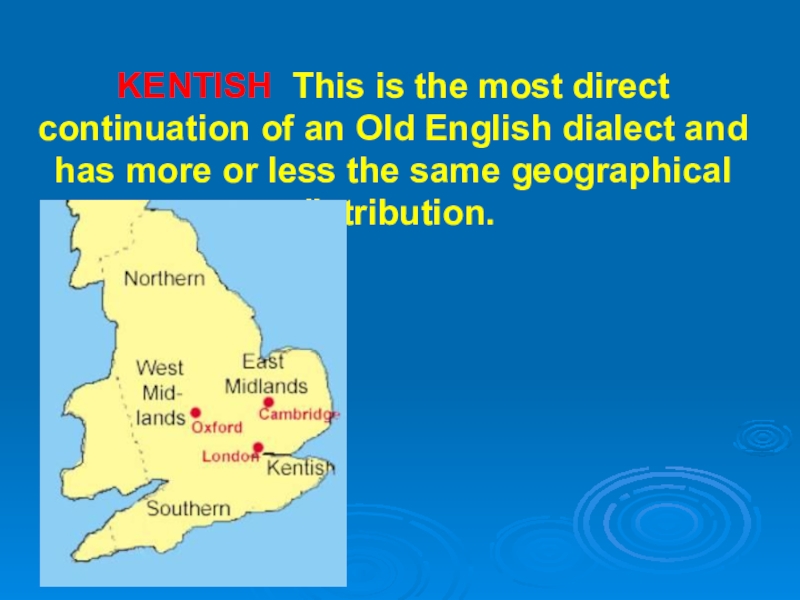
Слайд 8KENTISH This is the most direct continuation of an Old English
dialect and has more or less the same geographical distribution.
Слайд 9Characteristics The two most notable features of Kentish are (1) the
existence of /e:/ for Middle English /i:/ and (2) so-called "initial softening" which caused fricatives in word-initial position to be pronounced voiced as in vat, vane and vixen (female fox).
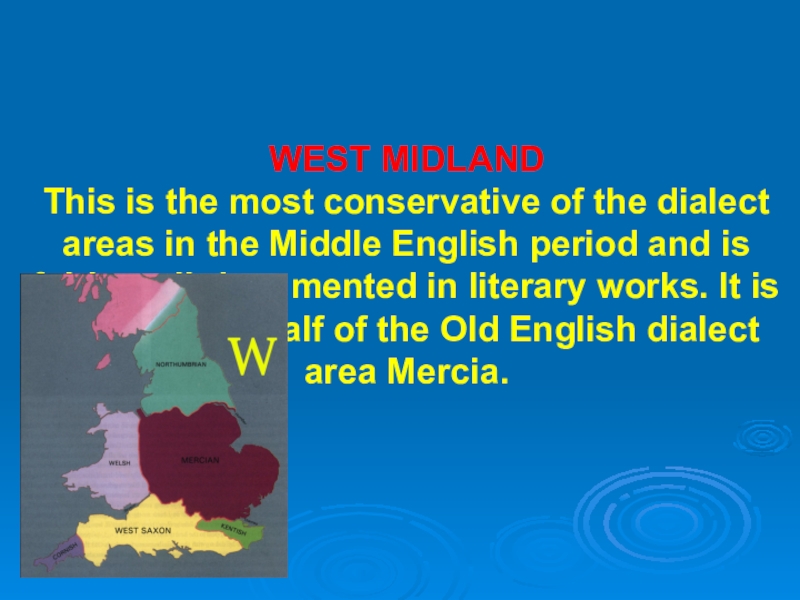
Слайд 10WEST MIDLAND This is the most conservative of the dialect areas in
the Middle English period and is fairly well-documented in literary works. It is the western half of the Old English dialect area Mercia.
Слайд 11Characteristics. The retention of the Old English rounded vowels /y:/ and
/ø:/ which in the East had been unrounded to /i:/ and /e:/ respectively.
Слайд 12EAST MIDLAND This is the dialect out of which the later standard
developed. To be precise the standard arose out of the London dialect of the late Middle English period. Note that the London dialect naturally developed into what is called Cockney today while the standard became less and less characteristic of a certain area and finally (after the 19th century) became the sociolect which is termed Received Pronunciation.