- Главная
- Разное
- Образование
- Спорт
- Естествознание
- Природоведение
- Религиоведение
- Французский язык
- Черчение
- Английский язык
- Астрономия
- Алгебра
- Биология
- География
- Геометрия
- Детские презентации
- Информатика
- История
- Литература
- Математика
- Музыка
- МХК
- Немецкий язык
- ОБЖ
- Обществознание
- Окружающий мир
- Педагогика
- Русский язык
- Технология
- Физика
- Философия
- Химия
- Шаблоны, фоны, картинки для презентаций
- Экология
- Экономика
Презентация, доклад по английскому языку на тему Old English Poetry - Beowulf
Содержание
- 1. Презентация по английскому языку на тему Old English Poetry - Beowulf
- 2. Слайд 2
- 3. The principles of Old English poetry are derived from the traditions of Germanic oral poetry.
- 4. There is no rhyme and no regular number of syllables in the lines.
- 5. Each line is divided into two
- 6. Caesura [si’zjuərə] - pause in a line of verse. Setton him to heafdon hilde-randas
- 7. - Each line has three stressed syllables beginning with the same consonant sound. (alliteration)
- 8. Alliteration – repetition of consonant sounds.
- 9. [b] Bore it bitterly he who bided
- 10. - The need to find words beginning
- 11. A kenning – a compound expression, often
- 12. Old English literature was naturally oral. The
- 13. The oldest poem in the English language
- 14. An epic poem – a long poem
- 15. “Beowulf” may have been written between circa
- 16. The name of the poet is unknown.
- 17. Слайд 17
- 18. Слайд 18
- 19. Слайд 19
- 20. Слайд 20
- 21. Слайд 21
- 22. Beowulf [‘beiəwulf] Hrothgar [‘hroθga:] Heorot [‘hεərət] Geat [‘geiət] Grendel [‘grendl]
- 23. Hrothgar, King of Danes, had built a
- 24. This joy was hateful to a monster
- 25. One day a young Viking, tall and
- 26. This was Beowulf. He was welcomed and
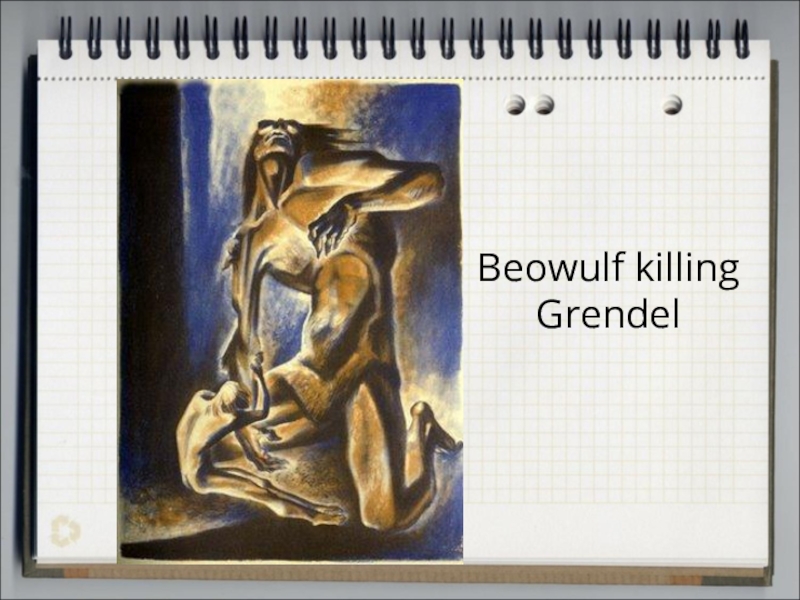
- 27. At night Grendel came to the palace.
- 28. Beowulf killing Grendel
- 29. The next day there was feasting and
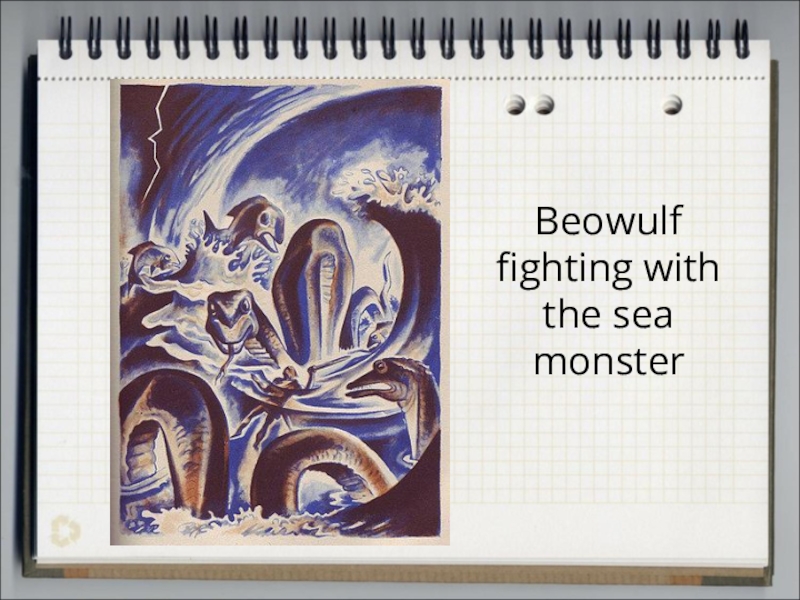
- 30. Beowulf followed her to the bottom of
- 31. Beowulf fighting with the sea monster
- 32. In later days Beowulf, now King of
- 33. He killed the animal, but was badly
- 34. Beowulf and the dragon
- 35. Post-reading exercises
- 36. Give the English equivalents:Могучий воин, приходить на
- 37. What characters do we meet in this
- 38. Does the translator of the poem use
The principles of Old English poetry are derived from the traditions of Germanic oral poetry.
Слайд 3 The principles of Old English poetry are derived from the
traditions of Germanic oral poetry.
Слайд 5 Each line is divided into two halves separated by a
caesura (цезура) and is represented by a gap on the page.
![Caesura [si’zjuərə] - pause in a line of verse. Setton him to heafdon hilde-randas](/img/thumbs/141dc584f455498e43819ae5d4407123-800x.jpg "Презентация по английскому языку на тему Old English Poetry - Beowulf Caesura [si’zjuərə] - pause in a line of verse. Setton him to heafdon hilde-randas")
Слайд 7- Each line has three stressed syllables beginning with the same
consonant sound. (alliteration)
Слайд 9[b] Bore it bitterly he who bided in darkness
[t] Twelve-winters’ time
torture suffered
[s] Soul crushing sorrow. Not seldom in private
[s] Soul crushing sorrow. Not seldom in private
![[b] Bore it bitterly he who bided in darkness[t] Twelve-winters’ time torture suffered[s] Soul crushing sorrow. Not](/img/tmb/4/336122/dcd48ccf75b96c678a3cd19f1bb73fbd-800x.jpg "Презентация по английскому языку на тему Old English Poetry - Beowulf [b] Bore it bitterly he who bided in darkness[t] Twelve-winters’ time")
Слайд 10- The need to find words beginning with the same sounds
often made the poet call a common thing by an uncommon name (a kenning) which he himself invented.
Слайд 11A kenning – a compound expression, often hyphenated, representing a single
noun.
a sea-rider (a sailor)
Слайд 12 Old English literature was naturally oral. The authors were unknown, and
their compositions were written down only at the end of the Middle Ages when the standard literary language emerged.
Слайд 13The oldest poem in the English language is “Beowulf” – an
epic poem with characteristics of elegy.
Слайд 14An epic poem – a long poem about heroic characters who
perform outstanding deeds.
Elegy [‘elidgi] – a poem of lament.
![An epic poem – a long poem about heroic characters who perform outstanding deeds. Elegy [‘elidgi]](/img/thumbs/1189c2b3482536441100b53e0d9f8119-800x.jpg "Презентация по английскому языку на тему Old English Poetry - Beowulf An epic poem – a long poem about heroic characters who")
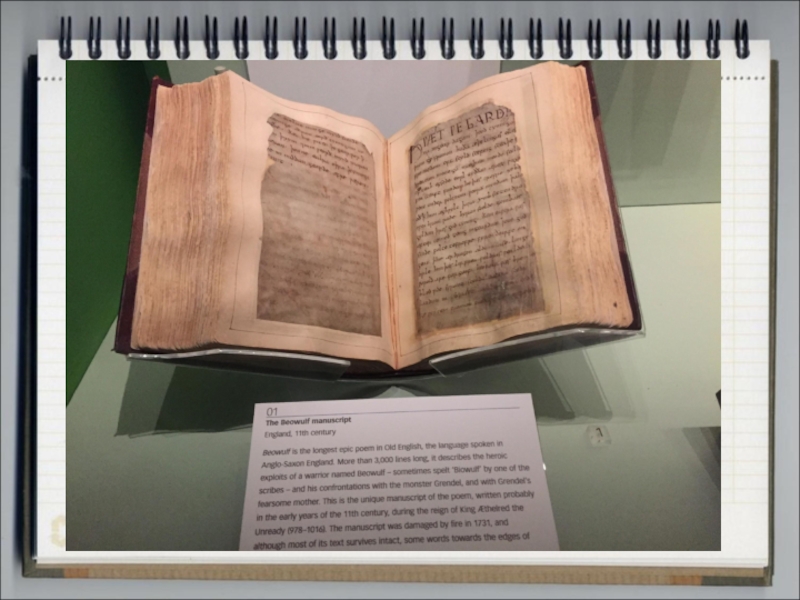
Слайд 15“Beowulf” may have been written between circa 700 AD and 1000
AD (the date of the manuscript).
Слайд 16The name of the poet is unknown. The poem consists of
more than 3000 lines and follows Beowulf (a brave warrior from Southern Sweden) from his heroic youth to an old age. It is a great adventure story and a deeply philosophical one.

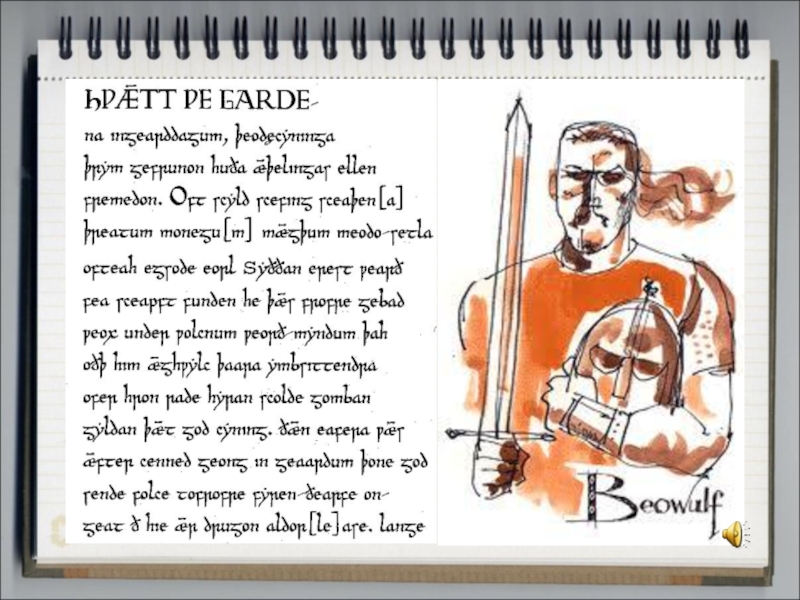
![Beowulf [‘beiəwulf] Hrothgar [‘hroθga:] Heorot [‘hεərət] Geat [‘geiət] Grendel [‘grendl]](/img/tmb/4/336122/e0db52831246f08f1a705374c5d30ada-800x.jpg "Презентация по английскому языку на тему Old English Poetry - Beowulf Beowulf [‘beiəwulf] Hrothgar [‘hroθga:] Heorot [‘hεərət] Geat [‘geiət] Grendel [‘grendl]")
Слайд 23Hrothgar, King of Danes, had built a beautiful palace called Heorot
where he and his subjects feasted and rejoiced every day.
Слайд 24This joy was hateful to a monster called Grendel who lived
in a lake. Night after night Grendel came to kill and eat Hrothgar’s men.
Слайд 25One day a young Viking, tall and strong as a young
oak tree, came over the sea to fight with the monster.
Слайд 26This was Beowulf. He was welcomed and feasted, and at night
he and his fourteen companions were left to sleep in the hall.
Слайд 27At night Grendel came to the palace. Beowulf seized him and
tore off one of Grendel’s arms. Grendel fled to the lake to die.
Слайд 29The next day there was feasting and joy in Heorot, but
when the warriors lay down to sleep, Grendel’s mother, the sea-wolf, came to revenge her son.
Слайд 30Beowulf followed her to the bottom of the lake where he
killed her with the magic sword which hung in the cave.
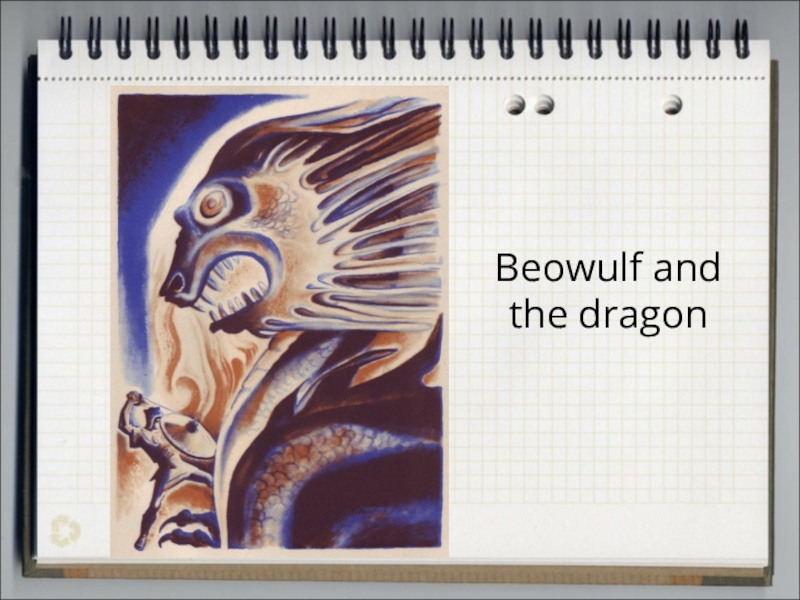
Слайд 32In later days Beowulf, now King of his people, had to
defend his country against a fire breathing dragon.
Слайд 33He killed the animal, but was badly wounded in the fight
and died. The poem ends with a sorrowful description of Beowulf’s funeral fire.
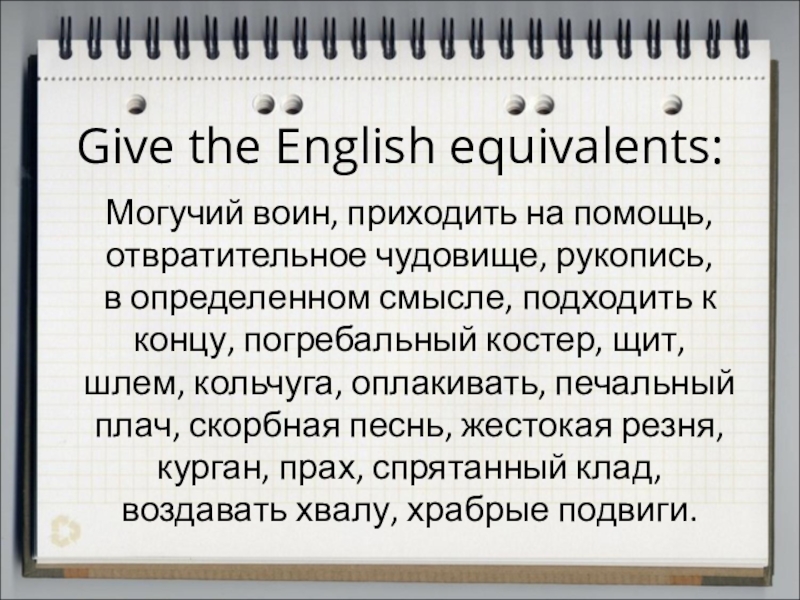
Слайд 36Give the English equivalents:
Могучий воин, приходить на помощь, отвратительное чудовище, рукопись,
в определенном смысле, подходить к концу, погребальный костер, щит, шлем, кольчуга, оплакивать, печальный плач, скорбная песнь, жестокая резня, курган, прах, спрятанный клад, воздавать хвалу, храбрые подвиги.
Слайд 37
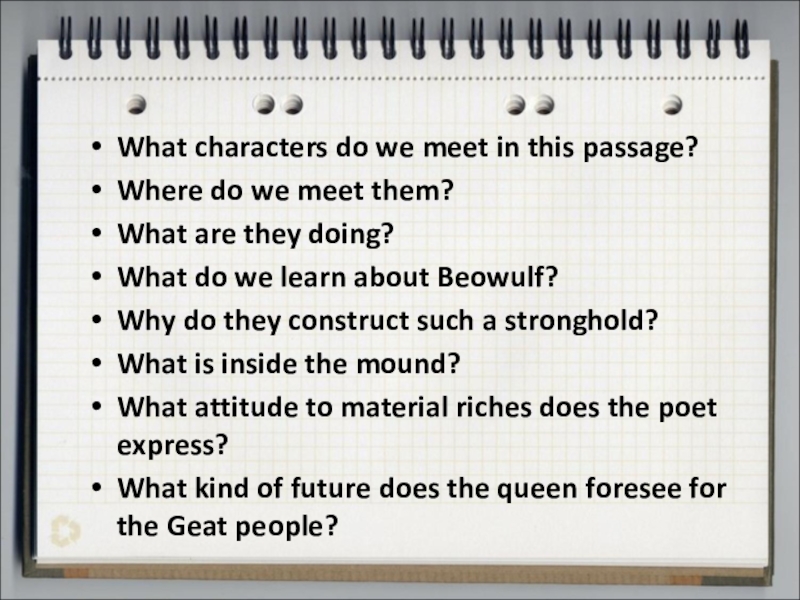
What characters do we meet in this passage?
Where do we meet
them?
What are they doing?
What do we learn about Beowulf?
Why do they construct such a stronghold?
What is inside the mound?
What attitude to material riches does the poet express?
What kind of future does the queen foresee for the Geat people?
What are they doing?
What do we learn about Beowulf?
Why do they construct such a stronghold?
What is inside the mound?
What attitude to material riches does the poet express?
What kind of future does the queen foresee for the Geat people?
Слайд 38
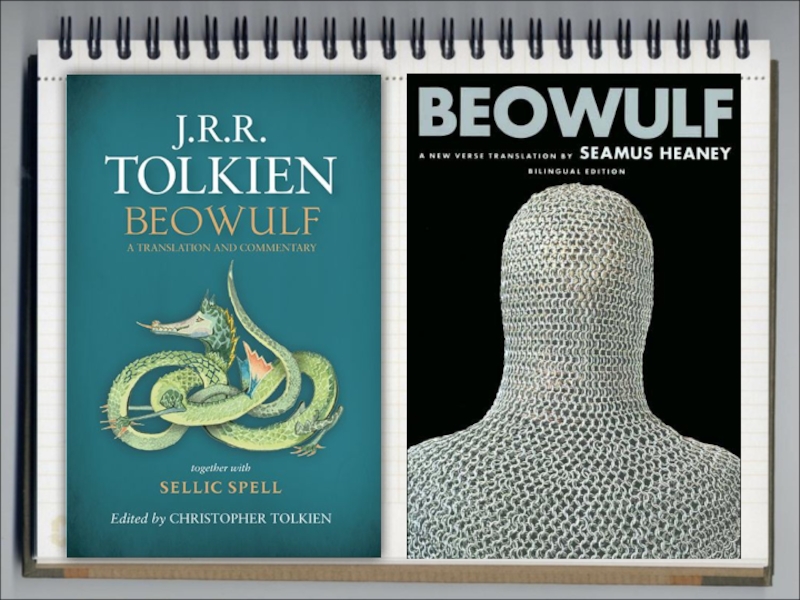
Does the translator of the poem use the same literary techniques
(alliteration, half-lines, kennings) as the ancient poet did? If yes, find any examples.