- Главная
- Разное
- Образование
- Спорт
- Естествознание
- Природоведение
- Религиоведение
- Французский язык
- Черчение
- Английский язык
- Астрономия
- Алгебра
- Биология
- География
- Геометрия
- Детские презентации
- Информатика
- История
- Литература
- Математика
- Музыка
- МХК
- Немецкий язык
- ОБЖ
- Обществознание
- Окружающий мир
- Педагогика
- Русский язык
- Технология
- Физика
- Философия
- Химия
- Шаблоны, фоны, картинки для презентаций
- Экология
- Экономика
Презентация, доклад по английскому языку на тему : Глобальные проблемы
Содержание
- 1. Презентация по английскому языку на тему : Глобальные проблемы
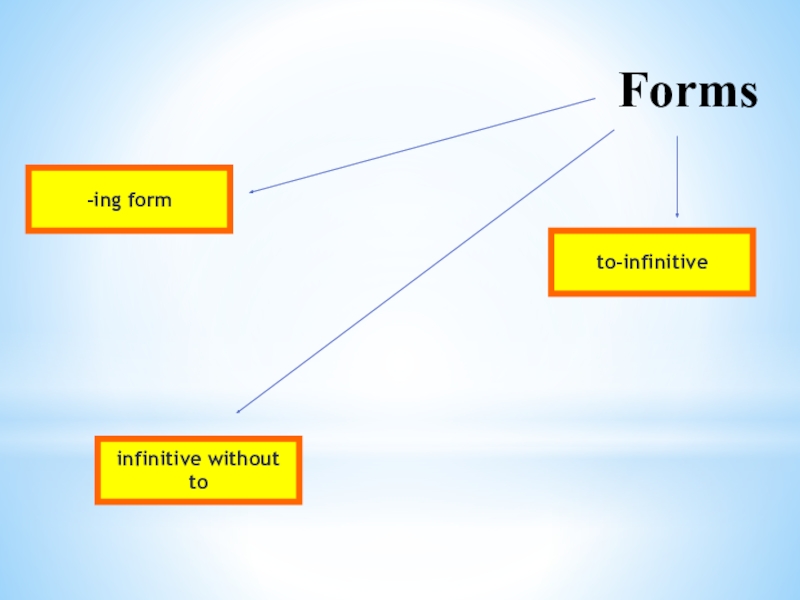
- 2. Formsinfinitive without to-ing formto-infinitive
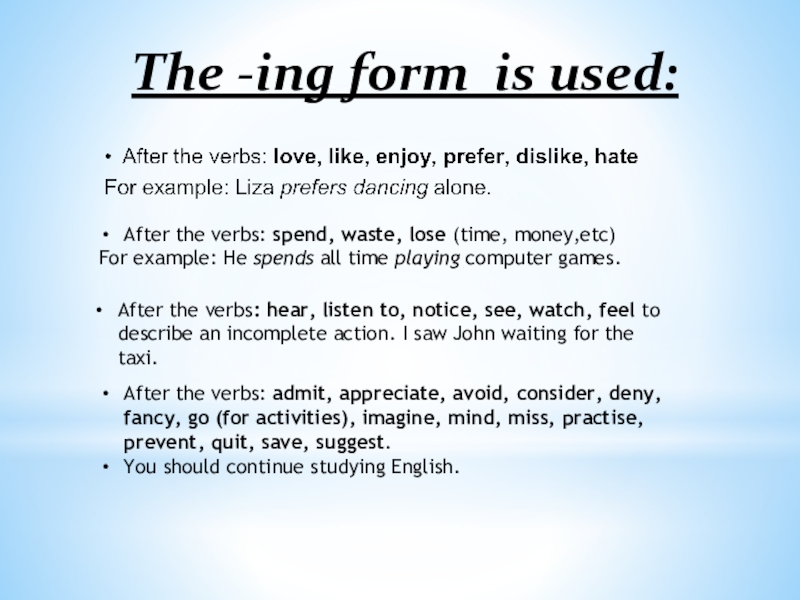
- 3. The -ing form is used:After the verbs:
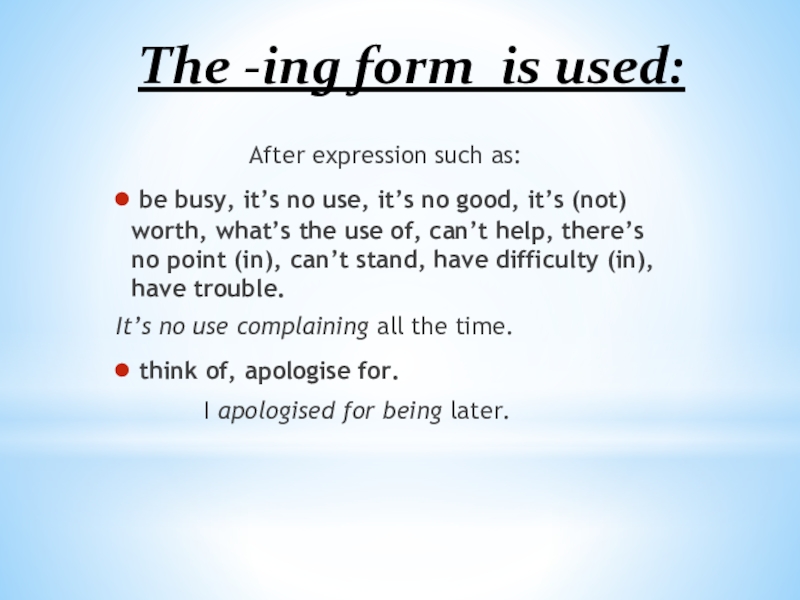
- 4. The -ing form is used:After expression such
- 5. The -ing form is used:After the preposition
- 6. The to-infinitive form is used:After would like,
- 7. The infinitive without to is used:After modal
- 8. Слайд 8
Formsinfinitive without to-ing formto-infinitive
Слайд 3The -ing form is used:
After the verbs: spend, waste, lose (time,
money,etc)
For example: He spends all time playing computer games.
For example: He spends all time playing computer games.
After the verbs: hear, listen to, notice, see, watch, feel to describe an incomplete action. I saw John waiting for the taxi.
After the verbs: admit, appreciate, avoid, consider, deny, fancy, go (for activities), imagine, mind, miss, practise, prevent, quit, save, suggest.
You should continue studying English.
Слайд 4The -ing form is used:
After expression such as:
be busy, it’s
no use, it’s no good, it’s (not) worth, what’s the use of, can’t help, there’s no point (in), can’t stand, have difficulty (in), have trouble.
It’s no use complaining all the time.
think of, apologise for.
I apologised for being later.
It’s no use complaining all the time.
think of, apologise for.
I apologised for being later.
Слайд 5The -ing form is used:
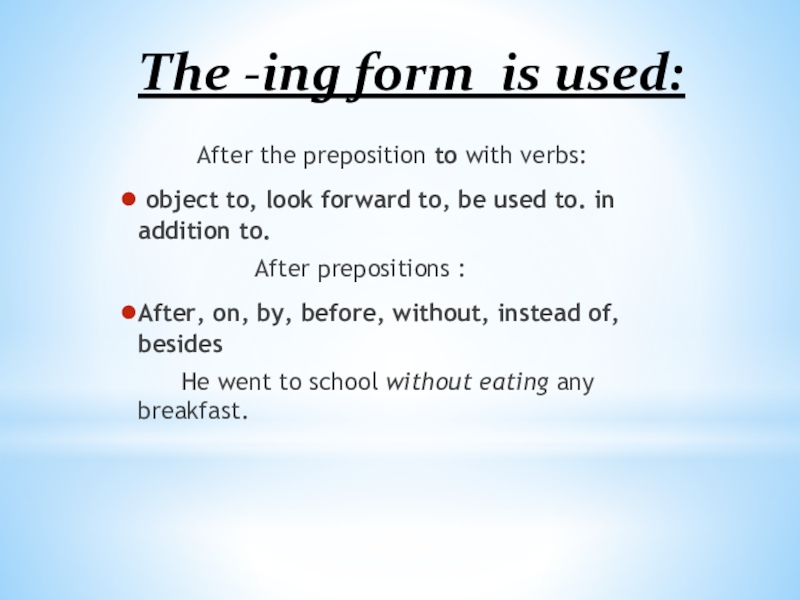
After the preposition to with verbs:
object
to, look forward to, be used to. in addition to.
After prepositions :
After, on, by, before, without, instead of, besides
He went to school without eating any breakfast.
After prepositions :
After, on, by, before, without, instead of, besides
He went to school without eating any breakfast.
Слайд 6The to-infinitive form is used:
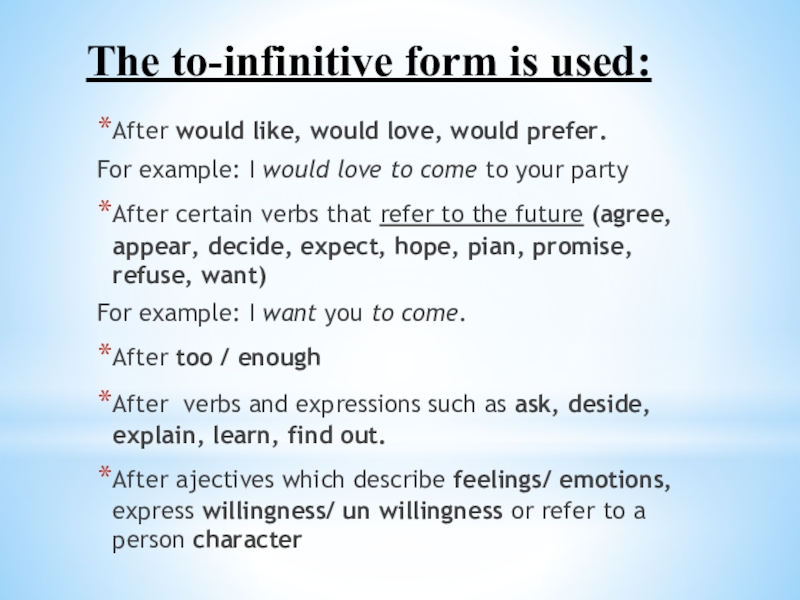
After would like, would love, would prefer.
For
example: I would love to come to your party
After certain verbs that refer to the future (agree, appear, decide, expect, hope, pian, promise, refuse, want)
For example: I want you to come.
After too / enough
After verbs and expressions such as ask, deside, explain, learn, find out.
After ajectives which describe feelings/ emotions, express willingness/ un willingness or refer to a person character
After certain verbs that refer to the future (agree, appear, decide, expect, hope, pian, promise, refuse, want)
For example: I want you to come.
After too / enough
After verbs and expressions such as ask, deside, explain, learn, find out.
After ajectives which describe feelings/ emotions, express willingness/ un willingness or refer to a person character
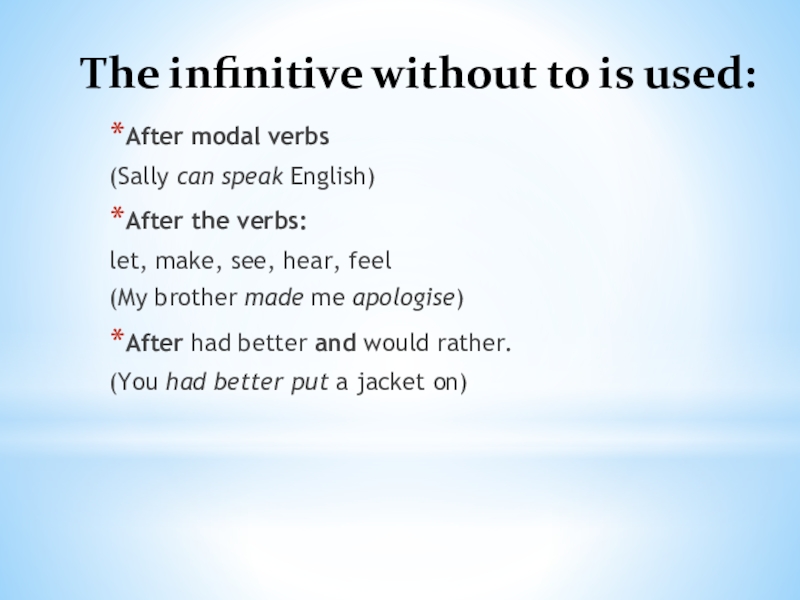
Слайд 7The infinitive without to is used:
After modal verbs
(Sally can speak English)
After
the verbs:
let, make, see, hear, feel
(My brother made me apologise)
After had better and would rather.
(You had better put a jacket on)
let, make, see, hear, feel
(My brother made me apologise)
After had better and would rather.
(You had better put a jacket on)