- Главная
- Разное
- Образование
- Спорт
- Естествознание
- Природоведение
- Религиоведение
- Французский язык
- Черчение
- Английский язык
- Астрономия
- Алгебра
- Биология
- География
- Геометрия
- Детские презентации
- Информатика
- История
- Литература
- Математика
- Музыка
- МХК
- Немецкий язык
- ОБЖ
- Обществознание
- Окружающий мир
- Педагогика
- Русский язык
- Технология
- Физика
- Философия
- Химия
- Шаблоны, фоны, картинки для презентаций
- Экология
- Экономика
Презентация, доклад по английскому языку на тему History of John Deere
Содержание
- 1. Презентация по английскому языку на тему History of John Deere
- 2. One hundred years ago on March 14,
- 3. 1867The first trademark using the leaping deer
- 4. 1912The second version of the John Deere
- 5. John Deere's tractor era began with the
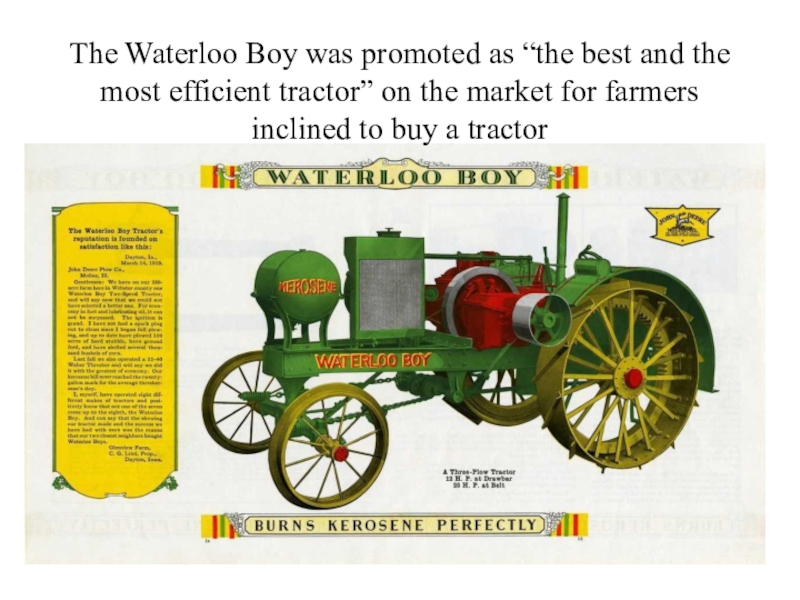
- 6. The Waterloo Boy was promoted as “the
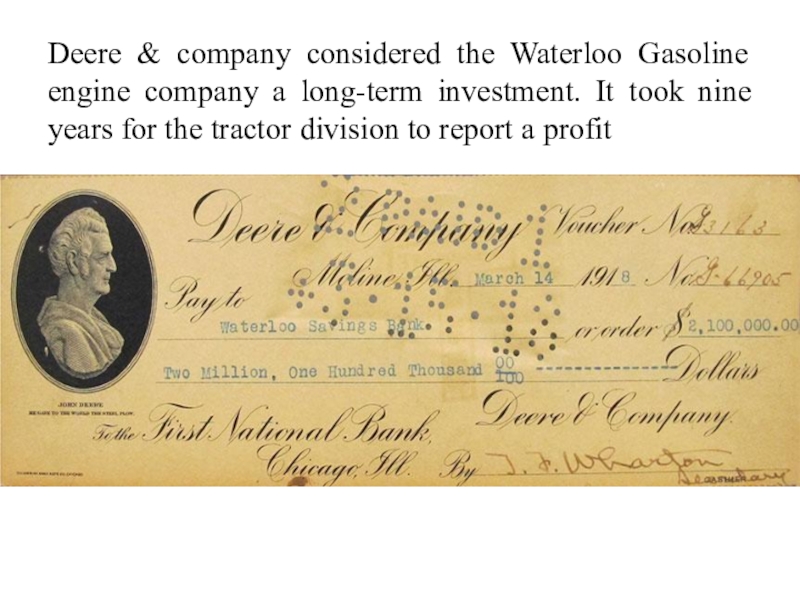
- 7. Deere & company considered the Waterloo Gasoline
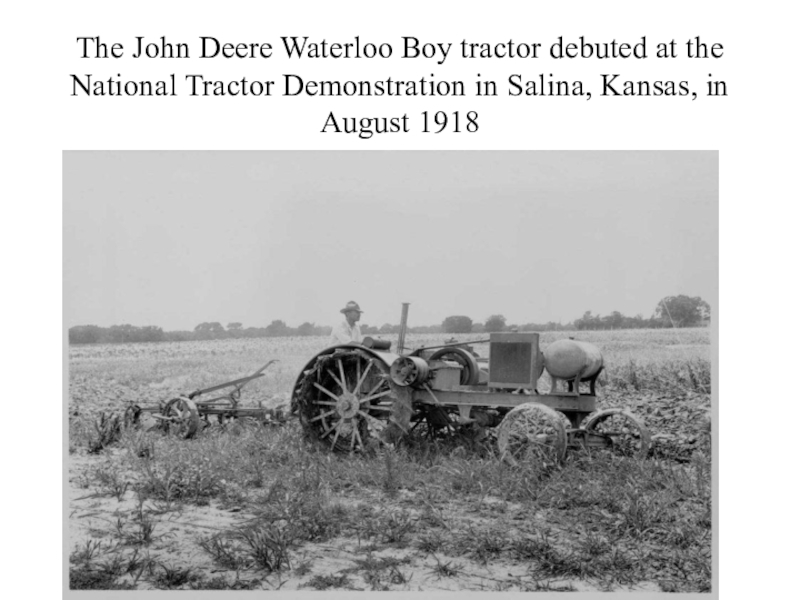
- 8. The John Deere Waterloo Boy tractor debuted
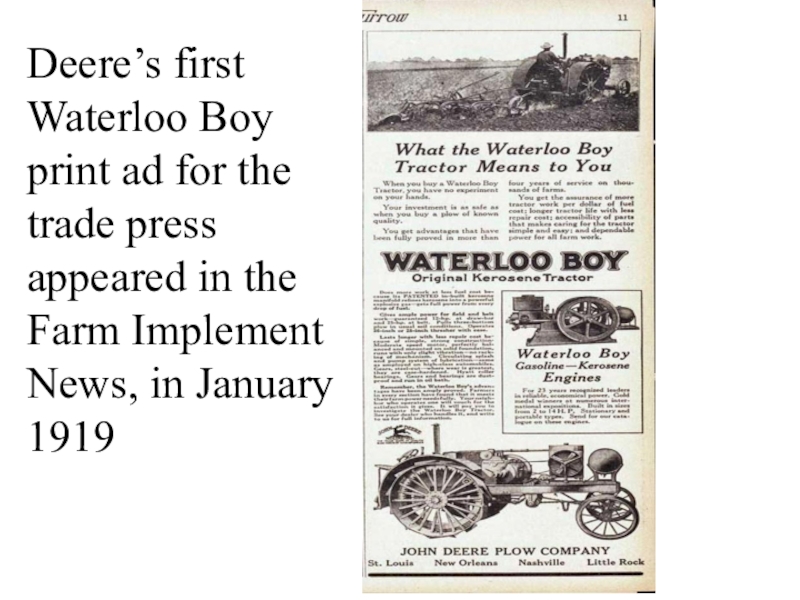
- 9. Deere’s first Waterloo Boy print ad for
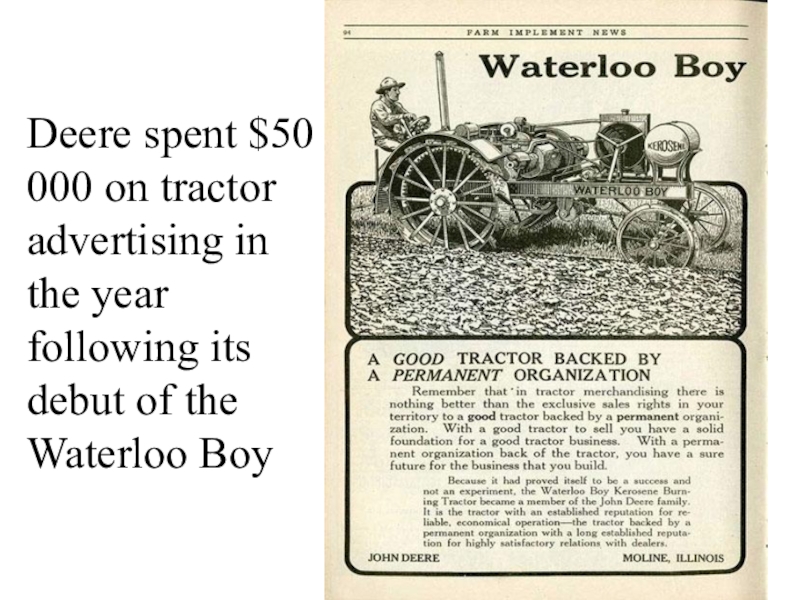
- 10. Deere spent $50 000 on tractor advertising
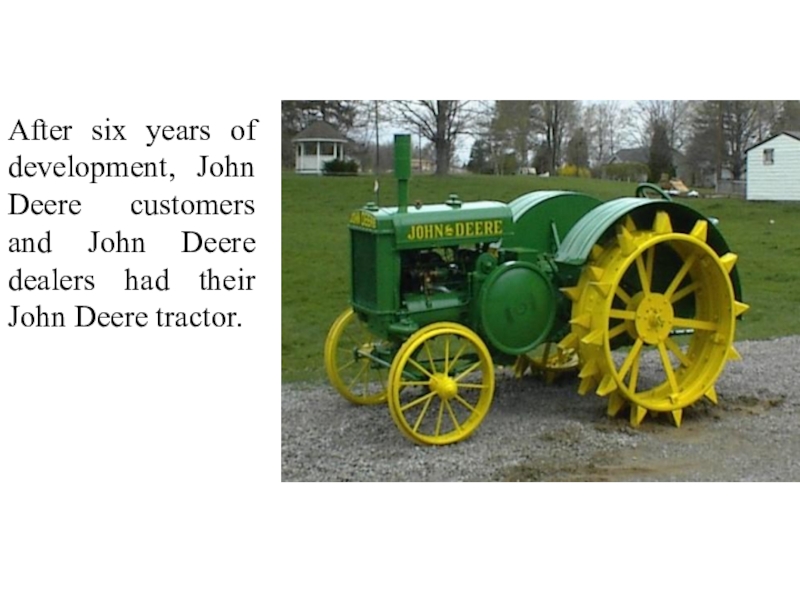
- 11. After six years of development, John Deere
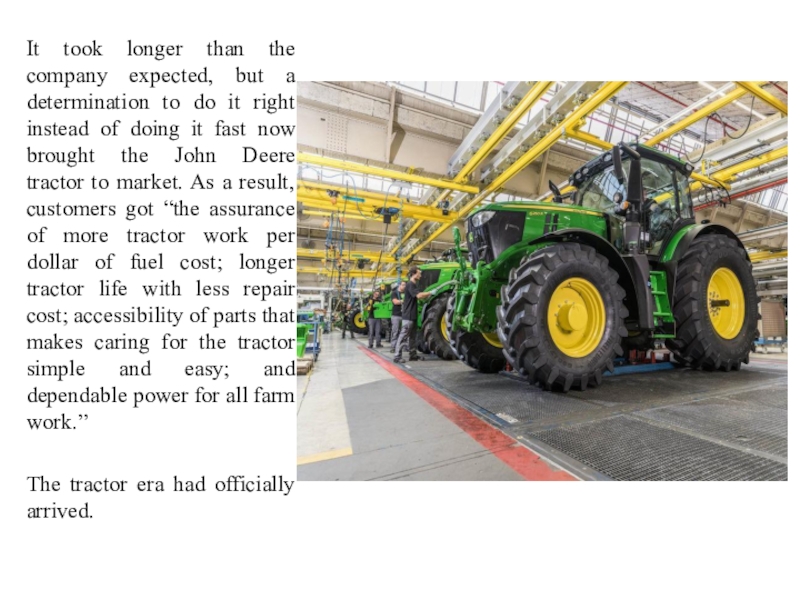
- 12. It took longer than the company expected,
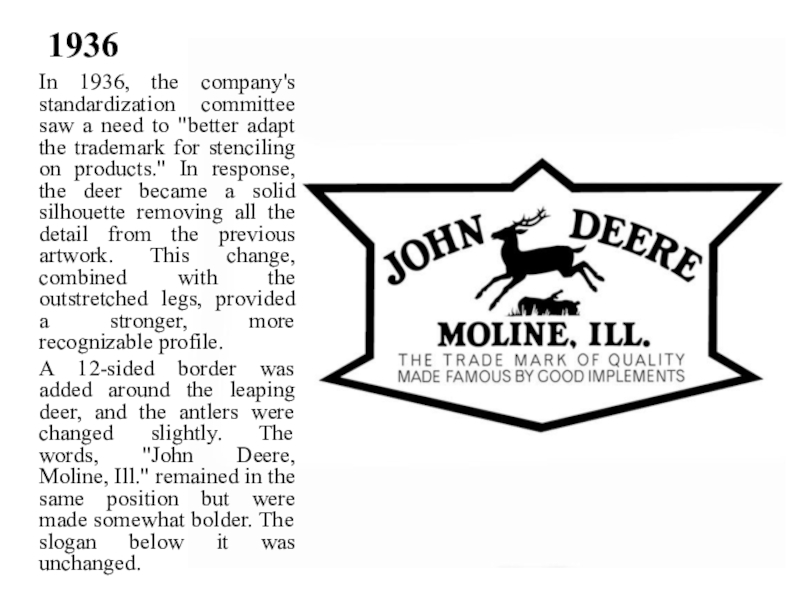
- 13. 1936In 1936, the company's standardization committee saw
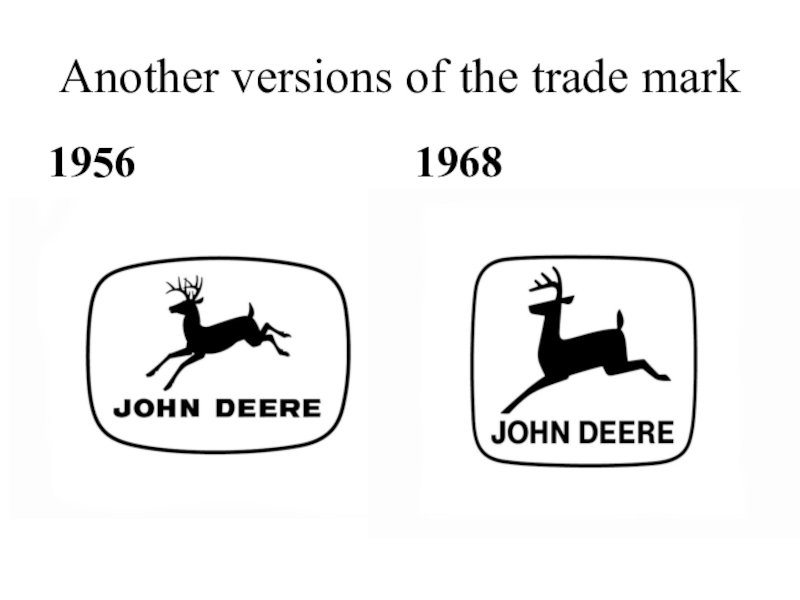
- 14. Another versions of the trade mark19561968
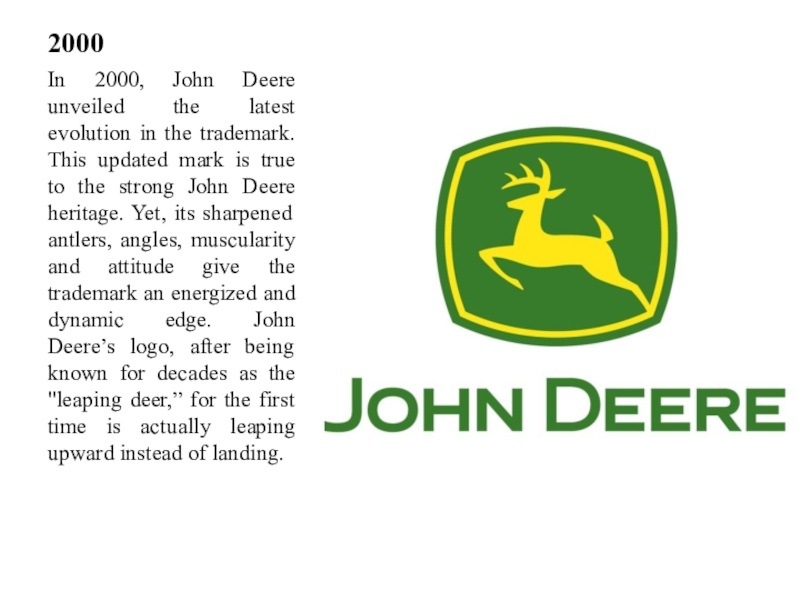
- 15. 2000In 2000, John Deere unveiled the latest
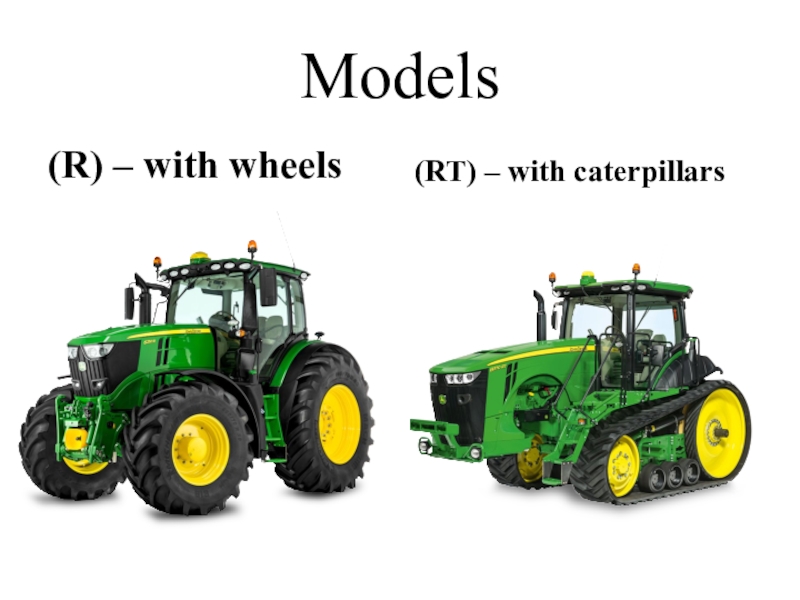
- 16. Models(R) – with wheels(RT) – with caterpillars
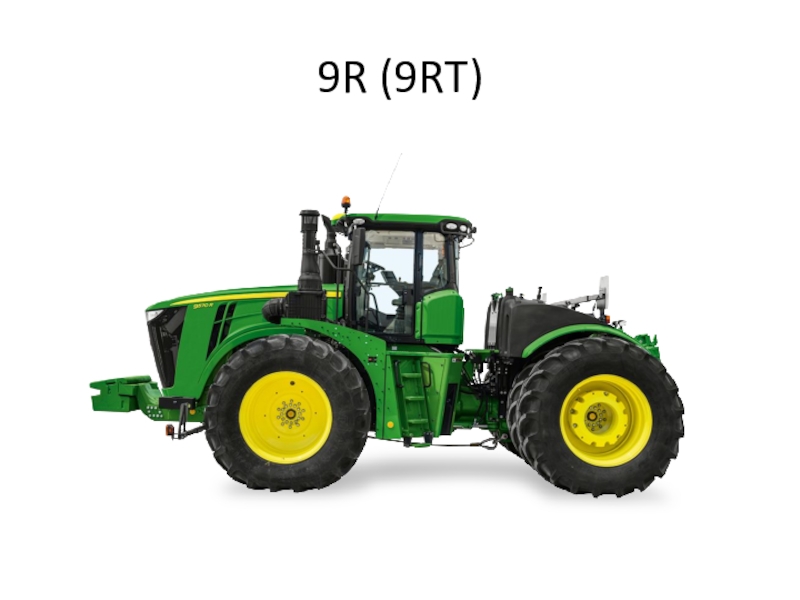
- 17. 9R (9RT)
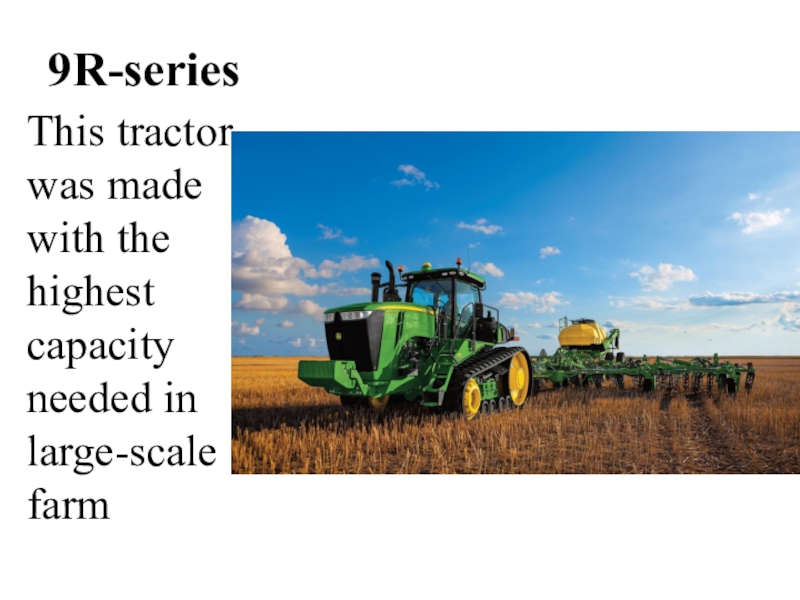
- 18. 9R-seriesThis tractor was made with the highest capacity needed in large-scale farm
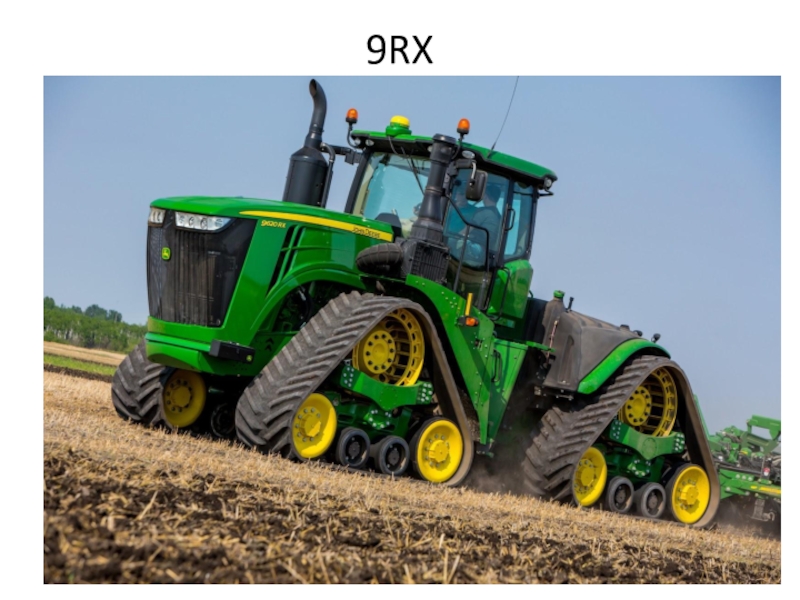
- 19. 9RX
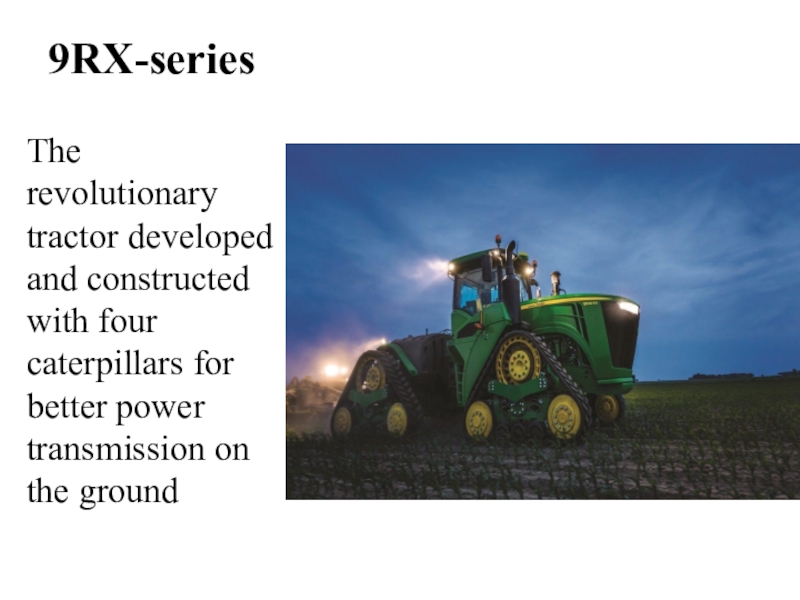
- 20. 9RX-seriesThe revolutionary tractor developed and constructed with four caterpillars for better power transmission on the ground
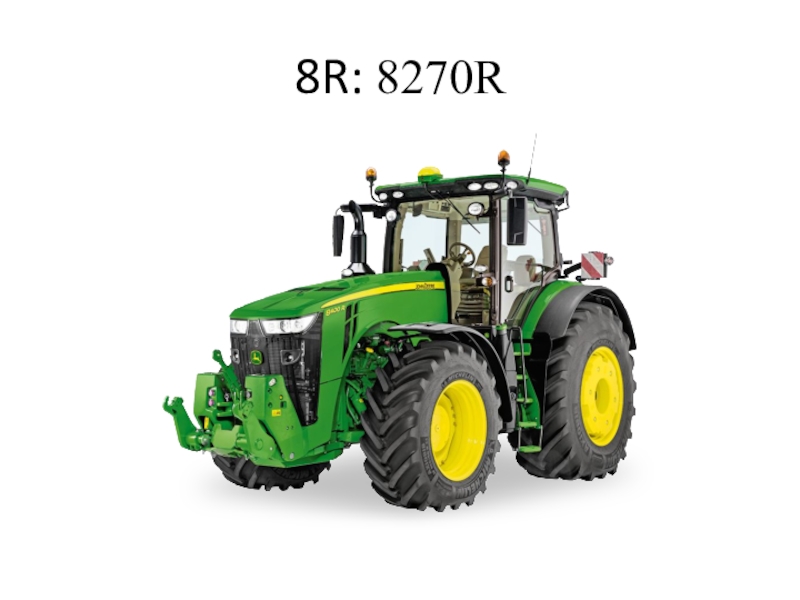
- 21. 8R: 8270R
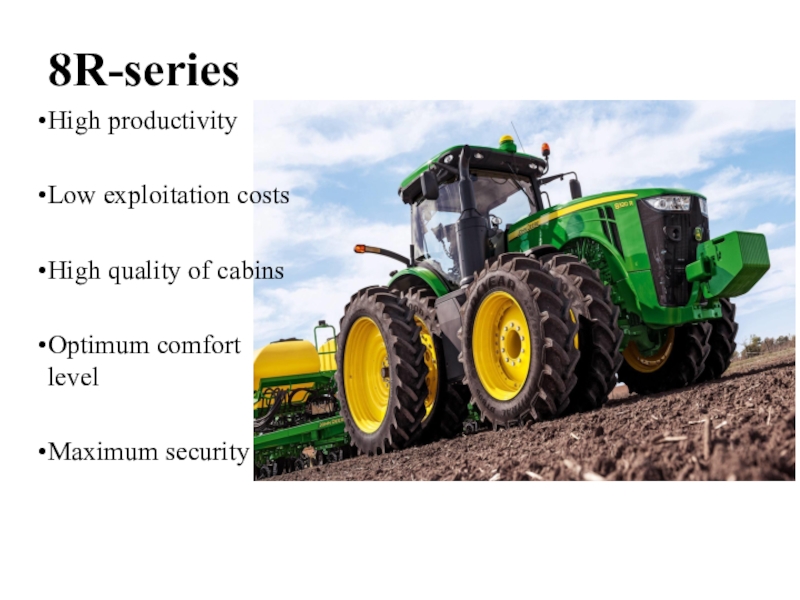
- 22. 8R-seriesHigh productivityLow exploitation costsHigh quality of cabinsOptimum comfort levelMaximum security
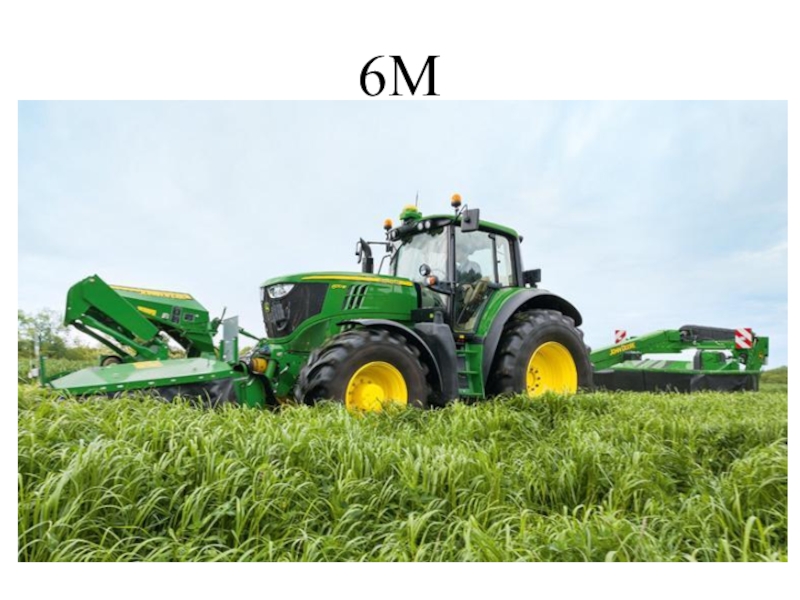
- 23. 6M
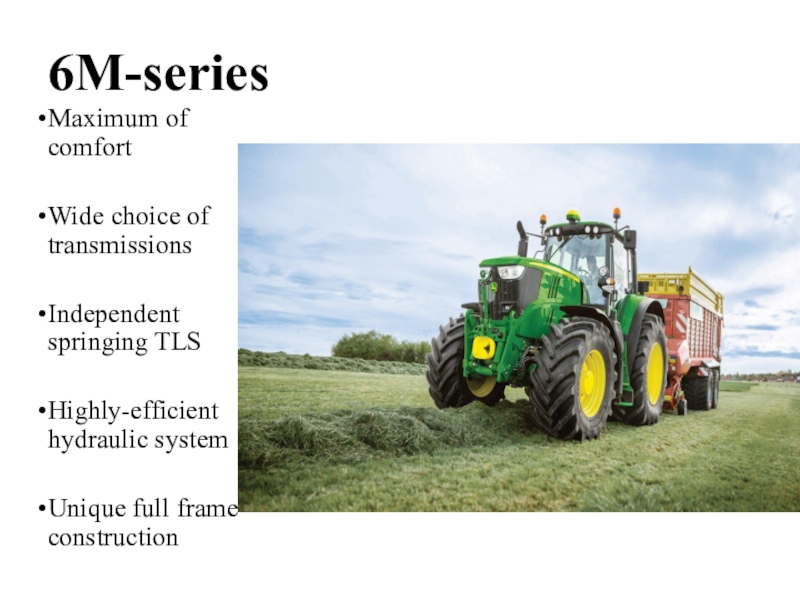
- 24. 6M-seriesMaximum of comfortWide choice of transmissionsIndependent springing TLSHighly-efficient hydraulic systemUnique full frame construction
- 25. 6B
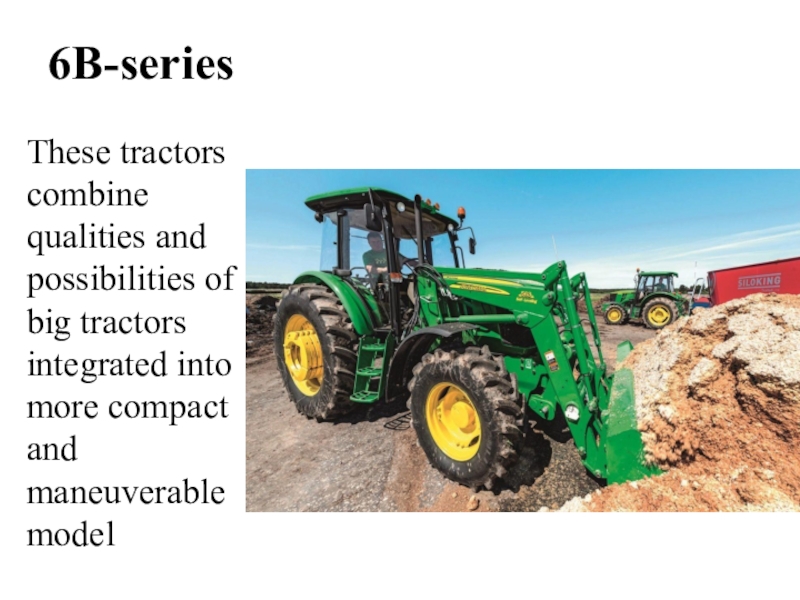
- 26. 6B-seriesThese tractors combine qualities and possibilities of big tractors integrated into more compact and maneuverable model
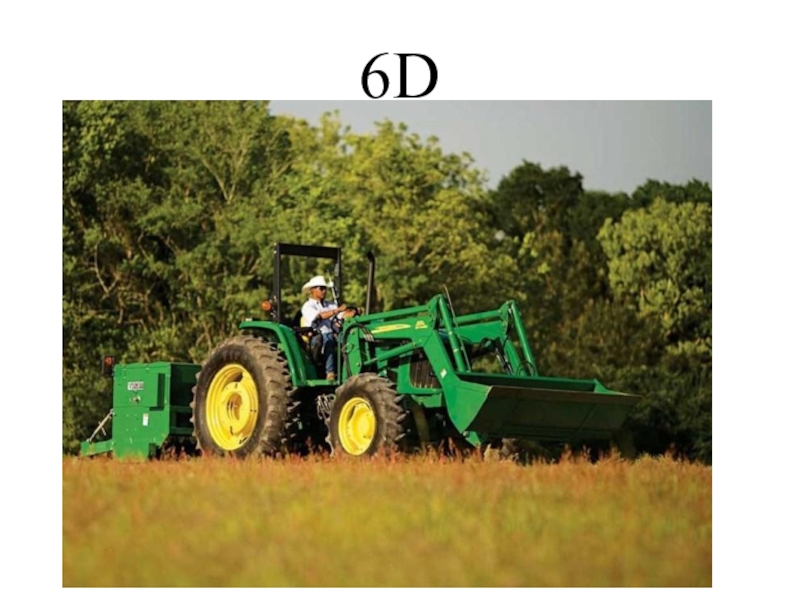
- 27. 6D
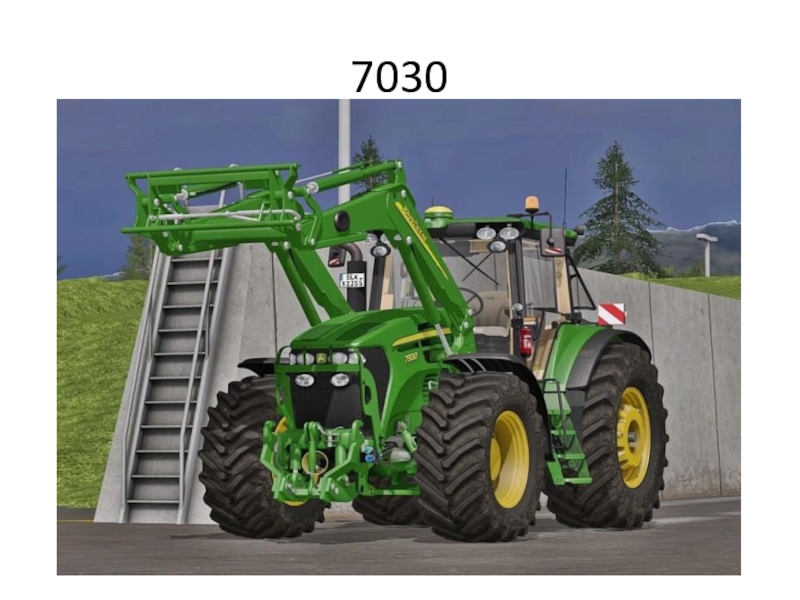
- 28. 7030
- 29. Thank you for your work!
- 30. Links: https://www.deere.com/en/our-company/history/https://www.deere.com
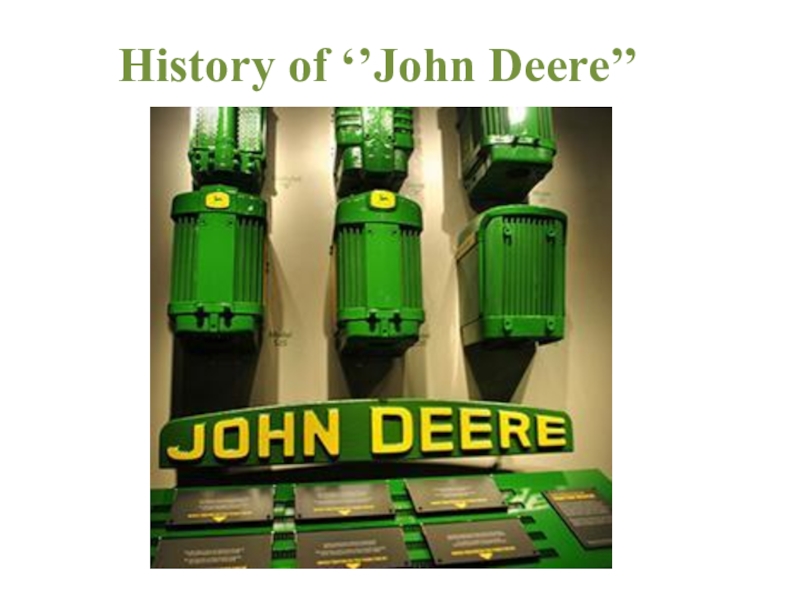
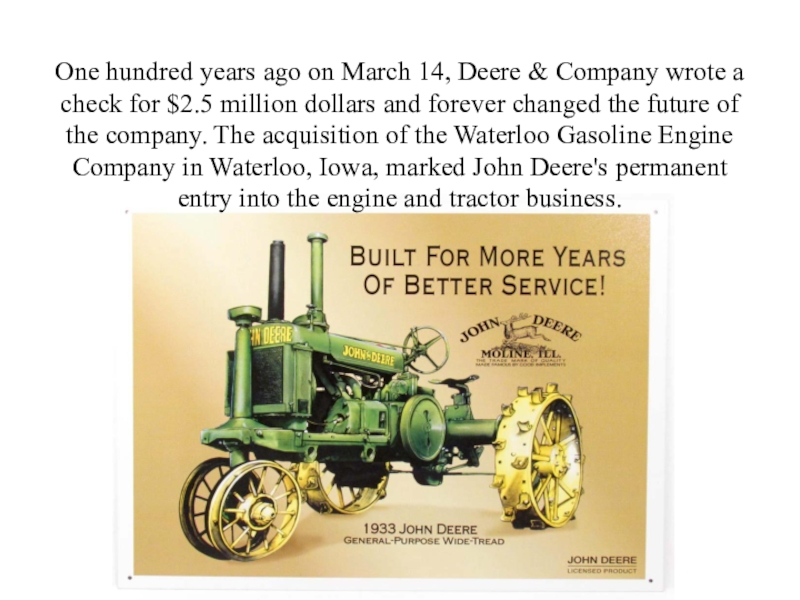
One hundred years ago on March 14, Deere & Company wrote a check for $2.5 million dollars and forever changed the future of the company. The acquisition of the Waterloo Gasoline Engine Company in Waterloo, Iowa,
Слайд 2One hundred years ago on March 14, Deere & Company wrote
a check for $2.5 million dollars and forever changed the future of the company. The acquisition of the Waterloo Gasoline Engine Company in Waterloo, Iowa, marked John Deere's permanent entry into the engine and tractor business.
Слайд 31867
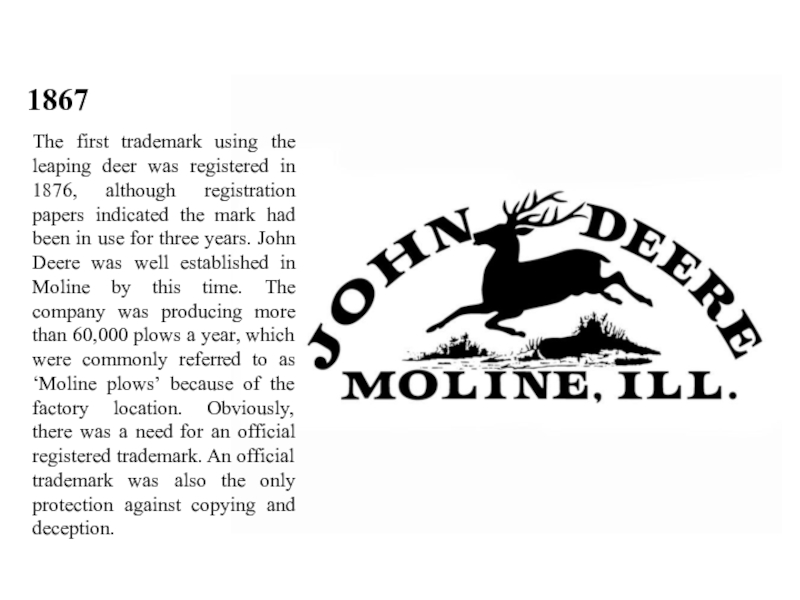
The first trademark using the leaping deer was registered in 1876,
although registration papers indicated the mark had been in use for three years. John Deere was well established in Moline by this time. The company was producing more than 60,000 plows a year, which were commonly referred to as ‘Moline plows’ because of the factory location. Obviously, there was a need for an official registered trademark. An official trademark was also the only protection against copying and deception.
Слайд 41912
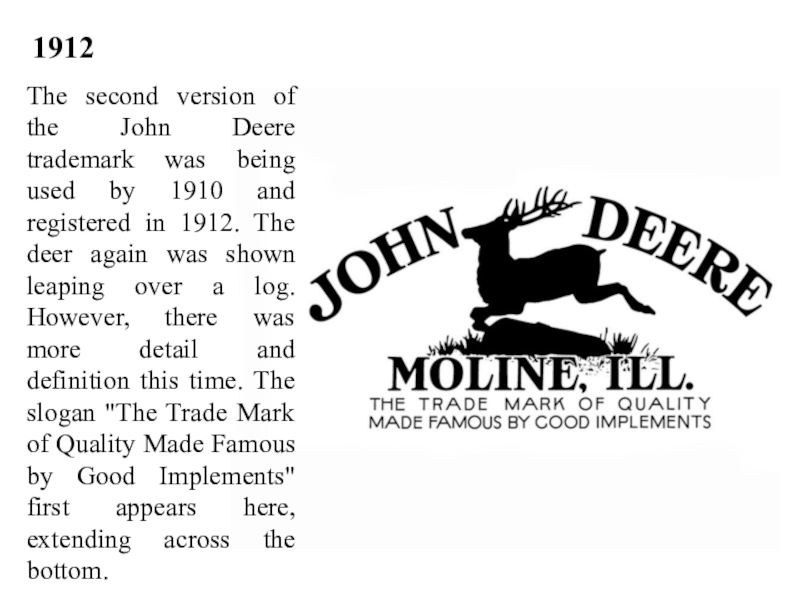
The second version of the John Deere trademark was being used
by 1910 and registered in 1912. The deer again was shown leaping over a log. However, there was more detail and definition this time. The slogan "The Trade Mark of Quality Made Famous by Good Implements" first appears here, extending across the bottom.
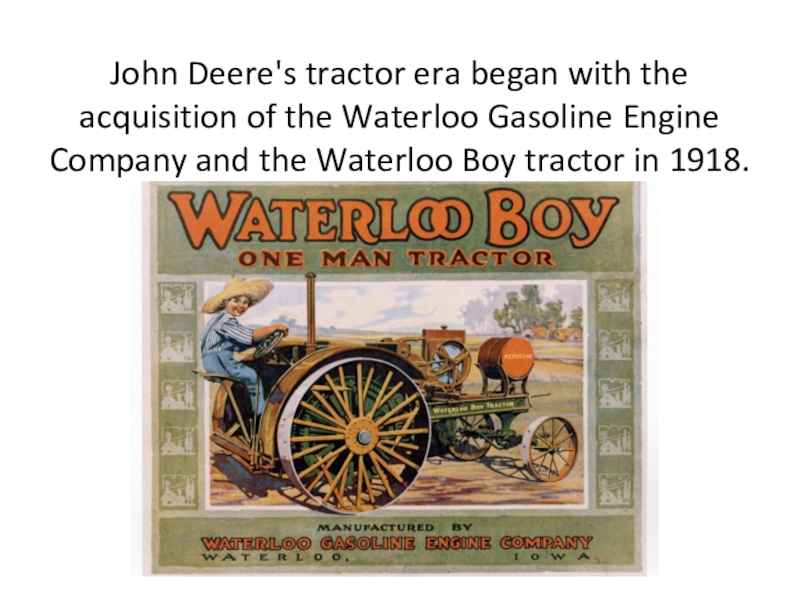
Слайд 5John Deere's tractor era began with the acquisition of the Waterloo
Gasoline Engine Company and the Waterloo Boy tractor in 1918.
Слайд 6The Waterloo Boy was promoted as “the best and the most
efficient tractor” on the market for farmers inclined to buy a tractor
Слайд 7Deere & company considered the Waterloo Gasoline engine company a long-term
investment. It took nine years for the tractor division to report a profit
Слайд 8The John Deere Waterloo Boy tractor debuted at the National Tractor
Demonstration in Salina, Kansas, in August 1918
Слайд 9Deere’s first Waterloo Boy print ad for the trade press appeared
in the Farm Implement News, in January 1919
Слайд 10
Deere spent $50 000 on tractor advertising in the year following
its debut of the Waterloo Boy
Слайд 11After six years of development, John Deere customers and John Deere
dealers had their John Deere tractor.
Слайд 12It took longer than the company expected, but a determination to
do it right instead of doing it fast now brought the John Deere tractor to market. As a result, customers got “the assurance of more tractor work per dollar of fuel cost; longer tractor life with less repair cost; accessibility of parts that makes caring for the tractor simple and easy; and dependable power for all farm work.”
The tractor era had officially arrived.
The tractor era had officially arrived.
Слайд 131936
In 1936, the company's standardization committee saw a need to "better
adapt the trademark for stenciling on products." In response, the deer became a solid silhouette removing all the detail from the previous artwork. This change, combined with the outstretched legs, provided a stronger, more recognizable profile.
A 12-sided border was added around the leaping deer, and the antlers were changed slightly. The words, "John Deere, Moline, Ill." remained in the same position but were made somewhat bolder. The slogan below it was unchanged.
A 12-sided border was added around the leaping deer, and the antlers were changed slightly. The words, "John Deere, Moline, Ill." remained in the same position but were made somewhat bolder. The slogan below it was unchanged.
Слайд 152000
In 2000, John Deere unveiled the latest evolution in the trademark.
This updated mark is true to the strong John Deere heritage. Yet, its sharpened antlers, angles, muscularity and attitude give the trademark an energized and dynamic edge. John Deere’s logo, after being known for decades as the "leaping deer,” for the first time is actually leaping upward instead of landing.
Слайд 209RX-series
The revolutionary tractor developed and constructed with four caterpillars for better
power transmission on the ground
Слайд 228R-series
High productivity
Low exploitation costs
High quality of cabins
Optimum comfort level
Maximum security
Слайд 246M-series
Maximum of comfort
Wide choice of transmissions
Independent springing TLS
Highly-efficient hydraulic system
Unique full
frame construction
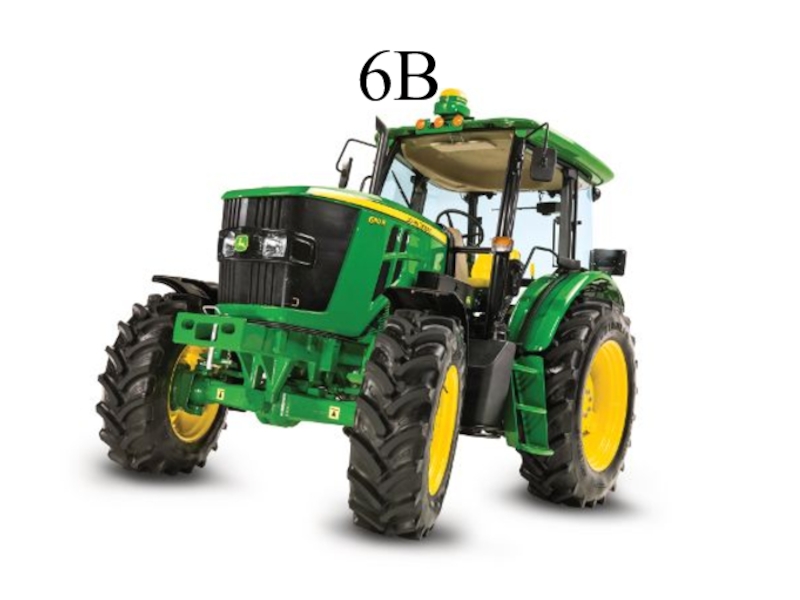
Слайд 266B-series
These tractors combine qualities and possibilities of big tractors integrated into
more compact and maneuverable model