- Главная
- Разное
- Образование
- Спорт
- Естествознание
- Природоведение
- Религиоведение
- Французский язык
- Черчение
- Английский язык
- Астрономия
- Алгебра
- Биология
- География
- Геометрия
- Детские презентации
- Информатика
- История
- Литература
- Математика
- Музыка
- МХК
- Немецкий язык
- ОБЖ
- Обществознание
- Окружающий мир
- Педагогика
- Русский язык
- Технология
- Физика
- Философия
- Химия
- Шаблоны, фоны, картинки для презентаций
- Экология
- Экономика
Презентация, доклад по английскому языку на тему Достопримечательности
Содержание
- 1. Презентация по английскому языку на тему Достопримечательности
- 2. Currency in Rome is Lira.In the
- 3. The sightseeing: The Colosseum is
- 4. What differentiates Villa Borghese from other large
- 5. The Trevi Fountain (Italian: Fontana di Trevi)
- 6. The Pantheon (UK: /ˈpænθiən/, US: /-ɒn/;[1] Latin:
- 7. Inside the Vatican city we can
- 8. It is built on the site of
- 9. Famous people of Rome
- 10. Born November 13, 354, in the African
- 11. Stock Lucius was a poet.The ancient Roman
- 12. Galen is a doctor.Roman (of Greek origin)
- 13. Paul III – the Pope.Paul III –
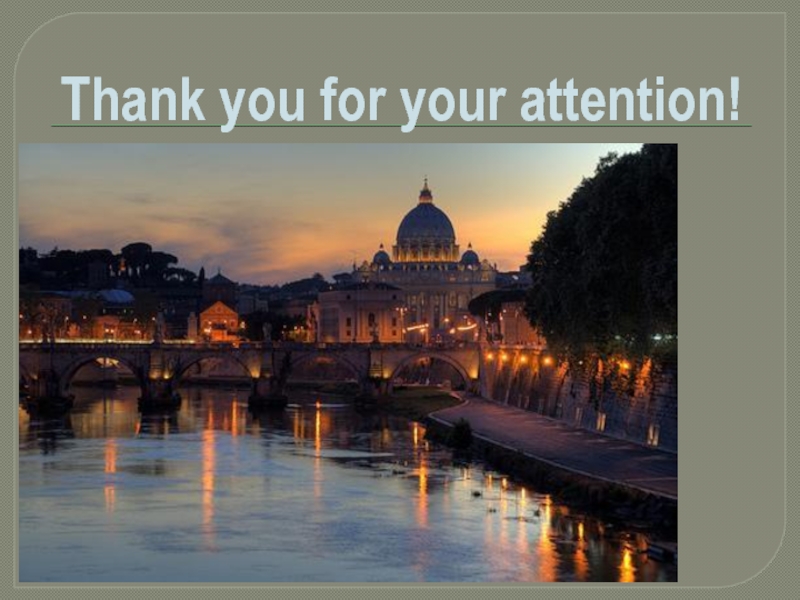
- 14. Thank you for your attention!
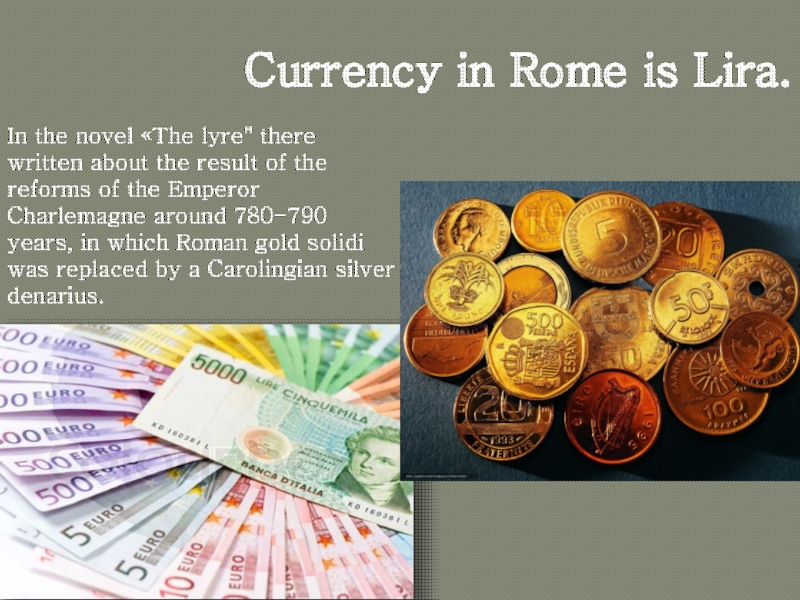
Currency in Rome is Lira.In the novel «The lyre" there written about the result of the reforms of the Emperor Charlemagne around 780-790 years, in which Roman gold solidi was replaced by a Carolingian silver
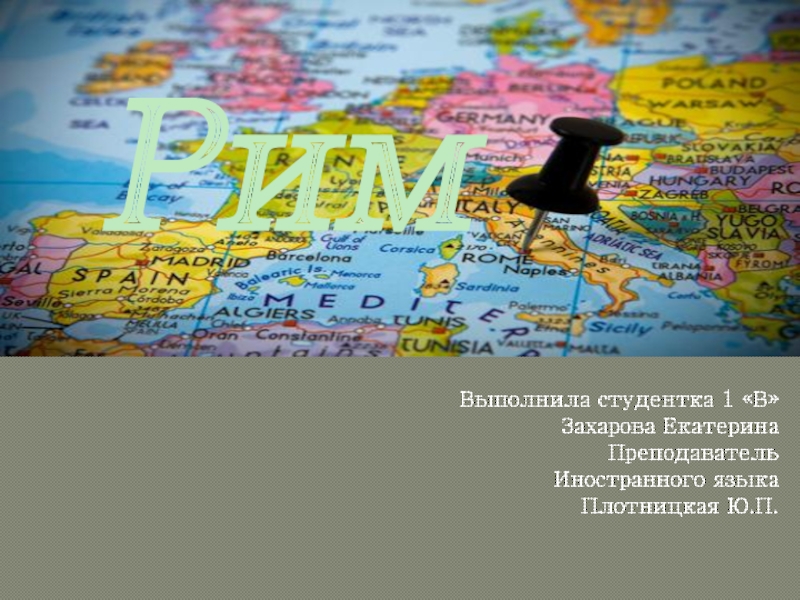
Слайд 2 Currency in Rome is Lira.
In the novel «The lyre" there
written about the result of the reforms of the Emperor Charlemagne around 780-790 years, in which Roman gold solidi was replaced by a Carolingian silver denarius.
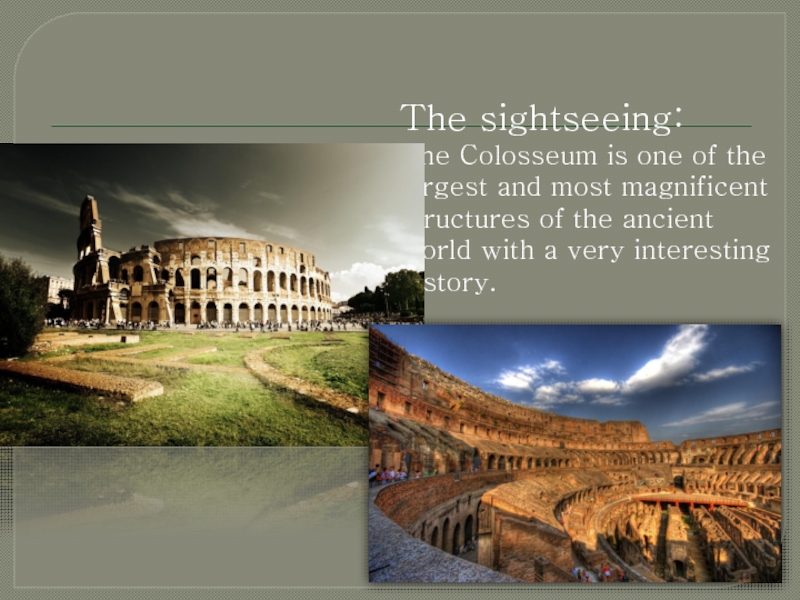
Слайд 3 The sightseeing: The Colosseum is one of the largest and most
magnificent structures of the ancient world with a very interesting history.
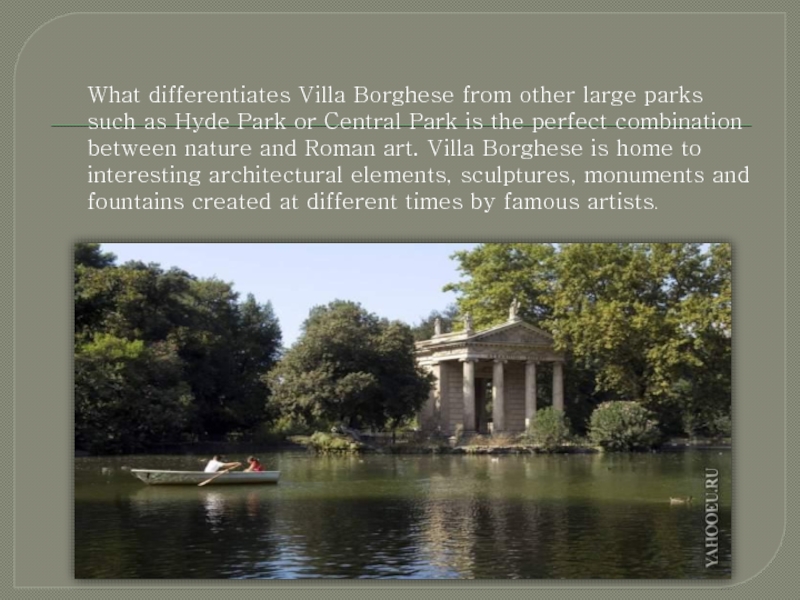
Слайд 4What differentiates Villa Borghese from other large parks such as Hyde
Park or Central Park is the perfect combination between nature and Roman art. Villa Borghese is home to interesting architectural elements, sculptures, monuments and fountains created at different times by famous artists.
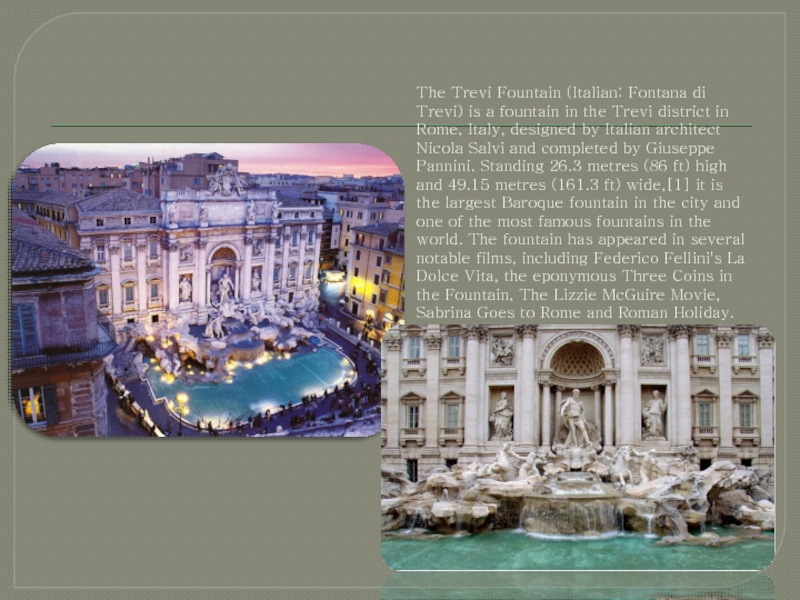
Слайд 5The Trevi Fountain (Italian: Fontana di Trevi) is a fountain in
the Trevi district in Rome, Italy, designed by Italian architect Nicola Salvi and completed by Giuseppe Pannini. Standing 26.3 metres (86 ft) high and 49.15 metres (161.3 ft) wide,[1] it is the largest Baroque fountain in the city and one of the most famous fountains in the world. The fountain has appeared in several notable films, including Federico Fellini's La Dolce Vita, the eponymous Three Coins in the Fountain, The Lizzie McGuire Movie, Sabrina Goes to Rome and Roman Holiday.
Слайд 6The Pantheon (UK: /ˈpænθiən/, US: /-ɒn/;[1] Latin: Pantheum,[nb 1] from Greek
Πάνθειον Pantheion, "[temple] of all the gods") is a former Roman temple, now a church, in Rome, Italy, on the site of an earlier temple commissioned by Marcus Agrippa during the reign of Augustus (27 BC – 14 AD). It was completed by the emperor Hadrian and probably dedicated about 126 AD. Its date of construction is uncertain, because Hadrian chose not to inscribe the new temple but rather to retain the inscription of Agrippa's older temple, which had burned down
![The Pantheon (UK: /ˈpænθiən/, US: /-ɒn/;[1] Latin: Pantheum,[nb 1] from Greek Πάνθειον Pantheion,](/img/thumbs/0f58ab1993c8d5d05fffa947f820cb40-800x.jpg "Презентация по английскому языку на тему Достопримечательности The Pantheon (UK: /ˈpænθiən/, US: /-ɒn/;[1] Latin: Pantheum,[nb 1] from Greek")
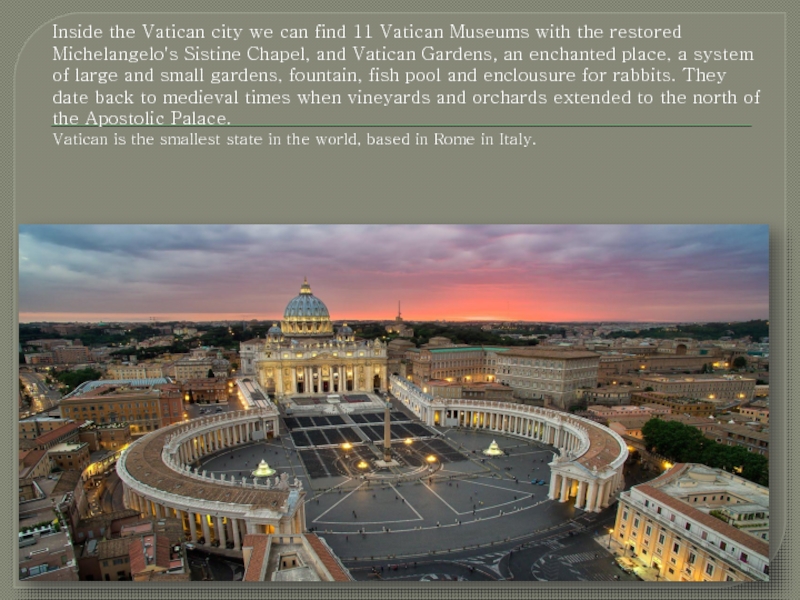
Слайд 7 Inside the Vatican city we can find 11 Vatican Museums with
the restored Michelangelo's Sistine Chapel, and Vatican Gardens, an enchanted place, a system of large and small gardens, fountain, fish pool and enclousure for rabbits. They date back to medieval times when vineyards and orchards extended to the north of the Apostolic Palace.
Vatican is the smallest state in the world, based in Rome in Italy.
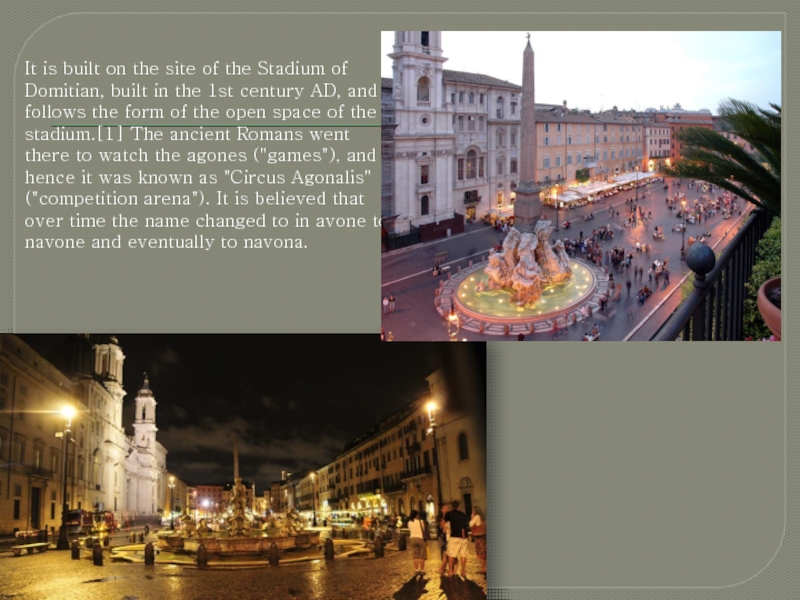
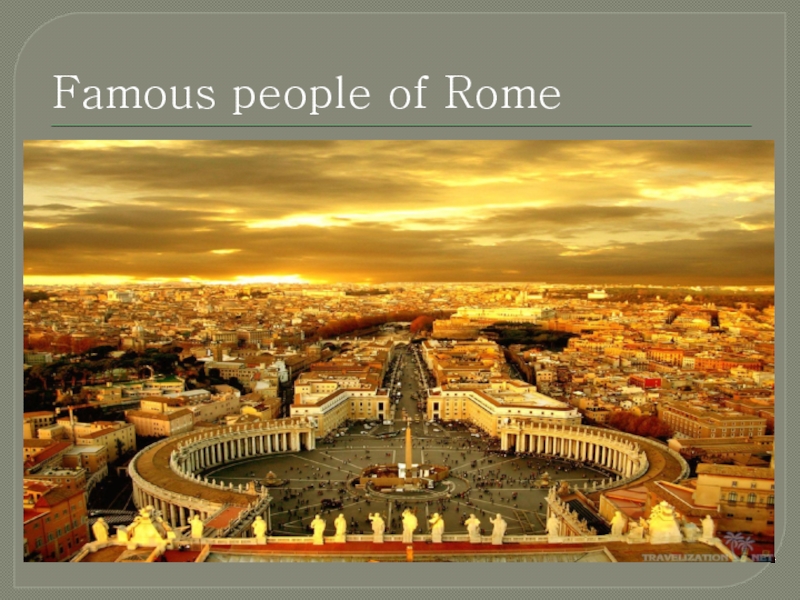
Слайд 8It is built on the site of the Stadium of Domitian,
built in the 1st century AD, and follows the form of the open space of the stadium.[1] The ancient Romans went there to watch the agones ("games"), and hence it was known as "Circus Agonalis" ("competition arena"). It is believed that over time the name changed to in avone to navone and eventually to navona.
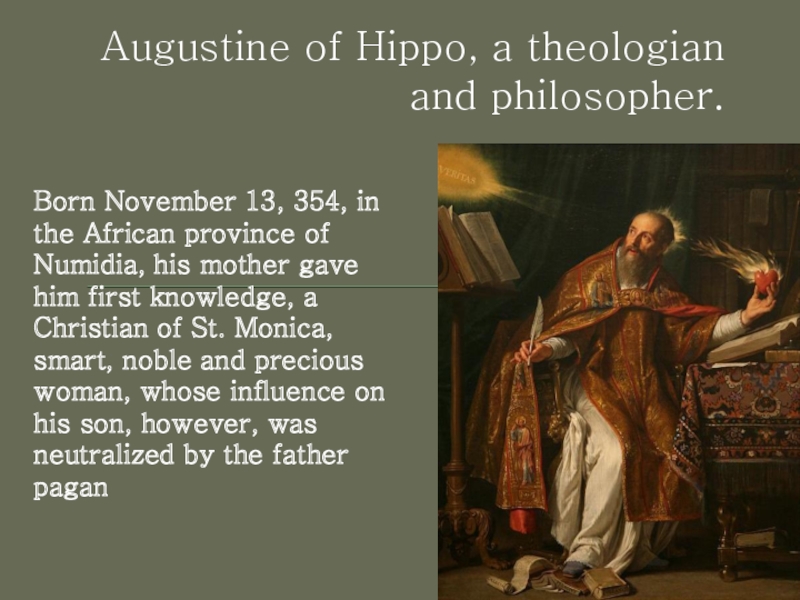
Слайд 10Born November 13, 354, in the African province of Numidia, his
mother gave him first knowledge, a Christian of St. Monica, smart, noble and precious woman, whose influence on his son, however, was neutralized by the father pagan
Augustine of Hippo, a theologian and philosopher.
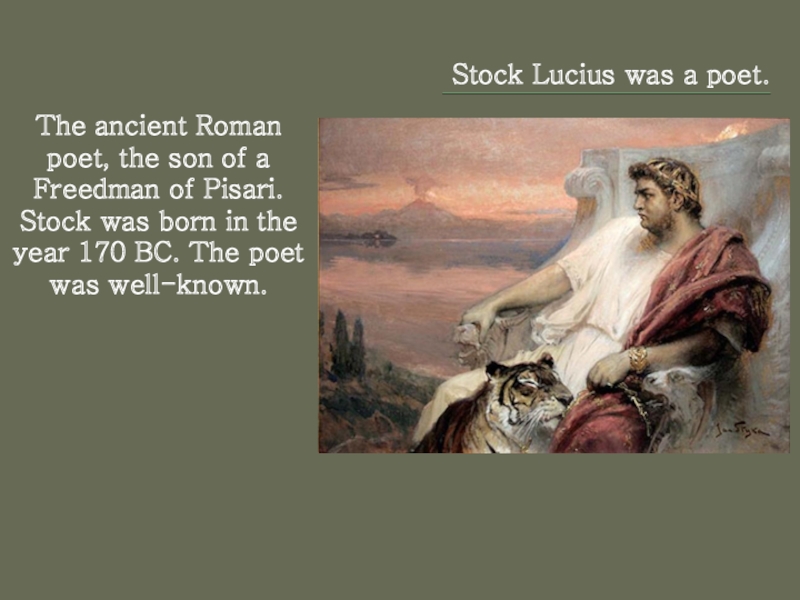
Слайд 11Stock Lucius was a poet.
The ancient Roman poet, the son of
a Freedman of Pisari. Stock was born in the year 170 BC. The poet was well-known.
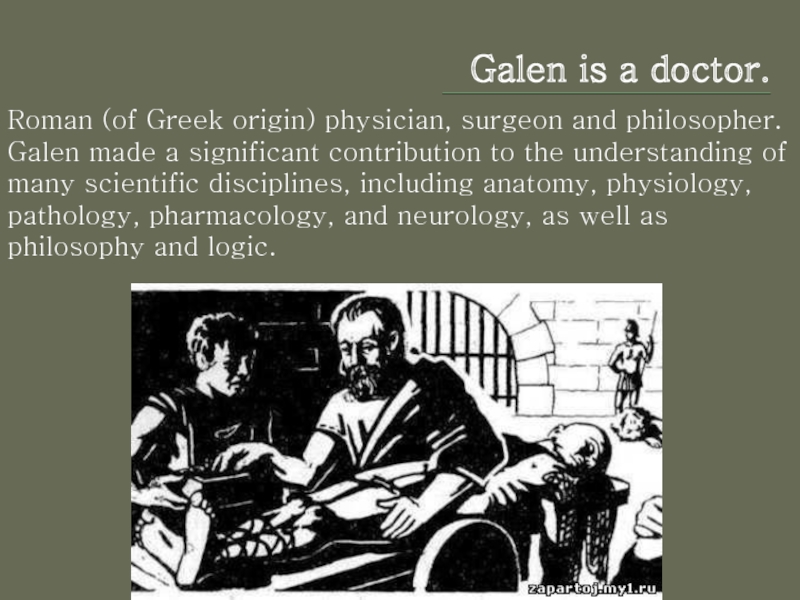
Слайд 12Galen is a doctor.
Roman (of Greek origin) physician, surgeon and philosopher.
Galen made a significant contribution to the understanding of many scientific disciplines, including anatomy, physiology, pathology, pharmacology, and neurology, as well as philosophy and logic.
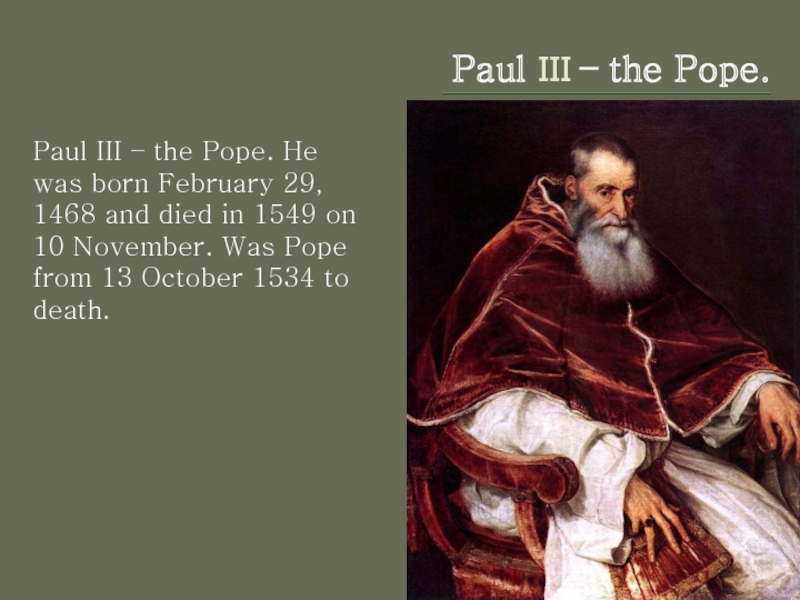
Слайд 13Paul III – the Pope.
Paul III – the Pope. He was
born February 29, 1468 and died in 1549 on 10 November. Was Pope from 13 October 1534 to death.